


Chlamydia Infections Treatment Market Size
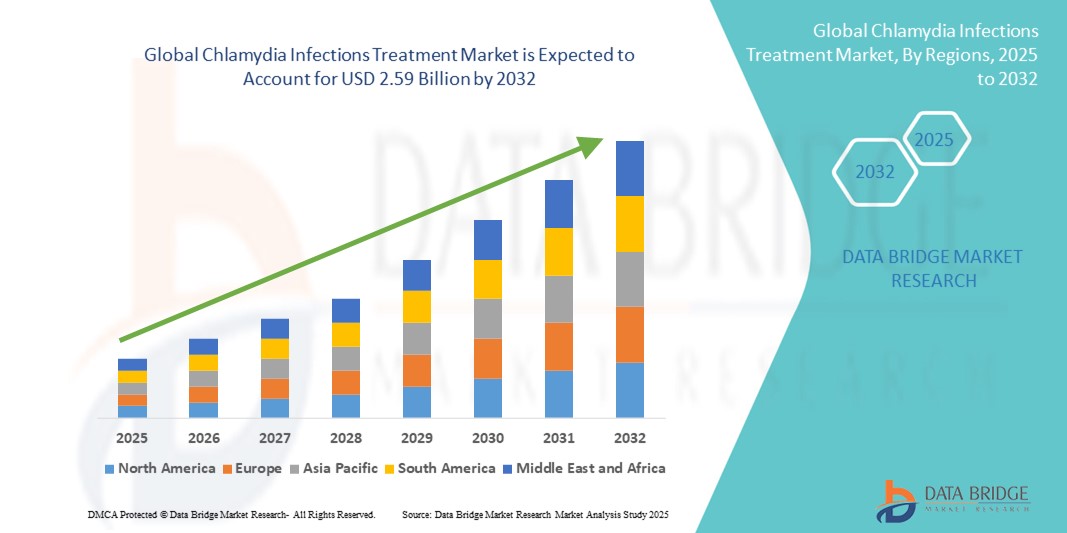
- The global chlamydia infections treatment market size was valued at USD 1.81 billion in 2024 and is expected to reach USD 2.59 billion by 2032, at a CAGR of 4.60% during the forecast period
- The market growth is largely fueled by the increasing prevalence of sexually transmitted infections, rising awareness of sexual health, and the growing emphasis on early diagnosis and effective treatment strategies
- Furthermore, expanding healthcare infrastructure, accessibility of treatment options, and advancements in antimicrobial therapies are driving the adoption of chlamydia infections treatment solutions. These converging factors are accelerating market uptake, thereby significantly boosting the industry's growth
Chlamydia Infections Treatment Market Analysis
- The global chlamydia infections treatment market is witnessing steady growth, driven by increasing prevalence of chlamydia infections, rising awareness about sexually transmitted infections (STIs), and the expansion of healthcare infrastructure across emerging markets
- The demand for effective treatment options is bolstered by government initiatives for STI prevention, screening programs, and rising adoption of standardized treatment guidelines in clinical practice
- North America dominated the chlamydia infections treatment market with the largest revenue share of 41% in 2024, supported by advanced healthcare infrastructure, high awareness levels, and widespread access to recommended antibiotics such as azithromycin and doxycycline. The U.S. shows substantial market activity due to routine STI screening, early diagnosis, and strong healthcare expenditure on STI management
- Asia-Pacific is expected to be the fastest-growing region in the chlamydia infections treatment market during the forecast period, driven by rising population awareness, urbanization, increasing healthcare spending, and government-led STI prevention programs
- The Oral segment dominated with a chlamydia infections treatment market with a share of 70.4% in 2024, as oral antibiotics such as Azithromycin and Doxycycline remain the cornerstone of treatment due to their proven clinical efficacy, ease of administration, affordability, and high levels of patient adherence
Report Scope and Chlamydia Infections Treatment Market Segmentation
|
Attributes |
Chlamydia Infections Treatment Key Market Insights |
|
Segments Covered |
|
|
Countries Covered |
North America
Europe
Asia-Pacific
Middle East and Africa
South America
|
|
Key Market Players |
|
|
Market Opportunities |
|
|
Value Added Data Infosets |
In addition to the insights on market scenarios such as market value, growth rate, segmentation, geographical coverage, and major players, the market reports curated by the Data Bridge Market Research also include in-depth expert analysis, pricing analysis, brand share analysis, consumer survey, demography analysis, supply chain analysis, value chain analysis, raw material/consumables overview, vendor selection criteria, PESTLE Analysis, Porter Analysis, and regulatory framework. |
Chlamydia Infections Treatment Market Trends
Enhanced Patient Outcomes Through Advanced Treatment Approaches
- A significant and accelerating trend in the global chlamydia infections treatment market is the adoption of more effective and targeted therapeutic approaches, aimed at improving patient outcomes and reducing infection recurrence
- For instance, the development of next-generation antibiotics and combination therapies has enhanced treatment efficacy and minimized resistance issues, enabling healthcare providers to manage cases more effectively
- Evidence-based treatment guidelines and standardized protocols are being increasingly implemented across hospitals, clinics, and sexual health centers, ensuring consistent and safe administration of medications for Chlamydia infections
- Expanding access to rapid diagnostic tools and point-of-care testing facilitates early detection, timely treatment initiation, and better monitoring of patient recovery, ultimately improving public health outcomes
- This trend towards more patient-centric and scientifically validated treatment strategies is reshaping expectations for sexual health management. Consequently, pharmaceutical companies and healthcare providers are investing in research, education, and awareness programs to promote adherence and effective treatment
- The demand for innovative, safe, and efficacious chlamydia infections treatment solutions is growing steadily across both developed and emerging markets, driven by rising awareness of sexually transmitted infections, increased screening, and proactive health management initiatives
Chlamydia Infections Treatment Market Dynamics
Driver
Growing Need Due to Rising Awareness and Rising Infection Rates
- The increasing prevalence of Chlamydia infections, particularly among young adults and sexually active populations, coupled with rising awareness about sexually transmitted infections (STIs), is a significant driver for the heightened demand for effective chlamydia infections treatment
- For instance, in April 2024, several healthcare providers and pharmaceutical companies announced initiatives to improve access to advanced treatment options, including the development of combination therapies and rapid diagnostic-guided treatments. Such strategies by key players are expected to drive the Chlamydia Infections Treatment industry growth in the forecast period
- As patients and healthcare providers become more aware of the complications associated with untreated Chlamydia, including infertility and increased susceptibility to other infections, there is growing emphasis on early diagnosis and timely treatment
- Furthermore, public health campaigns, sexual education programs, and government-supported screening initiatives are promoting proactive management of Chlamydia infections, encouraging patients to seek professional treatment rather than relying on over-the-counter remedies
- The increasing availability of effective, safe, and targeted treatment options, such as antibiotics, combination therapy regimens, and supportive care solutions, is enhancing patient compliance and treatment outcomes. This is further propelling the adoption of Chlamydia Infections Treatment across both clinical and community healthcare settings
Restraint/Challenge
Concerns Regarding Drug Resistance and Treatment Accessibility
- One of the most critical restraints impacting the Chlamydia Infections Treatment market is the rising concern of antibiotic resistance. Over the past few years, increased and sometimes inappropriate use of antibiotics has contributed to the development of resistant Chlamydia strains, reducing the effectiveness of traditional treatment regimens. This not only complicates treatment protocols but also raises concerns about the long-term sustainability of current therapeutic approaches
- For instance, global surveillance studies have highlighted cases where standard antibiotics such as azithromycin or doxycycline show reduced efficacy, pushing researchers and clinicians to explore novel drugs, combination therapies, or alternative approaches. This creates an urgent need for continuous innovation and clinical trials to stay ahead of resistance trends
- Another significant challenge lies in treatment accessibility, particularly in low- and middle-income countries where healthcare infrastructure is underdeveloped. In such regions, limited access to diagnostics, high treatment costs, and lack of awareness programs hinder timely diagnosis and effective management of Chlamydia infections. Rural populations, in particular, face barriers such as long travel distances to healthcare facilities and inadequate availability of trained healthcare professionals
- Moreover, patient-related challenges such as poor adherence to prescribed treatment regimens, discontinuation of antibiotics due to side effects, or lack of follow-up testing can result in incomplete eradication of the infection and recurrence. This not only impacts individual patient outcomes but also contributes to the spread of the disease within communities
- Overcoming these restraints requires a multi-pronged approach, including the development of next-generation antibiotics with improved resistance profiles, large-scale awareness campaigns to promote adherence, and government as well as NGO-supported initiatives to improve access to affordable diagnostic and treatment solutions. Strengthening global surveillance for resistant strains and investing in research for innovative therapies will be vital to mitigating these challenges and ensuring sustained market growth.
Chlamydia Infections Treatment Market Scope
The market is segmented on the basis of diagnosis, treatment, causative organisms, route of administration, end-users and distribution channel.
- By Diagnosis
On the basis of diagnosis, the chlamydia infections treatment market is segmented into Chlamydia Culture, Urine Culture, Enzyme Immunoassays (EIA), and Nucleic Acid Amplification Test (NAAT). The NAAT segment dominated with a market share of 51.3% in 2024, due to its unmatched diagnostic precision, high sensitivity, and low false-negative rates. NAAT also offers the advantage of being compatible with self-collected vaginal or urine samples, which increases accessibility and reduces stigma, particularly among women reluctant to undergo invasive pelvic exams. This makes NAAT the preferred choice in both clinical and at-home diagnostic settings. The Enzyme Immunoassays (EIA) segment remains highly relevant, especially in large-scale public health programs in developing countries, where cost-effectiveness and ease of deployment are prioritized. Its relatively simple testing protocol makes it suitable for primary care clinics with limited resources. Meanwhile, Urine Culture and Chlamydia Culture methods, though less widely adopted today, continue to serve as confirmatory tests in complex cases or where NAAT is unavailable.
The EIA segment is projected to grow at the fastest CAGR of 16.9% from 2025 to 2032, driven by its increasing adoption in budget-constrained healthcare systems due to its cost-effectiveness and operational simplicity. Enzyme Immunoassays (EIA) are favored for their reliable performance in detecting sexually transmitted infections (STIs) at an early stage, making them suitable for widespread community-level screening programs. Furthermore, ongoing initiatives to integrate EIAs into public health and preventive care frameworks are enhancing their accessibility in clinics, rural health centers, and outreach programs
- By Treatment
On the basis of treatment, the chlamydia infections treatment market is segmented into oral antibiotics, azithromycin, doxycycline, and others. The Oral Antibiotics segment dominated the market with a 44.1% revenue share in 2024, as they remain the gold standard in Chlamydia management due to their affordability, accessibility, and strong clinical efficacy. Within this category, Azithromycin continues to be the most widely prescribed drug, as its single-dose regimen significantly improves treatment adherence and reduces the likelihood of incomplete therapy. However, recent updates in clinical treatment guidelines have fueled the growing adoption of Doxycycline, which is now recommended for its superior efficacy in treating rectal Chlamydia infections and for reducing relapse rates.
This positions Doxycycline as the fastest-growing treatment option, projected to expand at a CAGR of 15.8% from 2025 to 2032. The Others segment, which includes combination therapies and pipeline drug candidates, is also gradually gaining importance as rising concerns about antibiotic resistance push pharmaceutical companies and research institutes to develop next-generation treatment regimens. This diversification in treatment strategies highlights the industry’s efforts to balance patient compliance, drug resistance, and long-term disease management.
- By Causative Organisms
On the basis of causative organisms, the chlamydia infections treatment market is segmented into Chlamydia Trachomatis, Chlamydophila Pneumoniae, and Others. The Chlamydia Trachomatis segment dominated with the largest revenue share of 65.2% in 2024, as it is the most common cause of sexually transmitted Chlamydia infections worldwide, particularly in young adults. Growing prevalence and high transmission rates in developing as well as developed countries reinforce its market leadership. Chlamydophila Pneumoniae is increasingly recognized as a respiratory pathogen linked to chronic diseases such as asthma and atherosclerosis, and its market demand is projected to rise steadily.
The Chlamydophila Pneumoniae segment is projected to grow at the fastest CAGR of 14.7% from 2025 to 2032, driven by increasing awareness of its broader health implications beyond traditional sexually transmitted infection (STI) contexts. Rising research linking Chlamydophila pneumoniae to respiratory illnesses, cardiovascular conditions, and chronic inflammatory diseases is encouraging healthcare providers to expand diagnostic testing in both hospital and community settings. The growing emphasis on early detection, coupled with advancements in sensitive and rapid testing methods, is enabling clinicians to identify infections more accurately and provide timely treatment.
- By Route of Administration
On the basis of route of administration, the chlamydia infections treatment market is segmented into oral, injectable, and others. The Oral segment dominated with a market share of 70.4% in 2024, as oral antibiotics such as Azithromycin and Doxycycline remain the cornerstone of treatment due to their proven clinical efficacy, ease of administration, affordability, and high levels of patient adherence. Oral therapies are particularly favored in large-scale public health programs, where mass distribution and compliance are critical, and are also the standard of care in outpatient management of uncomplicated Chlamydia infections. The Injectable segment, while representing a smaller portion of the market, plays a vital role in severe, recurrent, or resistant cases that demand higher bioavailability or when oral therapies are contraindicated. Increasing use of injectables in hospital settings and clinical trials is projected to expand their role.
The Injectable segment is expected to grow at the fastest CAGR of 13.9% from 2025 to 2032, driven by ongoing innovations in drug formulations that enhance efficacy, stability, and patient safety. Growth is further supported by the increasing prevalence of resistant bacterial strains, which require potent parenteral therapies for effective treatment. In addition, injectables are being increasingly adopted in clinical practice for patients who have compromised tolerance to oral medications or require rapid therapeutic intervention
- By End-Users
On the basis of end-users, the chlamydia infections treatment market is segmented into Hospitals, Homecare, Specialty Clinics, and Others. The Hospitals segment dominated with a revenue share of 47.6% in 2024, reflecting their role as the central hubs for diagnosis, treatment, and follow-up management of Chlamydia infections and related complications such as Pelvic Inflammatory Disease (PID). Hospitals benefit from advanced laboratory infrastructure, access to multidisciplinary specialists, and structured screening programs, enabling comprehensive patient management. In addition, hospital-based pharmacies provide immediate access to treatment, ensuring timely intervention.
The Specialty Clinics segment is projected to record the fastest CAGR of 15.5% from 2025 to 2032, driven by the rapid expansion of sexual health, reproductive health, and dedicated diagnostic centers. Growing awareness about sexually transmitted infections (STIs), coupled with the increasing demand for targeted, expert-led care, is prompting more patients to seek services from specialized clinics rather than general healthcare facilities. Patients increasingly prioritize privacy, confidentiality, and personalized treatment, which these clinics are uniquely equipped to provide.
- By Distribution Channel
On the basis of distribution channel, the chlamydia infections treatment market is segmented into Hospital Pharmacy, Online Pharmacy, Retail Pharmacy, and Others. The Hospital Pharmacy segment accounted for the largest revenue share of 41.9% in 2024, driven by the critical role these pharmacies play in providing immediate and reliable access to prescribed antibiotics, diagnostic kits, and ongoing patient care. Being integrated within hospital and clinical settings, hospital pharmacies ensure that treatments are dispensed promptly, minimizing delays in therapy initiation and supporting strict adherence to medical protocols. In addition, hospital pharmacies offer trained personnel who can provide guidance on proper medication use, monitor patient progress, and facilitate follow-up care, reinforcing their importance as a trusted and centralized distribution channel in the management of infections
The Online Pharmacy segment is anticipated to grow at the fastest CAGR of 17.8% from 2025 to 2032, driven by the rapid adoption of digital health platforms, the increasing use of e-prescriptions, and growing patient demand for privacy and convenient home delivery of medications. Online pharmacies offer discreet access to sexual health treatments and over-the-counter products, which is particularly appealing to individuals seeking confidential care. The convenience of browsing, ordering, and receiving medications at home, combined with competitive pricing and real-time order tracking, is further fueling the popularity of this channel.
Chlamydia Infections Treatment Market Regional Analysis
- North America dominated the chlamydia infections treatment market with the largest revenue share of 41% in 2024. The region’s leadership is primarily attributed to its well-established healthcare infrastructure, widespread awareness of sexually transmitted infections (STIs), and extensive access to advanced diagnostic tools and effective antibiotic therapies such as azithromycin and doxycycline
- High levels of routine STI screening, supported by government-led sexual health programs, have created a favorable environment for early diagnosis and timely treatment. In addition, the presence of leading pharmaceutical companies, robust healthcare expenditure, and comprehensive insurance coverage for STI management further reinforce the market dominance of this region
- Growing awareness campaigns by both government and non-governmental organizations have also encouraged higher treatment-seeking behavior among affected individuals, thereby driving consistent demand for chlamydia treatments
U.S. Chlamydia Infections Treatment Market Insight
The U.S. chlamydia infections treatment market accounted for the majority share of 78% within North America in 2024, underpinned by strong initiatives toward early diagnosis and standardized treatment pathways. The U.S. Centers for Disease Control and Prevention (CDC) plays a critical role by issuing treatment guidelines and conducting nationwide surveillance, ensuring that patients receive timely and effective therapy. High healthcare spending, increasing availability of point-of-care diagnostic tests, and wide-ranging reimbursement policies have made treatments more accessible. Moreover, the country has witnessed significant investment in research and development, particularly for next-generation antibiotics and combination therapies, which are expected to enhance treatment efficacy in the long run. Rising sexual health education, particularly targeting younger populations and high-risk groups, also contributes to higher rates of screening and early treatment adoption, making the U.S. the strongest growth driver within the region.
Europe Chlamydia Infections Treatment Market Insight
The Europe chlamydia infections treatment market is projected to expand at a substantial CAGR over the forecast period, with its growth supported by a rising prevalence of STIs, government-backed awareness programs, and the presence of well-structured healthcare systems across the region. Countries such as the U.K., Germany, and France are implementing national STI screening and education campaigns to promote early diagnosis and prevent complications associated with untreated chlamydia infections. The expansion of diagnostic laboratories, the adoption of advanced molecular testing techniques, and the availability of effective antibiotics have significantly strengthened the treatment landscape in Europe. Furthermore, rising public concern about sexual health, coupled with initiatives from non-profit organizations and healthcare providers, has enhanced patient willingness to undergo testing and treatment. Growing investment in telemedicine and online prescription services is also enabling easier access to antibiotics and sexual health consultations, particularly for younger and tech-savvy populations across the region.
U.K. Chlamydia Infections Treatment Market Insight
The U.K. chlamydia infections treatment market is anticipated to grow at a notable CAGR throughout the forecast period, driven by strong government-led sexual health initiatives, such as the National Chlamydia Screening Programme (NCSP), which has been pivotal in increasing awareness and early detection among young adults. The growing focus on preventive care, combined with the increasing adoption of rapid diagnostic kits, is enabling faster treatment initiation. Rising levels of urbanization and shifting sexual behaviors have heightened the demand for STI treatments, making the market highly dynamic. Moreover, the expansion of online healthcare platforms and discreet treatment options has further supported access for younger populations seeking privacy and convenience. With the government prioritizing public health strategies to reduce STI prevalence, the U.K. market is expected to witness strong and steady growth in the coming years.
Germany Chlamydia Infections Treatment Market Insight
The Germany chlamydia infections treatment market is expected to expand at a considerable pace due to the country’s strong focus on preventive healthcare and advanced diagnostic capabilities. The German healthcare system provides comprehensive coverage for STI screening and treatment, which facilitates broader access to effective therapies. Public health campaigns, alongside integration of digital health platforms, are further increasing awareness and accessibility. Germany also benefits from being a hub for pharmaceutical innovation, with research into next-generation therapies and improved antibiotic regimens contributing to the development of more effective treatment options. Rising public awareness about the risks of untreated chlamydia infections, including infertility and pelvic inflammatory disease, has driven a proactive approach to early treatment. Furthermore, the growing integration of sexual health services into primary care practices ensures that patients receive timely diagnosis and intervention.
Asia-Pacific Chlamydia Infections Treatment Market Insight
The Asia-Pacific chlamydia infections treatment market is projected to grow at the fastest CAGR of 24% during the forecast period of 2025 to 2032. This rapid growth is fueled by increasing awareness about STIs, expanding urban populations, and rising disposable incomes, which have improved access to healthcare services. Several governments in the region are launching targeted STI prevention and education programs to address the growing burden of infections, with China, India, and Japan emerging as key markets. The widespread availability of affordable generic antibiotics and point-of-care diagnostic tests is enabling greater accessibility to treatment across both urban and rural areas. Moreover, the expansion of telemedicine platforms and digital health services in Asia-Pacific has made consultations and prescriptions more accessible to younger populations. With increasing government focus on reducing STI prevalence through awareness campaigns and preventive strategies, Asia-Pacific is expected to remain the fastest-growing regional market for chlamydia treatments.
Japan Chlamydia Infections Treatment Market Insight
The Japan chlamydia infections treatment market is expanding steadily, supported by the country’s advanced healthcare infrastructure, cultural emphasis on preventive care, and government-backed initiatives to promote STI awareness. The country has a highly tech-savvy population, which is contributing to the adoption of advanced diagnostic solutions, including molecular testing and digital health consultations. Rising STI awareness among younger populations and increased focus on women’s reproductive health are further accelerating demand for treatment services. In addition, the Japanese government has been strengthening sexual health education in schools and universities, which is expected to contribute to long-term awareness and screening. The integration of chlamydia treatment into broader reproductive and sexual health services also ensures consistent uptake and accessibility across different age groups.
China Chlamydia Infections Treatment Market Insight
The China chlamydia infections treatment market held the largest market share within Asia-Pacific in 2024, driven by its large and growing population, rapid urbanization, and government-led health initiatives targeting infectious disease control. The expansion of public health campaigns, supported by strong investments in sexual health awareness, has encouraged more individuals to undergo STI testing and treatment. China’s growing pharmaceutical industry and the availability of cost-effective generic antibiotics make treatment more affordable and accessible across both rural and urban areas. The government’s focus on developing smart healthcare systems and digital health platforms has further improved patient access to consultations and treatments. Rising health consciousness among the younger generation and strong demand for reproductive health services are expected to further drive the growth of the Chinese market.
Chlamydia Infections Treatment Market Share
The chlamydia infections treatment industry is primarily led by well-established companies, including:
- Pfizer Inc. (U.S.)
- F. Hoffmann-La Roche AG (Switzerland)
- GSK plc (U.K.)
- Novartis AG (Switzerland)
- Merck & Co., Inc. (U.S.)
- AstraZeneca (U.K.)
- Sanofi S.A. (France)
- Viatris Inc. (U.K.)
- Lupin Limited (India)
- Sun Pharmaceutical Industries Ltd. (India)
- Dr. Reddy's Laboratories Ltd. (India)
- Hetero Healthcare Limited (India)
- Teva Pharmaceuticals Industries Ltd. (Ireland)
- Zydus Cadila (India)
Latest Developments in Global Chlamydia Infections Treatment Market
- In November 2023, the U.S. Food and Drug Administration (FDA) granted marketing authorization to LetsGetChecked for the Simple 2 at-home sample-collection test, allowing users to collect specimens for chlamydia and gonorrhea testing at home—marking a major public health milestone
- In March 2025, the FDA authorized the Visby Medical Women’s Sexual Health Test, the first fully at-home diagnostic kit for chlamydia, gonorrhea, and trichomoniasis—delivering results in approximately 30 minutes
- In March 2025, Sanofi’s experimental mRNA chlamydia vaccine candidate received FDA Fast Track designation, and a phase 1/2 clinical trial in adults was announced.
- In April 2023, a pivotal NEJM study published on Doxycycline post-exposure prophylaxis (DoxyPEP) demonstrated its effectiveness in preventing chlamydia, gonorrhea, and syphilis when taken within 72 hours post-unprotected sex. New England Journal of Medicine
- In June 2024, the U.S. Centers for Disease Control and Prevention (CDC) issued recommendations for DoxyPEP use among men who have sex with men (MSM) and transgender women with recent bacterial STIs, advising 200 mg post-exposure dosing
- In January 2025, a study in JAMA Internal Medicine reported significant declines in chlamydia and syphilis cases in San Francisco following DoxyPEP rollout—supporting its real-world efficacy at the population level
- In May 2025, the World Health Organization (WHO) announced the formation of a Guideline Development Group to evaluate doxycycline prophylaxis for STIs, aiming to craft global clinical guidance on post-exposure preventive strategies

- Interactive Data Analysis Dashboard
- Company Analysis Dashboard for high growth potential opportunities
- Research Analyst Access for customization & queries
- Competitor Analysis with Interactive dashboard
- Latest News, Updates & Trend analysis
- Harness the Power of Benchmark Analysis for Comprehensive Competitor Tracking
Data collection and base year analysis are done using data collection modules with large sample sizes. The stage includes obtaining market information or related data through various sources and strategies. It includes examining and planning all the data acquired from the past in advance. It likewise envelops the examination of information inconsistencies seen across different information sources. The market data is analysed and estimated using market statistical and coherent models. Also, market share analysis and key trend analysis are the major success factors in the market report. To know more, please request an analyst call or drop down your inquiry.
The key research methodology used by DBMR research team is data triangulation which involves data mining, analysis of the impact of data variables on the market and primary (industry expert) validation. Data models include Vendor Positioning Grid, Market Time Line Analysis, Market Overview and Guide, Company Positioning Grid, Patent Analysis, Pricing Analysis, Company Market Share Analysis, Standards of Measurement, Global versus Regional and Vendor Share Analysis. To know more about the research methodology, drop in an inquiry to speak to our industry experts.
Data Bridge Market Research is a leader in advanced formative research. We take pride in servicing our existing and new customers with data and analysis that match and suits their goal. The report can be customized to include price trend analysis of target brands understanding the market for additional countries (ask for the list of countries), clinical trial results data, literature review, refurbished market and product base analysis. Market analysis of target competitors can be analyzed from technology-based analysis to market portfolio strategies. We can add as many competitors that you require data about in the format and data style you are looking for. Our team of analysts can also provide you data in crude raw excel files pivot tables (Fact book) or can assist you in creating presentations from the data sets available in the report.












