


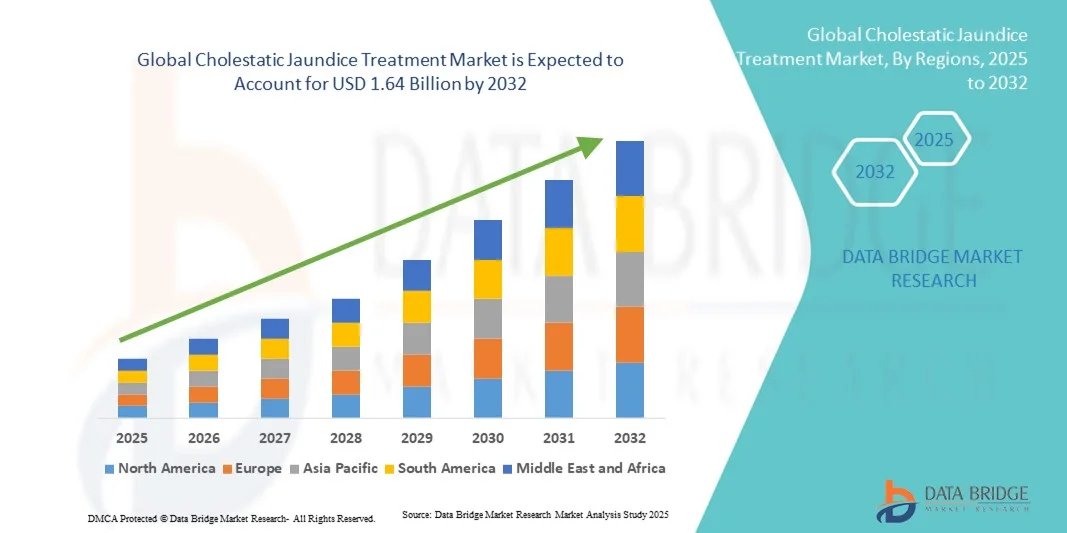
Cholestatic Jaundice Treatment Market Size
- The global cholestatic jaundice treatment market size was valued at USD 1.00 billion in 2024 and is expected to reach USD 1.64 billion by 2032, at a CAGR of 6.40% during the forecast period
- The market growth is largely fueled by the increasing prevalence of cholestatic liver disorders, rising awareness of liver health, and advancements in pharmacological therapies that improve bile flow and liver function
- Furthermore, growing investments in research and development, along with the expansion of specialized healthcare facilities, are enhancing the availability of effective treatment options, thereby driving market adoption and boosting overall industry growth
Cholestatic Jaundice Treatment Market Analysis
- Cholestatic jaundice treatments, including pharmacological therapies, bile acid supplements, and surgical interventions, are increasingly vital components of managing impaired bile flow and related liver disorders in both pediatric and adult populations due to their effectiveness in restoring liver function, reducing symptoms, and preventing long-term complications
- The escalating demand for cholestatic jaundice treatments is primarily fueled by the rising prevalence of liver disorders, growing awareness of liver health, and increasing adoption of advanced therapeutic options that improve patient outcomes
- North America dominated the cholestatic jaundice treatment market with the largest revenue share of 38.5% in 2024, characterized by advanced healthcare infrastructure, high patient awareness, and a strong presence of leading pharmaceutical and biotech companies, with the U.S. experiencing substantial growth due to innovations in bile acid therapies, targeted drug development, and specialized liver care centers
- Asia-Pacific is expected to be the fastest-growing region in the cholestatic jaundice treatment market during the forecast period, driven by increasing healthcare investment, rising prevalence of liver disorders, and growing access to advanced medical treatments in countries such as Japan, China, and South Korea
- Medication dominated the cholestatic jaundice treatment market with a market share of 45.3% in 2024, driven by their established efficacy, growing physician preference, and widespread availability of bile acid and supportive therapies
Report Scope and Cholestatic Jaundice Treatment Market Segmentation
|
Attributes |
Cholestatic Jaundice Treatment Key Market Insights |
|
Segments Covered |
|
|
Countries Covered |
North America
Europe
Asia-Pacific
Middle East and Africa
South America
|
|
Key Market Players |
|
|
Market Opportunities |
|
|
Value Added Data Infosets |
In addition to the insights on market scenarios such as market value, growth rate, segmentation, geographical coverage, and major players, the market reports curated by the Data Bridge Market Research also include in-depth expert analysis, pricing analysis, brand share analysis, consumer survey, demography analysis, supply chain analysis, value chain analysis, raw material/consumables overview, vendor selection criteria, PESTLE Analysis, Porter Analysis, and regulatory framework. |
Cholestatic Jaundice Treatment Market Trends
Advancements in Targeted Therapies and Personalized Medicine
- A significant and accelerating trend in the global cholestatic jaundice treatment market is the development of targeted bile acid therapies, gene-based interventions, and personalized treatment regimens that address both intrahepatic and extrahepatic cholestasis, improving patient outcomes
- For instance, In 2024, Ocaliva (ursodeoxycholic acid derivative) received expanded indications for rare cholestatic conditions, demonstrating the clinical impact of precision-targeted therapies
- Advanced therapies enable features such as optimized dosing based on patient genetics and improved symptom management, while reducing side effects. Instance: Some new bile acid modulators can adjust treatment intensity based on liver enzyme levels, enhancing therapeutic efficacy
- Integration of treatment regimens with digital health platforms facilitates continuous patient monitoring, adherence tracking, and real-time reporting of liver function, creating a unified approach to disease management
- This trend towards more effective, patient-specific, and technology-enabled therapies is reshaping physician and patient expectations for cholestatic jaundice care. Instance: Companies such as Intercept Pharmaceuticals are developing therapies that combine pharmacologic innovation with digital monitoring to optimize clinical outcomes
- The demand for advanced and personalized cholestatic jaundice treatments is growing rapidly across both pediatric and adult populations, as clinicians increasingly prioritize efficacy, safety, and long-term liver protection
Cholestatic Jaundice Treatment Market Dynamics
Driver
Rising Prevalence of Liver Disorders and Increased Awareness
- The increasing prevalence of cholestatic liver diseases, coupled with growing patient and physician awareness of liver health, is a significant driver for the heightened demand for effective treatments
- For Instance, In 2024, Intercept Pharmaceuticals reported expanded patient enrollment in clinical programs for primary biliary cholangitis, demonstrating growing treatment adoption
- As patients and healthcare providers recognize the risks of untreated cholestasis, therapies offering improved bile flow and symptom management are highly sought after
- Furthermore, advancements in diagnostic techniques, such as liver enzyme assays and imaging modalities, are making early detection and treatment more feasible, increasing market adoption
- Rising availability of specialized hepatology clinics and research initiatives are enabling broader access to treatment options, increasing uptake in both pediatric and adult populations
- Expansion of healthcare infrastructure and improved insurance coverage in emerging markets are enabling greater access to advanced therapies, creating growth opportunities. Instance: Countries such as Japan, China, and India are witnessing higher patient access due to expanded hepatology services
Restraint/Challenge
High Treatment Costs and Regulatory Hurdles
- The high cost of advanced cholestatic jaundice therapies, including bile acid modulators and targeted pharmacological agents, poses a significant barrier to broader market penetration
- For Instance, Some new therapies can cost tens of thousands of USD annually, limiting adoption in price-sensitive regions
- In addition, regulatory approvals for novel therapies require extensive clinical trials, delaying market entry and restricting patient access in certain geographies
- Addressing these challenges through patient assistance programs, strategic pricing models, and streamlined regulatory pathways is crucial for broader adoption
- Limited awareness of newer therapies in emerging regions, combined with restricted insurance coverage, can also slow treatment uptake despite clinical effectiveness
- Overcoming these hurdles through increased education, expanded reimbursement coverage, and cost-effective treatment strategies will be vital for sustained market growth
- Potential side effects and long-term safety concerns of some advanced therapies may hinder adoption, as clinicians carefully weigh risk-benefit profiles. Instance: Patients with pre-existing liver or kidney complications may require additional monitoring
Cholestatic Jaundice Treatment Market Scope
The market is segmented on the basis of type, treatment type, diagnosis, drug class, drug type, age, and end user.
- By Type
On the basis of type, the cholestatic jaundice treatment market is segmented into intrahepatic and extrahepatic cholestasis. The intrahepatic segment dominated the market in 2024 with a revenue share of 57.3%, driven by the higher prevalence of liver disorders such as primary biliary cholangitis, primary sclerosing cholangitis, and drug-induced cholestasis. Intrahepatic cholestasis often requires long-term pharmacological management and careful monitoring of liver function. Clinicians prefer established bile acid therapies for symptom control and improved liver outcomes. Early diagnosis using routine blood tests and advanced imaging facilitates timely treatment, further supporting the dominance of this segment. The segment is more common in adults, which contributes to higher market share. Awareness campaigns and specialized hepatology clinics in North America and Europe also reinforce the segment’s leading position.
The extrahepatic segment is expected to witness the fastest growth rate of 7.2% CAGR from 2025 to 2032, fueled by rising detection of bile duct obstructions, gallstones, and tumors requiring surgical intervention. Minimally invasive procedures and advanced imaging improve treatment outcomes, making management of extrahepatic cholestasis more accessible. Increased healthcare infrastructure and technological advancements in emerging markets support early intervention. Rising physician awareness and patient demand for procedural treatment also contribute to segment growth. The growth is further driven by increasing investment in hepatology-focused healthcare facilities.
- By Treatment Type
On the basis of treatment type, the cholestatic jaundice treatment market is segmented into medication, surgery, and others. The medication segment dominated the market with a share of 45.3% in 2024, driven by the widespread use of bile acid therapy, corticosteroids, and vitamin supplements. Medications are preferred for both intrahepatic and mild extrahepatic cholestasis, providing non-invasive symptom management and improved liver function. Physicians prioritize medication for children and adults due to lower complication risks and ease of administration. Ongoing R&D is expanding therapeutic options and improving patient adherence. Digital health platforms enhance the effectiveness of medication monitoring and follow-up care. Availability in hospitals and specialty clinics worldwide supports consistent adoption.
The surgery segment is expected to witness the fastest growth rate of 7.5% CAGR, driven by rising detection of bile duct obstructions, tumors, and gallstones requiring procedural intervention. Advancements in laparoscopic and minimally invasive techniques reduce recovery time and improve outcomes. The adoption of surgical treatment is increasing in emerging markets with expanding healthcare expenditure. Physician preference for minimally invasive approaches enhances patient acceptance. Awareness campaigns highlighting the benefits of early surgical intervention support market growth. Increased insurance coverage for surgical procedures is further boosting segment adoption.
- By Diagnosis
On the basis of diagnosis, the cholestatic jaundice treatment market is segmented into blood tests, imaging techniques, and liver biopsy. The blood tests segment dominated the market in 2024 with a share of 52.1%, owing to the non-invasive nature of tests such as liver function tests, bilirubin levels, and serum bile acids. Blood tests enable early detection of cholestasis and guide treatment decisions. They are widely available in hospitals and clinics, supporting timely intervention. Pediatric and adult populations both rely heavily on blood tests for initial and follow-up diagnosis. Routine monitoring through blood tests ensures long-term disease management. Developed regions with higher awareness and screening programs further reinforce segment dominance.
The liver biopsy segment is expected to witness the fastest growth rate of 8.0% CAGR, driven by rising adoption of histological analysis to confirm diagnosis and assess disease severity. Less invasive needle and image-guided biopsy techniques are increasing acceptance among clinicians and patients. Biopsy helps differentiate intrahepatic from extrahepatic cholestasis, improving treatment precision. Emerging markets with expanding hepatology centers are increasingly adopting biopsy for accurate diagnosis. Training programs and technological advancements are supporting biopsy adoption. The segment growth is strengthened by rising demand for personalized treatment planning.
- By Drug Class
On the basis of drug class, the cholestatic jaundice treatment market is segmented into corticosteroids, vitamin supplements, and bile acids. The bile acids segment dominated the market with a share of 48.7% in 2024, driven by the proven efficacy of ursodeoxycholic acid and obeticholic acid in improving bile flow and delaying disease progression. Physicians prefer bile acids for pediatric and adult patients due to their established clinical outcomes and safety profile. Patient adherence is high due to oral administration and compatibility with long-term therapy. R&D innovations and regulatory approvals are expanding the therapeutic pipeline. Hospitals and specialty clinics ensure wide availability, reinforcing dominance. Growing physician preference for bile acid therapy in rare cholestatic conditions also supports market leadership.
The vitamin supplements segment is expected to witness the fastest growth rate of 7.8% CAGR, fueled by rising awareness of the importance of vitamins A, D, E, and K in managing cholestasis-related deficiencies. Combination therapy integrating vitamins with primary treatment is becoming standard practice. Adoption is increasing in both inpatient and outpatient settings. Emerging markets with growing healthcare awareness are contributing to segment growth. Physicians are increasingly recommending vitamin supplementation to prevent long-term complications. Pediatric and neonatal patients particularly benefit from vitamin therapy, enhancing segment growth.
- By Drug Type
On the basis of drug type, the cholestatic jaundice treatment market is segmented into branded and generic. The branded segment dominated the market with a share of 54.2% in 2024, due to strong physician preference for well-studied, clinically validated products. Branded drugs include newer bile acid therapies and combination treatments with established safety profiles. Brand loyalty, clinical trial data, and marketing initiatives also support segment dominance. Adults and pediatric patients asuch as rely on branded drugs for severe and rare cholestatic conditions. Hospitals and specialty clinics stock branded therapies as first-line treatments. Regulatory approvals and ongoing post-marketing studies reinforce physician confidence in branded options.
The generic segment is expected to witness the fastest growth rate of 8.1% CAGR, driven by rising affordability, increasing insurance coverage in emerging markets, and enhanced patient access. Generics provide comparable efficacy to branded drugs while reducing treatment costs. Adoption is growing in hospitals, clinics, and developing regions. Rising government initiatives promoting generic usage further support market expansion. Increased physician confidence in generic safety profiles is contributing to adoption. Pediatric and adult patients benefit from cost-effective treatment access, strengthening segment growth.
- By Age
On the basis of age, the cholestatic jaundice treatment market is segmented into children and adults. The adult segment dominated the market with a share of 61.5% in 2024, driven by the higher incidence of chronic liver diseases, drug-induced cholestasis, and age-related bile flow disorders. Adults often require long-term medication and monitoring, contributing to sustained demand. Advanced therapies and specialized hepatology clinics reinforce the dominance of adults. Awareness campaigns and routine screenings improve treatment uptake. Hospital and clinic adoption further supports segment growth. Adult-focused treatment regimens drive continuous market expansion.
The children segment is expected to witness the fastest growth rate of 7.9% CAGR, fueled by rising awareness of pediatric cholestatic conditions such as biliary atresia, neonatal hepatitis, and inherited metabolic disorders. Early diagnosis and supportive care improve treatment outcomes. Pediatric hepatology centers are expanding services. Improved access to medications and vitamins supports growth. Parents and caregivers are increasingly seeking specialized treatment options. Developed regions show higher adoption of pediatric therapies, accelerating market expansion.
- By End User
On the basis of end user, the cholestatic jaundice treatment market is segmented into hospitals, specialty clinics, and others. The hospitals segment dominated the market in 2024 with a share of 56.8%, owing to comprehensive diagnostic facilities, access to advanced medications, and the capacity to manage complex cholestatic cases. Hospitals provide multidisciplinary care and long-term monitoring for both pediatric and adult patients. Large hospitals facilitate clinical trials and adoption of newer therapies. Access to digital health monitoring supports patient adherence. Hospital-based awareness programs reinforce market leadership. Widespread hospital infrastructure ensures treatment availability across regions.
The specialty clinics segment is expected to witness the fastest growth rate of 8.3% CAGR, driven by rising hepatology-focused centers, increasing outpatient management of cholestatic conditions, and improved access to advanced pharmacological therapies. Clinics offer personalized treatment plans for pediatric and adult patients. Adoption of digital health platforms supports monitoring and adherence. Emerging markets are witnessing expansion of specialty clinics. Physician expertise and patient preference for specialized care drive segment growth. Insurance coverage and healthcare initiatives in some regions further support adoption.
Cholestatic Jaundice Treatment Market Regional Analysis
- North America dominated the cholestatic jaundice treatment market with the largest revenue share of 38.5% in 2024, characterized by advanced healthcare infrastructure, high patient awareness, and a strong presence of leading pharmaceutical and biotech companies
- Patients and healthcare providers in the region highly value the availability of advanced pharmacological therapies, bile acid supplements, and specialized hepatology clinics, which facilitate timely diagnosis and effective disease management
- This widespread adoption is further supported by the presence of leading pharmaceutical and biotech companies, high healthcare expenditure, and strong government initiatives for liver health awareness, establishing North America as a key market for both pediatric and adult cholestatic jaundice treatment
U.S. Cholestatic Jaundice Treatment Market Insight
The U.S. cholestatic jaundice treatment market captured the largest revenue share in 2024 within North America, fueled by the high prevalence of liver disorders and advanced healthcare infrastructure. Patients and healthcare providers increasingly prioritize timely diagnosis and effective management through pharmacological therapies, bile acid supplements, and specialized hepatology clinics. The growing adoption of personalized medicine, along with digital health monitoring for liver function, further propels market growth. Moreover, government initiatives and awareness campaigns for liver health are significantly contributing to the expansion of treatment adoption. The U.S. also benefits from strong presence of leading pharmaceutical and biotech companies, enhancing patient access to advanced therapies. Rising insurance coverage and improved outpatient care facilities are further supporting the market’s growth.
Europe Cholestatic Jaundice Treatment Market Insight
The Europe cholestatic jaundice treatment market is projected to expand at a substantial CAGR throughout the forecast period, primarily driven by advanced healthcare systems, increasing liver disease prevalence, and rising patient awareness. Urbanization, improved diagnostic infrastructure, and access to specialized hepatology clinics are fostering adoption of effective therapies. European patients value the convenience, safety, and efficacy of bile acid therapies and supportive medications. The region is witnessing growth across hospitals, specialty clinics, and outpatient care centers. Initiatives promoting early diagnosis and liver health education are enhancing market penetration. Ongoing clinical research and approvals for novel therapies further contribute to market expansion.
U.K. Cholestatic Jaundice Treatment Market Insight
The U.K. cholestatic jaundice treatment market is anticipated to grow at a noteworthy CAGR during the forecast period, driven by rising awareness of liver disorders and the increasing need for advanced therapeutic options. Concerns regarding complications from untreated cholestasis are encouraging patients and physicians to adopt pharmacological and supportive treatments. The U.K.’s robust healthcare infrastructure, combined with growing liver disease screening programs, is expected to continue to stimulate market growth. Increased focus on patient-centric care and the integration of digital health monitoring platforms are supporting treatment adherence. Government-led health initiatives and specialized clinics are further enhancing adoption. The growing adult and pediatric patient population also contributes to market expansion.
Germany Cholestatic Jaundice Treatment Market Insight
The Germany cholestatic jaundice treatment market is expected to expand at a considerable CAGR during the forecast period, fueled by increasing patient awareness and the demand for advanced therapies. Germany’s well-developed healthcare infrastructure and focus on medical innovation promote the adoption of bile acid therapy, corticosteroids, and vitamin supplements. Hospitals and specialty clinics are increasingly offering comprehensive cholestasis management programs. Integration of digital health solutions with treatment monitoring is becoming more prevalent. A strong emphasis on early diagnosis and personalized therapy aligns with local patient expectations. Growing prevalence of both pediatric and adult cholestatic disorders supports market growth.
Asia-Pacific Cholestatic Jaundice Treatment Market Insight
The Asia-Pacific cholestatic jaundice treatment market is poised to grow at the fastest CAGR during the forecast period of 2025 to 2032, driven by rising liver disease prevalence, expanding healthcare infrastructure, and increasing patient awareness in countries such as China, Japan, and India. The growing inclination towards advanced therapies, including bile acid modulators and supportive care, is driving market adoption. Government initiatives promoting liver health and improved diagnostic facilities are further supporting treatment access. Asia-Pacific is witnessing expansion of hospitals, specialty clinics, and outpatient services focused on liver disease management. Rising disposable incomes and technological adoption are enabling better access to advanced therapies. In addition, the region’s growing research and clinical trial activities contribute to accelerated market growth.
Japan Cholestatic Jaundice Treatment Market Insight
The Japan cholestatic jaundice treatment market is gaining momentum due to high awareness of liver disorders, advanced medical infrastructure, and a strong focus on preventive care. Patients prioritize safe, effective therapies and timely diagnosis, while hospitals and hepatology centers offer comprehensive management programs. The integration of digital monitoring systems with treatment regimens supports adherence and outcome tracking. Japan’s aging population further drives demand for convenient and long-term liver disease management solutions. Government health initiatives and active clinical research enhance access to advanced treatments. Both adult and pediatric patient populations are contributing to market expansion.
India Cholestatic Jaundice Treatment Market Insight
The India cholestatic jaundice treatment market accounted for the largest market revenue share in Asia-Pacific in 2024, attributed to rising liver disease prevalence, expanding healthcare infrastructure, and growing awareness among patients. India has a rapidly increasing patient base seeking advanced therapies such as bile acids, corticosteroids, and vitamin supplementation. The push towards improving healthcare access and specialty hepatology clinics supports market growth. Affordable treatment options, coupled with domestic pharmaceutical production, are further propelling adoption. Government initiatives promoting liver health and early diagnosis programs enhance treatment uptake. Rapid urbanization and increasing disposable income are also key factors contributing to market expansion.
Cholestatic Jaundice Treatment Market Share
The Cholestatic Jaundice Treatment industry is primarily led by well-established companies, including:
- Mirum Pharmaceuticals, Inc. (U.S.)
- Intercept Pharmaceuticals, Inc. (U.S.)
- Gilead Sciences, Inc. (U.S.)
- Ipsen Pharma (France)
- Genfit (France)
- Galmed Pharmaceuticals (Israel)
- Syngene International Limited. (India)
- Aligos Therapeutics. (U.S.)
- Arbutus Biopharma (Canada)
- Hepion Pharmaceuticals, Inc. (U.S.)
- 89bio, Inc. (U.S.)
- Liminal BioSciences Inc. (Canada)
- Metacrine, Inc. (U.S.)
- Promethera Biosciences (Belgium)
- Ocelot Bio, Inc. (U.S.)
- Summit Clinical Research (U.S.)
- Phathom Pharmaceuticals, Inc. (U.S.)
- Viking Therapeutics, Inc. (U.S.)
- Vifor Pharma (Switzerland)
What are the Recent Developments in Global Cholestatic Jaundice Treatment Market?
- In June 2025, the U.S. Food and Drug Administration (FDA) accepted a New Drug Application (NDA) for linerixibat, an investigational medication aimed at treating cholestatic pruritus associated with primary biliary cholangitis (PBC). This acceptance marks a significant step toward providing a new treatment option for patients suffering from this challenging condition
- In May 2025, Gilead Sciences presented new data at the European Association for the Study of the Liver (EASL) conference, showcasing that Livdelzi (seladelpar) is effective and generally well-tolerated for the treatment of primary biliary cholangitis (PBC). The data indicated that Livdelzi provides a sustained biochemical response in adults with PBC, regardless of their prior treatment history, offering a promising therapeutic option for this patient population
- In April 2025, the U.S. Food and Drug Administration (FDA) approved a new tablet formulation of maralixibat (Livmarli) for the treatment of cholestatic pruritus in patients with Alagille syndrome and progressive familial intrahepatic cholestasis (PFIC). This approval expands the therapeutic options for managing pruritus in these patient populations
- In April 2025, a retrospective review published in The Journal of Pediatrics explored the genetic causes of neonatal cholestasis. The study provides insights into the genetic underpinnings of the condition, which may inform future diagnostic and therapeutic approaches
- In July 2024, the European Commission granted marketing authorization for maralixibat (Livmarli) for the treatment of cholestatic pruritus in patients with PFIC aged 3 months and older. This authorization provides a new treatment option for managing pruritus in young children with PFIC in the European Union

- Interactive Data Analysis Dashboard
- Company Analysis Dashboard for high growth potential opportunities
- Research Analyst Access for customization & queries
- Competitor Analysis with Interactive dashboard
- Latest News, Updates & Trend analysis
- Harness the Power of Benchmark Analysis for Comprehensive Competitor Tracking
Data collection and base year analysis are done using data collection modules with large sample sizes. The stage includes obtaining market information or related data through various sources and strategies. It includes examining and planning all the data acquired from the past in advance. It likewise envelops the examination of information inconsistencies seen across different information sources. The market data is analysed and estimated using market statistical and coherent models. Also, market share analysis and key trend analysis are the major success factors in the market report. To know more, please request an analyst call or drop down your inquiry.
The key research methodology used by DBMR research team is data triangulation which involves data mining, analysis of the impact of data variables on the market and primary (industry expert) validation. Data models include Vendor Positioning Grid, Market Time Line Analysis, Market Overview and Guide, Company Positioning Grid, Patent Analysis, Pricing Analysis, Company Market Share Analysis, Standards of Measurement, Global versus Regional and Vendor Share Analysis. To know more about the research methodology, drop in an inquiry to speak to our industry experts.
Data Bridge Market Research is a leader in advanced formative research. We take pride in servicing our existing and new customers with data and analysis that match and suits their goal. The report can be customized to include price trend analysis of target brands understanding the market for additional countries (ask for the list of countries), clinical trial results data, literature review, refurbished market and product base analysis. Market analysis of target competitors can be analyzed from technology-based analysis to market portfolio strategies. We can add as many competitors that you require data about in the format and data style you are looking for. Our team of analysts can also provide you data in crude raw excel files pivot tables (Fact book) or can assist you in creating presentations from the data sets available in the report.












