


What is the Chorioamnionitis Treatment Market Size and Growth Rate?
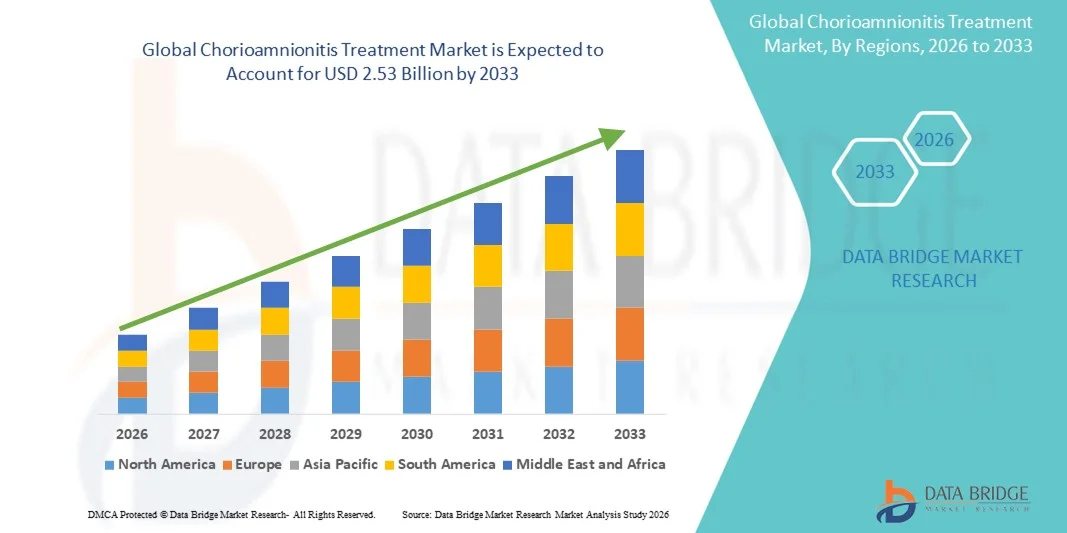
- The global chorioamnionitis treatment market size was valued at USD 1.68 billion in 2025 and is expected to reach USD 2.53 billion by 2033, at a CAGR of 5.30% during the forecast period
- The market growth is largely fueled by increasing awareness of maternal and fetal health, advancements in prenatal care, and the rising prevalence of pregnancy-related infections, which are driving the demand for effective Chorioamnionitis Treatment solutions
- Furthermore, growing investment in women’s healthcare, improved access to hospitals and specialized clinics, and the development of novel antibiotic and anti-inflammatory therapies are significantly contributing to the market’s expansion, thereby accelerating the uptake of Chorioamnionitis Treatment products and boosting the overall industry growth
What are the Major Takeaways of Chorioamnionitis Treatment Market?
- Chorioamnionitis Treatment, offering effective management and therapeutic interventions for maternal infections, is increasingly vital in modern prenatal care and obstetric practices due to its role in preventing complications, safeguarding maternal and fetal health, and improving clinical outcomes
- The escalating demand for chorioamnionitis treatment is primarily fueled by growing awareness of maternal health, advancements in prenatal diagnostics, and a rising preference for evidence-based and timely therapeutic interventions
- North America dominated the chorioamnionitis treatment market with the largest revenue share of 39.5% in 2025, supported by well-established healthcare infrastructure, widespread access to advanced prenatal care, high awareness of maternal and fetal health, and the presence of leading pharmaceutical companies offering effective antibiotic and anti-inflammatory therapies
- Asia-Pacific is expected to be the fastest growing region in the chorioamnionitis treatment market during the forecast period, projected to register a CAGR of 22.8%, driven by increasing urbanization, improving healthcare facilities, rising awareness of maternal health, expanding government initiatives, and growing adoption of advanced treatment options in countries such as China and India
- The Intravenous segment accounted for the largest revenue share of 60.2% in 2025, because immediate and efficient drug delivery is essential in managing chorioamnionitis
Report Scope and Chorioamnionitis Treatment Market Segmentation
|
Attributes |
Chorioamnionitis Treatment Key Market Insights |
|
Segments Covered |
|
|
Countries Covered |
North America
Europe
Asia-Pacific
Middle East and Africa
South America
|
|
Key Market Players |
• Pfizer Inc. (U.S.) |
|
Market Opportunities |
|
|
Value Added Data Infosets |
In addition to the insights on market scenarios such as market value, growth rate, segmentation, geographical coverage, and major players, the market reports curated by the Data Bridge Market Research also include in-depth expert analysis, patient epidemiology, pipeline analysis, pricing analysis, and regulatory framework. |
What is the Key Trend in the Chorioamnionitis Treatment Market?
Growing Adoption of Standardized Treatment Protocols and Advanced Diagnostics
- A significant trend in the chorioamnionitis treatment market is the increasing adoption of standardized treatment protocols across hospitals and clinics globally
- These protocols help ensure timely antibiotic administration and consistent patient management, reducing variability in treatment outcomes
- For instance, In addition, advancements in diagnostic tools such as amniotic fluid analysis, rapid PCR-based pathogen detection, and non-invasive imaging are enhancing early diagnosis rates
- Healthcare facilities are increasingly integrating these diagnostics into routine prenatal care, enabling targeted and effective therapy
- Research studies published between 2021 and 2025 emphasize the importance of individualized treatment based on gestational age and infection severity, shaping market practices
- The trend toward using broad-spectrum and combination antibiotic regimens to prevent neonatal complications is becoming more widespread
- Training programs for obstetricians and midwives to identify early symptoms of intra-amniotic infection are also influencing market demand
- Collaboration between pharmaceutical companies and maternal health organizations to improve protocol adherence is increasingly observed
- The adoption of telemedicine for monitoring high-risk pregnancies has facilitated timely intervention, further driving treatment uptake
- Overall, standardized care practices and improved diagnostics are leading to more effective treatment delivery and better patient outcomes, creating a steady growth trend in the market
Chorioamnionitis Treatment Market Dynamics
Driver
Rising Prevalence of Maternal Infections and Growing Awareness of Maternal Health
- The increasing prevalence of maternal infections during pregnancy, coupled with rising awareness about maternal and neonatal health, is a key driver for the chorioamnionitis treatment market
- Healthcare providers and pregnant women are becoming more proactive in diagnosing and treating intra-amniotic infections to prevent complications such as preterm birth, neonatal sepsis, and maternal morbidity
- For instance, in 2024, several hospitals in Europe and North America updated clinical protocols to emphasize early screening and rapid antibiotic therapy for suspected chorioamnionitis cases
- The adoption of evidence-based guidelines and prenatal care programs is encouraging timely treatment initiation, directly contributing to the growth of treatment demand
- Awareness campaigns by organizations like the World Health Organization (WHO) and local health ministries have increased patient education on recognizing early symptoms, further supporting market expansion
- Access to advanced healthcare facilities and a growing number of maternal care centers also facilitate timely treatment, which in turn drives the overall market
- Rising investments in maternal healthcare infrastructure in developing regions are expected to increase accessibility to effective chorioamnionitis therapies
- Increased focus on reducing preterm birth rates and maternal complications has prompted clinicians to prioritize treatment adherence, further supporting the market
- Clinicians are increasingly using combination therapies and updated antibiotic protocols to improve patient outcomes, fueling demand
- Growing partnerships between pharmaceutical companies and healthcare institutions for training programs on maternal infections strengthen the treatment adoption
Restraint/Challenge
Antibiotic Resistance and Limited Access in Emerging Regions
- One of the key challenges restricting market growth is the rising concern of antibiotic resistance among pathogens causing chorioamnionitis
- Resistance to common antibiotics such as ampicillin, clindamycin, and gentamicin has been reported in certain regions, complicating treatment regimens
- For instance, in 2023, a study highlighted increasing resistance in hospital-acquired infections related to intra-amniotic infections, emphasizing the need for alternative therapies
- High treatment costs and limited availability of advanced therapeutics in developing countries hinder widespread adoption
- Healthcare disparities, including insufficient prenatal screening and limited maternal care infrastructure, pose significant barriers
- Lack of awareness among patients about early symptoms and the importance of treatment adherence can lead to delayed therapy, reducing effectiveness
- Monitoring and managing adverse effects of antibiotic therapy in pregnant women require specialized care, which may not be accessible everywhere
- Inadequate regulatory approvals for newer combination therapies in certain regions further restrict market expansion
- Addressing these challenges requires improved access to healthcare facilities, patient education, and development of cost-effective and resistant-proof therapies
- While global efforts are ongoing to reduce maternal and neonatal complications, these barriers continue to restrain rapid market growth
How is the Chorioamnionitis Treatment Market Segmented?
The market is segmented on the basis of treatment, diagnosis, dosage, route of administration, end-users, and distribution channel.
- By Treatment
On the basis of treatment, the Chorioamnionitis Treatment market is segmented into Antibiotics, Surgery, and Others. The Antibiotics segment dominated the largest market revenue share of 62.8% in 2025, primarily due to the fact that chorioamnionitis is most commonly caused by bacterial infections, making antibiotics the first-line treatment in most healthcare settings. Broad-spectrum antibiotics such as ampicillin and gentamicin are widely prescribed to control infection and prevent complications for both mother and fetus. Increased awareness among healthcare professionals regarding early-stage treatment has further driven the use of antibiotics. Hospitals and clinics prefer antibiotic therapy due to its high success rate, affordability, and rapid action. In developing regions, standard clinical protocols also strongly support antibiotic administration as the primary treatment. In addition, the rise in institutional deliveries and availability of better diagnostic facilities has improved timely antibiotic intervention. Growing investments in maternal healthcare further support this segment's dominance. The proven clinical effectiveness and easy availability of antibiotics ensure continued preference in both developed and emerging markets.
The Surgery segment is expected to witness the fastest CAGR of 8.9% from 2026 to 2033, due to the increasing number of severe and complicated chorioamnionitis cases that require immediate surgical intervention. In advanced healthcare systems, timely delivery through induced labor or cesarean section is becoming a preferred option to reduce maternal and fetal risk. The rising availability of skilled obstetric surgeons and improved surgical infrastructures in hospitals further supports this growth. Increased maternal age and high-risk pregnancies have also contributed to the need for surgical procedures. With advancements in surgical technology and post-operative care, outcomes have improved significantly. This has increased confidence in surgical management for critical cases. In addition, growing awareness of long-term complications linked to delayed treatment is encouraging early surgical intervention when required. These combined factors accelerate the growth of the surgery segment during the forecast period.
- By Diagnosis
On the basis of diagnosis, the Chorioamnionitis Treatment market is segmented into Blood Tests, Amniotic Fluid Testing, Ultrasound, and Others. The Blood Tests segment held the largest market revenue share of 49.6% in 2025, as blood testing is the most commonly used and accessible method for identifying infection and inflammation in pregnant women. Elevated white blood cell count and inflammatory markers are key indicators used in the early diagnosis of chorioamnionitis. Blood tests are cost-effective, quick, and can be conducted in almost all healthcare facilities, including small clinics and rural centers. Physicians rely heavily on this method due to its reliability and convenience. The increasing number of routine prenatal checkups has led to a higher number of diagnostic blood tests being performed. Technological advancements in laboratory systems have enhanced diagnostic accuracy. Strong government focus on maternal health screening programs has further boosted adoption. This wide accessibility and reliability support the continued dominance of blood tests in the market.
The Amniotic Fluid Testing segment is projected to grow at the fastest CAGR of 9.4% from 2026 to 2033, owing to its high precision in detecting bacterial infection directly from the amniotic environment. This method is increasingly preferred in complicated and high-risk cases where clarification is needed. Although it is an invasive procedure, growing improvements in safety and accuracy have increased clinician confidence. Advanced hospitals now use this method to confirm diagnosis in uncertain cases. Rising availability of skilled professionals to perform amniocentesis is also driving growth. With continuous development of safer sampling techniques and better laboratory screening, this segment is expected to gain rapid adoption. An increase in research funding aimed at improving prenatal diagnostics is further accelerating market growth. As maternal-fetal monitoring improves worldwide, demand for accurate diagnostic methods like amniotic fluid testing continues to rise.
- By Dosage
On the basis of dosage, the Chorioamnionitis Treatment market is segmented into Tablet, Injection, and Others. The Injection segment dominated the market with a revenue share of 57.3% in 2025, as injectable antibiotics provide faster therapeutic action and higher bioavailability compared to oral dosage forms. In most hospital settings, intravenous administration is the standard practice for treating severe maternal infections. Injectables ensure immediate drug absorption, which is crucial in emergency cases involving the fetus and mother. Healthcare professionals prefer injectables due to controlled dosing and rapid infection control. The increasing hospitalization rate of pregnant women for close monitoring further strengthens this segment. Government and private hospitals worldwide stock essential injectable antibiotics as part of maternal care protocols. In addition, injectables reduce the risk of treatment failure caused by digestive issues in oral administration. All these factors contribute to the dominance of the injection dosage form.
The Tablet segment is expected to witness the fastest CAGR of 7.6% from 2026 to 2033, due to its convenience and increasing use in mild or early-stage infections. Tablets are easier to administer and are more suitable for outpatient and home-based treatment after hospital discharge. Improved formulation technology has increased the effectiveness of oral antibiotics. Rising preference for non-invasive treatment methods is also encouraging tablet use. In rural and resource-limited areas, tablets are more affordable and accessible compared to injections. Increased prenatal healthcare awareness is leading to earlier detection and easier oral interventions. Better patient compliance with tablet medications also supports this growth. These trends make tablets a rapidly growing dosage form in the global market.
- By Route of Administration
On the basis of route of administration, the Chorioamnionitis Treatment market is segmented into Oral, Intravenous, and Others. The Intravenous segment accounted for the largest revenue share of 60.2% in 2025, because immediate and efficient drug delivery is essential in managing chorioamnionitis. IV administration allows rapid control of infection and helps prevent the spread to surrounding tissues or the fetus. Most hospitals follow IV protocols for severe maternal infections. It offers precise dosing and consistent drug concentration in the bloodstream. The increasing number of hospital admissions for pregnancy complications also supports its widespread usage. IV therapy is strongly recommended in global clinical guidelines for chorioamnionitis. Furthermore, the presence of trained healthcare professionals in hospitals has fueled the dominance of intravenous administration. This route remains the gold standard in critical cases.
The Oral segment is projected to grow at the fastest CAGR of 7.9% from 2026 to 2033, due to the rising demand for convenient and less invasive treatment approaches. Oral antibiotics are increasingly prescribed for follow-up care after initial IV treatment. Growing home-care trends and outpatient treatment models support this growth. Pharmaceutical companies are developing more effective oral formulations specifically for maternal infections. Improved awareness among pregnant women about early signs of infection leads to faster oral treatment. Increased healthcare access in remote regions makes oral medication preferable. Patient comfort and ease of use further enhance the popularity of this route. As a result, the oral route is gaining significant momentum worldwide.
- By End-Users
On the basis of end-users, the Chorioamnionitis Treatment market is segmented into Clinic, Hospital, and Others. The Hospital segment dominated the market with a share of 68.5% in 2025, due to the availability of advanced medical infrastructure and trained specialists for handling complicated childbirth cases. Most chorioamnionitis cases require immediate medical attention and continuous monitoring, which can only be provided in hospitals. Hospitals are also equipped with laboratories, operation theaters, and ICUs for emergency treatment. The increasing number of institutional deliveries globally strengthens this segment further. Government programs encouraging safe hospital births contribute significantly to patient inflow. High-risk pregnancy management is mostly handled by hospitals. In addition, hospitals have access to IV medications and surgical interventions. These factors make hospitals the dominant end-user in the market.
The Clinic segment is anticipated to register the fastest CAGR of 8.3% from 2026 to 2033, as the number of specialized maternity clinics continues to increase. Clinics offer faster consultation and early-stage diagnosis, which is crucial for infection management. Many clinics are now equipped with modern diagnostic tools. Growing preference for private and community clinics in urban and semi-urban regions is driving this growth. Clinics also provide cost-effective treatment options for mild cases. Increased focus on preventive prenatal care further boosts clinic visits. Expansion of healthcare facilities in rural areas supports this segment. These factors contribute to the rapid growth of clinics as a key end-user.
- By Distribution Channel
On the basis of distribution channel, the Chorioamnionitis Treatment market is segmented into Hospital Pharmacy, Retail Pharmacy, and Online Pharmacy. The Hospital Pharmacy segment dominated the market in 2025 with a share of 55.9%, as most patients receive treatment while admitted to hospitals. Immediate availability of injectable antibiotics in hospital pharmacies enables faster response to emergency cases. Doctors and nurses directly depend on hospital pharmacies for continuous drug supply. The centralized distribution system in hospitals ensures safety and dosage accuracy. Increasing hospital infrastructure development contributes to higher consumption of medicines through this channel. Moreover, hospital pharmacies follow strict quality and safety standards, which increases patient trust. This strong dependency of inpatient care on hospital pharmacies solidifies their leading position.
The Online Pharmacy segment is expected to witness the fastest CAGR of 10.1% from 2026 to 2033, driven by increasing digital healthcare adoption and internet penetration. Pregnant women and caregivers now prefer doorstep delivery of medicines for convenience. Online platforms provide easy comparison of prices and improved accessibility in remote areas. The rise of e-prescriptions and teleconsultation is further fueling online medicine sales. Attractive discounts and subscription models make online pharmacies more appealing. Growing smartphone usage among consumers has boosted demand for digital pharmacy services. With increasing awareness and trust in online healthcare services, this segment is likely to experience rapid growth in the coming years.
Chorioamnionitis Treatment Market Regional Analysis
- North America dominated the chorioamnionitis treatment market with the largest revenue share of 39.5% in 2025
- Supported by a well-established healthcare infrastructure, widespread access to advanced prenatal care, high awareness of maternal and fetal health, and the strong presence of leading pharmaceutical companies offering effective antibiotic and anti-inflammatory therapies
- The region benefits from early diagnosis, routine prenatal screening, and rapid initiation of treatment in hospitals and maternity care centers, which continues to drive consistent demand for chorioamnionitis therapies
U.S. Chorioamnionitis Treatment Market Insight
The U.S. chorioamnionitis treatment market accounted for the largest share within North America in 2025, driven by high healthcare spending, advanced diagnostic facilities, increasing awareness of pregnancy-related infections, and strong adoption of evidence-based antibiotic treatment protocols in hospitals and clinics.
Europe Chorioamnionitis Treatment Market Insight
The Europe chorioamnionitis treatment market is expected to expand at a steady CAGR during the forecast period, supported by strong maternal healthcare systems, improved access to prenatal services, and growing awareness of infection management during pregnancy. Increased hospital admissions for supervised deliveries is also contributing to market growth.
U.K. Chorioamnionitis Treatment Market Insight
The U.K. chorioamnionitis treatment market is projected to grow at a notable CAGR, driven by rising awareness of maternal complications, improved antenatal monitoring, and strong government support for women’s healthcare programs. Hospitals and maternity clinics remain the primary users of treatment solutions across the country.
Germany Chorioamnionitis Treatment Market Insight
The Germany chorioamnionitis treatment market is anticipated to witness considerable growth, supported by a well-developed healthcare infrastructure, access to advanced diagnostics, and strong focus on maternal and fetal safety. The availability of broad-spectrum antibiotics and advanced hospital care continues to support market expansion.
Asia-Pacific Chorioamnionitis Treatment Market Insight
The Asia-Pacific chorioamnionitis treatment market is expected to be the fastest-growing region, projected to register a CAGR of 22.8% during the forecast period. This growth is driven by increasing urbanization, improving healthcare facilities, rising awareness of maternal health, expanding government initiatives, and the growing adoption of advanced treatment options in countries such as China and India.
Japan Chorioamnionitis Treatment Market Insight
The Japan chorioamnionitis treatment market is gaining steady momentum due to its advanced healthcare system, strong focus on maternal care, and widespread availability of hospital-based treatment. Increased screening during pregnancy and strict clinical guidelines for infection control are supporting market growth.
China Chorioamnionitis Treatment Market Insight
The China chorioamnionitis treatment market is experiencing steady growth due to expanding maternal healthcare infrastructure, rising awareness of prenatal infections, and increasing access to hospital-based diagnostic and treatment facilities. Government initiatives aimed at improving maternal and neonatal health, along with the growing availability of antibiotics and advanced diagnostic methods, are supporting market development.
Which are the Top Companies in Chorioamnionitis Treatment Market?
The Chorioamnionitis Treatment industry is primarily led by well-established companies, including:
• Pfizer Inc. (U.S.)
• GlaxoSmithKline plc (U.K.)
• Sanofi S.A. (France)
• Merck & Co., Inc. (U.S.)
• Johnson & Johnson (U.S.)
• Abbott (U.S.)
• F. Hoffmann-La Roche Ltd (Switzerland)
• Bayer AG (Germany)
• Novartis AG (Switzerland)
• AstraZeneca plc (U.K.)
• Cipla Limited (India)
• Sun Pharmaceutical Industries Ltd. (India)
• Aurobindo Pharma (India)
• Dr. Reddy’s Laboratories (India)
• Teva Pharmaceutical Industries Ltd. (Israel)
• Takeda Pharmaceutical Company (Japan)
Latest Developments in Global Chorioamnionitis Treatment Market
- In September 2024, a large academic medical center (Vanderbilt University Medical Center) implemented updated intra-amniotic infection (IAI) antibiotic guidelines using an electronic clinical decision-support tool (eCDST) and multidisciplinary education; after implementation the hospital shifted empiric therapy (increasing piperacillin-tazobactam use while reducing older regimens), with no adverse signals in length of stay or readmission — demonstrating that guideline updates + eCDSTs can be safely operationalized to optimize empiric antibiotic choice for chorioamnionitis
- In June 2024, proteomics research identified plasma protein signatures associated with intra-amniotic inflammation or microbial invasion of the amniotic cavity (MIAC) in women with preterm labor; such proteomic biomarker panels are being evaluated as less-invasive blood tests that could help differentiate true intra-amniotic infection from sterile inflammation and guide targeted antibiotic use
- In November 2023, comprehensive reviews and clinical updates consolidated contemporary practice: amoxicillin/ampicillin plus once-daily gentamicin remains a commonly recommended first-line empiric regimen for clinical chorioamnionitis in laboring women, but experts emphasized there is limited high-quality evidence to define a single “best” antimicrobial regimen and called for stewardship-aware, context-specific choices. These reviews also stressed the importance of balancing maternal and neonatal safety with rising resistance patterns

- Interactive Data Analysis Dashboard
- Company Analysis Dashboard for high growth potential opportunities
- Research Analyst Access for customization & queries
- Competitor Analysis with Interactive dashboard
- Latest News, Updates & Trend analysis
- Harness the Power of Benchmark Analysis for Comprehensive Competitor Tracking
Data collection and base year analysis are done using data collection modules with large sample sizes. The stage includes obtaining market information or related data through various sources and strategies. It includes examining and planning all the data acquired from the past in advance. It likewise envelops the examination of information inconsistencies seen across different information sources. The market data is analysed and estimated using market statistical and coherent models. Also, market share analysis and key trend analysis are the major success factors in the market report. To know more, please request an analyst call or drop down your inquiry.
The key research methodology used by DBMR research team is data triangulation which involves data mining, analysis of the impact of data variables on the market and primary (industry expert) validation. Data models include Vendor Positioning Grid, Market Time Line Analysis, Market Overview and Guide, Company Positioning Grid, Patent Analysis, Pricing Analysis, Company Market Share Analysis, Standards of Measurement, Global versus Regional and Vendor Share Analysis. To know more about the research methodology, drop in an inquiry to speak to our industry experts.
Data Bridge Market Research is a leader in advanced formative research. We take pride in servicing our existing and new customers with data and analysis that match and suits their goal. The report can be customized to include price trend analysis of target brands understanding the market for additional countries (ask for the list of countries), clinical trial results data, literature review, refurbished market and product base analysis. Market analysis of target competitors can be analyzed from technology-based analysis to market portfolio strategies. We can add as many competitors that you require data about in the format and data style you are looking for. Our team of analysts can also provide you data in crude raw excel files pivot tables (Fact book) or can assist you in creating presentations from the data sets available in the report.












