


Chromhidrosis Market Overview
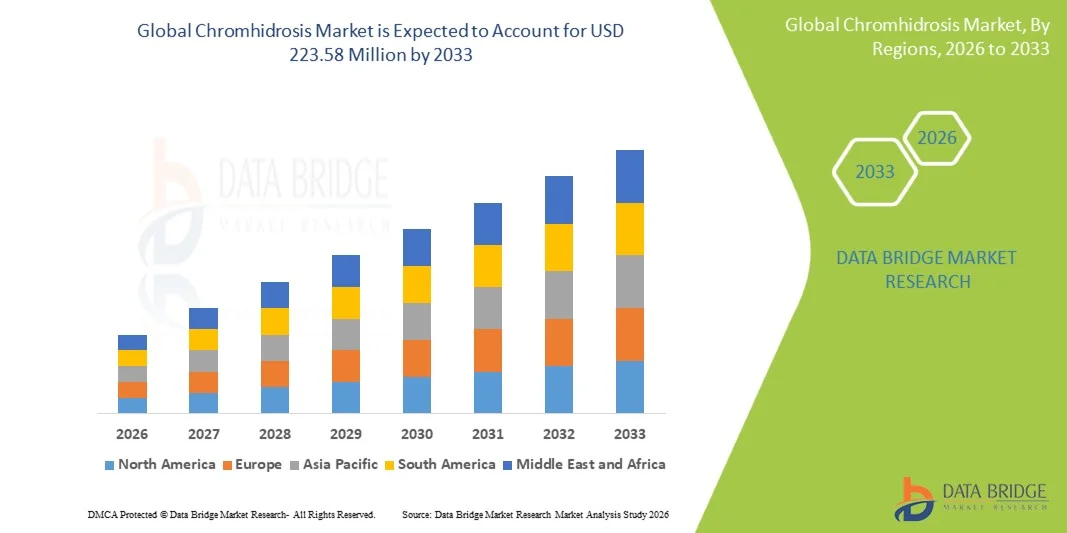
The Chromhidrosis Market was valued at USD 176.5 Million in 2025 and is projected to reach USD 223.58 Million by 2033, growing at a CAGR of 3.00% from 2026 to 2033. The Chromhidrosis Market is witnessing gradual growth, driven by increasing awareness of rare dermatological conditions, rising demand for advanced cosmetic and therapeutic skin treatments, and continuous improvements in dermatology diagnostics and clinical care.
Growing recognition of chromhidrosis as a distinct condition associated with apocrine gland dysfunction, along with its psychological and social impact due to visible colored sweat, is encouraging more patients to seek medical consultation and treatment. Expanding access to dermatology services, increasing healthcare expenditure, and improved diagnostic capabilities are enabling earlier and more accurate identification of cases that were previously underreported or misdiagnosed. In addition, advancements in treatment approaches such as topical therapies, capsaicin-based formulations, botulinum toxin injections, and laser-based interventions are supporting better symptom management and patient outcomes. The rising overlap of chromhidrosis with related conditions like hyperhidrosis and bromhidrosis, along with growing interest in aesthetic dermatology and quality-of-life–focused care, is further contributing to market expansion across both developed and emerging healthcare systems.
Key Market Trends & Insights
- North America dominated the Chromhidrosis Market with the largest revenue share of 36.42% in 2025, supported by advanced dermatology infrastructure, high awareness of rare skin disorders, and strong adoption of specialized cosmetic and therapeutic treatments. The region also benefits from high healthcare expenditure and early access to innovative dermatological therapies.
- The Topical Treatment segment led the market with a 44.18% share in 2025, driven by widespread use of aluminum chloride hexahydrate alcoholic solution (20%) and capsaicin-based creams as first-line therapies for symptom control and non-invasive management of chromhidrosis.
- Asia-Pacific is expected to be the fastest-growing region at a CAGR of 7.38% from 2026 to 2033, fueled by rising urbanization, improving dermatology healthcare infrastructure, increasing awareness of rare skin conditions, and expanding access to advanced treatment options across countries such as China, India, and Japan.
- The Topical Route of Administration dominated the market with a 52.73% share in 2025, attributed to its ease of application, better patient compliance, and preference for non-systemic treatment approaches in managing mild to moderate cases.
- The Specialty Clinics segment held the largest share of 38.96% in 2025 under the end-user category, supported by increasing patient visits to dermatology-focused clinics offering advanced diagnostic and cosmetic skin treatments.
- The Hospital Pharmacy segment dominated the distribution channel with a 41.27% revenue share in 2025, driven by higher prescription fulfillment rates within hospital settings and direct access to physician-recommended dermatological therapies.
Market Size & Forecast
- Global Market Value (2025): USD 176.5 Million
- Expected Market Value (2033): USD 223.58 Million
- Forecast CAGR (2026–2033): 3.00%
- Leading Region in 2025: North America
- Fastest Growing Region: Asia-Pacific
Report Scope and Chromhidrosis Market Segmentation
|
Attributes |
Chromhidrosis Key Market Insights |
|
Segments Covered |
· By Treatment: Aluminum Chloride Hexahydrate Alcoholic Solution (20%), Capsaicin Cream, Botulinum Toxin Type A, and Others. · By Route of Administration: Topical, Parenteral, and Others. · By End-User: Hospitals, Specialty Clinics, and Others. · By Distribution Channel: Hospital Pharmacy, Retail Pharmacy, and Others. |
|
Countries Covered |
North America · U.S. · Canada · Mexico Europe · Germany · France · U.K. · Netherlands · Switzerland · Belgium · Russia · Italy · Spain · Turkey · Rest of Europe Asia-Pacific · China · Japan · India · South Korea · Singapore · Malaysia · Australia · Thailand · Indonesia · Philippines · Rest of Asia-Pacific Middle East and Africa · Saudi Arabia · U.A.E. · South Africa · Egypt · Israel · Rest of Middle East and Africa South America · Brazil · Argentina · Rest of South America |
|
Key Market Players |
• AbbVie Inc. (U.S.) |
|
Market Opportunities |
· Rising demand for advanced dermatological treatments and aesthetic care solutions · Increasing adoption of minimally invasive procedures such as botulinum toxin injections · Growing awareness of rare skin disorders and expanding access to dermatology services |
|
Value Added Data Infosets |
In addition to the insights on market scenarios such as market value, growth rate, segmentation, geographical coverage, and major players, the market reports curated by the Data Bridge Market Research also include in-depth expert analysis, geographically represented company-wise production and capacity, network layouts of distributors and partners, detailed and updated price trend analysis and deficit analysis of supply chain and demand. |
Chromhidrosis Market Trends
Trend: Rising Awareness and Demand for Chromhidrosis Diagnosis & Treatment
The Chromhidrosis Market is witnessing steady growth as awareness of rare dermatological disorders increases among both patients and healthcare providers. Dermatology clinics are reporting higher diagnosis rates due to improved clinical recognition of pigment-producing sweat gland disorders and better access to specialized skin analysis tools such as dermoscopy and Wood’s lamp examination. For instance, leading dermatology networks in North America and Europe have expanded dedicated sweat disorder clinics, improving early identification and treatment outcomes. Growing social stigma linked to visible discoloration of sweat is also pushing more patients to seek medical care, particularly in urban populations.
Chromhidrosis Market Dynamics
Key Market Driver: Rising Adoption of Advanced Dermatological and Aesthetic Treatments
The increasing preference for effective and minimally invasive treatment options is driving demand for chromhidrosis therapies such as aluminum chloride hexahydrate topical solutions, capsaicin-based creams, and botulinum toxin type A injections. Dermatology centers in countries like the U.S., Germany, and Japan are increasingly using botulinum toxin injections for long-term symptom control, with clinical studies showing significant reduction in sweat gland activity lasting 4–6 months per treatment cycle. The expansion of aesthetic dermatology, which recorded double-digit growth in several Asia-Pacific markets such as India and South Korea post-2022, is further supporting adoption of advanced treatment protocols.
Key Restraint/Challenge: Underdiagnosis and Limited Awareness of the Disorder
A major challenge in the Chromhidrosis Market is underdiagnosis due to the rarity of the condition and frequent misclassification as bromhidrosis or hyperhidrosis. According to dermatology case reviews published across academic hospitals in Europe, chromhidrosis represents only a very small fraction of sweat gland disorder consultations, often leading to delayed or incorrect treatment. In addition, limited awareness among general practitioners in emerging economies restricts early referral to dermatologists. High treatment costs for advanced interventions such as botulinum toxin therapy and specialized laser procedures—often exceeding several hundred dollars per session in developed markets—also limit patient access.
Key Market Opportunity: Expansion of Targeted Therapies and Dermatology Infrastructure in Emerging Markets
The integration of advanced dermatological care into expanding healthcare systems in Asia-Pacific and Latin America presents a strong growth opportunity. Countries such as India and China are witnessing rapid growth in dermatology infrastructure, with India alone adding hundreds of specialty skin clinics annually across metro cities. Pharmaceutical companies are also investing in improved formulations, including sustained-release topical agents and combination therapies for better symptom management. In addition, increasing use of tele-dermatology platforms is enabling remote diagnosis and consultation, expanding access to rare disease management in semi-urban and rural regions, thereby accelerating market penetration.
Chromhidrosis Market Scope
The Chromhidrosis Market is segmented on the basis of treatment, route of administration, end-user, and distribution channel.
- By Treatment
On the basis of treatment, the Chromhidrosis Market is segmented into Aluminum Chloride Hexahydrate Alcoholic Solution (20%), Capsaicin cream, Botulinum toxin type A, and others. The Aluminum Chloride Hexahydrate Alcoholic Solution (20%) segment dominated the market with a 44.18% share in 2025, driven by its strong clinical effectiveness in reducing apocrine sweat gland activity and its widespread use as first-line therapy in dermatology practice. Increasing diagnosis rates of chromhidrosis and growing preference for topical management are further supporting its adoption across hospitals and specialty clinics. Expanding availability of over-the-counter formulations in developed markets is also contributing to sustained demand. In addition, rising physician familiarity with antiperspirant-based therapies is reinforcing segment dominance globally. However, limitations such as skin irritation in sensitive patients are encouraging research into improved formulations.
The Capsaicin cream segment is expected to witness the fastest growth at a CAGR of 6.7% from 2026 to 2033, driven by increasing adoption of nerve-desensitizing therapies for pigment-related sweat disorders. Clinical studies in dermatology centers have shown capsaicin-based formulations can significantly reduce symptom recurrence by modulating sensory nerve activity. Growing patient preference for non-invasive and cost-effective treatments is accelerating usage, especially in emerging economies like India and Brazil. In addition, rising OTC availability and integration into combination therapy protocols are strengthening market expansion. Pharmaceutical companies are investing in improved dermal delivery systems to enhance efficacy and reduce irritation, further boosting segment growth.
- By Route of Administration
On the basis of route of administration, the Chromhidrosis Market is segmented into topical, parenteral, and others. The Topical segment dominated the market with a 52.73% share in 2025, supported by its non-invasive nature, ease of application, and high patient compliance. Topical therapies remain the primary treatment approach due to their ability to directly target affected sweat glands while minimizing systemic side effects. Dermatology clinics across North America and Europe report that over 70% of chromhidrosis cases are managed using topical agents as first-line therapy. Increasing availability of advanced topical formulations and improved drug penetration technologies is further strengthening segment adoption.
The Parenteral segment is projected to register the fastest CAGR of 6.5% from 2026 to 2033, driven by growing use of botulinum toxin type A injections for moderate to severe chromhidrosis cases. Clinical outcomes demonstrate symptom relief lasting 4–6 months per treatment cycle, making it a preferred option for refractory cases. Rising demand for long-acting therapeutic interventions in specialty dermatology centers is accelerating adoption. In addition, increasing availability of minimally invasive injectable procedures in outpatient settings is improving accessibility. Expansion of aesthetic dermatology clinics in Asia-Pacific and Europe is further supporting segment growth.
- By End-User
On the basis of end-user, the Chromhidrosis Market is segmented into hospitals, specialty clinics, and others. The Specialty Clinics segment dominated the market with a 38.96% share in 2025, driven by increasing patient preference for dermatology-focused care and access to advanced diagnostic technologies. Specialty clinics are increasingly equipped with dermoscopy, sweat analysis tools, and laser-based treatment systems, enabling more accurate diagnosis and personalized treatment plans. Rising urbanization and growing aesthetic awareness are further increasing patient visits to these facilities. In countries like the U.S., Germany, and Japan, dermatology clinics account for a significant proportion of rare skin disorder consultations, strengthening segment dominance.
The Hospitals segment is expected to witness the fastest growth at a CAGR of 6.4% from 2026 to 2033, driven by increasing integration of dermatology departments and rising inpatient consultations for complex cases. Hospitals are expanding advanced dermatology units equipped with multidisciplinary care capabilities. Government healthcare initiatives in emerging economies are improving access to hospital-based dermatological care. In addition, rising referral rates from primary care physicians for rare conditions like chromhidrosis are boosting hospital demand. Increasing investment in hospital infrastructure and dermatology specialization programs is further supporting segment growth.
- By Distribution Channel
On the basis of distribution channel, the Chromhidrosis Market is segmented into hospital pharmacy, retail pharmacy, and others. The Hospital Pharmacy segment dominated the market with a 41.27% share in 2025, driven by high prescription volumes within clinical settings and direct dispensing of dermatologist-recommended therapies. Hospital pharmacies ensure controlled access to prescription-based treatments such as aluminum chloride formulations and botulinum toxin injections. Strong integration with hospital dermatology departments enhances treatment adherence and continuity of care. In addition, centralized procurement systems in hospitals contribute to higher drug utilization rates.
The Retail Pharmacy segment is projected to register the fastest CAGR of 6.6% from 2026 to 2033, driven by increasing availability of topical therapies and OTC dermatological products. Expanding pharmacy retail chains in Asia-Pacific and Latin America are improving accessibility to chromhidrosis treatments. Growing self-care trends and rising awareness of skin health conditions are further boosting demand through retail channels. Digital pharmacy platforms and e-prescription systems are also enabling faster product distribution. In addition, partnerships between pharmaceutical companies and retail networks are strengthening market penetration in semi-urban and rural regions.
Chromhidrosis Market Regional Analysis
North America dominated the Chromhidrosis Market and accounted for the largest revenue share of 36.42% in 2025, supported by advanced dermatology infrastructure, high awareness of rare skin disorders, and strong adoption of specialized cosmetic and therapeutic treatments. The region also benefits from high healthcare expenditure and early access to innovative dermatological therapies, enabling faster diagnosis and treatment adoption. Increasing presence of well-established dermatology clinics and hospitals, along with strong penetration of advanced treatment options such as botulinum toxin injections and topical therapeutic formulations, is further strengthening regional market growth. Continuous research in sweat gland disorders and growing patient willingness to seek aesthetic dermatology care are also contributing to North America’s leadership position in the global market.
U.S. Chromhidrosis Market Insight
The U.S. Chromhidrosis market is witnessing strong growth due to rising awareness of rare dermatological conditions and advanced access to specialized dermatology care. The country’s highly developed healthcare system, combined with strong adoption of cosmetic dermatology and minimally invasive treatments, is driving demand for chromhidrosis management solutions. Increasing use of botulinum toxin type A injections and advanced topical therapies in dermatology clinics is improving patient outcomes. In addition, strong pharmaceutical innovation, clinical research activity, and early adoption of new treatment modalities are supporting market expansion across hospitals and specialty clinics in the U.S.
Europe Chromhidrosis Market Insight
The Europe Chromhidrosis market remains a significant contributor to global revenue, driven by strong healthcare infrastructure, high dermatological awareness, and widespread access to specialized treatment centers. Countries across Europe have well-established dermatology networks that support early diagnosis and effective management of rare skin conditions such as chromhidrosis. Increasing use of advanced topical therapies and injectable treatments, along with strong focus on patient quality-of-life improvement, is further supporting market growth. In addition, government-supported healthcare systems and continuous dermatology research initiatives are enhancing treatment accessibility and innovation across the region.
U.K. Chromhidrosis Market Insight
The U.K. Chromhidrosis market is experiencing steady growth, supported by increasing awareness of rare skin disorders and strong adoption of advanced dermatological treatments. The presence of specialized dermatology clinics and NHS-supported care pathways is improving diagnosis and treatment rates. Growing use of minimally invasive therapies such as botulinum toxin injections and prescription topical agents is driving demand. In addition, rising focus on cosmetic dermatology and patient-centric treatment approaches is further strengthening the market in the U.K.
Germany Chromhidrosis Market Insight
The Germany Chromhidrosis market is expanding steadily due to strong healthcare infrastructure, high dermatology specialization, and growing access to advanced treatment options. German dermatology centers are increasingly adopting innovative therapies, including botulinum toxin-based treatments and improved topical formulations for sweat gland disorders. Strong emphasis on clinical research, early diagnosis, and precision-based dermatological care is supporting market growth. In addition, increasing patient awareness and structured healthcare reimbursement systems are enhancing treatment adoption across the country.
Asia-Pacific Chromhidrosis Market Insight
The Asia-Pacific Chromhidrosis market is expected to witness rapid growth, driven by increasing urbanization, expanding automotive production, and rising investments in driver training infrastructure across countries such as China, India, and Japan. Growing awareness regarding road safety, rising adoption of advanced simulation technologies, and increasing demand for scalable and cost-effective training solutions are supporting regional market expansion. In addition, the growing presence of automotive R&D centers and motorsport activities is accelerating simulator adoption across commercial and academic sectors.
Japan Chromhidrosis Market Insight
The Japan Chromhidrosis market is witnessing steady growth due to advanced healthcare infrastructure, strong focus on dermatological research, and high adoption of innovative treatment technologies. Japanese dermatology clinics are increasingly using modern diagnostic tools and minimally invasive therapies to manage rare skin conditions effectively. Rising integration of precision medicine approaches and increasing use of botulinum toxin-based treatments are further supporting market growth. In addition, strong emphasis on patient safety, aesthetic outcomes, and technological innovation continues to drive adoption in Japan.
China Chromhidrosis Market Insight
The China Chromhidrosis market is growing rapidly, driven by expanding healthcare infrastructure, rising awareness of dermatological conditions, and increasing access to specialized treatment centers. Rapid urbanization and growing demand for cosmetic dermatology services are supporting early diagnosis and treatment adoption. Increasing use of advanced topical therapies and minimally invasive procedures is also contributing to market growth. In addition, strong investments in healthcare modernization and rising adoption of innovative dermatology technologies are positioning China as a key growth hub in the Asia-Pacific region.
Chromhidrosis Market Share
The Chromhidrosis industry is primarily led by well-established companies, including:
- AbbVie Inc. (U.S.)
- Pfizer Inc. (U.S.)
- Novartis AG (Switzerland)
- Johnson & Johnson (U.S.)
- Galderma S.A. (Switzerland)
- Sanofi S.A. (France)
- Bristol Myers Squibb Company (U.S.)
- Amgen Inc. (U.S.)
- Merck & Co., Inc. (U.S.)
- Eli Lilly and Company (U.S.)
- Bayer AG (Germany)
- Viatris Inc. (U.S.)
- Sun Pharmaceutical Industries Ltd. (India)
- Glenmark Pharmaceuticals Ltd. (India)
- Dr. Reddy’s Laboratories Ltd. (India)
- Lupin Limited (India)
- Cipla Limited (India)
- Almirall S.A. (Spain)
- L’Oréal S.A. (France)
- Teva Pharmaceutical Industries Ltd. (Israel)
- Bausch Health Companies Inc. (Canada)
- Aclaris Therapeutics, Inc. (U.S.)
- Allergan Aesthetics (AbbVie) (U.S.)
- Meda Pharmaceuticals (U.S.)
- Cadila Healthcare (Zydus Lifesciences) (India)
- Pierre Fabre Group (France)
- Amorepacific Corporation (South Korea)
- Revance Therapeutics, Inc. (U.S.)
- Eisai Co., Ltd. (Japan)
- Hovione (Portugal)
- Hetero Drugs Ltd. (India)
Latest Developments in Chromhidrosis Market
- In February 2024, researchers from Diriyah Hospital, Saudi Arabia, published a clinical case report in Cureus demonstrating the successful treatment of facial apocrine chromhidrosis using botulinum toxin type A. The patient showed complete resolution of symptoms without relapse during follow-up, further strengthening clinical evidence supporting botulinum toxin as an effective therapeutic option for chromhidrosis management
- In August 2024, dermatologists from the University of Kentucky reported two documented cases of eccrine chromhidrosis linked to over-the-counter personal care products containing synthetic dyes. Published in Cureus, the report identified a previously underrecognized trigger for chromhidrosis and highlighted the need for greater evaluation of cosmetic and personal care ingredients during patient assessment
- In July 2023, StatPearls updated its clinical review on Chromhidrosis, highlighting advances in diagnosis and treatment approaches, including the use of topical capsaicin, aluminum chloride formulations, and botulinum toxin injections. The publication has become a widely referenced educational resource for healthcare professionals managing rare sweat gland disorders and reflects growing clinical attention toward chromhidrosis
- In June 2023, Dermatology Times published an extensive clinical review titled “Chromhidrosis: A Rare Clinical Finding,” increasing professional awareness of chromhidrosis and its classification into apocrine, eccrine, and pseudochromhidrosis. The review emphasized evolving diagnostic pathways and treatment strategies, contributing to improved recognition of the condition among dermatologists
- In March 2023, physicians from the All India Institute of Medical Sciences (AIIMS), Rishikesh, reported a rare case of eccrine chromhidrosis associated with alcoholic liver disease in the journal Skinmed. The publication expanded clinical understanding of secondary causes of chromhidrosis and highlighted the importance of investigating underlying systemic conditions during diagnosis
- In July 2022, a peer-reviewed article published in Clinical Case Reports International presented updated clinical insights into chromhidrosis, including disease mechanisms, diagnosis, and treatment pathways. The publication contributed to the limited but growing body of scientific literature focused on this rare dermatological disorder and supported broader physician awareness

- Interactive Data Analysis Dashboard
- Company Analysis Dashboard for high growth potential opportunities
- Research Analyst Access for customization & queries
- Competitor Analysis with Interactive dashboard
- Latest News, Updates & Trend analysis
- Harness the Power of Benchmark Analysis for Comprehensive Competitor Tracking
Data collection and base year analysis are done using data collection modules with large sample sizes. The stage includes obtaining market information or related data through various sources and strategies. It includes examining and planning all the data acquired from the past in advance. It likewise envelops the examination of information inconsistencies seen across different information sources. The market data is analysed and estimated using market statistical and coherent models. Also, market share analysis and key trend analysis are the major success factors in the market report. To know more, please request an analyst call or drop down your inquiry.
The key research methodology used by DBMR research team is data triangulation which involves data mining, analysis of the impact of data variables on the market and primary (industry expert) validation. Data models include Vendor Positioning Grid, Market Time Line Analysis, Market Overview and Guide, Company Positioning Grid, Patent Analysis, Pricing Analysis, Company Market Share Analysis, Standards of Measurement, Global versus Regional and Vendor Share Analysis. To know more about the research methodology, drop in an inquiry to speak to our industry experts.
Data Bridge Market Research is a leader in advanced formative research. We take pride in servicing our existing and new customers with data and analysis that match and suits their goal. The report can be customized to include price trend analysis of target brands understanding the market for additional countries (ask for the list of countries), clinical trial results data, literature review, refurbished market and product base analysis. Market analysis of target competitors can be analyzed from technology-based analysis to market portfolio strategies. We can add as many competitors that you require data about in the format and data style you are looking for. Our team of analysts can also provide you data in crude raw excel files pivot tables (Fact book) or can assist you in creating presentations from the data sets available in the report.












