


Chronic Depressive Personality Disorder Treatment Market Size
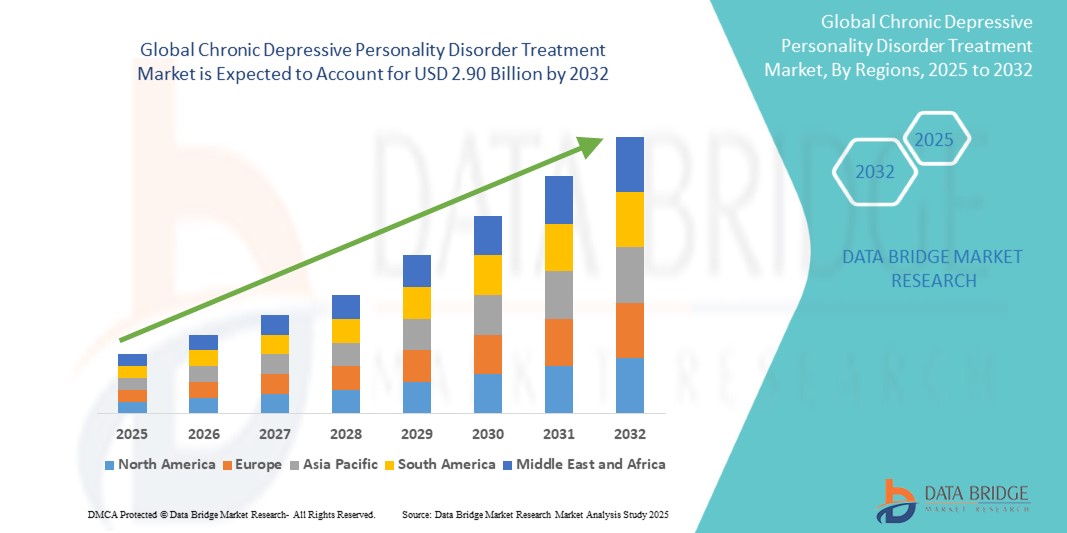
- The global chronic depressive personality disorder treatment market size was valued at USD 1.70 billion in 2024 and is expected to reach USD 2.90 billion by 2032, at a CAGR of 6.90% during the forecast period
- The market growth is largely fueled by the increasing prevalence of depressive disorders, greater awareness about mental health, and the rising adoption of advanced pharmacological and non-pharmacological treatment approaches in both clinical and outpatient settings
- Furthermore, expanding healthcare infrastructure, increasing investments in mental health research, and the growing focus on personalized treatment strategies are driving the demand for innovative Chronic Depressive Personality Disorder (CDPD) treatment solutions. These converging factors are accelerating the adoption of effective therapeutic options, including antidepressants, psychotherapy, and digital mental health platforms, thereby significantly boosting the growth of the Chronic Depressive Personality Disorder Treatment market
Chronic Depressive Personality Disorder Treatment Market Analysis
- The chronic depressive personality disorder treatment market is witnessing significant growth globally due to rising awareness of mental health, increasing prevalence of chronic depressive disorders, and advancements in treatment modalities
- The escalating demand for chronic depressive personality disorder treatment is primarily driven by growing awareness of mental health, adoption of personalized therapy plans, and innovations in pharmacological and psychotherapeutic interventions
- North America dominated the chronic depressive personality disorder treatment market with the largest revenue share of 40.5% in 2024, characterized by early adoption of advanced treatment protocols, high healthcare expenditure, and a strong presence of key pharmaceutical and mental health service providers. The U.S. experienced substantial growth in treatment adoption, particularly in urban centers, driven by innovations from both established healthcare companies and startups focusing on AI-assisted therapy and telepsychiatry
- Asia-Pacific is expected to be the fastest-growing region in the chronic depressive personality disorder treatment market during the forecast period, owing to rapid urbanization, rising disposable incomes, and increasing awareness of mental health interventions
- Medication dominated the largest market revenue share of 55.6% in 2024, due to its widespread adoption, consistent efficacy in symptom management, and strong clinical support for pharmacological interventions
Report Scope and Chronic Depressive Personality Disorder Treatment Market Segmentation
|
Attributes |
Chronic Depressive Personality Disorder Treatment Key Market Insights |
|
Segments Covered |
|
|
Countries Covered |
North America
Europe
Asia-Pacific
Middle East and Africa
South America
|
|
Key Market Players |
|
|
Market Opportunities |
|
|
Value Added Data Infosets |
In addition to the insights on market scenarios such as market value, growth rate, segmentation, geographical coverage, and major players, the market reports curated by the Data Bridge Market Research also include in-depth expert analysis, pricing analysis, brand share analysis, consumer survey, demography analysis, supply chain analysis, value chain analysis, raw material/consumables overview, vendor selection criteria, PESTLE Analysis, Porter Analysis, and regulatory framework. |
Chronic Depressive Personality Disorder Treatment Market Trends
Enhanced Patient Outcomes Through Innovative Therapeutics
- A significant and accelerating trend in the global chronic depressive personality disorder treatment market is the development and adoption of innovative therapeutic approaches aimed at improving patient outcomes. These include advancements in pharmacological treatments, psychotherapy techniques, and combined treatment regimens that address both depressive symptoms and underlying personality disorder traits
- For instance, recent clinical studies have highlighted the effectiveness of novel antidepressants and mood-stabilizing agents when used alongside cognitive-behavioral therapy (CBT) or dialectical behavior therapy (DBT), offering patients a more comprehensive treatment approach. Similarly, long-acting formulations are enabling more consistent symptom management, reducing the frequency of relapses and hospitalizations
- Ongoing research is focused on personalized treatment plans, where patient-specific factors such as genetics, comorbid conditions, and treatment history inform therapy selection. This individualized approach aims to enhance adherence, minimize side effects, and maximize therapeutic efficacy
- Integration of multidisciplinary care models allows psychiatrists, psychologists, and social workers to collaboratively manage patient care, addressing both psychological and social aspects of the disorder. Through coordinated care, patients can receive comprehensive support, from symptom management to lifestyle interventions and social rehabilitation
- This trend towards more patient-centered and evidence-based treatment options is fundamentally reshaping expectations in mental health care for CDPD. Consequently, pharmaceutical companies and mental health service providers are focusing on developing combination therapies, digital monitoring tools, and structured psychotherapy programs tailored for chronic depressive personality disorder
- The demand for effective, long-term, and individualized treatment solutions is growing rapidly across both clinical and outpatient settings, as healthcare providers and patients increasingly prioritize improved quality of life, functional recovery, and sustained symptom management
Chronic Depressive Personality Disorder Treatment Market Dynamics
Driver
Growing Need Due to Rising Awareness and Advancements in Treatment Options
- The increasing prevalence of chronic depressive personality disorder, coupled with growing awareness among healthcare providers and patients, is a significant driver for the heightened demand for effective treatment solutions
- For instance, in April 2024, leading pharmaceutical companies expanded their research programs for novel antidepressants and combination therapies aimed at improving long-term outcomes for patients with chronic depressive personality disorder. Such strategic initiatives are expected to drive the market growth over the forecast period
- As patients and clinicians become more aware of the benefits of early diagnosis and personalized treatment plans, the demand for innovative pharmacological interventions, including SSRIs, SNRIs, and tricyclic antidepressants, is rising. These treatments offer improved efficacy and reduced side effects compared to older medications, enhancing patient adherence and overall quality of life
- Furthermore, the growing adoption of integrated treatment approaches, combining medication with psychotherapy and digital health tools, is creating a more comprehensive care model for patients. Digital platforms for therapy management, remote consultations, and symptom tracking are increasingly being incorporated into patient care, further boosting market expansion
- The increasing focus on mental health awareness, patient education programs, and support networks are key factors propelling the adoption of chronic depressive personality disorder treatment solutions globally. Expanding access to affordable and clinically effective treatments in both developed and emerging regions further contributes to sustained market growth
Restraint/Challenge
Concerns Regarding Treatment Accessibility and Cost
- Limited access to specialized mental health services and trained professionals in certain regions poses a challenge to broader market penetration. Many patients, particularly in rural or underserved areas, may not receive timely diagnosis or appropriate therapeutic interventions
- For instance, disparities in healthcare infrastructure and the availability of antidepressant medications have made it difficult for some patients to consistently access treatment for chronic depressive personality disorder
- Addressing these challenges through initiatives such as telemedicine, mobile mental health apps, and government-supported mental health programs is crucial for expanding treatment access. In addition, the relatively high cost of certain advanced therapies and combination treatment plans can be a barrier for price-sensitive patients, especially in developing countries
- While the adoption of generic medications and increasing insurance coverage is gradually reducing costs, the perceived premium for specialized therapies can still hinder widespread treatment uptake
- Overcoming these challenges through improved healthcare infrastructure, expanded patient education, and the development of affordable, evidence-based treatment options will be vital for the sustained growth of the chronic depressive personality disorder treatment market
Chronic Depressive Personality Disorder Treatment Market Scope
The market is segmented on the basis of mechanism of action, drugs, diagnosis, treatment, distribution channel, and end-users.
• By Mechanism of Action
On the basis of mechanism of action, the chronic depressive personality disorder treatment market is segmented into selective serotonin reuptake inhibitors (SSRIs), tricyclic antidepressants (TCAs), serotonin and norepinephrine reuptake inhibitors (SNRIs) and others. The selective serotonin reuptake inhibitors (SSRIs) segment dominated the largest market revenue share of 47.2% in 2024, driven by their favorable safety profile, efficacy in long-term management, and widespread clinical adoption. SSRIs are often preferred as the first-line therapy due to lower side effects compared with TCAs and SNRIs, as well as their effectiveness in improving both depressive symptoms and overall patient functioning. The segment benefits from extensive clinical guidelines, physician familiarity, and strong patient adherence programs.
The serotonin and norepinephrine reuptake inhibitors (SNRIs) segment is expected to witness the fastest CAGR of 8.1% from 2025 to 2032, fueled by their dual action on serotonin and norepinephrine pathways, providing enhanced therapeutic effects for patients with treatment-resistant or comorbid depressive conditions. Growing awareness among clinicians and ongoing research on SNRIs’ efficacy and tolerability support this expansion. In addition, the increasing use of SNRIs in combination therapy regimens, and their ability to target multiple symptoms of chronic depressive personality disorder simultaneously, are further boosting adoption. Emerging clinical studies highlighting improved functional outcomes and lower relapse rates are also expected to contribute to sustained growth.
• By Drugs
On the basis of drugs, the market is segmented into amitriptyline, bupropion, sertraline, duloxetine and others. Sertraline dominated the largest market revenue share of 41.5% in 2024, owing to its proven clinical efficacy, favorable tolerability, and established presence in treatment guidelines. Sertraline is widely prescribed for both acute management and long-term therapy, benefiting from extensive physician confidence and patient familiarity.
Bupropion is expected to witness the fastest CAGR of 7.6% from 2025 to 2032, driven by its stimulating effect, lower sexual side effect profile, and suitability for patients with fatigue and low energy associated with chronic depressive personality disorder. Furthermore, increasing clinical evidence on Bupropion’s efficacy in managing comorbid anxiety and attentional deficits, along with its incorporation into personalized treatment plans, is expected to drive higher adoption rates across both hospital and outpatient settings. Rising patient awareness about side-effect profiles and improved adherence programs are further supporting market growth.
• By Diagnosis
On the basis of diagnosis, the market is segmented into physical exam, lab tests, psychological evaluation and others. Psychological evaluation dominated the largest market revenue share of 53.0% in 2024, owing to its critical role in assessing symptom severity, comorbidities, and personality traits. Psychological evaluation provides actionable insights for individualized treatment planning and monitoring therapeutic progress. The segment benefits from increasing use of standardized diagnostic tools and clinical guidelines across psychiatric practice.
Lab tests are expected to witness the fastest CAGR of 7.8% from 2025 to 2032, fueled by advances in biomarker research, genetic profiling, and the integration of laboratory diagnostics to support personalized medicine approaches in chronic depressive personality disorder management. In addition, the growing adoption of lab tests for early detection, monitoring treatment response, and identifying risk factors for relapse is contributing to rapid market expansion. Investments in advanced diagnostic technologies, including automated testing platforms and point-of-care devices, are expected to further accelerate growth.
• By Treatment
On the basis of treatment, the market is segmented into medication, psychotherapy and others. Medication dominated the largest market revenue share of 55.6% in 2024, due to its widespread adoption, consistent efficacy in symptom management, and strong clinical support for pharmacological interventions. Ongoing development of newer antidepressants and better safety profiles enhances physician confidence and patient adherence. In addition, increasing awareness campaigns and inclusion of medication management in clinical guidelines further reinforce the segment’s growth and adoption.
Psychotherapy is expected to witness the fastest CAGR of 8.5% from 2025 to 2032, driven by increasing awareness of non-pharmacological interventions, the effectiveness of cognitive-behavioral therapy and psychodynamic approaches, and growing patient preference for holistic mental health management. The rising use of digital platforms for therapy, including teletherapy and app-based interventions, along with supportive policies promoting mental health care access, are expected to contribute to the accelerated adoption of psychotherapy. Training and certification programs for therapists are expanding, increasing the availability of specialized care.
• By Distribution Channel
On the basis of distribution channel, the market is segmented into hospital pharmacy, retail pharmacy, online pharmacy and others. Hospital pharmacy dominated the largest market revenue share of 48.3% in 2024, driven by centralized access to prescribed therapies, physician oversight, and insurance reimbursement schemes. Hospitals provide structured treatment plans and integrated care, supporting adherence and long-term outcomes.
The online pharmacy segment is expected to witness the fastest CAGR of 9.2% from 2025 to 2032, fueled by rising digital adoption, patient preference for home delivery, and expanding telemedicine platforms facilitating prescription fulfillment. Increasing patient trust in verified online pharmacies, flexible subscription models for chronic therapies, and partnerships between online platforms and healthcare providers are expected to further enhance the segment’s growth. Convenience, privacy, and competitive pricing contribute to increasing penetration in both urban and semi-urban areas.
• By End-Users
On the basis of end-users, the market is segmented into hospitals, homecare, specialty clinics, and others. Hospitals dominated the largest market revenue share of 51.7% in 2024, attributed to high patient footfall, integrated psychiatric care, and strong physician networks overseeing treatment plans. Hospitals provide comprehensive care including medication management, psychotherapy, and follow-up monitoring. The segment also benefits from well-established infrastructure and access to advanced diagnostic and therapeutic resources, ensuring effective and continuous patient management.
Homecare is expected to witness the fastest CAGR of 8.9% from 2025 to 2032, driven by patient preference for therapy at home, telemedicine support, and increasing availability of home-based psychiatric services. Expanding remote monitoring technologies, personalized care plans, and insurance coverage for home-based psychiatric treatment are further accelerating adoption. The convenience of receiving therapy in a familiar environment also enhances patient adherence and overall treatment outcomes.
Chronic Depressive Personality Disorder Treatment Market Regional Analysis
- North America dominated the chronic depressive personality disorder treatment market with the largest revenue share of 40.5% in 2024, characterized by the early adoption of advanced treatment protocols, high healthcare expenditure, and a strong presence of key pharmaceutical and mental health service providers
- Substantial growth in treatment adoption, particularly in urban centers, driven by innovations from both established healthcare companies and startups focusing on AI-assisted therapy, telepsychiatry, and personalized care plans
- High awareness of mental health, government initiatives, and robust healthcare infrastructure further supported market expansion
U.S. Chronic Depressive Personality Disorder Treatment Market Insight
The U.S. chronic depressive personality disorder treatment market captured the largest revenue share within North America, fueled by the growing integration of digital health tools, telemedicine platforms, and AI-driven therapy solutions. The adoption of combination treatment approaches, including pharmacotherapy and psychotherapy, is increasing rapidly, driven by the focus on improving patient outcomes and enhancing long-term adherence to therapy. In addition, the expansion of mental health programs in hospitals, clinics, and specialized treatment centers is significantly contributing to market growth.
Europe Chronic Depressive Personality Disorder Treatment Market Insight
The Europe chronic depressive personality disorder treatment market is projected to expand at a substantial CAGR during the forecast period, driven by increasing awareness of mental health disorders, government support for psychological care, and rising adoption of innovative therapies. Growth is further supported by improvements in healthcare infrastructure, growing urbanization, and the integration of telepsychiatry and digital therapy platforms across hospitals and clinics in the region.
U.K. Chronic Depressive Personality Disorder Treatment Market Insight
The U.K. chronic depressive personality disorder treatment market is anticipated to grow at a noteworthy CAGR during the forecast period, fueled by increasing focus on mental health awareness, preventive interventions, and early diagnosis of chronic depressive personality disorder. Expansion of specialized treatment centers, robust healthcare programs, and government initiatives promoting mental wellness are expected to drive significant market growth.
Germany Chronic Depressive Personality Disorder Treatment Market Insight
The Germany chronic depressive personality disorder treatment market is expected to expand at a considerable CAGR during the forecast period, supported by increasing government initiatives for mental health, rising adoption of advanced therapy protocols, and strong healthcare infrastructure. The availability of digital mental health tools and integration of psychotherapy and pharmacological treatment options are driving the adoption of CDPD treatment across both residential and institutional care settings.
Asia-Pacific Chronic Depressive Personality Disorder Treatment Market Insight
The Asia-Pacific chronic depressive personality disorder treatment market is expected to grow at the fastest CAGR during the forecast period, driven by rapid urbanization, rising disposable incomes, and increasing awareness of mental health interventions. Expanding pharmaceutical and mental health services, government support, and adoption of digital therapy solutions such as telepsychiatry and app-based monitoring tools are key factors contributing to growth. Countries such as China, India, and Japan are witnessing increasing investments in mental health infrastructure, awareness campaigns, and accessibility of affordable treatments.
Japan Chronic Depressive Personality Disorder Treatment Market Insight
The Japan chronic depressive personality disorder treatment market is gaining momentum due to a high-tech healthcare environment, rising urban population, and increasing emphasis on mental wellness. The adoption of integrated treatment approaches combining psychotherapy, pharmacotherapy, and digital health tools is driving market expansion, particularly among middle-aged and elderly patients.
China Chronic Depressive Personality Disorder Treatment Market Insight
The China chronic depressive personality disorder treatment market accounted for the largest share of the Asia-Pacific region in 2024, attributed to growing awareness of mental health issues, rising healthcare expenditure, and rapid urbanization. Increasing availability of advanced treatment protocols, government initiatives promoting mental wellness, and the expansion of telemedicine platforms are facilitating broader access to care. The country’s focus on digital mental health solutions and integration of AI-assisted therapy for patient management are also key factors propelling market growth.
Chronic Depressive Personality Disorder Treatment Market Share
The chronic depressive personality disorder treatment industry is primarily led by well-established companies, including:
- Pfizer Inc. (U.S.)
- AstraZeneca (U.K.)
- Lilly USA, LLC (U.S.)
- Merck & Co., Inc. (U.S.)
- Novartis AG (Switzerland)
- GSK plc (U.K.)
- Johnson & Johnson and its affiliates (U.S.)
- Regeneron Pharmaceuticals Inc. (U.S.)
- Boehringer Ingelheim International GmbH (Germany)
- Abbott (U.S.)
- AbbVie Inc (U.S.)
- Astellas Pharma Inc. (U.S.)
- Daiichi-Sankyo Company Limited (Japan)
- Endo Pharmaceuticals Inc (Ireland)
Latest Developments in Global Chronic Depressive Personality Disorder Treatment Market
- In August 2022, the U.S. Food and Drug Administration (FDA) approved Auvelity, an oral medication developed by Axsome Therapeutics for the treatment of major depressive disorder (MDD) in adults. Auvelity is notable for being the first and only rapid-acting oral NMDA receptor antagonist approved for MDD. Clinical trials demonstrated that it significantly improved depressive symptoms compared to a placebo, with effects observable as early as one week. This approval marked a significant advancement in the treatment options available for MDD
- In January 2025, Johnson & Johnson's Spravato (esketamine) nasal spray received FDA approval as the first and only monotherapy for adults with treatment-resistant depression. This approval was based on data showing that Spravato led to rapid and superior improvement in depressive symptoms compared to a placebo, with effects observed as early as 24 hours. Notably, this approval allows for the use of Spravato without the need for daily oral antidepressants
- In July 2025, a review of the psychiatric treatment pipeline highlighted significant developments in the field. Notably, BPL-003 demonstrated rapid and robust antidepressant effects in treatment-resistant depression, with significant reductions in the Montgomery-Åsberg Depression Rating Scale (MADRS) scores by day 29. This indicates promising progress in the development of new treatments for chronic depressive conditions

- Interactive Data Analysis Dashboard
- Company Analysis Dashboard for high growth potential opportunities
- Research Analyst Access for customization & queries
- Competitor Analysis with Interactive dashboard
- Latest News, Updates & Trend analysis
- Harness the Power of Benchmark Analysis for Comprehensive Competitor Tracking
Data collection and base year analysis are done using data collection modules with large sample sizes. The stage includes obtaining market information or related data through various sources and strategies. It includes examining and planning all the data acquired from the past in advance. It likewise envelops the examination of information inconsistencies seen across different information sources. The market data is analysed and estimated using market statistical and coherent models. Also, market share analysis and key trend analysis are the major success factors in the market report. To know more, please request an analyst call or drop down your inquiry.
The key research methodology used by DBMR research team is data triangulation which involves data mining, analysis of the impact of data variables on the market and primary (industry expert) validation. Data models include Vendor Positioning Grid, Market Time Line Analysis, Market Overview and Guide, Company Positioning Grid, Patent Analysis, Pricing Analysis, Company Market Share Analysis, Standards of Measurement, Global versus Regional and Vendor Share Analysis. To know more about the research methodology, drop in an inquiry to speak to our industry experts.
Data Bridge Market Research is a leader in advanced formative research. We take pride in servicing our existing and new customers with data and analysis that match and suits their goal. The report can be customized to include price trend analysis of target brands understanding the market for additional countries (ask for the list of countries), clinical trial results data, literature review, refurbished market and product base analysis. Market analysis of target competitors can be analyzed from technology-based analysis to market portfolio strategies. We can add as many competitors that you require data about in the format and data style you are looking for. Our team of analysts can also provide you data in crude raw excel files pivot tables (Fact book) or can assist you in creating presentations from the data sets available in the report.












