


Chronic Kidney Disease - Mineral Bone Disorders (CKD-MBD) Treatment Market Size
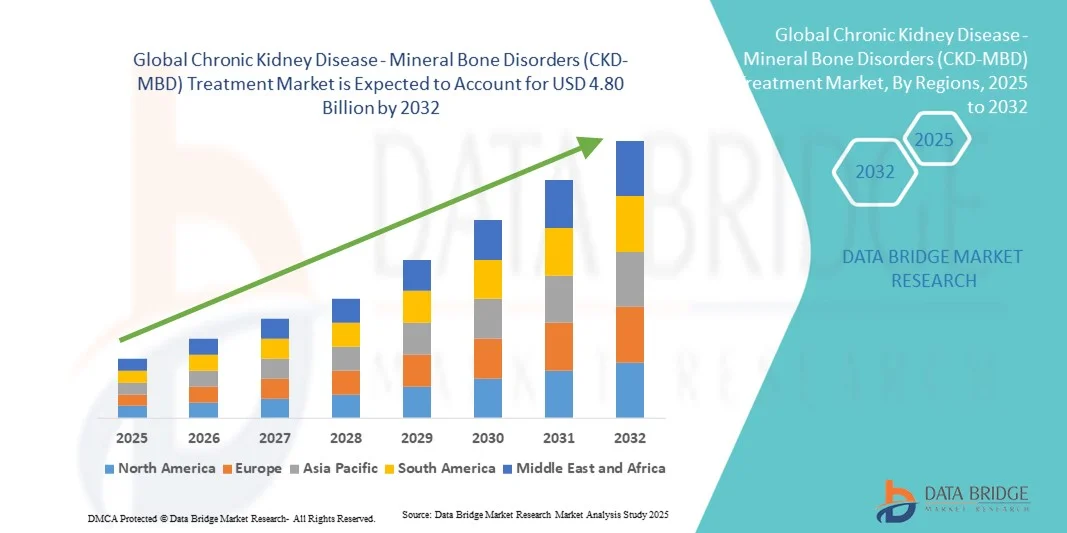
- The global chronic kidney disease - mineral bone disorders (CKD-MBD) treatment market size was valued at USD 2.39 billion in 2024 and is expected to reach USD 4.80 billion by 2032, at a CAGR of 9.09% during the forecast period
- The market growth is largely driven by rising prevalence of chronic kidney disease worldwide an expanding dialysis population susceptible to mineral and bone complications, and greater clinical awareness and screening for CKD-MBD leading to higher diagnosis rates and treatment uptake
- Furthermore, ongoing therapeutic innovation updated clinical guidelines, improved reimbursement coverage, and demand for safer, more convenient and outcome-oriented regimens are positioning CKD-MBD treatments as a priority area for nephrology care; these converging factors are accelerating adoption of advanced treatment options and significantly boosting industry growth
Chronic Kidney Disease - Mineral Bone Disorders (CKD-MBD) Treatment Market Analysis
- Chronic Kidney Disease – Mineral Bone Disorders (CKD-MBD) treatments, encompassing phosphate binders, vitamin D analogues, and calcimimetics, are increasingly vital components of nephrology care for patients with chronic kidney disease, as they address disturbances in calcium, phosphate, and parathyroid hormone regulation that lead to serious skeletal and cardiovascular complications
- The escalating demand for CKD-MBD treatments is primarily fueled by the rising global prevalence of chronic kidney disease, the growing dialysis-dependent population, and greater clinical emphasis on preventing bone fragility and vascular calcification through timely therapeutic intervention
- North America dominated the chronic kidney disease - mineral bone disorders (CKD-MBD) treatment market with the largest revenue share of 40% in 2024, characterized by a high incidence of CKD, well-established dialysis infrastructure, favorable reimbursement policies, and strong presence of leading pharmaceutical companies driving adoption of advanced therapeutic options
- Asia-Pacific is expected to be the fastest growing region in the chronic kidney disease - mineral bone disorders (CKD-MBD) treatment market during the forecast period due to increasing CKD prevalence linked to diabetes and hypertension, improving healthcare access, and rising awareness among clinicians and patients
- The phosphate binders segment dominated the chronic kidney disease - mineral bone disorders (CKD-MBD) treatment market with a market share of 43.2% in 2024, driven by their role as first-line therapy in controlling hyperphosphatemia and their broad usage across dialysis and non-dialysis CKD populations
Report Scope and Chronic Kidney Disease - Mineral Bone Disorders (CKD-MBD) Treatment Market Segmentation
|
Attributes |
Chronic Kidney Disease - Mineral Bone Disorders (CKD-MBD) Treatment Key Market Insights |
|
Segments Covered |
|
|
Countries Covered |
North America
Europe
Asia-Pacific
Middle East and Africa
South America
|
|
Key Market Players |
|
|
Market Opportunities |
|
|
Value Added Data Infosets |
In addition to the insights on market scenarios such as market value, growth rate, segmentation, geographical coverage, and major players, the market reports curated by the Data Bridge Market Research also include in-depth expert analysis, pricing analysis, brand share analysis, consumer survey, demography analysis, supply chain analysis, value chain analysis, raw material/consumables overview, vendor selection criteria, PESTLE Analysis, Porter Analysis, and regulatory framework. |
Chronic Kidney Disease - Mineral Bone Disorders (CKD-MBD) Treatment Market Trends
Advancements Through Targeted Therapies and Combination Treatments
- A significant and accelerating trend in the global CKD-MBD treatment market is the development of targeted therapies, including newer phosphate binders, calcimimetics, and vitamin D analogues, which offer more precise control over mineral metabolism and reduce side effects
- For instance, the launch of novel oral calcimimetics with improved bioavailability has enabled more convenient dosing regimens for dialysis patients, enhancing adherence and treatment outcomes
- Combination therapies that integrate phosphate binders with vitamin D analogues or calcimimetics are gaining traction, allowing physicians to manage multiple CKD-MBD parameters simultaneously, improving patient compliance and clinical results
- Personalized medicine approaches, leveraging patient-specific biochemical profiles, are becoming more prevalent, enabling clinicians to tailor treatment plans and optimize therapy based on individual needs
- The growing focus on patient-centric care and convenience is driving the adoption of therapies that simplify administration, reduce pill burden, and improve quality of life, fundamentally reshaping treatment expectations in CKD-MBD management
- Demand for innovative and more effective CKD-MBD treatments is rising across both dialysis and non-dialysis CKD populations, as healthcare providers seek therapies that deliver consistent outcomes with improved safety profiles
Chronic Kidney Disease - Mineral Bone Disorders (CKD-MBD) Treatment Market Dynamics
Driver
Increasing CKD Prevalence and Rising Clinical Awareness
- The growing prevalence of chronic kidney disease worldwide, especially among aging populations and patients with diabetes or hypertension, is a significant driver for increased demand for CKD-MBD treatments
- For instance, initiatives by nephrology societies to enhance early screening and guideline-based management have improved diagnosis rates and accelerated therapy initiation in at-risk populations
- Healthcare providers are emphasizing proactive management of mineral and bone disorders to prevent severe complications such as fractures and vascular calcification, boosting treatment adoption
- Increasing dialysis populations and longer patient survival rates have expanded the pool of patients requiring consistent CKD-MBD therapy, creating sustained market demand
- Rising awareness among patients and clinicians regarding the long-term benefits of controlling phosphate, calcium, and PTH levels is driving preference for advanced, targeted treatment regimens
- Government healthcare programs and insurance coverage that support CKD-MBD medications further facilitate adoption, enhancing market growth prospects globally
Restraint/Challenge
Side Effects, Adherence Issues, and Regulatory Hurdles
- Concerns about adverse effects such as gastrointestinal discomfort, hypocalcemia, or hypercalcemia associated with certain CKD-MBD medications pose a significant challenge to treatment adherence and market expansion
- For instance, some patients discontinue phosphate binders due to pill burden or gastrointestinal intolerance, limiting overall therapy effectiveness and growth potential
- Regulatory approvals for novel therapies can be lengthy and stringent, slowing market entry for innovative drugs and combination treatments
- High costs of advanced CKD-MBD medications, particularly calcimimetics and newer oral formulations, may limit accessibility in emerging markets or among uninsured populations
- Patient non-compliance due to complex dosing schedules or insufficient awareness of long-term benefits further restricts market penetration and effective therapy outcomes
- Addressing these challenges through improved formulation, patient education, and streamlined regulatory pathways will be critical for sustaining long-term growth in the CKD-MBD treatment market
Chronic Kidney Disease - Mineral Bone Disorders (CKD-MBD) Treatment Market Scope
The market is segmented on the basis of treatment type, drug type, route of administration, end-users, and distribution channel.
- By Treatment Type
On the basis of treatment type, the chronic kidney disease - mineral bone disorders (CKD-MBD) treatment market is segmented into medications and supplements, dialysis, surgery, diet, and others. The medications and supplements segment dominated the market with the largest revenue share of 45.8% in 2024, driven by their critical role in managing mineral imbalances and preventing complications such as bone fragility and vascular calcification. Medications such as phosphate binders, vitamin D analogues, and calcimimetics are widely prescribed due to their proven efficacy and guideline-backed usage in both dialysis and non-dialysis patients. Strong adoption is supported by healthcare providers’ preference for pharmacological intervention as a first-line therapy. Patient compliance and improved formulation options, such as combination therapies, further enhance market demand. In addition, insurance coverage and reimbursement policies in developed markets have facilitated the widespread use of these treatments.
The dialysis segment is anticipated to witness the fastest growth rate of 6.3% CAGR from 2025 to 2032, fueled by the increasing global dialysis population and extended survival rates of CKD patients. Dialysis treatments help manage CKD-MBD complications by maintaining mineral balance, particularly in end-stage renal disease patients. Growing access to dialysis centers in emerging economies and rising government initiatives to provide renal care are further driving this segment. Integration of dialysis with adjunct CKD-MBD medications also contributes to the rising adoption rate. Enhanced patient monitoring and education on CKD-MBD management during dialysis sessions improve therapy adherence. The convenience and necessity of dialysis in managing severe CKD-MBD conditions make it a rapidly expanding treatment type.
- By Drug Type
On the basis of drug type, the chronic kidney disease - mineral bone disorders (CKD-MBD) treatment market is segmented into ACE inhibitors, β-blockers, calcium channel blockers, loop diuretics, erythropoiesis-stimulating agents (ESAs), phosphate binders, and others. The phosphate binders segment dominated the market with a market share of 43.2% in 2024, as they are considered first-line therapy for controlling hyperphosphatemia, a major contributor to CKD-MBD. Their widespread use across both dialysis and non-dialysis CKD populations underlines their importance in treatment protocols. Market dominance is also supported by continuous innovation, such as newer non-calcium-based binders that reduce the risk of vascular calcification. Physicians prefer phosphate binders due to their effectiveness in slowing disease progression and improving patient outcomes. Availability in oral formulations and flexible dosing regimens further drive adoption.
The calcimimetics segment is expected to witness the fastest CAGR of 7.1% from 2025 to 2032, owing to increasing preference for targeted therapies that control parathyroid hormone (PTH) levels in dialysis patients. Calcimimetics provide improved safety profiles and reduce the need for surgical intervention such as parathyroidectomy. Growing awareness among nephrologists and patients regarding the benefits of non-invasive PTH management is fueling market growth. Expanding clinical evidence demonstrating improved cardiovascular outcomes with calcimimetics also supports their adoption. Advances in oral formulations and combination therapy options are attracting more users in developed and emerging markets.
- By Route of Administration
On the basis of route of administration, the chronic kidney disease - mineral bone disorders (CKD-MBD) treatment market is segmented into oral, intravenous, subcutaneous, and others. The oral segment dominated the market with a share of 51.2% in 2024, as oral therapies such as phosphate binders, vitamin D analogues, and some calcimimetics are convenient for home administration. Oral drugs offer improved patient adherence, flexibility in dosing, and reduced dependency on hospital visits. The dominance is reinforced by the preference for self-managed treatment among pre-dialysis and non-hospitalized patients. Pharmaceutical companies continue to innovate with combination pills and improved bioavailability, further strengthening this segment. Oral administration reduces treatment burden and enhances the quality of life for CKD-MBD patients.
The intravenous segment is expected to witness the fastest growth rate of 6.8% CAGR from 2025 to 2032, driven by increasing administration of vitamin D analogues and ESAs in dialysis centers. Intravenous delivery ensures precise dosing and rapid therapeutic effect for patients undergoing regular hemodialysis. Adoption is supported by hospital-based monitoring and physician preference for controlled administration. Rising investments in dialysis infrastructure in emerging markets are also contributing to growth. Intravenous administration is particularly advantageous for patients with severe mineral imbalances or poor oral absorption.
- By End-Users
On the basis of end-users, the chronic kidney disease - mineral bone disorders (CKD-MBD) treatment market is segmented into clinics, hospitals, ambulatory surgical centers, and others. The hospitals segment dominated the market with a share of 54.3% in 2024, as hospitals provide comprehensive care including dialysis, medication administration, and monitoring of CKD-MBD patients. Hospitals also host specialists, including nephrologists and endocrinologists, who guide treatment plans, enhancing adoption of advanced therapies. The dominance is strengthened by the availability of modern infrastructure, advanced equipment, and reimbursement policies supporting hospital-based care. Hospitals serve both acute and chronic CKD-MBD patients, offering integrated management. In addition, the presence of large patient populations ensures consistent demand for therapies and services.
The clinics segment is expected to witness the fastest CAGR of 6.5% from 2025 to 2032, due to the rising number of outpatient nephrology clinics and primary care centers providing early-stage CKD-MBD management. Clinics facilitate convenient monitoring, prescription of medications, and patient education on diet and lifestyle interventions. Expansion of private and community-based clinics in emerging economies is further boosting adoption. The growing trend of outpatient management and telehealth consultations supports clinic-based treatment. Clinics provide accessible care for non-dialysis patients, enhancing therapy adherence and overall market growth.
- By Distribution Channel
On the basis of distribution channel, the chronic kidney disease - mineral bone disorders (CKD-MBD) treatment market is segmented into direct tender, hospital pharmacy, retail pharmacy, online pharmacy, and others. The hospital pharmacy segment dominated the market with a share of 46.9% in 2024, as hospitals dispense most CKD-MBD medications directly to patients during inpatient and dialysis visits. This ensures timely therapy initiation, proper dosing, and patient counseling, which enhances adherence and outcomes. Hospitals also negotiate bulk purchases, reducing cost barriers and driving volume growth. The presence of specialized pharmacists in hospitals further improves patient guidance and compliance.
The online pharmacy segment is expected to witness the fastest CAGR of 8.2% from 2025 to 2032, driven by increasing digital adoption, convenience, and the ability to deliver medications directly to patients’ homes. Online platforms allow patients, especially in remote areas, to access essential CKD-MBD therapies without frequent hospital visits. Subscription-based delivery models, teleconsultation integration, and rising e-pharmacy penetration in developed and emerging markets are boosting growth. Online pharmacies also offer competitive pricing, improving accessibility and convenience for chronic therapy patients.
Chronic Kidney Disease - Mineral Bone Disorders (CKD-MBD) Treatment Market Regional Analysis
- North America dominated the chronic kidney disease - mineral bone disorders (CKD-MBD) treatment market with the largest revenue share of 40% in 2024, characterized by a high incidence of CKD, well-established dialysis infrastructure, favorable reimbursement policies, and strong presence of leading pharmaceutical companies driving adoption of advanced therapeutic options
- Patients and healthcare providers in the region increasingly prioritize early diagnosis, guideline-based management, and access to advanced therapies such as phosphate binders, calcimimetics, and vitamin D analogues
- This widespread adoption is further supported by favorable reimbursement policies, the presence of leading pharmaceutical companies, and a technologically advanced healthcare system, establishing CKD-MBD treatments as a standard of care for both dialysis and non-dialysis patients
U.S. CKD-MBD Treatment Market Insight
The U.S. chronic kidney disease - mineral bone disorders (CKD-MBD) treatment market captured the largest revenue share of 82% in 2024 within North America, fueled by the high prevalence of chronic kidney disease and a well-established dialysis infrastructure. Patients and healthcare providers are increasingly prioritizing early diagnosis and guideline-based management using phosphate binders, calcimimetics, and vitamin D analogues. The growing adoption of advanced therapies, coupled with robust insurance coverage and reimbursement policies, further propels market growth. Moreover, increasing integration of patient monitoring systems and telehealth solutions is significantly contributing to therapy adherence and outcomes.
Europe CKD-MBD Treatment Market Insight
The Europe chronic kidney disease - mineral bone disorders (CKD-MBD) treatment market is projected to expand at a substantial CAGR throughout the forecast period, primarily driven by rising CKD prevalence and the growing emphasis on preventive care and mineral-bone disorder management. Increasing awareness among clinicians and patients, along with supportive healthcare policies, is fostering the adoption of advanced pharmacological treatments. European healthcare systems are also emphasizing integrated CKD-MBD management across hospitals and outpatient clinics, promoting both early intervention and long-term monitoring. The market is witnessing significant growth in both dialysis and non-dialysis patient segments.
U.K. CKD-MBD Treatment Market Insight
The U.K. chronic kidney disease - mineral bone disorders (CKD-MBD) treatment market is anticipated to grow at a noteworthy CAGR during the forecast period, driven by rising CKD incidence and increasing focus on patient-centric care. Concerns regarding CKD complications, such as bone fractures and cardiovascular risks, are encouraging healthcare providers to adopt comprehensive CKD-MBD management strategies. The U.K.’s well-established healthcare infrastructure and widespread insurance coverage are supporting the adoption of phosphate binders, calcimimetics, and vitamin D therapies. The integration of CKD-MBD management programs in both hospital and clinic settings is expected to continue stimulating market growth.
Germany CKD-MBD Treatment Market Insight
The Germany chronic kidney disease - mineral bone disorders (CKD-MBD) treatment market is expected to expand at a considerable CAGR during the forecast period, fueled by high CKD prevalence, advanced healthcare infrastructure, and strong government support for renal care. The country’s emphasis on preventive nephrology and evidence-based treatment guidelines promotes the adoption of medications and supplements for CKD-MBD management. Hospitals and specialized clinics are increasingly integrating pharmacological therapies with dialysis and monitoring programs, ensuring better patient outcomes. Awareness campaigns regarding early diagnosis and mineral-bone disorder management further contribute to market growth.
Asia-Pacific CKD-MBD Treatment Market Insight
The Asia-Pacific chronic kidney disease - mineral bone disorders (CKD-MBD) treatment market is poised to grow at the fastest CAGR of 7.8% during 2025 to 2032, driven by increasing CKD prevalence, rising diabetes and hypertension rates, and improving healthcare infrastructure in countries such as China, Japan, and India. The region's growing awareness of CKD-MBD complications and expansion of dialysis centers are driving therapy adoption. Government initiatives promoting early diagnosis, chronic disease management, and digital health solutions are further supporting market growth. Moreover, the availability of cost-effective medications and increasing local manufacturing of CKD-MBD drugs are enhancing accessibility across diverse patient populations.
Japan CKD-MBD Treatment Market Insight
The Japan chronic kidney disease - mineral bone disorders (CKD-MBD) treatment market is gaining momentum due to the country’s aging population, high CKD prevalence, and emphasis on preventive nephrology. Patients and healthcare providers are adopting advanced therapies such as phosphate binders, vitamin D analogues, and calcimimetics for better disease management. Integration of CKD-MBD monitoring with dialysis centers and telehealth platforms is improving treatment adherence. Moreover, rising awareness of long-term complications such as cardiovascular disease and bone fractures is fueling demand for comprehensive management solutions in both residential and hospital-based care.
India CKD-MBD Treatment Market Insight
The India chronic kidney disease - mineral bone disorders (CKD-MBD) treatment market accounted for the largest revenue share in Asia-Pacific in 2024, attributed to rising CKD prevalence, increasing diabetes and hypertension rates, and expanding access to dialysis and renal care services. Growing awareness among healthcare providers and patients regarding mineral and bone disorder management is driving adoption of phosphate binders, vitamin D analogues, and calcimimetics. The development of affordable treatment options and expansion of outpatient nephrology clinics further support market growth. In addition, government initiatives for CKD screening and chronic disease management are key factors propelling the market in India.
Chronic Kidney Disease - Mineral Bone Disorders (CKD-MBD) Treatment Market Share
The Chronic Kidney Disease - Mineral Bone Disorders (CKD-MBD) Treatment industry is primarily led by well-established companies, including:
- AbbVie Inc. (U.S.)
- Pfizer Inc. (U.S.)
- Sanofi (France)
- GSK plc (U.K.)
- Kissei Pharmaceutical Co., Ltd. (Japan)
- Astellas Pharma Inc. (Japan)
- Amgen Inc. (U.S.)
- Teva Pharmaceutical Industries Ltd. (Israel)
- F. Hoffmann-La Roche Ltd (Switzerland)
- Fresenius Medical Care AG (Germany)
- Abbott (U.S.)
- Daiichi Sankyo Company, Limited (Japan)
- OPKO Health, Inc. (U.S.)
- Celltrion, Inc. (South Korea)
- Akebia Therapeutics, Inc. (U.S.)
- FibroGen Inc. (U.S.)
- Keryx Biopharmaceuticals, Inc. (U.S.)
- Allergan plc (Ireland)
- ViiV Healthcare (U.K.)
- Genzyme Corporation (U.S.)
What are the Recent Developments in Global Chronic Kidney Disease - Mineral Bone Disorders (CKD-MBD) Treatment Market?
- In June 2025, Sandoz announced the launch of WYOST and Jubbonti, the first and only interchangeable FDA-approved denosumab biosimilars. These biosimilars provide new affordable treatment options for over 10 million patients in the U.S., addressing bone loss associated with CKD-MBD
- In June 2025, Mineralys Therapeutics announced positive topline results from its Phase 2 Explore-CKD trial of lorundrostat for the treatment of hypertension in subjects with chronic kidney disease and albuminuria. The trial demonstrated that lorundrostat achieved a significant reduction in systolic blood pressure, indicating its potential as a therapeutic option for CKD patients with hypertension
- In April 2025, UC Davis Health launched a new clinical trial investigating cell therapy for patients with chronic kidney disease caused by type 2 diabetes. The trial aims to evaluate the efficacy and safety of Renal Autologous Cell Therapy (REACT), a first-in-class cell therapy that could potentially restore kidney function in some patients
- In March 2025, the Kidney Disease Improving Global Outcomes (KDIGO) organization published an updated report from its CKD-MBD Controversies Conference. This report provides new insights into the diagnosis, evaluation, and treatment of CKD-MBD, reflecting the latest clinical evidence and expert consensus
- In October 2023, the U.S. FDA approved tenapanor (XPHOZAH), the first drug of its kind designed to reduce serum phosphate in adults with CKD on dialysis. This approval marks a significant advancement in managing hyperphosphatemia, a key component of CKD-MBD

- Interactive Data Analysis Dashboard
- Company Analysis Dashboard for high growth potential opportunities
- Research Analyst Access for customization & queries
- Competitor Analysis with Interactive dashboard
- Latest News, Updates & Trend analysis
- Harness the Power of Benchmark Analysis for Comprehensive Competitor Tracking
Data collection and base year analysis are done using data collection modules with large sample sizes. The stage includes obtaining market information or related data through various sources and strategies. It includes examining and planning all the data acquired from the past in advance. It likewise envelops the examination of information inconsistencies seen across different information sources. The market data is analysed and estimated using market statistical and coherent models. Also, market share analysis and key trend analysis are the major success factors in the market report. To know more, please request an analyst call or drop down your inquiry.
The key research methodology used by DBMR research team is data triangulation which involves data mining, analysis of the impact of data variables on the market and primary (industry expert) validation. Data models include Vendor Positioning Grid, Market Time Line Analysis, Market Overview and Guide, Company Positioning Grid, Patent Analysis, Pricing Analysis, Company Market Share Analysis, Standards of Measurement, Global versus Regional and Vendor Share Analysis. To know more about the research methodology, drop in an inquiry to speak to our industry experts.
Data Bridge Market Research is a leader in advanced formative research. We take pride in servicing our existing and new customers with data and analysis that match and suits their goal. The report can be customized to include price trend analysis of target brands understanding the market for additional countries (ask for the list of countries), clinical trial results data, literature review, refurbished market and product base analysis. Market analysis of target competitors can be analyzed from technology-based analysis to market portfolio strategies. We can add as many competitors that you require data about in the format and data style you are looking for. Our team of analysts can also provide you data in crude raw excel files pivot tables (Fact book) or can assist you in creating presentations from the data sets available in the report.












