


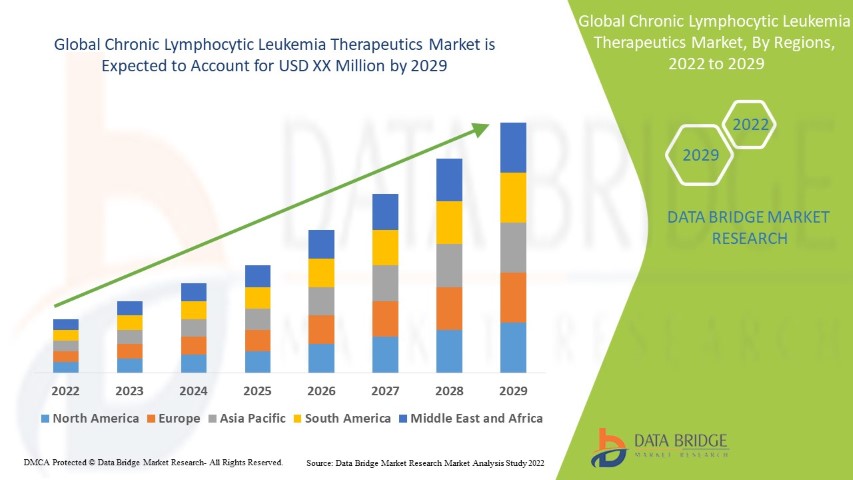
Global Chronic Lymphocytic Leukemia Therapeutics Market Size
- The global ophthalmic operational microscope market was valued at USD 709.8 million in 2024 and is expected to reach USD 1131.4 million by 2032
- During the forecast period of 2025 to 2032 the market is likely to grow at a CAGR of 6.00%, primarily driven by highlighting the market's robust growth potential
- The increasing incidence of CLL, advancements in therapeutic options, and a growing aging population are key factors driving the market's expansion
Global Chronic Lymphocytic Leukemia Therapeutics Market Analysis
- Chronic Lymphocytic Leukemia (CLL) therapeutics refers to the medical treatments and therapies used to manage and treat CLL, a type of cancer that primarily affects white blood cells (specifically B lymphocytes). CLL is characterized by the slow accumulation of abnormal, mature lymphocytes in the blood, bone marrow, and lymphatic tissues
- The market’s growth include advances in targeted therapies, the increasing aging population, and the rising demand for effective treatments, newer drug approvals and personalized treatment options are enhancing the market landscape
- North America currently leads the CLL therapeutics market, attributed to factors such as a high prevalence of leukemia cases and a substantial aging population. For example, Market Data Forecast reports that North America led the market in 2023, contributing significantly to the overall market share
- For instance, the approval and widespread adoption of Imbruvica and other similar therapies in North America have been key drivers in the region's market dominance. North America's well-established healthcare systems, strong regulatory support, and higher healthcare expenditure have facilitated the rapid uptake of these advanced treatments
- The global CLL therapeutics market is on an upward trajectory, driven by increasing incidence rates and advancements in treatment options. North America remains a dominant force in this market, though opportunities for growth exist in emerging regions as awareness and healthcare infrastructure improve
Report Scope and Global Chronic Lymphocytic Leukemia Therapeutics Market Segmentation
|
Attributes |
Global Chronic Lymphocytic Leukemia Therapeutics Market Key Market Insights |
|
Segments Covered |
|
|
Countries Covered |
North America
Europe
Asia-Pacific
Middle East and Africa
South America
|
|
Key Market Players |
|
|
Market Opportunities |
|
|
Value Added Data Infosets |
In addition to the insights on market scenarios such as market value, growth rate, segmentation, geographical coverage, and major players, the market reports curated by the Data Bridge Market Research also include import export analysis, production capacity overview, production consumption analysis, price trend analysis, climate change scenario, supply chain analysis, value chain analysis, raw material/consumables overview, vendor selection criteria, PESTLE Analysis, Porter Analysis, and regulatory framework. |
Global Chronic Lymphocytic Leukemia Therapeutics Market Trends
“Rising Demand for Targeted Therapies”
- Targeted therapies such as CAR-T cell therapy and monoclonal antibodies are showing significant success in treating CLL, especially for patients who have not responded well to traditional therapies. These treatments focus on specific molecules involved in cancer cell growth, offering more effective and personalized care
- Unlike conventional chemotherapy, targeted therapies often have fewer side effects, leading to better patient tolerance and improved quality of life. This is a major factor driving their adoption in the CLL market
- For instance, Imbruvica (ibrutinib), a Bruton's tyrosine kinase (BTK) inhibitor, has become a cornerstone of CLL treatment due to its ability to specifically target cancerous B cells, demonstrating strong efficacy while reducing the side effects commonly associated with chemotherapy
- The market has witnessed a growing approval of targeted therapies, with more treatments such as Venetoclax (another BCL-2 inhibitor) entering the market, further driving the trend
- The rising demand for targeted therapies in the CLL therapeutics market is reshaping treatment paradigms by offering more effective, personalized, and tolerable options for patients, which is likely to fuel continued market growth and innovation in the coming years
Global Chronic Lymphocytic Leukemia Therapeutics Market Dynamics
Driver
“Advancements in Targeted Therapies such as CAR-T Cell Therapy and Monoclonal Antibodies”
- Targeted therapies, including CAR-T cell therapy and monoclonal antibodies, focus on specifically targeting cancer cells without harming normal cells, leading to more personalized and effective treatment plans for patients with CLL
- These therapies offer a major advantage over traditional chemotherapy by minimizing side effects, such as nausea and immune suppression, thereby improving the quality of life for patients
- Studies have shown that CAR-T cell therapy and monoclonal antibodies have significantly higher response rates in CLL patients, especially for those who have not responded to other treatments
- New targeted therapies are being developed and approved at an accelerated rate, expanding the available options for treating CLL and advancing the standard of care. The rising prevalence of eye diseases such as cataracts, glaucoma, macular degeneration, and diabetic retinopathy is significantly contributing to the increased demand for ophthalmic operational microscopes
For instance,
- Approved by the U.S. FDA in 2017, Kymriah is a CAR-T cell therapy specifically designed for CLL and other blood cancers. It has shown promising results in treating relapsed or refractory CLL, where traditional therapies fail
- Since its FDA approval in 2013, Imbruvica, a BTK inhibitor, has revolutionized CLL treatment. It is a monoclonal antibody that selectively targets B-cell receptor signaling, leading to a reduction in malignant B-cell survival
- Advancements in CAR-T cell therapy and monoclonal antibodies are significantly transforming the CLL therapeutic landscape by offering more targeted, effective, and less toxic treatment options. This shift is not only improving patient outcomes but also driving continuous innovation in the development of future therapies
Opportunity
“Innovations in Diagnostics, including Liquid Biopsy and Precision Oncology”
- Liquid biopsy is a groundbreaking diagnostic tool that allows for non-invasive detection of CLL through blood samples, offering a less painful alternative to traditional biopsy methods, while still providing crucial genetic and molecular information
- Liquid biopsy enables earlier detection of CLL, even at its molecular level, potentially before clinical symptoms manifest. This can lead to earlier treatment initiation and better patient outcomes
- Precision oncology leverages genetic profiling and biomarkers to tailor treatments specifically to the individual’s cancer profile. This ensures therapies are more effective, reducing the chances of adverse reactions
- Liquid biopsy offers the opportunity to monitor disease progression and treatment response in real time, allowing for more dynamic and responsive treatment plans
For instance,
- Biocept launched its Target Selector liquid biopsy platform in 2020, which enables the detection of specific cancer-related biomarkers through blood samples, offering valuable insights for CLL patients to guide treatment decisions
- Developed by Natera and approved in 2020, Signatera is a liquid biopsy test that analyzes ctDNA (circulating tumor DNA) to detect minimal residual disease in CLL patients, which aids in monitoring treatment effectiveness and detecting early relapse
- Innovations in liquid biopsy and precision oncology are revolutionizing the way CLL is diagnosed and treated. By providing non-invasive, personalized, and real-time monitoring options, these advancements are enabling more precise, early, and effective interventions, which can significantly improve patient outcomes and pave the way for future breakthroughs in cancer care
Restraint/Challenge
“High Equipment Costs Hindering Market Penetration”
- Advanced therapies, especially CAR-T cell therapy and monoclonal antibodies, can cause immune-related side effects such as cytokine release syndrome (CRS), which can lead to severe inflammation and organ dysfunction
- Since these therapies often involve modifying or suppressing the immune system, patients may experience an increased risk of infections during or after treatment
- Some CAR-T cell therapies, such as Kymriah, have been linked to neurological side effects such as confusion, seizures, and encephalopathy
- Advanced therapies can be very expensive, limiting their accessibility to a broader patient population and raising concerns about affordability and insurance coverage
For instance,
- Kymriah also has associated risks of severe neurological toxicity, such as confusion and delirium, which were observed in early clinical trials and have led to additional monitoring requirements for patients undergoing treatment
- Imbruvica (ibrutinib), approved in 2013, is a widely used targeted therapy in CLL, but it can increase the risk of serious infections, including pneumonia and bloodstream infections, particularly in immunocompromised patients
- While advanced therapies such as CAR-T cell therapy and monoclonal antibodies are transformative in treating CLL, they come with significant risks such as immunological reactions, infection risks, and neurological toxicity. Additionally, their high costs present a barrier to widespread accessibility
Global Chronic Lymphocytic Leukemia Therapeutics Market Scope
The market is segmented on the basis application, product type, technology, magnification type, end user, and distribution channel.
|
Segmentation |
Sub-Segmentation |
|
By Treatment Type |
|
|
By Route of Administration |
|
|
By End-Users |
|
|
By Distribution Channel |
|
Global Chronic Lymphocytic Leukemia Therapeutics Market Regional Analysis
“North America is the Dominant Region in the Chronic Lymphocytic Leukemia Therapeutics Market”
- North America leads the global CLL therapeutics market, bolstered by a robust healthcare infrastructure and U.S. is the dominant country in the chronic lymphocytic leukemia therapeutics market
- The region benefits from a high prevalence of leukemia, driving demand for advanced and innovative therapies
- Favorable regulatory frameworks enable faster approvals of cutting-edge treatments in North America
- Strong presence of key pharmaceutical and biotech companies fosters growth through strategic collaborations and groundbreaking innovations
“Asia-Pacific is Projected to Register the Highest Growth Rate”
- Asia-Pacific is the fastest-growing region in the CLL therapeutics market, driven by increasing awareness and India is projected to register the highest growth rate in the chronic lymphocytic leukemia therapeutics market
- Rising demand for advanced treatments and targeted therapies is fueling market growth in this region
- Governments and private sectors are investing heavily in healthcare, boosting accessibility to innovative therapies
- A growing geriatric population and higher leukemia prevalence are contributing to the rapid expansion of the market in Asia-Pacific
Ophthalmic Operational Microscope Market Share
The market competitive landscape provides details by competitor. Details included are company overview, company financials, revenue generated, market potential, investment in research and development, new market initiatives, global presence, production sites and facilities, production capacities, company strengths and weaknesses, product launch, product width and breadth, application dominance. The above data points provided are only related to the companies' focus related to market.
The Major Market Leaders Operating in the Market Are:
- Allergan (U.S.)
- AstraZeneca (U.K.)
- F. Hoffmann-La Roche Ltd (Switzerland)
- Pfizer Inc. (U.S.)
- Merck KGaA (Germany)
- Clovis Oncology (U.S.)
- Boehringer Ingelheim International GmbH (Germany)
- GlaxoSmithKline plc (U.K.)
- Exelixis, Inc. (U.S.)
- Bristol-Myers Squibb Company (U.S.)
- Novartis AG (Switzerland)
- Johnson & Johnson Services, Inc. (U.S.)
- AbbVie Inc. (U.S.)
- MorphoSys AG (Germany)
- Ono Pharmaceutical Co., Ltd. (Japan)
- Amgen, Inc. (U.S.)
Latest Developments in Global Chronic Lymphocytic Leukemia Therapeutics Market
- In December 2022, Gilead Sciences collaborated with ImmunoGen, Inc., a pioneer in antibody-drug conjugates (ADCs), to evaluate the safety and anti-leukemia activity of pivekimab sunirine, a CD123-targeting ADC, in combination with magrolimab, an investigational CD47 inhibitor. This study focuses on patients with relapsed or refractory CD123-positive acute myeloid leukemia (AML), aiming to leverage the complementary mechanisms of these therapies
- In October 2022, Gilead Sciences partnered with MacroGenics, a biopharmaceutical company specializing in monoclonal antibody-based cancer therapeutics. This collaboration focuses on the development of MGD024, an investigational bispecific antibody that targets CD3 and CD123 using MacroGenics’ proprietary DART® platform. MGD024 is designed to minimize cytokine-release syndrome while maintaining potent anti-tumor activity, offering a promising approach for treating hematologic malignancies such as acute myeloid leukemia (AML) and myelodysplastic syndromes (MDS)
- In October 2022, Bristol Myers Squibb entered into a strategic collaboration with Century Therapeutics, a biotechnology company specializing in advanced cell therapies. This agreement focuses on developing and commercializing up to four induced pluripotent stem cell (iPSC)-derived engineered natural killer (NK) cell and T cell programs. These programs target hematologic malignancies and solid tumors, leveraging Century's iPSC platform and Bristol Myers Squibb's expertise in oncology drug development
- In March 2022, Novartis entered into an agreement with Carisma Therapeutics, a biopharmaceutical company specializing in macrophage-based therapeutics, to manufacture the HER2-targeted CAR-M cell therapy. This therapy is being tested in early clinical trials for the treatment of solid tumors. The collaboration involves transferring Carisma's manufacturing process to Novartis' cell therapy site in Morris Plains, U.S., with clinical manufacturing planned to begin in 2023
- In March 2022, Teva Pharmaceuticals, a U.S.-based affiliate of Teva Pharmaceutical Industries Ltd., launched Revlimid, the generic version of lenalidomide capsules. This introduction provides patients with an essential treatment option for managing complex conditions such as multiple myeloma, certain myelodysplastic syndromes, and mantle cell lymphoma

- Interactive Data Analysis Dashboard
- Company Analysis Dashboard for high growth potential opportunities
- Research Analyst Access for customization & queries
- Competitor Analysis with Interactive dashboard
- Latest News, Updates & Trend analysis
- Harness the Power of Benchmark Analysis for Comprehensive Competitor Tracking
Data collection and base year analysis are done using data collection modules with large sample sizes. The stage includes obtaining market information or related data through various sources and strategies. It includes examining and planning all the data acquired from the past in advance. It likewise envelops the examination of information inconsistencies seen across different information sources. The market data is analysed and estimated using market statistical and coherent models. Also, market share analysis and key trend analysis are the major success factors in the market report. To know more, please request an analyst call or drop down your inquiry.
The key research methodology used by DBMR research team is data triangulation which involves data mining, analysis of the impact of data variables on the market and primary (industry expert) validation. Data models include Vendor Positioning Grid, Market Time Line Analysis, Market Overview and Guide, Company Positioning Grid, Patent Analysis, Pricing Analysis, Company Market Share Analysis, Standards of Measurement, Global versus Regional and Vendor Share Analysis. To know more about the research methodology, drop in an inquiry to speak to our industry experts.
Data Bridge Market Research is a leader in advanced formative research. We take pride in servicing our existing and new customers with data and analysis that match and suits their goal. The report can be customized to include price trend analysis of target brands understanding the market for additional countries (ask for the list of countries), clinical trial results data, literature review, refurbished market and product base analysis. Market analysis of target competitors can be analyzed from technology-based analysis to market portfolio strategies. We can add as many competitors that you require data about in the format and data style you are looking for. Our team of analysts can also provide you data in crude raw excel files pivot tables (Fact book) or can assist you in creating presentations from the data sets available in the report.












