


Cluster Headaches Market Size
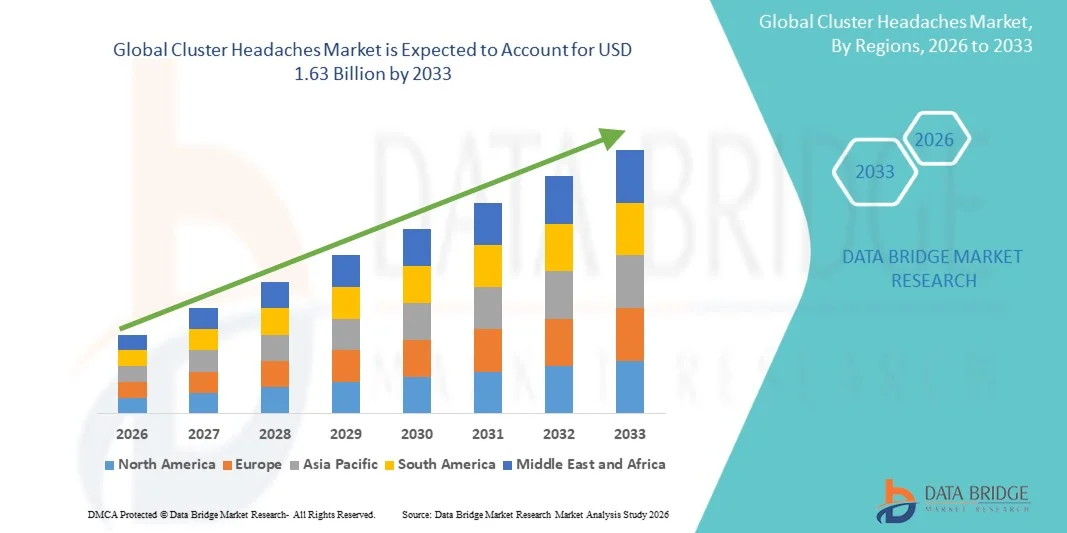
- The global cluster headaches market size was valued at USD 1.10 billion in 2025 and is expected to reach USD 1.63 billion by 2033, at a CAGR of 5.00% during the forecast period
- The market growth is primarily driven by increasing prevalence of cluster headaches, rising awareness about headache disorders, and advancements in targeted therapies and neuromodulation treatments
- In addition, growing patient preference for effective, fast-acting, and minimally invasive treatment options is positioning novel therapies as the preferred choice for managing cluster headaches. These factors collectively are accelerating adoption of advanced treatment solutions, thereby significantly propelling the market’s growth
Cluster Headaches Market Analysis
- Cluster headaches, characterized by severe, recurrent headaches often localized around one eye, are increasingly recognized as a distinct neurological disorder requiring specialized treatment and management strategies in both clinical and home care settings due to their debilitating impact and episodic nature
- The escalating demand for effective cluster headache treatments is primarily fueled by growing awareness of headache disorders, increasing prevalence rates, and a rising preference for fast-acting, targeted, and minimally invasive therapies
- North America dominated the cluster headaches market with the largest revenue share of 39.7% in 2025, driven by high diagnosis rates, well-established healthcare infrastructure, patient awareness programs, and a strong presence of pharmaceutical and neuromodulation therapy providers, with the U.S. witnessing significant adoption of novel therapies, including triptans and preventive medications for both episodic and chronic cluster headaches
- Asia-Pacific is expected to be the fastest-growing region in the cluster headaches market during the forecast period due to improving healthcare access, rising awareness, and increasing adoption of advanced drug therapies and combination treatment regimens
- Triptans segment dominated the cluster headaches market with a market share of 42.8% in 2025, driven by their proven efficacy in abortive treatment of both episodic and chronic cluster headache attacks
Report Scope and Cluster Headaches Market Segmentation
|
Attributes |
Cluster Headaches Key Market Insights |
|
Segments Covered |
|
|
Countries Covered |
North America
Europe
Asia-Pacific
Middle East and Africa
South America
|
|
Key Market Players |
|
|
Market Opportunities |
|
|
Value Added Data Infosets |
In addition to the insights on market scenarios such as market value, growth rate, segmentation, geographical coverage, and major players, the market reports curated by the Data Bridge Market Research also include in-depth expert analysis, patient epidemiology, pipeline analysis, pricing analysis, and regulatory framework |
Cluster Headaches Market Trends
“Advancements in Neuromodulation and Digital Health Solutions”
- A significant and accelerating trend in the global cluster headaches market is the increasing adoption of neuromodulation devices and digital health platforms, which provide non-drug-based, personalized management of headache episodes
- For instance, non-invasive vagus nerve stimulators allow patients to manage acute attacks at home, reducing dependence on injectable therapies and improving quality of life. Similarly, mobile headache tracking apps help monitor triggers, treatment response, and attack patterns for better disease management
- Integration of digital monitoring with treatment devices enables real-time data collection, personalized alerts, and predictive insights into upcoming cluster attacks, facilitating proactive intervention and more effective patient care
- The combination of neuromodulation therapies and digital platforms allows centralized management of headache treatment plans, enabling healthcare providers to track patient adherence, adjust therapy, and optimize outcomes
- This trend towards more patient-centric, technology-enabled, and data-driven treatment solutions is reshaping expectations for cluster headache management. Consequently, companies are developing connected neuromodulation devices with app integration and real-time monitoring features
- The demand for innovative, integrated, and patient-friendly treatment options is growing rapidly across both clinical and home care settings, as patients increasingly prioritize effective symptom control and convenience
- Growing interest in combination therapies, such as integrating preventive drugs with neuromodulation devices, is creating opportunities for holistic treatment approaches
- Increasing investment in R&D for wearable and portable cluster headache management devices is expected to drive product innovation and market expansion globally
Cluster Headaches Market Dynamics
Driver
“Increasing Prevalence and Awareness of Cluster Headaches”
- The rising prevalence of cluster headaches globally, coupled with growing patient awareness and educational initiatives, is a key driver for the expanding demand for effective treatment solutions
- For instance, in March 2025, electroCore announced expanded access programs for non-invasive vagus nerve stimulation devices, targeting patients with difficult-to-treat cluster headaches. Such initiatives by leading companies are expected to accelerate market growth in the forecast period
- As patients and healthcare providers become more aware of advanced treatment options, demand for targeted therapies, including triptans and preventive medications, continues to rise, improving patient outcomes
- Furthermore, increasing healthcare access and patient education are encouraging timely diagnosis and adoption of both pharmacological and device-based therapies, making cluster headache management more effective
- The convenience of home-use devices, easy-to-administer medications, and patient-centric monitoring solutions are key factors propelling market adoption across hospitals, clinics, and home care settings
- Expansion of headache specialty clinics and dedicated neurology centers is facilitating earlier diagnosis and personalized treatment, further driving market growth
- Collaborations between pharmaceutical companies and digital health startups are enhancing treatment accessibility and patient engagement, creating additional growth opportunities
Restraint/Challenge
“High Treatment Costs and Limited Access in Emerging Markets”
- The relatively high cost of advanced therapies, including neuromodulation devices and specialized medications, poses a significant challenge to broader market penetration, particularly in price-sensitive regions
- For instance, reports on limited insurance coverage and high out-of-pocket costs have made some patients hesitant to adopt premium therapies for cluster headache management
- Ensuring wider accessibility through reimbursement policies, affordable device options, and generic medications is crucial for expanding patient reach and driving adoption
- In addition, lack of awareness among healthcare providers and patients in certain regions can delay diagnosis and treatment initiation, limiting market growth despite availability of advanced therapies
- Overcoming these challenges through cost reduction strategies, patient education programs, and expanded access initiatives will be vital for sustained growth of the global cluster headaches market
- Regulatory hurdles and varying approval timelines for new drugs and devices in different countries may slow market expansion and delay product launches
- Limited availability of trained healthcare professionals specializing in cluster headache management can restrict patient access to advanced therapies, particularly in rural and underserved regions
Cluster Headaches Market Scope
The market is segmented on the basis of drug type, type, drug application, product types, and end user.
- By Drug Type
On the basis of drug type, the cluster headaches market is segmented into triptans, octreotide, opioids, and others. The triptans segment dominated the market with the largest market revenue share of 42.8% in 2025, driven by their proven efficacy in abortive treatment of both episodic and chronic cluster headache attacks. Triptans are widely prescribed by neurologists for rapid relief due to their high success rates and well-established safety profile. The strong adoption is further supported by the availability of various formulations, including nasal sprays, subcutaneous injections, and oral tablets. Triptans are also compatible with combination therapies, making them a preferred choice for patients requiring both acute and preventive management. Their clinical reliability and extensive physician familiarity reinforce their dominance in the market.
The octreotide segment is anticipated to witness the fastest growth rate of 19.4% from 2026 to 2033, fueled by its increasing use in patients who are unresponsive to traditional therapies. Octreotide, a somatostatin analog, is increasingly being used off-label for cluster headache management due to its efficacy in reducing attack frequency and severity. Ongoing clinical studies and growing awareness among neurologists regarding alternative treatments are driving adoption. The segment benefits from patient preference for non-triptan options and the rising focus on individualized therapy plans, particularly for chronic cluster headache sufferers.
- By Type
On the basis of type, the cluster headaches market is segmented into episodic and chronic. The episodic segment dominated the market with the largest revenue share of 55.2% in 2025, due to the higher prevalence of episodic cluster headaches and greater recognition in clinical practice. Episodic cases often prompt timely medical intervention, leading to consistent demand for abortive and preventive therapies. Patients with episodic cluster headaches are more such asly to seek effective treatment for predictable attack cycles, reinforcing the segment’s market dominance. Healthcare providers focus on rapid relief strategies and adherence to therapy, further supporting sustained growth in this segment.
The chronic segment is expected to witness the fastest CAGR of 17.8% from 2026 to 2033, driven by an increasing number of patients requiring long-term management and novel treatment modalities. Chronic cluster headache sufferers often exhibit treatment resistance, prompting demand for innovative therapies such as neuromodulation devices and combination drug regimens. Rising awareness and better diagnostic capabilities are leading to earlier identification of chronic cases, accelerating adoption of specialized treatments.
- By Drug Application
On the basis of drug application, the cluster headaches market is segmented into abortive, transitional, and preventative. The abortive segment dominated the market with a revenue share of 48.6% in 2025, as patients primarily seek immediate relief during intense headache episodes. Abortive therapies such as triptans and oxygen therapy provide rapid alleviation of symptoms, making them critical in clinical treatment protocols. High physician preference and patient reliance on quick-acting treatments reinforce dominance in this segment. Ongoing innovation in delivery methods, including subcutaneous injections and nasal sprays, further strengthens the segment’s market position.
The preventative segment is expected to witness the fastest growth rate of 18.5% from 2026 to 2033, fueled by increasing adoption of prophylactic treatments to reduce attack frequency and improve patient quality of life. Preventive drugs, including calcium channel blockers and corticosteroids, are gaining traction as patients and clinicians prioritize long-term management strategies. Growing awareness about chronic and recurrent cluster headache patterns drives the need for prevention-focused therapies, accelerating market growth.
- By Product Types
On the basis of product types, the cluster headaches market is segmented into calcium channel blockers, corticosteroids, sumatriptan, lithium carbonate, ergots, melatonin, anti-seizure, and local anesthetics. The sumatriptan segment dominated the market with the largest revenue share of 43.7% in 2025, due to its established efficacy in abortive therapy and widespread clinical adoption. Sumatriptan is available in multiple delivery formats, providing flexibility for patients and healthcare providers. Physician familiarity and strong clinical guidelines further reinforce its market dominance.
The anti-seizure segment is anticipated to witness the fastest CAGR of 20.1% from 2026 to 2033, driven by its emerging use in prophylactic treatment for both episodic and chronic cluster headaches. Anti-seizure medications, such as valproate and topiramate, are increasingly recommended for patients with refractory or treatment-resistant cases. Ongoing research and clinical trials demonstrating efficacy in reducing attack frequency are supporting rapid adoption. Overall, the combination of clinical efficacy, patient preference, and growing awareness is accelerating growth in this segment.
- By End User
On the basis of end user, the cluster headaches market is segmented into hospitals & clinics, private clinics, retail pharmacies & drug stores, and e-commerce. The hospitals & clinics segment dominated the market with the largest revenue share of 52.8% in 2025, owing to the high patient influx for diagnosis, treatment, and follow-up care. Hospitals provide access to advanced therapies, including neuromodulation devices and injectable medications, supporting market dominance. Strong collaboration with pharmaceutical companies ensures continuous availability of both abortive and preventive treatments.
The e-commerce segment is expected to witness the fastest growth rate of 22.3% from 2026 to 2033, fueled by rising patient preference for convenient home delivery of prescription and over-the-counter medications. Online platforms also facilitate access to specialty drugs, patient education, and teleconsultation services. The growing digital penetration and acceptance of online healthcare solutions are accelerating adoption, particularly among tech-savvy and younger patient populations. The convenience, coupled with growing awareness and patient education through digital channels, is accelerating market growth in this segment.
Cluster Headaches Market Regional Analysis
- North America dominated the cluster headaches market with the largest revenue share of 39.7% in 2025, driven by high diagnosis rates, well-established healthcare infrastructure, patient awareness programs, and a strong presence of pharmaceutical and neuromodulation therapy providers
- Patients and healthcare providers in the region prioritize access to advanced therapies, including triptans, neuromodulation devices, and preventive medications, which are widely available through hospitals and specialty clinics
- This strong market presence is further supported by high healthcare spending, robust insurance coverage, and the availability of skilled neurologists, establishing North America as a leading region for cluster headache diagnosis, treatment, and management
U.S. Cluster Headaches Market Insight
The U.S. cluster headaches market captured the largest revenue share of 82% in 2025 within North America, fueled by high awareness of headache disorders and advanced healthcare infrastructure. Patients increasingly seek effective acute and preventive therapies, including triptans, neuromodulation devices, and prophylactic medications. The growing prevalence of episodic and chronic cluster headaches, combined with robust access to specialty neurology clinics, further propels market growth. Moreover, integration of telemedicine and digital headache tracking apps is enhancing patient monitoring and adherence to treatment. In addition, strong insurance coverage and widespread availability of novel therapies support the market's expansion.
Europe Cluster Headaches Market Insight
The Europe cluster headaches market is projected to expand at a substantial CAGR throughout the forecast period, primarily driven by rising awareness of headache disorders and increased adoption of advanced therapies. The need for effective management in both residential and clinical settings is encouraging the use of triptans, preventive drugs, and neuromodulation devices. Increasing urbanization and healthcare infrastructure improvements are fostering the accessibility of treatments. European patients are also drawn to convenient home-use devices and telehealth solutions. The region is experiencing growth across hospitals, clinics, and retail pharmacies, with both acute and preventive therapies gaining traction.
U.K. Cluster Headaches Market Insight
The U.K. cluster headaches market is anticipated to grow at a noteworthy CAGR during the forecast period, driven by heightened awareness of headache management and a preference for effective, fast-acting therapies. Rising patient focus on quality of life, along with concerns regarding prolonged headache episodes, encourages the adoption of abortive and preventive treatments. The country’s strong healthcare system and widespread telemedicine adoption facilitate access to advanced therapies. In addition, the availability of online pharmacies and e-commerce platforms supports treatment adherence. The growing trend of self-management and patient education initiatives is expected to continue stimulating market growth.
Germany Cluster Headaches Market Insight
The Germany cluster headaches market is expected to expand at a considerable CAGR during the forecast period, fueled by increasing awareness of chronic headache disorders and growing demand for innovative treatment options. Patients and healthcare providers are increasingly adopting neuromodulation devices and preventive medications for effective long-term management. Germany’s robust healthcare infrastructure and emphasis on research and innovation promote market adoption. Integration of digital monitoring tools and personalized therapy plans is also gaining traction. Strong patient education programs and early diagnosis initiatives further support market growth.
Asia-Pacific Cluster Headaches Market Insight
The Asia-Pacific cluster headaches market is poised to grow at the fastest CAGR of 23% during the forecast period of 2026 to 2033, driven by rising awareness, improving healthcare infrastructure, and increasing adoption of advanced therapies in countries such as China, Japan, and India. Government initiatives promoting healthcare accessibility and digital health adoption are accelerating treatment uptake. The region’s growing telemedicine and e-commerce platforms enable convenient access to prescription and preventive medications. Moreover, emerging markets are witnessing rising investment in neurology clinics and headache specialty centers. The combination of affordability, technological advancement, and increasing patient awareness is driving rapid market expansion.
Japan Cluster Headaches Market Insight
The Japan cluster headaches market is gaining momentum due to high awareness of headache disorders, advanced healthcare systems, and strong focus on patient convenience. The adoption of neuromodulation devices and combination drug therapies is increasing, particularly in urban areas with high prevalence of cluster headaches. Integration of digital headache monitoring tools and telemedicine enhances patient adherence and personalized treatment. In addition, the aging population is such asly to drive demand for easier-to-use, effective treatments. Increasing patient education and specialized clinics further support market growth across both residential and clinical settings.
India Cluster Headaches Market Insight
The India cluster headaches market accounted for the largest market revenue share in Asia-Pacific in 2025, attributed to rising awareness, improving healthcare infrastructure, and increasing access to advanced therapies. The expanding middle class and urbanization are driving demand for both acute and preventive treatments. Telemedicine and e-commerce channels are improving access to prescription medications and neuromodulation devices. Growing patient education initiatives and headache specialty centers are facilitating early diagnosis and effective treatment. The availability of affordable therapies and domestic pharmaceutical manufacturers are key factors propelling market growth in India.
Cluster Headaches Market Share
The Cluster Headaches industry is primarily led by well-established companies, including:
- Eli Lilly and Company (U.S.)
- Teva Pharmaceutical Industries Ltd. (Israel)
- Pfizer Inc., (U.S.)
- Novartis AG (Switzerland)
- GSK plc (U.K.)
- Amgen Inc. (U.S.)
- AstraZeneca (U.K.)
- AbbVie Inc. (U.S.)
- Sun Pharmaceutical Industries Ltd. (India)
- Lundbeck A/S (Denmark)
- Bausch Health (Canada)
- Dr. Reddy’s Laboratories Ltd., (India)
- ElectroCore, Inc., (U.S.)
- Viatris Inc., (U.S.)
- Satsuma Pharmaceuticals, Inc., (U.S.)
- Autonomic Technologies, Inc., (U.S.)
- Hikma Pharmaceuticals PLC, (U.K.)
- Johnson & Johnson Services, Inc., (U.S.)
- Otsuka Pharmaceutical Co., Ltd., (Japan)
- Zosano Pharma Corporation (U.S.)
What are the Recent Developments in Global Cluster Headaches Market?
- In October 2025, Amneal Pharmaceuticals commercially launched Brekiya in the U.S., making this new acute‑attack therapy accessible to patients via prescription through specialized pharmacies, giving CH sufferers a convenient, ready-to-use, single-dose DHE autoinjector
- In July 2025, a phase‑2 placebo-controlled trial of Erenumab for prophylactic treatment of chronic cluster headache (CCH) concluded that the drug did not yield a statistically significant reduction in weekly headache attacks versus placebo, undermining hope for its effectiveness in CCH prevention
- In June 2025, researchers at the Karolinska Institutet (Sweden) were awarded grants by agencies including the International Headache Society to fund innovative research into the role of heavy‑metal exposure in Cluster Headache specifically a project studying epigenetic changes linked to cadmium exposure. This could open new preventive and pathophysiological understanding of cluster headache causes
- In May 2025, Brekiya (dihydroergotamine mesylate) was approved by the U.S. Food and Drug Administration (FDA) as the first ever ready‑to‑use DHE autoinjector for acute treatment of migraine and cluster headaches in adults enabling self‑administration at home, thus potentially reducing emergency‑room visits for acute CH attacks
- In December 2024, a real‑world observational study from Brazil on Galcanezumab involving 44 CH patients reported that 66% of patients had ≥ 50% reduction in headache frequency within 3 weeks strengthening evidence for Galcanezumab’s prophylactic use in cluster headache

- Interactive Data Analysis Dashboard
- Company Analysis Dashboard for high growth potential opportunities
- Research Analyst Access for customization & queries
- Competitor Analysis with Interactive dashboard
- Latest News, Updates & Trend analysis
- Harness the Power of Benchmark Analysis for Comprehensive Competitor Tracking
Data collection and base year analysis are done using data collection modules with large sample sizes. The stage includes obtaining market information or related data through various sources and strategies. It includes examining and planning all the data acquired from the past in advance. It likewise envelops the examination of information inconsistencies seen across different information sources. The market data is analysed and estimated using market statistical and coherent models. Also, market share analysis and key trend analysis are the major success factors in the market report. To know more, please request an analyst call or drop down your inquiry.
The key research methodology used by DBMR research team is data triangulation which involves data mining, analysis of the impact of data variables on the market and primary (industry expert) validation. Data models include Vendor Positioning Grid, Market Time Line Analysis, Market Overview and Guide, Company Positioning Grid, Patent Analysis, Pricing Analysis, Company Market Share Analysis, Standards of Measurement, Global versus Regional and Vendor Share Analysis. To know more about the research methodology, drop in an inquiry to speak to our industry experts.
Data Bridge Market Research is a leader in advanced formative research. We take pride in servicing our existing and new customers with data and analysis that match and suits their goal. The report can be customized to include price trend analysis of target brands understanding the market for additional countries (ask for the list of countries), clinical trial results data, literature review, refurbished market and product base analysis. Market analysis of target competitors can be analyzed from technology-based analysis to market portfolio strategies. We can add as many competitors that you require data about in the format and data style you are looking for. Our team of analysts can also provide you data in crude raw excel files pivot tables (Fact book) or can assist you in creating presentations from the data sets available in the report.













