


Coated Fabrics Market Size
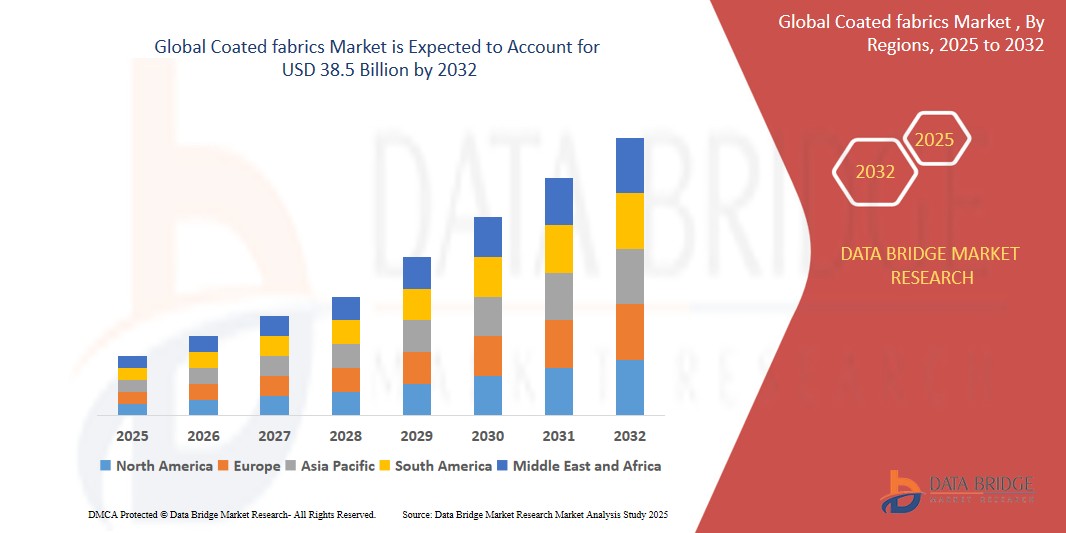
- The global coated fabrics market size was valued at USD 23.7 billion in 2024 and is expected to reach USD 38.5 billion by 2032, growing at a CAGR of 6.2% during the forecast period.
- This growth is fueled by rising demand from the transportation and industrial sectors, increased focus on worker safety, and the adoption of lightweight and durable materials across end-use industries. Advancements in eco-friendly coating technologies and increasing infrastructure development are further accelerating market growth.
Coated Fabrics Market Analysis
- Coated fabrics are textiles coated with rubber, polymer, or other materials to enhance properties such as water resistance, durability, UV protection, and chemical resistance. They are widely used in automotive interiors, industrial protective gear, tents, roofing membranes, and furniture upholstery.
- The market is gaining traction due to the growing need for high-performance and lightweight materials that meet environmental and safety standards, especially in transportation, industrial, and protective clothing applications.
- Asia-Pacific dominates the coated fabrics market, accounting for 37.26% of the global share, attributed to rapid industrialization, growing automotive production, and infrastructure expansion in countries such as China and India.
- North America is expected to be the fastest-growing region during the forecast period due to increasing demand for technical textiles, rising emphasis on automotive lightweighting, and the adoption of sustainable and bio-based coatings.
- The Polymer-Coated Fabrics segment holds the largest market share at 48.10%, driven by high usage in automotive seating, airbags, and protective covers. Among these, Vinyl-Coated Fabrics (PVC) lead due to their cost-efficiency, water resistance, and broad applicability in upholstery and industrial applications.
- In terms of End-Use Industry, the Aerospace and Defense sector is witnessing rising adoption of lightweight coated textiles for applications such as inflatable shelters, tarpaulins, gear protection, and aircraft seating, followed closely by marine and sports industries, where durability and weather resistance are crucial.
Report Scope and Coated fabrics Market Segmentation
|
Attributes |
Coated fabrics Key Market Insights |
|
Segments Covered |
|
|
Countries Covered |
North America
Europe
Asia-Pacific
Middle East and Africa
South America
|
|
Key Market Players |
|
|
Market Opportunities |
|
|
Value Added Data Infosets |
In addition to the insights on market scenarios such as market value, growth rate, segmentation, geographical coverage, and major players, the market reports curated by the Data Bridge Market Research also include in-depth expert analysis, pricing analysis, brand share analysis, consumer survey, demography analysis, supply chain analysis, value chain analysis, raw material/consumables overview, vendor selection criteria, PESTLE Analysis, Porter Analysis, and regulatory framework. |
Coated fabrics Market Trends
“Growing Preference for Sustainable and Recyclable Coated Fabrics”
- One key trend shaping the global coated fabrics market is the growing preference for sustainable and recyclable coated fabrics, particularly across sectors such as automotive, marine, and furniture.
- This shift is driven by increasing environmental awareness, rising regulatory pressures, and the global push toward circular economy practices.
For instance, companies like Spradling International and Saint-Gobain are investing in eco-friendly vinyl alternatives and recyclable polymer coatings to reduce environmental impact and align with green manufacturing initiatives.
- Additionally, PU- and silicone-based coatings are gaining popularity due to their lower environmental footprint compared to conventional PVC-coated materials.
- As end-use industries seek to reduce carbon emissions and promote sustainable sourcing, the demand for green, recyclable, and compliant coated fabric solutions is expected to accelerate.
Coated fabrics Market Dynamics
Driver
“Surging Demand from Automotive and Transportation Sectors”
- The increasing demand from automotive and transportation industries is a major growth driver for the coated fabrics market. These materials are extensively used in vehicle interiors, seat upholstery, airbags, and protective coverings due to their durability, flexibility, water resistance, and aesthetic appeal.
- With rising automotive production in Asia-Pacific and technological innovations in electric and lightweight vehicles, coated fabrics are witnessing broader adoption.
For instance, Trelleborg AB and Seaman Corporation have introduced high-performance, fire-retardant coated fabrics specifically engineered for automotive and rail applications, offering both safety and aesthetic enhancements.
- Additionally, as the automotive industry embraces lightweight and cost-effective materials to meet fuel efficiency standards, coated fabrics offer an ideal balance of performance, weight savings, and cost control, thereby reinforcing their demand
Restraint/Challenge
“Volatility in Raw Material Prices and Supply Chain Disruptions”
- A key challenge facing the coated fabrics market is the volatility in raw material prices, particularly for polymers such as PVC, polyurethane, and silicone, which are derived from petrochemicals.
- Fluctuations in crude oil prices, combined with geopolitical tensions and supply chain disruptions, have led to unpredictable material costs, impacting manufacturers' margins and pricing strategies.
For instance, manufacturers sourcing raw materials from overseas markets faced logistics bottlenecks and rising freight costs during the COVID-19 pandemic and post-pandemic recovery period, which affected production cycles and order deliveries.
- Additionally, the transition toward eco-friendly formulations further raises input costs due to the need for specialty polymers and advanced coating technologies, limiting affordability for price-sensitive segments such as construction and industrial applications.
- The high dependency on consistent raw material supply and price stability may constrain growth, especially for small and mid-sized manufacturers trying to compete in cost-driven markets.
Coated fabrics Market Scope
The market is segmented on the basis of product type, application, and end user industry
- By Product Type
On the basis of product type, the Coated Fabrics Market is segmented into Polymer-Coated Fabrics (Vinyl-Coated, PU-Coated, PE-Coated), Rubber-Coated Fabrics, and Fabric-Backed Wall Coverings.
The Polymer-Coated Fabrics segment is projected to dominate the largest market revenue share of 46.1% in 2025, driven by its extensive utilization in industries such as automotive, construction, protective clothing, and furniture. These fabrics offer exceptional durability, chemical resistance, water repellency, and easy maintenance, making them the material of choice for a wide range of heavy-duty and decorative applications. Within this segment, PU-coated fabrics are gaining preference due to their eco-friendly properties, superior flexibility, and enhanced breathability compared to vinyl alternatives.
Meanwhile, the Rubber-Coated Fabrics segment is expected to grow at the highest CAGR of 6.91% during the forecast period of 2025–2032, supported by increasing demand in industrial and marine sectors. These fabrics are particularly valued for their high tensile strength, abrasion resistance, and weather resilience, making them ideal for applications such as conveyor belts, inflatable boats, and protective linings.
- By Application
On the basis of application, the Coated Fabrics Market is segmented into Transportation, Protective Clothing, Industrial, Roofing Awnings and Canopies, Furniture and Seating, and Others. The Transportation segment held the largest market share of 27.4% in 2025, owing to the widespread use of coated fabrics in automobile seat upholstery, airbags, headliners, and truck covers. Their resistance to UV radiation, flame retardancy, and ease of cleaning makes them highly suitable for both interior and exterior transport components.
However, the Protective Clothing segment is anticipated to witness the highest CAGR of 7.02% during the forecast period, driven by the rising need for high-performance PPE across industries such as chemicals, oil & gas, construction, and manufacturing. Coated fabrics offer vital protective properties, including chemical resistance, waterproofing, and puncture resistance, contributing to worker safety and regulatory compliance across hazardous work environments.
- By End-Use Industry
By end-use industry, the market is categorized into Aerospace and Defense, Marine, Pharmaceuticals, Sports, and Others. The Aerospace and Defense segment is forecasted to account for the largest market share of 23.6% in 2025, driven by the use of coated fabrics in aircraft seating, military tents, protective coverings, and life-saving gear. The demand is fueled by the material’s flame retardant, lightweight, and high-strength properties, crucial for high-performance and safety-sensitive applications.
In contrast, the Pharmaceuticals segment is expected to register the highest CAGR of 7.25% during 2025–2032, supported by increasing demand for sterile and chemical-resistant environments in pharmaceutical production and packaging units. Coated fabrics are widely used in cleanroom curtains, antimicrobial wall coverings, and hygienic furniture surfaces, driven by stringent regulatory standards and expanding pharmaceutical infrastructure globally.
Global Coated fabrics Market Regional Analysis
North America Coated Fabrics Market Insight
North America accounted for approximately 28.4% of the global coated fabrics market revenue in 2024, reflecting strong demand from transportation, protective apparel, and furniture sectors.
The region's mature industrial ecosystem and heightened focus on workplace safety standards and durable, compliant materials contribute to steady demand for polymer and rubber-coated fabric solutions.
- U.S. Coated Fabrics Market Insight
The U.S. held the largest share within North America, capturing nearly 21.6% of the global coated fabrics market in 2025. High consumption across automotive interiors, airbag systems, and industrial protective clothing continues to drive the market. Growing investments in infrastructure, as well as heightened demand for sustainable, flame-retardant coated textiles, are reinforcing the U.S. market’s leading position.
- Canada Coated Fabrics Market Insight
Canada contributed around 6.8% of North America’s total coated fabrics market in 2025. With rising adoption in marine, industrial, and architectural applications, the country is witnessing gradual yet consistent growth. The increasing focus on durable, weather-resistant solutions in tarpaulins, tents, and construction membranes is boosting coated fabric usage across sectors.
Europe Coated Fabrics Market Insight
Europe represented approximately 26.7% of the global coated fabrics market revenue in 2024, supported by strong demand from automotive, construction, and healthcare sectors.
The region’s proactive environmental regulations and innovation-driven economy are propelling demand for low-VOC, recyclable, and sustainable coated fabric products across diverse end-use verticals.
- Germany Coated Fabrics Market Insight
Germany accounted for nearly 9.2% of the global market share in 2025, standing out as a key contributor within Europe. The country’s robust automotive and industrial machinery sectors utilize coated fabrics extensively in seating, conveyor belts, and thermal insulation materials. Government incentives for green buildings and automotive innovation further enhance market adoption.
- France Coated Fabrics Market Insight
France held a market share of about 6.7% in 2025, with growth supported by rapid deployment of coated fabrics in cleanroom equipment, medical products, and modular construction. France’s commitment to climate goals and modern infrastructure is also driving usage in roofing membranes and outdoor structures, favoring high-performance coated fabric demand.
Asia-Pacific Coated Fabrics Market Insight
Asia-Pacific dominated the global market in 2024, capturing an estimated 34.1% of the total coated fabrics market revenue, and is projected to witness the fastest CAGR of over 7.8% during the forecast period.
The region's rapid industrialization, expanding middle class, and increasing demand from automotive, construction, and consumer goods industries are key growth drivers.
- China Coated Fabrics Market Insight
China held the largest share in Asia-Pacific, accounting for approximately 17.9% of the global coated fabrics market in 2025. The country’s booming automotive sector, extensive infrastructure development, and export-led growth in furniture and marine products continue to support high demand for coated textiles. Emphasis on sustainable development and domestic production of advanced materials is further accelerating adoption.
- India Coated Fabrics Market Insight
India captured around 6.2% of the global market in 2025, driven by strong infrastructure development, growing automotive production, and increased government support for domestic manufacturing. The country is witnessing a surge in demand for protective fabrics in industrial and healthcare sectors, as well as polymer-coated solutions in tents, vehicle covers, and transport upholster
Coated fabrics Market Share
The Coated fabrics industry is primarily led by well-established companies, including:
- Omnova Solutions Inc. (U.S.)
- Trelleborg AB (Sweden)
- Saint-Gobain Performance Plastics (France)
- Takata Corporation (Japan)
- SRF Limited (India)
- Seaman Corporation (U.S.)
- ContiTech AG (Germany)
- Spradling International Inc. (U.S.)
- Nassimi LLC (U.S.)
- Morbern Inc. (Canada)
- Heytex Bramsche GmbH (Germany)
- Sioen Industries NV (Belgium)
- Canadian General Tower Ltd. (CGT) (Canada)
- Uniroyal Engineered Products LLC (U.S.)
- Cotting Group (France)
Latest Developments in Global Coated fabrics Market
- In February 2025, Trelleborg AB launched a new range of eco-engineered rubber-coated fabrics under the brand EcoShield Series, targeting applications in marine and defense sectors. These fabrics are designed to offer superior abrasion resistance while being halogen-free and compliant with stringent environmental regulations, reinforcing Trelleborg’s leadership in sustainable coated fabric solutions.
- In October 2024, Saint-Gobain Performance Plastics expanded its production facility in Hoosick Falls, New York (USA) to increase the output of PTFE-coated fabrics used in industrial filtration and food processing belts. This investment enhances the company’s supply chain reliability and supports growing demand for high-performance coated materials in North America.
- In June 2024, Sioen Industries NV introduced a new line of lightweight PVC-coated fabrics for use in architectural membranes and tensile structures. Developed with a focus on durability and recyclability, this innovation aligns with increasing global demand for sustainable construction materials and positions Sioen as a key player in the green building movement.
- In May 2024, SRF Limited announced the development of a new PU-coated technical textile tailored for high-endurance protective clothing, especially for defense and industrial use. The launch is expected to open new revenue streams in the high-spec fabric segment and enhance SRF’s competitive advantage in Asia-Pacific and Middle East markets.
- In March 2024, Heytex Bramsche GmbH unveiled its latest innovation, Heytex Protect XT, a silicone-coated fabric designed for extreme environments such as firefighting gear and aerospace insulation. This new product line offers superior heat resistance, flexibility, and longer lifecycle performance, reinforcing the company’s foothold in high-specification applications.

- Interactive Data Analysis Dashboard
- Company Analysis Dashboard for high growth potential opportunities
- Research Analyst Access for customization & queries
- Competitor Analysis with Interactive dashboard
- Latest News, Updates & Trend analysis
- Harness the Power of Benchmark Analysis for Comprehensive Competitor Tracking
Global Coated Fabrics Market, Supply Chain Analysis and Ecosystem Framework
To support market growth and help clients navigate the impact of geopolitical shifts, DBMR has integrated in-depth supply chain analysis into its Global Coated Fabrics Market research reports. This addition empowers clients to respond effectively to global changes affecting their industries. The supply chain analysis section includes detailed insights such as Global Coated Fabrics Market consumption and production by country, price trend analysis, the impact of tariffs and geopolitical developments, and import and export trends by country and HSN code. It also highlights major suppliers with data on production capacity and company profiles, as well as key importers and exporters. In addition to research, DBMR offers specialized supply chain consulting services backed by over a decade of experience, providing solutions like supplier discovery, supplier risk assessment, price trend analysis, impact evaluation of inflation and trade route changes, and comprehensive market trend analysis.
Data collection and base year analysis are done using data collection modules with large sample sizes. The stage includes obtaining market information or related data through various sources and strategies. It includes examining and planning all the data acquired from the past in advance. It likewise envelops the examination of information inconsistencies seen across different information sources. The market data is analysed and estimated using market statistical and coherent models. Also, market share analysis and key trend analysis are the major success factors in the market report. To know more, please request an analyst call or drop down your inquiry.
The key research methodology used by DBMR research team is data triangulation which involves data mining, analysis of the impact of data variables on the market and primary (industry expert) validation. Data models include Vendor Positioning Grid, Market Time Line Analysis, Market Overview and Guide, Company Positioning Grid, Patent Analysis, Pricing Analysis, Company Market Share Analysis, Standards of Measurement, Global versus Regional and Vendor Share Analysis. To know more about the research methodology, drop in an inquiry to speak to our industry experts.
Data Bridge Market Research is a leader in advanced formative research. We take pride in servicing our existing and new customers with data and analysis that match and suits their goal. The report can be customized to include price trend analysis of target brands understanding the market for additional countries (ask for the list of countries), clinical trial results data, literature review, refurbished market and product base analysis. Market analysis of target competitors can be analyzed from technology-based analysis to market portfolio strategies. We can add as many competitors that you require data about in the format and data style you are looking for. Our team of analysts can also provide you data in crude raw excel files pivot tables (Fact book) or can assist you in creating presentations from the data sets available in the report.













