


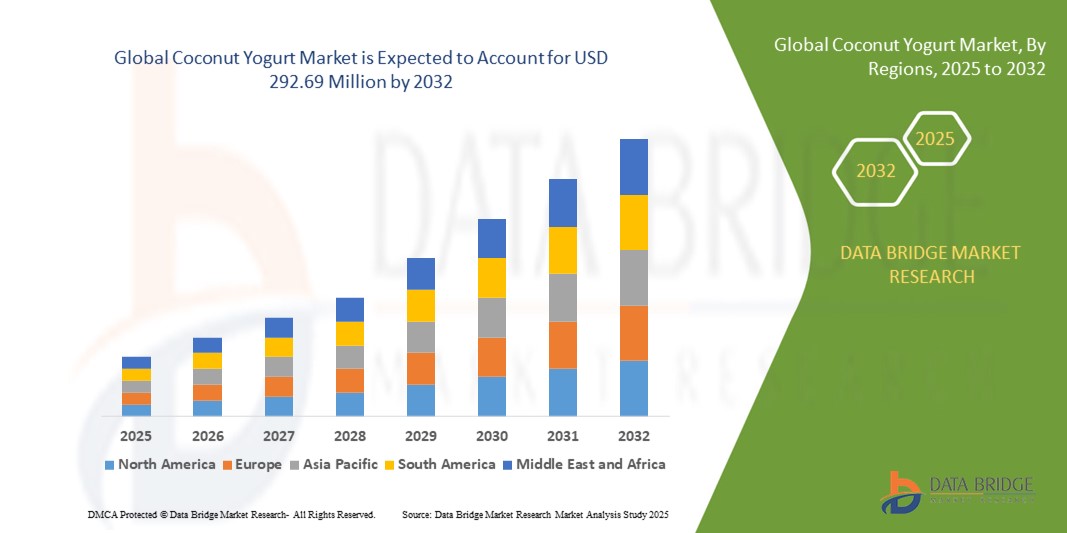
Coconut Yogurt Market Size
- The global coconut yogurt market size was valued at USD 114.07 million in 2024 and is expected to reach USD 292.69 million by 2032, at a CAGR of 12.50% during the forecast period
- The market growth is largely fueled by increasing consumer preference for plant-based, dairy-free alternatives, driven by rising lactose intolerance, veganism, and awareness of gut health benefits associated with probiotic-rich foods
- Furthermore, growing demand for clean-label, allergen-free, and sustainably sourced products is positioning coconut yogurt as a preferred choice among health-conscious and environmentally aware consumers. These combined factors are accelerating the adoption of coconut-based yogurt across global retail and foodservice sectors, thereby significantly contributing to the industry’s expansion
Coconut Yogurt Market Analysis
- Coconut yogurt is a plant-based, non-dairy fermented product made from coconut milk and live cultures, offering probiotic benefits similar to traditional yogurt. It serves as an alternative for individuals with dietary restrictions and appeals to consumers seeking natural, vegan, and functional food products
- The escalating demand for coconut yogurt is primarily driven by a shift in dietary patterns toward sustainable and wellness-oriented foods, coupled with a growing retail presence of plant-based alternatives and continuous product innovation in flavors, protein fortification, and clean-label formulations
- North America dominated the coconut yogurt market with a share of 35.4% in 2024, due to rising lactose intolerance rates, growing veganism, and increasing consumer preference for plant-based alternatives
- Asia-Pacific is expected to be the fastest growing region in the coconut yogurt market during the forecast period due to rising health awareness, urbanization, and dietary shifts among consumers in countries such as China, Japan, and India
- Flavored segment dominated the market with a market share of 69.4% in 2024, due to high consumer demand for indulgent and varied taste options. Flavored coconut yogurts—ranging from strawberry and vanilla to tropical fruits and chocolate—appeal to a broad demographic and are often positioned as healthier dessert alternatives. They cater to children, snackers, and those seeking sweet but guilt-free options. Frequent product innovations, seasonal flavors, and collaborations with chefs or wellness influencers keep the segment dynamic and engaging
Report Scope and Coconut Yogurt Market Segmentation
|
Attributes |
Coconut Yogurt Key Market Insights |
|
Segments Covered |
|
|
Countries Covered |
North America
Europe
Asia-Pacific
Middle East and Africa
South America
|
|
Key Market Players |
|
|
Market Opportunities |
|
|
Value Added Data Infosets |
In addition to the insights on market scenarios such as market value, growth rate, segmentation, geographical coverage, and major players, the market reports curated by the Data Bridge Market Research also include in-depth expert analysis, pricing analysis, brand share analysis, consumer survey, demography analysis, supply chain analysis, value chain analysis, raw material/consumables overview, vendor selection criteria, PESTLE Analysis, Porter Analysis, and regulatory framework. |
Coconut Yogurt Market Trends
Surge in Online Sales of Plant-Based Yogurt Products
- The coconut yogurt market is witnessing a significant rise in online sales channels, driven by growing consumer preference for convenient access to plant-based, dairy-free yogurt options and broader e-commerce adoption
- For instance, brands such as Daiya Foods, Coconut Collaborative, and Harmless Harvest leverage direct-to-consumer platforms and digital marketplaces to reach health-conscious and vegan consumers worldwide, expanding market penetration beyond traditional retail outlets
- Online sales enable rapid launch and promotion of innovative flavors, limited editions, and functional products enriched with probiotics, superfoods, and adaptogens, appealing to digitally engaged customers seeking new experiences
- The COVID-19 pandemic accelerated the shift to online grocery shopping, boosting visibility and accessibility of coconut yogurt through subscription services, specialty retailers, and health food stores with e-commerce capabilities
- Social media marketing and influencer collaborations effectively drive awareness and trial among younger demographics, further fueling digital sales growth
- Integration of personalized shopping, easy reordering, and subscription models on online platforms supports customer retention and market expansion by simplifying purchase frequency and product discovery
Coconut Yogurt Market Dynamics
Driver
Increasing Demand for Plant-Based and Dairy-Free Alternatives
- Rising consumer awareness about lactose intolerance, dairy allergies, and the environmental impact of traditional dairy is fueling strong demand for coconut yogurt as a nutritious, dairy-free alternative with appealing taste and texture
- For instance, growing vegan, vegetarian, and flexitarian populations worldwide are adopting plant-based diets, with statistics showing a 600% increase in U.S. vegans over recent years, contributing significantly to market growth
- Coconut yogurt’s natural richness in medium-chain triglycerides (MCTs), fiber, and probiotics positions it as a functional food that supports digestive health and immune function, enhancing its appeal to health-conscious consumers
- Expanding product innovations include fortified coconut yogurts with added vitamins, protein blends, and clean-label formulations that resonate with new health trends and dietary preferences
- Distribution expansion into mainstream supermarkets, specialty stores, and foodservice sectors enables wider consumer access, accelerating overall market adoption
Restraint/Challenge
Limited Shelf Life and Cold Chain Dependency
- Coconut yogurt’s shorter shelf life compared to dairy yogurt and its dependence on strict cold chain logistics pose significant challenges for manufacturers and distributors, impacting product availability and profitability
- For instance, maintaining product freshness and probiotic viability requires continuous refrigeration throughout storage, transport, and retail display, increasing costs and complexity, especially in emerging markets with less developed cold infrastructure
- Supply chain disruptions and temperature fluctuations can cause spoilage or quality degradation, reducing consumer confidence and increasing waste
- The need for refrigerated transport and storage restricts distribution channels and increases carbon footprint, complicating sustainability efforts for brands prioritizing eco-friendly credentials
- High operational costs related to cold chain logistics may limit price competitiveness against conventional dairy and other long-shelf-life plant-based yogurt alternatives
Coconut Yogurt Market Scope
The market is segmented on the basis of type, application, distribution channel, consumer demographic, packaging, and flavor.
- By Type
On the basis of type, the coconut yogurt market is segmented into conventional and organic. The conventional segment dominated the largest market revenue share in 2024, driven by its mass-market accessibility, competitive pricing, and strong consumer acceptance. Conventional coconut yogurt is widely distributed through retail chains and food service outlets, making it readily available to a broad demographic. Its consistent taste, availability in a range of flavors, and longer shelf life have solidified its position in the everyday diet of consumers. Manufacturers often enhance these products with added vitamins or stabilizers to improve nutrition and shelf stability.
The organic segment is expected to witness the fastest CAGR from 2025 to 2032, propelled by rising awareness of clean-label and health-oriented food choices. Consumers are increasingly shifting toward products that are free from synthetic additives, preservatives, and GMOs, which has boosted the demand for organic coconut yogurt. The segment is further supported by growing environmental consciousness and preference for sustainable farming practices. Premium positioning, targeted marketing through wellness influencers, and availability in health food stores and digital platforms are expanding its adoption, especially among millennials and urban health-conscious consumers.
- By Application
On the basis of application, the market is segmented into food service, supermarkets/hypermarkets, departmental stores, specialty stores, and online retail. The supermarkets/hypermarkets segment held the largest market revenue share in 2024 due to high product visibility, established distribution infrastructure, and consumer trust in large-format retail. These stores provide consumers with the convenience of bulk shopping and access to a wide range of brands and price points. Refrigeration facilities and promotional displays enhance product appeal, while in-store sampling boosts first-time purchases.
The online retail segment is projected to grow at the fastest rate from 2025 to 2032, supported by rising digital penetration and changing consumer purchasing habits. E-commerce platforms enable easy product discovery, detailed product comparisons, and home delivery, which are especially valued for perishable health foods. Direct-to-consumer subscription models, influencer-driven branding, and exclusive online launches are further driving momentum. This channel is particularly attractive to tech-savvy consumers who prioritize convenience, variety, and access to niche or premium brands not available in local stores.
- By Distribution Channel
On the basis of distribution channel, the coconut yogurt market is segmented into direct selling and third-party selling. The third-party selling segment dominated the largest market share in 2024 owing to the extensive retail network comprising supermarkets, health food chains, and e-commerce platforms. This model allows manufacturers to scale efficiently and reach geographically diverse customer bases without managing end-to-end logistics. It also supports better shelf presence through merchandising support from retailers.
The direct selling segment is anticipated to register the fastest growth rate from 2025 to 2032, driven by rising adoption of brand-owned online platforms and D2C (direct-to-consumer) marketing. This model enables brands to engage customers with tailored promotions, exclusive products, and feedback-driven innovation. Enhanced consumer trust, better control over brand experience, and higher margins also make direct selling increasingly attractive. Growing use of social media, wellness communities, and email marketing campaigns is further accelerating the reach of this channel, especially among loyal or health-conscious shoppers.
- By Consumer Demographic
On the basis of consumer demographic, the coconut yogurt market is segmented into adults and children. The adults segment captured the largest revenue share in 2024, largely due to the increasing demand from health-aware individuals who seek dairy-free, probiotic-rich alternatives for gut health and lactose intolerance. Adults frequently incorporate coconut yogurt into daily diets as part of breakfast routines, smoothie bowls, or clean-label snacking options. This group is also highly responsive to functional claims such as “high-protein,” “plant-based,” and “low-sugar,” which are increasingly featured in coconut yogurt branding.
The children segment is forecast to grow at the fastest CAGR from 2025 to 2032, driven by parental preference for clean, nutritious snacks free from artificial sweeteners and allergens. As awareness around child nutrition and gut health grows, coconut yogurt is being positioned as a healthier replacement for sugary dairy yogurts and desserts. Brands are launching kid-focused product lines with appealing packaging, mild flavors, and added calcium or vitamins. Educational campaigns and pediatric nutrition endorsements are further fueling acceptance among parents, expanding the product’s reach in schools, homes, and daycare centers.
- By Packaging
On the basis of packaging, the market is segmented into glass, plastic, and paper. The plastic packaging segment led the market in revenue share in 2024, attributed to its lightweight nature, durability, and cost-efficiency. Plastic is widely used in single-serving containers and multi-packs that are convenient for consumers on the go. Its ability to provide a strong barrier against moisture and contaminants ensures longer shelf life, which is crucial for refrigerated products such as coconut yogurt. Plastic packaging also supports high-volume distribution in both retail and foodservice channels.
The paper packaging segment is expected to grow at the fastest CAGR from 2025 to 2032 due to increasing consumer preference for eco-friendly and biodegradable materials. Heightened awareness around plastic pollution and regulatory moves against single-use plastics have prompted brands to innovate with compostable and recyclable paper-based formats. Paper cartons and fiber-based containers are especially popular among premium and organic product lines. The aesthetic appeal of minimalist, sustainable packaging also resonates with environmentally conscious consumers, boosting brand differentiation and long-term loyalty.
- By Flavor
On the basis of flavor, the coconut yogurt market is segmented into plain and flavored. The flavored segment accounted for the largest market share of 69.4% in 2024, supported by high consumer demand for indulgent and varied taste options. Flavored coconut yogurts—ranging from strawberry and vanilla to tropical fruits and chocolate—appeal to a broad demographic and are often positioned as healthier dessert alternatives. They cater to children, snackers, and those seeking sweet but guilt-free options. Frequent product innovations, seasonal flavors, and collaborations with chefs or wellness influencers keep the segment dynamic and engaging.
The plain segment is projected to grow at the fastest pace from 2025 to 2032, driven by rising adoption among health-focused consumers, athletes, and home cooks. Plain coconut yogurt serves as a versatile base for both sweet and savory preparations, making it a preferred choice for consumers who want to customize their meals. Its minimal ingredient profile and lower sugar content align with clean-eating trends. Demand is also increasing from niche dietary groups such as paleo, keto, and Whole30, which emphasize unprocessed, additive-free foods. The segment benefits from increasing visibility in health stores and fitness communities.
Coconut Yogurt Market Regional Analysis
- North America dominated the coconut yogurt market with the largest revenue share of 35.4% in 2024, driven by rising lactose intolerance rates, growing veganism, and increasing consumer preference for plant-based alternatives
- Consumers in the region are shifting away from traditional dairy products in favor of coconut-based yogurt due to its perceived health benefits, such as being dairy-free, cholesterol-free, and rich in probiotics
- The strong presence of health-conscious populations, widespread availability of plant-based foods in retail channels, and consistent product innovation by key market players are fueling the market’s growth across the U.S. and Canada
U.S. Coconut Yogurt Market Insight
The U.S. coconut yogurt market captured the largest revenue share in 2024 within North America, propelled by the rapid adoption of plant-based diets and strong demand from lactose-intolerant and health-focused consumers. The country’s expanding retail infrastructure, especially natural food chains and online grocery services, ensures high product accessibility. Continued innovation in flavors, packaging, and nutritional enhancements by domestic brands is driving repeat purchases. In addition, the growing influence of clean-label and non-GMO certifications contributes to consumer trust and brand loyalty in this market.
Europe Coconut Yogurt Market Insight
The Europe coconut yogurt market is projected to expand at a substantial CAGR throughout the forecast period, driven by heightened environmental awareness and increasing demand for dairy-free products among flexitarians and vegans. The market benefits from EU regulatory support for plant-based food labeling and strong penetration of organic food retail. European consumers place a high value on natural ingredients and sustainability, which aligns well with coconut yogurt's product positioning. Growth is especially strong in Western European countries, where premium and functional dairy alternatives are increasingly mainstream.
U.K. Coconut Yogurt Market Insight
The U.K. coconut yogurt market is anticipated to grow at a noteworthy CAGR during the forecast period, supported by growing consumer awareness of gut health and digestive wellness. The demand for dairy-free alternatives is steadily increasing as consumers seek options aligned with vegan, gluten-free, and allergen-free diets. Retailers across the U.K. have expanded their plant-based offerings, including coconut yogurt in various formats and flavors. Marketing campaigns promoting sustainability, along with a strong foodservice industry embracing non-dairy options, are further driving market expansion.
Germany Coconut Yogurt Market Insight
The Germany coconut yogurt market is expected to expand at a considerable CAGR during the forecast period, fueled by the nation’s strong focus on organic and sustainable food consumption. German consumers are known for their demand for high-quality, environmentally friendly products, which has led to increased shelf space for plant-based yogurts. The country’s well-established bio (organic) food segment is supporting the rise in coconut yogurt sales. Moreover, the preference for minimally processed and additive-free products aligns with the clean-label appeal of coconut-based yogurt.
Asia-Pacific Coconut Yogurt Market Insight
The Asia-Pacific coconut yogurt market is poised to grow at the fastest CAGR from 2025 to 2032, driven by rising health awareness, urbanization, and dietary shifts among consumers in countries such as China, Japan, and India. Increased lactose intolerance, especially among East and Southeast Asian populations, is prompting greater adoption of dairy-free alternatives. The rise of wellness trends, growth in vegan communities, and expanding organized retail are further stimulating demand. Government initiatives promoting food innovation and nutrition also support product development in this region.
Japan Coconut Yogurt Market Insight
The Japan coconut yogurt market is gaining traction due to a cultural emphasis on digestive health, growing vegan trends, and an aging population seeking light, easily digestible foods. The preference for functional foods rich in probiotics aligns with the nutritional profile of coconut yogurt. Japanese consumers value convenient, single-serve, and aesthetically packaged products, which is influencing the launch of premium coconut yogurt offerings. Retailers and foodservice providers are also expanding dairy-free menus to cater to evolving consumer expectations, further driving market growth.
China Coconut Yogurt Market Insight
The China coconut yogurt market accounted for the largest revenue share in Asia Pacific in 2024, fueled by a growing middle class, increasing lactose intolerance, and booming demand for plant-based dairy alternatives. Coconut yogurt is gaining popularity among young urban consumers focused on wellness, clean eating, and sustainability. Domestic brands are actively launching new product variants with local flavors and nutritional enhancements. Moreover, strong online retail ecosystems and government backing for healthy eating campaigns are playing a key role in market expansion across urban and semi-urban areas.
Coconut Yogurt Market Share
The coconut yogurt industry is primarily led by well-established companies, including:
- Daiya Foods (Canada)
- Laiterie Chalifoux for Maison Riviera (Canada)
- Coyo Pty Ltd. (Australia)
- The Coconut Collaborative Ltd (U.K.)
- The Icelandic Milk and Skyr Corporation (Iceland)
- Lavva (U.S.)
- NOOSA YOGHURT (U.S.)
- Forager Project (U.S.)
- Yoplait (France)
- GT's Living Foods (U.S.)
- Chobani.LLC (U.S.)
- Harmless Harvest (U.S.)
Latest Developments in Global Coconut Yogurt Market
- In July 2025, Seoul Dairy Cooperative announced the launch of its plant-based yogurt product ‘Cocogurt’, emphasizing the sweet and rich flavor of coconut to align with the growing vegan trend. This strategic move marks a significant step into the alternative dairy segment for South Korea’s leading dairy brand, reflecting the increasing consumer shift toward plant-based and lactose-free options. The launch is expected to stimulate innovation in the South Korean market and broaden access to coconut-based yogurts, especially as the country embraces global health and sustainability trends. By tapping into the projected growth of the global alternative dairy market, Seoul Dairy aims to solidify its presence in this rapidly expanding category
- In March 2025, U.K.-based brand The Coconut Collab introduced its Strawberry Protein Yog, a single-serving coconut and almond-based yogurt fortified with 9g of plant protein per cup. This product innovation reflects the growing consumer demand for functional, high-protein, plant-based options that support gut health and meet clean-label standards. By blending fruit flavors with nutritional benefits and eliminating added sugar, the brand is addressing health-conscious consumers across the U.K. market. The launch also strengthens The Coconut Collab’s leadership in the premium dairy-free yogurt space, particularly among fitness-focused and vegan demographics
- In July 2024, The Coconut Collab expanded its product portfolio with a new high-protein plant-based coconut yogurt containing 10g of protein per serving, derived from soy and almonds. The yogurt is also fermented with live cultures and positioned as a gut-friendly, low-sugar, gluten-free offering. This development reinforces the brand’s commitment to nutritional enhancement and sustainable sourcing practices, setting a new standard for protein-rich dairy alternatives in the U.K. market. By emphasizing ethical ingredient sourcing and full utilization of coconuts, the brand also aligns itself with environmental-conscious consumers, potentially influencing wider adoption in Europe
- In March 2024, Marvelous Foods, an alternative protein company, launched its Yeyo plant-based coconut yogurt range in Ole supermarkets across China. With Ole being a prominent high-end supermarket chain operating in 31 cities, this launch significantly improves product visibility among urban, health-conscious Chinese consumers. It marks a pivotal step for plant-based brands entering the premium retail space in China, where demand for non-dairy, clean-label yogurt products is rapidly increasing. The move also reflects the evolving retail strategy of niche brands leveraging upscale supermarket partnerships to penetrate a highly competitive market
- In June 2020, Mumbai-based brand Epigamia introduced its first 100% plant-based coconut yogurt made from coconut milk, launching unsweetened and coconut jaggery flavors. This early entry into India’s dairy-free yogurt market addressed rising demand for sustainable and vegan-friendly food options. The launch positioned Epigamia as a pioneer in the Indian plant-based segment and served as a catalyst for broader innovation within the domestic dairy alternative landscape. By offering culturally relevant flavor variants and catering to evolving dietary preferences, Epigamia set a precedent for the development of coconut-based yogurt in India

- Interactive Data Analysis Dashboard
- Company Analysis Dashboard for high growth potential opportunities
- Research Analyst Access for customization & queries
- Competitor Analysis with Interactive dashboard
- Latest News, Updates & Trend analysis
- Harness the Power of Benchmark Analysis for Comprehensive Competitor Tracking
Global Coconut Yogurt Market, Supply Chain Analysis and Ecosystem Framework
To support market growth and help clients navigate the impact of geopolitical shifts, DBMR has integrated in-depth supply chain analysis into its Global Coconut Yogurt Market research reports. This addition empowers clients to respond effectively to global changes affecting their industries. The supply chain analysis section includes detailed insights such as Global Coconut Yogurt Market consumption and production by country, price trend analysis, the impact of tariffs and geopolitical developments, and import and export trends by country and HSN code. It also highlights major suppliers with data on production capacity and company profiles, as well as key importers and exporters. In addition to research, DBMR offers specialized supply chain consulting services backed by over a decade of experience, providing solutions like supplier discovery, supplier risk assessment, price trend analysis, impact evaluation of inflation and trade route changes, and comprehensive market trend analysis.
Data collection and base year analysis are done using data collection modules with large sample sizes. The stage includes obtaining market information or related data through various sources and strategies. It includes examining and planning all the data acquired from the past in advance. It likewise envelops the examination of information inconsistencies seen across different information sources. The market data is analysed and estimated using market statistical and coherent models. Also, market share analysis and key trend analysis are the major success factors in the market report. To know more, please request an analyst call or drop down your inquiry.
The key research methodology used by DBMR research team is data triangulation which involves data mining, analysis of the impact of data variables on the market and primary (industry expert) validation. Data models include Vendor Positioning Grid, Market Time Line Analysis, Market Overview and Guide, Company Positioning Grid, Patent Analysis, Pricing Analysis, Company Market Share Analysis, Standards of Measurement, Global versus Regional and Vendor Share Analysis. To know more about the research methodology, drop in an inquiry to speak to our industry experts.
Data Bridge Market Research is a leader in advanced formative research. We take pride in servicing our existing and new customers with data and analysis that match and suits their goal. The report can be customized to include price trend analysis of target brands understanding the market for additional countries (ask for the list of countries), clinical trial results data, literature review, refurbished market and product base analysis. Market analysis of target competitors can be analyzed from technology-based analysis to market portfolio strategies. We can add as many competitors that you require data about in the format and data style you are looking for. Our team of analysts can also provide you data in crude raw excel files pivot tables (Fact book) or can assist you in creating presentations from the data sets available in the report.













