


Cold Flow Improvers Market Size
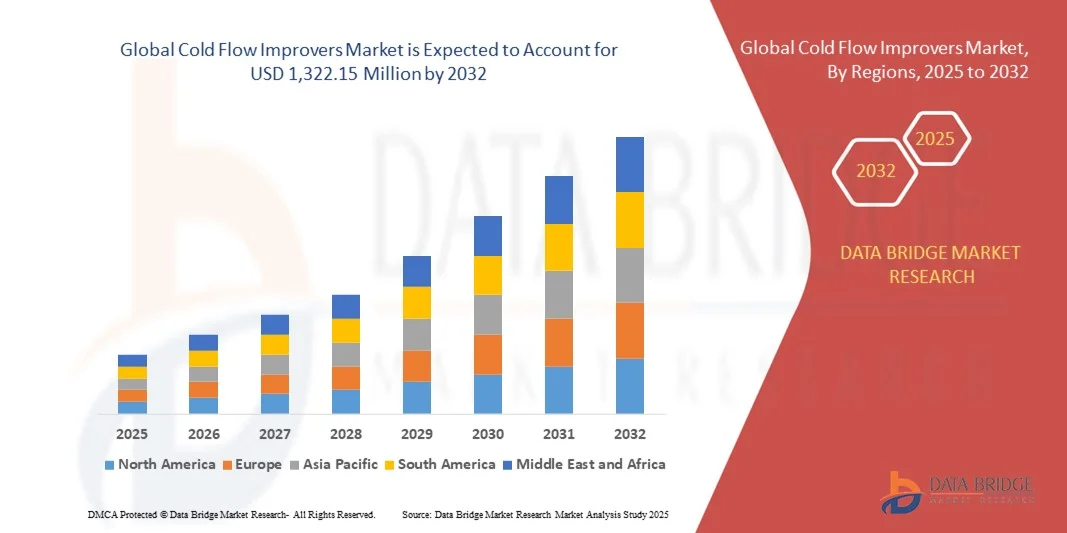
- The global cold flow improvers market size was valued at USD 856.30 million in 2024 and is expected to reach USD 1,322.15 million by 2032, at a CAGR of 5.58% during the forecast period
- The market growth is largely fuelled by the rising demand for biodiesel and diesel fuels in cold climate regions, where low-temperature performance is critical to prevent fuel gelling and ensure smooth engine operation
- Increasing adoption of advanced additives by fuel manufacturers to enhance pour point, cloud point, and low-temperature operability is accelerating market penetration across automotive and industrial sectors
Cold Flow Improvers Market Analysis
- The market is witnessing increased research and development activities aimed at producing highly efficient additives compatible with conventional and renewable fuels
- Expanding end-use applications in marine, aviation, and off-road equipment are creating new avenues for market expansion, particularly in regions with harsh winter conditions
- North America dominated the cold flow improvers market with the largest revenue share of 38.5% in 2024, driven by a growing demand for diesel and biodiesel fuels in cold climates, as well as increasing awareness of fuel efficiency and performance-enhancing additives
- Asia-Pacific region is expected to witness the highest growth rate in the global cold flow improvers market, driven by rapid urbanization, expanding fleet operations, and technological advancements in fuel additive formulations across countries such as China, Japan, and South Korea
- The Polyalkyl Methacrylate (PAMA) segment held the largest market revenue share in 2024, driven by its superior low-temperature performance and compatibility with diesel and biodiesel fuels. PAMA-based CFIs help prevent wax crystallization, improve flow properties, and ensure reliable engine operation in cold climates, making it a preferred choice for fuel producers
Report Scope and Cold Flow Improvers Market Segmentation
|
Attributes |
Cold Flow Improvers Key Market Insights |
|
Segments Covered |
|
|
Countries Covered |
North America
Europe
Asia-Pacific
Middle East and Africa
South America
|
|
Key Market Players |
|
|
Market Opportunities |
|
|
Value Added Data Infosets |
In addition to the insights on market scenarios such as market value, growth rate, segmentation, geographical coverage, and major players, the market reports curated by the Data Bridge Market Research also include import export analysis, production capacity overview, production consumption analysis, price trend analysis, climate change scenario, supply chain analysis, value chain analysis, raw material/consumables overview, vendor selection criteria, PESTLE Analysis, Porter Analysis, and regulatory framework. |
Cold Flow Improvers Market Trends
Increasing Adoption of Cold Flow Improvers in Diesel and Biodiesel Fuels
The growing shift toward using cold flow improvers (CFIs) is transforming the diesel and biodiesel fuel industry by enhancing low-temperature operability and preventing wax crystallization. This allows engines to perform efficiently in cold climates, reducing downtime and maintenance costs. In addition, CFIs support higher fuel stability over extended storage periods, reducing gel formation and ensuring smoother winter operations
Rising demand for CFIs in regions with harsh winter conditions is accelerating market adoption. CFIs improve fuel flow properties and reduce filter plugging, particularly in commercial and heavy-duty vehicles, supporting uninterrupted transportation and logistics operations. The use of CFIs also contributes to lower energy consumption during fuel pumping and improved combustion efficiency in cold conditions
The cost-effectiveness and performance benefits of modern CFIs are making them attractive for fuel producers, fleet operators, and industrial users, leading to improved engine reliability and reduced operational disruptions. Furthermore, the incorporation of CFIs enhances compliance with cold-weather fuel standards, allowing suppliers to expand market reach and reduce warranty claims
For instance, in 2023, several fuel distributors in Europe and North America reported improved fuel performance and reduced winter-related maintenance claims after incorporating CFIs into diesel and biodiesel blends. These distributors also noted enhanced customer satisfaction and fewer operational stoppages in logistics chains operating in sub-zero climates
While adoption of cold flow improvers is increasing, market growth depends on continued innovation in additive chemistry, formulation optimization, and regulatory compliance. Manufacturers must focus on scalable solutions and regional adaptation to fully capitalize on rising demand, along with building awareness campaigns for end-users in emerging markets
Cold Flow Improvers Market Dynamics
Driver
Rising Demand for Reliable Fuel Performance in Cold Climates
- Increasing winter fuel challenges in diesel and biodiesel fuels are driving the adoption of cold flow improvers, which prevent wax crystal formation and improve low-temperature operability. This enhances vehicle and machinery performance during extreme cold conditions. The adoption of CFIs also reduces downtime and operational risks for critical transport sectors, including logistics, emergency services, and industrial fleets
- Growing industrialization and logistics operations in cold regions are increasing demand for CFIs to maintain fuel efficiency and reduce engine maintenance costs, particularly for commercial transportation and energy sectors. In addition, expanding construction and mining activities in harsh climates are boosting the need for consistent fuel performance, driving CFI penetration across diverse end-user segments
- Supportive initiatives by governments and energy organizations promoting fuel stability and operational efficiency are further boosting adoption, ensuring uninterrupted energy and transport supply. Incentive programs, subsidies, and inclusion in winter fuel regulations encourage wider CFI integration, benefiting both producers and end-users in regulated markets
- For instance, in 2022, several European transport fleets integrated CFIs into winter diesel, significantly improving vehicle reliability and operational continuity. Fleet operators reported measurable reductions in fuel gel incidents, smoother engine starts, and lower maintenance intervention costs
- While environmental regulations and technological advancements are driving market growth, continuous R&D and performance optimization remain essential for broader adoption. Companies investing in advanced formulations and localized solutions are better positioned to capture high-growth markets in cold regions
Restraint/Challenge
High Cost of Advanced Cold Flow Improvers and Limited Awareness in Emerging Markets
- The premium price of advanced CFIs, especially multi-functional and polymer-based additives, limits their use in cost-sensitive markets, restricting widespread adoption among smaller fuel producers. Many small-scale operators still rely on conventional fuels, leading to operational inefficiencies during winter months
- Limited awareness and technical expertise in emerging regions reduce the implementation of CFIs, resulting in winter fuel flow issues and higher operational disruptions for transportation and industrial sectors. Lack of training and insufficient knowledge about optimal dosing and blending methods exacerbate these challenges, impacting fuel performance
- Supply chain constraints, including import dependencies and storage challenges for specialized additives, can delay fuel preparation and affect consistent performance during cold months. Transportation delays, inadequate cold storage infrastructure, and inconsistent supply of additives contribute to operational disruptions in remote or emerging markets
- For instance, in 2023, several fuel distributors in Southeast Asia faced winter fuel quality challenges due to limited availability and low awareness of CFIs, highlighting market gaps. These distributors reported increased downtime, higher maintenance costs, and reduced fleet reliability during peak cold periods
- While additive technologies continue to improve, addressing cost, education, and supply challenges is critical for unlocking long-term market potential and ensuring reliable cold-weather fuel performance. Strategic partnerships, local manufacturing, and awareness campaigns are key to overcoming these barriers and accelerating adoption globally
Cold Flow Improvers Market Scope
The market is segmented on the basis of type, application, and end-use industry.
- By Type
On the basis of type, the cold flow improvers market is segmented into Ethylene Vinyl Acetate, Polyalkyl Methacrylate (PAMA), Polyalpha Olefin, Polyalkyl Methacrylates, Polyacrylate, and Others. The Polyalkyl Methacrylate (PAMA) segment held the largest market revenue share in 2024, driven by its superior low-temperature performance and compatibility with diesel and biodiesel fuels. PAMA-based CFIs help prevent wax crystallization, improve flow properties, and ensure reliable engine operation in cold climates, making it a preferred choice for fuel producers.
The Ethylene Vinyl Acetate segment is expected to witness the fastest growth rate from 2025 to 2032, attributed to its cost-effectiveness, ease of formulation, and ability to enhance low-temperature fuel operability. EVA-based CFIs are increasingly adopted in diesel blends and aviation fuels to prevent filter plugging and maintain smooth fuel flow during winter months, particularly in regions experiencing harsh winters.
- By Application
On the basis of application, the cold flow improvers market is segmented into Diesel Fuel, Lubricating Oil, Aviation Oil, and Others. The Diesel Fuel segment held the largest market revenue share in 2024, driven by the widespread use of diesel in commercial vehicles, trucks, and industrial machinery in cold climates. CFIs enhance low-temperature flow properties, minimize filter blockage, and ensure uninterrupted fuel supply, which is crucial for transportation and industrial operations.
The Aviation Oil segment is expected to witness the fastest growth rate from 2025 to 2032, owing to rising demand for reliable fuel performance in the aerospace sector. Cold flow improvers in aviation fuels prevent wax crystallization at high altitudes, ensure smooth engine operation, and enhance flight safety, making them critical additives for modern aircraft.
- By End Use Industry
On the basis of end use industry, the cold flow improvers market is segmented into Automotive, Aerospace and Defense, and Others. The Automotive segment held the largest market revenue share in 2024, fueled by high demand for diesel vehicles and commercial transportation fleets in regions with harsh winters. CFIs ensure smooth engine operation, reduce downtime, and improve fuel efficiency, making them indispensable for automotive fuel suppliers.
The Aerospace and Defense segment is expected to witness the fastest growth rate from 2025 to 2032, driven by increasing air travel, military operations in cold regions, and the critical need for reliable fuel performance. CFIs in aviation and defense fuels prevent wax crystallization, maintain flow consistency, and enhance operational safety, supporting both civilian and defense applications.
Cold Flow Improvers Market Regional Analysis
- North America dominated the cold flow improvers market with the largest revenue share of 38.5% in 2024, driven by a growing demand for diesel and biodiesel fuels in cold climates, as well as increasing awareness of fuel efficiency and performance-enhancing additives
- Fuel distributors and fleet operators in the region highly value the ability of cold flow improvers to prevent wax crystallization, improve low-temperature operability, and ensure uninterrupted transportation and industrial operations
- This widespread adoption is further supported by established fuel infrastructure, stringent fuel quality regulations, and rising demand for heavy-duty and commercial vehicles, making North America a key market for cold flow improver solutions
U.S. Cold Flow Improvers Market Insight
The U.S. cold flow improvers market captured the largest revenue share in 2024 within North America, fueled by the increasing use of diesel and biodiesel in commercial transportation and industrial sectors. The adoption of CFIs ensures reliable fuel performance during harsh winter conditions, minimizing downtime and maintenance costs. In addition, government regulations and initiatives promoting fuel efficiency and low-emission fuels further drive the integration of CFIs into winter fuel blends.
Europe Cold Flow Improvers Market Insight
The Europe cold flow improvers market is expected to witness the fastest growth rate from 2025 to 2032, primarily driven by harsh winter conditions in countries such as Germany, France, and Russia. The adoption of CFIs in diesel and biodiesel fuels is critical for maintaining fuel flow, preventing filter plugging, and ensuring smooth operations in the transportation and energy sectors. Increasing industrialization, the rise of logistics operations, and supportive regulatory frameworks are accelerating market growth across the region.
U.K. Cold Flow Improvers Market Insight
The U.K. cold flow improvers market is expected to witness the fastest growth rate from 2025 to 2032, driven by the country’s focus on reliable fuel performance for automotive and industrial applications. The increasing adoption of biodiesel blends, coupled with government mandates for low-temperature fuel efficiency, encourages fuel distributors to incorporate CFIs. Rising awareness among fleet operators and logistics companies regarding winter fuel issues further supports market growth.
Germany Cold Flow Improvers Market Insight
The Germany cold flow improvers market is expected to witness the fastest growth rate from 2025 to 2032od, fueled by widespread use of diesel and biodiesel fuels in commercial and industrial vehicles. Cold flow improvers help maintain consistent fuel performance in extreme winter conditions, reducing operational disruptions and maintenance costs. Germany’s advanced fuel infrastructure, focus on renewable energy, and stringent environmental standards further promote adoption of CFIs.
Asia-Pacific Cold Flow Improvers Market Insight
The Asia-Pacific cold flow improvers market is expected to witness the fastest growth rate from 2025 to 2032, driven by increasing industrialization, rising diesel consumption, and expanding logistics operations in countries such as China, India, and Japan. The region’s harsh winter zones, combined with growing adoption of biodiesel fuels, are creating strong demand for CFIs. Moreover, APAC is emerging as a manufacturing hub for fuel additives, increasing accessibility and affordability for a broader consumer base.
Japan Cold Flow Improvers Market Insight
The Japan cold flow improvers market is expected to witness the fastest growth rate from 2025 to 2032 due to the country’s high dependence on diesel and biodiesel fuels for transportation and industrial operations. CFIs are increasingly used to prevent fuel flow issues during winter, ensuring uninterrupted performance for vehicles and machinery. In addition, Japan’s advanced industrial infrastructure, technological adoption, and focus on energy efficiency are contributing to market expansion in both automotive and aerospace applications.
China Cold Flow Improvers Market Insight
The China cold flow improvers market accounted for the largest revenue share in Asia-Pacific in 2024, attributed to the country’s rapid industrial growth, increasing diesel fuel consumption, and expansion of logistics networks. CFIs are widely adopted to improve low-temperature operability and prevent winter fuel disruptions. The development of domestic additive manufacturing capabilities, supportive government policies, and rising fleet operations are key factors propelling market growth in China.
Cold Flow Improvers Market Share
The Cold Flow Improvers industry is primarily led by well-established companies, including:
- BASF SE (Germany)
- Clariant (Switzerland)
- Evonik Industries AG (Germany)
- Akzo Nobel N.V. (Netherlands)
- Baker Hughes (U.S.)
- Bell Performance, Inc. (U.S.)
- The Lubrizol Corporation (U.S.)
- Chevron Corporation (U.S.)
- Infineum International Limited (U.K.)
- Ecolab (U.S.)
- ADCO Global, Inc. (U.S.)
- AICELLO CORPORATION (Japan)
- LANXESS (Germany)
- Cerion Energy (U.S.)
- Afton Chemical (U.S.)
- Rymax Lubricants (Netherlands)
- Valvoline Inc. (U.S.)
- Innospec (U.K.)
- Eurol (Netherlands)
Latest Developments in Global Cold Flow Improvers Market
- In January 2024, BASF SE launched a new Keropur gasoline additive in Taiwan, aimed at enhancing engine cleanliness in both modern direct injection and conventional port fuel injection engines. The additive effectively removes engine deposits, improving combustion efficiency, reducing emissions, and contributing to a more sustainable mobility ecosystem. This development strengthens BASF’s position in the fuel additives market by offering advanced solutions for cleaner and more efficient engines
- In October 2020, LSI Chemical introduced a cold flow additive for diesel fuels, designed to improve low-temperature operability by enhancing Cold Filter Plugging Point (CFPP) and Pour Point. The product, including ArcticArmor523, helps maintain smooth fuel flow in extreme cold conditions, improving engine performance and reliability. This launch expanded LSI Chemical’s global market presence by providing tailored solutions for diesel fuel stability in harsh climates

- Interactive Data Analysis Dashboard
- Company Analysis Dashboard for high growth potential opportunities
- Research Analyst Access for customization & queries
- Competitor Analysis with Interactive dashboard
- Latest News, Updates & Trend analysis
- Harness the Power of Benchmark Analysis for Comprehensive Competitor Tracking
Global Cold Flow Improvers Market, Supply Chain Analysis and Ecosystem Framework
To support market growth and help clients navigate the impact of geopolitical shifts, DBMR has integrated in-depth supply chain analysis into its Global Cold Flow Improvers Market research reports. This addition empowers clients to respond effectively to global changes affecting their industries. The supply chain analysis section includes detailed insights such as Global Cold Flow Improvers Market consumption and production by country, price trend analysis, the impact of tariffs and geopolitical developments, and import and export trends by country and HSN code. It also highlights major suppliers with data on production capacity and company profiles, as well as key importers and exporters. In addition to research, DBMR offers specialized supply chain consulting services backed by over a decade of experience, providing solutions like supplier discovery, supplier risk assessment, price trend analysis, impact evaluation of inflation and trade route changes, and comprehensive market trend analysis.
Data collection and base year analysis are done using data collection modules with large sample sizes. The stage includes obtaining market information or related data through various sources and strategies. It includes examining and planning all the data acquired from the past in advance. It likewise envelops the examination of information inconsistencies seen across different information sources. The market data is analysed and estimated using market statistical and coherent models. Also, market share analysis and key trend analysis are the major success factors in the market report. To know more, please request an analyst call or drop down your inquiry.
The key research methodology used by DBMR research team is data triangulation which involves data mining, analysis of the impact of data variables on the market and primary (industry expert) validation. Data models include Vendor Positioning Grid, Market Time Line Analysis, Market Overview and Guide, Company Positioning Grid, Patent Analysis, Pricing Analysis, Company Market Share Analysis, Standards of Measurement, Global versus Regional and Vendor Share Analysis. To know more about the research methodology, drop in an inquiry to speak to our industry experts.
Data Bridge Market Research is a leader in advanced formative research. We take pride in servicing our existing and new customers with data and analysis that match and suits their goal. The report can be customized to include price trend analysis of target brands understanding the market for additional countries (ask for the list of countries), clinical trial results data, literature review, refurbished market and product base analysis. Market analysis of target competitors can be analyzed from technology-based analysis to market portfolio strategies. We can add as many competitors that you require data about in the format and data style you are looking for. Our team of analysts can also provide you data in crude raw excel files pivot tables (Fact book) or can assist you in creating presentations from the data sets available in the report.













