


What is the Compounding Pharmacy Market Size & Overview?
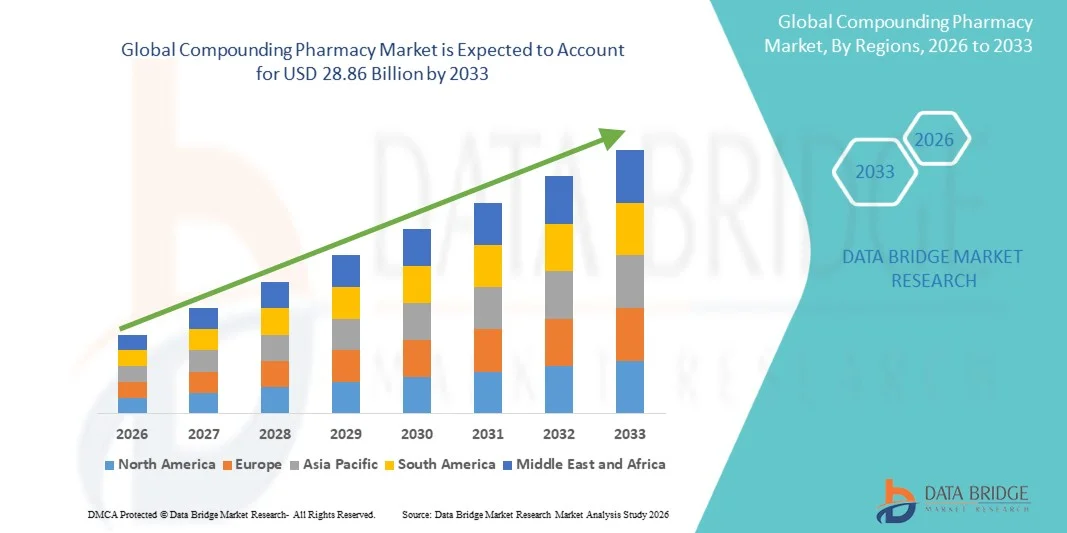
As per Data Bridge Market Research analysis the compounding pharmacy market was valued at USD 16.80 billion in 2025 and is projected to reach USD 28.86 billion by 2033, growing at a CAGR of 7.00% from 2026 to 2033. The market is experiencing robust growth driven by the increasing demand for personalized medications, the rising prevalence of chronic diseases, and the expanding need for patient-specific pharmaceutical formulations that are not commercially available. Growing adoption of customized drug therapies across pediatrics, geriatrics, hormone replacement therapy (HRT), pain management, dermatology, and veterinary medicine is accelerating market expansion. Compounding pharmacies enable pharmacists to prepare individualized medications by modifying dosage strengths, combining active pharmaceutical ingredients, altering dosage forms, and eliminating allergens or unnecessary additives, thereby improving treatment effectiveness, medication adherence, and patient outcomes.
The growing aging population, increasing incidence of medication shortages, and rising demand for precision medicine are encouraging healthcare providers, hospitals, and specialty clinics to rely on compounded medications to address unique patient requirements. In addition, continuous advancements in sterile compounding technologies, automated compounding systems, quality assurance practices, and regulatory compliance are enhancing the safety and efficiency of compounded pharmaceutical preparations. The expansion of specialty pharmacy services, home healthcare, and personalized healthcare models, coupled with increasing investments in pharmaceutical compounding infrastructure and advanced pharmacy technologies, is further accelerating the adoption of compounding pharmacy solutions across both developed and emerging markets.
Market Size & Forecast
- Market Value (2025): USD 16.80 Billion
- Expected Market Value (2033): USD 28.86 Billion
- Forecast CAGR (2026–2033): 7.00%
- Leading Region in 2025: North America
- Fastest Growing Region: Asia-Pacific
Key Market Trends & Insights
- North America dominated the compounding pharmacy market with the largest revenue share of 43.56% in 2025, supported by the strong presence of 503A and 503B compounding pharmacies, a well-established healthcare infrastructure, increasing demand for personalized medicines, frequent drug shortages requiring customized formulations, and a favorable regulatory framework. The United States accounts for the majority of regional demand due to high adoption of sterile and non-sterile compounded medications across hospitals, specialty clinics, and retail pharmacies.
- The non-sterile compounding segment dominated the market with an estimated 38% share in 2025 owing to its widespread utilization in preparing customized oral capsules, topical creams, ointments, gels, suspensions, suppositories, powders, and hormone replacement therapies for patients requiring individualized treatment.
- Asia-Pacific is expected to be the fastest-growing regional market during the forecast period (2026–2033), driven by expanding healthcare infrastructure, rising demand for personalized medicine, increasing investments in hospital pharmacy services, improving regulatory frameworks, growing prevalence of chronic diseases, and rapid expansion of pharmaceutical compounding capabilities across China, India, Japan, Australia, and Southeast Asia. Increasing healthcare expenditure and the growing adoption of customized pharmaceutical therapies are expected to further accelerate regional market growth.
- The online pharmacies segment is projected to witness the fastest CAGR of 14% from 2026 to 2033, driven by the rapid digitalization of healthcare services, increasing adoption of telemedicine, expanding e-prescription platforms, and growing consumer preference for home delivery of customized medications.
- The retail/independent compounding pharmacies segment dominated the market with an estimated 16% share in 2025 owing to their extensive expertise in preparing customized medications for pain management, hormone replacement therapy, dermatology, pediatrics, veterinary medicine, and specialty care.
Waht is Report Scope and Segmentation of Compounding Pharmacy Market?
|
Attributes |
Compounding Pharmacy Key Market Insights |
|
Segments Covered |
|
|
Countries Covered |
North America
Europe
Asia-Pacific
Middle East and Africa
South America
|
|
Key Market Players |
|
|
Market Opportunities |
|
|
Value Added Data Infosets |
In addition to the insights on market scenarios such as market value, growth rate, segmentation, geographical coverage, and major players, the market reports curated by the Data Bridge Market Research also include in-depth expert analysis, geographically represented company-wise production and capacity, network layouts of distributors and partners, detailed and updated price trend analysis and deficit analysis of supply chain and demand. |
What are the Compounding Pharmacy Market Trends?
Trend: Rising Demand for Personalized Medicine and Compounded Therapies Amid Drug Shortages
Healthcare providers, hospitals, and specialty pharmacies are increasingly relying on pharmaceutical compounding to deliver patient-specific medications that are unavailable commercially or require customized dosages, alternative dosage forms, allergen-free formulations, or preservative-free preparations. The growing prevalence of chronic diseases, an aging population, pediatric and geriatric care requirements, hormone replacement therapy, pain management, and recurring shortages of commercially manufactured drugs are accelerating the adoption of compounding pharmacy services worldwide. In addition, the rapid expansion of sterile compounding through 503B outsourcing facilities is enabling healthcare systems to maintain continuity of care during critical drug shortages. For instance, in October 2024, Fagron announced the acquisition of RiteDose's 503B book of business in North America as part of its strategy to strengthen its sterile compounding services and expand outsourced pharmaceutical compounding capabilities. The company also reported strong growth driven by increasing demand for compounding services across North America. This development reflects the growing global demand for personalized medicines and outsourced sterile compounding services.
What are the Compounding Pharmacy Market Dynamics?
Key Market Driver: Increasing Demand for Personalized Medicine and Ongoing Drug Shortages
The growing need for individualized therapies is a major driver of the global compounding pharmacy market. Many patients require medications that are unavailable in commercially manufactured strengths, dosage forms, or ingredient combinations. Compounding pharmacies address these unmet clinical needs by preparing customized medications for pediatric, geriatric, oncology, dermatology, ophthalmology, hormone replacement therapy, pain management, and veterinary applications. Simultaneously, persistent shortages of injectable drugs, IV solutions, and specialty medicines have increased healthcare providers' reliance on compounding pharmacies. For instance, in October 2024, the U.S. Food and Drug Administration issued temporary guidance allowing compounders to prepare certain parenteral drug products following supply disruptions caused by Hurricane Helene, helping maintain patient access to critical medicines during nationwide shortages. This highlights the increasingly important role of compounding pharmacies in ensuring drug availability during supply chain disruptions.
Key Restraint/Challenge: Stringent Regulatory Compliance and Quality Assurance Requirements
One of the major challenges facing the global compounding pharmacy market is maintaining compliance with increasingly stringent regulatory and quality standards governing sterile and non-sterile compounding. Compounding pharmacies must comply with requirements such as USP <795>, USP <797>, USP <800>, Current Good Manufacturing Practices (CGMP) for outsourcing facilities, environmental monitoring, sterility testing, and documentation standards. Regulatory inspections continue to place greater emphasis on product quality, contamination prevention, process validation, and manufacturing controls. For instance, in December 2024, Fagron announced that its Wichita sterile compounding facility received an FDA warning letter following a routine inspection, requiring additional improvements in manufacturing validation and quality processes. The development illustrates the regulatory scrutiny and operational investments required for compounding pharmacies to maintain compliance.
Key Market Opportunity: Expansion of Sterile Outsourcing Facilities and Advanced Compounding Services
The continued expansion of 503B outsourcing facilities and investments in advanced sterile compounding technologies present significant long-term opportunities for the global compounding pharmacy market. Hospitals and healthcare systems are increasingly outsourcing sterile medication preparation to specialized facilities that can deliver high-quality compounded medications at scale while meeting stringent regulatory standards. Growing investments in cleanroom automation, robotics, digital quality management systems, and sterile manufacturing capacity are expected to improve efficiency and patient safety. For instance, in August 2024, Fagron announced continued investments to expand its Wichita sterile compounding facility in the United States in response to strong demand for outsourced compounding services across North America. The company highlighted increasing demand for sterile compounded medications and reaffirmed its strategy to expand production capacity, demonstrating the significant growth opportunities within the outsourced sterile compounding segment.
Whatbis Compounding Pharmacy Market Scope?
The global compounding pharmacy market is segmented on the basis of product type, therapeutic area, sterility, age group, and distribution channel.
- By Product Type
On the basis of product type, the global compounding pharmacy market is segmented into oral medications, topical medications, sterile injectable preparations, suppositories, ophthalmic preparations, and other compounded formulations. The oral medications segment dominated the market with an estimated 34.82% share in 2025 owing to the widespread use of customized capsules, tablets, oral suspensions, flavored medications, and dosage-strength modifications for patients requiring personalized treatment. Oral compounded medications are extensively prescribed for pain management, hormone replacement therapy, pediatric care, geriatric medicine, veterinary applications, and chronic disease management where commercially available drugs do not adequately meet patient requirements. The growing prevalence of chronic diseases, increasing elderly population, and rising demand for allergen-free and preservative-free formulations continue to drive segment growth. Compounding pharmacies also prepare customized oral medications for patients experiencing swallowing difficulties or requiring discontinued medications. Furthermore, continuous drug shortages and increasing physician preference for patient-specific therapies have strengthened demand for compounded oral formulations. Growing investments in personalized medicine and expanding pharmacy compounding capabilities are expected to maintain the dominance of the oral medications segment throughout the forecast period.
The sterile injectable preparations segment is projected to witness the fastest CAGR of 8.96% from 2026 to 2033, driven by increasing demand for customized injectable therapies across hospitals, ambulatory surgery centers, oncology clinics, ophthalmology centers, and specialty healthcare facilities. Sterile compounded injectables are increasingly utilized for pain management, chemotherapy support, parenteral nutrition, anesthesia, and critical care applications. Rising shortages of commercially manufactured injectable drugs have further accelerated the reliance on 503B outsourcing facilities capable of producing sterile preparations under stringent quality standards. Healthcare providers continue to outsource sterile compounding to improve operational efficiency while ensuring uninterrupted drug availability. Continuous investments in automated sterile compounding technologies, cleanroom facilities, and regulatory compliance are expected to further accelerate the growth of the sterile injectable preparations segment during the forecast period.
-
By Therapeutic Area
On the basis of therapeutic area, the global compounding pharmacy market is segmented into pain management, hormone replacement therapy (HRT), dermatology, specialty medications, nutritional supplements, and others. The pain management segment dominated the market with an estimated 31.64% share in 2025 owing to the increasing prevalence of chronic pain disorders, arthritis, musculoskeletal diseases, neuropathic pain, cancer-related pain, and postoperative pain requiring individualized treatment approaches. Compounded medications enable pharmacists to customize dosage strengths, combine multiple active ingredients, remove allergens, and prepare alternative dosage forms according to patient-specific requirements. Physicians increasingly prescribe compounded topical creams, oral medications, transdermal gels, and customized pain formulations for patients who cannot tolerate commercially available products. The growing elderly population and increasing incidence of chronic orthopedic conditions continue to strengthen demand for personalized pain therapies. In addition, rising awareness regarding patient-centric healthcare and precision medicine is supporting the widespread adoption of compounded pain medications. Continuous advancements in pharmaceutical compounding techniques are expected to sustain the segment's leadership throughout the forecast period.
The specialty medications segment is anticipated to witness the fastest CAGR of 9.41% from 2026 to 2033, driven by the increasing demand for customized therapies in oncology, ophthalmology, rare diseases, infectious diseases, neurology, and autoimmune disorders. Growing adoption of personalized medicine and increasing complexity of specialty treatments are encouraging healthcare providers to utilize compounded medications tailored to individual patient requirements. The expansion of biologic therapies, precision medicine initiatives, and specialty healthcare services is further supporting market growth. Compounding pharmacies are increasingly preparing patient-specific formulations that improve treatment adherence and clinical outcomes where commercial alternatives are unavailable. Furthermore, continuous innovation in pharmaceutical compounding, increasing collaboration between specialty healthcare providers and compounding pharmacies, and expanding healthcare expenditure worldwide are expected to significantly accelerate the growth of the specialty medications segment during the forecast period.
- By Sterility
On the basis of sterility, the global compounding pharmacy market is segmented into sterile compounding and non-sterile compounding. The non-sterile compounding segment dominated the market with an estimated 61.38% share in 2025 owing to its widespread utilization in preparing customized oral capsules, topical creams, ointments, gels, suspensions, suppositories, powders, and hormone replacement therapies for patients requiring individualized treatment. Non-sterile compounded medications are extensively used across dermatology, pain management, pediatrics, geriatrics, veterinary medicine, and hormone replacement therapy where commercially available products fail to meet patient-specific dosage, formulation, or allergen requirements. The growing demand for personalized medicine, increasing prevalence of chronic diseases, and rising adoption of patient-centric healthcare continue to strengthen demand for non-sterile compounding services. In addition, pharmacists are increasingly preparing preservative-free, sugar-free, dye-free, and allergen-free formulations to improve medication adherence and patient outcomes. Continuous expansion of independent compounding pharmacies and favorable reimbursement for customized therapies are expected to sustain the dominance of the non-sterile compounding segment throughout the forecast period.
The sterile compounding segment is projected to witness the fastest CAGR of 9.72% from 2026 to 2033, driven by rising demand for customized injectable medications, ophthalmic preparations, intravenous therapies, chemotherapy support, total parenteral nutrition (TPN), and hospital-based sterile formulations. Increasing drug shortages, expansion of 503B outsourcing facilities, and stringent quality standards are encouraging healthcare providers to outsource sterile compounding to specialized pharmacies. Growing investments in cleanroom technologies, automated sterile filling systems, environmental monitoring, and advanced aseptic manufacturing processes are further supporting market growth. Hospitals and ambulatory care centers are increasingly relying on sterile compounded medications to improve patient safety and ensure uninterrupted drug availability. Continuous regulatory improvements and technological advancements are expected to accelerate the expansion of the sterile compounding segment throughout the forecast period.
- By Age Group
On the basis of age group, the global compounding pharmacy market is segmented into pediatric, adult, and geriatric. The adult segment dominated the market with an estimated 53.84% share in 2025 owing to the high prevalence of chronic diseases including diabetes, cardiovascular disorders, chronic pain, endocrine disorders, dermatological conditions, and hormone deficiencies among the adult population. Adults frequently require customized dosage strengths, alternative dosage forms, allergen-free medications, and personalized hormone replacement therapies that cannot always be addressed through commercially manufactured medicines. Growing awareness regarding precision medicine and increasing physician preference for individualized treatment approaches continue to strengthen demand for compounded medications. In addition, rising healthcare expenditure, expanding access to specialty healthcare services, and increasing utilization of customized pharmaceutical formulations are supporting segment growth. Continuous advancements in pharmaceutical compounding technologies are expected to maintain the leadership of the adult segment during the forecast period.
The geriatric segment is anticipated to witness the fastest CAGR of 9.26% from 2026 to 2033, driven by the rapidly growing elderly population and increasing prevalence of multiple chronic diseases requiring individualized medication regimens. Older patients frequently experience dysphagia, polypharmacy, dosage adjustment requirements, and allergies to inactive ingredients, making compounded medications an effective therapeutic option. Pharmacists are increasingly preparing flavored oral liquids, lower-dose formulations, transdermal preparations, and customized medications that improve adherence among elderly patients. Rising life expectancy, growing long-term care facilities, and increasing healthcare utilization among aging populations are further supporting market expansion. Continuous emphasis on personalized geriatric care is expected to accelerate the growth of the geriatric segment throughout the forecast period.
- By Distribution Channel
On the basis of distribution channel, the global compounding pharmacy market is segmented into hospital pharmacies, retail/independent compounding pharmacies, online pharmacies, and others. The retail/independent compounding pharmacies segment dominated the market with an estimated 47.16% share in 2025 owing to their extensive expertise in preparing customized medications for pain management, hormone replacement therapy, dermatology, pediatrics, veterinary medicine, and specialty care. These pharmacies maintain close collaboration with physicians to formulate patient-specific medications that address unique dosage requirements, allergies, discontinued drugs, and alternative dosage forms. Growing patient preference for personalized pharmaceutical care, expanding independent pharmacy networks, and increasing awareness regarding compounded medications continue to strengthen demand. In addition, improvements in pharmacy automation, prescription management systems, and quality assurance processes have enhanced operational efficiency and patient satisfaction. The increasing availability of specialized compounding services is expected to sustain the dominance of the retail/independent compounding pharmacies segment throughout the forecast period.
The online pharmacies segment is projected to witness the fastest CAGR of 10.14% from 2026 to 2033, driven by the rapid digitalization of healthcare services, increasing adoption of telemedicine, expanding e-prescription platforms, and growing consumer preference for home delivery of customized medications. Online pharmacy providers are improving patient access to compounded therapies by offering virtual consultations, digital prescription management, medication adherence support, and nationwide distribution services. Rising internet penetration, increasing smartphone adoption, and growing acceptance of digital healthcare platforms are accelerating market growth. Furthermore, investments in secure digital pharmacy infrastructure, automated prescription processing, and integrated healthcare technologies are enabling pharmacies to efficiently deliver personalized medications. These developments are expected to significantly support the expansion of the online pharmacies segment over the forecast period.
Which Region Holds the Largest Share of the Compounding Pharmacy Market?
North America dominated the global compounding pharmacy market and accounted for the largest revenue share of 43.56% in 2025, supported by the strong presence of 503A and 503B compounding pharmacies, a well-established healthcare infrastructure, and increasing demand for personalized medications across the region. The market benefits from frequent drug shortages, rising adoption of sterile and non-sterile compounded preparations, and a favorable regulatory framework that supports pharmaceutical compounding under the oversight of regulatory authorities. Hospitals, specialty clinics, and retail pharmacies are increasingly utilizing compounded medications for pain management, hormone replacement therapy, dermatology, ophthalmology, pediatrics, and oncology applications. Furthermore, growing investments in advanced sterile compounding facilities and automated pharmacy technologies continue to strengthen North America's leadership in the global compounding pharmacy market.
U.S. Compounding Pharmacy Market Insight
The U.S. compounding pharmacy market is witnessing robust growth owing to the country's large network of 503A compounding pharmacies and FDA-registered 503B outsourcing facilities that supply customized medications to hospitals and healthcare providers. Increasing drug shortages, growing demand for patient-specific formulations, and rising adoption of personalized medicine are driving market expansion. Healthcare providers increasingly prescribe compounded medications for pediatric, geriatric, dermatology, hormone replacement therapy, ophthalmology, pain management, and veterinary applications. In addition, continuous investments in sterile manufacturing facilities, pharmacy automation, and quality assurance systems are supporting the long-term growth of the compounding pharmacy market across the United States.
Europe Compounding Pharmacy Market Insight
The Europe compounding pharmacy market is experiencing significant growth due to increasing demand for personalized medicines, expanding elderly populations, and rising prevalence of chronic diseases requiring customized pharmaceutical formulations. Healthcare providers across the region are increasingly utilizing compounded medications when commercially available products fail to meet individual patient requirements. Growing adoption of hormone replacement therapy, pediatric formulations, dermatological preparations, and hospital-based sterile compounding is supporting market expansion. In addition, stringent quality standards, improving pharmaceutical regulations, and increasing investments in specialty pharmacy services continue to drive the growth of the compounding pharmacy market throughout Europe.
U.K. Compounding Pharmacy Market Insight
The U.K. compounding pharmacy market is expanding steadily, supported by increasing demand for individualized medications, rising utilization of hospital pharmacy compounding services, and growing awareness regarding personalized pharmaceutical care. Compounded formulations are increasingly prescribed for patients requiring customized dosage strengths, allergen-free medications, hormone replacement therapy, and pediatric treatments. The country's advanced healthcare infrastructure, expanding specialty pharmacy services, and continued focus on improving patient outcomes are contributing to the steady expansion of the compounding pharmacy market.
Germany Compounding Pharmacy Market Insight
The Germany compounding pharmacy market is witnessing steady expansion owing to the country's advanced pharmaceutical manufacturing capabilities, strong healthcare infrastructure, and increasing demand for customized therapeutic solutions. Healthcare professionals are increasingly prescribing compounded medications for dermatology, oncology supportive care, ophthalmology, and hormone replacement therapy. Growing investments in sterile compounding technologies, pharmaceutical quality assurance, and specialty healthcare services are further supporting market growth. Rising focus on patient-centric healthcare and precision medicine continues to strengthen the compounding pharmacy market across Germany.
Asia-Pacific Compounding Pharmacy Market Insight
The Asia-Pacific compounding pharmacy market is expected to witness the fastest growth during the forecast period (2026–2033), driven by expanding healthcare infrastructure, rising demand for personalized medicine, increasing investments in hospital pharmacy services, improving regulatory frameworks, growing prevalence of chronic diseases, and rapid expansion of pharmaceutical compounding capabilities across China, India, Japan, Australia, and Southeast Asia. Increasing healthcare expenditure, expanding access to specialty healthcare services, and rising awareness regarding customized pharmaceutical therapies are accelerating market demand. Continuous investments in pharmaceutical manufacturing and modernization of healthcare systems are expected to position Asia-Pacific as the fastest-growing regional market for the compounding pharmacy market.
Japan Compounding Pharmacy Market Insight
The Japan compounding pharmacy market is witnessing consistent growth due to the country's aging population, increasing prevalence of chronic diseases, and rising demand for personalized pharmaceutical therapies. Hospitals and specialty pharmacies are increasingly utilizing compounded medications for geriatrics, oncology, ophthalmology, and hormone replacement therapy. Strong pharmaceutical regulations, advanced healthcare infrastructure, and growing adoption of precision medicine are encouraging further investment in pharmacy compounding services, supporting sustained market growth.
China Compounding Pharmacy Market Insight
The China compounding pharmacy market is growing rapidly owing to expanding healthcare infrastructure, rising healthcare expenditure, and increasing demand for customized pharmaceutical formulations. Growing prevalence of chronic diseases, improving access to specialty healthcare, and government initiatives supporting healthcare modernization are accelerating market growth. Pharmaceutical manufacturers, hospitals, and specialty pharmacies are expanding their compounding capabilities to address increasing demand for personalized medicines. In addition, rising investments in healthcare facilities and pharmaceutical innovation are positioning China as one of the fastest-growing countries in the compounding pharmacy market.
What are Top Companies in Compounding Pharmacy Market?
The compounding pharmacy industry is primarily led by well-established companies, including:
- Fagron (Netherlands)
- Professional Compounding Centers of America (U.S.)
- Medisca Inc. (Canada)
- Wedgewood Pharmacy (U.S.)
- Braun SE (Germany)
- Fresenius Kabi AG (Germany)
- Olympia Pharmaceuticals (U.S.)
- Institutional Pharmacy Solutions, LLC (U.S.)
- Pavilion Compounding Pharmacy, LLC (U.S.)
- Triangle Compounding Pharmacy (U.S.)
- Aurora Compounding Pharmacy (U.S.)
- CareFirst Specialty Pharmacy (U.S.)
- Miller's Pharmacy (U.S.)
- Valor Compounding Pharmacy (U.S.)
- Town & Country Compounding Pharmacy (U.S.)
- The Compounding Pharmacy of America (U.S.)
What are the Latest Developments in Compounding Pharmacy Market?
- In June 2022, the U.S. Food and Drug Administration convened a meeting of the Pharmacy Compounding Advisory Committee (PCAC) to review scientific and regulatory issues related to bulk drug substances used in pharmaceutical compounding under Sections 503A and 503B of the Federal Food, Drug, and Cosmetic Act. The meeting represented an important regulatory milestone, providing updated recommendations that continue to shape compliance requirements and future growth opportunities for compounding pharmacies in the United States
- In November 2022, the United States Pharmacopeia implemented the revised USP General Chapters <795> and <797>, introducing updated standards for non-sterile and sterile pharmaceutical compounding. The revised standards strengthened requirements related to personnel training, environmental monitoring, beyond-use dating, facility design, and quality assurance, encouraging compounding pharmacies to invest in upgraded infrastructure and compliance systems to improve medication safety and product quality
- In October 2024, Fagron announced the acquisition of RiteDose's 503B outsourcing business, expanding its sterile compounding capabilities in the United States. The acquisition strengthened Fagron's production capacity for customized sterile medications supplied to hospitals and healthcare providers while supporting the growing demand for outsourced sterile compounding services amid persistent drug shortages. The development further reinforced Fagron's leadership position in the North American compounding pharmacy market
- In December 2024, the U.S. Food and Drug Administration issued a Warning Letter to Fagron Sterile Services following an inspection of its Wichita, Kansas, 503B outsourcing facility. The agency identified deficiencies related to current good manufacturing practices (CGMP) and sterile production processes, highlighting the continued emphasis on regulatory compliance, quality assurance, and patient safety within the global compounding pharmacy industry
- In April 2025, the U.S. Food and Drug Administration issued a Warning Letter to Empower Pharmacy after inspections identified deficiencies in sterile compounding operations, including current good manufacturing practice (CGMP) and sterility assurance concerns. The regulatory action reinforced the FDA's continued oversight of large-scale outsourcing facilities and highlighted the increasing importance of manufacturing quality, compliance, and patient safety as demand for compounded medications continues to expand globally

- Interactive Data Analysis Dashboard
- Company Analysis Dashboard for high growth potential opportunities
- Research Analyst Access for customization & queries
- Competitor Analysis with Interactive dashboard
- Latest News, Updates & Trend analysis
- Harness the Power of Benchmark Analysis for Comprehensive Competitor Tracking
Data collection and base year analysis are done using data collection modules with large sample sizes. The stage includes obtaining market information or related data through various sources and strategies. It includes examining and planning all the data acquired from the past in advance. It likewise envelops the examination of information inconsistencies seen across different information sources. The market data is analysed and estimated using market statistical and coherent models. Also, market share analysis and key trend analysis are the major success factors in the market report. To know more, please request an analyst call or drop down your inquiry.
The key research methodology used by DBMR research team is data triangulation which involves data mining, analysis of the impact of data variables on the market and primary (industry expert) validation. Data models include Vendor Positioning Grid, Market Time Line Analysis, Market Overview and Guide, Company Positioning Grid, Patent Analysis, Pricing Analysis, Company Market Share Analysis, Standards of Measurement, Global versus Regional and Vendor Share Analysis. To know more about the research methodology, drop in an inquiry to speak to our industry experts.
Data Bridge Market Research is a leader in advanced formative research. We take pride in servicing our existing and new customers with data and analysis that match and suits their goal. The report can be customized to include price trend analysis of target brands understanding the market for additional countries (ask for the list of countries), clinical trial results data, literature review, refurbished market and product base analysis. Market analysis of target competitors can be analyzed from technology-based analysis to market portfolio strategies. We can add as many competitors that you require data about in the format and data style you are looking for. Our team of analysts can also provide you data in crude raw excel files pivot tables (Fact book) or can assist you in creating presentations from the data sets available in the report.













