


Congenital Anosmia Treatment Market Size
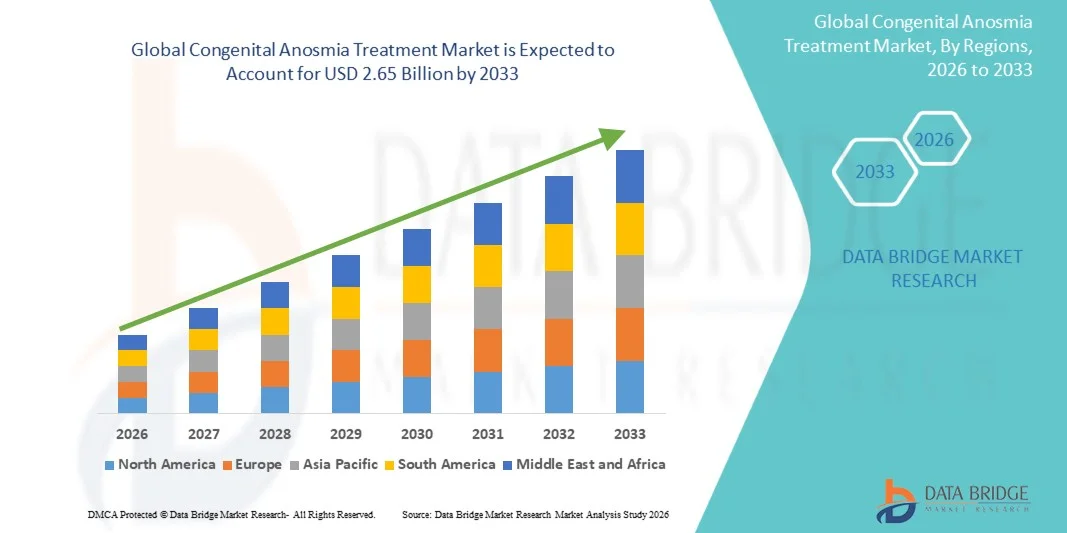
- The global congenital anosmia treatment market size was valued at USD 1.38 billion in 2025 and is expected to reach USD 2.65 billion by 2033, at a CAGR of 8.50% during the forecast period
- The market growth is largely fueled by the increasing awareness and diagnosis of rare sensory disorders such as congenital anosmia, along with advancements in diagnostic techniques and growing research in neurological and genetic conditions, leading to improved identification and management
- Furthermore, rising demand for effective treatment and supportive care options, including olfactory training therapies and emerging research into regenerative and gene-based treatments, is establishing more structured approaches to patient care. These converging factors are accelerating the development and adoption of Congenital Anosmia treatment solutions, thereby significantly boosting the market growth
Congenital Anosmia Treatment Market Analysis
- Congenital anosmia, a rare condition characterized by the lifelong inability to perceive smell, is gaining increasing attention in the healthcare sector due to advancements in neurological research, improved diagnostic techniques, and growing awareness among clinicians and patients
- The escalating demand for Congenital Anosmia treatment solutions is primarily fueled by increasing research into sensory disorders, rising interest in olfactory training therapies, and ongoing developments in regenerative and gene-based treatment approaches
- North America dominated the congenital anosmia treatment market with the largest revenue share of approximately 43.8% in 2025, characterized by advanced healthcare infrastructure, strong research focus on rare neurological conditions, and availability of specialized diagnostic facilities, with the U.S. leading in clinical research and patient care initiatives
- Asia-Pacific is expected to be the fastest growing region in the Congenital Anosmia Treatment market during the forecast period due to improving healthcare infrastructure, rising awareness of rare disorders, and increasing investments in medical research and diagnostics
- The therapies segment dominated the largest market revenue share of 57.4% in 2025, driven by the lack of definitive pharmacological cures for Congenital Anosmia and the growing reliance on supportive and rehabilitative approaches
Report Scope and Congenital Anosmia Treatment Market Segmentation
|
Attributes |
Congenital Anosmia Treatment Key Market Insights |
|
Segments Covered |
|
|
Countries Covered |
North America
Europe
Asia-Pacific
Middle East and Africa
South America
|
|
Key Market Players |
|
|
Market Opportunities |
|
|
Value Added Data Infosets |
In addition to the insights on market scenarios such as market value, growth rate, segmentation, geographical coverage, and major players, the market reports curated by the Data Bridge Market Research also include in-depth expert analysis, patient epidemiology, pipeline analysis, pricing analysis, and regulatory framework. |
Congenital Anosmia Treatment Market Trends
“Advancements in Regenerative Medicine and Olfactory Research”
- A significant and accelerating trend in the global congenital anosmia treatment market is the increasing focus on advancements in regenerative medicine and olfactory system research. As congenital anosmia is a rare condition involving the absence or underdevelopment of olfactory nerves, research efforts are expanding to explore innovative therapeutic approaches
- For instance, ongoing studies in stem cell therapy and gene-based treatments are aiming to regenerate or repair olfactory neurons, offering potential long-term treatment possibilities for patients with congenital anosmia
- Growing interest in neuroscience and sensory disorder research is leading to improved understanding of olfactory dysfunction and its underlying genetic causes
- Furthermore, collaborations between academic institutions, biotechnology companies, and healthcare providers are accelerating clinical research and innovation in this niche segment
- The development of supportive therapies, including olfactory training techniques and digital health tools for sensory rehabilitation, is also gaining traction globally
- This trend toward scientific innovation and targeted research is gradually shaping the future landscape of the Congenital Anosmia Treatment market
Congenital Anosmia Treatment Market Dynamics
Driver
“Increasing Awareness and Advancements in Diagnostic Technologies”
- The rising global awareness of rare sensory disorders, coupled with advancements in diagnostic technologies, is a key driver for the growth of the Congenital Anosmia Treatment market
- For instance, improved access to imaging techniques such as MRI and genetic testing is enabling healthcare professionals to diagnose congenital anosmia more accurately by identifying structural abnormalities in the olfactory system
- Growing awareness among patients and healthcare providers regarding the condition is encouraging early consultation and proper diagnosis
- In addition, advancements in healthcare infrastructure and the availability of specialized neurological and ENT care are supporting better disease management
- The increasing focus on rare disease research and supportive regulatory frameworks for orphan conditions is further encouraging investment in treatment development
- Rising patient demand for improved quality of life and sensory function is contributing to the adoption of available treatment and management solutions globally
Restraint/Challenge
“Limited Treatment Options and Underdiagnosis”
- The absence of well-established and curative treatment options for congenital anosmia remains a major challenge, as the condition is often lifelong and primarily managed through supportive care
- A significant proportion of cases remain undiagnosed or misdiagnosed due to lack of awareness and limited access to specialized diagnostic tool
- For instance, in many low- and middle-income countries, individuals with congenital anosmia may not seek medical attention or are misdiagnosed with temporary smell loss conditions, as advanced imaging and genetic testing facilities are not widely available
- The rarity of the condition results in limited clinical research and fewer large-scale studies, slowing the development of targeted therapies
- In addition, the lack of standardized treatment protocols and variability in patient response to supportive therapies can hinder effective disease management
- The high cost associated with advanced diagnostic procedures and emerging therapeutic approaches may also limit accessibility for a broader population
- Addressing these challenges through increased awareness, improved diagnostic access, and continued research investment will be essential for advancing the Congenital Anosmia Treatment market globally
Congenital Anosmia Treatment Market Scope
The market is segmented on the basis of treatment, end-user, and distribution channel.
• By Treatment
On the basis of treatment, the Congenital Anosmia Treatment market is segmented into therapies and medications. The therapies segment dominated the largest market revenue share of 57.4% in 2025, driven by the lack of definitive pharmacological cures for Congenital Anosmia and the growing reliance on supportive and rehabilitative approaches. Therapeutic interventions such as olfactory training and sensory rehabilitation are widely recommended to help patients improve smell perception or adapt to the condition. Increasing awareness among patients and healthcare providers regarding non-invasive management strategies further contributes to segment growth. In addition, advancements in neuroscience research and sensory therapy techniques are enhancing treatment effectiveness. The rising focus on improving quality of life for patients is also a key factor driving demand. Healthcare professionals increasingly emphasize personalized therapy plans tailored to patient needs. Moreover, growing investments in rare disease research and rehabilitation programs are supporting the expansion of this segment globally.
The medications segment is expected to witness the fastest CAGR of 8.9% from 2026 to 2033, driven by ongoing research into pharmacological interventions aimed at stimulating olfactory nerve function and addressing underlying causes. Although currently limited, the development of novel drug therapies is gaining momentum with advancements in biotechnology and neurology. Increasing clinical trials and research initiatives are contributing to the emergence of new treatment options. In addition, rising demand for convenient and less time-intensive treatment methods is encouraging medication adoption. Pharmaceutical companies are investing in innovative drug delivery systems and targeted therapies. Growing awareness about early diagnosis and treatment is also supporting segment growth. As scientific understanding of olfactory disorders improves, the medications segment is expected to expand significantly in the coming years.
• By End-User
On the basis of end-user, the Congenital Anosmia Treatment market is segmented into hospitals, research institutes, and specialty clinics. The hospitals segment accounted for the largest market revenue share of 49.6% in 2025, driven by the availability of comprehensive diagnostic and treatment facilities for rare sensory disorders. Hospitals serve as primary centers for patient diagnosis, evaluation, and management, supported by multidisciplinary healthcare teams. The presence of advanced imaging technologies and specialized departments enhances accurate diagnosis and treatment planning. Increasing patient visits for sensory disorders and rising awareness about congenital conditions further support segment dominance. In addition, hospitals provide access to both therapeutic interventions and experimental treatments under clinical supervision. Government funding and healthcare infrastructure development also contribute to growth. The integration of neurology and ENT services within hospital settings strengthens their role in managing congenital anosmia cases.
The specialty clinics segment is expected to witness the fastest CAGR of 10.2% from 2026 to 2033, driven by the growing demand for specialized and focused care in sensory and neurological disorders. These clinics offer targeted expertise, personalized treatment plans, and advanced therapeutic approaches tailored to individual patient needs. Increasing preference for outpatient care and shorter waiting times is encouraging patients to opt for specialty clinics. In addition, advancements in diagnostic tools and therapy techniques are enhancing treatment outcomes in these settings. The expansion of private healthcare providers and specialty care networks is further supporting segment growth. Rising awareness about early intervention and rehabilitation is also contributing to increased patient footfall. As healthcare systems evolve, specialty clinics are expected to play a crucial role in the management of congenital anosmia.
• By Distribution Channel
On the basis of distribution channel, the Congenital Anosmia Treatment market is segmented into hospital pharmacy, retail pharmacy, online pharmacies, and others. The hospital pharmacy segment held the largest market revenue share of 53.8% in 2025, driven by the need for prescription-based treatments and specialized care associated with rare disorders. Hospital pharmacies ensure the availability of medications and therapeutic products under professional supervision, which is critical for effective disease management. Patients diagnosed in hospital settings often rely on in-house pharmacies for immediate access to treatment solutions. In addition, coordinated care and follow-up treatment plans are efficiently managed through hospital channels. Government support and institutional procurement of medications further strengthen this segment. The presence of skilled healthcare professionals ensures proper guidance and adherence to treatment protocols. Increasing hospital-based diagnosis rates also contribute to sustained demand.
The online pharmacies segment is expected to witness the fastest CAGR of 11.4% from 2026 to 2033, driven by the rapid growth of digital healthcare platforms and increasing consumer preference for convenience. Online pharmacies offer easy access to medications, home delivery services, and competitive pricing, making them attractive to patients. Rising internet penetration and smartphone usage are further supporting the adoption of e-pharmacy services. In addition, patients with rare conditions benefit from the availability of specialized products that may not be easily accessible locally. The expansion of telemedicine and digital prescriptions is also accelerating growth. Increasing trust in online healthcare platforms and secure transaction systems contributes to segment expansion. Regulatory support in various regions is enabling the growth of online pharmaceutical distribution channels.
Congenital Anosmia Treatment Market Regional Analysis
- North America dominated the congenital anosmia treatment market with the largest revenue share of approximately 43.8% in 2025, characterized by advanced healthcare infrastructure, strong research focus on rare neurological conditions, and the availability of specialized diagnostic facilities
- The region benefits from early adoption of advanced diagnostic technologies, including genetic and neurological assessments, along with strong support from research institutions
- Increasing awareness of rare sensory disorders and the presence of well-established healthcare systems further contribute to market growth. In addition, ongoing clinical research and patient care initiatives are improving diagnosis rates and management approaches across North America
U.S. Congenital Anosmia Treatment Market Insight
The U.S. congenital anosmia treatment market captured the largest revenue share within North America in 2025, driven by extensive clinical research and advanced patient care initiatives. The country leads in the adoption of innovative diagnostic tools and neurological assessments, enabling early and accurate detection of congenital anosmia. Strong funding for rare disease research, along with the presence of leading healthcare institutions, is accelerating the development of potential therapeutic approaches. Furthermore, increased awareness among healthcare professionals is supporting improved patient outcomes.
Europe Congenital Anosmia Treatment Market Insight
The Europe congenital anosmia treatment market is projected to expand at a substantial CAGR during the forecast period, primarily driven by increasing focus on rare disease management and supportive regulatory frameworks. Government initiatives and funding programs aimed at neurological disorders are enhancing research and diagnostic capabilities. In addition, improved access to specialized healthcare services and rising awareness are fostering market growth across the region.
U.K. Congenital Anosmia Treatment Market Insight
The U.K. congenital anosmia treatment market is anticipated to grow at a noteworthy CAGR, supported by a strong healthcare system and increasing recognition of rare sensory disorders. National health programs and research collaborations are enabling early diagnosis and better patient monitoring. Moreover, growing investment in neurological research is contributing to advancements in understanding and managing congenital anosmia.
Germany Congenital Anosmia Treatment Market Insight
The Germany congenital anosmia treatment market is expected to expand at a considerable CAGR, driven by the country’s emphasis on medical innovation and advanced diagnostic infrastructure. Germany’s robust healthcare system and focus on research and development are supporting improved identification and management of rare neurological conditions. The increasing adoption of precision diagnostics is further contributing to market growth.
Asia-Pacific Congenital Anosmia Treatment Market Insight
The Asia-Pacific congenital anosmia treatment market is poised to grow at the fastest CAGR during the forecast period, driven by improving healthcare infrastructure, rising awareness of rare disorders, and increasing investments in medical research and diagnostics. The region’s large population base and expanding access to healthcare services are creating opportunities for early detection and treatment. Government initiatives aimed at strengthening healthcare systems are further accelerating market expansion.
Japan Congenital Anosmia Treatment Market Insight
The Japan congenital anosmia treatment market is gaining momentum due to the country’s advanced healthcare system and strong focus on technological innovation. Increasing use of advanced diagnostic tools and neurological research is improving detection rates. In addition, Japan’s emphasis on high-quality healthcare and continued investment in rare disease research are supporting market development.
China Congenital Anosmia Treatment Market Insight
The China congenital anosmia treatment market accounted for the largest revenue share in Asia-Pacific in 2025, attributed to rapid improvements in healthcare infrastructure and growing investments in medical research. Increasing awareness of rare neurological disorders and expanding access to diagnostic services are contributing to higher detection rates. Furthermore, government support and the presence of domestic research organizations are key factors driving market growth in China.
Congenital Anosmia Treatment Market Share
The Congenital Anosmia Treatment industry is primarily led by well-established companies, including:
- Pfizer Inc. (U.S.)
- Novartis AG (Switzerland)
- F. Hoffmann-La Roche Ltd. (Switzerland)
- Sanofi S.A. (France)
- GlaxoSmithKline plc (U.K.)
- AstraZeneca plc (U.K.)
- Bayer AG (Germany)
- Merck & Co., Inc. (U.S.)
- Eli Lilly and Company (U.S.)
- Takeda Pharmaceutical Company Limited (Japan)
- Abbott (U.S.)
- Thermo Fisher Scientific Inc. (U.S.)
- Siemens Healthineers AG (Germany)
- Quest Diagnostics Incorporated (U.S.)
- Danaher Corporation (U.S.)
- Bio-Rad Laboratories, Inc. (U.S.)
- PerkinElmer, Inc. (U.S.)
- Charles River Laboratories International, Inc. (U.S.)
- Laboratory Corporation of America Holdings (U.S.)
- Invitae Corporation (U.S.)
Latest Developments in Global Congenital Anosmia Treatment Market
- In July 2022, a clinical case study published in Wiley Online Library highlighted the genetic and developmental basis of isolated congenital anosmia, emphasizing abnormalities such as olfactory bulb aplasia as key causes. This development strengthened the scientific understanding necessary for future targeted therapies and diagnostic improvements
- In September 2023, research discussions published in Undark Magazine highlighted increasing scientific focus on the genetic origins and developmental abnormalities associated with congenital anosmia, supporting ongoing efforts to identify therapeutic targets and improve disease understanding
- In February 2025, a patient in the United Kingdom became one of the first to receive a novel platelet-rich plasma (PRP) treatment for smell loss, developed by researchers at Stanford University. The therapy aims to regenerate olfactory nerve function and has shown promising improvements in smell recovery, marking a significant advancement in treatment approaches for anosmia-related conditions
- In March 2025, research published in MDPI Diagnostics utilized advanced MRI-based analysis to identify structural brain differences in individuals with congenital anosmia, enhancing diagnostic precision and supporting the development of targeted therapeutic strategies
- In May 2025, scientific research highlighted the growing potential of stem cell-based therapies and extracellular vesicle approaches in regenerating olfactory neurons. These findings demonstrated promising preclinical results for restoring smell function, offering a potential future treatment pathway for congenital anosmia
- In June 2025, a clinical study reported that autologous nasal epithelial stem cell transplantation showed significant and sustained improvement in olfactory function in pediatric patients with congenital olfactory disorders, representing a breakthrough in regenerative treatment approaches for previously untreatable conditions
- In July 2025, ongoing NIH-supported research initiatives focused on identifying genes responsible for congenital anosmia advanced the potential for future gene therapy approaches, aiming to restore olfactory function through targeted genetic interventions
- In September 2025, updates on CRISPR and gene-editing research highlighted expanding clinical trial activity in rare genetic disorders, reinforcing the potential application of gene-editing technologies for conditions like congenital anosmia caused by genetic mutations

- Interactive Data Analysis Dashboard
- Company Analysis Dashboard for high growth potential opportunities
- Research Analyst Access for customization & queries
- Competitor Analysis with Interactive dashboard
- Latest News, Updates & Trend analysis
- Harness the Power of Benchmark Analysis for Comprehensive Competitor Tracking
Data collection and base year analysis are done using data collection modules with large sample sizes. The stage includes obtaining market information or related data through various sources and strategies. It includes examining and planning all the data acquired from the past in advance. It likewise envelops the examination of information inconsistencies seen across different information sources. The market data is analysed and estimated using market statistical and coherent models. Also, market share analysis and key trend analysis are the major success factors in the market report. To know more, please request an analyst call or drop down your inquiry.
The key research methodology used by DBMR research team is data triangulation which involves data mining, analysis of the impact of data variables on the market and primary (industry expert) validation. Data models include Vendor Positioning Grid, Market Time Line Analysis, Market Overview and Guide, Company Positioning Grid, Patent Analysis, Pricing Analysis, Company Market Share Analysis, Standards of Measurement, Global versus Regional and Vendor Share Analysis. To know more about the research methodology, drop in an inquiry to speak to our industry experts.
Data Bridge Market Research is a leader in advanced formative research. We take pride in servicing our existing and new customers with data and analysis that match and suits their goal. The report can be customized to include price trend analysis of target brands understanding the market for additional countries (ask for the list of countries), clinical trial results data, literature review, refurbished market and product base analysis. Market analysis of target competitors can be analyzed from technology-based analysis to market portfolio strategies. We can add as many competitors that you require data about in the format and data style you are looking for. Our team of analysts can also provide you data in crude raw excel files pivot tables (Fact book) or can assist you in creating presentations from the data sets available in the report.












