


Constrictive Pericarditis Market Size
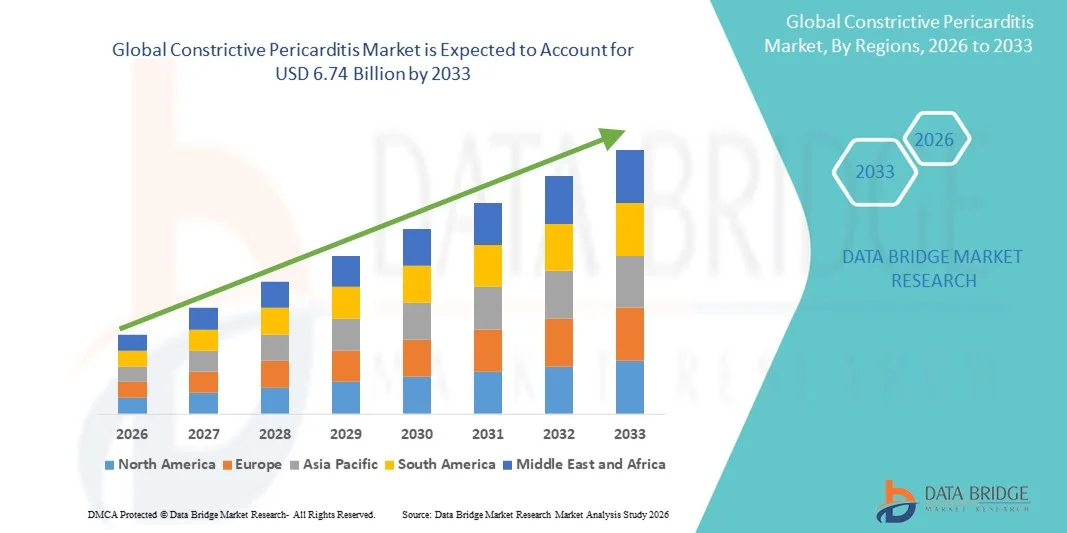
- The global constrictive pericarditis market size was valued at USD 4.60 billion in 2025 and is expected to reach USD 6.74 billion by 2033, at a CAGR of 4.90% during the forecast period
- The market growth is largely fueled by increasing prevalence of cardiovascular diseases and rising awareness about early diagnosis and treatment of heart disorders, leading to higher adoption of constrictive pericarditis therapies in hospitals and specialty clinic
- Furthermore, advancements in minimally invasive procedures, improved imaging techniques, and innovative pharmacological interventions are significantly accelerating market demand, thereby boosting the industry's growth
Constrictive Pericarditis Market Analysis
- Constrictive Pericarditis treatments, offering advanced therapeutic and surgical interventions, are increasingly vital components of modern cardiovascular care in both hospitals and specialty clinics due to their effectiveness, minimally invasive options, and ability to improve patient outcomes
- The escalating demand for constrictive pericarditis solutions is primarily fueled by the rising prevalence of pericardial diseases, growing awareness among healthcare professionals, and a rising preference for early diagnosis and effective management
- North America dominated the constrictive pericarditis market with the largest revenue share of 42.5% in 2025, characterized by advanced healthcare infrastructure, high diagnosis rates for pericardial diseases, and strong presence of leading cardiac centers, with the U.S. experiencing substantial growth in treatment adoption, particularly in hospitals and specialty clinics, driven by early detection programs, minimally invasive surgical procedures, and availability of advanced therapeutic options
- Asia-Pacific is expected to be the fastest-growing region in the Constrictive Pericarditis market during the forecast period, projected to expand at a CAGR from 2026 to 2033, driven by increasing awareness of cardiovascular health, expanding healthcare access, rising disposable incomes, and government initiatives promoting early diagnosis and management of pericardial disorders
- The Nonsteroidal Anti-Inflammatory Drugs (NSAIDs) segment dominated the largest market revenue share of 46.8% in 2025, driven by their widespread use as first-line therapy for managing inflammation and alleviating pain associated with constrictive pericarditis
Report Scope and Constrictive Pericarditis Market Segmentation
|
Attributes |
Constrictive Pericarditis Key Market Insights |
|
Segments Covered |
|
|
Countries Covered |
North America
Europe
Asia-Pacific
Middle East and Africa
South America
|
|
Key Market Players |
|
|
Market Opportunities |
|
|
Value Added Data Infosets |
In addition to the insights on market scenarios such as market value, growth rate, segmentation, geographical coverage, and major players, the market reports curated by the Data Bridge Market Research also include in-depth expert analysis, patient epidemiology, pipeline analysis, pricing analysis, and regulatory framework. |
Constrictive Pericarditis Market Trends
Emerging Trends in Diagnosis and Treatment Approaches
- A significant and accelerating trend in the global constrictive pericarditis market is the increasing focus on early diagnosis and minimally invasive treatment approaches. Advancements in imaging technologies such as cardiac MRI and CT scans are enabling more accurate differentiation between constrictive pericarditis and other cardiac conditions, improving treatment outcome
- For instance, recent studies indicate that multiparametric MRI can identify pericardial thickening and calcification with higher precision, allowing timely intervention. Similarly, tissue characterization techniques are increasingly applied to assess inflammation and fibrosis, supporting personalized treatment planning
- The trend towards percutaneous and catheter-based interventions, in addition to refined surgical techniques such as minimally invasive pericardiectomy, is driving improved patient outcomes and reducing recovery times
- Pharmaceutical research is emphasizing targeted anti-inflammatory and antifibrotic therapies to manage disease progression, complementing surgical interventions
- Increasing adoption of standardized treatment protocols and evidence-based guidelines is enabling clinicians to optimize therapeutic strategies for patients with chronic or recurrent constrictive pericarditis
- Overall, the focus on precision medicine, noninvasive diagnostics, and innovative therapeutic options is reshaping clinical management strategies and setting new benchmarks for patient care
Constrictive Pericarditis Market Dynamics
Driver
Rising Incidence of Cardiovascular Disorders and Demand for Effective Management
- The increasing prevalence of cardiovascular diseases, post-cardiac surgery complications, and infectious causes of pericarditis is a key driver for the Constrictive Pericarditis market. Early recognition and treatment of pericardial constriction are critical to prevent long-term cardiac dysfunction
- For instance, in January 2024, a multicenter observational study highlighted that delayed intervention in constrictive pericarditis patients led to higher morbidity, emphasizing the need for timely therapeutic measures
- Rising awareness among clinicians and patients regarding disease symptoms such as edema, fatigue, and dyspnea is contributing to higher diagnosis rates and more frequent treatment
- Furthermore, the development and commercialization of anti-inflammatory and antifibrotic drugs, as well as improvements in surgical techniques, are increasing the range of available therapeutic options
- Healthcare infrastructure improvements in both developed and emerging regions facilitate access to advanced imaging and treatment facilities, supporting market growth
- The growing emphasis on patient-centered care, along with governmental and private initiatives promoting cardiac health screening, also fuels demand for early and effective management of constrictive pericarditis
Restraint/Challenge
High Treatment Costs and Limited Awareness in Emerging Markets
- Despite advancements, the relatively high cost of diagnostic imaging, surgical procedures, and novel pharmaceutical therapies poses a significant challenge to widespread market adoption. Patients in low- and middle-income countries often face financial barriers to accessing timely care
- For instance, a 2023 WHO report highlighted that limited awareness and access to cardiac imaging facilities in certain regions led to delayed diagnosis and suboptimal outcomes in constrictive pericarditis cases
- The complexity of differentiating constrictive pericarditis from restrictive cardiomyopathy or other pericardial disorders can lead to misdiagnosis and treatment delays, adding to clinical and financial burdens
- Availability of trained specialists capable of performing pericardiectomy or advanced percutaneous interventions is uneven globally, restricting patient access in rural or underdeveloped areas
- While research into anti-inflammatory and antifibrotic drugs is progressing, the time and cost associated with clinical trials and regulatory approvals may delay broader adoption
- Addressing these challenges through awareness campaigns, expanded training for healthcare professionals, and cost-effective diagnostic and treatment solutions will be vital to supporting long-term market growth
Constrictive Pericarditis Market Scope
The market is segmented on the basis of drug type, distribution channel, and end user.
- By Drug Type
On the basis of drug type, the Constrictive Pericarditis market is segmented into Nonsteroidal Anti-Inflammatory Drugs (NSAIDs), Colchicine, and Others. The Nonsteroidal Anti-Inflammatory Drugs (NSAIDs) segment dominated the largest market revenue share of 46.8% in 2025, driven by their widespread use as first-line therapy for managing inflammation and alleviating pain associated with constrictive pericarditis. NSAIDs such as ibuprofen and aspirin remain the preferred treatment options due to their effectiveness in reducing pericardial inflammation and improving patient comfort. Their extensive clinical availability, affordability, and inclusion in standard treatment protocols contribute to their dominance in hospital and retail settings. Increasing physician preference for NSAIDs in mild to moderate cases, along with growing accessibility through generic formulations, further supports their leading market position. Moreover, rising patient awareness of early symptom management and rapid relief outcomes enhances market penetration across both developed and developing regions.
The Colchicine segment is anticipated to witness the fastest growth rate of 17.3% CAGR from 2026 to 2033, attributed to its increasing acceptance as an adjunct therapy for managing chronic and recurrent constrictive pericarditis. Colchicine has demonstrated efficacy in reducing recurrence rates, pericardial inflammation, and post-pericardiotomy syndrome, driving its growing clinical adoption. The rise in research studies supporting colchicine’s therapeutic role, coupled with regulatory approvals in several regions, strengthens its market trajectory. Its affordability, oral administration convenience, and minimal side effects compared to corticosteroids have further fueled its usage. The expanding pipeline of fixed-dose combination drugs and growing inclusion in treatment guidelines by cardiac societies worldwide are expected to accelerate its market expansion in the forecast period.
- By Distribution Channel
On the basis of distribution channel, the Constrictive Pericarditis market is segmented into Hospital Pharmacy, Retail Pharmacy, and Online Pharmacy. The Hospital Pharmacy segment held the largest market revenue share of 55.4% in 2025, driven by the high number of inpatient treatments and immediate availability of prescribed drugs for acute and chronic pericarditis management. Hospitals remain the primary point of care for patients undergoing diagnostic procedures, anti-inflammatory therapy, or surgical interventions, ensuring strong demand for pharmaceuticals through institutional channels. The presence of specialized cardiology departments and structured medication protocols supports consistent drug dispensing. Furthermore, hospital-based purchasing agreements and the availability of both branded and generic NSAIDs and colchicine enhance accessibility and affordability. Growing hospital admission rates for cardiac inflammatory diseases and increasing healthcare expenditure in developing nations also contribute to this segment’s dominance.
The Online Pharmacy segment is projected to witness the fastest CAGR of 19.1% from 2026 to 2033, propelled by increasing digital health adoption, convenience in medication ordering, and the growing trend toward e-commerce platforms for chronic disease management. The shift in patient preferences toward contactless purchasing and the availability of doorstep delivery services are key factors stimulating market expansion. Rising internet penetration, especially in emerging economies, is improving access to medications such as colchicine and NSAIDs through verified online portals. Furthermore, collaborations between pharmaceutical manufacturers and digital health providers to ensure prescription authenticity and timely delivery are enhancing consumer trust. Government support for digital pharmacy regulation and the rising acceptance of telehealth consultations further augment the demand for online pharmaceutical distribution worldwide.
- By End User
On the basis of end user, the Constrictive Pericarditis market is segmented into Hospitals, Specialty Clinics, Homecare, and Others. The Hospitals segment dominated the largest market revenue share of 52.7% in 2025, owing to the centralized treatment of acute and chronic constrictive pericarditis cases in tertiary care centers. Hospitals provide comprehensive care including diagnostic procedures, inpatient management, and continuous monitoring, which ensures high drug consumption through institutional channels. The presence of dedicated cardiology and cardiac surgery units, along with hospital formularies that stock NSAIDs, colchicine, and other related drugs, supports the strong revenue share. In addition, patient preference for hospital-based care for severe cases, insurance coverage for inpatient treatment, and the availability of clinical expertise contribute to the sustained dominance of this segment. Growing hospital admissions for cardiovascular inflammation, expansion of hospital networks in emerging economies, and rising healthcare spending further reinforce the market leadership of this segment.
The Homecare segment is anticipated to witness the fastest CAGR of 18.2% from 2026 to 2033, driven by increasing patient preference for home-based care and outpatient treatment for mild to moderate constrictive pericarditis. The rising adoption of telemedicine and remote monitoring solutions enables patients to receive prescribed drugs such as NSAIDs or colchicine without frequent hospital visits. Convenience, reduced treatment costs, and improved patient compliance are major growth factors. Moreover, the COVID-19 pandemic accelerated the trend toward homecare services, and healthcare providers are increasingly offering prescription delivery, dosage guidance, and virtual consultations. The expansion of home healthcare infrastructure, growing awareness about early symptom management, and partnerships between pharmacies and homecare providers are expected to propel market growth in this segment during the forecast period.
Constrictive Pericarditis Market Regional Analysis
- North America dominated the constrictive pericarditis market with the largest revenue share of 42.5% in 2025
- Characterized by advanced healthcare infrastructure, high diagnosis rates for pericardial diseases, and strong presence of leading cardiac centers, with the U.S. experiencing substantial growth in treatment adoption, particularly in hospitals and specialty clinics, driven by early detection programs, minimally invasive surgical procedures, and availability of advanced therapeutic options
- The widespread adoption of advanced diagnostic tools, increased patient awareness, and rising investments in healthcare services are further supporting market growth, establishing Constrictive Pericarditis treatments as the preferred solution for effective disease management
U.S. Constrictive Pericarditis Market Insight
The U.S. constrictive pericarditis market captured the largest revenue share in 2025 within North America, fueled by early detection programs, availability of minimally invasive procedures, and increasing adoption of targeted therapies. Hospitals and specialty clinics are driving demand through advanced cardiac care, research initiatives, and patient education on pericardial disorders, further accelerating market expansion.
Europe Constrictive Pericarditis Market Insight
The Europe constrictive pericarditis market is projected to expand at a substantial CAGR throughout the forecast period, primarily driven by increasing awareness of pericardial diseases, well-established healthcare infrastructure, and adoption of advanced diagnostic and therapeutic solutions. The region is witnessing growth in hospitals and specialty clinics across Germany, the U.K., and France, supported by government programs and private healthcare investments.
U.K. Constrictive Pericarditis Market Insight
The U.K. constrictive pericarditis market is anticipated to grow at a noteworthy CAGR during the forecast period, driven by rising patient awareness, increased adoption of minimally invasive procedures, and supportive healthcare policies. Hospitals and specialty cardiac centers are playing a key role in early diagnosis and treatment adoption.
Germany Constrictive Pericarditis Market Insight
The Germany constrictive pericarditis market is expected to expand at a considerable CAGR during the forecast period, fueled by high prevalence of pericardial disorders, increasing investment in cardiac care infrastructure, and demand for innovative therapeutic options. Early diagnosis programs and hospital-led initiatives are significantly driving market uptake.
Asia-Pacific Constrictive Pericarditis Market Insight
The Asia-Pacific constrictive pericarditis market is expected to be the fastest-growing region during the forecast period, projected to expand at a CAGR from 2026 to 2033, driven by increasing awareness of cardiovascular health, expanding healthcare access, rising disposable incomes, and government initiatives promoting early diagnosis and management of pericardial disorders. Rapid growth is observed in China, India, and Japan, supported by hospital modernization and adoption of advanced treatment technologies.
Japan Constrictive Pericarditis Market Insight
The Japan constrictive pericarditis market is gaining momentum due to rising prevalence of pericardial diseases, advanced healthcare infrastructure, and growing emphasis on early diagnosis and minimally invasive interventions. Investments in cardiac research and adoption of innovative therapies in hospitals and specialty clinics are driving market growth.
China Constrictive Pericarditis Market Insight
The China constrictive pericarditis market accounted for the largest revenue share in Asia-Pacific in 2025, attributed to expanding healthcare infrastructure, increasing patient awareness, and widespread adoption of advanced diagnostic and treatment solutions. Government programs promoting early detection and hospital-led initiatives are key factors accelerating market growth.
Constrictive Pericarditis Market Share
The Constrictive Pericarditis industry is primarily led by well-established companies, including:
• Pfizer Inc. (U.S.)
• Novartis AG (Switzerland)
• Johnson & Johnson (U.S.)
• GlaxoSmithKline (U.K.)
• AbbVie Inc. (U.S.)
• Bayer AG (Germany)
• AstraZeneca Plc (U.K.)
• Celgene Corporation (U.S.)
• Eli Lilly and Company (U.S.)
• Sanofi S.A. (France)
• Roche Holding AG (Switzerland)
• Boehringer Ingelheim (Germany)
• Takeda Pharmaceutical Company (Japan)
• Hikma Pharmaceuticals (U.K.)
• Teva Pharmaceutical Industries (Israel)
• Cipla Limited (India)
• Dr. Reddy’s Laboratories (India)
• Fresenius Kabi AG (Germany)
• Servier Laboratories (France)
Latest Developments in Global Constrictive Pericarditis Market
- In April 2024, Cardiol Therapeutics announced its year‑end 2023 update, which included completion of patient enrolment in the Phase II MAvERIC‑Pilot study for recurrent pericarditis, and the granting of U.S. Orphan Drug Designation for its drug candidate CardiolRx™ for the treatment of pericarditis
- In June 2024, the American Heart Association launched the “Addressing Recurrent Pericarditis” initiative in collaboration with clinical sites across the U.S., aiming to improve diagnosis, treatment, and quality‑of‑life for patients with recurrent pericarditis—including those at risk of progression to constrictive forms
- In August 2025, the American College of Cardiology published a concise clinical guidance document providing updated practical algorithms for imaging, diagnosis and management of pericardial diseases including constrictive pericarditis
- In May 2025, a peer‑reviewed article titled “Constrictive pericarditis: Loss of elasticity and often abnormal thickening…” was published in the Journal of the American College of Cardiology, highlighting the evolving treatment landscape and the emergence of non‑invasive diagnostics and fibrosis‑targeted therapies

- Interactive Data Analysis Dashboard
- Company Analysis Dashboard for high growth potential opportunities
- Research Analyst Access for customization & queries
- Competitor Analysis with Interactive dashboard
- Latest News, Updates & Trend analysis
- Harness the Power of Benchmark Analysis for Comprehensive Competitor Tracking
Data collection and base year analysis are done using data collection modules with large sample sizes. The stage includes obtaining market information or related data through various sources and strategies. It includes examining and planning all the data acquired from the past in advance. It likewise envelops the examination of information inconsistencies seen across different information sources. The market data is analysed and estimated using market statistical and coherent models. Also, market share analysis and key trend analysis are the major success factors in the market report. To know more, please request an analyst call or drop down your inquiry.
The key research methodology used by DBMR research team is data triangulation which involves data mining, analysis of the impact of data variables on the market and primary (industry expert) validation. Data models include Vendor Positioning Grid, Market Time Line Analysis, Market Overview and Guide, Company Positioning Grid, Patent Analysis, Pricing Analysis, Company Market Share Analysis, Standards of Measurement, Global versus Regional and Vendor Share Analysis. To know more about the research methodology, drop in an inquiry to speak to our industry experts.
Data Bridge Market Research is a leader in advanced formative research. We take pride in servicing our existing and new customers with data and analysis that match and suits their goal. The report can be customized to include price trend analysis of target brands understanding the market for additional countries (ask for the list of countries), clinical trial results data, literature review, refurbished market and product base analysis. Market analysis of target competitors can be analyzed from technology-based analysis to market portfolio strategies. We can add as many competitors that you require data about in the format and data style you are looking for. Our team of analysts can also provide you data in crude raw excel files pivot tables (Fact book) or can assist you in creating presentations from the data sets available in the report.












