


Copper Fungicides Market Size
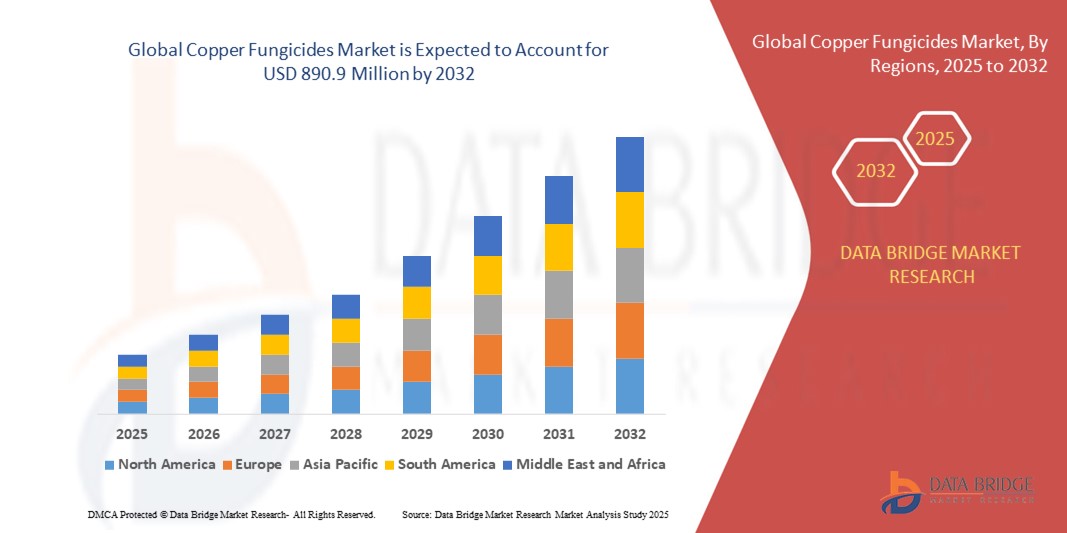
- The global copper fungicides market size was valued at USD 542.40 million in 2024 and is projected to reach USD 890.9 million by 2032, at a CAGR of 6.40% during the forecast period.
- Market growth is being driven by increasing awareness about crop protection, the rising need for high agricultural productivity, and the growing prevalence of fungal diseases across a variety of crops.
- Furthermore, expanding organic farming practices and rising demand for eco-friendly fungicides are enhancing the adoption of copper-based solutions, making them a critical component of integrated pest management strategies. These factors collectively are propelling the copper fungicides market forward, fueling sustained industry expansion.
Copper Fungicides Market Analysis
- Copper fungicides, widely used to control fungal and bacterial diseases in crops, have become essential in modern agriculture due to their broad-spectrum effectiveness, cost-efficiency, and compatibility with both conventional and organic farming practices.
- The rising demand for copper fungicides is driven by increasing global food production needs, expanding awareness of plant disease management, and a growing emphasis on sustainable and residue-free crop protection solutions.
- Europe held the largest revenue share of the copper fungicides market in 2024 at 38.7%, supported by stringent regulatory standards promoting organic farming, widespread vineyard and horticultural crop cultivation, and strong institutional support for sustainable agriculture.
- Asia-Pacific is projected to witness the fastest growth during the forecast period, fueled by rapid agricultural expansion, increasing pest pressure, and rising government initiatives to boost crop yield and farmer education.
- The copper oxychloride segment dominated with the largest market revenue share of 38.5% in 2024, driven by its broad-spectrum efficacy, cost-effectiveness, and widespread use across various crops such as fruits, vegetables, and cereals.
Report Scope and Market Segmentation
|
Attributes |
Copper Fungicides Market Insights |
|
Segments Covered |
|
|
Countries Covered |
|
|
Key Market Players |
|
|
Market Opportunities |
|
|
Value Added Data Infosets |
In addition to the insights on market scenarios such as market value, growth rate, segmentation, geographical coverage, and major players, the market reports curated by the Data Bridge Market Research also include in-depth expert analysis, pricing analysis, brand share analysis, consumer survey, demography analysis, supply chain analysis, value chain analysis, raw material/consumables overview, vendor selection criteria, PESTLE Analysis, Porter Analysis, and regulatory framework. |
Copper Fungicides Market Trends
Rising Demand for Sustainable and Organic Crop Protection Solutions
- A key and accelerating trend in the global copper fungicides market is the growing preference for sustainable, eco-friendly crop protection solutions, particularly within the expanding organic farming sector. Copper fungicides, being approved for use in organic agriculture by several regulatory bodies, are witnessing increased demand as growers seek alternatives to synthetic chemicals.
- For instance, copper hydroxide and copper oxychloride are widely used in organic vineyards and orchards across Europe and North America due to their effectiveness against a broad range of fungal and bacterial pathogens without leaving harmful residues.
- Regulatory pressures and increasing environmental awareness are prompting the agricultural industry to adopt low-impact fungicides. As a result, several manufacturers are investing in research to develop advanced formulations that reduce copper accumulation in soil while maintaining efficacy. These innovations include micronized copper products and slow-release formulations that minimize environmental risks and improve uptake by plants.
- The trend also includes a shift toward integrated pest management (IPM) practices, where copper fungicides are combined with other biological and cultural methods for disease control. This integrated approach is being promoted globally to ensure long-term soil health and reduce resistance buildup among pathogens.
- Furthermore, government support for organic farming—such as subsidies, training programs, and certification incentives—is driving copper fungicide adoption, especially in developing regions like Asia-Pacific and Latin America. For instance, India’s Paramparagat Krishi Vikas Yojana (PKVY) encourages organic crop cultivation, fueling the use of copper-based fungicides as a preferred choice.
- As sustainability and food safety continue to shape consumer and regulatory expectations, the copper fungicides market is evolving to meet these demands, with manufacturers focusing on eco-conscious innovation, residue management, and targeted disease control across a broad spectrum of crops.
Copper Fungicides Market Dynamics
Driver
Increasing Demand for Crop Protection Amid Rising Agricultural Pressure
- The growing global demand for food production, driven by a rising population and shrinking arable land, is a key driver of the copper fungicides market. Farmers and agribusinesses are increasingly turning to effective crop protection solutions to safeguard yield and ensure food security.
- For instance, copper-based fungicides are extensively used in high-value crops such as grapes, citrus fruits, tomatoes, and potatoes, where fungal and bacterial diseases can significantly impact productivity and quality.
- Copper fungicides provide broad-spectrum control against a range of plant pathogens while also being accepted in organic farming, making them versatile tools for both conventional and organic growers. This dual applicability boosts their appeal in global agricultural practices.
- Additionally, the resurgence of organic farming and sustainable agriculture initiatives worldwide is fueling demand for copper-based solutions, as they are among the few fungicides permitted under organic certifications by regulatory agencies such as the USDA and the EU.
- Government support, educational outreach, and increased access to agrochemicals in developing nations are further accelerating the use of copper fungicides. Countries like India and China are witnessing a surge in copper fungicide adoption due to initiatives promoting integrated pest management and productivity enhancement.
Restraint/Challenge
Environmental Concerns and Regulatory Limitations on Copper Usage
- One of the primary challenges facing the copper fungicides market is growing environmental concern over copper accumulation in soil, which can negatively impact soil health, microbial diversity, and water systems. Prolonged and excessive use of copper-based products has raised alarms in ecologically sensitive areas.
- For instance, the European Union has placed strict restrictions on the annual permissible limits of copper application per hectare in organic farming, pushing growers to seek alternative or complementary solutions.
- The risk of phytotoxicity (plant damage) when applied in high concentrations or under certain weather conditions is another constraint, limiting the flexibility of usage for farmers. This risk makes precise application techniques and farmer education essential to avoid crop damage.
- Additionally, regulatory scrutiny and environmental activism are compelling manufacturers to invest in the development of low-dosage, slow-release, or nanoparticle-based copper fungicide formulations that reduce environmental impact while maintaining efficacy.
- The relatively high cost of such advanced formulations compared to traditional copper fungicides can limit their accessibility in price-sensitive markets. As sustainability pressures mount, the industry must balance regulatory compliance, environmental stewardship, and economic viability to ensure continued growth and acceptance of copper fungicides.
Copper Fungicides Market Scope
The market is segmented on the basis of product, application, and formulation.
- By Product
On the basis of chemistry, the market is segmented into copper oxychloride, copper hydroxide, cuprous oxide, copper sulphate, and others. The copper oxychloride segment dominated the market with the largest revenue share in 2024, driven by its broad-spectrum fungicidal properties and excellent compatibility with various crops. It is widely preferred due to its effectiveness against a range of fungal diseases and its relatively lower toxicity, making it a staple in integrated pest management programs.
The copper hydroxide segment is anticipated to witness the fastest growth rate from 2025 to 2032, fueled by its superior curative action and quick absorption in plants. Copper hydroxide’s enhanced formulation technologies also contribute to its rising adoption in both conventional and organic farming systems. The growing demand for eco-friendly and residue-free agricultural chemicals further propels the growth of these copper-based chemistries.
- By Application
On the basis of application, the market is segmented into fruits & vegetables, cereals & grains, and oilseeds & pulses. The fruits & vegetables segment accounted for the largest market revenue share in 2024, driven by the high susceptibility of these crops to fungal infections and the critical need for disease control to prevent post-harvest losses. The increasing global demand for fresh produce with longer shelf life has accelerated the adoption of effective fungicidal treatments in this segment.
The cereals & grains segment is expected to witness the fastest CAGR from 2025 to 2032, propelled by the growing cultivation of staple crops and rising awareness about crop protection to improve yields. Additionally, government initiatives supporting food security and sustainable agriculture further support the rapid growth of copper-based fungicides in cereal and grain production.
- By Formulation
On the basis of formulation, the market is segmented into water treatment, food and beverages, and textile. The water treatment segment held the largest market revenue share in 2024, owing to the extensive use of copper-based compounds for microbial control in industrial and municipal water systems. Copper’s biocidal properties make it effective in preventing biofilm formation and ensuring water safety, which is critical for public health.
The textile segment is anticipated to witness the fastest growth rate from 2025 to 2032, driven by increasing demand for antimicrobial and antifungal treatments in fabric manufacturing. Innovations in copper-based formulations enhance the durability and hygiene of textiles, appealing to healthcare, sportswear, and fashion industries. Moreover, rising consumer awareness about fabric cleanliness and sustainability supports the expansion of copper formulations in textile applications.
Copper Fungicides Market Regional Analysis
- Europe dominated the copper fungicides market with the largest revenue share of 38.7% in 2024, primarily driven by stringent regulatory frameworks supporting organic farming and the high demand for disease control in vineyards, fruits, and vegetables.
- Farmers in the region prefer copper fungicides due to their effectiveness, long-standing approval in organic agriculture, and low resistance risk. The EU’s support for sustainable agriculture and environmentally conscious pest management is further bolstering market growth across member states.
- The market benefits from a mature agricultural infrastructure, advanced research, and a strong emphasis on reducing synthetic chemical use—driving steady demand for copper-based solutions in both conventional and organic settings.
Germany Copper Fungicides Market Insight
Germany captured a significant share of the European copper fungicides market in 2024 and is projected to grow at a robust CAGR through 2032. The country’s focus on sustainable agriculture, coupled with regulatory encouragement for organic farming, supports the continued use of copper-based fungicides. Wineries and horticulture farms in particular rely on copper products for effective disease management, and technological innovations in low-dose formulations are helping maintain compliance with EU copper limits.
France Copper Fungicides Market Insight
France is expected to experience a notable CAGR during the forecast period, supported by the country’s leadership in organic wine production and horticultural farming. The widespread use of copper fungicides in vineyards and orchards, combined with policy support for reduced-pesticide strategies, contributes to stable market growth. French farmers are increasingly adopting integrated pest management (IPM) practices that include copper-based solutions.
Asia-Pacific Copper Fungicides Market Insight
The Asia-Pacific copper fungicides market is projected to register the fastest CAGR of 7.3% from 2025 to 2032, fueled by growing awareness of crop protection, rising agricultural output, and government-led initiatives in countries such as India, China, and Indonesia. The need to control fungal diseases in staple crops and vegetables, combined with increasing demand for residue-free produce, is encouraging the use of copper fungicides. The affordability and accessibility of copper-based solutions also make them attractive in price-sensitive markets.
China Copper Fungicides Market Insight
China held the largest revenue share in the Asia-Pacific market in 2024, driven by vast agricultural activity and growing demand for effective disease management in fruits, vegetables, and rice. The government’s promotion of eco-friendly farming and domestic manufacturing capabilities support steady market expansion. Adoption of copper fungicides is widespread in both industrial-scale farms and smallholder agriculture.
India Copper Fungicides Market Insight
India is expected to witness the highest CAGR within the Asia-Pacific region during the forecast period, fueled by increasing awareness among farmers, higher pest pressure, and expanding horticulture cultivation. Government initiatives promoting integrated pest management (IPM) and organic farming are enhancing the demand for copper fungicides. Their affordability and versatility across various climatic zones further boost usage.
North America Copper Fungicides Market Insight
The North American copper fungicides market is expected to grow steadily through 2032, supported by advanced farming technologies, high-value crop cultivation, and regulatory approval for copper use in organic systems. The U.S. market is driven by fruit and vegetable production in California and Florida, where disease pressure is high. Adoption is also increasing in organic farming communities and sustainable agricultural operations.
U.S. Copper Fungicides Market Insight
The U.S. accounted for the majority share in North America in 2024. Key growth factors include the country’s well-established fruit and vegetable sectors, widespread adoption of IPM practices, and growing organic acreage. The U.S. EPA’s continued allowance of copper fungicides in organic systems under specific limits sustains their demand. Emerging low-copper formulations and micronized products are gaining popularity for environmental compliance.
Copper Fungicides Market Share
Copper Fungicides Market Leaders Operating in the Market are:
- UPL Limited (India)
- Bayer AG (Germany)
- Mitsui & Co., Ltd. (Japan)
- Jiangxi Heyi Chemicals Co., Ltd. (China)
- Synthos AGRO Sp. z o.o. (Sweden)
- Industrias Químicas del Vallés SA (IQV) (Spain)
- Albaugh (U.S.)
- Nufarm (Australia)
- Isagro (Italy)
- ADAMA Agricultural Solutions Ltd (Israel)
Recent Developments in the Global Copper Fungicides Market
- In May 2023, UPL Limited, a global leader in sustainable agriculture solutions, announced the launch of a new generation copper-based fungicide, Cuprofix Ultra Disperss, in Latin America. The product offers improved dispersibility, reduced copper load per hectare, and enhanced disease control for fruits and vegetables. This innovation aligns with UPL's commitment to environmentally conscious crop protection and supports the region's increasing shift toward sustainable and organic farming practices.
- In April 2023, Bayer AG introduced a copper fungicide innovation in its biologics and crop protection portfolio tailored for vineyard protection in Europe. The new formulation, developed under strict EU residue guidelines, offers improved adhesion, rainfastness, and disease resistance management. The launch reinforces Bayer’s strategic focus on reducing environmental impact while maintaining high efficacy against critical fungal diseases such as downy mildew.
- In March 2023, Nufarm Limited announced the expansion of its copper fungicide line with Nu-Cop 50 WP in key Asia-Pacific markets, including India and Thailand. The product is designed to meet increasing demand for broad-spectrum, cost-effective crop protection in cereals, pulses, and horticulture. Its approval for use in organic farming has also strengthened Nufarm’s position in the sustainable agriculture sector.
- In February 2023, Isagro S.p.A., an Italian agrochemical company specializing in copper-based solutions, completed field trials for its new low-dose copper hydroxide formulation in collaboration with European research institutes. The trials demonstrated effective disease control with minimal soil accumulation, supporting upcoming regulatory compliance under EU environmental standards. Commercial release is expected in select EU countries in early 2024.
- In January 2023, Albaugh LLC partnered with agricultural distributors in North America to promote its enhanced copper fungicide product line, including Kocide® 3000, which features smaller particle size for improved coverage and performance. The partnership aims to expand Albaugh’s reach into specialty crop markets and support growers adopting integrated pest management (IPM) practices. This move reflects increasing demand for versatile, sustainable crop protection products across the U.S. agricultural landscape.

- Interactive Data Analysis Dashboard
- Company Analysis Dashboard for high growth potential opportunities
- Research Analyst Access for customization & queries
- Competitor Analysis with Interactive dashboard
- Latest News, Updates & Trend analysis
- Harness the Power of Benchmark Analysis for Comprehensive Competitor Tracking
Global Copper Fungicides Market, Supply Chain Analysis and Ecosystem Framework
To support market growth and help clients navigate the impact of geopolitical shifts, DBMR has integrated in-depth supply chain analysis into its Global Copper Fungicides Market research reports. This addition empowers clients to respond effectively to global changes affecting their industries. The supply chain analysis section includes detailed insights such as Global Copper Fungicides Market consumption and production by country, price trend analysis, the impact of tariffs and geopolitical developments, and import and export trends by country and HSN code. It also highlights major suppliers with data on production capacity and company profiles, as well as key importers and exporters. In addition to research, DBMR offers specialized supply chain consulting services backed by over a decade of experience, providing solutions like supplier discovery, supplier risk assessment, price trend analysis, impact evaluation of inflation and trade route changes, and comprehensive market trend analysis.
Data collection and base year analysis are done using data collection modules with large sample sizes. The stage includes obtaining market information or related data through various sources and strategies. It includes examining and planning all the data acquired from the past in advance. It likewise envelops the examination of information inconsistencies seen across different information sources. The market data is analysed and estimated using market statistical and coherent models. Also, market share analysis and key trend analysis are the major success factors in the market report. To know more, please request an analyst call or drop down your inquiry.
The key research methodology used by DBMR research team is data triangulation which involves data mining, analysis of the impact of data variables on the market and primary (industry expert) validation. Data models include Vendor Positioning Grid, Market Time Line Analysis, Market Overview and Guide, Company Positioning Grid, Patent Analysis, Pricing Analysis, Company Market Share Analysis, Standards of Measurement, Global versus Regional and Vendor Share Analysis. To know more about the research methodology, drop in an inquiry to speak to our industry experts.
Data Bridge Market Research is a leader in advanced formative research. We take pride in servicing our existing and new customers with data and analysis that match and suits their goal. The report can be customized to include price trend analysis of target brands understanding the market for additional countries (ask for the list of countries), clinical trial results data, literature review, refurbished market and product base analysis. Market analysis of target competitors can be analyzed from technology-based analysis to market portfolio strategies. We can add as many competitors that you require data about in the format and data style you are looking for. Our team of analysts can also provide you data in crude raw excel files pivot tables (Fact book) or can assist you in creating presentations from the data sets available in the report.













