Cruise Tourism Market Size
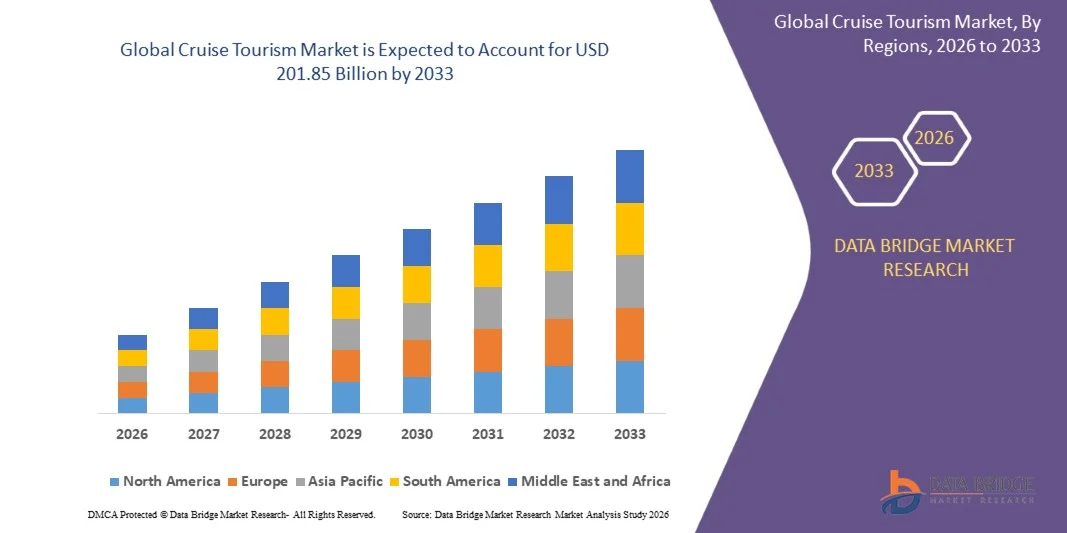
- The global cruise tourism market size was valued at USD 88.86 billion in 2025 and is expected to reach USD 201.85 billion by 2033, at a CAGR of 10.80% during the forecast period
- The market growth is largely fueled by increasing global disposable incomes, rising demand for leisure and experiential travel, and the growing popularity of ocean, river, and expedition cruises among diverse traveler segments. These factors are driving more frequent and longer-duration cruise bookings, thereby significantly boosting the cruise tourism industry
- Furthermore, the expansion of cruise infrastructure, including new ports, upgraded ships, and enhanced onboard amenities, is establishing cruise tourism as a preferred vacation choice for families, millennials, and senior travelers. For instance, major operators such as Carnival Corporation & plc and Royal Caribbean Group are introducing innovative itineraries and onboard experiences, accelerating market adoption and passenger engagement
Cruise Tourism Market Analysis
- Cruise tourism, offering curated travel experiences across domestic and international destinations, is increasingly valued for convenience, entertainment, and immersive cultural exploration, making it an attractive alternative to traditional vacations. The integration of themed cruises, wellness packages, and adventure activities further enhances the appeal for a wide range of travelers
- The escalating demand for cruise tourism is primarily fueled by rising interest in experiential and luxury travel, increasing participation in short- and mid-duration cruises, and enhanced accessibility to global cruise destinations. Cruise lines are investing in digital booking platforms, mobile applications, and loyalty programs to improve convenience and attract repeat customers
- North America dominated cruise tourism market with a share of 53.27% in 2025, due to rising disposable incomes, increasing demand for leisure travel, and a strong preference for luxury and family-oriented cruise experiences
- Asia-Pacific is expected to be the fastest growing region in the cruise tourism market during the forecast period due to increasing urbanization, rising disposable incomes, and growing interest in experiential and luxury travel in countries such as China, Japan, and Australia
- Ocean cruises segment dominated the market with a market share of 72.26% in 2025, due to the extensive availability of large vessels, diverse onboard amenities, and globally recognized cruise routes. Travelers often prefer ocean cruises for the comprehensive vacation experience, which includes entertainment, fine dining, and international port visits, making them appealing for both leisure and family tourism. Ocean cruises also benefit from established cruise operators and robust marketing campaigns, increasing their visibility among potential travelers. The flexibility in itineraries, luxurious accommodations, and specialized packages such as wellness and adventure cruises further strengthen demand for this segment. Cruise lines offering ocean cruises often integrate digital booking, personalized services, and loyalty programs, enhancing customer satisfaction and repeat bookings
Report Scope and Cruise Tourism Market Segmentation
|
Attributes |
Cruise Tourism Key Market Insights |
|
Segments Covered |
|
|
Countries Covered |
North America
Europe
Asia-Pacific
Middle East and Africa
South America
|
|
Key Market Players |
|
|
Market Opportunities |
|
|
Value Added Data Infosets |
In addition to the insights on market scenarios such as market value, growth rate, segmentation, geographical coverage, and major players, the market reports curated by the Data Bridge Market Research also include in-depth expert analysis, pricing analysis, brand share analysis, consumer survey, demography analysis, supply chain analysis, value chain analysis, raw material/consumables overview, vendor selection criteria, PESTLE Analysis, Porter Analysis, and regulatory framework. |
Cruise Tourism Market Trends
“Rising Popularity of Experiential and Themed Cruises”
- The cruise tourism market is witnessing a pronounced trend towards experiential and themed cruises, as travelers increasingly prefer vacations that provide immersive cultural, wellness, and adventure experiences. Cruise operators are designing specialized itineraries that combine unique destinations, onboard activities, and personalized services to enhance overall passenger satisfaction and engagement
- For instance, Royal Caribbean Group launched themed wellness and adventure cruises across the Caribbean and Mediterranean, providing passengers with curated experiences such as yoga workshops, hiking excursions, and culinary tours, which significantly increased bookings among millennials and experience-driven travelers
- The growing focus on cultural immersion and local experiences is influencing cruise lines to include guided shore excursions, art and cooking workshops, and educational programs within itineraries, ensuring passengers receive memorable and engaging travel experiences. These offerings also strengthen customer loyalty and encourage repeat bookings across multiple cruise seasons
- Digitalization is further enhancing the experiential cruise trend, as mobile apps and online platforms allow passengers to pre-select excursions, manage itineraries, and customize onboard services, providing convenience and a sense of control over their journey. This seamless digital engagement is enabling operators to gather insights into passenger preferences and tailor future experiences accordingly
- The expansion of niche cruise experiences, including expedition cruises, eco-friendly voyages, and culinary-themed itineraries, is broadening the market and attracting a wide range of travelers such as families, retirees, and younger adults seeking unique travel options. Cruise lines are increasingly leveraging these specialized offerings to differentiate their brand and expand their market share
- This trend towards experiential and themed cruises is expected to continue reshaping the cruise tourism landscape, as operators focus on providing highly personalized, immersive, and differentiated travel experiences that meet evolving consumer expectations and drive long-term industry growth
Cruise Tourism Market Dynamics
Driver
“Increasing Global Disposable Incomes and Leisure Travel Demand”
- Rising disposable incomes across developed and emerging economies are enabling more travelers to afford mid- to high-end cruise vacations, contributing significantly to the expansion of the cruise tourism market. The growing preference for leisure and experiential travel is motivating higher participation across short, mid-, and long-duration cruises
- For instance, Carnival Corporation & plc reported substantial growth in bookings during 2025, as rising consumer spending in North America and Europe translated into higher demand for both ocean and river cruises, reinforcing the strong link between disposable income and cruise adoption
- The increasing awareness of cruise tourism as a desirable vacation option is prompting travelers to choose cruises over traditional holidays, supporting consistent market expansion. Cruise operators are developing multi-destination itineraries and all-inclusive packages that appeal to travelers seeking value, comfort, and curated experiences
- Improved accessibility to global cruise destinations through enhanced port connectivity, simplified visa regulations, and tourism promotion initiatives is further fueling market growth. These developments reduce travel barriers, attract international passengers, and expand the potential customer base for cruise operators
- The rising trend of multi-generational and family travel is also boosting cruise demand, as cruises provide comprehensive onboard amenities, entertainment options, and excursions suitable for all age groups. This demographic shift is fostering sustained growth in bookings across various cruise segments and durations
Restraint/Challenge
“Limited Cruise Infrastructure and Port Capacity”
- The growth of the cruise tourism market is restrained by limited port facilities, insufficient berth availability, and underdeveloped supporting infrastructure in certain regions, which can hinder the expansion of new itineraries and vessels. Capacity limitations often result in operational bottlenecks, affecting the efficiency and flexibility of cruise line schedules
- For instance, several Southeast Asian ports and emerging European destinations face constraints in accommodating larger vessels, limiting the ability of cruise operators such as MSC Cruises S.A. and Viking Cruises Ltd. to expand their itineraries and attract international travelers
- The uneven distribution of cruise infrastructure across regions restricts market penetration in high-potential areas, reducing the opportunity for operators to capture new customer segments. Investments in port development, docking facilities, and related tourism infrastructure are essential to overcome these challenges and support market growth
- High congestion at popular ports can negatively impact passenger experience due to overcrowding, longer embarkation and disembarkation times, and limited availability of shore excursions. These operational challenges may diminish customer satisfaction, reduce repeat bookings, and affect brand reputation
- Addressing infrastructure and capacity constraints is critical for the sustainable growth of the cruise tourism market, requiring collaboration between cruise operators, governments, and local authorities. Expanding port capabilities, developing new destinations, and upgrading existing facilities will be necessary to accommodate rising demand and ensure long-term industry expansion
Cruise Tourism Market Scope
The market is segmented on the basis of type, duration, and age group.
- By Type
On the basis of type, the cruise tourism market is segmented into ocean cruises, river cruises, expedition cruises, and others. The ocean cruises segment dominated the market with the largest revenue share of 72.26% in 2025, driven by the extensive availability of large vessels, diverse onboard amenities, and globally recognized cruise routes. Travelers often prefer ocean cruises for the comprehensive vacation experience, which includes entertainment, fine dining, and international port visits, making them appealing for both leisure and family tourism. Ocean cruises also benefit from established cruise operators and robust marketing campaigns, increasing their visibility among potential travelers. The flexibility in itineraries, luxurious accommodations, and specialized packages such as wellness and adventure cruises further strengthen demand for this segment. Cruise lines offering ocean cruises often integrate digital booking, personalized services, and loyalty programs, enhancing customer satisfaction and repeat bookings.
The expedition cruises segment is anticipated to witness the fastest growth rate from 2026 to 2033, fueled by rising interest in adventure tourism and exploration of remote destinations. Expedition cruises offer unique experiences such as polar exploration, wildlife observation, and immersive cultural journeys, attracting affluent travelers and millennials seeking offbeat travel experiences. The increasing number of eco-conscious travelers also contributes to the growth of this segment, as expedition cruises emphasize sustainability and low-impact travel. Cruise operators are investing in smaller, technologically advanced vessels designed for these remote areas, offering safety, comfort, and expert-guided excursions. The growing popularity of social media and travel influencers showcasing expedition experiences further drives interest in this segment among younger demographics.
- By Duration
On the basis of duration, the cruise tourism market is segmented into up to 6 days, between 6 and 10 days, between 10 and 14 days, and above 14 days. The segment between 6 and 10 days dominated the market with the largest revenue share in 2025, driven by the balance it offers between affordability, convenience, and the ability to explore multiple destinations. Travelers often prefer this duration for its optimal combination of onboard experience and port visits without requiring extended time off work. Cruise lines promote 7- to 9-day itineraries through bundled packages, early booking discounts, and seasonal promotions, making them attractive for both family vacations and group travel. The segment also benefits from strong repeat bookings, as passengers who enjoy mid-duration cruises are likely to plan similar trips in the future. Onboard amenities, entertainment, and excursions are designed to maximize experience within this timeframe, appealing to both leisure and first-time cruise travelers.
The above 14 days segment is expected to witness the fastest CAGR from 2026 to 2033, driven by the rising demand for luxury, long-haul, and immersive travel experiences. Extended cruises allow travelers to explore multiple continents, remote destinations, and unique cultural experiences that shorter cruises cannot accommodate. High-net-worth individuals and retirees are primary consumers of this segment due to the luxury offerings, specialized services, and comprehensive itineraries. Cruise operators are expanding ultra-long-duration cruise options, integrating educational programs, wellness retreats, and themed voyages to enhance appeal. Increasing disposable income, coupled with the desire for experiential travel, is further driving growth in this segment.
- By Age Group
On the basis of age group, the cruise tourism market is segmented into up to 20 years, between 20 and 40 years, between 40 and 60 years, and above 60 years. The age group between 40 and 60 years dominated the market with the largest revenue share in 2025, driven by higher disposable income, greater vacation flexibility, and preference for premium travel experiences. Travelers in this age group often seek comfort, safety, and enriching experiences, making them ideal candidates for mainstream and luxury cruises. Cruise lines frequently design itineraries, entertainment, and amenities tailored to this demographic, including wellness programs, culinary experiences, and cultural excursions. The segment also benefits from multi-generational travel trends, as families often choose cruise vacations that cater to both adults and children. Marketing campaigns targeting this age group emphasize value, convenience, and personalized experiences, reinforcing loyalty and repeat bookings.
The age group between 20 and 40 years is expected to witness the fastest growth rate from 2026 to 2033, fueled by millennials’ and younger professionals’ preference for adventure, social experiences, and experiential travel. This group often prioritizes unique destinations, themed cruises, nightlife, and activity-based packages over traditional cruise offerings. Social media influence, influencer promotions, and digital-first booking platforms play a significant role in attracting this age group. Cruise operators are increasingly offering affordable mid-range packages, flexible itineraries, and onboard amenities such as gyms, adventure activities, and social events to appeal to younger travelers. The growing interest in solo travel, group bookings, and eco-conscious trips further supports the rapid expansion of this segment.
Cruise Tourism Market Regional Analysis
- North America dominated the cruise tourism market with the largest revenue share of 53.27% in 2025, driven by rising disposable incomes, increasing demand for leisure travel, and a strong preference for luxury and family-oriented cruise experiences
- Consumers in the region highly value the variety of destinations, onboard entertainment, and convenience offered by cruise packages, including all-inclusive amenities and flexible itineraries. This widespread adoption is further supported by well-established cruise operators, extensive port infrastructure, and the growing popularity of themed cruises such as wellness, adventure, and culinary journeys
- The U.S., in particular, leads the regional market, with strong participation from both domestic travelers and international tourists seeking North American cruise experiences. North American cruise lines are also focusing on integrating digital booking platforms, loyalty programs, and personalized services to enhance customer engagement and repeat travel
U.S. Cruise Tourism Market Insight
The U.S. cruise tourism market captured the largest revenue share in 2025 within North America, fueled by strong consumer interest in ocean and river cruises, along with increased vacation spending. Travelers are increasingly prioritizing comfort, safety, and diverse leisure experiences, driving demand for mid- to long-duration cruises. Cruise operators are offering innovative itineraries, onboard entertainment, and activity-based programs tailored to families, millennials, and senior travelers. The expansion of ports, coupled with easy access to Caribbean, Alaska, and Pacific destinations, supports the robust growth of the U.S. cruise market. In addition, marketing campaigns targeting experiential travel and digital engagement through mobile apps and social media are further enhancing the market’s reach.
Europe Cruise Tourism Market Insight
The Europe cruise tourism market is projected to expand at a substantial CAGR throughout the forecast period, driven by the region’s rich cultural heritage, historical landmarks, and increasing tourism expenditure. European consumers show strong preference for Mediterranean, Baltic, and Northern European itineraries, offering both leisure and immersive cultural experiences. The increase in disposable incomes, coupled with the rising trend of multi-generational travel, is fostering cruise adoption across the continent. Cruise lines are capitalizing on Europe’s well-connected ports and scenic river routes, enhancing accessibility and convenience for travelers. In addition, themed cruises, eco-friendly vessels, and luxury packages are attracting premium travelers, contributing to the market’s steady growth.
U.K. Cruise Tourism Market Insight
The U.K. cruise tourism market is anticipated to grow at a noteworthy CAGR during the forecast period, driven by a rising preference for short-haul cruises and holiday packages that combine leisure with cultural exploration. In addition, increasing concerns regarding travel convenience and safety are motivating travelers to choose organized cruise vacations. The U.K.’s strong travel infrastructure, ease of booking through digital platforms, and the presence of major cruise operators are expected to sustain market expansion. Cruise lines are focusing on offering flexible itineraries, themed experiences, and family-friendly amenities to attract a wide range of travelers.
Germany Cruise Tourism Market Insight
The Germany cruise tourism market is expected to expand at a considerable CAGR during the forecast period, fueled by growing interest in river cruises along the Rhine, Danube, and Elbe, as well as ocean cruises to global destinations. Germany’s high travel expenditure, coupled with increasing awareness of experiential tourism, drives demand for premium cruise offerings. Travelers seek comfort, cultural enrichment, and eco-friendly travel options, which are increasingly incorporated by cruise operators. The integration of digital booking, personalized packages, and sustainable cruise practices is further enhancing market growth, particularly in residential and group travel segments.
Asia-Pacific Cruise Tourism Market Insight
The Asia-Pacific cruise tourism market is poised to grow at the fastest CAGR during the forecast period of 2026 to 2033, driven by increasing urbanization, rising disposable incomes, and growing interest in experiential and luxury travel in countries such as China, Japan, and Australia. The region’s emerging middle class is fueling demand for short- and mid-duration cruises, while government initiatives promoting tourism and infrastructure development support market expansion. Cruise operators are investing in regional cruise lines, local itineraries, and new port facilities to meet rising demand. In addition, younger travelers and millennials are showing greater interest in adventure, expedition, and themed cruises, accelerating the market’s growth.
Japan Cruise Tourism Market Insight
The Japan cruise tourism market is gaining momentum due to the country’s high urbanization rate, technological adoption in travel services, and strong interest in domestic and international cruising. Japanese consumers value safety, comfort, and cultural experiences, resulting in demand for both ocean and river cruises. Cruise operators are introducing wellness, culinary, and adventure-themed packages to cater to local preferences. The increasing adoption of mobile booking platforms and integration with digital services further enhances the convenience and appeal of cruise tourism in Japan.
China Cruise Tourism Market Insight
The China cruise tourism market accounted for the largest revenue share in Asia-Pacific in 2025, attributed to the country’s rapidly growing middle class, rising outbound and domestic travel, and investment in cruise infrastructure. Ocean cruises to Southeast Asia, Japan, and Australia are particularly popular, while domestic river cruises are gaining traction among regional travelers. Cruise operators are leveraging digital marketing, mobile app bookings, and loyalty programs to expand reach. In addition, the government’s push for tourism development, coupled with increasing awareness of leisure travel, is propelling the market in China.
Cruise Tourism Market Share
The cruise tourism industry is primarily led by well-established companies, including:
- MSC Cruises S.A. (Switzerland)
- Disney Cruise Line (U.S.)
- Seabourn Cruise Line (U.S.)
- Royal Caribbean Group (U.S.)
- Holland America Line (U.S.)
- Viking Cruises Ltd. (Switzerland)
- Oceania Cruises (U.S.)
- Celebrity Cruises (U.S.)
- Hurtigruten Group (Norway)
- Carnival Corporation & plc (U.S.)
- Ponant (France)
- Norwegian Cruise Line Holdings Ltd. (U.S.)
- Crystal Cruises (U.S.)
- Scenic Luxury Cruises & Tours (Australia)
- Azamara (U.S.)
- Regent Seven Seas Cruises (U.S.)
- Silversea Cruises (Switzerland)
- Princess Cruises (U.S.)
- Genting Hong Kong Ltd. (Dream Cruises) (Hong Kong)
- Lindblad Expeditions (U.S.)
Latest Developments in Global Cruise Tourism Market
- In September 2025, Oceania Cruises, a Florida, U.S.-based cruise line, expanded its customer offerings through its program, Your World Included, by adding complimentary beer and wine for passengers. This initiative is expected to enhance the overall onboard experience, strengthening customer loyalty and encouraging repeat bookings. The expanded amenities position Oceania Cruises competitively in the luxury cruise segment, attracting travelers seeking inclusive, premium services and contributing to growth in North America’s cruise tourism market
- In September 2025, Princess Cruises, a U.S.-based cruise line, launched 13 new shore excursions across popular Mexican ports, including Puerto Vallarta, Mazatlán, Manzanillo, La Paz, and Cabo San Lucas. This expansion enhances the attractiveness of their itineraries, increasing passenger engagement and spending on destination activities. By offering diverse experiences, Princess Cruises is likely to drive higher occupancy rates, strengthen brand loyalty, and boost the U.S. and international market share in short- and mid-duration cruises
- In September 2025, Sea Cloud Cruises, a Germany-based cruise line, introduced special promotional deals targeting solo travelers, applicable on ships such as Sea Cloud Spirit and Sea Cloud II to destinations including Italy, Spain, and France. This initiative is expected to expand the European cruise market by attracting independent travelers who were previously underserved, boosting overall occupancy and diversifying the passenger demographic. These promotional deals also enhance market inclusivity and generate additional revenue from niche segments seeking premium, culturally immersive experiences
- In April 2025, Cordelia Cruises, a Mumbai, India-based cruise line, acquired Norwegian Sun and Norwegian Sky from Norwegian Cruise Line, a U.S.-based operator, to expand its presence in the Middle East, Southeast Asia, and India. This strategic fleet expansion is expected to enhance India’s cruise tourism infrastructure, providing more routes, increased capacity, and elevated service offerings. The move positions Cordelia Cruises to capitalize on growing demand for regional and international cruise experiences, boosting passenger volumes and stimulating market growth in Asia-Pacific
- In March 2025, the Delhi government in India announced plans to introduce a river cruise service on the Yamuna River, operating between Jagatpur and Sonia Vihar. This development aims to promote local tourism, create new leisure opportunities, and attract both domestic and international visitors. The project is expected to stimulate regional economic activity, increase visibility of river cruising in India, and contribute to the expansion of India’s nascent cruise tourism market

- Interactive Data Analysis Dashboard
- Company Analysis Dashboard for high growth potential opportunities
- Research Analyst Access for customization & queries
- Competitor Analysis with Interactive dashboard
- Latest News, Updates & Trend analysis
- Harness the Power of Benchmark Analysis for Comprehensive Competitor Tracking
Data collection and base year analysis are done using data collection modules with large sample sizes. The stage includes obtaining market information or related data through various sources and strategies. It includes examining and planning all the data acquired from the past in advance. It likewise envelops the examination of information inconsistencies seen across different information sources. The market data is analysed and estimated using market statistical and coherent models. Also, market share analysis and key trend analysis are the major success factors in the market report. To know more, please request an analyst call or drop down your inquiry.
The key research methodology used by DBMR research team is data triangulation which involves data mining, analysis of the impact of data variables on the market and primary (industry expert) validation. Data models include Vendor Positioning Grid, Market Time Line Analysis, Market Overview and Guide, Company Positioning Grid, Patent Analysis, Pricing Analysis, Company Market Share Analysis, Standards of Measurement, Global versus Regional and Vendor Share Analysis. To know more about the research methodology, drop in an inquiry to speak to our industry experts.
Data Bridge Market Research is a leader in advanced formative research. We take pride in servicing our existing and new customers with data and analysis that match and suits their goal. The report can be customized to include price trend analysis of target brands understanding the market for additional countries (ask for the list of countries), clinical trial results data, literature review, refurbished market and product base analysis. Market analysis of target competitors can be analyzed from technology-based analysis to market portfolio strategies. We can add as many competitors that you require data about in the format and data style you are looking for. Our team of analysts can also provide you data in crude raw excel files pivot tables (Fact book) or can assist you in creating presentations from the data sets available in the report.