


What is the Cyanotic Heart Disease Market Size and Growth Rate?
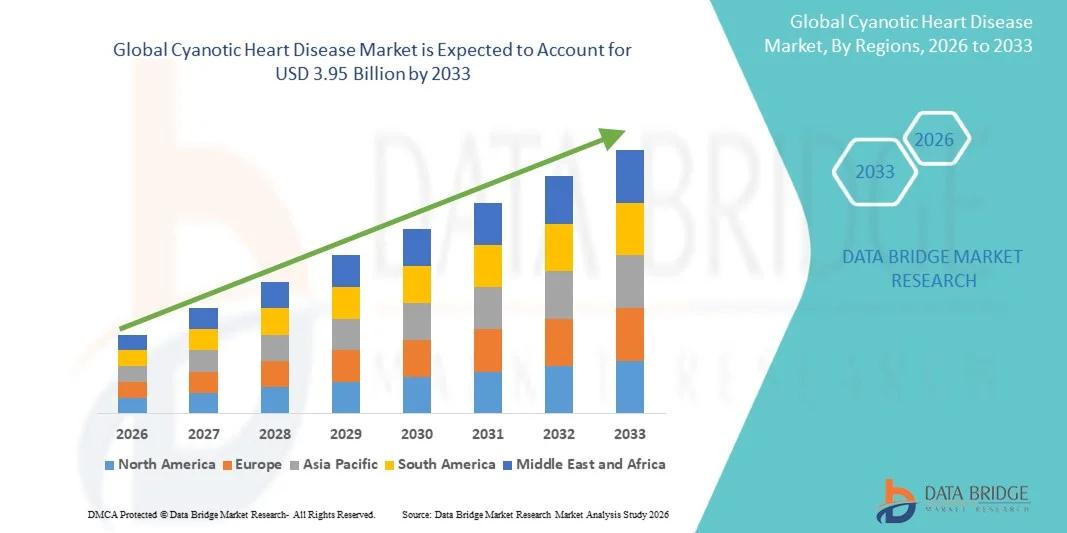
- As per Data Bridge Market Research Analysis the global cyanotic heart disease market size was valued at USD 2.30 billion in 2025 and is expected to reach USD 3.95 billion by 2033, at a CAGR of 7.0% during the forecast period
- The market growth is largely fueled by the rising prevalence of congenital heart defects, particularly cyanotic conditions, along with increasing awareness, early diagnosis, and advancements in pediatric cardiology and cardiac imaging technologies
- Furthermore, growing investments in healthcare infrastructure, improved access to specialized cardiac care, and the adoption of advanced surgical and interventional procedures are driving treatment adoption, thereby supporting sustained market expansion
Market Size & Forecast
- Global Market Value (2025): USD 2.30 billion
- Expected Market Value (2033): USD 3.95 billion
- Forecast CAGR (2026–2033): 7.0%
What are the Major Takeaways of Cyanotic Heart Disease Market?
- Cyanotic heart disease, a group of congenital cardiac conditions characterized by reduced oxygen levels in the blood, represents a critical segment within the broader congenital heart disease landscape, requiring timely diagnosis, specialized pediatric care, and advanced surgical or interventional treatments to improve patient outcomes
- The escalating demand in the cyanotic heart disease market is primarily driven by the increasing prevalence of congenital heart defects, growing awareness of early screening in newborns, advancements in diagnostic imaging and neonatal care, and improvements in surgical techniques such as corrective and palliative procedures
- North America dominated the cyanotic heart disease market with the largest revenue share of 42% in 2025, supported by advanced healthcare infrastructure, high adoption of early diagnostic technologies, strong reimbursement frameworks, and the presence of specialized cardiac centers with experienced pediatric cardiologists and cardiothoracic surgeons
- Asia-Pacific is expected to be the fastest growing region in the cyanotic heart disease market during the forecast period due to rising birth rates, increasing healthcare expenditure, improving access to pediatric cardiac care, and growing government initiatives aimed at early detection and treatment of congenital heart disorders
- Surgery dominated the cyanotic heart disease market in 2025, holding a market share of 60.4%, driven by the necessity of corrective procedures such as open-heart surgeries and catheter-based interventions, which remain the primary treatment approach for managing complex cyanotic conditions and improving long-term survival rates
Report Scope and Cyanotic Heart Disease Market Segmentation
|
Attributes |
Cyanotic Heart Disease Key Market Insights |
|
Segments Covered |
|
|
Countries Covered |
North America
Europe
Asia-Pacific
Middle East and Africa
South America
|
|
Key Market Players |
|
|
Market Opportunities |
|
|
Value Added Data Infosets |
In addition to the insights on market scenarios such as market value, growth rate, segmentation, geographical coverage, and major players, the market reports curated by the Data Bridge Market Research also include in-depth expert analysis, patient epidemiology, pipeline analysis, pricing analysis, and regulatory framework |
What is the Key Trend in the Cyanotic Heart Disease Market?
“Advancements in Early Diagnosis and Precision Cardiac Care”
- A significant and accelerating trend in the global cyanotic heart disease market is the growing emphasis on early diagnosis through advanced imaging technologies such as echocardiography, fetal ultrasound, and pulse oximetry screening, enabling timely detection of congenital heart defects in newborn
- For instance, increasing adoption of neonatal screening programs in hospitals allows clinicians to identify oxygen saturation abnormalities early, facilitating prompt intervention and improving survival outcomes in infants with cyanotic conditions
- Advances in pediatric cardiology and precision medicine are enabling more personalized treatment approaches, including improved surgical planning, catheter-based interventions, and tailored post-operative care based on patient-specific anatomical and physiological conditions
- The integration of digital health tools and remote monitoring solutions is further enhancing patient management, allowing continuous tracking of vital parameters and early detection of complications in post-surgical and long-term care patients
- Growing utilization of multidisciplinary cardiac care teams is improving coordination between pediatricians, cardiologists, and surgeons, leading to more comprehensive and outcome-driven treatment pathways
- This trend toward more proactive, technology-enabled, and patient-centric care is reshaping clinical expectations in congenital cardiac management, encouraging healthcare providers to adopt advanced diagnostic and treatment pathways
Cyanotic Heart Disease Market Dynamics
Driver
“Rising Prevalence of Congenital Heart Defects and Advancements in Pediatric Cardiac Care”
- The increasing prevalence of congenital heart diseases, including cyanotic conditions, combined with improved survival rates due to advancements in pediatric cardiac surgery and intensive care, is a key driver of market growth
- For instance, growing investments in healthcare infrastructure and the expansion of specialized cardiac centers are improving access to life-saving interventions for neonates and children diagnosed with cyanotic heart disease
- As awareness regarding early diagnosis and treatment increases among healthcare professionals and parents, demand for advanced diagnostic tools, surgical procedures, and long-term disease management solutions is rising significantly
- Furthermore, continuous innovation in minimally invasive procedures, improved surgical techniques, and better post-operative care are contributing to higher treatment success rates and expanding the treated patient population
- Increasing government initiatives and public health programs focused on congenital heart disease screening and child health are further supporting early detection and treatment adoption
- Rising collaborations between hospitals, research institutes, and medical device companies are accelerating innovation in pediatric cardiac care, improving treatment outcomes and accessibility
Restraint/Challenge
“High Treatment Complexity and Limited Access to Specialized Care”
- The management of cyanotic heart disease is highly complex, often requiring specialized pediatric cardiologists, cardiothoracic surgeons, and advanced healthcare infrastructure, which is not uniformly available across all regions
- In many low- and middle-income countries, limited access to early screening programs, diagnostic facilities, and specialized surgical centers remains a major barrier to timely treatment and improved patient outcomes
- In addition, the high cost associated with surgical procedures, long-term care, and hospitalization can be a significant financial burden for patients and healthcare systems, particularly in resource-constrained settings
- Shortage of trained healthcare professionals in pediatric cardiology further limits the capacity to manage complex congenital cases effectively in emerging markets
- Delays in diagnosis due to lack of awareness and inadequate prenatal and neonatal screening infrastructure can lead to late-stage detection, increasing the risk of complications and reducing treatment success rates
- Variability in healthcare quality and lack of standardized treatment protocols across regions can also impact consistency in patient outcomes and overall disease management
- Addressing these challenges through expansion of healthcare access, increased government initiatives, capacity building in pediatric cardiac care, and development of cost-effective treatment options will be critical for sustained market growth
How is the Cyanotic Heart Disease Market Segmented?
The market is segmented on the basis of treatment type, route of administration, end-users, and distribution channel.
- By Treatment Type
On the basis of treatment type, the cyanotic heart disease market is segmented into medication and surgery. The surgery segment dominated the market with the largest market share of 60.4% in 2025, driven by the critical need for corrective procedures such as open-heart surgeries and catheter-based interventions to manage structural heart abnormalities associated with cyanotic conditions. Surgical treatments remain the primary and often life-saving approach, especially in infants and children, as they directly address the underlying anatomical defects rather than just managing symptoms. Increasing advancements in pediatric cardiac surgery, improved surgical success rates, and availability of specialized cardiac centers further support the dominance of this segment. In addition, the growing number of diagnosed cases requiring immediate intervention continues to sustain demand for surgical procedures.
The medication segment is expected to witness the fastest growth during the forecast period, driven by its supportive role in managing symptoms, stabilizing patients pre- and post-surgery, and improving overall cardiac function. Medications such as prostaglandins, diuretics, and anticoagulants are increasingly used in neonatal intensive care settings to maintain ductal patency and manage complications. Rising adoption of pharmacological therapies as part of long-term disease management and increasing use in combination with surgical interventions are contributing to segment growth. Furthermore, ongoing research into advanced drug therapies and improved access to supportive care in emerging regions are accelerating the expansion of this segment.
- By Route of Administration
On the basis of route of administration, the cyanotic heart disease market is segmented into oral, parenteral, and others. The parenteral segment dominated the market in 2025, primarily due to the critical condition of patients, especially neonates and infants, who often require immediate and controlled drug delivery in hospital settings. Intravenous administration allows rapid onset of action, which is essential in emergency and intensive care situations where cyanotic heart disease patients require stabilization. Parenteral drugs such as prostaglandin infusions are commonly used to maintain blood flow and oxygenation in critical cases, reinforcing the dominance of this segment. The preference for hospital-based administration and the need for precise dosage control further support its widespread use.
The oral segment is expected to witness the fastest growth during the forecast period, driven by its convenience, ease of administration, and increasing use in long-term disease management. Oral medications are commonly prescribed for ongoing symptom management, post-operative care, and outpatient treatment, reducing dependency on hospital visits. Growing adoption of homecare settings and improved patient compliance with oral therapies are contributing to segment growth. In addition, advancements in pediatric-friendly formulations and increasing availability of oral drugs in emerging markets are further accelerating the expansion of this segment.
- By End-Users
On the basis of end-users, the cyanotic heart disease market is segmented into hospitals, homecare, specialty centres, and others. The hospitals segment dominated the market in 2025, owing to the high concentration of specialized medical professionals, advanced diagnostic equipment, and availability of emergency care required for managing complex congenital heart conditions. Hospitals serve as the primary point of diagnosis, surgical intervention, and post-operative care for cyanotic heart disease patients. The presence of pediatric intensive care units (PICUs) and cardiothoracic surgical teams makes hospitals the preferred setting for both acute and critical care management. Increasing hospital admissions for congenital heart disease treatments further reinforces the dominance of this segment.
The specialty centres segment is expected to witness the fastest growth during the forecast period, driven by the rising establishment of dedicated cardiac care facilities focused on pediatric and congenital heart diseases. These centres offer specialized expertise, advanced treatment protocols, and multidisciplinary care, improving patient outcomes and treatment efficiency. Increasing referrals from general hospitals to specialized cardiac centers and growing demand for high-quality, focused care are supporting segment expansion. In addition, investments in specialized infrastructure and the availability of advanced surgical and diagnostic capabilities are accelerating growth in this segment.
- By Distribution Channel
On the basis of distribution channel, the cyanotic heart disease market is segmented into hospital pharmacy, retail pharmacy, online pharmacy, and others. The hospital pharmacy segment dominated the market in 2025, as most treatments for cyanotic heart disease are administered in hospital settings, particularly during emergency care, surgeries, and neonatal intensive care. Hospital pharmacies ensure immediate availability of critical drugs such as injectable medications, prostaglandins, and other life-saving therapies required for inpatients. The integration of hospital pharmacies with treatment units enables efficient medication management and timely dispensing, making them the primary distribution channel for this market.
The online pharmacy segment is expected to witness the fastest growth during the forecast period, driven by the increasing adoption of digital healthcare platforms and growing preference for home delivery of medications. Online pharmacies offer convenience, accessibility, and time-saving benefits, particularly for patients requiring long-term medication management after hospital discharge. The expansion of e-commerce in pharmaceuticals, increasing internet penetration, and growing consumer trust in digital healthcare services are contributing to the rapid growth of this segment. In addition, the shift toward homecare and outpatient treatment is further supporting the adoption of online pharmacy channels.
Which Region Holds the Largest Share of the Cyanotic Heart Disease Market?
- North America dominated the cyanotic heart disease market with the largest revenue share of 42% in 2025, supported by advanced healthcare infrastructure, high adoption of early diagnostic technologies, strong reimbursement frameworks, and the presence of specialized cardiac centers with experienced pediatric cardiologists and cardiothoracic surgeons
- Patients in the region benefit from early diagnostic programs, widespread access to neonatal screening, and advanced treatment options including corrective surgeries and interventional cardiology procedures
- This widespread adoption is further supported by high healthcare expenditure, favorable reimbursement policies, and the presence of leading hospitals and cardiac centers equipped with state-of-the-art technologies, establishing North America as a key region for the diagnosis and management of cyanotic heart disease
U.S. Cyanotic Heart Disease Market Insight
The U.S. cyanotic heart disease market captured the largest revenue share within North America in 2025, driven by advanced healthcare infrastructure, high adoption of early diagnostic technologies, and strong availability of specialized pediatric cardiac care facilities. Patients in the region benefit from widespread neonatal screening programs, advanced imaging techniques, and access to complex surgical and interventional procedures performed in leading hospitals. The growing emphasis on early detection, combined with favorable reimbursement frameworks and high healthcare spending, further supports market growth. In addition, the presence of experienced cardiothoracic surgeons and continuous innovation in pediatric cardiac care significantly contributes to improved treatment outcomes and sustained demand for cyanotic heart disease management.
Europe Cyanotic Heart Disease Market Insight
The Europe cyanotic heart disease market is projected to expand at a steady CAGR throughout the forecast period, primarily driven by well-established healthcare systems and increasing focus on early diagnosis of congenital heart defects. Rising awareness among healthcare providers and parents regarding neonatal screening programs is encouraging timely detection and treatment of cyanotic conditions. The region also benefits from strong government support, advanced hospital infrastructure, and availability of specialized cardiac centers. Increasing investments in pediatric healthcare and the growing adoption of minimally invasive surgical procedures are further supporting market growth across both developed and emerging European countries.
U.K. Cyanotic Heart Disease Market Insight
The U.K. cyanotic heart disease market is anticipated to grow at a notable CAGR during the forecast period, driven by the presence of a structured public healthcare system and increasing emphasis on early screening for congenital disorders. The National Health Service (NHS) plays a key role in providing accessible cardiac care, including diagnosis, surgical interventions, and long-term management. Rising awareness of congenital heart diseases, coupled with advancements in pediatric cardiology services, is encouraging early intervention. In addition, the availability of specialized cardiac units and ongoing research initiatives in congenital heart disease management are contributing to the steady growth of the market in the U.K.
Germany Cyanotic Heart Disease Market Insight
The Germany cyanotic heart disease market is expected to expand at a considerable CAGR during the forecast period, supported by a well-developed healthcare infrastructure and strong focus on medical innovation. Germany’s emphasis on advanced diagnostic technologies, high-quality surgical care, and efficient hospital systems promotes effective management of congenital heart conditions. Increasing awareness of early diagnosis, along with widespread access to specialized cardiac centers, is driving demand for treatment. Furthermore, the country’s commitment to precision medicine and continuous advancements in pediatric cardiac procedures are enhancing patient outcomes and supporting market expansion.
Asia-Pacific Cyanotic Heart Disease Market Insight
The Asia-Pacific cyanotic heart disease market is poised to grow at the fastest CAGR during the forecast period, driven by rising birth rates, increasing prevalence of congenital heart diseases, and improving healthcare infrastructure in countries such as China, India, and Japan. The region’s growing focus on early diagnosis, coupled with expanding access to pediatric cardiac care, is significantly boosting demand. Government initiatives aimed at improving maternal and child healthcare, along with increasing investments in hospital infrastructure, are further accelerating market growth. In addition, the rising awareness of congenital disorders and expanding insurance coverage are enabling broader access to treatment across the region.
Japan Cyanotic Heart Disease Market Insight
The Japan cyanotic heart disease market is gaining momentum due to its advanced healthcare system, aging population, and strong emphasis on medical technology. The country’s high standard of pediatric care and widespread availability of diagnostic facilities support early detection and effective management of congenital heart diseases. Integration of advanced imaging technologies and minimally invasive procedures is improving treatment outcomes. In addition, Japan’s focus on innovation in healthcare, combined with increasing awareness of congenital heart conditions, is contributing to the steady adoption of advanced treatment solutions in both hospital and specialized care settings.
India Cyanotic Heart Disease Market Insight
The India cyanotic heart disease market accounted for a significant share in Asia-Pacific in 2025, attributed to its large population base, increasing birth rates, and growing awareness of congenital heart diseases. Rapid improvements in healthcare infrastructure, along with expanding access to specialized cardiac centers, are enabling better diagnosis and treatment of cyanotic conditions. Government initiatives focused on maternal and child health, combined with rising investments in pediatric cardiac care, are supporting market growth. In addition, the availability of more affordable treatment options and increasing participation of private healthcare providers are making advanced cardiac care more accessible to a broader patient population.
Which are the Top Companies in Cyanotic Heart Disease Market?
The Cyanotic Heart Disease industry is primarily led by well-established companies, including:
- Medtronic (Ireland)
- Abbott (U.S.)
- Boston Scientific Corporation (U.S.)
- GE Healthcare (U.S.)
- Siemens Healthineers AG (Germany)
- Edwards Lifesciences Corporation (U.S.)
- LivaNova PLC (U.K.)
- W. L. Gore & Associates, Inc. (U.S.)
- Koninklijke Philips N.V. (Netherlands)
- MicroPort Inc. (China)
- Terumo Corporation (Japan)
- B. Braun SE (Germany)
- Cook (U.S.)
- Biotronik SE & Co. KG (Germany)
- Cardiovascular Systems, Inc. (U.S.)
- NIPRO CORPORATION (Japan)
- Masimo Corporation (U.S.)
- Lepu Medical Technology Co., Ltd. (China)
- OSYPKA Medical GmbH (Germany)
- ABIOMED, Inc. (U.S.)
What are Latest Developments in Cyanotic Heart Disease Market?
- In January 2026, research highlights that around 1.3 million children are born annually with congenital heart disorders globally, with a significant portion requiring surgery shortly after birth. This underscores ongoing challenges and the need for improved diagnostic and treatment infrastructure worldwide
- In December 2025, the American College of Cardiology (ACC) and American Heart Association (AHA) released new clinical guidelines for the management of adult congenital heart disease, aiming to standardize care and improve long-term outcomes for patients transitioning from pediatric to adult cardiac care settings. These guidelines include updates on diagnostic strategies, intervention timing, and follow-up care pathways for complex congenital conditions
- In October 2025, Children’s Hospital of Philadelphia (CHOP) performed its first artificial heart surgery on an infant with complex congenital heart disease, marking a medical milestone in mechanical support for critical heart defects. This breakthrough showcases advanced surgical options and life-saving interventions for infants with otherwise inoperable conditions
- In January 2025, researchers reported a novel precision fetal cardiology method that uses maternal saliva metabolomics combined with artificial intelligence to accurately detect cyanotic congenital heart disease (CCHD) prenatally, representing a significant advancement in early non-invasive diagnosis
- In August 2024, the American Heart Association (AHA) and Additional Ventures committed USD 13 million to study the biological mechanisms of rare congenital heart defects such as single ventricle disease, aiming to deepen scientific understanding and improve clinical care

- Interactive Data Analysis Dashboard
- Company Analysis Dashboard for high growth potential opportunities
- Research Analyst Access for customization & queries
- Competitor Analysis with Interactive dashboard
- Latest News, Updates & Trend analysis
- Harness the Power of Benchmark Analysis for Comprehensive Competitor Tracking
Data collection and base year analysis are done using data collection modules with large sample sizes. The stage includes obtaining market information or related data through various sources and strategies. It includes examining and planning all the data acquired from the past in advance. It likewise envelops the examination of information inconsistencies seen across different information sources. The market data is analysed and estimated using market statistical and coherent models. Also, market share analysis and key trend analysis are the major success factors in the market report. To know more, please request an analyst call or drop down your inquiry.
The key research methodology used by DBMR research team is data triangulation which involves data mining, analysis of the impact of data variables on the market and primary (industry expert) validation. Data models include Vendor Positioning Grid, Market Time Line Analysis, Market Overview and Guide, Company Positioning Grid, Patent Analysis, Pricing Analysis, Company Market Share Analysis, Standards of Measurement, Global versus Regional and Vendor Share Analysis. To know more about the research methodology, drop in an inquiry to speak to our industry experts.
Data Bridge Market Research is a leader in advanced formative research. We take pride in servicing our existing and new customers with data and analysis that match and suits their goal. The report can be customized to include price trend analysis of target brands understanding the market for additional countries (ask for the list of countries), clinical trial results data, literature review, refurbished market and product base analysis. Market analysis of target competitors can be analyzed from technology-based analysis to market portfolio strategies. We can add as many competitors that you require data about in the format and data style you are looking for. Our team of analysts can also provide you data in crude raw excel files pivot tables (Fact book) or can assist you in creating presentations from the data sets available in the report.












