


Cyclosporine Market Size
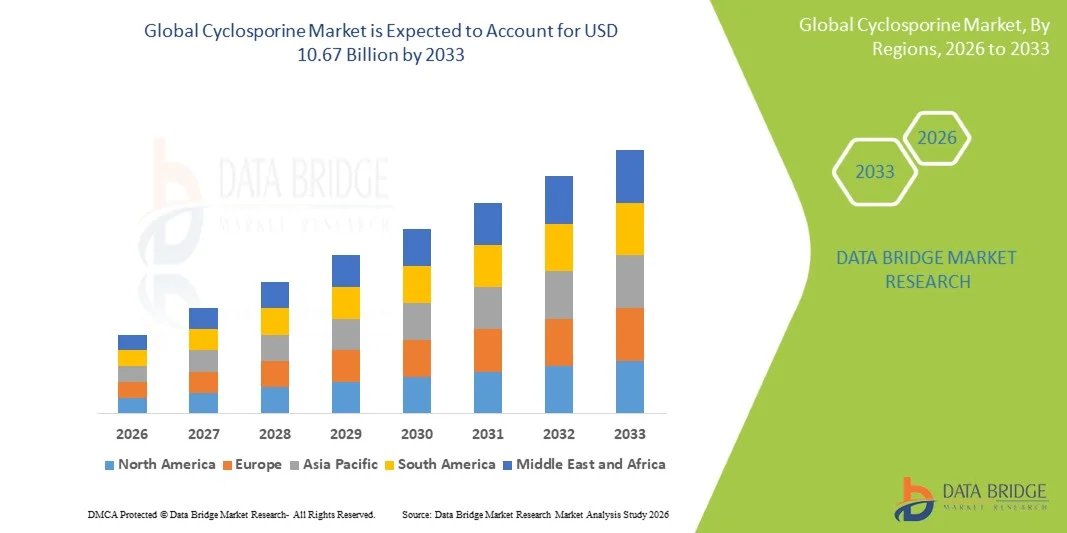
- The global cyclosporine market size was valued at USD 3.49 billion in 2025 and is expected to reach USD 10.67 billion by 2033, at a CAGR of 15.00% during the forecast period
- The market growth is primarily driven by the increasing prevalence of autoimmune diseases, organ transplant procedures, and chronic inflammatory conditions, where cyclosporine is widely used as an immunosuppressant to prevent organ rejection and manage immune responses
- Furthermore, rising advancements in drug formulations, including improved oral solutions, ophthalmic emulsions, and generic availability, along with expanding healthcare access and awareness, are enhancing treatment adoption across both developed and emerging regions. These factors are collectively supporting the sustained growth of the cyclosporine market globally
Cyclosporine Market Analysis
- Cyclosporine, an immunosuppressive drug widely used in organ transplantation and autoimmune disease management, plays a critical role in preventing organ rejection and managing immune-mediated conditions such as rheumatoid arthritis, psoriasis, and dry eye disease due to its ability to inhibit T-cell activation
- The escalating demand for cyclosporine is primarily driven by the increasing number of organ transplant procedures, rising prevalence of autoimmune disorders, and growing adoption of targeted immunosuppressive therapies, along with expanding awareness of advanced treatment options across healthcare systems
- North America dominated the cyclosporine market with the largest revenue share of 38.6% in 2025, supported by a high volume of transplant procedures, advanced healthcare infrastructure, strong reimbursement frameworks, and the presence of major pharmaceutical companies, with the U.S. accounting for a significant portion of consumption driven by established clinical practices and broad availability of branded and generic drugs
- Asia-Pacific is expected to be the fastest growing region in the cyclosporine market during the forecast period due to increasing healthcare expenditure, rising awareness of autoimmune diseases, a growing patient population, expanding transplant procedures, and improving access to advanced immunosuppressive therapies across emerging economies
- The oral segment dominated the cyclosporine market with the largest market share of 52.4% in 2025, attributed to its widespread use in long-term therapy, ease of administration, and strong patient compliance compared to other routes such as injectable and topical formulations across various indications and treatment settings
Report Scope and Cyclosporine Market Segmentation
|
Attributes |
Cyclosporine Key Market Insights |
|
Segments Covered |
|
|
Countries Covered |
North America
Europe
Asia-Pacific
Middle East and Africa
South America
|
|
Key Market Players |
|
|
Market Opportunities |
|
|
Value Added Data Infosets |
In addition to the insights on market scenarios such as market value, growth rate, segmentation, geographical coverage, and major players, the market reports curated by the Data Bridge Market Research also include in-depth expert analysis, patient epidemiology, pipeline analysis, pricing analysis, and regulatory framework |
Cyclosporine Market Trends
“Expansion of Advanced Formulations and Targeted Therapeutic Applications”
- A significant and evolving trend in the global cyclosporine market is the development and adoption of advanced formulations such as ophthalmic emulsions, modified oral delivery systems, and improved generic variants that enhance bioavailability and patient compliance across treatment settings
- For instance, Restasis (cyclosporine ophthalmic emulsion) is widely used for dry eye disease, demonstrating how formulation innovation is extending cyclosporine use beyond transplantation into chronic ocular therapies
- Advancements in drug delivery technologies and formulation science are enabling more consistent dosing, reduced side effects, and improved therapeutic outcomes, particularly in long-term immunosuppressive treatments
- The growing integration of cyclosporine into diversified indications such as autoimmune myasthenia gravis and dermatological conditions is expanding its clinical relevance beyond traditional transplant rejection prophylaxis
- This trend toward improved formulations and broader therapeutic utilization is reshaping prescribing patterns, with increasing preference for patient-friendly and indication-specific cyclosporine products across healthcare systems
- In addition, the rising use of cyclosporine in combination therapies with corticosteroids and other immunosuppressants is enhancing treatment efficacy, supporting its continued relevance in multi-drug clinical protocols
Cyclosporine Market Dynamics
Driver
“Rising Transplant Procedures and Increasing Prevalence of Autoimmune Diseases”
- The increasing incidence of organ transplantation procedures along with the growing burden of autoimmune disorders is a key driver accelerating demand for cyclosporine across global healthcare systems
- For instance, according to transplant registries and clinical data trends, the steady rise in kidney, liver, and heart transplants continues to require long-term immunosuppressive regimens where cyclosporine remains a cornerstone therapy
- As patients with autoimmune conditions such as rheumatoid arthritis, psoriasis, and dry eye disease require sustained immunomodulatory treatment, cyclosporine adoption is expanding across multiple therapeutic areas
- Furthermore, increasing healthcare access, improved diagnostic rates, and expanding treatment awareness are contributing to earlier intervention and higher utilization of immunosuppressive therapies
- The growing reliance on established immunosuppressants such as cyclosporine in combination therapies and maintenance regimens is significantly driving market growth in both developed and emerging regions
- In addition, favorable reimbursement policies in developed markets and increasing government initiatives to support transplant procedures are further stimulating consistent demand for cyclosporine-based treatments
Restraint/Challenge
“Adverse Effects and Competition from Alternative Immunosuppressants”
- Concerns related to nephrotoxicity, hypertension, and other long-term adverse effects associated with cyclosporine use pose a significant challenge to its widespread adoption and long-term patient management
- For instance, clinicians often require regular monitoring of renal function and dosage adjustments, which can limit patient compliance and increase the complexity of treatment regimens
- The availability of alternative immunosuppressive drugs such as tacrolimus and biologics with improved safety profiles is increasing competitive pressure on cyclosporine in several indications
- In addition, patent expirations and the growing presence of low-cost generic alternatives have intensified price competition, impacting revenue growth for branded formulations
- Addressing safety concerns, improving therapeutic monitoring, and differentiating through advanced formulations will be critical for sustaining cyclosporine’s position in the evolving immunosuppressive therapy landscape
- Furthermore, stringent regulatory requirements for drug approval and post-market surveillance add compliance burdens for manufacturers, potentially slowing product innovation and market entry timelines
Cyclosporine Market Scope
The market is segmented on the basis of indication, route of administration, end-users, and distribution channel.
- By Indication
On the basis of indication, the cyclosporine market is segmented into transplant rejection prophylaxis, rheumatoid arthritis, psoriasis, autoimmune myasthenia gravis, dry eye, and others. The transplant rejection prophylaxis segment dominated the market with the largest market revenue share of 46.8% in 2025, driven by the extensive use of cyclosporine as a first-line immunosuppressant in kidney, liver, and heart transplant patients. Its critical role in preventing graft rejection and maintaining long-term transplant viability makes it a cornerstone therapy in post-transplant care. The segment benefits from well-established clinical protocols, high transplant volumes, and the necessity of lifelong immunosuppression in transplant recipients. Hospitals and specialty centres primarily rely on cyclosporine for maintaining immune balance in these patients. In addition, strong physician preference and consistent reimbursement support further reinforce its dominant position.
The rheumatoid arthritis segment is expected to witness the fastest growth rate of 8.9% from 2026 to 2033, fueled by the rising global burden of autoimmune disorders and increasing adoption of immunosuppressive therapies in patients unresponsive to first-line treatments. Cyclosporine is increasingly used as a second-line or adjunct therapy in managing moderate to severe rheumatoid arthritis. Growing awareness of early diagnosis and treatment, along with improved access to healthcare in emerging economies, is contributing to segment expansion. Furthermore, ongoing clinical adoption of combination therapies enhances treatment outcomes, supporting wider utilization. Increasing research into autoimmune disease management is also expected to expand the therapeutic relevance of cyclosporine in this segment.
- By Route of Administration
On the basis of route of administration, the cyclosporine market is segmented into oral, injectable, and topical. The oral segment held the largest market revenue share of 52.4% in 2025, driven by its widespread use in long-term maintenance therapy for transplant recipients and autoimmune disease patients. Oral formulations, including capsules and solutions, are preferred due to ease of administration and strong patient compliance in outpatient settings. The segment benefits from broad availability of generic versions, improving affordability across developed and emerging markets. Oral cyclosporine is also commonly prescribed in chronic treatment regimens where sustained immunosuppression is required. Its non-invasive nature and suitability for long-term use make it the most preferred route among clinicians. In addition, well-established dosing protocols contribute to its continued dominance in clinical practice.
The topical segment is expected to witness the fastest growth rate of 9.3% from 2026 to 2033, primarily driven by increasing use in ophthalmic conditions such as dry eye disease. Rising prevalence of lifestyle-related eye disorders, prolonged screen exposure, and aging populations are fueling demand for topical cyclosporine formulations. These products provide localized treatment with minimal systemic absorption, reducing the risk of systemic side effects. Growing patient preference for non-invasive and targeted therapies is further supporting adoption. Increasing availability of branded ophthalmic emulsions and expanded awareness among ophthalmologists are also contributing to growth.
- By End-Users
On the basis of end-users, the cyclosporine market is segmented into hospitals, homecare, specialty centres, and others. The hospitals segment dominated the market with the largest market revenue share of 48.5% in 2025, driven by the high volume of transplant procedures and the need for intensive monitoring during initial immunosuppressive therapy. Hospitals serve as the primary point of care for administering cyclosporine in acute and post-operative settings. The presence of specialized healthcare professionals, advanced diagnostic infrastructure, and controlled environments ensures accurate dosing and patient management. Hospitals also handle complex cases requiring intravenous administration and close supervision. Furthermore, strong institutional purchasing and established procurement systems contribute to the segment’s dominance.
The homecare segment is expected to witness the fastest growth rate of 10.1% from 2026 to 2033, driven by the growing shift toward outpatient care and long-term disease management at home. Increasing availability of oral and topical formulations suitable for self-administration is enabling patients to continue treatment outside clinical settings. Rising healthcare costs and the need for convenience are encouraging adoption of home-based therapies. Telemedicine and remote monitoring solutions are further supporting physician oversight in homecare environments. In addition, improved patient education and adherence programs are facilitating safer and more effective use of cyclosporine in homecare settings.
- By Distribution Channel
On the basis of distribution channel, the cyclosporine market is segmented into hospital pharmacy, online pharmacy, and retail pharmacy. The hospital pharmacy segment held the largest market revenue share of 44.7% in 2025, driven by the high dependency on hospitals for dispensing cyclosporine during transplant procedures and inpatient treatments. Hospital pharmacies ensure proper medication management, dosing accuracy, and coordination with clinical teams. They play a crucial role in initiating therapy and maintaining continuity of care for high-risk patients. Integration with hospital systems enables streamlined supply and monitoring of immunosuppressive therapies. In addition, institutional procurement and bulk purchasing strengthen the dominance of this segment.
The online pharmacy segment is expected to witness the fastest growth rate of 11.5% from 2026 to 2033, driven by increasing digitalization and growing consumer preference for convenience in medication procurement. Expanding internet penetration and smartphone usage are making it easier for patients to order prescriptions online. Subscription-based delivery models and discounts are further encouraging adoption. Online pharmacies also support chronic disease patients who require regular refills of medications such as cyclosporine. Improved logistics, regulatory support in several regions, and the rise of e-pharmacy platforms are collectively accelerating segment growth.
Cyclosporine Market Regional Analysis
- North America dominated the cyclosporine market with the largest revenue share of 38.6% in 2025, supported by a high volume of transplant procedures, advanced healthcare infrastructure, strong reimbursement frameworks, and the presence of major pharmaceutical companies
- Healthcare providers in the region extensively rely on cyclosporine as a standard treatment option in transplant rejection prophylaxis and chronic inflammatory conditions due to well-established clinical guidelines and advanced treatment infrastructure
- This widespread adoption is further supported by high healthcare expenditure, favorable reimbursement policies, strong presence of major pharmaceutical manufacturers, and a technologically advanced healthcare system, establishing cyclosporine as a widely utilized therapeutic option across hospitals and specialty centres
U.S. Cyclosporine Market Insight
The U.S. cyclosporine market captured the largest revenue share of 81% in 2025 within North America, driven by a high number of organ transplant procedures and a strong prevalence of autoimmune diseases requiring long-term immunosuppressive therapy. The country benefits from advanced healthcare infrastructure, widespread availability of branded and generic formulations, and well-established clinical guidelines supporting cyclosporine use. Healthcare providers in the U.S. extensively rely on cyclosporine for transplant rejection prophylaxis as well as for conditions such as rheumatoid arthritis and dry eye disease. This widespread adoption is further supported by high healthcare expenditure, favorable reimbursement policies, and strong presence of leading pharmaceutical companies, along with increasing integration of specialized transplant centers and specialty clinics across the country.
Europe Cyclosporine Market Insight
The Europe cyclosporine market is projected to expand at a steady CAGR throughout the forecast period, primarily driven by increasing transplant activities and the rising burden of autoimmune disorders. The region’s well-developed healthcare systems, along with supportive regulatory frameworks, are facilitating consistent access to immunosuppressive therapies. European healthcare providers emphasize standardized treatment protocols, contributing to sustained demand for cyclosporine across multiple indications. In addition, growing awareness of early diagnosis and long-term disease management is encouraging the adoption of immunosuppressants. The expansion of specialty clinics and hospital networks is further supporting market growth across residential and clinical care settings.
U.K. Cyclosporine Market Insight
The U.K. cyclosporine market is anticipated to grow at a notable CAGR during the forecast period, driven by increasing cases of autoimmune diseases and a steady number of organ transplant procedures. The country’s National Health Service (NHS) plays a key role in ensuring accessibility to essential immunosuppressive drugs such as cyclosporine. Rising awareness among patients and physicians regarding advanced treatment options is supporting adoption across therapeutic areas such as rheumatoid arthritis and dry eye disease. In addition, the availability of both branded and generic formulations enhances affordability and access. Strong clinical guidelines and structured healthcare delivery systems further contribute to the market’s expansion in hospital and specialty care settings.
Germany Cyclosporine Market Insight
The Germany cyclosporine market is expected to expand at a considerable CAGR during the forecast period, fueled by increasing demand for advanced immunosuppressive therapies and a strong focus on healthcare innovation. Germany’s well-established healthcare infrastructure and emphasis on high-quality patient care support the adoption of cyclosporine across transplant and autoimmune indications. The country’s strong pharmaceutical manufacturing base also ensures consistent supply of both branded and generic formulations. Growing awareness of chronic disease management and early intervention strategies is encouraging physicians to prescribe cyclosporine in appropriate clinical scenarios. Furthermore, integration of modern treatment protocols within hospitals and specialty centres is reinforcing its use in long-term therapy management.
Asia-Pacific Cyclosporine Market Insight
The Asia-Pacific cyclosporine market is poised to grow at the fastest CAGR of 9.7% during the forecast period of 2026 to 2033, driven by rising healthcare expenditure, increasing prevalence of autoimmune diseases, and a growing number of transplant procedures. Rapid urbanization and expanding access to healthcare services are improving diagnosis and treatment rates across emerging economies. The region is also witnessing increasing availability of affordable generic cyclosporine products, making treatment more accessible to a larger patient population. Government initiatives aimed at strengthening healthcare infrastructure and expanding insurance coverage are further supporting market growth. In addition, the presence of a large patient pool and improving awareness of immunosuppressive therapies are key factors accelerating adoption across hospitals and specialty centres.
Japan Cyclosporine Market Insight
The Japan cyclosporine market is gaining momentum due to the country’s advanced healthcare system, aging population, and increasing incidence of chronic diseases requiring immunosuppressive treatment. Japan places strong emphasis on precision medicine and high-quality clinical care, supporting the adoption of cyclosporine in transplant and autoimmune therapies. The integration of advanced diagnostics and treatment protocols in hospitals and specialty clinics is contributing to consistent demand. In addition, the growing need for ophthalmic treatments such as dry eye disease is expanding the application of topical cyclosporine formulations. The country’s focus on innovation and patient-centric care further supports the steady growth of the market.
India Cyclosporine Market Insight
The India cyclosporine market accounted for the largest market revenue share in Asia Pacific in 2025, attributed to the country’s large patient population, rising incidence of autoimmune diseases, and increasing number of transplant procedures. Expanding healthcare infrastructure, along with improved access to specialty care, is driving the adoption of immunosuppressive therapies. India’s growing pharmaceutical manufacturing capabilities also ensure the availability of cost-effective generic cyclosporine products. Increasing awareness among patients and healthcare professionals regarding early diagnosis and treatment is further supporting market growth. In addition, government initiatives to improve healthcare access and the rise of private hospitals and specialty centres are key factors propelling demand across urban and semi-urban regions.
Cyclosporine Market Share
The Cyclosporine industry is primarily led by well-established companies, including:
- Novartis AG (Switzerland)
- AbbVie Inc. (U.S.)
- Sun Pharmaceutical Industries Ltd. (India)
- Teva Pharmaceutical Industries Ltd. (Israel)
- Santen Pharmaceutical Co., Ltd. (Japan)
- Apotex Inc. (Canada)
- Cipla Ltd. (India)
- Harrow, Inc. (U.S.)
- Lupin Pharmaceuticals, Inc. (India)
- AdvaCare Pharma (China)
- ChemWerth Inc. (U.S.)
- Shanghai Minbiotech (China)
- Fishfa Biogenics (India)
- TAPI Technology & API Services (China)
- Bills Biotech (China)
- Concord Biotech (India)
- Curia (U.S.)
- Guangzhou Topwork Chemical (China)
- Guangzhou Tosun Pharmaceutical (China)
- Hangzhou Longshine Bio-Tech (China)
What are the Recent Developments in Global Cyclosporine Market?
- In December 2025, Amneal announced U.S. FDA approval of its cyclosporine ophthalmic emulsion 0.05%, marking a significant expansion in ophthalmic immunosuppressive therapies with launch expected in early 2026 and underscoring investment in sterile formulation capabilities
- In November 2023, Novartis issued a voluntary U.S. nationwide recall of two lots of its Sandimmune® cyclosporine oral solution due to crystallization, highlighting ongoing quality control and safety vigilance in established cyclosporine formulations
- In March 2023, the U.S. FDA approved the first generic cyclosporine oral solution for cats (Modulis for Cats) for allergic dermatitis, representing a noteworthy veterinary extension of cyclosporine products and broadening market reach beyond human indications
- In February 2022, the FDA approved a cyclosporine ophthalmic emulsion (Restasis) generic equivalent, facilitating broader access and competition in dry eye treatment through generic availability
- In June 2021, the FDA granted marketing approval for Verkazia (cyclosporine) for treatment of vernal keratoconjunctivitis, expanding approved ophthalmic indications for cyclosporine beyond traditional uses

- Interactive Data Analysis Dashboard
- Company Analysis Dashboard for high growth potential opportunities
- Research Analyst Access for customization & queries
- Competitor Analysis with Interactive dashboard
- Latest News, Updates & Trend analysis
- Harness the Power of Benchmark Analysis for Comprehensive Competitor Tracking
Data collection and base year analysis are done using data collection modules with large sample sizes. The stage includes obtaining market information or related data through various sources and strategies. It includes examining and planning all the data acquired from the past in advance. It likewise envelops the examination of information inconsistencies seen across different information sources. The market data is analysed and estimated using market statistical and coherent models. Also, market share analysis and key trend analysis are the major success factors in the market report. To know more, please request an analyst call or drop down your inquiry.
The key research methodology used by DBMR research team is data triangulation which involves data mining, analysis of the impact of data variables on the market and primary (industry expert) validation. Data models include Vendor Positioning Grid, Market Time Line Analysis, Market Overview and Guide, Company Positioning Grid, Patent Analysis, Pricing Analysis, Company Market Share Analysis, Standards of Measurement, Global versus Regional and Vendor Share Analysis. To know more about the research methodology, drop in an inquiry to speak to our industry experts.
Data Bridge Market Research is a leader in advanced formative research. We take pride in servicing our existing and new customers with data and analysis that match and suits their goal. The report can be customized to include price trend analysis of target brands understanding the market for additional countries (ask for the list of countries), clinical trial results data, literature review, refurbished market and product base analysis. Market analysis of target competitors can be analyzed from technology-based analysis to market portfolio strategies. We can add as many competitors that you require data about in the format and data style you are looking for. Our team of analysts can also provide you data in crude raw excel files pivot tables (Fact book) or can assist you in creating presentations from the data sets available in the report.












