


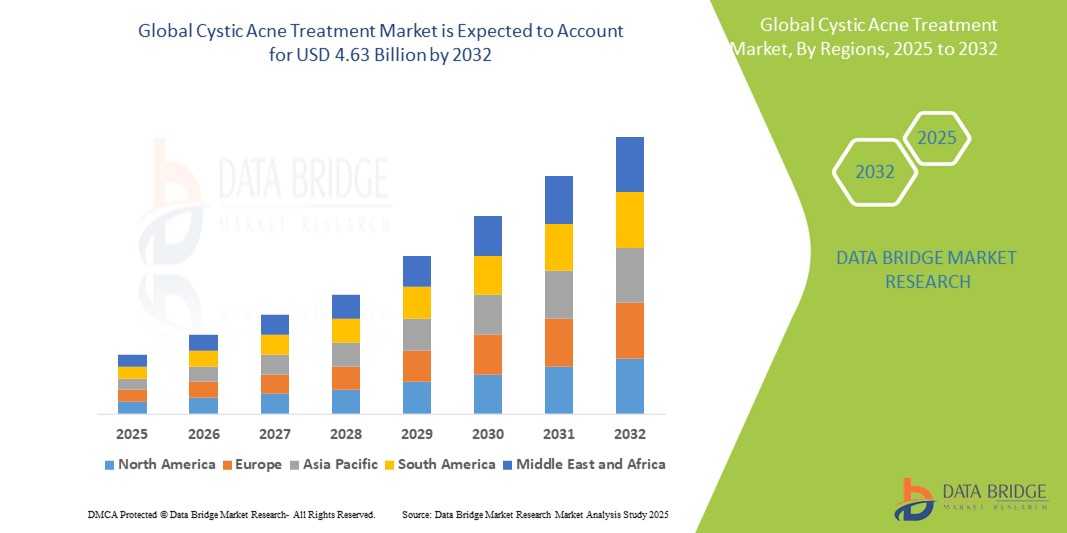
Cystic Acne Treatment Market Size
- The Global Cystic Acne Treatment Market size was valued at USD 3.36 billion in 2024 and is expected to reach USD 4.63 billion by 2032, at a CAGR of 3.69% during the forecast period
- The market growth is primarily driven by the increasing prevalence of severe and treatment-resistant acne, particularly among adolescents and young adults, as well as growing awareness regarding dermatological care and early intervention
- Additionally, advancements in pharmaceutical formulations, rising demand for personalized skincare regimens, and the expansion of online dermatology consultation platforms are contributing to market expansion. The availability of diverse treatment options—ranging from isotretinoin and oral antibiotics to hormonal therapy and topical retinoids—is reshaping the therapeutic landscape for cystic acne
- These combined trends are fostering the adoption of effective, safe, and long-term acne management solutions, thereby supporting the sustained growth of the cystic acne treatment market globally
Cystic Acne Treatment Market Analysis
- Cystic acne treatments, which include pharmaceutical and topical therapies targeting severe and painful acne lesions, are becoming increasingly essential in dermatology due to the growing prevalence of chronic and treatment-resistant acne conditions, especially among adolescents and young adults. These treatments focus on reducing inflammation, regulating hormonal imbalances, and preventing scarring.
- The rising incidence of hormonal disorders, increased stress levels, and unhealthy dietary patterns are key contributors to the demand for advanced cystic acne treatments. Furthermore, growing awareness of skin health, expanding access to dermatological care, and the popularity of teledermatology platforms are accelerating market uptake.
- North America dominates the global cystic acne treatment market, accounting for the largest revenue share of 38.6% in 2025, attributed to high healthcare spending, strong presence of dermatological product manufacturers, and increasing consumer awareness of prescription-based skincare solutions. The U.S. leads the region with rising adoption of treatments like isotretinoin and hormonal therapies, supported by a growing trend of medical-grade skincare.
- Asia-Pacific is projected to be the fastest-growing region during the forecast period, driven by a large adolescent population, increasing affordability of dermatological care, and growing penetration of e-commerce channels offering acne treatment products.
- The Isotretinoin segment is expected to dominate the treatment landscape with a market share of 29.4% in 2025, owing to its proven efficacy in severe acne cases and increasing prescription rates across dermatology clinics globally
Report Scope and Cystic Acne Treatment Market Segmentation
|
Attributes |
Cystic Acne Treatment Key Market Insights |
|
Segments Covered |
|
|
Countries Covered |
North America
Europe
Asia-Pacific
Middle East and Africa
South America
|
|
Key Market Players |
|
|
Market Opportunities |
|
|
Value Added Data Infosets |
In addition to the insights on market scenarios such as market value, growth rate, segmentation, geographical coverage, and major players, the market reports curated by the Data Bridge Market Research also include in-depth expert analysis, pricing analysis, brand share analysis, consumer survey, demography analysis, supply chain analysis, value chain analysis, raw material/consumables overview, vendor selection criteria, PESTLE Analysis, Porter Analysis, and regulatory framework. |
Cystic Acne Treatment Market Trends
“Personalized and Combination Therapies Gaining Traction”
- A prominent and accelerating trend in the global cystic acne treatment market is the shift toward personalized and combination therapies, tailored to patient-specific factors such as hormonal profiles, skin type, and acne severity. This shift is driven by increasing awareness among consumers and dermatologists regarding the limitations of one-size-fits-all treatment approaches.
- For instance, dermatologists are increasingly combining isotretinoin with topical retinoids or hormonal therapies to improve outcomes while reducing the risk of side effects. Similarly, spironolactone, traditionally used as an off-label treatment for hormonal acne, is being more widely prescribed—particularly for adult women—with measurable success.
- The growth of teledermatology platforms like Nurx, Apostrophe, and Curology is accelerating access to customized skincare regimens based on digital skin assessments. These platforms leverage AI-driven diagnostic tools and dermatologist input to deliver prescription-grade treatments directly to consumers, supporting the trend toward individualized care.
- Another trend gaining ground is the use of anti-inflammatory supplements and microbiome-friendly formulations, as consumers seek less harsh, more holistic acne management solutions. Ingredients such as niacinamide, zinc, and probiotics are being incorporated into over-the-counter (OTC) and prescription regimens alike, often as adjuncts to traditional therapies.
- The growing influence of social media, influencer marketing, and skin positivity movements has increased consumer engagement and demand for transparent, science-backed treatment plans. Brands and pharma companies that invest in education, telehealth integration, and evidence-based personalization are well-positioned to capture emerging demand across all severity levels of cystic acne.
Cystic Acne Treatment Market Dynamics
Driver
“Rising Prevalence of Severe Acne and Expanding Access to Dermatological Care”
- The increasing prevalence of moderate to severe acne, particularly among adolescents and young adults, is a major growth driver for the cystic acne treatment market. According to global dermatological health surveys, over 20% of acne cases are classified as cystic or nodulocystic, requiring specialized interventions beyond conventional topical solutions.
- Access to advanced dermatological care is expanding across both developed and developing regions, fueled by rising health awareness, urbanization, and the growth of online healthcare platforms. For instance, in 2024, major dermatology providers such as Galderma and Johnson & Johnson expanded their telehealth services in Asia-Pacific, addressing underserved patient populations.
- Consumers are also becoming more informed about the long-term consequences of untreated cystic acne, such as permanent scarring and psychological distress. This awareness is driving earlier diagnosis and increased treatment-seeking behavior.
- The emergence of targeted treatments—like hormonal therapies for adult female acne and isotretinoin for adolescent nodular acne—offers more effective options, contributing to the growing preference for physician-prescribed solutions. Additionally, the rise of e-commerce pharmacy platforms and direct-to-consumer dermatology services makes treatment more accessible, especially in remote areas.
Restraint/Challenge
“Side Effects of Potent Medications and Regulatory Hurdles”
- One of the most significant challenges facing the cystic acne treatment market is the concern over side effects associated with powerful medications like isotretinoin. Despite its effectiveness, isotretinoin is linked to severe dryness, potential liver toxicity, and teratogenic effects, requiring strict monitoring and pregnancy prevention programs (e.g., iPLEDGE in the U.S.).
- These safety concerns lead to regulatory constraints, limited prescription flexibility, and heightened liability risks for healthcare providers, especially in regions with stringent drug safety policies. As a result, some patients and physicians are hesitant to pursue systemic therapies even when clinically appropriate.
- Moreover, overuse of antibiotics, both topical and oral, raises concerns about antimicrobial resistance (AMR). Regulatory bodies are increasingly urging dermatologists to limit antibiotic durations and consider alternative treatments, which may restrict the widespread use of these once-mainstay therapies.
- Cost barriers also persist, particularly for biologic and specialty medications under development, which are expected to carry high price tags. Limited reimbursement policies and out-of-pocket costs can deter treatment uptake, especially in lower-income and uninsured populations.
- To overcome these challenges, stakeholders must focus on developing safer formulations, risk management programs, and patient education initiatives, while also advocating for broader insurance coverage and telehealth expansion to improve accessibility and adherence.
Cystic Acne Treatment Market Scope
The market is segmented on the basis of type, communication protocol, unlocking mechanism, and application.
- By Treatment Type
On the basis of treatment type, the global cystic acne treatment market is segmented into Isotretinoin, Oral Antibiotics, Topical Retinoid, Spironolactone, Oral Contraceptives, Benzyl Peroxide, and Others. The Isotretinoin segment currently commands the largest market revenue share of 29.4% in 2025, driven by its high efficacy in treating severe acne cases and its established role in clinical guidelines. Its widespread prescription by dermatologists worldwide for treatment-resistant acne significantly bolsters its dominance across developed and emerging markets alike.
The Topical Retinoid segment is projected to witness the fastest CAGR of 5.9% from 2025 to 2032, fuelled by increased consumer demand for treatments with reduced systemic side effects and a growing preference for combination therapy regimens. These therapies are often used in tandem with oral or antibacterial treatments to improve therapeutic outcomes while minimizing long-term adverse effects and scarring.
- By End-Users
On the basis of end-users, the market is segmented into Hospitals, Specialty Clinics, Home Healthcare, and Others. The Specialty Clinics segment captures the largest share of market revenue, due to the increasing number of dermatology centers and dedicated skin care clinics where advanced treatment options are more frequently prescribed.
Meanwhile, the Home Healthcare segment is anticipated to witness the fastest growth, as the rising availability of over-the-counter formulations and teledermatology services drive a shift towards self-managed care solutions and remote consultations, particularly in regions with limited access to in-person dermatological expertise.
- By Distribution Channel
On the basis of distribution channel, the cystic acne treatment market is segmented into Direct Tender, Hospital Pharmacy, Retail Pharmacy, Online Pharmacy, and Others. The Retail Pharmacy segment currently holds the largest market revenue share, thanks to widespread consumer access, robust distribution networks, and the growing prominence of pharmacist-led consultations in skin care management.
The Online Pharmacy segment is expected to register the fastest CAGR, driven by the increasing digitalization of healthcare services and the convenience offered by e-commerce platforms. Consumers are increasingly turning to online channels for both prescription and over-the-counter cystic acne treatments, facilitated by improved logistics and regulatory support for telehealth initiatives.
Cystic Acne Treatment Market Regional Analysis
- North America dominates the global cystic acne treatment market with the largest revenue share of 38.6% in 2024, primarily driven by the high prevalence of moderate to severe acne cases, widespread access to dermatological care, and strong demand for advanced prescription therapies such as isotretinoin and spironolactone.
- Consumers in the region exhibit a growing preference for medically supervised acne management and combination therapies tailored to specific skin types and hormonal profiles.
- The regional market growth is further supported by well-established healthcare infrastructure, rising awareness about early treatment intervention, and strong distribution networks across both retail and online pharmacy channels, making North America a key hub for pharmaceutical innovation and clinical dermatology in acne care.
U.S. Cystic Acne Treatment Market Insight
The U.S. cystic acne treatment market accounted for 82.3% of North America’s revenue share in 2025, driven by a high prevalence of moderate to severe acne among adolescents and young adults, alongside robust access to advanced dermatological care. The market benefits from widespread use of prescription treatments such as isotretinoin and spironolactone, along with rising consumer awareness regarding early intervention and scarring prevention. The proliferation of teledermatology services and strong retail and online pharmacy networks further enhance treatment accessibility, supporting continued growth.
Europe Cystic Acne Treatment Market Insight
The European cystic acne treatment market is projected to grow at a steady CAGR over the forecast period, supported by rising awareness of dermatological health, expanding health insurance coverage, and the availability of specialized acne therapies. Increasing demand for both prescription and over-the-counter solutions is being seen across major European economies. The market is also driven by shifting consumer preference toward topical formulations and combination therapies with fewer systemic side effects.
U.K. Cystic Acne Treatment Market Insight
The U.K. cystic acne treatment market is expected to grow at a healthy CAGR, driven by rising incidences of hormonal acne and a strong emphasis on aesthetic dermatology. NHS support for acne treatment, growing consumer preference for early medical intervention, and high utilization of prescription treatments in combination with OTC products contribute to the market's expansion. Additionally, the increasing popularity of skincare-focused e-commerce platforms is boosting demand for accessible and branded acne treatments.
Germany Cystic Acne Treatment Market Insight
The German cystic acne treatment market is witnessing notable growth, supported by its well-established healthcare system and high consumer awareness of dermatological conditions. Germany’s dermatological clinics and pharmacies offer a wide range of prescription and non-prescription treatments. There is also growing interest in pharmaceutical-grade skincare and personalized acne management, driving demand for both clinical and cosmeceutical solutions. Sustainability-conscious consumers are increasingly opting for eco-friendly topical treatments and cruelty-free brands.
Asia-Pacific Cystic Acne Treatment Market Insight
The Asia-Pacific cystic acne treatment market is projected to grow at the fastest CAGR of over 5.6% in 2025, due to rapid urbanization, rising disposable incomes, and an increasing youth population in countries like China, India, and South Korea. The region is seeing heightened awareness of skin health and growing demand for effective treatments driven by social media influence and evolving beauty standards. Market growth is further accelerated by improving healthcare infrastructure, availability of dermatology services, and expansion of e-commerce-based distribution.
Japan Cystic Acne Treatment Market Insight
The Japan cystic acne treatment market is expanding steadily, supported by a strong culture of skincare, innovation in pharmaceutical and cosmeceutical formulations, and rising awareness about acne prevention and treatment. Japanese consumers favor gentle yet effective topical regimens with minimal side effects, and demand for combination therapy is rising. Moreover, the aging population’s demand for long-term scar management and skin rejuvenation contributes to sustained interest in specialized acne solutions.
China Cystic Acne Treatment Market Insight
The China cystic acne treatment market held the largest share in the Asia-Pacific region in 2025, fueled by increasing urbanization, a growing adolescent and young adult population, and heightened demand for both western and traditional acne remedies. The surge in online dermatology consultations and rapid expansion of the country’s healthcare infrastructure are also supporting access to prescription treatments. Furthermore, domestic pharmaceutical manufacturers and global brands are actively introducing new topical and oral therapies to meet rising consumer demand.
Cystic Acne Treatment Market Share
The Cystic Acne Treatment industry is primarily led by well-established companies, including:
- Leo Pharma A/S (Denmark)
- GlaxoSmithKline plc (UK)
- Pfizer Inc. (U.S.)
- Abbott (U.S.)
- Hexal AG (Germany)
- Mylan N.V. (U.S.)
- Bristol-Myers Squibb Company (U.S.)
- Johnson & Johnson Services, Inc. (U.S.)
- Teva Pharmaceutical Industries Ltd. (Israel)
- Bayer AG (Germany)
- Galderma S.A. (Switzerland)
- Allergan (Ireland)
- F. Hoffmann-La Roche Ltd. (Switzerland)
- Alma Lasers Inc. (Israel)
- Herbert Waldmann GmbH & Co. KG (Germany)
- DUSA Pharmaceuticals Inc. (U.S.)
- Sylvan Company (U.S.)
- Sun Pharmaceutical Industries Ltd. (India)
- Perrigo Pharmaceutical plc (Ireland)

- Interactive Data Analysis Dashboard
- Company Analysis Dashboard for high growth potential opportunities
- Research Analyst Access for customization & queries
- Competitor Analysis with Interactive dashboard
- Latest News, Updates & Trend analysis
- Harness the Power of Benchmark Analysis for Comprehensive Competitor Tracking
Data collection and base year analysis are done using data collection modules with large sample sizes. The stage includes obtaining market information or related data through various sources and strategies. It includes examining and planning all the data acquired from the past in advance. It likewise envelops the examination of information inconsistencies seen across different information sources. The market data is analysed and estimated using market statistical and coherent models. Also, market share analysis and key trend analysis are the major success factors in the market report. To know more, please request an analyst call or drop down your inquiry.
The key research methodology used by DBMR research team is data triangulation which involves data mining, analysis of the impact of data variables on the market and primary (industry expert) validation. Data models include Vendor Positioning Grid, Market Time Line Analysis, Market Overview and Guide, Company Positioning Grid, Patent Analysis, Pricing Analysis, Company Market Share Analysis, Standards of Measurement, Global versus Regional and Vendor Share Analysis. To know more about the research methodology, drop in an inquiry to speak to our industry experts.
Data Bridge Market Research is a leader in advanced formative research. We take pride in servicing our existing and new customers with data and analysis that match and suits their goal. The report can be customized to include price trend analysis of target brands understanding the market for additional countries (ask for the list of countries), clinical trial results data, literature review, refurbished market and product base analysis. Market analysis of target competitors can be analyzed from technology-based analysis to market portfolio strategies. We can add as many competitors that you require data about in the format and data style you are looking for. Our team of analysts can also provide you data in crude raw excel files pivot tables (Fact book) or can assist you in creating presentations from the data sets available in the report.












