


What is the Cystic Fibrosis Market Size and Growth Rate?
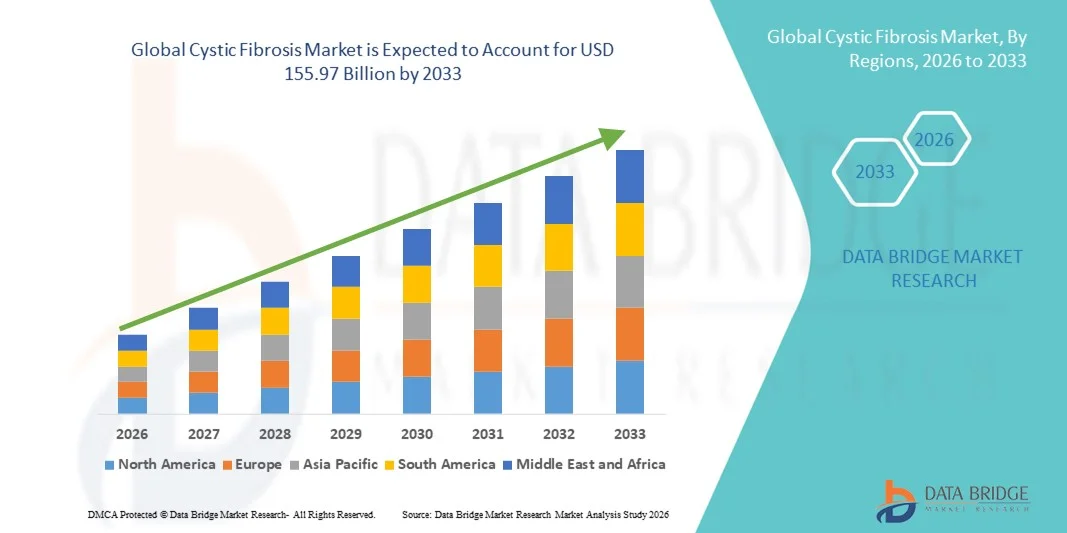
- The global cystic fibrosis market size was valued at USD 17.81 billion in 2025 and is expected to reach USD 155.97 billion by 2033, at a CAGR of 31.15% during the forecast period
- The market growth is largely fueled by advancements in precision medicine, gene therapy, and cystic fibrosis transmembrane conductance regulator (CFTR) modulators, which have significantly improved patient outcomes and expanded treatment access worldwide
- Furthermore, rising diagnosis rates, increased healthcare spending, and growing awareness of genetic testing are driving the adoption of novel therapeutic solutions. These converging factors are accelerating innovation and treatment adoption, thereby significantly boosting the industry's growth
Market Size & Forecast
- Global Market Value (2025): USD 17.81 billion
- Expected Market Value (2033): USD 155.97 billion
- Forecast CAGR (2026–2033): 31.15%
What are the Major Takeaways of Cystic Fibrosis Market?
- Cystic fibrosis, a life-threatening genetic disorder affecting the respiratory and digestive systems, is witnessing significant medical advancements with the introduction of CFTR modulators, precision therapies, and improved diagnostic tools, transforming disease management and patient survival rates across global healthcare systems
- The growing demand for cystic fibrosis treatments is primarily fueled by increased awareness of genetic testing, rising diagnosis rates, and expanding access to advanced therapeutics in both developed and emerging economies
- North America dominated the cystic fibrosis market with the largest revenue share of 48.2% in 2025, supported by high treatment adoption rates, well-established healthcare infrastructure, and strong market presence of key pharmaceutical companies, particularly in the U.S., where ongoing R&D in gene therapy and combination drug regimens continues to accelerate growth
- Asia-Pacific is expected to be the fastest growing region in the cystic fibrosis market during the forecast period, driven by improving diagnostic capabilities, expanding healthcare access, and increased government focus on rare disease management in countries such as China, Japan, and India
- Cystic Fibrosis Transmembrane Conductance Regulator segment dominated the cystic fibrosis market with a market share of 56.9% in 2025, owing to their proven ability to target the underlying genetic defect and provide long-term clinical benefits, positioning them as the cornerstone of modern cystic fibrosis treatment strategies
Report Scope and Cystic Fibrosis Market Segmentation
|
Attributes |
Cystic Fibrosis Key Market Insights |
|
Segments Covered |
|
|
Countries Covered |
North America
Europe
Asia-Pacific
Middle East and Africa
South America
|
|
Key Market Players |
|
|
Market Opportunities |
|
|
Value Added Data Infosets |
In addition to the insights on market scenarios such as market value, growth rate, segmentation, geographical coverage, and major players, the market reports curated by the Data Bridge Market Research also include in-depth expert analysis, patient epidemiology, pipeline analysis, pricing analysis, and regulatory framework |
What is the Key Trend in the Cystic Fibrosis Market?
Advancements in Gene Therapy and Precision Medicine
- A significant and accelerating trend in the global cystic fibrosis market is the growing focus on gene therapy and precision medicine, aiming to address the root genetic cause of the disease rather than just managing symptoms, thereby transforming the long-term treatment landscape
- For instance, Vertex Pharmaceuticals and Moderna are jointly developing a CFTR mRNA therapy designed to restore CFTR protein production in patients unresponsive to existing modulators, representing a major leap forward in curative potential
- Gene-editing technologies such as CRISPR are being increasingly explored to correct the defective CFTR gene directly, potentially providing a one-time, long-lasting solution. For instance, research collaborations between academic institutions and biotech firms are intensifying to refine gene delivery systems and enhance editing precision
- The integration of genomic data analytics and AI-driven diagnostic tools enables personalized treatment selection, improving therapy effectiveness and patient outcomes. Through molecular profiling, clinicians can tailor drug regimens to individual mutation types, ensuring optimal response rates and minimizing adverse effects
- This shift toward genetically targeted and individualized therapy approaches is reshaping patient management protocols globally. Consequently, leading companies such as Vertex and AbbVie are expanding their R&D pipelines to include next-generation CFTR modulators and gene-based treatments aimed at broader patient populations
- The demand for therapies offering long-term disease modification and potential cures is growing rapidly across both developed and emerging markets, as healthcare systems increasingly prioritize precision-based approaches for rare genetic disorders such as cystic fibrosis
Cystic Fibrosis Market Dynamics
Driver
Rising Prevalence and Advancements in CFTR Modulator Therapies
- The increasing global prevalence of cystic fibrosis, coupled with remarkable advancements in CFTR modulator therapies, is a significant driver accelerating market growth and improving quality of life for patients worldwide
- For instance, in February 2025, Vertex Pharmaceuticals reported expanded regulatory approvals for Trikafta (Kaftrio) across new age groups and genetic mutations, further strengthening its dominance in the cystic fibrosis treatment landscape
- As awareness of genetic testing and early diagnosis improves, more patients are being identified and initiated on targeted therapies, leading to a substantial rise in treatment adoption rates
- Furthermore, government support and patient advocacy organizations are playing a crucial role in expanding access to advanced cystic fibrosis treatments, particularly in high-income and developing regions
- The availability of innovative drug formulations, improved inhalation devices, and combination regimens offering enhanced efficacy and convenience continues to drive therapeutic adoption across global markets. The trend toward earlier treatment initiation and personalized care strategies further contributes to the sustained market expansion
Restraint/Challenge
High Treatment Costs and Limited Access in Emerging Regions
- The exceptionally high cost of cystic fibrosis treatments, especially CFTR modulators, poses a major challenge to widespread adoption and equitable access across global healthcare systems
- For instance, the annual treatment cost of leading CFTR modulator therapies such as Trikafta can exceed USD 300,000 per patient, limiting affordability for patients in countries without strong reimbursement frameworks
- In addition, disparities in healthcare infrastructure and limited specialist availability in emerging economies hinder timely diagnosis and access to advanced therapies, creating significant gaps in care outcomes
- For instance, while North America and Europe benefit from comprehensive screening programs, many regions in Asia-Pacific and Latin America still face underdiagnosis due to lack of testing facilities and awareness
- Overcoming these affordability and accessibility barriers through government subsidies, generic drug development, and global health partnerships will be crucial for ensuring equitable treatment availability and improving survival rates worldwide
- While several companies are exploring cost-effective CFTR modulator alternatives, sustainable pricing models and global reimbursement initiatives remain essential to address the economic burden of cystic fibrosis care
How is the Cystic Fibrosis Market Segmented?
The market is segmented on the basis of treatment method, drug class, route of administration, and distribution channel.
- By Treatment Method
On the basis of treatment method, the cystic fibrosis market is segmented into medication, devices, and others. The medication segment dominated the market with the largest revenue share in 2025, primarily due to the widespread use of advanced CFTR modulators, antibiotics, mucolytics, and anti-inflammatory drugs. These medications directly improve lung function, reduce exacerbations, and extend survival rates, making them the cornerstone of cystic fibrosis management. The segment’s growth is further supported by strong R&D investment, with new drug approvals from key players such as Vertex and AbbVie expanding therapeutic options. In addition, growing awareness about early genetic testing and treatment initiation contributes to rising medication adoption globally.
The devices segment is anticipated to witness the fastest growth during the forecast period, propelled by the increasing reliance on airway clearance devices, nebulizers, and respiratory monitoring systems for improved lung management. Technological advancements, such as portable nebulizers and digitally connected airway clearance systems, are driving adoption across both hospital and home-care settings. The integration of smart sensors and mobile app connectivity in respiratory devices has improved patient compliance and monitoring. In addition, as the global cystic fibrosis population ages, demand for advanced, easy-to-use respiratory devices continues to expand rapidly across developed and emerging regions.
- By Drug Class
On the basis of drug class, the cystic fibrosis market is segmented into Cystic Fibrosis Transmembrane Conductance Regulator (CFTR) modulators, bronchodilators, mucolytic agents, pancreatic enzyme supplements, and others. The CFTR modulator segment dominated the market in 2025, capturing the largest revenue share of 56.9% due to its transformative impact on treating the underlying cause of cystic fibrosis rather than just managing symptoms. CFTR modulators, such as Trikafta and Kalydeco, have improved patient outcomes by restoring CFTR protein function, reducing pulmonary exacerbations, and improving overall quality of life. Expanding mutation coverage and early-age approvals are also driving greater adoption. Furthermore, ongoing research into next-generation CFTR modulators and gene-corrective therapies ensures long-term growth prospects.
The mucolytic agents segment is projected to be the fastest-growing during the forecast period, driven by the critical role of mucus-thinning therapies in improving airway clearance and reducing infection risks. Mucolytic agents such as dornase alfa and hypertonic saline remain essential adjunct treatments alongside CFTR modulators. The increasing development of advanced inhalable formulations and combination therapies is expanding their use among pediatric and adult patients. Rising awareness about early intervention and adherence to airway management therapies further supports demand growth. Moreover, the ongoing research into novel mucolytic compounds offering better tolerability and sustained efficacy strengthens this segment’s growth potential.
- By Route of Administration
On the basis of route of administration, the cystic fibrosis market is segmented into oral and parenteral. The oral segment dominated the market in 2025, driven by the convenience, safety, and high compliance rates associated with orally administered CFTR modulators and antibiotics. Oral medications are preferred for long-term disease management, offering patients the ability to maintain treatment routines at home. The segment also benefits from the growing availability of combination oral formulations that enhance bioavailability and therapeutic outcomes. Pharmaceutical advancements in sustained-release oral drugs are further supporting their dominance in the market. In addition, the increasing number of approvals for oral therapies with expanded genetic coverage continues to boost this segment’s growth trajectory.
The parenteral segment is projected to record the fastest CAGR during the forecast period, owing to its crucial role in delivering high-potency antibiotics, enzyme therapies, and other supportive treatments for severe or advanced cases. Intravenous therapies provide rapid onset and are often essential during acute pulmonary exacerbations. Increasing availability of hospital infusion centers and the rise of home-based parenteral therapy services are expanding access to these treatments. The growing prevalence of antibiotic-resistant infections has also driven the demand for injectable medications. Moreover, innovations in infusion technology and the development of safer, longer-acting injectable formulations are further supporting the rapid growth of this segment globally.
- By Distribution Channel
On the basis of distribution channel, the cystic fibrosis market is segmented into hospital pharmacies, retail pharmacies and drug stores, and online pharmacies. The hospital pharmacies segment dominated the market with the largest revenue share in 2025, as these facilities are primary distribution centers for CFTR modulators and high-cost biologics requiring medical supervision. Hospital pharmacies ensure accurate dosing, professional guidance, and safety monitoring for patients undergoing complex therapies. The strong presence of specialty care centers dedicated to cystic fibrosis within hospitals also reinforces this channel’s prominence. Furthermore, increasing hospital-based clinical trials and collaborations with pharmaceutical manufacturers support the dominance of hospital pharmacies.
The online pharmacies segment is expected to witness the fastest growth during the forecast period, driven by the expansion of digital healthcare platforms and increasing consumer preference for home delivery of chronic medications. Growing internet access, efficient logistics, and online prescription verification systems are encouraging patients to order maintenance drugs online. In addition, online channels offer cost benefits, refill reminders, and subscription models that improve treatment adherence making them increasingly vital for long-term cystic fibrosis care.
Which Region Holds the Largest Share of the Cystic Fibrosis Market?
- North America dominated the cystic fibrosis market with the largest revenue share of 48.2% in 2025, supported by high treatment adoption rates, well-established healthcare infrastructure, and strong market presence of key pharmaceutical companies, particularly in the U.S., where ongoing R&D in gene therapy and combination drug regimens continues to accelerate growth
- Patients in the region benefit from early diagnosis through established newborn screening programs and widespread adoption of innovative therapies such as CFTR modulators, which significantly improve clinical outcomes and life expectancy
- This dominance is further reinforced by favorable reimbursement frameworks, active patient advocacy organizations, and robust investment in research and clinical trials, making North America the key hub for cystic fibrosis innovation and advanced treatment adoption
U.S. Cystic Fibrosis Market Insight
The U.S. cystic fibrosis market captured the largest revenue share of 84% in 2025 within North America, driven by the strong availability of advanced CFTR modulator therapies and high treatment adherence among patients. The presence of key pharmaceutical players and a well-established healthcare infrastructure ensures early diagnosis and effective disease management. Increasing insurance coverage and strong patient advocacy networks further promote access to premium therapies. Moreover, continuous R&D investments and FDA approvals for next-generation drugs are strengthening the U.S. market’s leadership in cystic fibrosis treatment innovation.
Europe Cystic Fibrosis Market Insight
The Europe cystic fibrosis market is projected to grow at a substantial CAGR throughout the forecast period, supported by improved healthcare systems and growing awareness about early screening and treatment. Rising demand for advanced CFTR therapies and structured patient registries across major European countries are contributing to market expansion. The implementation of favorable reimbursement policies and collaborative research initiatives enhances access to novel medications. In addition, the rising focus on personalized and precision medicine is fostering the development of tailored treatment approaches in the region.
U.K. Cystic Fibrosis Market Insight
The U.K. cystic fibrosis market is anticipated to expand at a noteworthy CAGR during the forecast period, driven by national health initiatives and the NHS’s support for novel CFTR modulators. Increasing diagnostic rates, enhanced clinical care frameworks, and the integration of telehealth services are improving disease management. Patient advocacy groups and dedicated cystic fibrosis foundations play a vital role in promoting research and therapy access. The country’s focus on clinical innovation and favorable reimbursement policies is expected to sustain long-term market growth.
Germany Cystic Fibrosis Market Insight
The Germany cystic fibrosis market is expected to grow at a considerable CAGR, propelled by robust healthcare infrastructure, high healthcare spending, and increased adoption of advanced treatment options. Germany’s commitment to R&D and biopharmaceutical innovation supports the development and uptake of cutting-edge therapies. The market benefits from strong collaborations between pharmaceutical firms, research institutions, and healthcare providers. Moreover, the increasing emphasis on genetic testing and early intervention continues to improve treatment outcomes across the patient population.
Asia-Pacific Cystic Fibrosis Market Insight
The Asia-Pacific cystic fibrosis market is poised to grow at the fastest CAGR of 16.5% from 2026 to 2033, driven by rising disease awareness, improving healthcare infrastructure, and growing availability of novel therapies. Countries such as Japan, China, and India are witnessing a gradual increase in cystic fibrosis diagnosis rates due to expanding genetic testing programs. Government healthcare reforms and international collaborations are enhancing access to advanced treatments. In addition, the region’s emerging pharmaceutical industry and cost-effective drug manufacturing are expected to boost market accessibility and growth.
Japan Cystic Fibrosis Market Insight
The Japan cystic fibrosis market is gaining momentum due to improvements in genetic testing and increased awareness of rare diseases. Despite the historically low diagnosis rate, initiatives to strengthen early screening programs are driving gradual market growth. Japan’s biopharmaceutical advancements and integration of precision medicine approaches are enhancing treatment outcomes. Collaboration between healthcare institutions and global drug developers is further improving access to innovative CF therapies, particularly CFTR modulators and enzyme replacement solutions.
India Cystic Fibrosis Market Insight
The India cystic fibrosis market accounted for the largest market revenue share within Asia-Pacific in 2025, supported by growing recognition of cystic fibrosis as a serious chronic condition. Expanding access to diagnostic tools, rising medical literacy, and increasing partnerships between local healthcare providers and international drug companies are key growth drivers. The government’s push toward rare disease management and the entry of cost-effective generic CF drugs are making treatment more affordable. Furthermore, improving pediatric healthcare infrastructure is expected to enhance early diagnosis and long-term management outcomes.
Which are the Top Companies in Cystic Fibrosis Market?
The Cystic Fibrosis industry is primarily led by well-established companies, including:
- Vertex Pharmaceuticals Incorporated (U.S.)
- Enterprise Therapeutics (U.K.)
- ProQR Therapeutics (Netherlands)
- Insmed Incorporated (U.S.)
- Novartis AG (Switzerland)
- AbbVie Inc. (U.S.)
- F. Hoffmann-La Roche Ltd (Switzerland)
- Moderna, Inc. (U.S.)
- Pfizer Inc. (U.S.)
- Prime Medicine, Inc. (U.S.)
- GSK plc (U.K.)
- Sanofi. (France)
- Takeda Pharmaceutical Company Limited (Japan)
- Nestlé (Switzerland)
- PARI GmbH (Germany)
- Koninklijke Philips N.V. (Netherlands)
- ResMed Inc. (U.S.)
- Drive DeVilbiss Healthcare (U.S.)
- Teva Pharmaceutical Industries Ltd. (Israel)
- Catalent, Inc. (U.S.)
What are Latest Developments in Cystic Fibrosis Market?
- In July 2025, the Cystic Fibrosis Foundation (CFF) announced an additional USD 24 million funding agreement with Prime Medicine to accelerate development of its PASSIGE™ (Prime Assisted Site-Specific Gene Editing) platform. This technology aims to correct the G542X nonsense mutation and other CF-causing variants at their genomic origin, offering the potential for a durable, one-time treatment
- In June 2025, a survey published by Cystic Fibrosis News Today reported that approximately 1 in 7 adults with CF on CFTR modulators (such as TRIKAFTA® or KALYDECO®) still rated their overall health as “fair” or “poor.” Despite major therapeutic advances, patients cited ongoing challenges such as fatigue, treatment burden, and emotional strain. The findings highlight the persistent unmet needs and underscore the necessity for next-generation modulators and adjunct therapies to further improve quality of life
- In December 2024, Vertex Pharmaceuticals received U.S. FDA approval for ALYFTREK™ (vanzacaftor/tezacaftor/deutivacaftor), a next-generation CFTR modulator for patients aged 6 years and older with at least one responsive CFTR mutation, including 31 additional mutations not previously treated by earlier modulators. The once-daily regimen simplifies patient compliance and expands therapeutic access to a broader CF population
- In July 2024, Enterprise Therapeutics initiated a Phase 2 clinical trial for ETD001, an inhaled epithelial sodium channel (ENaC) blocker, targeting CF patients whose mutations make them unresponsive to CFTR modulators. The compound, which received rare pediatric disease designation, works by improving airway hydration and mucus clearance. This development represents a promising new class of CF treatments addressing residual unmet needs for patients with non-CFTR-responsive variants
- In January 2024, the Cystic Fibrosis Foundation (CFF) announced a funding commitment of up to USD 15 million to Prime Medicine to support preclinical development of a prime editing–based gene therapy targeting the CFTR gene. The project aims to permanently correct CF-causing mutations, including rare variants not responsive to current modulators such as TRIKAFTA

- Interactive Data Analysis Dashboard
- Company Analysis Dashboard for high growth potential opportunities
- Research Analyst Access for customization & queries
- Competitor Analysis with Interactive dashboard
- Latest News, Updates & Trend analysis
- Harness the Power of Benchmark Analysis for Comprehensive Competitor Tracking
Data collection and base year analysis are done using data collection modules with large sample sizes. The stage includes obtaining market information or related data through various sources and strategies. It includes examining and planning all the data acquired from the past in advance. It likewise envelops the examination of information inconsistencies seen across different information sources. The market data is analysed and estimated using market statistical and coherent models. Also, market share analysis and key trend analysis are the major success factors in the market report. To know more, please request an analyst call or drop down your inquiry.
The key research methodology used by DBMR research team is data triangulation which involves data mining, analysis of the impact of data variables on the market and primary (industry expert) validation. Data models include Vendor Positioning Grid, Market Time Line Analysis, Market Overview and Guide, Company Positioning Grid, Patent Analysis, Pricing Analysis, Company Market Share Analysis, Standards of Measurement, Global versus Regional and Vendor Share Analysis. To know more about the research methodology, drop in an inquiry to speak to our industry experts.
Data Bridge Market Research is a leader in advanced formative research. We take pride in servicing our existing and new customers with data and analysis that match and suits their goal. The report can be customized to include price trend analysis of target brands understanding the market for additional countries (ask for the list of countries), clinical trial results data, literature review, refurbished market and product base analysis. Market analysis of target competitors can be analyzed from technology-based analysis to market portfolio strategies. We can add as many competitors that you require data about in the format and data style you are looking for. Our team of analysts can also provide you data in crude raw excel files pivot tables (Fact book) or can assist you in creating presentations from the data sets available in the report.













