


Cytochrome Inhibitors Market Size
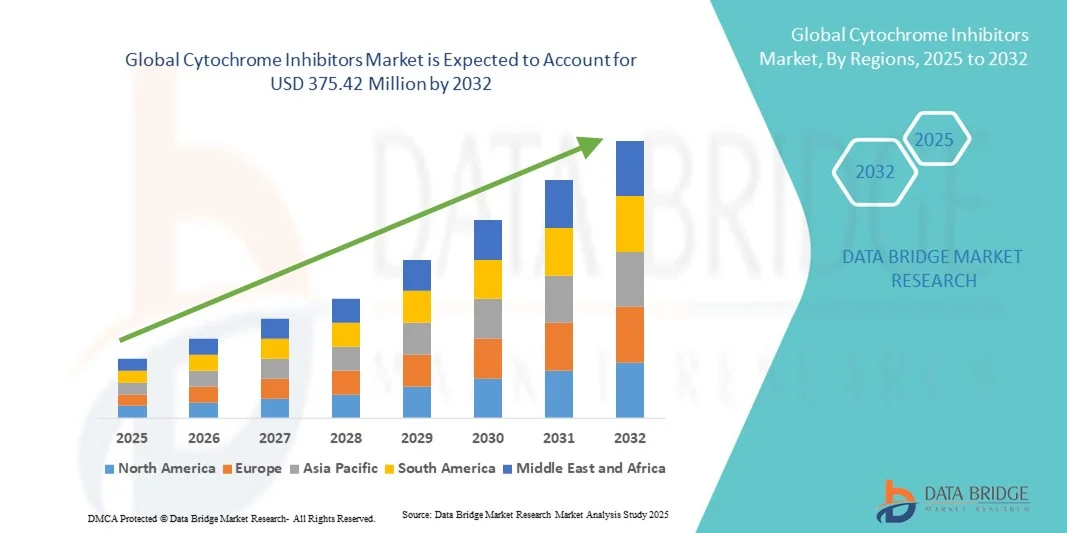
- The global cytochrome inhibitors market size was valued at USD 210.6 Million in 2024 and is expected to reach USD 375.42 Million by 2032, at a CAGR of 7.50% during the forecast period
- The market growth is largely fueled by the increasing prevalence of diseases and disorders where cytochrome enzymes play a critical role, along with growing adoption of targeted therapies and precision medicine approaches in both clinical and research settings
- Furthermore, rising demand for effective, safe, and selective cytochrome inhibitors for therapeutic and drug development applications is establishing these solutions as essential tools in pharmaceutical research and treatment. These converging factors are accelerating the uptake of cytochrome inhibitor solutions, thereby significantly boosting the industry’s growth
Cytochrome Inhibitors Market Analysis
- Cytochrome inhibitors, essential in modulating the activity of cytochrome P450 enzymes, are increasingly vital components in pharmacology and toxicology due to their role in drug metabolism, drug-drug interactions, and personalized medicine
- The escalating demand for cytochrome inhibitors is primarily fueled by the growing need for precision medicine, advancements in pharmacogenomics, and the rising prevalence of diseases requiring complex drug regimens
- North America dominated the cytochrome inhibitors market with the largest revenue share of 39.5% in 2024, characterized by high healthcare expenditure, advanced research facilities, and a strong presence of key industry players. The U.S. experienced substantial growth in cytochrome inhibitors utilization, particularly in clinical settings and personalized medicine applications, driven by innovations from both established pharmaceutical companies and biotech startups focusing on enzyme modulation and drug interaction studies
- Asia-Pacific is expected to be the fastest-growing region in the cytochrome inhibitors market during the forecast period, due to increasing urbanization, rising disposable incomes, and expanding healthcare infrastructure, leading to greater adoption of advanced pharmaceutical therapies
- The CYP3A4 inhibitors segment dominated the cytochrome inhibitors market with a share of 27% in 2024, owing to its major role in the metabolism of a broad spectrum of drugs including statins, immunosuppressants, and antiepileptics
Report Scope and Cytochrome Inhibitors Market Segmentation
|
Attributes |
Cytochrome Inhibitors Key Market Insights |
|
Segments Covered |
|
|
Countries Covered |
North America
Europe
Asia-Pacific
Middle East and Africa
South America
|
|
Key Market Players |
|
|
Market Opportunities |
|
|
Value Added Data Infosets |
In addition to the insights on market scenarios such as market value, growth rate, segmentation, geographical coverage, and major players, the market reports curated by the Data Bridge Market Research also include in-depth expert analysis, pricing analysis, brand share analysis, consumer survey, demography analysis, supply chain analysis, value chain analysis, raw material/consumables overview, vendor selection criteria, PESTLE Analysis, Porter Analysis, and regulatory framework. |
Cytochrome Inhibitors Market Trends
Optimizing treatment outcomes through innovation
- A significant and accelerating trend in the global cytochrome inhibitors market is the increasing integration of precision medicine and AI-driven drug discovery platforms. This integration is significantly enhancing drug efficacy, safety profiling, and personalized treatment strategies
- For instance, advanced AI models can predict patient responses to Cytochrome Inhibitors, optimize dosing schedules, and identify potential adverse interactions, thereby improving clinical outcomes. Similarly, computational platforms enable rapid screening of molecular candidates, accelerating the development pipeline
- AI integration also supports the design of novel inhibitors targeting specific cytochrome isoforms, enabling more selective and effective therapies for conditions such as cardiovascular diseases, metabolic disorders, and certain cancers. Predictive modeling helps identify high-risk patients who may benefit most from targeted treatment
- The seamless combination of AI, machine learning, and bioinformatics with traditional drug discovery facilitates centralized and data-driven decision-making in pharmaceutical development. Researchers can manage multiple drug candidates, evaluate clinical trial simulations, and optimize formulations more efficiently
- This trend towards more intelligent, data-driven, and personalized therapies is reshaping expectations in pharmaceutical development. Consequently, companies are increasingly investing in AI-enabled drug discovery platforms and precision-targeted Cytochrome Inhibitors to improve patient outcomes
- The demand for Cytochrome Inhibitors with enhanced specificity, efficacy, and reduced side effects is growing rapidly across both clinical research and therapeutic applications, as healthcare providers increasingly prioritize personalized and optimized treatment strategies
Cytochrome Inhibitors Market Dynamics
Driver
Growing Need Due to Rising Prevalence of Target Diseases and Personalized Medicine
- The increasing prevalence of metabolic disorders, cardiovascular diseases, and certain types of cancers is a significant driver for the heightened demand for Cytochrome Inhibitors
- For instance, in 2024, several pharmaceutical companies expanded their R&D pipelines to include AI-assisted identification of novel cytochrome targets, aiming to enhance treatment efficacy. Such strategies are expected to drive Cytochrome Inhibitors market growth during the forecast period
- As clinicians focus on improving patient outcomes through targeted therapies, Cytochrome Inhibitors offer advantages such as higher specificity, lower toxicity, and optimized metabolic interactions
- Furthermore, the growing adoption of personalized medicine approaches, including genetic profiling and biomarker-based patient selection, is increasing the clinical utility of Cytochrome Inhibitors
- Advances in AI-assisted drug discovery, computational modeling, and high-throughput screening are enhancing drug design efficiency, supporting faster clinical translation
- The availability of Cytochrome Inhibitors across multiple therapeutic areas, combined with growing patient awareness and demand for effective treatments, is propelling market expansion
Restraint/Challenge
Concerns Regarding Drug Safety, Regulatory Approval, and High Development Costs
- Safety concerns, including off-target effects and adverse drug reactions, pose a significant challenge to broader market adoption of Cytochrome Inhibitors. Comprehensive preclinical and clinical testing is required to address these issues
- The complexity and high cost of R&D for novel Cytochrome Inhibitors, including AI-assisted drug design and multi-phase clinical trials, can limit investment by smaller pharmaceutical companies
- Regulatory hurdles and stringent approval processes across different regions can delay the launch of new inhibitors, affecting market penetration
- While advancements in predictive modeling and AI reduce some development risks, the overall investment required remains substantial, especially for high-potency or selective inhibitors
- Overcoming these challenges through enhanced safety profiling, streamlined regulatory strategies, and cost-effective drug development approaches is crucial for sustained market growth
- Increased collaboration between research institutions, pharmaceutical companies, and regulatory agencies will be vital to accelerate innovation and ensure the availability of safe, effective Cytochrome Inhibitors in global markets
Cytochrome Inhibitors Market Scope
The market is segmented on the basis of drugs, enzyme, end-users, and distribution channel.
- By Drugs
On the basis of drugs, the cytochrome inhibitors market is segmented into Amiodarone, Clarithromycin, Erythromycin, Diltiazem, Verapamil, Fluoxetine, Grapefruit Juice, Metronidazole, and Others. The Amiodarone segment dominated the market with a revenue share of 22% in 2024, driven by its established efficacy in managing cardiac arrhythmias and its potent inhibitory effect on multiple cytochrome P450 enzymes. Hospitals and specialty clinics extensively utilize Amiodarone due to its well-documented safety profile and clinical importance. It is considered a standard treatment in critical care settings, where precise dosing and monitoring are essential. The demand is further supported by its role in preventing life-threatening cardiac events, making it highly prioritized in inpatient treatment protocols. The segment’s dominance is also reinforced by long-standing clinical usage and familiarity among healthcare providers. Amiodarone’s wide applicability across age groups and conditions enhances its adoption in hospital formularies. Additionally, continuous physician preference for drugs with predictable enzyme interactions contributes to its leading position. The segment benefits from stable pricing, consistent supply chains, and strong recommendations in treatment guidelines. Overall, the clinical reliability, widespread adoption, and critical role in patient care solidify Amiodarone as the dominant drug sub-segment in the Cytochrome Inhibitors market.
The Clarithromycin segment is expected to witness the fastest CAGR of 5.5% from 2025 to 2032, driven by the growing awareness of its interactions with cytochrome enzymes and the rising demand for effective treatments of respiratory infections. Its adoption is increasing in hospitals and home healthcare settings due to the need for careful management of drug-drug interactions. Clinicians are focusing on personalized dosing strategies to optimize therapeutic outcomes. The segment benefits from improvements in pharmacovigilance and patient monitoring. Increasing regulatory emphasis on safe prescribing practices is also contributing to growth. Clarithromycin’s relatively safe profile and predictable enzyme inhibition make it attractive for both inpatient and outpatient care. Healthcare providers are incorporating it more frequently in treatment regimens. The rise of chronic respiratory conditions globally further fuels demand. Education campaigns for healthcare professionals enhance its awareness and adoption. Expanding availability in retail and hospital pharmacies accelerates market penetration. Overall, the combination of clinical importance, safety, and growing therapeutic applications supports the rapid growth of Clarithromycin in the market.
- By Enzyme
On the basis of enzyme, the cytochrome inhibitors market is segmented into CYP2C9, CYP3A4, CYP2D6, and Others. The CYP3A4 inhibitors segment dominated the market with a share of 27% in 2024, owing to its major role in the metabolism of a broad spectrum of drugs including statins, immunosuppressants, and antiepileptics. Hospitals and specialty clinics prioritize CYP3A4 inhibitors due to their critical importance in managing drug-drug interactions and optimizing therapeutic outcomes. The widespread applicability across multiple drug classes ensures steady demand in clinical practice. CYP3A4 inhibitors are commonly incorporated into treatment protocols for chronic diseases requiring polypharmacy. Their use is reinforced by established clinical guidelines and the necessity of precise enzyme modulation for patient safety. Healthcare providers favor CYP3A4 inhibitors due to predictable pharmacokinetic profiles and well-understood interactions. Regulatory approvals and long-term safety data further strengthen confidence in their clinical use. The segment’s dominance is enhanced by extensive adoption in both inpatient and outpatient settings, supported by physician familiarity and hospital formularies. Continuous R&D on drug-enzyme interactions keeps this segment relevant and indispensable. The combination of broad drug applicability, clinical significance, and guideline-backed usage positions CYP3A4 inhibitors as the leading enzyme segment in the market.
The CYP2D6 inhibitors segment is projected to register the fastest CAGR of 5.4% from 2025 to 2032, supported by the rising focus on personalized medicine and pharmacogenomic testing. Healthcare providers are increasingly monitoring its effect on drugs such as antidepressants, beta-blockers, and antipsychotics to improve patient safety and treatment efficacy. The segment’s growth is boosted by increasing awareness of its role in drug metabolism and interactions. Adoption is expanding across hospitals, specialty clinics, and home healthcare services. Physicians are integrating CYP2D6 testing into routine treatment plans for targeted therapies. Growing patient demand for tailored therapeutic solutions further accelerates adoption. The segment also benefits from research initiatives in precision pharmacology. Hospital pharmacies and specialty clinics are ensuring easier access to CYP2D6 inhibitors. Continuous clinical studies highlight its relevance in polypharmacy management. The combination of emerging healthcare practices and increasing focus on patient safety drives the rapid expansion of this enzyme segment.
- By End-Users
On the basis of end-users, the cytochrome inhibitors market is segmented into hospitals, specialty clinics, home healthcare, and others. The hospitals segment dominated the market with a revenue share of 45% in 2024, driven by the high patient inflow, advanced diagnostic infrastructure, and structured treatment protocols available in hospital settings. Hospitals provide controlled environments for administering cytochrome inhibitors, ensuring accurate dosing and minimizing risks associated with drug-drug interactions. The extensive presence of trained healthcare professionals allows careful monitoring and timely adjustments in therapy. Hospitals manage complex cases requiring multi-drug regimens, making cytochrome inhibitors critical in inpatient care. The availability of specialized wards and ICUs supports the use of high-risk, high-importance drugs like Amiodarone and CYP3A4 inhibitors. Hospitals also benefit from reliable supply chains and bulk procurement, ensuring uninterrupted access to essential inhibitors. Their central role in clinical research and early adoption of new therapeutic protocols further consolidates dominance. Moreover, hospital pharmacies integrate inhibitors into formularies based on guidelines, ensuring standardized use across patient populations. Overall, the segment’s dominance is reinforced by infrastructure, skilled personnel, and clinical necessity in complex healthcare settings.
The home healthcare segment is expected to witness the fastest CAGR of 6.1% from 2025 to 2032, propelled by growing patient preference for receiving care at home and the convenience of remote monitoring. Increased awareness about chronic disease management, coupled with telemedicine integration, is driving adoption. Healthcare providers are offering home-based programs to ensure proper administration of cytochrome inhibitors. The segment benefits from rising investment in home care infrastructure and supportive technologies. Patients prefer home healthcare for comfort and reduced exposure to hospital-acquired infections. Insurance coverage and reimbursement initiatives are encouraging growth. Home-based therapy protocols allow for individualized dosing and better patient adherence. The increasing availability of portable diagnostic and monitoring tools strengthens adoption. Training programs for caregivers ensure safe and effective use of inhibitors at home. Overall, the combination of convenience, safety, and technology integration supports rapid growth in the home healthcare segment.
- By Distribution Channel
On the basis of distribution channel, the cytochrome inhibitors market is segmented into direct tender, hospital pharmacy, retail pharmacy, online pharmacy, and others. The hospital pharmacy segment dominated the market with a revenue share of 50% in 2024, attributed to direct access to clinical settings, efficient supply chains, and controlled distribution of cytochrome inhibitors. Hospital pharmacies ensure timely availability for inpatient care and critical treatments, supporting seamless therapy administration. The integration of hospital pharmacies with treatment protocols allows precise dosing, monitoring, and management of potential drug interactions. Their dominance is reinforced by bulk procurement capabilities and centralized distribution within healthcare networks. Hospital pharmacy staff are trained to manage storage, inventory, and dispensing of inhibitors, minimizing errors and ensuring safety. The presence of established workflows for handling high-priority drugs strengthens the segment’s leadership. Hospitals’ reliance on pharmacy-managed distribution ensures consistent and guideline-compliant access to cytochrome inhibitors. Overall, clinical importance, operational control, and direct access to patient care contribute to hospital pharmacies’ dominance in the distribution channel segment.
The online pharmacy segment is projected to witness the fastest CAGR of 7% from 2025 to 2032, driven by the growing preference for digital purchasing, home delivery convenience, and easy access to prescribed cytochrome inhibitors. Increasing e-commerce penetration and digital health platforms support market expansion. Patients and caregivers are embracing online ordering to save time and effort. Telehealth consultations combined with online dispensing accelerate adoption. Improved logistics and delivery networks ensure timely access to medications. Online pharmacies provide additional patient support and adherence monitoring. The segment benefits from competitive pricing, promotional offers, and subscription models. Growing smartphone and internet penetration further enhance accessibility. Overall, the convenience, affordability, and technological integration contribute to rapid growth of online pharmacies in the distribution channel segment.
Cytochrome Inhibitors Market Regional Analysis
- North America dominated the cytochrome inhibitors market with the largest revenue share of 39.5% in 2024, characterized by high healthcare expenditure, advanced research facilities, and a strong presence of key industry players
- The market experienced substantial growth in cytochrome inhibitors utilization, particularly in clinical settings and personalized medicine applications, driven by innovations from both established pharmaceutical companies and biotech startups focusing on enzyme modulation and drug interaction studies. The widespread adoption is further supported by a technologically advanced medical infrastructure, high research investments, and increasing focus on precision medicine. Healthcare providers are prioritizing therapies that target specific cytochrome pathways, enhancing treatment efficacy and patient outcomes
- The region benefits from strong regulatory support, robust clinical trial networks, and high patient awareness, establishing North America as a key hub for cytochrome inhibitors research, development, and application
U.S. Cytochrome Inhibitors Market Insight
The U.S. cytochrome inhibitors market captured the largest revenue share in North America in 2024, fueled by the rapid adoption of enzyme-targeted therapies and personalized treatment approaches. Clinical research initiatives and the integration of advanced pharmacogenomics in healthcare settings are driving the demand for Cytochrome Inhibitors. The growing emphasis on managing drug interactions and optimizing therapeutic outcomes in hospital and outpatient settings further propels market growth. Moreover, ongoing collaborations between pharmaceutical companies and biotech startups focused on enzyme modulation are significantly contributing to market expansion.
Europe Cytochrome Inhibitors Market Insight
The Europe cytochrome inhibitors market is projected to expand at a substantial CAGR throughout the forecast period, primarily driven by increasing prevalence of chronic diseases, rising research funding, and growing demand for personalized medicine. Urbanization, well-established healthcare infrastructure, and stringent regulatory frameworks supporting innovative therapies foster market adoption. Countries such as Germany, France, and Italy are experiencing significant growth in clinical research applications and hospital-based usage of Cytochrome Inhibitors. The integration of enzyme-targeted therapies into standard treatment protocols across hospitals and specialty clinics is further accelerating market growth.
U.K. Cytochrome Inhibitors Market Insight
The U.K. cytochrome inhibitors market is anticipated to grow at a noteworthy CAGR during the forecast period, driven by increasing awareness of drug-drug interactions, adoption of enzyme-focused therapeutics, and expansion of clinical research activities. In addition, the country’s strong pharmaceutical research base and government initiatives supporting precision medicine are expected to stimulate market growth.
Germany Cytochrome Inhibitors Market Insight
The Germany cytochrome inhibitors market is expected to expand at a considerable CAGR during the forecast period, fueled by increasing investment in biotechnology research and rising adoption of advanced pharmaceutical therapies. Germany’s well-developed healthcare infrastructure, emphasis on innovation, and stringent regulatory standards promote the use of Cytochrome Inhibitors in both hospital and research settings. The integration of enzyme-targeted treatments into clinical practice and ongoing R&D programs are driving regional market growth.
Asia-Pacific Cytochrome Inhibitors Market Insight
The Asia-Pacific cytochrome inhibitors market is poised to grow at the fastest CAGR during the forecast period of 2025 to 2032, driven by increasing urbanization, rising disposable incomes, and expanding healthcare infrastructure in countries such as China, Japan, and India. Growing awareness of personalized medicine, government initiatives supporting pharmaceutical research, and the rising prevalence of chronic diseases are accelerating the adoption of Cytochrome Inhibitors. The region is also benefiting from the expansion of clinical research facilities, better access to advanced therapies, and increasing healthcare investments, making it a highly attractive growth market.
Japan Cytochrome Inhibitors Market Insight
The Japan cytochrome inhibitors market is gaining momentum due to the country’s technologically advanced healthcare system, high prevalence of metabolic and cardiovascular diseases, and increasing focus on enzyme-targeted therapies. The integration of Cytochrome Inhibitors in hospital and clinical research settings, coupled with strong government support for personalized medicine, is driving market expansion. Aging population trends are also likely to increase demand for safer, targeted pharmaceutical interventions in both clinical and outpatient environments.
China Cytochrome Inhibitors Market Insight
The China cytochrome inhibitors market accounted for the largest market revenue share in Asia-Pacific in 2024, attributed to rapid urbanization, increasing awareness of advanced therapies, and expanding healthcare infrastructure. China’s rising middle class and government initiatives promoting innovation in pharmaceutical research are key factors propelling market growth. The country is witnessing increased adoption of enzyme-targeted therapies in hospitals and research institutions, supported by strong domestic pharmaceutical manufacturing capabilities. Ongoing R&D investments and collaborations with global biotech companies further accelerate the expansion of the Cytochrome Inhibitors market in China.
Cytochrome Inhibitors Market Share
The Cytochrome Inhibitors industry is primarily led by well-established companies, including:
- Pfizer Inc. (U.S.)
- Novartis AG (Switzerland)
- F. Hoffmann-La Roche Ltd (Switzerland)
- GSK Plc. (U.K.)
- Sanofi (France)
- Abbott (U.S.)
- Bayer (Germany)
- AstraZeneca (U.K.)
- Teva Pharmaceutical Industries Ltd. (Israel)
- Sun Pharmaceutical Industries Ltd. (India)
- Dr. Reddy’s Laboratories Ltd. (India)
- Amgen Inc. (U.S.)
- Viatris Inc. (U.S.)
- Vertex Pharmaceuticals Incorporated (U.S.)
- Boehringer Ingelheim International GmbH (Germany)
Latest Developments in Global Cytochrome Inhibitors Market
- In April 2025, scientists at St. Jude Children's Research Hospital announced the development of novel drug scaffolds that selectively target the cytochrome P450 enzyme CYP3A4. This advancement aims to enhance drug efficacy by reducing off-target effects associated with non-selective CYP3A4 inhibition. The study provides structural insights that could guide future drug design efforts to improve therapeutic outcomes. The findings were published in Nature Communications
- In August 2025, a comprehensive dataset covering the majority of cytochrome P450 (CYP450) enzymes was published, facilitating the development of predictive models for drug metabolism. This resource aims to support the identification of potential drug-drug interactions and optimize drug development processes by providing detailed information on CYP450-mediated metabolism

- Interactive Data Analysis Dashboard
- Company Analysis Dashboard for high growth potential opportunities
- Research Analyst Access for customization & queries
- Competitor Analysis with Interactive dashboard
- Latest News, Updates & Trend analysis
- Harness the Power of Benchmark Analysis for Comprehensive Competitor Tracking
Data collection and base year analysis are done using data collection modules with large sample sizes. The stage includes obtaining market information or related data through various sources and strategies. It includes examining and planning all the data acquired from the past in advance. It likewise envelops the examination of information inconsistencies seen across different information sources. The market data is analysed and estimated using market statistical and coherent models. Also, market share analysis and key trend analysis are the major success factors in the market report. To know more, please request an analyst call or drop down your inquiry.
The key research methodology used by DBMR research team is data triangulation which involves data mining, analysis of the impact of data variables on the market and primary (industry expert) validation. Data models include Vendor Positioning Grid, Market Time Line Analysis, Market Overview and Guide, Company Positioning Grid, Patent Analysis, Pricing Analysis, Company Market Share Analysis, Standards of Measurement, Global versus Regional and Vendor Share Analysis. To know more about the research methodology, drop in an inquiry to speak to our industry experts.
Data Bridge Market Research is a leader in advanced formative research. We take pride in servicing our existing and new customers with data and analysis that match and suits their goal. The report can be customized to include price trend analysis of target brands understanding the market for additional countries (ask for the list of countries), clinical trial results data, literature review, refurbished market and product base analysis. Market analysis of target competitors can be analyzed from technology-based analysis to market portfolio strategies. We can add as many competitors that you require data about in the format and data style you are looking for. Our team of analysts can also provide you data in crude raw excel files pivot tables (Fact book) or can assist you in creating presentations from the data sets available in the report.












