


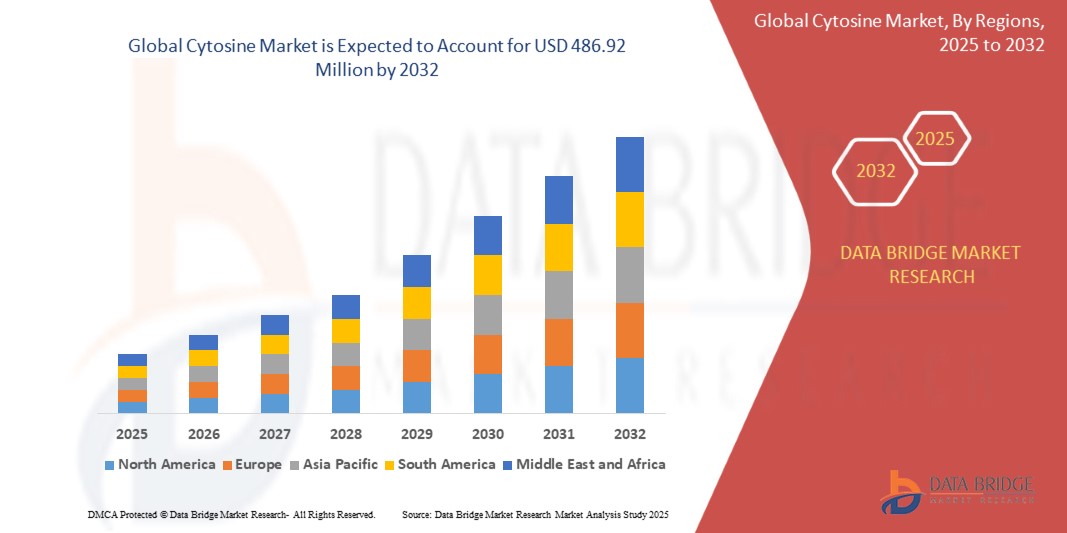
Cytosine Market Size
- The global cytosine market size was valued at USD 327.07 million in 2024 and is expected to reach USD 486.92 million by 2032, at a CAGR of 5.1% during the forecast period
- The market growth is largely fueled by increasing applications of cytosine and its derivatives in pharmaceuticals and biotechnology, particularly in drug development, genetic research, and epigenetics. Advances in molecular biology and growing investments in personalized medicine are driving the demand for high-quality cytosine compounds
- Furthermore, rising research activities in genomics and epigenetics, along with expanding biopharmaceutical manufacturing capabilities, are enhancing the adoption of cytosine in both therapeutic and diagnostic areas. These factors are collectively accelerating the market growth by broadening the scope of cytosine applications across multiple industries
Cytosine Market Analysis
- Cytosine is a fundamental nucleobase in DNA and RNA, playing a critical role in genetic coding, epigenetic regulation, and nucleic acid-based therapies. The compound’s versatility makes it indispensable for applications in pharmaceuticals, molecular diagnostics, and biotechnology research
- The escalating demand for cytosine is primarily driven by the increasing prevalence of chronic diseases, growing focus on genetic and epigenetic research, and the rise of advanced drug development platforms that rely on cytosine analogs. Continuous technological innovations and enhanced manufacturing processes further support market expansion
- North America dominated the cytosine market with a share of 40.90% in 2024, due to the well-established pharmaceutical and biotechnology industries
- Europe is expected to be the fastest growing region in the cytosine market during the forecast period due to increasing biopharmaceutical activities and stringent regulations on drug safety and quality
- Pharmaceuticals segment dominated the market with a market share of 63% in 2024, due to the extensive use of cytosine derivatives in antiviral, anticancer, and genetic therapies. Pharmaceutical companies rely on cytosine compounds as essential building blocks in nucleic acid synthesis, enabling the development of novel drugs and vaccines. Increasing prevalence of chronic diseases and rising investment in drug discovery further bolster this segment. Cytosine's critical role in molecular biology and therapeutic applications ensures sustained demand from pharmaceutical manufacturers globally. Biotechnology applications are also growing steadily due to advancements in gene editing and synthetic biology
Report Scope and Cytosine Market Segmentation
|
Attributes |
Cytosine Key Market Insights |
|
Segments Covered |
|
|
Countries Covered |
North America
Europe
Asia-Pacific
Middle East and Africa
South America
|
|
Key Market Players |
|
|
Market Opportunities |
|
|
Value Added Data Infosets |
In addition to the insights on market scenarios such as market value, growth rate, segmentation, geographical coverage, and major players, the market reports curated by the Data Bridge Market Research also include import export analysis, production capacity overview, production consumption analysis, price trend analysis, climate change scenario, supply chain analysis, value chain analysis, raw material/consumables overview, vendor selection criteria, PESTLE Analysis, Porter Analysis, and regulatory framework. |
Cytosine Market Trends
Growth in Personalized Medicine Applications
- Cytosine is playing a critical role in personalized medicine by enabling the development of targeted therapies and diagnostics based on individual genetic profiles, which enhances treatment efficacy and safety
- For instance, advancements in genetic research and DNA sequencing technology are increasingly utilizing cytosine derivatives for precise gene editing, epigenetic studies, and biomarker development, thus fueling demand in pharmaceutical and biotech sectors
- The rise of precision oncology and gene therapy treatments requires high-purity cytosine compounds to synthesize nucleoside analogs and customize RNA/DNA-based drugs for patient-specific applications
- Increasing investment in research exploring cytosine’s influence on epigenetic regulation, such as DNA methylation, is likely to unlock new therapeutic avenues and diagnostic tools, expanding its market footprint
- Integration of cytosine in emerging fields such as CRISPR gene editing further amplifies its significance in next-generation personalized medicine platforms
- Growing awareness about genomic medicine and patient-tailored healthcare solutions supports continuous innovation and adoption of cytosine in advanced medication development
Cytosine Market Dynamics
Driver
Growing Demand of Pharmaceutical Industry
- The pharmaceutical industry’s need for cytosine in synthesizing antiviral, anticancer, and nucleoside-based drugs is a major growth driver, as these compounds form essential components for drug formulations targeting genetic and infectious diseases
- For instance, ongoing research and development in large pharma and biotech companies focus on cytosine-based nucleoside analogs used in HIV, hepatitis, and cancer therapies, contributing to a dominant pharmaceutical market share estimated at around 65% by 2030
- Increasing government funding, regulatory approvals, and collaborations between pharmaceutical firms and research institutes stimulate advancements in cytosine applications, especially in personalized medicine
- Growing pharmaceutical manufacturing capacity globally, especially in North America, Europe, and Asia-Pacific, supports scalable production and wider availability of cytosine for drug development
- Advancements in synthetic methods and quality assurance enable the pharmaceutical industry to meet stringent purity standards, reinforcing cytosine’s critical role in drug manufacturing and innovation
Restraint/Challenge
High Production Costs
- The complex manufacturing process of high-purity cytosine involving multiple synthesis steps, purification, and quality testing contributes significantly to its production cost, posing challenges for price-sensitive market segments
- For instance, fluctuations in raw material availability and cost can impact production economics, leading to variable pricing and margin pressures especially in emerging markets or smaller-scale producers
- Meeting rigorous pharmaceutical-grade standards (such as USP, EP, JP) necessitates investments in advanced manufacturing facilities and compliance protocols that increase capital expenditures
- The technological sophistication and energy-intensive purification methods required for premium-grade cytosine limit production scalability and can create supply bottlenecks amid rising demand
- Cost constraints and investment risks may slow down entry of new players or delay innovation in manufacturing technologies that could reduce production expenses. High production costs may restrain market growth by affecting affordability and accessibility in lower-income regions or price-competitive industries outside pharmaceuticals
Cytosine Market Scope
The market is segmented on the basis of application, formulation type, end-user, product type, and distribution channel.
- By Application
On the basis of application, the Cytosine market is segmented into pharmaceuticals and biotechnology. The pharmaceuticals segment holds the largest market revenue share of 63% in 2024, driven by the extensive use of cytosine derivatives in antiviral, anticancer, and genetic therapies. Pharmaceutical companies rely on cytosine compounds as essential building blocks in nucleic acid synthesis, enabling the development of novel drugs and vaccines. Increasing prevalence of chronic diseases and rising investment in drug discovery further bolster this segment. Cytosine's critical role in molecular biology and therapeutic applications ensures sustained demand from pharmaceutical manufacturers globally. Biotechnology applications are also growing steadily due to advancements in gene editing and synthetic biology.
The biotechnology segment is expected to witness the fastest growth rate from 2025 to 2032. Growth is propelled by expanding research in genomics, molecular diagnostics, and synthetic biology, where cytosine plays a vital role in DNA methylation and epigenetic studies. The rising adoption of biotechnological tools for personalized medicine and agricultural biotech also fuels demand. As biotech firms innovate with cytosine-based technologies, this application segment gains momentum, supported by increased funding and collaboration across research institutions and industry.
- By Formulation Type
On the basis of formulation type, the Cytosine market is categorized into injectable and oral formulations. Injectable formulations dominate the market revenue share in 2024, largely due to their effectiveness in delivering cytosine analogs directly into the bloodstream for faster therapeutic action, especially in oncology and antiviral treatments. The injectable route allows precise dosage control and higher bioavailability, which are critical in clinical settings. Hospitals and specialized clinics increasingly prefer injectable cytosine products for targeted treatments and acute care, strengthening this segment’s market position.
Oral formulations are projected to exhibit the fastest growth during the forecast period. This growth is driven by the rising preference for non-invasive treatment options, patient convenience, and the increasing development of oral cytosine-based drugs with improved absorption and stability profiles. The oral segment benefits from expanding outpatient care and home healthcare trends. Pharmaceutical advancements aimed at enhancing oral bioavailability and reducing side effects further accelerate adoption, making oral formulations a promising growth avenue.
- By End-User
The Cytosine market segmented by end-user includes research laboratories, chemical industries, and pharmaceutical companies. Pharmaceutical companies account for the largest market revenue share in 2024 due to their extensive use of cytosine in drug development, nucleic acid research, and manufacturing of cytosine-based therapeutics. The growing pipeline of cytosine-derived drugs, coupled with regulatory approvals and expanding production capacities, solidify the pharmaceutical sector’s dominant position.
Research laboratories are anticipated to witness the fastest growth rate from 2025 to 2032. The surge is driven by increasing genomic and epigenetic research where cytosine and its analogs are crucial. Expanding funding for molecular biology studies, personalized medicine research, and novel diagnostic methods creates strong demand. In addition, academic institutions and private research organizations contribute significantly to this growth, leveraging cytosine in advanced biological studies and synthetic biology.
- By Product Type
On the basis of product type, the Cytosine market is divided into natural cytosine and synthetic cytosine. Synthetic cytosine dominates the market revenue share in 2024, supported by its scalability, cost-effectiveness, and tailored purity levels suitable for pharmaceutical manufacturing and research purposes. Synthetic variants offer controlled modifications, enabling enhanced functionality for drug conjugates and nucleic acid therapies. The ability to meet stringent quality standards and consistent supply drives preference for synthetic cytosine among industrial users.
Natural cytosine is expected to register the fastest growth from 2025 to 2032, propelled by rising demand for naturally derived and biocompatible compounds in pharmaceutical and biotech sectors. Growing consumer awareness and regulatory preference for natural and eco-friendly products encourage exploration of natural cytosine sources. Advancements in biotechnological extraction methods and sustainable production processes further boost this segment’s growth potential.
- By Distribution Channel
The Cytosine market by distribution channel includes direct sales and online retail. Direct sales hold the largest market revenue share in 2024 due to established relationships between manufacturers and large-scale end-users such as pharmaceutical companies and research institutions. This channel offers bulk supply, personalized service, and compliance with regulatory requirements, making it the preferred choice for critical and high-volume cytosine transactions.
Online retail is projected to experience the fastest CAGR from 2025 to 2032, driven by increasing digitization in the chemical and pharmaceutical supply chain. Online platforms provide easy access to small- and medium-sized buyers, including academic labs and small biotech firms, who benefit from convenience, faster procurement, and competitive pricing. The rise of e-commerce, coupled with enhanced logistics and payment solutions, supports the expansion of online retail as a viable distribution channel in the cytosine market.
Cytosine Market Regional Analysis
- North America dominated the cytosine market with the largest revenue share of 40.90% in 2024, driven by the well-established pharmaceutical and biotechnology industries
- The region’s advanced research infrastructure, significant R&D investments, and presence of major pharmaceutical companies support strong demand for cytosine and its derivatives
- Increasing applications in drug development, gene therapy, and molecular diagnostics contribute to market growth. The high adoption rate of advanced technologies and favorable regulatory environment further solidify North America’s leading position in the global cytosine market
U.S. Cytosine Market Insight
The U.S. cytosine market captured the largest revenue share within North America in 2024, fueled by a rapid pace of drug discovery and biotechnological innovations. The country’s robust pharmaceutical manufacturing capabilities and expanding clinical research activities enhance cytosine demand. In addition, government initiatives promoting personalized medicine and genomic research drive the integration of cytosine derivatives into novel therapeutics. The increasing collaboration between biotech firms and academic institutions also accelerates market expansion.
Asia-Pacific Cytosine Market Insight
The Asia-Pacific cytosine market is poised for substantial growth, driven by increasing pharmaceutical manufacturing activities and biotechnology research in countries such as China, India, and Japan. Rising healthcare expenditure, growing prevalence of chronic diseases, and government initiatives promoting biotech innovation contribute to demand. Expansion of contract research organizations and manufacturing hubs enhances accessibility and affordability of cytosine. The region’s expanding middle-class population and increasing investments in healthcare infrastructure further fuel market growth.
China Cytosine Market Insight
China held the largest revenue share in Asia-Pacific in 2024, attributed to its rapidly expanding pharmaceutical industry and strong focus on biotechnology. Government policies encouraging innovation, coupled with growing research initiatives, support the widespread adoption of cytosine. The country’s role as a global pharmaceutical manufacturing hub facilitates supply chain efficiencies and cost advantages. Increasing collaborations with global biotech firms also drive market growth.
Europe Cytosine Market Insight
The Europe cytosine market is projected to grow at the fastest CAGR throughout the forecast period, driven by increasing biopharmaceutical activities and stringent regulations on drug safety and quality. The region benefits from rising investments in research and development focused on genetic therapies and molecular biology. Growing urbanization, coupled with government support for biotechnology innovation, fosters the adoption of cytosine in pharmaceuticals and research. European markets are witnessing increased demand for cytosine-based products in both established pharmaceutical companies and emerging biotech startups.
Germany Cytosine Market Insight
The Germany cytosine market is expected to grow significantly due to heightened awareness of precision medicine and rising demand for synthetic nucleotides. Germany’s advanced pharmaceutical infrastructure and focus on sustainable biotechnologies create favorable conditions for cytosine market expansion. The country’s emphasis on innovation and regulatory support for biotech applications encourages the development and adoption of cytosine-based solutions across healthcare and research sectors.
Cytosine Market Share
The cytosine industry is primarily led by well-established companies, including:
- Spectrum Chemical (U.S.)
- Tuoxin Pharmaceutical (China)
- VIVAN Life Sciences (India)
- KANTO KAGAKU (Japan)
- Tokyo Chemical Industry Co., Ltd. (Japan)
- SIELC Technologies (U.S.)
- Santa Cruz Biotechnology, Inc. (U.S.)
- FUJIFILM Wako Pure Chemical Corporation (Japan)
- Bio Basic Inc. (Canada)
- Carbosynth Limited (U.K.)
- Shanghai Fuyu Fine Chemical Co., Ltd. (China)
- SynQuest Laboratories, Inc. (U.S.)
- Jena Bioscience GmbH (Germany)
- Biosynth Carbosynth (Switzerland)
- Cayman Chemical Company (U.S.)
- LGC Standards (U.K.)
- MP Biomedicals, LLC (U.S.)
- AstaTech, Inc. (U.S.)
Latest Developments in Global Cytosine Market
- In November 2023, Merck KGaA formed strategic collaborations with leading academic institutions in Germany to develop next-generation sequencing technologies that incorporate advanced cytosine analysis for both genetic and epigenetic profiling. This partnership aims to improve the precision, speed, and affordability of sequencing workflows, enabling deeper insights into DNA modifications. The initiative is anticipated to drive higher adoption of cytosine-based reagents and products in Europe’s thriving biotech and pharmaceutical sectors, boosting the regional market’s growth trajectory
- In September 2023, the U.S. National Institutes of Health (NIH) announced a substantial increase in funding dedicated to epigenetics research, particularly focusing on cytosine modifications such as methylation and hydroxymethylation that regulate gene expression. This surge in financial support is expected to propel new discoveries and applications for cytosine in disease treatment and molecular biology. The increased research activity will likely stimulate demand for cytosine compounds across research laboratories, biotech firms, and pharmaceutical companies, fostering technological advancements and market expansion
- In June 2023, Thermo Fisher Scientific launched an improved synthetic cytosine product featuring enhanced purity levels and scalability to meet increasing industrial requirements. This advancement addresses challenges related to consistent quality and supply shortages, enabling pharmaceutical manufacturers and research laboratories to reliably produce nucleic acid-based drugs and genetic testing kits. By providing a more dependable supply of synthetic cytosine, Thermo Fisher’s innovation supports expanded use in drug development and genomics, thereby accelerating overall market growth
- In March 2023, Roche Diagnostics expanded its molecular diagnostics portfolio by introducing a novel cytosine-based biomarker assay specifically designed for early cancer detection. This innovative assay enhances the accuracy and sensitivity of diagnostic tests by targeting cytosine methylation patterns linked to tumor progression. The launch is expected to significantly increase the application of cytosine derivatives in clinical diagnostics, driving higher demand for high-purity cytosine compounds in both pharmaceutical and research settings. This development strengthens the market by opening new avenues for early disease detection and personalized medicine
- In January 2023, UK-based company Cambridge Epigenetix rebranded as Biomodal, marking a strategic move in the DNA sequencing technology sector. Alongside this rebranding, Biomodal launched a new product featuring a streamlined sequencing workflow that captures both genetic and epigenetic information within DNA. This innovation is poised to enhance the precision and efficiency of genomic analysis, driving advancements in research and therapeutic development, and thereby strengthening the overall growth and competitiveness of the cytosine and broader epigenetics market

- Interactive Data Analysis Dashboard
- Company Analysis Dashboard for high growth potential opportunities
- Research Analyst Access for customization & queries
- Competitor Analysis with Interactive dashboard
- Latest News, Updates & Trend analysis
- Harness the Power of Benchmark Analysis for Comprehensive Competitor Tracking
Global Cytosine Market, Supply Chain Analysis and Ecosystem Framework
To support market growth and help clients navigate the impact of geopolitical shifts, DBMR has integrated in-depth supply chain analysis into its Global Cytosine Market research reports. This addition empowers clients to respond effectively to global changes affecting their industries. The supply chain analysis section includes detailed insights such as Global Cytosine Market consumption and production by country, price trend analysis, the impact of tariffs and geopolitical developments, and import and export trends by country and HSN code. It also highlights major suppliers with data on production capacity and company profiles, as well as key importers and exporters. In addition to research, DBMR offers specialized supply chain consulting services backed by over a decade of experience, providing solutions like supplier discovery, supplier risk assessment, price trend analysis, impact evaluation of inflation and trade route changes, and comprehensive market trend analysis.
Data collection and base year analysis are done using data collection modules with large sample sizes. The stage includes obtaining market information or related data through various sources and strategies. It includes examining and planning all the data acquired from the past in advance. It likewise envelops the examination of information inconsistencies seen across different information sources. The market data is analysed and estimated using market statistical and coherent models. Also, market share analysis and key trend analysis are the major success factors in the market report. To know more, please request an analyst call or drop down your inquiry.
The key research methodology used by DBMR research team is data triangulation which involves data mining, analysis of the impact of data variables on the market and primary (industry expert) validation. Data models include Vendor Positioning Grid, Market Time Line Analysis, Market Overview and Guide, Company Positioning Grid, Patent Analysis, Pricing Analysis, Company Market Share Analysis, Standards of Measurement, Global versus Regional and Vendor Share Analysis. To know more about the research methodology, drop in an inquiry to speak to our industry experts.
Data Bridge Market Research is a leader in advanced formative research. We take pride in servicing our existing and new customers with data and analysis that match and suits their goal. The report can be customized to include price trend analysis of target brands understanding the market for additional countries (ask for the list of countries), clinical trial results data, literature review, refurbished market and product base analysis. Market analysis of target competitors can be analyzed from technology-based analysis to market portfolio strategies. We can add as many competitors that you require data about in the format and data style you are looking for. Our team of analysts can also provide you data in crude raw excel files pivot tables (Fact book) or can assist you in creating presentations from the data sets available in the report.













