


Detergent Alcohol Market Size
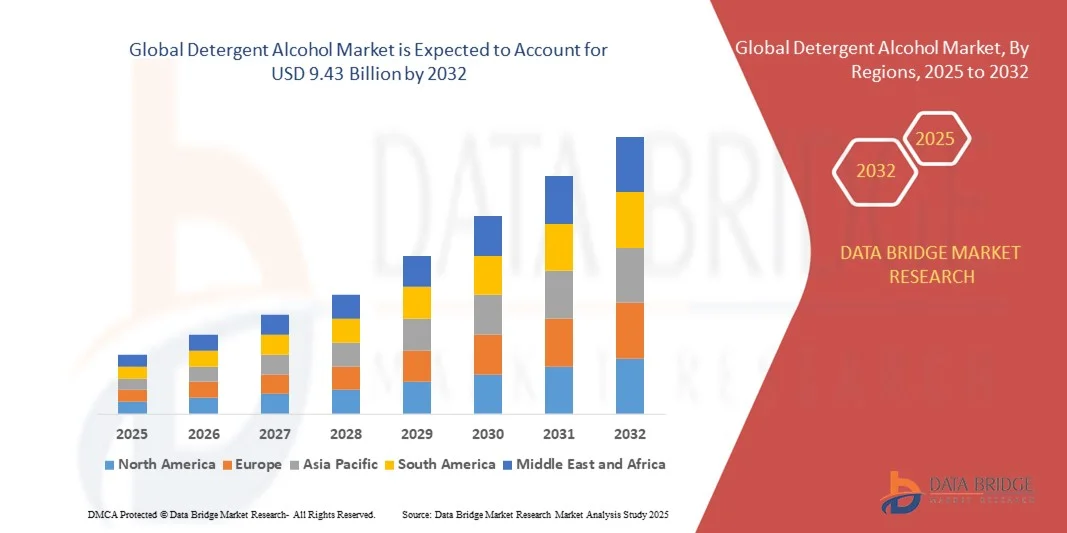
- The global detergent alcohol market size was valued at USD 6.34 billion in 2024 and is expected to reach USD 9.43 billion by 2032, at a CAGR of 5.1% during the forecast period
- The market growth is largely fueled by the expanding demand for cleaning and personal care products, driven by increasing urbanization, rising hygiene awareness, and the growth of pharmaceutical and industrial sectors
- Furthermore, the rising consumer preference for sustainable and eco-friendly formulations, coupled with advancements in fatty alcohol production and surfactant technology, is boosting the adoption of detergent alcohols across domestic, industrial, and personal care applications. These converging factors are accelerating market growth and enhancing the overall industry expansion
Detergent Alcohol Market Analysis
- Detergent alcohols, as key surfactants, are increasingly essential in modern cleaning, personal care, pharmaceutical, and industrial applications due to their superior emulsifying, foaming, and cleansing properties
- The escalating demand for detergent alcohols is primarily fueled by growth in domestic and industrial cleaning products, expanding cosmetics and personal care markets, rising wastewater treatment initiatives, and increasing focus on sustainable and biodegradable ingredients
- Asia-Pacific dominated the detergent alcohol market with a share of 42.2% in 2024, due to increasing demand for cleaning products, expanding personal care and pharmaceutical industries, and a strong presence of chemical manufacturing hubs
- North America is expected to be the fastest growing region in the detergent alcohol market during the forecast period due to rising demand for domestic and industrial cleaning products, personal care formulations, and pharmaceutical applications
- Synthetic segment dominated the market with a market share of 68.3% in 2024, due to its consistent quality, cost-effectiveness, and large-scale production capabilities. Synthetic detergent alcohols are widely used across diverse industries due to their high purity and customizable chemical properties, enabling manufacturers to meet specific formulation requirements. Their widespread availability and compatibility with various surfactant formulations further reinforce their dominance in the market. In addition, regulatory approvals and established supply chains make synthetic sources a preferred choice for both domestic and industrial applications
Report Scope and Detergent Alcohol Market Segmentation
|
Attributes |
Detergent Alcohol Key Market Insights |
|
Segments Covered |
|
|
Countries Covered |
North America
Europe
Asia-Pacific
Middle East and Africa
South America
|
|
Key Market Players |
|
|
Market Opportunities |
|
|
Value Added Data Infosets |
In addition to the insights on market scenarios such as market value, growth rate, segmentation, geographical coverage, and major players, the market reports curated by the Data Bridge Market Research also include import export analysis, production capacity overview, production consumption analysis, price trend analysis, climate change scenario, supply chain analysis, value chain analysis, raw material/consumables overview, vendor selection criteria, PESTLE Analysis, Porter Analysis, and regulatory framework. |
Detergent Alcohol Market Trends
Rising Demand for Eco-Friendly Detergent Alcohols
- The detergent alcohol market is witnessing strong growth driven by the increasing global focus on sustainable and biodegradable cleaning formulations. Consumers and manufacturers alike are prioritizing eco-friendly detergent ingredients derived from renewable sources to reduce environmental impact and align with clean-label product trends
- For instance, BASF SE and Croda International Plc have expanded their bio-based detergent alcohol portfolios using natural feedstocks such as palm kernel oil and coconut oil certified by the Roundtable on Sustainable Palm Oil (RSPO). These developments are accelerating the transition from petroleum-derived alcohols to renewable alternatives across the cleaning and personal care sectors
- The emphasis on sustainability is encouraging the adoption of green chemistry principles in surfactant production, where bio-based alcohols serve as key raw materials for detergents with lower toxicity and improved biodegradability. This shift supports compliance with global environmental standards such as REACH and EPA Safer Choice programs
- In addition, major chemical producers are investing in advanced catalytic technologies to improve yield efficiency while minimizing energy consumption and greenhouse gas emissions. These innovations enhance the cost-effectiveness and scalability of eco-friendly detergent alcohols in industrial manufacturing applications
- The growing demand for natural home care and personal hygiene products is also contributing to the expansion of sustainable detergent alcohol markets. Manufacturers targeting eco-conscious consumers are developing formulations free from sulfates and synthetic additives using renewable alcohol sources
- Overall, the rising demand for eco-friendly detergent alcohols reflects the ongoing global transformation toward renewable materials, circular production models, and reduced environmental footprint. This trend is expected to strengthen as governments and corporations intensify commitments to sustainability and carbon neutrality goals
Detergent Alcohol Market Dynamics
Driver
Growth in Domestic and Industrial Cleaning Products
- The expansion of domestic and industrial cleaning activities is one of the key drivers fueling the demand for detergent alcohols, which serve as essential raw materials in surfactant and cleaning formulations. Increasing hygiene awareness, urbanization, and industrial maintenance requirements are collectively driving growth across the sector
- For instance, Shell Chemicals and Sasol Limited supply high-purity linear alcohols used in household detergents, dishwashing agents, and industrial cleaners manufactured by major brands such as Unilever and Procter & Gamble. The demand for effective, high-foaming, and quick-rinsing detergents continues to rise across residential and institutional applications
- Detergent alcohols play a vital role in improving cleaning efficiency by reducing water surface tension and enabling deeper dirt and grease removal. Their compatibility with various surfactant types and formulation chemistries makes them indispensable in both liquid and powder cleaning agents
- In addition, rising industrial activity in sectors such as food processing, textiles, automotive, and healthcare has amplified the need for stronger and more environmentally responsible cleaning solutions. The ongoing push toward hygiene safety in public spaces continues to boost consumption of cleaning products globally
- The consistent demand for multipurpose cleaning formulations and increasing public health awareness are expected to maintain steady market growth. The growing intersection between health, hygiene, and sustainability ensures continued expansion of detergent alcohol consumption worldwide
Restraint/Challenge
Volatile Raw Material Prices
- Fluctuating raw material prices represent a major challenge for detergent alcohol producers, particularly those dependent on both petrochemical and natural feedstocks. The market experiences frequent cost swings caused by oil price variation, supply disruptions, and agricultural yield fluctuations affecting natural oils such as palm and coconut
- For instance, companies such as KLK OLEO and Sasol have faced raw material price volatility due to changing global crude oil trends and weather-related disruptions to palm kernel oil production. These fluctuations create uncertainty in cost management and profit margins across manufacturing operations
- The price instability of feedstocks also impacts contract pricing with end-use detergent manufacturers, leading to unpredictable profit cycles. This challenge is especially significant for producers serving large-scale consumer goods sectors with high-volume, low-margin product lines
- In addition, geopolitical factors, trade restrictions, and sustainability certification costs further influence raw material sourcing strategies. Companies balancing between synthetic and bio-based inputs often face complex procurement decisions based on forecasted availability and price trends
- Ultimately, mitigating the effects of raw material volatility through diversified sourcing, long-term supplier partnerships, and investment in synthetic biology for renewable alcohol production will be essential. Establishing more stable and resilient supply frameworks will help ensure consistent profitability and sustainable growth in the detergent alcohol market
Detergent Alcohol Market Scope
The market is segmented on the basis of source and application.
- By Source
On the basis of source, the detergent alcohol market is segmented into natural and synthetic. The synthetic segment dominated the market with the largest market revenue share of 68.3% in 2024, driven by its consistent quality, cost-effectiveness, and large-scale production capabilities. Synthetic detergent alcohols are widely used across diverse industries due to their high purity and customizable chemical properties, enabling manufacturers to meet specific formulation requirements. Their widespread availability and compatibility with various surfactant formulations further reinforce their dominance in the market. In addition, regulatory approvals and established supply chains make synthetic sources a preferred choice for both domestic and industrial applications.
The natural segment is anticipated to witness the fastest growth from 2025 to 2032, fueled by rising consumer preference for eco-friendly and sustainable ingredients. Natural detergent alcohols, derived from renewable resources such as palm, coconut, or corn, align with increasing demand for green cleaning products and personal care formulations. Growing awareness regarding environmental impact, biodegradability, and low toxicity is encouraging manufacturers to adopt natural sources. The segment also benefits from government initiatives promoting sustainable production and use of bio-based chemicals.
- By Application
On the basis of application, the detergent alcohol market is segmented into domestic and industrial cleaning, cosmetics and personal care, pharmaceutical, wastewater treatment, plasticizer, and others. The domestic and industrial cleaning segment dominated the market with the largest revenue share of 40.7% in 2024, driven by the extensive use of detergent alcohols in household cleaners, dishwashing products, and industrial cleaning agents. Their excellent surfactant properties, ability to remove grease and oils, and compatibility with multiple formulations make them indispensable in cleaning applications. Rising urbanization and increased hygiene awareness are further fueling demand, along with the adoption of concentrated and multi-purpose cleaning solutions.
The cosmetics and personal care segment is expected to witness the fastest growth from 2025 to 2032, propelled by growing demand for personal care products with enhanced cleansing and foaming properties. Detergent alcohols are widely used in shampoos, body washes, facial cleansers, and hand sanitizers due to their mildness and emulsifying capabilities. Increasing consumer focus on skincare, coupled with rising disposable income and preference for innovative beauty products, is driving the adoption of detergent alcohols in this segment. Manufacturers are also exploring natural and bio-based detergent alcohols to meet the trend of sustainable and safe cosmetic formulations.
Detergent Alcohol Market Regional Analysis
- Asia-Pacific dominated the detergent alcohol market with the largest revenue share of 42.2% in 2024, driven by increasing demand for cleaning products, expanding personal care and pharmaceutical industries, and a strong presence of chemical manufacturing hubs
- The region’s cost-effective production landscape, rising investments in specialty surfactant production, and growing exports of detergent alcohols are accelerating market growth
- The availability of skilled labor, supportive government policies, and rapid industrialization across developing economies are contributing to increased consumption of detergent alcohol in both domestic and industrial applications
China Detergent Alcohol Market Insight
China held the largest share in the Asia-Pacific detergent alcohol market in 2024, owing to its position as a global leader in chemical manufacturing and surfactant production. Strong industrial infrastructure, favorable government policies for chemical sector expansion, and extensive export capabilities for detergent alcohols are major growth drivers. Demand is further supported by growing domestic consumption in cleaning products, personal care formulations, and industrial applications.
India Detergent Alcohol Market Insight
India is witnessing the fastest growth in the Asia-Pacific region, fueled by expanding domestic cleaning product manufacturing, rising personal care and pharmaceutical production, and increasing investments in chemical infrastructure. Initiatives supporting self-reliance in chemical intermediates and eco-friendly surfactants are strengthening market demand. Growing exports and adoption of modern cleaning solutions are contributing to robust market expansion.
Europe Detergent Alcohol Market Insight
The Europe detergent alcohol market is expanding steadily, supported by stringent regulatory frameworks, growing demand for high-purity and specialty surfactants, and increasing investments in sustainable chemical production. The region emphasizes environmental compliance, advanced formulations, and adoption of bio-based detergent alcohols, particularly in cleaning and personal care applications. Growing use in industrial and wastewater treatment sectors is further driving market growth.
Germany Detergent Alcohol Market Insight
Germany’s detergent alcohol market is driven by its leadership in high-quality chemical manufacturing, strong industrial heritage, and export-focused production. Well-established R&D networks and collaborations between academic institutions and manufacturers foster innovation in surfactants and detergent alcohol formulations. Demand is particularly strong for domestic and industrial cleaning, personal care, and pharmaceutical applications.
U.K. Detergent Alcohol Market Insight
The U.K. market is supported by a mature personal care and cleaning products industry, increasing focus on sustainability, and growth in specialty surfactants. R&D initiatives, industry-academia partnerships, and investments in eco-friendly and high-purity detergent alcohols continue to drive market adoption. The region also benefits from strong regulatory compliance and innovative formulation trends.
North America Detergent Alcohol Market Insight
North America is projected to grow at the fastest CAGR from 2025 to 2032, driven by rising demand for domestic and industrial cleaning products, personal care formulations, and pharmaceutical applications. Focus on high-performance surfactants, sustainable production, and innovations in formulation technology are boosting adoption. Increasing reshoring of chemical manufacturing and collaborations between specialty chemical companies and end-users are supporting market expansion.
U.S. Detergent Alcohol Market Insight
The U.S. accounted for the largest share in the North America market in 2024, underpinned by its extensive cleaning product and personal care industries, strong R&D capabilities, and investment in specialty chemical production. Focus on eco-friendly and high-purity detergent alcohols, regulatory compliance, and innovation in formulations is driving growth. Presence of key players, established supply chains, and mature distribution networks reinforce the U.S.'s leading position in the region.
Detergent Alcohol Market Share
The detergent alcohol industry is primarily led by well-established companies, including:
- BASF SE (Germany)
- Mitsubishi Chemical Corporation (Japan)
- Ashland (U.S.)
- Bioamber Inc. (Canada)
- Sipchem (Saudi Arabia)
- LyondellBasell Industries Holdings B.V. (Netherlands)
- ExxonMobil Corporation (U.S.)
- DOW (U.S.)
- DuPont (U.S.)
- Panjiva, Inc. (U.S.)
- INVISTA (U.S.)
- NAN YA PLASTICS CORPORATION (Taiwan)
- Calgon Carbon Corporation (U.S.)
- Kuraray Co., Ltd. (Japan)
- Reliance Industries Limited (India)
Latest Developments in Global Detergent Alcohol Market
- In July 2025, Procter & Gamble introduced Tide Evo, a concentrated laundry detergent in the form of a "fiber tile," packaged in recyclable paper and manufactured using renewable energy. This innovative product addresses the growing consumer demand for sustainable and eco-friendly cleaning solutions. Despite a higher price point, Tide Evo has received strong market acceptance in pilot regions, driving category growth and prompting P&G to scale up production. The launch also positions the company as a leader in sustainable detergent formulations, encouraging competitors to innovate in green cleaning products
- In April 2023, KLK OLEO, a subsidiary of Kuala Lumpur Kepong Berhad, completed the acquisition of a controlling stake in Temix Oleo SpA. This strategic move strengthens KLK OLEO’s product portfolio in fatty alcohols and enhances its global presence in the detergent alcohol market. The acquisition provides access to new technologies and production capabilities, enabling KLK OLEO to meet increasing demand for high-quality detergent alcohols. It also supports the company’s expansion into emerging markets and reinforces its position as a key supplier for both industrial and personal care applications
- In 2020, Procter & Gamble expanded its sustainable product line by introducing eco-friendly liquid detergents formulated with biodegradable detergent alcohols. This launch reinforced P&G’s market leadership in environmentally responsible cleaning solutions and catered to rising consumer awareness of sustainability. By integrating bio-based detergent alcohols, P&G improved the environmental profile of its products and also enhanced performance in cleaning efficiency and user experience. The initiative contributed to overall market growth by setting new standards for eco-friendly detergent formulations

- Interactive Data Analysis Dashboard
- Company Analysis Dashboard for high growth potential opportunities
- Research Analyst Access for customization & queries
- Competitor Analysis with Interactive dashboard
- Latest News, Updates & Trend analysis
- Harness the Power of Benchmark Analysis for Comprehensive Competitor Tracking
Global Detergent Alcohol Market, Supply Chain Analysis and Ecosystem Framework
To support market growth and help clients navigate the impact of geopolitical shifts, DBMR has integrated in-depth supply chain analysis into its Global Detergent Alcohol Market research reports. This addition empowers clients to respond effectively to global changes affecting their industries. The supply chain analysis section includes detailed insights such as Global Detergent Alcohol Market consumption and production by country, price trend analysis, the impact of tariffs and geopolitical developments, and import and export trends by country and HSN code. It also highlights major suppliers with data on production capacity and company profiles, as well as key importers and exporters. In addition to research, DBMR offers specialized supply chain consulting services backed by over a decade of experience, providing solutions like supplier discovery, supplier risk assessment, price trend analysis, impact evaluation of inflation and trade route changes, and comprehensive market trend analysis.
Data collection and base year analysis are done using data collection modules with large sample sizes. The stage includes obtaining market information or related data through various sources and strategies. It includes examining and planning all the data acquired from the past in advance. It likewise envelops the examination of information inconsistencies seen across different information sources. The market data is analysed and estimated using market statistical and coherent models. Also, market share analysis and key trend analysis are the major success factors in the market report. To know more, please request an analyst call or drop down your inquiry.
The key research methodology used by DBMR research team is data triangulation which involves data mining, analysis of the impact of data variables on the market and primary (industry expert) validation. Data models include Vendor Positioning Grid, Market Time Line Analysis, Market Overview and Guide, Company Positioning Grid, Patent Analysis, Pricing Analysis, Company Market Share Analysis, Standards of Measurement, Global versus Regional and Vendor Share Analysis. To know more about the research methodology, drop in an inquiry to speak to our industry experts.
Data Bridge Market Research is a leader in advanced formative research. We take pride in servicing our existing and new customers with data and analysis that match and suits their goal. The report can be customized to include price trend analysis of target brands understanding the market for additional countries (ask for the list of countries), clinical trial results data, literature review, refurbished market and product base analysis. Market analysis of target competitors can be analyzed from technology-based analysis to market portfolio strategies. We can add as many competitors that you require data about in the format and data style you are looking for. Our team of analysts can also provide you data in crude raw excel files pivot tables (Fact book) or can assist you in creating presentations from the data sets available in the report.













