


Diabetic Hyperosmolar Syndrome Market Analysis
The diabetic hyperosmolar syndrome market is witnessing steady growth due to the increasing prevalence of diabetes, particularly type 2, and the rising incidence of complications associated with poor glucose control. Diabetic hyperosmolar syndrome (DHS), a life-threatening condition characterized by high blood sugar levels and dehydration, is more common among elderly individuals and those with poorly managed diabetes. The market is driven by advancements in diagnostic tools, increased awareness about early detection, and improvements in treatment protocols. Recent developments focus on enhanced glucose management therapies, along with advancements in intravenous fluids and electrolytes for rehydration. Increasing healthcare spending, especially in developed countries, and the growing need for specialized care and management options further fuel market expansion. In addition, emerging trends in personalized treatment approaches and the development of novel drug therapies are expected to shape the market's future growth.
Diabetic Hyperosmolar Syndrome Market Size
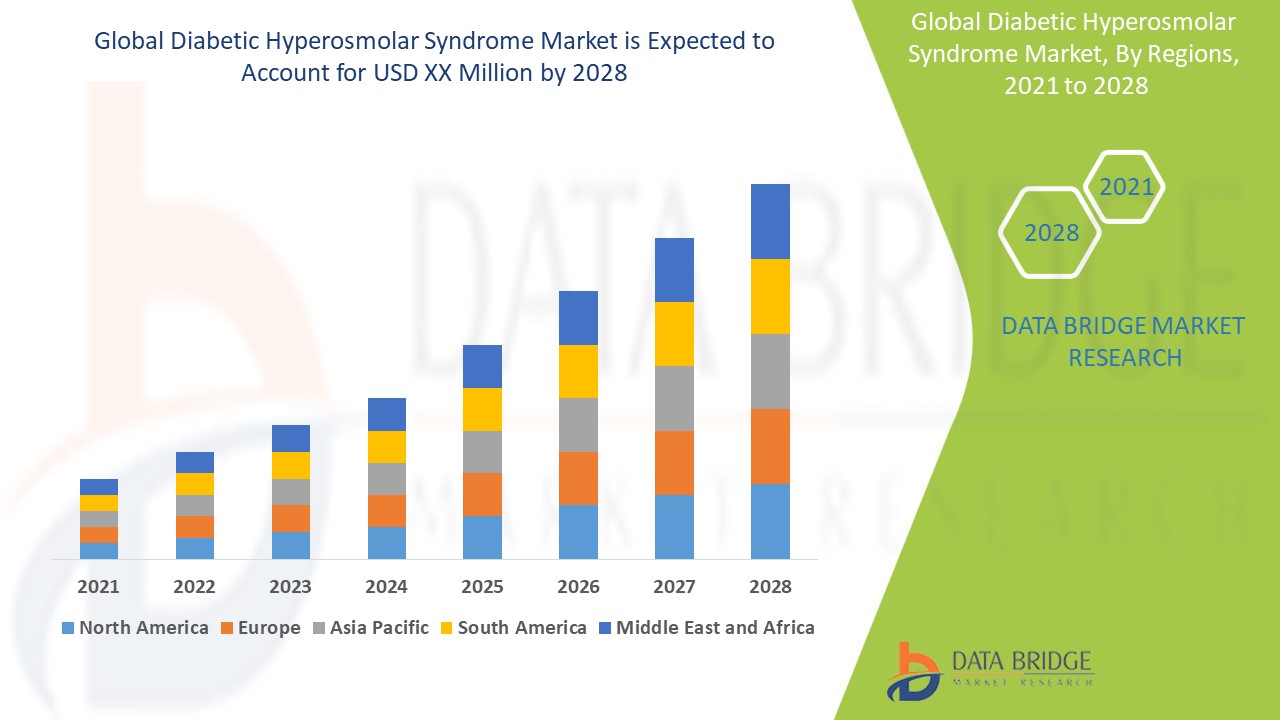
The global diabetic hyperosmolar syndrome market size was valued at USD 420.10 million in 2024 and is projected to reach USD 840.20 million by 2032, with a CAGR of 9.05% during the forecast period of 2025 to 2032. In addition to the insights on market scenarios such as market value, growth rate, segmentation, geographical coverage, and major players, the market reports curated by the Data Bridge Market Research also include depth expert analysis, patient epidemiology, pipeline analysis, pricing analysis, and regulatory framework.
Diabetic Hyperosmolar Syndrome Market Trends
“Rising Diabetes Rates”
The diabetic hyperosmolar syndrome market is experiencing significant growth, driven by rising diabetes rates and advancements in healthcare. Recent innovations in glucose monitoring device and intravenous therapy are enhancing the management of diabetic hyperosmolar syndrome, improving outcomes for patients. A key trend is the increasing focus on early diagnosis and preventive measures, which is crucial for reducing the incidence of this severe complication. The adoption of continuous glucose monitoring (CGM) devices and smart insulin pen is also gaining momentum, enabling more precise management of blood sugar levels and preventing hyperosmolar episodes. These technological advancements are expected to significantly shape the market, leading to better patient outcomes and greater demand for specialized treatments.
Report Scope and Diabetic Hyperosmolar Syndrome Market Segmentation
|
Attributes |
Diabetic Hyperosmolar Syndrome Key Market Insights |
|
Segments Covered |
|
|
Countries Covered |
U.S., Canada and Mexico in North America, Germany, France, U.K., Netherlands, Switzerland, Belgium, Russia, Italy, Spain, Turkey, Rest of Europe in Europe, China, Japan, India, South Korea, Singapore, Malaysia, Australia, Thailand, Indonesia, Philippines, Rest of Asia-Pacific (APAC) in the Asia-Pacific (APAC), Saudi Arabia, U.A.E., South Africa, Egypt, Israel, Rest of Middle East and Africa (MEA) as a part of Middle East and Africa (MEA), Brazil, Argentina and Rest of South America as part of South America. |
|
Key Market Players |
Eli Lilly and Company (U.S.), Sanofi (France), Novo Nordisk A/S (Denmark), Bristol-Myers Squibb Company (U.S.) |
|
Market Opportunities |
|
|
Value Added Data Infosets |
In addition to the insights on market scenarios such as market value, growth rate, segmentation, geographical coverage, and major players, the market reports curated by the Data Bridge Market Research also include depth expert analysis, patient epidemiology, pipeline analysis, pricing analysis, and regulatory framework. |
Diabetic Hyperosmolar Syndrome Market Definition
Diabetic hyperosmolar syndrome (DHS) is a serious and potentially life-threatening complication of diabetes, primarily seen in people with type 2 diabetes. It occurs when blood sugar levels become extremely high (often above 600 mg/dL), leading to severe dehydration, elevated blood osmolarity, and electrolyte imbalances. Unlike diabetic ketoacidosis, DHS typically develops more slowly and is often characterized by extreme thirst, frequent urination, confusion, and in severe cases, coma. It is triggered by factors such as infections, uncontrolled blood sugar, or other health problems, and requires immediate medical attention for proper rehydration and glucose control.
Diabetic Hyperosmolar Syndrome Market Dynamics
Drivers
- Rising Prevalence of Diabetes
The global rise in diabetes, particularly type 2 diabetes, is a significant driver of the diabetic hyperosmolar syndrome (DHS) market. As more individuals are diagnosed with diabetes, the incidence of DHS, a severe complication of uncontrolled blood sugar, is increasing. This trend is pushing the demand for effective management and treatment options to mitigate the risks associated with DHS. With a higher prevalence of diabetes, especially among older adults and in developing countries, there is an urgent need for advanced diagnostic tools, glucose monitoring systems, and innovative therapies to manage this life-threatening condition, fueling market growth.
- Growing Focus on Preventive Healthcare
The global shift toward preventive healthcare is significantly driving the diabetic hyperosmolar syndrome (DHS) market. As more emphasis is placed on the early detection and management of diabetes, healthcare systems aim to prevent complications such as DHS by encouraging proactive care. This focus on prevention is leading to greater adoption of tools such as continuous glucose monitoring systems, early screening methods, and diabetes management therapies. By identifying individuals at risk and intervening early, the healthcare sector is reducing the incidence of severe complications, thereby driving the demand for advanced medical products and services to manage and prevent DHS.
Opportunities
- Advancements in Diagnostics
Improvements in diagnostic tools, particularly continuous glucose monitoring (CGM) systems, present a significant opportunity for the diabetic hyperosmolar syndrome (DHS) market. CGM systems enable real-time, continuous monitoring of blood sugar levels, allowing for early detection of fluctuations and helping patients and healthcare providers manage high blood sugar levels more effectively. By preventing prolonged periods of hyperglycemia, CGMs can significantly reduce the risk of developing DHS, a severe complication of diabetes. As the adoption of CGM technology grows, it creates a market opportunity for related devices, treatments, and services designed to manage diabetes and prevent DHS.
- Improved Treatment Options
Innovations in glucose management therapies, rehydration methods, and improved intravenous treatments offer a significant market opportunity for the diabetic hyperosmolar syndrome (DHS) market. Advancements in insulin therapies and glucose-lowering agents enable more effective control of blood sugar levels, reducing the risk of severe hyperglycemic episodes that can lead to DHS. In addition, improved rehydration protocols and intravenous solutions enhance patient recovery by addressing fluid imbalances and restoring electrolyte levels more efficiently. These innovations contribute to better patient outcomes and faster recovery times, driving demand for specialized products and services in the DHS market, further expanding its growth potential.
Restraints/Challenges
- Limited Treatment Options
Currently, the primary treatment for Diabetic Hyperosmolar Syndrome (DHS) is supportive care, which includes intravenous (IV) fluids to correct dehydration and insulin therapy to lower blood glucose levels. While these interventions are crucial for stabilizing patients, they do not specifically target the underlying pathophysiology of DHS. The lack of targeted therapies for this condition presents a significant market challenge, as there is a limited scope for pharmaceutical companies to develop specialized drugs for DHS. This gap in treatment options contributes to reliance on general supportive care, potentially resulting in longer hospitalizations, increased costs, and suboptimal patient outcomes.
- High Treatment Costs
The management of Diabetic Hyperosmolar Syndrome (DHS) often requires intensive care due to the severe dehydration, hyperglycemia, and altered mental state that accompany the condition. Patients typically need close monitoring in a hospital setting, with interventions such as intravenous fluids, insulin therapy, and electrolyte correction. This intensive care approach results in high hospitalization costs, especially for prolonged treatment durations. The need for specialized care can strain healthcare resources, particularly in regions with limited access to advanced medical facilities. These factors contribute to significant financial burdens on both patients and healthcare systems, acting as a key market restraint for the development and accessibility of DHS treatments.
This market report provides details of new recent developments, trade regulations, import-export analysis, production analysis, value chain optimization, market share, impact of domestic and localized market players, analyses opportunities in terms of emerging revenue pockets, changes in market regulations, strategic market growth analysis, market size, category market growths, application niches and dominance, product approvals, product launches, geographic expansions, technological innovations in the market. To gain more info on the market contact Data Bridge Market Research for an Analyst Brief, our team will help you take an informed market decision to achieve market growth.
Diabetic Hyperosmolar Syndrome Market Scope
The market is segmented on the basis of drug class, route of administration, insulin type, brand type, mode of purchase, and distribution channel. The growth amongst these segments will help you analyse meagre growth segments in the industries and provide the users with a valuable market overview and market insights to help them make strategic decisions for identifying core market applications.
Drug Class
- Insulin
- DPP-4 Inhibitors
- Metformin
Route of Administration
- Intravenous
- Oral
- Parenteral
Insulin Type
- Traditional Insulin
- Intravenous Insulin
Brand Type
- Novolog
- Humulin R
- Insulin Lispro
Mode of Purchase
- Prescription
- Over the Counter
Distribution Channel
- Hospital Pharmacies
- Retail Pharmacies
- Online Pharmacies
- Others
Diabetic Hyperosmolar Syndrome Market Regional Analysis
The market is analysed and market size insights and trends are provided by country, drug class, route of administration, insulin type, brand type, mode of purchase, and distribution channel as referenced above.
The countries covered in the market report are U.S., Canada and Mexico in North America, Germany, France, U.K., Netherlands, Switzerland, Belgium, Russia, Italy, Spain, Turkey, Rest of Europe in Europe, China, Japan, India, South Korea, Singapore, Malaysia, Australia, Thailand, Indonesia, Philippines, Rest of Asia-Pacific (APAC) in the Asia-Pacific (APAC), Saudi Arabia, U.A.E., South Africa, Egypt, Israel, Rest of Middle East and Africa (MEA) as a part of Middle East and Africa (MEA), Brazil, Argentina and Rest of South America as part of South America.
North America is projected to dominate the market, driven by the growing geriatric population and the increasing number of hospital admissions for diabetic hyperosmolar syndrome. In addition, the region benefits from better access to healthcare services, including insurance coverage, which supports timely treatment. These factors collectively contribute to the substantial market share in North America.
The Asia-Pacific region is expected to experience the fastest market growth, fueled by advancements in technology, such as in-vitro diagnostics, and the establishment of new healthcare centers in rural areas. In addition, strategic initiatives by key market players and the increasing use of insulin pens are driving the expansion of healthcare access and diabetes management. These factors position the region for rapid growth in the diabetic hyperosmolar syndrome market.
The country section of the report also provides individual market impacting factors and changes in regulation in the market domestically that impacts the current and future trends of the market. Data points such as down-stream and upstream value chain analysis, technical trends and porter's five forces analysis, case studies are some of the pointers used to forecast the market scenario for individual countries. Also, the presence and availability of global brands and their challenges faced due to large or scarce competition from local and domestic brands, impact of domestic tariffs and trade routes are considered while providing forecast analysis of the country data.
Diabetic Hyperosmolar Syndrome Market Share
The market competitive landscape provides details by competitor. Details included are company overview, company financials, revenue generated, market potential, investment in research and development, new market initiatives, global presence, production sites and facilities, production capacities, company strengths and weaknesses, product launch, product width and breadth, application dominance. The above data points provided are only related to the companies' focus related to market.
Diabetic Hyperosmolar Syndrome Market Leaders Operating in the Market Are:
- Eli Lilly and Company (U.S.)
- Sanofi (France)
- Novo Nordisk A/S (Denmark)
- Bristol-Myers Squibb Company (U.S.)

- Interactive Data Analysis Dashboard
- Company Analysis Dashboard for high growth potential opportunities
- Research Analyst Access for customization & queries
- Competitor Analysis with Interactive dashboard
- Latest News, Updates & Trend analysis
- Harness the Power of Benchmark Analysis for Comprehensive Competitor Tracking
Data collection and base year analysis are done using data collection modules with large sample sizes. The stage includes obtaining market information or related data through various sources and strategies. It includes examining and planning all the data acquired from the past in advance. It likewise envelops the examination of information inconsistencies seen across different information sources. The market data is analysed and estimated using market statistical and coherent models. Also, market share analysis and key trend analysis are the major success factors in the market report. To know more, please request an analyst call or drop down your inquiry.
The key research methodology used by DBMR research team is data triangulation which involves data mining, analysis of the impact of data variables on the market and primary (industry expert) validation. Data models include Vendor Positioning Grid, Market Time Line Analysis, Market Overview and Guide, Company Positioning Grid, Patent Analysis, Pricing Analysis, Company Market Share Analysis, Standards of Measurement, Global versus Regional and Vendor Share Analysis. To know more about the research methodology, drop in an inquiry to speak to our industry experts.
Data Bridge Market Research is a leader in advanced formative research. We take pride in servicing our existing and new customers with data and analysis that match and suits their goal. The report can be customized to include price trend analysis of target brands understanding the market for additional countries (ask for the list of countries), clinical trial results data, literature review, refurbished market and product base analysis. Market analysis of target competitors can be analyzed from technology-based analysis to market portfolio strategies. We can add as many competitors that you require data about in the format and data style you are looking for. Our team of analysts can also provide you data in crude raw excel files pivot tables (Fact book) or can assist you in creating presentations from the data sets available in the report.












