What is the Diaper Rash Cream Market Size and Growth Rate?
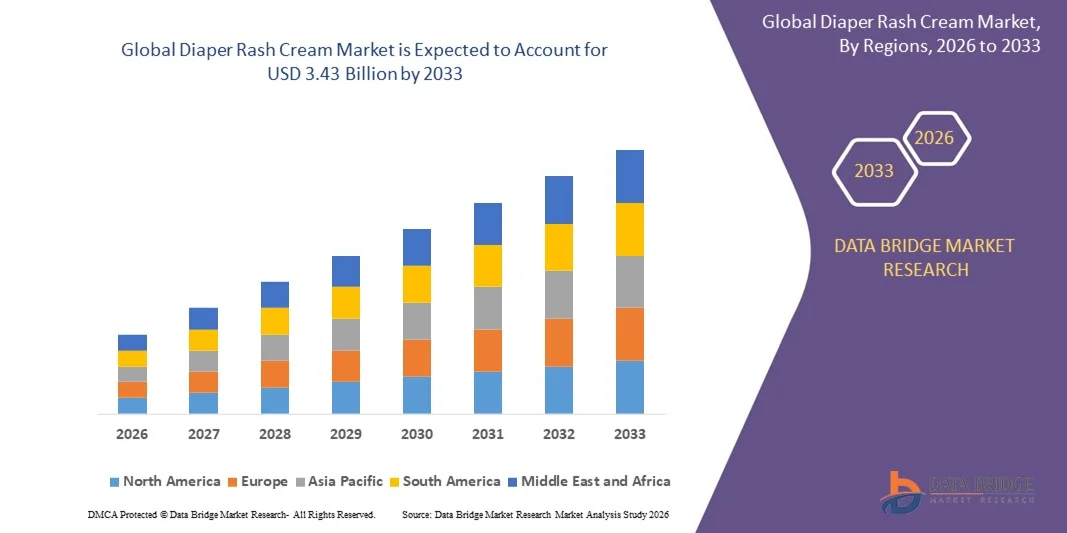
- As per Data Bridge Market Research Analysis the global diaper rash cream market size was valued at USD 2.02 billion in 2025 and is expected to reach USD 3.43 billion by 2033, at a CAGR of 6.8% during the forecast period
- The increase in the consciousness among parents regarding the harmful impact of utilizing baby products in the long term, acts as one of the major factors driving the growth of diaper rash cream market
- The rise in the inclination towards natural products those are free from parabens, phthalates, silicones, artificial preservatives and petrochemicals among other synthetic additives and availability of organic variants with antifungal and antibacterial qualities to recondition and soften the baby’s skin accelerate the diaper rash cream market growth
Market Size & Forecast
Global Market Value (2025): USD 2.02 billion
Expected Market Value (2033): USD 3.43 billion
Forecast CAGR (2026–2033):6.8%
What are the Major Takeaways of Diaper Rash Cream Market?
- The growing demand for baby diaper rash cream as it assists in calming the skin irritation symptoms and prevents them from reoccurring by forming a protective barrier between the baby’s skin and potential irritants and surge in investment in organic products produced using ingredients such as sunflower seed, jojoba, almond and calendula oils further influence the diaper rash cream market
- In addition, growth in awareness, rise in the number of infants, increase in ageing population, urbanization, change in consumer preferences and surge in disposable income of people positively affect the diaper rash cream market. Furthermore, promotional campaigns to retain a competitive edge and expansion of e-commerce sector extend profitable opportunities to the diaper rash cream market players
- North America dominated the diaper rash cream market with a 31.13% revenue share in 2025, driven by rising cases of diaper dermatitis, strong spending on baby skincare products, and the presence of leading global baby care brands across the U.S. and Canada
- Asia-Pacific is projected to register the fastest CAGR of 7.32% from 2026 to 2033, driven by rising birth rates, rapid urbanization, growing middle-class spending on baby care, and expanding diaper usage across China, India, Japan, South Korea, and Southeast Asia
- The Conventional segment dominated the market with a 62.4% share in 2025, driven by its wide availability, lower price range, and strong presence across pharmacies, supermarkets, and mass retail channels
Report Scope and Diaper Rash Cream Market Segmentation
|
Attributes |
Diaper Rash Cream Key Market Insights |
|
Segments Covered |
|
|
Countries Covered |
North America
Europe
Asia-Pacific
Middle East and Africa
South America
|
|
Key Market Players |
|
|
Market Opportunities |
|
|
Value Added Data Infosets |
In addition to the insights on market scenarios such as market value, growth rate, segmentation, geographical coverage, and major players, the market reports curated by the Data Bridge Market Research also include in-depth expert analysis, pricing analysis, brand share analysis, consumer survey, demography analysis, supply chain analysis, value chain analysis, raw material/consumables overview, vendor selection criteria, PESTLE Analysis, Porter Analysis, and regulatory framework. |
What is the Key Trend in the Diaper Rash Cream Market?
Increasing Shift Toward Natural, Hypoallergenic, and Plant-Based Diaper Rash Creams
- The diaper rash cream market is experiencing strong adoption of natural, organic, and chemical-free formulations, driven by growing parental preference for safer skincare products for infants
- Manufacturers are launching hypoallergenic, fragrance-free, and dermatologist-tested creams enriched with zinc oxide, calendula, shea butter, and plant extracts to minimize irritation and support sensitive skin
- Rising demand for eco-friendly, paraben-free, and non-toxic baby care products is encouraging brands to invest in cleaner ingredient profiles and sustainable packaging
- For instance, companies such as Johnson & Johnson, Beiersdorf, Weleda, and The Honest Company have expanded their natural baby skincare lines with improved formulations and gentler ingredients
- Increasing awareness of skin sensitivities, eczema, and allergy-related concerns is accelerating the shift toward safer, plant-based diaper rash solutions
- As parents continue prioritizing skin safety and environmental sustainability, natural and hypoallergenic diaper rash creams will remain central to infant skincare innovation
What are the Key Drivers of Diaper Rash Cream Market?
- Rising demand for safe, effective, and easy-to-apply diaper rash creams that offer quick relief from irritation, redness, and moisture-related skin issues in infants
- For instance, in 2025, leading companies such as Bayer AG, Himalaya, and Galderma expanded their baby skincare portfolios with enhanced soothing, moisturizing, and protective formulations
- Growing adoption of premium baby care products due to increasing disposable income, urbanization, and expanding awareness of infant hygiene across the U.S., Europe, and Asia-Pacific
- Advancements in formulations such as fast-acting zinc oxide blends, herbal-based creams, pH-balanced products, and microbiome-friendly ingredients have strengthened product effectiveness
- Rising prevalence of diaper dermatitis, heat rashes, and sensitive skin conditions is creating strong demand for pediatric-recommended rash creams
- Supported by steady investments in infant skincare R&D, product innovation, and marketing, the Diaper Rash Cream market is expected to witness sustained long-term growth
Which Factor is Challenging the Growth of the Diaper Rash Cream Market?
- High costs associated with premium, organic, and dermatologist-approved rash creams limit adoption among price-sensitive consumers in emerging markets
- For instance, during 2024–2025, fluctuations in raw material prices, plant-based ingredient shortages, and increased regulatory compliance led to higher production costs for several global brands
- Growing complexity in identifying skin-safe ingredients, allergen-free formulations, and clinically proven actives increases R&D efforts and development time
- Limited awareness in rural and low-income regions about proper infant hygiene practices and product benefits slows overall market penetration
- Competition from low-cost local brands, home remedies, and multipurpose baby creams creates pricing pressure and reduces product differentiation
- To address these challenges, companies are focusing on cost-efficient formulations, wider retail distribution, doctor-endorsed products, and educational campaigns to increase global adoption of diaper rash creams
How is the Diaper Rash Cream Market Segmented?
The market is segmented on the basis of product, end-user, and distribution channel.
- By Product
On the basis of product, the diaper rash cream market is segmented into Organic and Conventional. The Conventional segment dominated the market with a 62.4% share in 2025, driven by its wide availability, lower price range, and strong presence across pharmacies, supermarkets, and mass retail channels. Conventional creams remain preferred due to proven formulations containing zinc oxide, petrolatum, and antifungal agents that offer fast relief and high protective efficacy. Their long-established brand trust, pediatrician recommendations, and strong global retail distribution further support market leadership.
The Organic segment is expected to grow at the fastest CAGR from 2026 to 2033, owing to increasing consumer shift toward natural, chemical-free, hypoallergenic, and plant-derived formulations. Rising parental awareness of skin sensitivities, higher demand for paraben-free and fragrance-free products, and widespread promotion of clean-label baby care solutions are accelerating adoption. Expanding availability of organic baby skincare across premium retail, e-commerce, and specialty stores further enhances growth prospects.
- By End-User
On the basis of end-user, the market is segmented into Infant and Adult. The Infant segment dominated the market with a 78.6% share in 2025, supported by the high prevalence of diaper dermatitis among newborns and toddlers, rising birth rates in emerging economies, and increasing parental focus on infant hygiene. Frequent diaper usage, prolonged moisture exposure, and sensitive infant skin create strong demand for soothing, protective, and clinically tested diaper rash creams. Major brands continue to expand pediatric dermatology portfolios with fast-acting, hypoallergenic, and pediatrician-approved formulations, strengthening segment leadership.
The Adult segment is projected to grow at the fastest CAGR from 2026 to 2033, driven by rising cases of incontinence-related dermatitis among elderly populations, individuals with disabilities, and long-term bedridden patients. Growing adoption of adult diapers, expanding geriatric demographics, and increasing awareness of skin protection in institutional care settings are accelerating product demand. Improvements in hospital hygiene protocols and expansion of home healthcare services further support market growth.
- By Distribution Channel
On the basis of distribution channel, the diaper rash cream market is segmented into Offline and Online. The Offline segment dominated the market with a 67.2% share in 2025, driven by strong consumer preference for in-store product evaluation, immediate purchase availability, and trusted retail formats such as pharmacies, supermarkets, hypermarkets, and baby specialty stores. Brick-and-mortar outlets remain important for brand visibility, sampling, pediatric recommendations, and promotional campaigns. In addition, pharmacies continue to drive large sales volumes due to medical credibility and accessibility.
The Online segment is expected to grow at the fastest CAGR from 2026 to 2033, propelled by rising e-commerce penetration, increasing digital awareness among young parents, and expanding availability of global baby care brands on platforms such as Amazon, Walmart, and specialty baby websites. Greater access to product comparisons, subscription services, doorstep delivery, and discounts is accelerating the shift toward online purchases. Social media marketing and influencer-driven baby care recommendations further enhance digital channel growth.
Which Region Holds the Largest Share of the Diaper Rash Cream Market?
- North America dominated the diaper rash cream market with a 31.13% revenue share in 2025, driven by rising cases of diaper dermatitis, strong spending on baby skincare products, and the presence of leading global baby care brands across the U.S. and Canada. High consumer awareness regarding infant hygiene, increasing adoption of premium and dermatologist-tested formulations, and expanding retail penetration support strong market demand
- Leading companies in North America are launching organic, fragrance-free, hypoallergenic, and zinc oxide–based creams backed by clinical safety claims and paediatric certifications, strengthening the region’s product innovation leadership. Growing preference for natural ingredients, clean-label skincare, and sensitive skin formulations continues to create long-term growth opportunities
- High purchasing power, strong healthcare infrastructure, and rising adoption of preventive skincare routines among parents further reinforce regional dominance
U.S. Diaper Rash Cream Market Insight
The U.S. remains the largest contributor in North America, driven by high product awareness, strong demand for dermatologist-recommended formulations, and the presence of major multinational brands. Increasing prevalence of diaper dermatitis among infants, growing use of diapers due to busy lifestyles, and rising adoption of premium baby skincare products accelerate market growth. The expanding availability of organic, plant-based, and clinically tested creams across supermarkets, pharmacies, and e-commerce platforms further strengthens national market leadership.
Canada Diaper Rash Cream Market Insight
Canada contributes significantly to regional growth, supported by rising parental focus on infant skincare, strong penetration of natural and eco-friendly brands, and expanding access to paediatric dermatology products. Pharmacies, baby specialty stores, and online platforms increasingly promote barrier-protective and hypoallergenic creams in response to growing skin sensitivity concerns among infants. Government-supported healthcare awareness programs and rising demand for clean-label skincare further enhance product adoption across Canada.
Asia-Pacific Diaper Rash Cream Market
Asia-Pacific is projected to register the fastest CAGR of 7.32% from 2026 to 2033, driven by rising birth rates, rapid urbanization, growing middle-class spending on baby care, and expanding diaper usage across China, India, Japan, South Korea, and Southeast Asia. Increasing awareness of diaper rash prevention, accessibility of affordable products, and strong growth of e-commerce platforms are accelerating regional demand. Expanding portfolios of natural, herbal, and plant-based creams by domestic brands further support rapid market expansion across APAC.
China Diaper Rash Cream Market Insight
China is the largest contributor within Asia-Pacific due to high infant population, strong adoption of premium baby care products, and rapid growth of online retail. Rising awareness of infant hygiene, increasing preference for dermatologist-tested and non-toxic formulations, and strong marketing by local and international brands drive market expansion. Competitive pricing and large-scale manufacturing capabilities further boost domestic consumption and export potential.
Japan Diaper Rash Cream Market Insight
Japan demonstrates steady growth driven by high focus on product safety, extensive demand for sensitive-skin formulations, and a strong culture of preventive infant care. Japanese parents prefer high-quality, clinically validated, and fragrance-free creams, supporting adoption of premium global and domestic brands. The country’s advanced manufacturing and strict regulatory standards also help maintain strong product reliability and long-term market growth.
India Diaper Rash Cream Market Insight
India is emerging as a major growth hub due to rising urbanization, increasing diaper adoption, growing awareness about infant skincare, and expanding availability of budget to premium diaper rash creams. Ayurvedic, herbal, and natural formulations are witnessing strong demand among parents seeking safe and chemical-free options. Expanding penetration of pharmacies, supermarkets, and e-commerce platforms further accelerates national market adoption.
South Korea Diaper Rash Cream Market Insight
South Korea contributes significantly to regional growth driven by high demand for dermatologically tested baby skincare products and rapid adoption of premium formulations featuring probiotics, ceramides, and plant extracts. Strong influence of K-beauty innovation, advanced skincare R&D, and a growing preference for hypoallergenic products support steady market expansion. Digital retail ecosystems and strong online parenting communities further boost market penetration.
Which are the Top Companies in Diaper Rash Cream Market?
The diaper rash cream industry is primarily led by well-established companies, including:
- Bayer AG (Germany)
- Johnson & Johnson Services, Inc. (U.S.)
- Unilever (U.K.)
- Beiersdorf (Germany)
- The Himalaya Drug Company (India)
- Artsana USA, Inc. (U.S.)
- Tubby Todd Bath Co. (U.S.)
- Sebapharma (Germany)
- The Honest Company, Inc. (U.S.)
- The Natural Baby Company (U.K.)
- Burt’s Bees (U.S.)
- Mission Pharmacal Company (U.S.)
- Weleda (Switzerland)
- NUK USA LLC (U.S.)
- Forest Laboratories, Inc. (U.S.)
- Summers Laboratories, Inc. (U.S.)
- W.S. Badger Company (U.S.)
- Bio Veda Action Research Co. (India)
- GlaxoSmithKline plc (U.K.)
What are the Recent Developments in Global Diaper Rash Cream Market?
- In January 2024, CITTA, an India-based diaper rash cream brand, introduced a new 0+ age diaper rash cream range enriched with Chamomile, Zinc Oxide, Soybean, moisturizing emollients, and Sunflower extracts, reinforcing the brand’s commitment to gentle and effective infant skincare
- In February 2023, Triple Paste, a U.S. personal care brand, expanded its diaper rash care lineup with the launch of Sheer Zinc Diaper Rash Ointment and 3X Max Diaper Rash Ointment, strengthening its position in the premium therapeutic rash care segment
- In May 2022, BabyChakra rolled out 14 new organic and chemical-free baby care products, such as natural strengthening shampoo, moisturizing body wash, bamboo water-based wipes, organic coconut oil, and natural diaper rash cream, enhancing the brand’s footprint in safe and toxin-free child hygiene solutions
- In March 2022, Being Mama introduced a comprehensive baby care range comprising baby lotion, face cream, baby wash, baby powder, baby soap, diaper rash cream, and more, emphasizing natural ingredients to ensure nourishment and protection for delicate baby skin

- Interactive Data Analysis Dashboard
- Company Analysis Dashboard for high growth potential opportunities
- Research Analyst Access for customization & queries
- Competitor Analysis with Interactive dashboard
- Latest News, Updates & Trend analysis
- Harness the Power of Benchmark Analysis for Comprehensive Competitor Tracking
Data collection and base year analysis are done using data collection modules with large sample sizes. The stage includes obtaining market information or related data through various sources and strategies. It includes examining and planning all the data acquired from the past in advance. It likewise envelops the examination of information inconsistencies seen across different information sources. The market data is analysed and estimated using market statistical and coherent models. Also, market share analysis and key trend analysis are the major success factors in the market report. To know more, please request an analyst call or drop down your inquiry.
The key research methodology used by DBMR research team is data triangulation which involves data mining, analysis of the impact of data variables on the market and primary (industry expert) validation. Data models include Vendor Positioning Grid, Market Time Line Analysis, Market Overview and Guide, Company Positioning Grid, Patent Analysis, Pricing Analysis, Company Market Share Analysis, Standards of Measurement, Global versus Regional and Vendor Share Analysis. To know more about the research methodology, drop in an inquiry to speak to our industry experts.
Data Bridge Market Research is a leader in advanced formative research. We take pride in servicing our existing and new customers with data and analysis that match and suits their goal. The report can be customized to include price trend analysis of target brands understanding the market for additional countries (ask for the list of countries), clinical trial results data, literature review, refurbished market and product base analysis. Market analysis of target competitors can be analyzed from technology-based analysis to market portfolio strategies. We can add as many competitors that you require data about in the format and data style you are looking for. Our team of analysts can also provide you data in crude raw excel files pivot tables (Fact book) or can assist you in creating presentations from the data sets available in the report.