


What is the DPP-4 Inhibitors Market Size and Growth Rate?
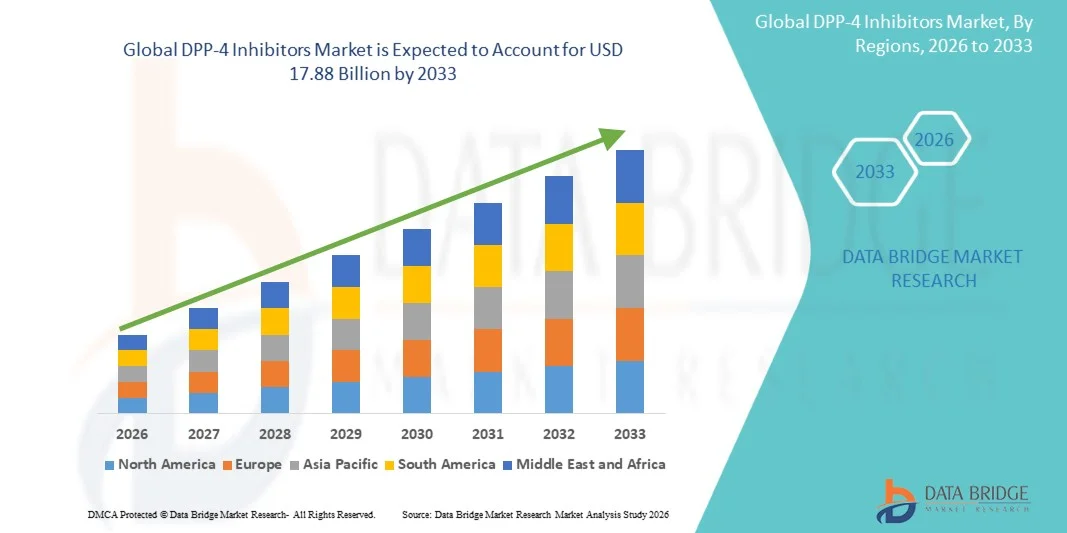
- As per Data Bridge Market Research analysis, the DPP-4 inhibitors market was valued at USD 13.48 billion in 2025 and is projected to reach USD 17.88 billion by 2033, growing at a CAGR of 3.60% from 2026 to 2033.
- The market is experiencing consistent growth driven by the growing prevalence of type 2 diabetes globally, the need for glucose-lowering therapies with low hypoglycemia risk, widespread clinical acceptance of incretin-based therapies, availability of multiple branded DPP-4 inhibitors, and expansion of outpatient diabetes management. DPP-4 inhibitors increase active incretin levels, which help regulate blood glucose by promoting insulin secretion and suppressing glucagon release.
- The rising global diabetic population, increasing adoption of combination diabetes therapies, growing focus on patient-friendly oral treatments, expanding access to diabetes care in emerging markets, and continued demand for cost-effective glycemic control options are expected to support market expansion. The market includes major DPP-4 inhibitors such as sitagliptin, saxagliptin, linagliptin, alogliptin, and vildagliptin, which are used primarily in the treatment of type 2 diabetes.
Market Size & Forecast
- Global Market Value (2025): USD 13.48 Billion
- Expected Market Value (2033): USD 17.88 Billion
- Forecast CAGR (2026–2033): 3.60%
- Leading Region in 2025: North America
- Fastest Growing Region: Asia Pacific
What are the Major Takeaways of the DPP-4 Inhibitors Market?
- North America dominated the DPP-4 inhibitors market with the largest revenue share of 37.59% in 2025, supported by the high diabetes prevalence and advanced healthcare infrastructure
- Asia-Pacific is expected to be the fastest-growing region at a CAGR of 6.2% from 2026 to 2033, fueled by the rising diabetes incidence and improving healthcare access across the region.
- The sitagliptin segment led the market with a 36.9% share in 2025, driven by its established clinical use and extensive adoption in type 2 diabetes management.
- Alogliptin are the fastest-growing drug type, projected to register a CAGR of 4.62%, reflecting the surge in continued utilization of alogliptin as an oral glucose-lowering treatment for type 2 diabetes.
- The generic drugs segment dominated the medication type category with a 63.38% revenue share in 2025, led by the increasing availability of lower-cost alternatives to branded DPP-4 inhibitors.
- Type 2 diabetes accounted for 78.5% of the market share in 2025, preferred by the widespread use of DPP-4 inhibitors for long-term glycemic management in patients with type 2 diabetes
- The gestational diabetes segment is the fastest-growing application category, with a CAGR of 5.0%, driven by increasing awareness of gestational diabetes, rising maternal age, and a growing emphasis on maternal and fetal health.
Report Scope and DPP-4 Inhibitors Market Segmentation
|
Attributes |
DPP-4 Inhibitors Key Market Insights |
|
Segments Covered |
|
|
Countries Covered |
North America
Europe
Asia-Pacific
Middle East and Africa
South America
|
|
Key Market Players |
|
|
Market Opportunities |
|
|
Value Added Data Infosets |
In addition to the insights on market scenarios such as market value, growth rate, segmentation, geographical coverage, and major players, the market reports curated by the Data Bridge Market Research also include in-depth expert analysis, patient epidemiology, pipeline analysis, pricing analysis, and regulatory framework. |
What is the Key Trend in the DPP-4 Inhibitors Market?
- Combination therapy and fixed-dose formulations are increasingly shaping the DPP-4 inhibitors market, as clinicians use DPP-4 inhibitors with metformin, SGLT2 inhibitors, and other oral antidiabetic therapies to achieve and sustain glycemic control in patients whose response to monotherapy is inadequate.
- For instance, in October 2025, a Chinese expert panel published consensus recommendations supporting triple oral therapy with metformin, DPP-4 inhibitors, and SGLT2 inhibitors, including fixed-dose combination formulations, reflecting the increasing use of DPP-4 inhibitors in combination treatment
- The growing use of triple oral therapy is strengthening demand for DPP-4 inhibitor-based combinations, particularly combinations containing metformin and an SGLT2 inhibitor, which provide additional glucose-lowering efficacy while maintaining an oral treatment approach.
- Fixed-dose combination formulations are gaining clinical attention because they can simplify diabetes treatment, with recent research evaluating combinations of DPP-4 inhibitors with metformin and SGLT2 inhibitors for patients requiring multiple glucose-lowering agents.
- Patient adherence and medication persistence are becoming important considerations in DPP-4 inhibitor therapy, particularly as treatment regimens vary from once-daily to twice-daily and once-weekly administration.
- For instance, in December 2024, according to a study published in Diabetology & Metabolic Syndrome, a prospective multicentre Indian study involving 215 patients evaluated a fixed-dose combination of remogliflozin, vildagliptin, and metformin in patients with type 2 diabetes inadequately controlled on dual therapy, supporting the growing adoption of DPP-4 inhibitor-based triple fixed-dose combinations.
- As diabetes treatment increasingly moves toward individualized combination regimens and simplified oral therapies, DPP-4 inhibitors are expected to remain an important component of multi-drug treatment strategies, particularly for patients requiring additional glycemic control after metformin or dual therapy.
What are the Key Drivers of the DPP-4 Inhibitors Market?
- The rapidly increasing global prevalence of diabetes is significantly expanding the patient population requiring pharmacological glucose-lowering treatment, creating sustained demand for oral antidiabetic therapies such as DPP-4 inhibitors
- For instance, in December 2025, The Lancet Diabetes & Endocrinology published the 11th edition of the IDF Diabetes Atlas, reporting that 589 million adults were living with diabetes globally in 2024, with this number projected to reach 853 million by 2050, demonstrating the expanding patient population requiring long-term glucose-lowering therapies.
- DPP-4 inhibitors offer an oral treatment option with established glucose-lowering efficacy and can be used as monotherapy or in combination with other antidiabetic medicines, supporting their continued use across different stages of type 2 diabetes management.
- The increasing requirement for combination therapy is another major market driver, as progressive type 2 diabetes frequently requires additional medicines when glycemic targets are not achieved with initial treatment. Research supports DPP-4 inhibitors in combination with metformin, sulfonylureas, thiazolidinediones, and SGLT2 inhibitors.
- The growing diabetes burden among older adults and populations in middle-income countries is creating additional demand for accessible oral diabetes therapies
- For instance, in June 2024, Diabetes published a survey of 185 Indian physicians in which 66% preferred DPP-4 inhibitor/SGLT2 inhibitor fixed-dose combinations across three clinical scenarios, supporting the growing adoption of combination-based DPP-4 inhibitor therapy.
- With the global diabetes population continuing to expand and combination treatment becoming increasingly common, demand for oral DPP-4 inhibitor therapies is expected to remain supported across established and emerging diabetes-care markets.
Which Factors are Challenging the Growth of the DPP-4 Inhibitors Market?
- Increasing competition from newer glucose-lowering therapies, particularly SGLT2 inhibitors and GLP-1 receptor agonists, is creating a significant challenge for DPP-4 inhibitors, as these newer classes provide additional cardiovascular, renal, and metabolic benefits that can influence treatment selection.
- For instance, in February 2026, an article published in the Journal of Diabetes Research evaluated 35 studies and found that DPP-4 inhibitor/metformin combinations had significant HbA1c reductions, but their relatively low cost-effectiveness compared with metformin monotherapy could hinder patient adherence, particularly in low- and middle-income settings.
- Cost-effectiveness and affordability concerns can also restrict DPP-4 inhibitor adoption, particularly in price-sensitive healthcare systems where metformin and other lower-cost alternatives remain widely used.
- Safety considerations surrounding cardiovascular outcomes and adverse events can affect prescribing decisions, with research identifying class-specific concerns and the need for continued safety assessment, particularly for patients with cardiovascular or renal comorbidities.
- For instance, in September 2022, a study published in Diabetes Care analyzed 315 trials and found that GLP-1 receptor agonist add-on therapy demonstrated a more comprehensive beneficial effect across efficacy and safety outcomes than DPP-4 inhibitors, highlighting competitive pressure from newer glucose-lowering therapies.
- These competitive, economic, and safety considerations may limit DPP-4 inhibitor growth, particularly where physicians increasingly prioritize therapies with demonstrated cardiovascular or renal outcome advantages or where healthcare systems emphasize lower-cost diabetes treatment options.
How is the DPP-4 Inhibitors Market Segmented?
The DPP-4 inhibitors market is segmented on the basis of drug type, medication type, application, end user, and distribution channel.
- By Drug Type
On the basis of drug type, the DPP-4 inhibitors market is segmented into sitagliptin, saxagliptin, linagliptin, alogliptin, vildagliptin, and other DPP-4 inhibitors. The sitagliptin segment dominated the market with 36.9% share in 2025, owing to its established clinical use and extensive adoption in type 2 diabetes management. Sitagliptin is widely used as both monotherapy and combination therapy, particularly with metformin. Its long-standing market presence has resulted in substantial physician familiarity and clinical experience. The availability of branded and generic formulations has further expanded access to sitagliptin across healthcare systems. Its oral administration and established role in glucose-lowering therapy continue to support demand. Broad utilization in combination treatment and established prescribing practices reinforce its leading position among DPP-4 inhibitors
The alogliptin segment is projected to witness the fastest growth at a CAGR of 4.62% through 2033. Growth is supported by continued utilization of alogliptin as an oral glucose-lowering treatment for type 2 diabetes. Increasing availability of generic formulations is improving affordability and access to established DPP-4 inhibitor therapies. The drug can also be incorporated into combination treatment strategies for patients requiring additional glycemic control. Increasing diabetes prevalence across Europe is expanding the potential patient pool for oral antidiabetic medicines. Continued demand for therapies with established clinical profiles is supporting alogliptin adoption. The increasing availability of lower-cost treatment options is expected to further strengthen segment expansion
- By Medication Type
On the basis of medication type, the DPP-4 inhibitors market is segmented into branded drugs and generic drugs. The generic drugs segment dominated the market with 63.38% share in 2025, supported by the increasing availability of lower-cost alternatives to branded DPP-4 inhibitors. Generic medicines improve affordability for patients requiring long-term diabetes treatment. Their adoption is particularly significant in price-sensitive healthcare markets where treatment costs influence prescribing and patient access. Patent expirations of established DPP-4 inhibitors have encouraged generic competition across several markets. Generic formulations of established molecules such as sitagliptin have further increased treatment accessibility. The availability of lower-cost medicines is also supporting wider use of DPP-4 inhibitors among chronic-care patients. These factors continue to strengthen the position of generic medicines within the DPP-4 inhibitor market.
The branded drugs segment is projected to register the fastest growth at a CAGR of 4.97% through 2033. Branded DPP-4 inhibitors continue to benefit from physician familiarity and established clinical positioning. Pharmaceutical manufacturers are also supporting branded demand through combination products and differentiated formulations. Fixed-dose combinations can simplify treatment regimens and improve medication convenience. Increasing diabetes prevalence across Asia-Pacific is expanding the underlying population requiring pharmacological treatment. Improving healthcare infrastructure and rising access to prescription medicines are creating additional opportunities for branded therapies. Established distribution networks and continued physician confidence further support branded product adoption. These factors are expected to sustain the growth of branded DPP-4 inhibitors despite increasing generic competition.
- By Application
On the basis of application, the DPP-4 inhibitors market is segmented into Type 2 diabetes, gestational diabetes, metabolic syndrome, and other applications. The Type 2 diabetes segment dominated the market with 78.5% share in 2025, DPP-4 inhibitors are primarily used as oral glucose-lowering medicines for type 2 diabetes. The increasing prevalence of type 2 diabetes is expanding the number of patients requiring long-term pharmacological treatment. DPP-4 inhibitors can be used alone or in combination with metformin and other glucose-lowering therapies. Their oral administration supports convenient long-term outpatient treatment. Increasing adoption of combination therapy is further contributing to segment expansion. The large global type 2 diabetes population therefore continues to make this the dominant application for DPP-4 inhibitors.
The gestational diabetes segment is projected to witness the fastest growth at a CAGR of 5.0% during forecast period. Increasing awareness and screening for gestational diabetes are expanding the diagnosed patient population. Rising maternal age and increasing metabolic risk factors are also contributing to greater attention toward pregnancy-related glucose abnormalities. Improvements in maternal healthcare infrastructure are supporting earlier diagnosis and treatment. Growing research into pharmacological approaches is increasing clinical interest in managing gestational diabetes. However, medication selection during pregnancy remains subject to safety considerations and clinical recommendations. Increasing emphasis on maternal and fetal health is expected to support further expansion of this application.
- By End User
On the basis of end user, the DPP-4 inhibitors market is segmented into hospitals, specialty clinics, and homecare settings. The hospitals segment dominated the market with 52.56% share in 2025. Hospitals remain major centers for diabetes diagnosis, treatment initiation, monitoring, and medication adjustment. They provide access to endocrinologists, physicians, diagnostic facilities, and multidisciplinary diabetes-care teams. Patients with uncontrolled or complicated diabetes frequently require hospital-based assessment and management. Hospitals also have established pharmaceutical procurement and dispensing systems that facilitate medicine availability. The high volume of patients receiving diabetes-related care supports continued demand for DPP-4 inhibitor therapies. Their comprehensive clinical infrastructure therefore makes hospitals the dominant end-user segment.
The homecare settings segment is projected to witness the fastest growth at a CAGR of 8.0% during forecast period, driven by the increasing shift toward home-based management of chronic diseases. DPP-4 inhibitors are oral therapies that can be conveniently administered without specialized equipment or administration procedures. Increasing preference for convenient long-term treatment is encouraging patients to manage stable diabetes outside hospital environments. The growing elderly population is also increasing demand for continuous and accessible chronic-care services. Expansion of home healthcare and remote patient-monitoring services is further supporting home-based diabetes management. Digital health technologies can help healthcare professionals monitor treatment adherence and disease control remotely. The ability to continue oral medication at home reduces the need for frequent hospital visits. These factors are expected to support faster adoption of DPP-4 inhibitors within homecare settings.
- By Distribution Channel
On the basis of distribution channel, the DPP-4 inhibitors market is segmented into hospital pharmacies, retail pharmacies, and online pharmacies. The retail pharmacies segment dominated the market with 44.8% share in 2025, supported by broad geographic availability and established distribution networks. DPP-4 inhibitors are commonly prescribed for long-term diabetes management, creating recurring demand for prescription refills. Retail pharmacies provide convenient access to medicines for patients receiving outpatient diabetes treatment. Their extensive physical presence allows patients to obtain medicines close to their homes. Retail pharmacies also distribute both branded and generic DPP-4 inhibitor formulations. Established relationships with pharmaceutical distributors and healthcare providers further strengthen their market position. The recurring nature of diabetes medication requirements continues to make retail pharmacies the leading distribution channel.
The online pharmacies segment is projected to register the fastest growth at 6.46% CAGR through 2033, supported by increasing digitalization of pharmaceutical distribution and growing preference for home delivery. Online pharmacies provide convenient access to recurring prescription medicines without requiring patients to visit physical stores. The increasing use of electronic prescriptions is improving the integration of digital pharmacy services into healthcare systems. Online platforms also allow patients to order medicines remotely and arrange home delivery. The channel is particularly suitable for chronic diabetes therapies because patients require regular medication refills. Increasing internet penetration and adoption of digital healthcare services are further supporting online pharmaceutical purchasing. Growing acceptance of e-commerce in healthcare is expected to strengthen the role of online pharmacies.
Which Region Holds the Largest Share of the DPP-4 Inhibitors Market?
- North America dominated the DPP-4 inhibitors market with the largest revenue share of 37.59% in 2025, supported by the high diabetes prevalence and advanced healthcare infrastructure
- The region also benefits from a substantial diabetes burden, established prescription networks, and continued use of DPP-4 inhibitors for oral glucose management. High-income North America has experienced a significant increase in type 2 diabetes incidence, while a considerable proportion of adults with diabetes remain undiagnosed. DPP-4 inhibitors continue to have a role among older adults and patients requiring oral therapies with low hypoglycemia risk. Genericization of established DPP-4 inhibitors is widening access while increasing price competition.
U.S. DPP-4 Inhibitors Market Insight
The U.S. DPP-4 inhibitors market is witnessing steady growth due to the country’s substantial diabetes burden, established healthcare infrastructure, and widespread use of oral glucose-lowering therapies. The strong presence of specialized diabetes-care providers and extensive prescription networks supports continued demand for DPP-4 inhibitors. DPP-4 inhibitors remain an established treatment option for patients requiring oral glycemic management, particularly among patients for whom low hypoglycemia risk is an important consideration. Increasing availability of generic DPP-4 inhibitors is also improving affordability and expanding treatment access. In addition, established pharmacy networks and growing digital prescription services are supporting convenient access to recurring diabetes medications. These factors continue to support the adoption of DPP-4 inhibitors across the U.S. market.
Asia-Pacific DPP-4 Inhibitors Market Insight
The Asia-Pacific DPP-4 inhibitors market is expected to witness strong growth, driven by the expanding type 2 diabetes population, increasing access to healthcare, and widespread adoption of oral antidiabetic therapies across countries such as China, India, and Japan. The region has a large and growing population requiring long-term diabetes management, creating substantial demand for affordable oral glucose-lowering medicines. Increasing availability of generic DPP-4 inhibitors is further improving treatment accessibility across price-sensitive markets. Growing healthcare infrastructure and expansion of diabetes screening are supporting earlier diagnosis and treatment. In addition, increasing use of combination therapies is strengthening demand for DPP-4 inhibitor-based treatment regimens. These factors are supporting the continued expansion of the DPP-4 inhibitors market across Asia-Pacific.
Japan DPP-4 Inhibitors Market Insight
The Japan DPP-4 inhibitors market is witnessing consistent growth due to the established role of DPP-4 inhibitors in type 2 diabetes treatment and strong physician adoption of oral therapies. A large real-world analysis published in the Journal of Diabetes Investigation found that DPP-4 inhibitor prescriptions increased substantially between 2002 and 2020 and became the most prescribed oral antidiabetic drug class after 2014. A separate claims-based study published in BMJ Open found that DPP-4 inhibitors were the most frequently prescribed initial therapy among Japanese patients with type 2 diabetes. DPP-4 inhibitors were also commonly selected in combination with biguanides and other oral antidiabetic medicines. Research published in Expert Opinion on Pharmacotherapy analyzed 255,974 patients receiving DPP-4 inhibitor-based fixed-dose combinations in Japan, demonstrating continued utilization in real-world clinical practice. These established prescribing patterns continue to support the Japanese market.
China DPP-4 Inhibitors Market Insight
The China DPP-4 inhibitors market is expanding due to the country’s substantial type 2 diabetes burden, increasing demand for oral glucose-lowering treatments, and continued development of diabetes-care infrastructure. The growing number of patients requiring long-term pharmacological management is creating opportunities for established oral antidiabetic drug classes. Increasing availability of generic medicines is also improving affordability and accessibility across the Chinese healthcare system. DPP-4 inhibitors can be incorporated into combination treatment strategies, supporting their use among patients requiring additional glycemic control. Expansion of diabetes screening and management programs is improving diagnosis and treatment access. Increasing demand for convenient oral therapies and continued development of pharmaceutical distribution networks are further supporting market expansion in China.
U.K. DPP-4 Inhibitors Market Insight
The U.K. DPP-4 inhibitors market is experiencing steady growth, supported by established diabetes-management pathways, widespread access to prescription medicines, and continued use of oral glucose-lowering therapies. The country's structured National Health Service diabetes-care system supports standardized diagnosis, monitoring, and treatment of type 2 diabetes. DPP-4 inhibitors remain an established oral treatment option within the broader range of glucose-lowering medicines. Growing emphasis on individualized diabetes management is supporting treatment selection according to patient characteristics and comorbidities. The availability of generic medicines is also helping improve affordability within the healthcare system. In addition, increasing use of combination therapies is supporting demand for DPP-4 inhibitor-based treatment approaches.
Germany DPP-4 Inhibitors Market Insight
The Germany DPP-4 inhibitors market is expanding steadily due to the country's well-developed healthcare system, established diabetes-treatment infrastructure, and continuing demand for oral antidiabetic medicines. Germany has a large population requiring long-term management of type 2 diabetes, supporting sustained demand for glucose-lowering therapies. DPP-4 inhibitors remain part of the available pharmacological treatment options for type 2 diabetes and are used in appropriate patient populations. Strong physician access to evidence-based treatment guidelines supports structured diabetes management. The country's extensive pharmacy and healthcare-provider networks facilitate access to prescription medicines and recurring treatment. Increasing availability of generic therapies and continued use of combination treatment are also supporting market development. These factors are contributing to sustained demand for DPP-4 inhibitors in Germany
Which are the Top Companies in DPP-4 Inhibitors Market?
The DPP-4 inhibitors industry is primarily led by well-established companies, including:
- Merck & Co., Inc. (U.S.)
- Boehringer Ingelheim International GmbH (Germany)
- Novartis AG (Switzerland)
- AstraZeneca (U.K.)
- Takeda Pharmaceutical Company Limited (Japan)
- Daiichi Sankyo Company, Limited (Japan)
- Mitsubishi Tanabe Pharma Corporation (Japan)
- Sun Pharmaceutical Industries Limited (India)
- Zydus Lifesciences Limited (India)
- Glenmark Pharmaceuticals Limited (India)
- Dr. Reddy's Laboratories Limited (India)
- Cipla (India)
- Lupin (India)
- Ajanta Pharma Limited (India)
- Torrent Pharmaceuticals Limited (India)
- Alkem Laboratories Limited (India)
- Intas Pharmaceuticals Limited (India)
- USV Private Limited (India)
- Eris Lifesciences Limited (India)
- Viatris Inc. (U.S.)
What are Latest Developments in DPP-4 Inhibitors Market?
- In December 2025, the U.S. Food and Drug Administration approved sitagliptin phosphate tablets as a first generic version of Januvia, indicated as an adjunct to diet and exercise to improve glycemic control in adults with type 2 diabetes. The FDA also approved generic sitagliptin and metformin hydrochloride tablets during December 2025, expanding access to established DPP-4 inhibitor-based treatment. These approvals strengthen the availability of lower-cost alternatives and increase competition within the sitagliptin market.
- In June 2025, Abbott and MSD Pharmaceuticals announced a strategic distribution agreement in India covering sitagliptin, sitagliptin/metformin, and extended-release sitagliptin/metformin medicines. Abbott agreed to distribute MSD's Januvia, Janumet, and Janumet XR portfolios through its extensive Indian distribution network. The companies stated that sitagliptin remained an important oral treatment for type 2 diabetes in India, where the country has a substantial diabetes burden. The agreement is expected to expand access to established DPP-4 inhibitor therapies across the Indian market.
- In January 2025, Zydus Lifesciences announced an agreement with CVS Caremark to add Zituvio, Zituvimet, and Zituvimet XR to its template formulary in the United States. The products contain sitagliptin or sitagliptin combined with metformin and include an extended-release formulation. The agreement took effect on January 1, 2025, increasing formulary access to Zydus' sitagliptin-based products. The development highlights expanding competition and availability of sitagliptin-based therapies following loss of exclusivity.
- In January 2025, Zydus Lifesciences expanded access to its sitagliptin portfolio in the U.S. through an agreement with CVS Caremark to add ZITUVIO, ZITUVIMET, and ZITUVIMET XR to its template formulary. The products contain sitagliptin alone or in combination with metformin and are indicated as adjuncts to diet and exercise to improve glycemic control in adults with type 2 diabetes. The formulary placement became effective January 1, 2025, increasing access to Zydus' DPP-4 inhibitor-based products through a major U.S. pharmacy benefit network. The development represents an important commercialization and access expansion for sitagliptin-based therapies.
- In October 2023, Zydus Lifesciences received U.S. FDA approval for ZITUVIO (sitagliptin), a DPP-4 inhibitor for adults with type 2 diabetes. The approval covered 25 mg, 50 mg, and 100 mg sitagliptin tablets and represented Zydus' entry into the U.S. market with its first 505(b)(2) product. ZITUVIO was developed to provide an additional and potentially more affordable sitagliptin treatment option for patients requiring oral glycemic management. The product was subsequently commercialized in the United States, strengthening competition in the sitagliptin segment.

- Interactive Data Analysis Dashboard
- Company Analysis Dashboard for high growth potential opportunities
- Research Analyst Access for customization & queries
- Competitor Analysis with Interactive dashboard
- Latest News, Updates & Trend analysis
- Harness the Power of Benchmark Analysis for Comprehensive Competitor Tracking
Data collection and base year analysis are done using data collection modules with large sample sizes. The stage includes obtaining market information or related data through various sources and strategies. It includes examining and planning all the data acquired from the past in advance. It likewise envelops the examination of information inconsistencies seen across different information sources. The market data is analysed and estimated using market statistical and coherent models. Also, market share analysis and key trend analysis are the major success factors in the market report. To know more, please request an analyst call or drop down your inquiry.
The key research methodology used by DBMR research team is data triangulation which involves data mining, analysis of the impact of data variables on the market and primary (industry expert) validation. Data models include Vendor Positioning Grid, Market Time Line Analysis, Market Overview and Guide, Company Positioning Grid, Patent Analysis, Pricing Analysis, Company Market Share Analysis, Standards of Measurement, Global versus Regional and Vendor Share Analysis. To know more about the research methodology, drop in an inquiry to speak to our industry experts.
Data Bridge Market Research is a leader in advanced formative research. We take pride in servicing our existing and new customers with data and analysis that match and suits their goal. The report can be customized to include price trend analysis of target brands understanding the market for additional countries (ask for the list of countries), clinical trial results data, literature review, refurbished market and product base analysis. Market analysis of target competitors can be analyzed from technology-based analysis to market portfolio strategies. We can add as many competitors that you require data about in the format and data style you are looking for. Our team of analysts can also provide you data in crude raw excel files pivot tables (Fact book) or can assist you in creating presentations from the data sets available in the report.












