


What is the Drone-Based Emergency Medical Supply Delivery Size and Growth Rate?
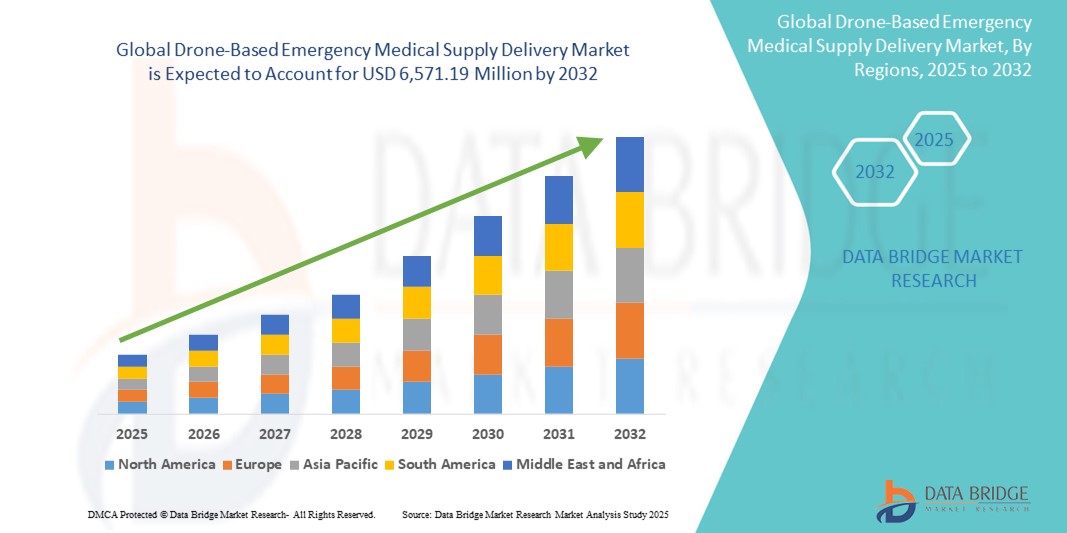
- As per Data Bridge Market Research Analysis the global drone-based emergency medical supply delivery market size was valued at USD 970.99 million in 2024 and is expected to reach USD 6,571.19 million by 2032, at a CAGR of 27.00% during the forecast period
- The market growth is largely fueled by the increasing need for rapid and efficient delivery of medical supplies in emergency situations, coupled with advancements in drone technology enabling autonomous and long-distance flight capabilities, leading to enhanced accessibility in remote and disaster-stricken areas
- Furthermore, rising demand for timely delivery of critical medical resources, bypassing traditional transportation limitations, and the growing integration of drone technology with healthcare logistics are establishing drone-based delivery as a vital solution for emergency medical supply chains. These converging factors are accelerating the uptake of drone-based emergency medical supply delivery solutions, thereby significantly boosting the industry's growth.
Market Size & Forecast
- Global Market Value (2024): USD 6,571.19 million
- Expected Market Value (2032): USD 970.99 million
- Forecast CAGR (2024–2032): 27.00%
What are the Major Takeaways of Drone-Based Emergency Medical Supply Delivery?
- Drone-based emergency medical supply delivery solutions, providing rapid and autonomous transportation of critical medical resources during emergencies, are increasingly vital components of modern disaster response and healthcare logistics, including remote clinics, disaster zones, and urban areas with transportation challenges, due to their crucial role in ensuring timely access to life-saving supplies
- The escalating demand for drone-based emergency medical supply delivery is primarily fueled by the growing need for immediate medical aid in emergencies, the increasing limitations of traditional transportation in disaster scenarios, and the rising advancements in drone technology enabling efficient and long-distance delivery
- North America dominates the drone-based emergency medical supply delivery market with the largest revenue share of approximately 40.4% in 2025, characterized by advanced technological infrastructure, high investment in drone research and development, and a strong presence of leading drone technology and logistics companies
- Asia-Pacific is expected to be the fastest-growing region in the drone-based emergency medical supply delivery market during the forecast period, with an anticipated CAGR of 15.3% due to increasing government support for drone technology, rising investments in healthcare infrastructure in remote areas, and a growing need for efficient emergency response solutions in densely populated and geographically challenging terrains
- The drugs/pharmaceutical transfer segment dominates the drone-based emergency medical supply delivery market with a market share of 41.3% in 2025, driven by the critical need for timely delivery of medications in emergency situations and to remote locations
Report Scope and Drone-Based Emergency Medical Supply Delivery Market Segmentation
|
Attributes |
Drone-Based Emergency Medical Supply Delivery Key Market Insights |
|
Segments Covered |
|
|
Countries Covered |
North America
Europe
Asia-Pacific
Middle East and Africa
South America
|
|
Key Market Players |
|
|
Market Opportunities |
|
|
Value Added Data Infosets |
|
What is the Key Trend in the Drone-Based Emergency Medical Supply Delivery?
“Expanding Regulatory Frameworks and Public-Private Partnerships”
- A significant and accelerating trend in the global drone-based emergency medical supply delivery market is the continuous evolution of regulatory frameworks and the proliferation of strategic public-private partnerships. This collaboration is crucial for standardizing operations, ensuring safety, and enabling scalable, widespread deployment of drone delivery services
- For instance, national aviation authorities (such as the FAA in the US or EASA in Europe) are increasingly developing specific guidelines for drone operations beyond visual line of sight (BVLOS) for medical delivery, providing a clearer legal pathway. Similarly, partnerships between drone technology companies (e.g., Zipline, Wing) and government health agencies or non-governmental organizations (NGOs) are becoming common to pilot and establish new delivery routes, particularly in remote or underserved areas
- The development of clear regulatory pathways, including streamlined approvals for medical payloads and potentially designated drone corridors, provides the necessary legal and operational certainty for large-scale drone deployment. Public-private partnerships leverage the technological expertise from private firms with the logistical and public health mandates of government bodies, accelerating real-world implementation and addressing critical gaps in medical supply chains, especially during crises
- The establishment of these frameworks and collaborations facilitates smoother integration of drone delivery services into existing emergency response and healthcare supply chain networks. Through collaborative planning and standardized protocols, emergency responders can confidently incorporate drone capabilities into their rapid response strategies, enhancing overall logistical effectiveness and reach for medical aid
- This trend towards a more structured, regulated, and collaborative ecosystem is fundamentally reshaping expectations for how emergency medical supplies can be delivered. Consequently, governments, healthcare organizations, and humanitarian agencies are actively exploring and implementing drone delivery as a viable, supplementary method for ensuring timely and equitable access to essential medical supplies
- The demand for drone-based emergency medical supply delivery solutions, supported by robust regulatory backing and formalized partnerships, is growing rapidly across both disaster response agencies and national healthcare systems, as they increasingly prioritize rapid, efficient, and resilient medical logistics
Drone-Based Emergency Medical Supply Delivery Market Dynamics
Driver
“Growing Need Due to Rising Emergency Situations and Logistical Limitations”
- The increasing prevalence of natural disasters, pandemics, and other emergency situations, coupled with the accelerating limitations of traditional transportation infrastructure, is a significant driver for the heightened demand for drone-based emergency medical supply delivery
- For instance, in April 2024, Zipline announced an expansion of its drone delivery network to reach more remote healthcare facilities, looking forward to integrating advanced autonomous flight capabilities and weather resilience into its delivery drones. Such strategies by key companies are expected to drive the Drone-Based Emergency Medical Supply Delivery industry growth in the forecast period
- As aid organizations and healthcare providers become more aware of the challenges in reaching affected populations and seek enhanced speed and reliability for supply chains, drone delivery offers advanced features such as autonomous navigation, GPS tracking, and all-weather capabilities, providing a compelling upgrade over traditional ground-based logistics
- Furthermore, the growing sophistication of drone technology and the desire for interconnected disaster response systems are making drone delivery an integral component of these systems, offering seamless integration with emergency communication networks and logistical platforms
- The convenience of rapid deployment, access to geographically isolated areas, and the ability to manage deliveries through sophisticated software applications are key factors propelling the adoption of drone delivery in both disaster relief and routine medical supply to remote locations. The trend towards leveraging advanced technology for humanitarian aid and the increasing availability of robust and reliable Drone-Based Emergency Medical Supply Delivery options further contribute to market growth
Restraint/Challenge
“Concerns Regarding Regulatory Frameworks and Operational Limitations”
- Concerns surrounding the evolving regulatory frameworks for drone operations, including airspace restrictions and safety protocols, pose a significant challenge to broader market penetration. As drone delivery relies on complex flight management and permissions, uncertainties in regulations and obtaining necessary approvals raise anxieties among potential operators about the feasibility and scalability of their services
- For instance, high-profile instances of drone flight restrictions in urban areas or near airports have made some organizations hesitant to invest heavily in drone-based emergency medical supply delivery solutions
- Addressing these regulatory concerns through clear guidelines, standardized operational procedures, and collaborative efforts between drone companies and governing bodies is crucial for building operational certainty. Companies such as Wingcopter and Matternet actively engage with regulatory agencies to establish safe and efficient operational frameworks
- In addition, the relatively high operational costs associated with maintaining drone fleets, ensuring battery life, and managing payload capacity compared to traditional logistics can be a barrier to adoption for resource-constrained organizations, particularly in developing regions or for smaller healthcare providers. While technological advancements are gradually improving efficiency, the perceived premium for advanced drone delivery can still hinder widespread adoption, especially for those who do not see an immediate need for the unique capabilities offered
- While operational efficiencies are gradually improving, the perceived premium for drone technology can still hinder widespread adoption, especially for those who do not face significant logistical challenges
- Overcoming these challenges through clearer regulatory pathways, demonstrating cost-effectiveness over traditional methods in specific scenarios, and the development of more robust and versatile Drone-Based Emergency Medical Supply Delivery options will be vital for sustained market growth
Drone-Based Emergency Medical Supply Delivery Market Scope
The market is segmented on the basis of application and end user.
By Application
On the basis of application, the drone-based emergency medical supply delivery market is segmented into blood transfer, drugs/pharmaceutical transfer, vaccination program, lab sample and other applications. The drugs/pharmaceutical transfer segment dominates the largest market revenue share of 41.3% in 2025, driven by the critical need for timely delivery of medications in emergency situations and to remote locations. Healthcare providers often prioritize drone delivery for pharmaceuticals due to its speed and ability to bypass logistical barriers. The market also sees strong demand in this segment due to the increasing focus on efficient healthcare logistics and the growing adoption of drone technology in pharmaceutical supply chains.
The vaccination program segment is anticipated to witness the fastest growth rate of 18.2% from 2025 to 2032, fueled by increasing efforts to reach underserved populations and the efficiency of drones in rapid deployment of vaccines during outbreaks or routine immunization programs. Drones offer a solution to logistical challenges in reaching remote areas, making them suitable for large-scale vaccination campaigns. The growing global health initiatives and the demonstrated effectiveness of drone delivery in vaccine distribution contribute to their increasing popularity in public health sectors.
By End User
On the basis of end user, the drone-based emergency medical supply delivery market is segmented into emergency medical services, blood banks and other. The emergency medical services segment held the largest market revenue share in 2025, driven by the immediate and critical need for rapid medical supply delivery in emergency situations. EMS organizations are increasingly adopting drone technology to enhance their response capabilities and reach patients in a timely manner, especially in situations where traditional transportation is hindered.
The blood banks segment is expected to witness the fastest CAGR from 2025 to 2032, driven by the urgent need for blood and blood products in emergencies and the ability of drones to provide rapid and temperature-controlled delivery to hospitals and trauma centers. The time-sensitive nature of blood transfusions and the logistical advantages offered by drones in overcoming transportation barriers are key factors driving the growth in this segment.
Which Region Holds the Largest Share of the How is Drone-Based Emergency Medical Supply Delivery Segmented?
- North America dominates the drone-based emergency medical supply delivery market with the largest revenue share of approximately 40.4% in 2024, driven by a growing demand for rapid and efficient medical logistics, as well as increased investment in advanced drone technology
- Organizations in the region highly value the speed, accessibility to remote areas, and enhanced logistical capabilities offered by drone delivery for critical medical supplies
- This widespread adoption is further supported by robust technological infrastructure, significant healthcare expenditure, and the increasing preference for innovative solutions in emergency response and healthcare delivery, establishing drone delivery as a favored solution for reaching underserved populations and overcoming logistical challenges
U.S. Drone-Based Emergency Medical Supply Delivery Market Insight
The U.S. drone-based emergency medical supply delivery market captured the largest revenue share of 46.7% within North America in 2025, fueled by the swift uptake of advanced drone technology and the expanding trend of rapid medical logistics. Emergency medical services and healthcare organizations are increasingly prioritizing the enhancement of emergency response through intelligent, autonomous delivery systems. The growing preference for bypassing traditional transportation limitations, combined with robust demand for real-time tracking and secure delivery, further propels the drone-based emergency medical supply delivery industry. Moreover, the increasing integration of sophisticated software and communication systems is significantly contributing to the market's expansion.
Europe Drone-Based Emergency Medical Supply Delivery Market Insight
The European drone-based emergency medical supply delivery market is projected to expand at a substantial CAGR throughout the forecast period, primarily driven by stringent healthcare regulations and the escalating need for and rapid medical supply chains. The increase in remote healthcare initiatives, coupled with the demand for efficient delivery in urban and rural areas, is fostering the adoption of drone-based logistics. European healthcare providers are also drawn to the enhanced speed and accessibility these devices offer. The region is experiencing significant growth across emergency medical services, hospitals, and specialized clinics, with drone delivery being incorporated into both routine and emergency medical logistics.
U.K. Drone-Based Emergency Medical Supply Delivery Market Insight
The U.K. drone-based emergency medical supply delivery market is anticipated to grow at a noteworthy CAGR during the forecast period, driven by the escalating trend of healthcare logistics and a desire for heightened efficiency and responsiveness in emergency situations. In addition, concerns regarding logistical challenges in reaching remote areas and the need for rapid delivery of critical supplies are encouraging both healthcare organizations and emergency services to choose drone-based delivery solutions. The UK’s embrace of technological advancements in healthcare, alongside its well-established healthcare infrastructure, is expected to continue to stimulate market growth.
Germany Drone-Based Emergency Medical Supply Delivery Market Insight
The German drone-based emergency medical supply delivery market is expected to expand at a considerable CAGR during the forecast period, fueled by increasing awareness of the benefits of rapid medical logistics and the demand for technologically advanced, efficient delivery solutions. Germany’s well-developed infrastructure, combined with its emphasis on innovation and healthcare efficiency, promotes the adoption of drone delivery, particularly in emergency medical services and specialized medical transport. The integration of drone delivery with existing healthcare logistics systems is also becoming increasingly prevalent, with a strong preference for secure, reliable solutions aligning with local healthcare standards.
Asia-Pacific Drone-Based Emergency Medical Supply Delivery Market Insight
The Asia-Pacific drone-based emergency medical supply delivery market is poised to grow at the fastest CAGR of 15.3% in 2025, driven by increasing healthcare investments, rising disposable incomes, and technological advancements in countries such as China, Japan, and India. The region's growing inclination towards healthcare logistics, supported by government initiatives promoting technological adoption in healthcare, is driving the adoption of drone delivery. Furthermore, as APAC emerges as a manufacturing hub for drone technology and medical supplies, the affordability and accessibility of drone delivery solutions are expanding to a wider healthcare base.
China Drone-Based Emergency Medical Supply Delivery Market Insight
The China drone-based emergency medical supply delivery market accounted for the largest market revenue share in Asia Pacific in 2025, attributed to the country's expanding healthcare infrastructure, rapid technological adoption, and government support for innovative logistics solutions. China stands as one of the largest markets for drone technology, and drone delivery for medical supplies is becoming increasingly popular for reaching remote areas and improving emergency response times. The push towards smart logistics and the availability of affordable drone technology, alongside strong domestic manufacturers, are key factors propelling the market in China.
India Drone-Based Emergency Medical Supply Delivery Market Insight
The India drone-based emergency medical supply delivery market accounted to witness the highest compound annual growth rate, attributed to the country's expanding healthcare needs, increasing technological adoption, and the necessity to overcome significant logistical challenges in reaching remote and underserved populations. The growing demand for healthcare access and the potential of drones to deliver critical medical supplies rapidly are driving the adoption of drone delivery solutions across India. Government initiatives supporting drone technology and healthcare innovation are key factors propelling the market in India.
Which are the Top Companies in Drone-Based Emergency Medical Supply Delivery?
The drone-based emergency medical supply delivery industry is primarily led by well-established companies, including:
- Zipline International Inc. (U.S.)
- Matternet (U.S.)
- Wingcopter (Germany)
- Kite Aero (Australia)
- Volocopter GmbH (Germany)
- Drone Delivery Canada Corp. (Canada)
- Flytrex Aviation Ltd. (Israel)
- Skyports (U.K.)
- Amazon (U.S.)
- Skyfarer (U.K.)
- AVY (Netherlands)
What are Latest Developments in Drone-Based Emergency Medical Supply Delivery?
- In April 2023, Zipline announced a strategic partnership with a national healthcare system in Ghana to expand its drone delivery network for critical medical supplies, including blood and vaccines, to remote health facilities. This initiative underscores Zipline's dedication to leveraging its autonomous drone technology to improve healthcare access and outcomes in underserved communities
- In March 2023, Matternet partnered with a leading hospital network in Switzerland to implement drone delivery for time-sensitive diagnostic samples between medical facilities within urban areas. This collaboration highlights Matternet's focus on utilizing its urban drone logistics platform to enhance the efficiency of healthcare operations in densely populated environments
- In March 2023, Wingcopter collaborated with a major pharmaceutical company to pilot drone delivery of temperature-sensitive medications to remote clinics in Tanzania. This initiative showcases Wingcopter's commitment to developing reliable and long-range drone solutions for improving access to essential medicines in challenging terrains
- In February 2023, Swoop Aero expanded its operations in Malawi, integrating its drone logistics platform with the national health supply chain to deliver vaccines and essential medical supplies to a wider network of rural health centers. This development highlights Swoop Aero's dedication to building scalable drone networks for improving public health outcomes in low-infrastructure settings
- In January 2023, Drone Delivery Canada Corp. announced a commercial agreement with a remote First Nations community in Canada to provide drone-based delivery of medications and healthcare supplies, addressing the unique logistical challenges faced by remote and indigenous populations. This initiative underscores Drone Delivery Canada's focus on utilizing its drone technology to improve healthcare access in remote and isolated regions

- Interactive Data Analysis Dashboard
- Company Analysis Dashboard for high growth potential opportunities
- Research Analyst Access for customization & queries
- Competitor Analysis with Interactive dashboard
- Latest News, Updates & Trend analysis
- Harness the Power of Benchmark Analysis for Comprehensive Competitor Tracking
Data collection and base year analysis are done using data collection modules with large sample sizes. The stage includes obtaining market information or related data through various sources and strategies. It includes examining and planning all the data acquired from the past in advance. It likewise envelops the examination of information inconsistencies seen across different information sources. The market data is analysed and estimated using market statistical and coherent models. Also, market share analysis and key trend analysis are the major success factors in the market report. To know more, please request an analyst call or drop down your inquiry.
The key research methodology used by DBMR research team is data triangulation which involves data mining, analysis of the impact of data variables on the market and primary (industry expert) validation. Data models include Vendor Positioning Grid, Market Time Line Analysis, Market Overview and Guide, Company Positioning Grid, Patent Analysis, Pricing Analysis, Company Market Share Analysis, Standards of Measurement, Global versus Regional and Vendor Share Analysis. To know more about the research methodology, drop in an inquiry to speak to our industry experts.
Data Bridge Market Research is a leader in advanced formative research. We take pride in servicing our existing and new customers with data and analysis that match and suits their goal. The report can be customized to include price trend analysis of target brands understanding the market for additional countries (ask for the list of countries), clinical trial results data, literature review, refurbished market and product base analysis. Market analysis of target competitors can be analyzed from technology-based analysis to market portfolio strategies. We can add as many competitors that you require data about in the format and data style you are looking for. Our team of analysts can also provide you data in crude raw excel files pivot tables (Fact book) or can assist you in creating presentations from the data sets available in the report.













