


What is the Drowning Treatment Market Size and Growth Rate?
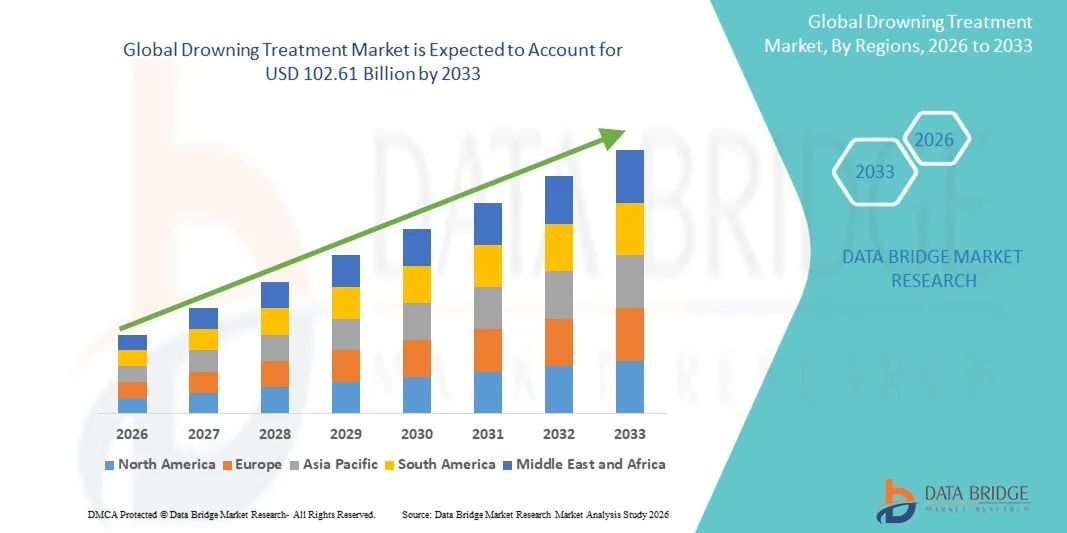
- The global Drowning Treatment market size was valued at USD 75.56 billion in 2025 and is expected to reach USD 102.61 billion by 2033, at a CAGR of 3.90% during the forecast period
- The market growth is largely fueled by the increasing incidence of drowning cases worldwide, particularly in coastal and flood-prone regions, along with rising awareness regarding emergency response and life-saving interventions, leading to greater demand for effective drowning treatment solutions across healthcare settings
- Furthermore, advancements in emergency medical care, including improved resuscitation techniques, oxygen therapy, and critical care support, are enhancing survival rates and patient outcomes. Growing investments in healthcare infrastructure and training programs for first responders are establishing drowning treatment as a crucial component of emergency and trauma care. These converging factors are accelerating the uptake of drowning treatment solutions, thereby significantly boosting the market growth
What are the Major Takeaways of Drowning Treatment Market?
- Drowning treatment, encompassing immediate resuscitation, oxygen therapy, and advanced critical care interventions to restore breathing and prevent neurological damage, is a vital component of emergency medical services across hospitals and trauma care centers due to its life-saving importance and time-sensitive nature
- The escalating demand for drowning treatment is primarily driven by the rising incidence of water-related accidents, increasing awareness about timely first aid and CPR, and improvements in emergency response systems, along with growing investments in healthcare infrastructure and training of first responders
- North America dominated the drowning treatment market with the largest revenue share of 37.2% in 2025, supported by well-established emergency medical services, high healthcare expenditure, and widespread availability of advanced life-support systems, with the U.S. leading in adoption of innovative resuscitation and critical care technologies
- Asia-Pacific is expected to be the fastest-growing region in the drowning treatment market during the forecast period due to increasing population density, rising incidence of drowning cases in coastal and rural areas, improving healthcare access, and growing government initiatives focused on emergency preparedness and response
- The wet drowning segment dominated the market with a share of approximately 62.4% in 2025, driven by its high occurrence rate compared to other types
Report Scope and Drowning Treatment Market Segmentation
|
Attributes |
Drowning Treatment Key Market Insights |
|
Segments Covered |
|
|
Countries Covered |
North America
Europe
Asia-Pacific
Middle East and Africa
South America
|
|
Key Market Players |
|
|
Market Opportunities |
|
|
Value Added Data Infosets |
In addition to the insights on market scenarios such as market value, growth rate, segmentation, geographical coverage, and major players, the market reports curated by the Data Bridge Market Research also include in-depth expert analysis, patient epidemiology, pipeline analysis, pricing analysis, and regulatory framework. |
What is the Key Trend in the Drowning Treatment Market?
“Advancements in Emergency Response Techniques and Resuscitation Technologies”
- A significant and accelerating trend in the global drowning treatment market is the continuous advancement in emergency response techniques and resuscitation technologies, aimed at improving survival rates and reducing long-term complications
- For instance, the increasing adoption of advanced cardiopulmonary resuscitation (CPR) methods and automated external defibrillators (AEDs) in both public and healthcare settings is enhancing the effectiveness of immediate drowning response
- The integration of improved ventilation devices and oxygen delivery systems is enabling faster stabilization of drowning victims, reducing the risk of brain damage caused by oxygen deprivation
- Furthermore, the growing use of post-resuscitation care, including therapeutic hypothermia and intensive monitoring, is improving recovery outcomes in severe drowning cases
- The development of portable and user-friendly emergency response equipment is also supporting quicker intervention in remote or high-risk areas such as beaches and swimming pools
- This trend toward rapid response, technological innovation, and improved critical care management is significantly transforming the drowning treatment landscape across both pre-hospital and hospital settings
Drowning Treatment Market Dynamics
Driver
“Increasing Incidence of Drowning Cases and Rising Awareness of Water Safety”
- The increasing incidence of drowning cases worldwide is a major driver for the growth of the drowning treatment market
- For instance, rising participation in water-based recreational activities such as swimming, boating, and water sports has led to a higher risk of drowning incidents, particularly among children and young adults
- Government initiatives and public awareness campaigns focusing on water safety, swimming education, and early rescue techniques are encouraging timely intervention and treatment
- Furthermore, the expansion of healthcare infrastructure and emergency medical services is improving access to immediate care, thereby increasing survival rates and demand for effective treatment solutions
- The growing emphasis on training individuals in first aid and CPR techniques is also contributing to better pre-hospital response and boosting the need for advanced treatment options
- The availability of improved medical devices and supportive care systems is further accelerating market growth across both developed and developing regions
Restraint/Challenge
“Limited Access to Immediate Care and High Cost of Advanced Treatment”
- Limited access to immediate medical care, especially in remote or underdeveloped regions, poses a significant challenge to effective drowning treatment outcomes
- For instance, in rural or coastal areas, the lack of nearby healthcare facilities and delayed emergency response times can reduce the chances of survival and recovery for drowning victims
- In addition, the high cost associated with advanced treatment methods, including intensive care support and long-term rehabilitation, can be a financial burden for patients and healthcare systems
- A shortage of trained professionals and inadequate emergency response infrastructure further hinder timely and effective treatment
- Addressing these challenges requires improved emergency response networks, increased investment in healthcare infrastructure, and widespread training in lifesaving techniques
- While advancements are being made, disparities in access and affordability continue to limit the overall effectiveness of drowning treatment solutions
- Overcoming these barriers through policy support, public health initiatives, and cost-effective treatment innovations will be essential for sustained market growth
How is the Drowning Treatment Market Segmented?
The market is segmented on the basis of drug class, types, treatment, route of administration, distribution channel, and end-users.
• By Drug Class
On the basis of drug class, the Drowning Treatment market is segmented into crystalloid fluids, vasopressors, and others. The crystalloid fluids segment dominated the largest market revenue share of approximately 46.8% in 2025, driven by its critical role in immediate resuscitation and fluid replacement during drowning emergencies. Crystalloid solutions such as saline and Ringer’s lactate are widely used to restore blood volume and maintain hemodynamic stability. Their availability, cost-effectiveness, and rapid administration make them the first-line treatment in emergency care settings. Hospitals and emergency responders heavily rely on these fluids for initial patient stabilization. Increasing incidence of drowning cases globally further supports segment dominance. In addition, well-established clinical protocols favor the use of crystalloid fluids in critical care. Growing investments in emergency healthcare infrastructure enhance accessibility. The segment also benefits from widespread training in basic and advanced life support techniques. Continuous demand in both pre-hospital and hospital settings sustains growth.
The vasopressors segment is expected to witness the fastest CAGR of 8.3% from 2026 to 2033, driven by their importance in managing severe hypotension and shock in drowning patients. Vasopressors such as norepinephrine and dopamine are increasingly used in critical care settings to stabilize patients who do not respond to fluid therapy alone. Rising awareness regarding advanced life support protocols is boosting adoption. Increasing availability of intensive care units (ICUs) supports segment growth. In addition, advancements in emergency medicine are improving patient survival rates, driving demand for vasopressors. The growing number of trained healthcare professionals further enhances usage. Expanding healthcare infrastructure in emerging markets also contributes to growth. Continuous research into critical care drugs is expected to support long-term expansion. The segment is likely to benefit from increasing adoption of advanced resuscitation techniques.
• By Types
On the basis of types, the market is segmented into wet drowning, dry drowning, and delayed drowning (secondary drowning). The wet drowning segment dominated the market with a share of approximately 62.4% in 2025, driven by its high occurrence rate compared to other types. Wet drowning involves water entering the lungs, making it the most common clinical scenario encountered by healthcare providers. The high prevalence of water-related accidents globally significantly contributes to this segment’s dominance. Immediate medical intervention is required in most cases, leading to increased demand for treatment solutions. Hospitals and emergency care units are well-equipped to handle such cases, further supporting growth. Awareness campaigns about water safety and drowning prevention also indirectly drive treatment demand. In addition, advancements in emergency response systems improve patient outcomes. The segment benefits from strong clinical recognition and standardized treatment protocols. Increasing tourism and recreational water activities also contribute to rising incidence rates.
The delayed drowning (secondary drowning) segment is expected to grow at the fastest CAGR of 7.9% from 2026 to 2033, driven by increasing awareness about its symptoms and risks. Unlike immediate drowning, delayed drowning can occur hours after water exposure, requiring continuous monitoring and follow-up care. Growing awareness among parents and caregivers is boosting early diagnosis. Healthcare providers are increasingly focusing on observation and preventive care strategies. Rising incidence of near-drowning cases also contributes to segment growth. Advancements in diagnostic techniques improve detection and management. In addition, increased access to healthcare services in developing regions supports expansion. Public health campaigns highlighting the dangers of secondary drowning further enhance awareness. The segment is expected to witness steady growth due to improved reporting and diagnosis rates.
• By Treatment
On the basis of treatment, the market is segmented into cardiopulmonary resuscitation (CPR), supportive care, hyperbaric oxygen therapy, medication, and others. The cardiopulmonary resuscitation (CPR) segment held the largest market revenue share of around 48.2% in 2025, driven by its role as the primary life-saving intervention in drowning cases. CPR is often administered immediately at the site of the incident, significantly improving survival chances. Widespread training programs and awareness initiatives have increased the adoption of CPR techniques globally. Emergency responders, lifeguards, and even bystanders are increasingly trained in CPR, boosting its usage. In addition, advancements in resuscitation guidelines enhance effectiveness. The segment benefits from strong support from healthcare organizations and governments. Increasing incidence of drowning accidents further drives demand for CPR-related equipment and training. The availability of automated external defibrillators (AEDs) also complements CPR effectiveness.
The hyperbaric oxygen therapy segment is projected to grow at the fastest CAGR of 8.7% from 2026 to 2033, driven by its effectiveness in treating severe hypoxia and preventing neurological damage. This therapy involves delivering oxygen at high pressure, improving oxygen supply to tissues. Increasing awareness about advanced treatment options is boosting adoption. Growing availability of hyperbaric chambers in specialized healthcare facilities supports growth. In addition, improved clinical outcomes encourage healthcare providers to adopt this therapy. Rising investments in advanced medical technologies further enhance accessibility. The segment is expected to expand significantly with ongoing research and innovation in critical care treatments.
• By Route of Administration
On the basis of route of administration, the market is segmented into oral, inhalation, intravenous, and others. The intravenous segment dominated the market with a share of 55.6% in 2025, driven by its rapid drug delivery and effectiveness in emergency situations. Intravenous administration is the preferred route in critical care settings due to its immediate action. Healthcare professionals rely on IV fluids and medications to stabilize patients quickly. Increasing hospital admissions for drowning cases further support segment growth. In addition, advancements in infusion technologies improve safety and efficiency. The segment benefits from strong adoption in emergency departments and ICUs. Availability of skilled healthcare personnel further enhances usage.
The inhalation segment is expected to witness the fastest CAGR of 7.5% from 2026 to 2033, driven by its role in oxygen therapy and respiratory support. Inhalation methods are essential for restoring oxygen levels in drowning patients. Increasing availability of portable oxygen devices supports segment growth. In addition, advancements in respiratory care technologies improve treatment outcomes. Growing awareness about early oxygen therapy further boosts adoption. Expansion of emergency medical services in developing regions enhances accessibility. The segment is expected to grow steadily with increasing focus on respiratory care.
• By Distribution Channel
On the basis of distribution channel, the market is segmented into hospital pharmacy, retail pharmacy, and online pharmacy. The hospital pharmacy segment held the largest market share of 51.2% in 2025, driven by the high number of emergency treatments administered in hospitals. Drowning cases often require immediate medical attention, leading to direct drug dispensing through hospital pharmacies. The presence of trained healthcare professionals ensures accurate medication management. In addition, hospitals maintain a steady supply of critical care drugs. Increasing investments in healthcare infrastructure further support segment dominance.
The online pharmacy segment is expected to grow at the fastest CAGR of 9.0% from 2026 to 2033, driven by the rising adoption of digital healthcare platforms. Patients and caregivers increasingly prefer online channels for convenience and accessibility. Growing internet penetration and smartphone usage support this trend. Competitive pricing and home delivery services further attract users. The segment is expected to expand rapidly with the digital transformation of healthcare systems. In addition, improved regulatory frameworks and digital authentication measures are enhancing consumer trust in online pharmacies. The integration of e-prescriptions and digital health records is further streamlining the purchasing process and boosting segment growth.
• By End-Users
On the basis of end-users, the market is segmented into hospitals, homecare, specialty clinics, and others. The hospitals segment dominated the market with a share of 58.7% in 2025, driven by the availability of advanced emergency care facilities and trained medical professionals. Hospitals are the primary centers for treating drowning cases, especially severe ones requiring intensive care. The presence of ICUs and specialized equipment supports effective treatment. Increasing number of emergency cases further boosts demand. Government funding and healthcare investments strengthen this segment.
The homecare segment is expected to witness the fastest CAGR of 8.4% from 2026 to 2033, driven by the need for post-treatment monitoring and rehabilitation. Patients recovering from drowning incidents often require continued care at home. Advancements in remote monitoring technologies support homecare services. Increasing awareness about post-recovery care further boosts demand. The segment is expected to grow steadily with the shift toward patient-centric healthcare. In addition, the rising adoption of telehealth services enables continuous medical supervision and timely intervention. Growing preference for cost-effective care solutions further supports the expansion of home-based treatment services.
Which Region Holds the Largest Share of the Drowning Treatment Market?
- North America dominated the drowning treatment market with the largest revenue share of 37.2% in 2025, supported by well-established emergency medical services, high healthcare expenditure, and widespread availability of advanced life-support systems
- The region benefits from strong pre-hospital care infrastructure, trained first responders, and rapid emergency response mechanisms, which significantly improve survival outcomes in drowning cases
- The increasing adoption of advanced resuscitation technologies, including automated external defibrillators (AEDs), mechanical ventilators, and extracorporeal membrane oxygenation (ECMO), is further strengthening treatment capabilities. In addition, growing awareness regarding water safety and the presence of structured emergency protocols are contributing to market growth across North America.
U.S. Drowning Treatment Market Insight
The U.S. drowning treatment market captured the largest revenue share within North America in 2025, driven by the widespread adoption of innovative resuscitation and critical care technologies. The country has a highly developed emergency response system, including paramedic services and trauma centers, enabling prompt and effective management of drowning incidents. Increasing investments in healthcare infrastructure, along with rising awareness regarding CPR and life-saving techniques, are further propelling market expansion in the U.S..
Europe Drowning Treatment Market Insight
The Europe drowning treatment market is projected to expand at a substantial CAGR during the forecast period, primarily driven by strong healthcare systems and increasing focus on emergency preparedness. Government initiatives aimed at improving public safety and response to water-related accidents are supporting the adoption of advanced treatment solutions. In addition, rising awareness regarding first aid training and increasing availability of emergency medical services are contributing to market growth across the region.
U.K. Drowning Treatment Market Insight
The U.K. drowning treatment market is anticipated to grow at a noteworthy CAGR during the forecast period, supported by increasing awareness campaigns related to water safety and drowning prevention. The presence of organized emergency response frameworks and trained rescue personnel enhances treatment outcomes. Furthermore, the growing emphasis on public education regarding CPR and first aid is driving the demand for effective drowning treatment solutions in the U.K.
Germany Drowning Treatment Market Insight
The Germany drowning treatment market is expected to expand at a considerable CAGR during the forecast period, fueled by the country’s advanced healthcare infrastructure and strong focus on emergency medical services. Increasing investments in critical care technologies and the availability of well-equipped hospitals are supporting efficient treatment of drowning cases. In addition, widespread awareness and training programs related to life-saving techniques are contributing to market growth in Germany.
Asia-Pacific Drowning Treatment Market Insight
The Asia-Pacific drowning treatment market is expected to grow at the fastest CAGR during the forecast period, driven by increasing population density, rising incidence of drowning cases in coastal and rural areas, and improving healthcare access. Countries such as China and India are witnessing growing government initiatives focused on emergency preparedness, water safety, and healthcare infrastructure development. In addition, increasing awareness regarding timely intervention and life-saving techniques is accelerating market growth across the region.
Japan Drowning Treatment Market Insight
The Japan drowning treatment market is gaining momentum due to the country’s advanced healthcare system and strong disaster and emergency preparedness framework. The adoption of modern resuscitation technologies and high public awareness regarding emergency response are key factors driving market growth. Moreover, Japan’s focus on safety measures in aquatic environments is supporting effective management of drowning incidents.
China Drowning Treatment Market Insight
The China drowning treatment market accounted for the largest market revenue share in Asia-Pacific in 2025, attributed to its large population and increasing incidence of water-related accidents. Rapid improvements in healthcare infrastructure, along with government efforts to enhance emergency medical services, are driving market growth. Furthermore, rising awareness regarding drowning prevention and the expansion of critical care facilities are key factors propelling the adoption of drowning treatment solutions in China.
Which are the Top Companies in Drowning Treatment Market?
The Drowning Treatment industry is primarily led by well-established companies, including:
- Koninklijke Philips N.V. (Netherlands)
- Medtronic plc (Ireland)
- Stryker Corporation (U.S.)
- GE HealthCare Technologies Inc. (U.S.)
- Drägerwerk AG & Co. KGaA (Germany)
- Smiths Medical (U.K.)
- BD (U.S.)
- Baxter International Inc. (U.S.)
- Fresenius Medical Care AG & Co. KGaA (Germany)
- ZOLL Medical Corporation (U.S.)
- ResMed Inc. (U.S.)
- Teleflex Incorporated (U.S.)
- Ambu A/S (Denmark)
- Nihon Kohden Corporation (Japan)
- ICU Medical, Inc. (U.S.)
- Asahi Kasei Corporation (Japan)
- Mindray Medical International Limited (China)
- Hamilton Medical AG (Switzerland)
- Vyaire Medical, Inc. (U.S.)
- Getinge AB (Sweden)
What are Latest Developments in Drowning Treatment Market?
- In November 2024, the American Heart Association (AHA) and the American Academy of Pediatrics (AAP) published a Focused Update on Resuscitation Following Drowning in the journal Circulation. The update emphasized that CPR for drowning victims must include both rescue breaths and chest compressions, with a strong focus on restoring oxygenation first due to the hypoxic nature of drowning. This development highlights a significant shift toward oxygen-first resuscitation strategies to improve survival outcomes
- In November 2024, the American Heart Association and the American Red Cross, as part of updated first aid guidelines, reinforced the importance of early intervention in drowning cases, including immediate CPR with ventilation and rapid emergency response. The updated recommendations represent the first comprehensive review of first aid science in over a decade, strengthening global protocols for drowning treatment and emergency care
- In November 2024, the International Liaison Committee on Resuscitation (ILCOR) incorporated findings from systematic reviews conducted between 2021 and 2023 into updated drowning resuscitation recommendations. These updates support early rescue breathing and continuous CPR for drowning victims, improving evidence-based clinical practices across emergency care systems worldwide
- In November 2024, global health organizations and emergency care experts highlighted the increased importance of in-water rescue breathing for trained responders, provided it can be performed safely. This recommendation marks an advancement in pre-hospital drowning care, aiming to initiate oxygen delivery even before reaching land, thereby improving patient survival rates
- In October 2025, the American Heart Association released updated CPR and Emergency Cardiovascular Care Guidelines 2025, incorporating the latest scientific evidence for special circumstances such as drowning. The guidelines further reinforce prioritizing high-quality CPR with rescue breaths and rapid response, enhancing standardized treatment protocols for drowning-related cardiac arrest globally

- Interactive Data Analysis Dashboard
- Company Analysis Dashboard for high growth potential opportunities
- Research Analyst Access for customization & queries
- Competitor Analysis with Interactive dashboard
- Latest News, Updates & Trend analysis
- Harness the Power of Benchmark Analysis for Comprehensive Competitor Tracking
Data collection and base year analysis are done using data collection modules with large sample sizes. The stage includes obtaining market information or related data through various sources and strategies. It includes examining and planning all the data acquired from the past in advance. It likewise envelops the examination of information inconsistencies seen across different information sources. The market data is analysed and estimated using market statistical and coherent models. Also, market share analysis and key trend analysis are the major success factors in the market report. To know more, please request an analyst call or drop down your inquiry.
The key research methodology used by DBMR research team is data triangulation which involves data mining, analysis of the impact of data variables on the market and primary (industry expert) validation. Data models include Vendor Positioning Grid, Market Time Line Analysis, Market Overview and Guide, Company Positioning Grid, Patent Analysis, Pricing Analysis, Company Market Share Analysis, Standards of Measurement, Global versus Regional and Vendor Share Analysis. To know more about the research methodology, drop in an inquiry to speak to our industry experts.
Data Bridge Market Research is a leader in advanced formative research. We take pride in servicing our existing and new customers with data and analysis that match and suits their goal. The report can be customized to include price trend analysis of target brands understanding the market for additional countries (ask for the list of countries), clinical trial results data, literature review, refurbished market and product base analysis. Market analysis of target competitors can be analyzed from technology-based analysis to market portfolio strategies. We can add as many competitors that you require data about in the format and data style you are looking for. Our team of analysts can also provide you data in crude raw excel files pivot tables (Fact book) or can assist you in creating presentations from the data sets available in the report.












