


Duloxetine Market Size
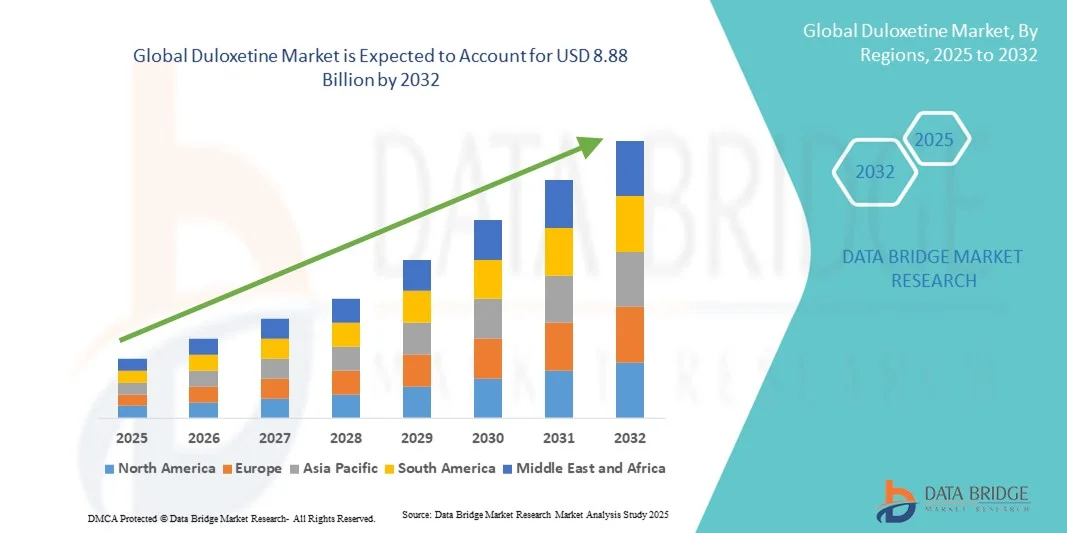
- The global duloxetine market size was valued at USD 6.20 billion in 2024 and is expected to reach USD 8.88 billion by 2032, at a CAGR of 4.60% during the forecast period
- The market growth is largely fueled by the growing adoption of duloxetine in the treatment of major depressive disorder, generalized anxiety disorder, neuropathic pain, and fibromyalgia, supported by increasing awareness and diagnosis rates of mental health and chronic pain conditions
- Furthermore, rising patient demand for effective, safe, and long-term treatment options, along with the expanding availability of generic versions of duloxetine at affordable prices, is significantly boosting market penetration across both developed and emerging economies. These converging factors are accelerating the uptake of Duloxetine solutions, thereby substantially driving the industry’s growth
Duloxetine Market Analysis
- Duloxetine, an antidepressant and serotonin-norepinephrine reuptake inhibitor (SNRI), is increasingly vital in the treatment of major depressive disorder, generalized anxiety disorder, fibromyalgia, and chronic musculoskeletal pain, owing to its proven efficacy and broad therapeutic applicability
- The escalating demand for duloxetine is primarily fueled by the rising prevalence of depression, anxiety, and chronic pain disorders worldwide, coupled with growing awareness of mental health treatment and improved accessibility to psychiatric medications
- North America dominated the duloxetine market with the largest revenue share of 38.5% in 2024, supported by high diagnosis rates of mental health disorders, well-established healthcare infrastructure, and the presence of leading pharmaceutical manufacturers. The U.S. accounted for the majority of this share due to widespread prescriptions and increasing acceptance of antidepressant therapy
- Asia-Pacific is expected to be the fastest-growing region in the duloxetine market during the forecast period, projected to record a CAGR of 10.8%, driven by rising healthcare expenditure, urbanization, and greater recognition of mental health issues in countries such as China and India
- The Oral segment dominated the duloxetine market with a revenue share of 82.5% in 2024, as it is the standard route for Duloxetine delivery
Report Scope and Duloxetine Market Segmentation
|
Attributes |
Duloxetine Key Market Insights |
|
Segments Covered |
|
|
Countries Covered |
North America
Europe
Asia-Pacific
Middle East and Africa
South America
|
|
Key Market Players |
|
|
Market Opportunities |
|
|
Value Added Data Infosets |
In addition to the insights on market scenarios such as market value, growth rate, segmentation, geographical coverage, and major players, the market reports curated by the Data Bridge Market Research also include in-depth expert analysis, pricing analysis, brand share analysis, consumer survey, demography analysis, supply chain analysis, value chain analysis, raw material/consumables overview, vendor selection criteria, PESTLE Analysis, Porter Analysis, and regulatory framework. |
Duloxetine Market Trends
Expanding Therapeutic Applications of Duloxetine
- A significant and accelerating trend in the global duloxetine market is the broadening scope of its therapeutic applications beyond depression and anxiety, extending into chronic pain management, fibromyalgia, diabetic peripheral neuropathy, and stress-related disorders. This versatility is positioning duloxetine as a multi-purpose treatment option within both psychiatric and neurological domains
- For instance, duloxetine has shown clinically significant benefits in reducing chronic musculoskeletal pain, including conditions such as osteoarthritis and lower back pain, thereby expanding its patient base across both mental health and pain management specialties
- Growing clinical research and evidence supporting duloxetine’s effectiveness in addressing multiple conditions simultaneously, such as patients experiencing both depression and chronic pain, further enhance its adoption in integrated care settings
- Increasing awareness campaigns and educational initiatives about mental health are helping destigmatize psychiatric medications, creating a favorable environment for higher Duloxetine prescription rates globally
- Moreover, the drug’s established safety and efficacy profile, combined with the availability of both branded and generic formulations, is making it more accessible and affordable to a wider range of patients across developed and developing regions
- The rising prevalence of lifestyle-related disorders, along with the growing geriatric population who are more susceptible to chronic pain and mood disorders, is further fueling demand. This multi-condition applicability strengthens Duloxetine’s market position compared to more narrowly focused antidepressants
- The trend toward integrated mental health and pain management solutions is reshaping the therapeutic landscape, encouraging healthcare providers to favor versatile medications such as Duloxetine that address both psychological and physical symptoms effectively
- Consequently, leading pharmaceutical players are increasingly investing in clinical trials, product line extensions, and region-specific generic launches to capitalize on Duloxetine’s expanding role in modern healthcare
Duloxetine Market Dynamics
Driver
Growing Need Due to Rising Mental Health Disorders and Chronic Pain
- The increasing prevalence of mental health conditions such as major depressive disorder (MDD), generalized anxiety disorder (GAD), and stress-related illnesses, coupled with a growing burden of chronic pain syndromes, is a significant driver for the heightened demand for Duloxetine
- For instance, in March 2024, Eli Lilly and Company expanded clinical research evaluating Duloxetine’s role in managing both depressive disorders and chronic musculoskeletal pain, reflecting the growing recognition of its dual therapeutic benefits. Such developments are expected to drive the Duloxetine industry growth during the forecast period
- As patients and healthcare providers increasingly seek treatment options that address both emotional and physical symptoms, Duloxetine offers a compelling solution due to its unique mechanism of action as a serotonin-norepinephrine reuptake inhibitor (SNRI)
- Furthermore, the growing awareness of mental health and pain management, combined with public health initiatives and educational campaigns, is encouraging earlier diagnosis and greater treatment uptake, thereby expanding the eligible patient pool for Duloxetine
- The drug’s proven clinical efficacy, availability in both branded and generic forms, and inclusion in treatment guidelines for multiple indications further strengthen its adoption across various healthcare systems worldwide
- Rising lifestyle-related disorders, aging populations, and the associated increase in neuropathic pain conditions are additional factors propelling market demand
- The trend toward holistic patient care, where mental and physical health are managed together, is making Duloxetine an essential therapeutic option in integrated care models
- Consequently, pharmaceutical companies are strategically focusing on expanding access to Duloxetine through generic launches, region-specific approvals, and broader insurance coverage to capitalize on this growing need
Restraint/Challenge
Concerns Regarding Side Effects and Patent Expirations
- Concerns surrounding the potential side effects of duloxetine, including nausea, dry mouth, fatigue, sexual dysfunction, and withdrawal symptoms, pose a significant challenge to broader market penetration. As patients weigh the benefits against possible adverse effects, hesitancy in long-term use remains a limiting factor
- For instance, post-marketing safety reports highlighting risks of serotonin syndrome or elevated blood pressure in certain patient groups have led some healthcare professionals to prescribe Duloxetine cautiously, slowing down its adoption in sensitive populations
- Addressing these concerns through continued clinical monitoring, clear communication of risk–benefit ratios, and development of improved formulations is crucial for building both physician and patient confidence
- In addition, the relatively high cost of branded Duloxetine products in some regions creates access barriers, particularly in low- and middle-income countries. While generic alternatives are increasingly available, pricing disparities remain a restraint for patients without comprehensive healthcare coverage
- Another major challenge is the patent expiration of branded formulations, which has intensified generic competition, leading to pricing pressures and reduced profitability for innovator companies. While generics increase affordability, the crowded competitive landscape may hinder market differentiation and limit growth opportunities for branded players
- Overcoming these challenges requires strategies such as innovative drug delivery systems, patient support programs, and collaborations to expand market penetration while addressing safety and cost concerns
- Ensuring patient adherence through education, managing withdrawal risks effectively, and making affordable options widely available will be vital for sustained Duloxetine market growth
Duloxetine Market Scope
The market is segmented on the basis of strength, drug class, application, type, dosage form, route of administration, end-users, and distribution channel.
- By Strength
On the basis of strength, the duloxetine market is segmented into 20mg, 30mg, 40mg, and 60mg. The 60mg strength segment dominated the market with a revenue share of 46.8% in 2024, making it the most prescribed dosage across both psychiatric and pain-related disorders. Widely regarded as the standard therapeutic strength, it is highly preferred in the treatment of major depressive disorder (MDD), generalized anxiety disorder (GAD), neuropathic pain, and chronic musculoskeletal pain. Physicians rely on 60mg as it balances clinical efficacy with tolerability, leading to strong patient compliance. Its global inclusion in treatment guidelines, better reimbursement support, and broad acceptance among specialists and general practitioners have reinforced its dominance. Moreover, the rising prevalence of mental health conditions worldwide, coupled with higher diagnosis and awareness rates, has resulted in consistent demand for this dosage level.
The 30mg strength segment is expected to grow at the fastest CAGR of 10.2% from 2025 to 2032, due to its increasing use as an initiation dose and for patients with heightened sensitivity to side effects. It is commonly prescribed for elderly patients, individuals requiring dose titration, or those being introduced to antidepressant therapy for the first time. Growing adoption of personalized medicine has further boosted demand for lower dosages such as 30mg, which provide therapeutic benefits while minimizing adverse events. In addition, the rising use of Duloxetine in fibromyalgia and preventive neuropathic pain management has fueled the preference for gradual dose escalation strategies. With physicians in emerging economies focusing on cost-effective, safer entry-point dosages, the 30mg strength has gained recognition as the fastest-expanding strength category globally.
- By Drug Class
On the basis of drug class, the Duloxetine market is segmented into Antidepressants, Fibromyalgia Agents, and Selective Serotonin and Norepinephrine Reuptake Inhibitors (SNRIs). The SNRIs segment dominated the market with a revenue share of 52.1% in 2024, as Duloxetine itself belongs to this class and is a gold standard treatment for major depressive disorder and anxiety. The wide clinical application of SNRIs in both psychiatric and pain-related disorders has contributed to their strong adoption. Their dual mechanism of action — inhibiting both serotonin and norepinephrine reuptake — provides superior symptom control compared to single-pathway drugs, ensuring broad usage. The dominance of this segment is also supported by growing physician confidence, high patient adherence, and strong insurance coverage in developed regions. The wide therapeutic versatility of SNRIs, from treating neuropathic pain to chronic musculoskeletal disorders, consolidates their leading market position.
The Fibromyalgia agents segment is projected to grow at the fastest CAGR of 11.4% from 2025 to 2032, owing to the increasing recognition of fibromyalgia as a global public health concern. Duloxetine is one of the few FDA-approved medications for fibromyalgia, giving it a unique advantage in this category. Rising awareness of chronic pain syndromes, combined with improved diagnostic practices, is expected to fuel prescriptions for fibromyalgia agents. Patients often prefer Duloxetine for its ability to address both the pain and mood-related symptoms of the disease, improving overall quality of life. In addition, growing investments in pain research and the rising number of clinical studies supporting Duloxetine’s efficacy in fibromyalgia are likely to accelerate adoption in the forecast period.
- By Application
On the basis of application, the duloxetine market is segmented into neuropathic pain, major depressive disorder, fibromyalgia, generalized anxiety disorder (GAD), chronic musculoskeletal pain, and others. The Major Depressive Disorder (MDD) segment dominated the market with a revenue share of 38.7% in 2024, reflecting the rising global burden of depression and the established role of Duloxetine in treatment guidelines. Duloxetine’s effectiveness in alleviating both emotional and physical symptoms of depression has made it a preferred choice among psychiatrists. Strong awareness campaigns, early diagnosis rates in developed economies, and improved reimbursement policies have boosted MDD prescriptions. The versatility of Duloxetine in treating comorbid conditions such as anxiety and pain also supports its leading role in depression management. Its inclusion in WHO essential medicines lists and its high adoption across hospital and retail pharmacies reinforce this dominance.
The neuropathic pain segment is anticipated to witness the fastest CAGR of 12.1% from 2025 to 2032, as chronic pain management continues to gain prominence worldwide. The growing prevalence of diabetes and chemotherapy-induced neuropathy are driving higher Duloxetine use in this category. Patients benefit from its dual efficacy in addressing both neuropathic pain and associated mood disturbances, making it an increasingly recommended therapy. Rising awareness of non-opioid pain management alternatives and a global shift away from addictive painkillers are fueling demand. Furthermore, expanding approvals for neuropathic indications across multiple geographies enhance its adoption trajectory.
- By Type
On the basis of type, the duloxetine market is segmented into generic and brand. The generic segment dominated the market with a revenue share of 63.4% in 2024, largely due to the widespread availability of Duloxetine generics following patent expirations. Affordability is the primary factor driving adoption in cost-sensitive markets such as Asia-Pacific and Latin America. Generics ensure accessibility for a broader patient population, especially in public healthcare systems, while maintaining comparable efficacy to branded formulations. Their dominance is reinforced by strong government support for generic substitution, competitive pricing among manufacturers, and bulk procurement by hospitals and insurers.
The brand segment is expected to grow at the fastest CAGR of 9.7% from 2025 to 2032, sustained by strong physician trust in branded formulations and patient perception of higher quality and reliability. Brands such as Cymbalta continue to enjoy recognition in premium markets such as North America and Europe. Strategic marketing campaigns, loyalty programs, and continuous post-market studies have supported brand preference despite generic competition. In addition, new branded combinations and extended-release formulations under development are likely to further drive growth in this segment. Furthermore, the entry of branded Duloxetine in emerging markets is anticipated to strengthen its global growth trajectory.
- By Dosage Form
On the basis of dosage form, the Duloxetine market is segmented into oral delayed release capsule and others. The oral delayed release capsule segment dominated the market with a revenue share of 71.2% in 2024, as it remains the primary and most effective delivery format for Duloxetine. Capsules provide controlled release, improving absorption and minimizing side effects such as nausea, thereby enhancing patient adherence. Their ease of storage, standardized dosing, and wide availability across hospital and retail pharmacies make them the default prescription form. Furthermore, the capsule format’s established production processes and cost-effectiveness contribute to its dominance.
The others segment, which includes emerging formulations such as liquid suspensions and novel delivery technologies, is projected to grow at the fastest CAGR of 8.9% from 2025 to 2032. Increasing research into patient-friendly delivery mechanisms, particularly for children and elderly patients who have difficulty swallowing capsules, is fueling this growth. Innovative dosage forms designed for improved bioavailability and reduced side effects are gaining momentum. Pharmaceutical companies are also focusing on customized formulations to expand market opportunities in niche populations, further driving adoption.
- By Route of Administration
On the basis of route of administration, the duloxetine market is segmented into oral and others. The Oral segment dominated the market with a revenue share of 82.5% in 2024, as it is the standard route for Duloxetine delivery. Oral administration offers convenience, high patient compliance, and is supported by robust distribution infrastructure. Tablets and capsules ensure accurate dosing and are easy to dispense, making them highly preferred in clinical practice. The dominance of oral administration is further reinforced by the absence of widely accepted alternative delivery methods for Duloxetine in current medical practice.
The Others segment, which may include parenteral or investigational delivery methods, is anticipated to expand at the fastest CAGR of 7.6% from 2025 to 2032. Research in this area is driven by the need to address patients who cannot tolerate oral medications, including those with gastrointestinal disorders. Innovation in drug delivery technologies, such as transdermal patches or extended-release injectables, is under exploration to diversify therapeutic applications. Though still nascent, this segment holds growth potential as companies invest in R&D for alternative administration methods. In addition, regulatory support for novel formulations is expected to further accelerate the adoption of alternative delivery routes in the near future.
- By End-Users
On the basis of end-users, the duloxetine market is segmented into clinic, hospital, and others. The Hospitals segment dominated the market with a revenue share of 47.9% in 2024, due to their central role in initiating therapy and managing complex psychiatric and pain cases. Hospitals benefit from large patient inflows, access to advanced diagnostic tools, and multidisciplinary treatment teams that frequently prescribe Duloxetine. Institutional purchasing power, insurance integration, and greater adherence to clinical guidelines also drive hospital dominance. In addition, hospital pharmacies serve as a critical distribution channel for both branded and generic Duloxetine.
The Clinic segment is projected to grow at the fastest CAGR of 10.8% from 2025 to 2032, reflecting the global shift toward outpatient care and community-level management of depression and anxiety. Clinics offer easier accessibility and affordability compared to hospitals, particularly in emerging markets. Growing numbers of private psychiatric practices and pain management centers have fueled Duloxetine uptake in this setting. Clinics also play an essential role in long-term prescription renewals and follow-up care, making them vital contributors to future market expansion.
- By Distribution Channel
On the basis of distribution channel, the duloxetine market is segmented into hospital pharmacy, retail pharmacy, and online pharmacy. The Retail Pharmacy segment dominated the market with a revenue share of 44.6% in 2024, supported by its wide accessibility, patient trust, and convenience in prescription fulfillment. Retail pharmacies remain the primary channel for chronic medication such as Duloxetine, given their strong presence in both urban and rural areas. Pharmacist-led patient education, prescription refills, and integration with insurance schemes have further enhanced adoption through this channel. Retail pharmacies also act as a bridge between hospitals, clinics, and patients, strengthening their market leadership.
The Online Pharmacy segment is forecasted to grow at the fastest CAGR of 13.3% from 2025 to 2032, driven by increasing digital adoption, convenience of home delivery, and competitive pricing. The COVID-19 pandemic accelerated patient preference for online drug purchases, and this trend has sustained post-pandemic. Online platforms also enable discreet access to antidepressants, addressing stigma-related barriers. With rising internet penetration, telehealth integration, and government support for e-pharmacy regulations, online pharmacies are expected to rapidly capture market share in the coming years.
Duloxetine Market Regional Analysis
- North America dominated the duloxetine market with the largest revenue share of 38.5% in 2024, supported by high diagnosis rates of mental health disorders, a well-established healthcare infrastructure, and the strong presence of leading pharmaceutical manufacturers
- The availability of advanced treatment guidelines, rising awareness of depression and anxiety management, and widespread access to healthcare services have made the region the largest contributor
- Favorable reimbursement policies and the growing penetration of generic Duloxetine have further reinforced regional dominance
U.S. Duloxetine Market Insight
The U.S. duloxetine market captured the largest revenue share in 2024 within North America, primarily fueled by widespread adoption of antidepressant therapy and the availability of multiple branded and generic formulations. The country benefits from high awareness of mental health, strong insurance coverage, and a large patient pool suffering from depression, anxiety, and neuropathic pain. Rising prescriptions in both primary care and psychiatric settings, coupled with ongoing research into expanded indications, continue to strengthen Duloxetine’s role in the U.S. market.
Europe Duloxetine Market Insight
The Europe duloxetine market is projected to expand steadily throughout the forecast period, driven by increasing recognition of mental health disorders and supportive government initiatives promoting access to psychiatric care. Countries across the region are focusing on reducing stigma associated with mental illness, leading to greater patient willingness to seek treatment. Strong regulatory frameworks and the presence of global as well as regional pharmaceutical manufacturers are ensuring widespread availability of both branded and generic Duloxetine. Rising incidence of chronic pain conditions, particularly among aging populations, further contributes to growth across key markets such as Germany, France, and the U.K.
U.K. Duloxetine Market Insight
The U.K. duloxetine market is anticipated to grow at a noteworthy CAGR during the forecast period, supported by expanding access to mental health services through the National Health Service (NHS) and a growing emphasis on early diagnosis. Rising awareness campaigns around depression and anxiety management, combined with the U.K.’s well-developed healthcare infrastructure, are driving prescriptions. The availability of cost-effective generics also supports broader adoption, making Duloxetine more accessible across both urban and rural populations.
Germany Duloxetine Market Insight
The Germany duloxetine market is expected to expand at a considerable CAGR, fueled by the country’s strong emphasis on mental health awareness, growing demand for effective neuropathic pain management, and a robust pharmaceutical sector. Germany’s aging population is contributing to higher prevalence of pain-related conditions, creating a strong demand for Duloxetine in both hospital and retail pharmacy channels. Furthermore, favorable reimbursement and strong healthcare expenditure are supporting adoption, while physicians continue to integrate Duloxetine into treatment guidelines for multiple disorders.
Asia-Pacific Duloxetine Market Insight
The Asia-Pacific duloxetine market is poised to grow at the fastest CAGR of 10.8% during the forecast period of 2025 to 2032, driven by rising healthcare expenditure, rapid urbanization, and greater recognition of mental health issues. Countries such as China and India are witnessing significant increases in mental health diagnoses as awareness grows and stigma decreases. Government programs aimed at expanding access to psychiatric care, coupled with the availability of affordable generic formulations, are supporting wider treatment adoption. The large population base, rising disposable incomes, and investment in healthcare infrastructure are key contributors to the region’s rapid growth.
Japan Duloxetine Market Insight
The Japan duloxetine market is gaining momentum due to the country’s increasing emphasis on treating depression and anxiety within its rapidly aging population. A strong preference for pharmacological interventions, combined with government-led initiatives to improve mental health services, is fueling adoption. Duloxetine’s dual role in addressing both psychiatric and pain-related conditions makes it particularly valuable in Japan, where comorbidities in elderly patients are common. Continuous clinical use and the availability of generics are further enhancing accessibility.
China Duloxetine Market Insight
The China duloxetine market accounted for the largest market revenue share within Asia-Pacific in 2024, supported by rapid urbanization, an expanding middle class, and growing awareness of mental health treatment options. Increasing efforts by healthcare authorities to integrate mental health services into primary care, alongside government policies encouraging access to affordable medications, are driving adoption. Domestic pharmaceutical companies are also playing a vital role in ensuring the availability of generics, making Duloxetine more accessible to a broad patient base. This combination of factors positions China as a major contributor to regional growth.
Duloxetine Market Share
The Duloxetine industry is primarily led by well-established companies, including:
- Lilly USA, LLC. (U.S.)
- Cipla (India)
- Teva Pharmaceutical Industries Ltd. (Israel)
- Dr. Reddy’s Laboratories Ltd. (India)
- Lupin (India)
- Aurobindo Pharma Ltd. (India)
- Sun Pharmaceutical Industries Ltd. (India)
- Hetero (India)
- Torrent Pharmaceuticals Ltd. (India)
- Zydus Group (India)
- Apotex Inc. (Canada)
- Alkem (India)
- Glenmark Pharmaceuticals Ltd. (India)
- Jubilant Pharmova Ltd. (India)
Latest Developments in Global Duloxetine Market
- In October 2024, the FDA announced a recall of 7,107 bottles of Duloxetine delayed-release 20 mg capsules (lot number 220128, expiration date December 2024). The recall was issued after testing revealed the presence of N-nitroso-duloxetine, a nitrosamine impurity classified as a probable human carcinogen, at levels above the FDA’s acceptable intake limit. This was the first significant recall event involving Duloxetine for nitrosamine contamination
- In November 2024, Rising Pharmaceuticals, in coordination with the FDA, voluntarily initiated a nationwide recall of multiple batches of Duloxetine delayed-release capsules (20 mg, 30 mg, and 60 mg). The action followed continued concerns about nitrosamine impurities in additional lots beyond the initial October recall. The voluntary recall emphasized the seriousness of potential carcinogenic risk from prolonged exposure to these impurities, though no immediate safety events were reported
- In December 2024, the recall was expanded to over 233,000 bottles of Duloxetine delayed-release capsules across all major dosage strengths (20 mg, 30 mg, and 60 mg). The FDA reported that the nitrosamine impurity N-nitroso-duloxetine was detected above the interim acceptable daily intake levels. This expansion represented one of the largest safety-related withdrawals for Duloxetine in recent years and affected products distributed widely across the U.S.
- On December 19, 2024, the FDA officially classified the Duloxetine recall as a Class II recall, indicating that exposure to the affected products could cause temporary or medically reversible adverse health consequences, while the probability of serious outcomes was considered remote. This classification helped contextualize the health risks for healthcare providers and patients, while underscoring the importance of tighter impurity control in antidepressant manufacturing

- Interactive Data Analysis Dashboard
- Company Analysis Dashboard for high growth potential opportunities
- Research Analyst Access for customization & queries
- Competitor Analysis with Interactive dashboard
- Latest News, Updates & Trend analysis
- Harness the Power of Benchmark Analysis for Comprehensive Competitor Tracking
Data collection and base year analysis are done using data collection modules with large sample sizes. The stage includes obtaining market information or related data through various sources and strategies. It includes examining and planning all the data acquired from the past in advance. It likewise envelops the examination of information inconsistencies seen across different information sources. The market data is analysed and estimated using market statistical and coherent models. Also, market share analysis and key trend analysis are the major success factors in the market report. To know more, please request an analyst call or drop down your inquiry.
The key research methodology used by DBMR research team is data triangulation which involves data mining, analysis of the impact of data variables on the market and primary (industry expert) validation. Data models include Vendor Positioning Grid, Market Time Line Analysis, Market Overview and Guide, Company Positioning Grid, Patent Analysis, Pricing Analysis, Company Market Share Analysis, Standards of Measurement, Global versus Regional and Vendor Share Analysis. To know more about the research methodology, drop in an inquiry to speak to our industry experts.
Data Bridge Market Research is a leader in advanced formative research. We take pride in servicing our existing and new customers with data and analysis that match and suits their goal. The report can be customized to include price trend analysis of target brands understanding the market for additional countries (ask for the list of countries), clinical trial results data, literature review, refurbished market and product base analysis. Market analysis of target competitors can be analyzed from technology-based analysis to market portfolio strategies. We can add as many competitors that you require data about in the format and data style you are looking for. Our team of analysts can also provide you data in crude raw excel files pivot tables (Fact book) or can assist you in creating presentations from the data sets available in the report.












