


What is the Dupilumab Market Size and Growth Rate?
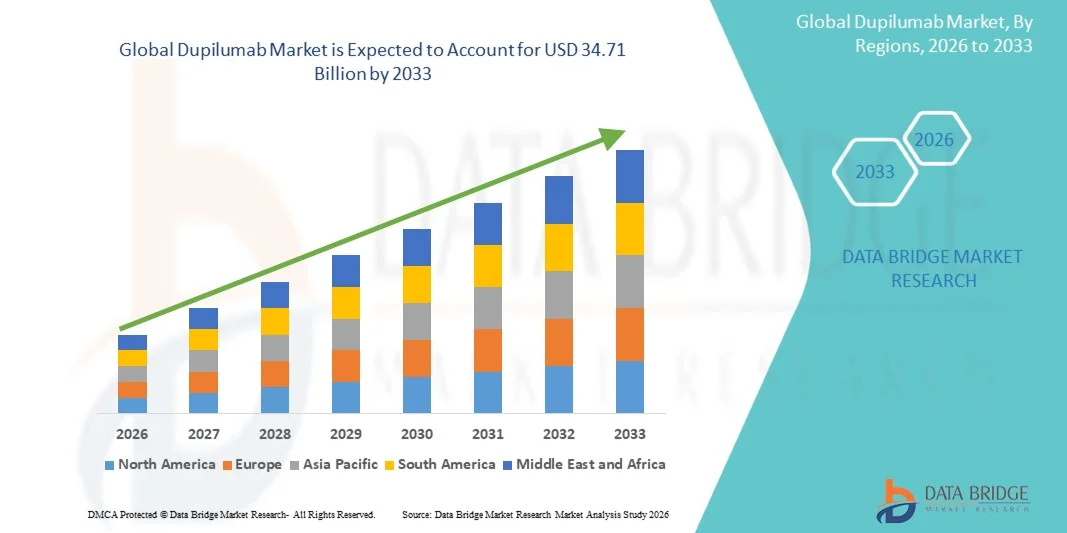
- As per Data Bridge Market Research analysis, the dupilumab market was valued at USD 18.48 billion in 2025 and is projected to reach USD 34.71 billion by 2033, growing at a CAGR of 8.20% from 2026 to 2033.
- The market is experiencing consistent expansion driven by continuous label extensions, rising adoption across dermatology, respiratory, and gastroenterology indications, and the differentiated mechanism of action of dupilumab targeting the interleukin-4 (IL-4) and interleukin-13 (IL-13) pathways. Regulatory advancements, expanding patient eligibility, and strengthening commercial presence are further supporting market development.
- The increasing prevalence of chronic inflammatory conditions, including atopic dermatitis, asthma, and chronic rhinosinusitis with nasal polyps, combined with the expansion of dupilumab into additional indications such as COPD, is broadening its therapeutic scope. Its demonstrated efficacy in moderate-to-severe inflammatory diseases and growing adoption of biologic therapies are supporting wider utilization across specialty care settings.
Market Size & Forecast
- Global Market Value (2025): USD 18.48 Billion
- Expected Market Value (2033): USD 34.71 Billion
- Forecast CAGR (2026–2033): 8.20%
- Leading Region in 2025: North America
- Fastest Growing Region: Asia Pacific
What are the Major Takeaways of the Dupilumab Market?
- North America dominated the dupilumab market with a 45.2% revenue share in 2025, supported by advanced healthcare infrastructure, strong adoption of biologic therapies, favorable reimbursement frameworks, and the high prevalence of Type 2 inflammatory diseases.
- Asia-Pacific is expected to be the fastest-growing region at a CAGR of 13.0% from 2026 to 2033, fueled by improving healthcare infrastructure, increasing adoption of biologic therapies, and rising diagnosis and treatment of inflammatory diseases
- The atopic dermatitis segment led the market with a 69.92% share in 2025, driven by the strong disease burden and increasing global treatment adoption.
- COPD are the fastest-growing indication type, projected to register a CAGR of 17.9%, reflecting the surge in persistent airflow limitation, increasing disease burden, and the expansion of dupilumab into respiratory treatment.
- The adults segment dominated the age group category with a 70% revenue share in 2025, led by higher disease prevalence and well-established biologic treatment pathways among adult patients.
- Prefilled syringes accounted for 58% of the market share in 2025, preferred by patients and healthcare providers due to their established availability, standardized dosing, and suitability for self-administration.
- The auto-injectors segment is the fastest-growing delivery mode category, with a CAGR of 10.5%, driven by rising demand for self-administration options, improved treatment convenience, and technological advancements in user-friendly auto-injector designs.
Report Scope and Dupilumab Market Segmentation
|
Attributes |
Dupilumab Key Market Insights |
|
Segments Covered |
|
|
Countries Covered |
North America
Europe
Asia-Pacific
Middle East and Africa
South America
|
|
Key Market Players |
|
|
Market Opportunities |
|
|
Value Added Data Infosets |
In addition to the insights on market scenarios such as market value, growth rate, segmentation, geographical coverage, and major players, the market reports curated by the Data Bridge Market Research also include in-depth expert analysis, patient epidemiology, pipeline analysis, pricing analysis, and regulatory framework. |
What is the Key Trend in the Dupilumab Market?
- Expansion of dupilumab into additional Type 2 inflammatory diseases is a key market trend, with the therapy moving beyond established uses in atopic dermatitis, asthma, and chronic rhinosinusitis with nasal polyps into indications including chronic obstructive pulmonary disease, chronic spontaneous urticaria, eosinophilic esophagitis, and bullous pemphigoid.
- For instance, in July 2024, a research article published in Current Opinion in Allergy and Clinical Immunology reported that dupilumab had become the first U.S. FDA-approved medication for eosinophilic esophagitis, demonstrating the continued expansion of dupilumab into additional Type 2 inflammatory indications.
- The expanding indication base is strengthening the commercial position of dupilumab by increasing its addressable patient population and extending its use across dermatology, respiratory, allergy, and gastroenterology, while continued clinical development is supporting broader utilization in diseases driven by Type 2 inflammation.
- Real-world studies continue to demonstrate sustained clinical effectiveness and treatment satisfaction, supporting the transition of dupilumab from clinical-trial use toward routine long-term management of chronic inflammatory diseases.
- Self-injection is increasingly important to dupilumab treatment delivery, providing greater flexibility in the time and place of administration and reducing the need for frequent hospital or clinic visits.
- For instance, in September 2024, a research study published in JAMA Dermatology examined dupilumab prescribing patterns and found substantial growth in the number of physicians prescribing the drug, reflecting its expanding use following the addition of multiple FDA-approved indications.
- As dupilumab continues to gain approvals across multiple Type 2 inflammatory diseases and self-administration becomes more established, the market is expected to increasingly emphasize broader indication coverage, long-term treatment persistence, patient convenience, and real-world treatment outcomes.
What are the Key Drivers of the Dupilumab Market?
- The increasing prevalence of atopic dermatitis, asthma, chronic rhinosinusitis with nasal polyps, eosinophilic esophagitis, and other Type 2 inflammatory diseases is increasing demand for targeted biologic therapies such as dupilumab across specialty-care settings.
- For instance, in May 2023, a Phase 3 study published in the New England Journal of Medicine involving 939 patients found that dupilumab reduced moderate or severe COPD exacerbations by 30% versus placebo and significantly improved lung function, supporting the growing demand for targeted biologic therapies in patients with Type 2 inflammation.
- Dupilumab's ability to selectively inhibit interleukin-4 and interleukin-13 signaling through the IL-4 receptor alpha pathway provides a targeted therapeutic approach for multiple diseases driven by Type 2 inflammation.
- The expansion of regulatory approvals across different therapeutic areas is broadening the eligible patient population and strengthening the role of dupilumab as a multi-indication biologic therapy.
- Real-world evidence is also supporting broader treatment adoption, with studies reporting meaningful improvements in disease severity, quality of life, tolerability, and treatment outcomes among patients receiving dupilumab.
- For instance, in June 2025, the U.S. FDA approved Dupixent for adults with bullous pemphigoid, making it the first targeted medicine approved in the U.S. for this indication and further expanding dupilumab's therapeutic application.
- With continued indication expansion, growing real-world evidence, and increasing recognition of Type 2 inflammation as a therapeutic target, dupilumab is positioned to remain an important biologic treatment across multiple chronic inflammatory diseases.
Which Factors are Challenging the Growth of the Dupilumab Market?
- Treatment adherence and long-term persistence remain challenges because dupilumab requires repeated subcutaneous administration, and real-world studies indicate that treatment duration, inconvenience, and forgetfulness can influence adherence.
- For instance, in February 2023, a study published in the Journal of the European Academy of Dermatology and Venereology involving 181 adults with atopic dermatitis reported dupilumab-induced blepharoconjunctivitis in 18.7% of patients, with most cases being moderate, highlighting ocular adverse events as a potential treatment-management challenge.
- Although self-injection improves convenience, patients can experience injection-related difficulties, pain, forgetfulness, and the need for repeated administration training, creating barriers to consistent long-term treatment.
- The increasing availability of alternative targeted therapies, including Janus kinase inhibitors and other biologic treatments, is creating greater competition for prescribing decisions in diseases such as atopic dermatitis.
- Biologic treatment costs and access considerations can also constrain broader adoption, particularly where reimbursement coverage and affordability of advanced therapies remain limited. The U.S. Department of Health and Human Services has identified reducing biologic drug prices and improving patient access as important policy considerations.
- For instance, in September 2024, a Italian study of 2,576 patients with moderate-to-severe atopic dermatitis reported treatment discontinuation because of adverse events throughout follow-up, including 13 patients during the first four months and 18 patients during months five to twelve, demonstrating that adverse events can contribute to treatment discontinuation and limit long-term persistence.
- The combination of long-term adherence requirements, injection-related barriers, increasing therapeutic competition, and affordability and access considerations can restrict treatment uptake and persistence, particularly among patients requiring prolonged management of chronic inflammatory diseases.
How is the Dupilumab Market Segmented?
The dupilumab market is segmented on the basis of indication, age group, delivery mode, and distribution channel.
- By Indication
On the basis of indication, the dupilumab market is segmented into atopic dermatitis (AD), asthma, chronic obstructive pulmonary disease (COPD), eosinophilic esophagitis (EoE), prurigo nodularis, and others. The atopic dermatitis segment dominated the market with a 69.92% revenue share in 2025, owing to the strong disease burden and increasing global treatment adoption. Dupilumab has an established position in moderate-to-severe atopic dermatitis, supported by demonstrated improvements in disease severity, itching, and skin lesions. Increasing prevalence of atopic dermatitis and growing preference for biologic therapies continue to support demand. Expanding patient access initiatives and physician familiarity with biologic treatment pathways are further supporting utilization. Earlier initiation of advanced therapies among eligible patients is also contributing to improved long-term disease control. The continuous incorporation of biologics into treatment guidelines further strengthens the position of atopic dermatitis as the dominant indication.
The COPD segment is projected to register the fastest growth at a CAGR of 17.9% from 2026 to 2033, driven by persistent airflow limitation, increasing disease burden, and the expansion of dupilumab into respiratory treatment. COPD remains associated with substantial morbidity, frequent exacerbations, and healthcare utilization. The expansion of dupilumab into COPD is broadening its therapeutic scope beyond established indications such as atopic dermatitis and asthma. Increasing recognition of Type 2 inflammation as a relevant treatment pathway is creating additional opportunities for targeted biologic therapies. Rising awareness and improved diagnosis are also contributing to greater identification of patients requiring advanced treatment. The combination of substantial unmet medical need and expanding biologic treatment options is therefore expected to make COPD the fastest-growing indication.
- By Age Group
On the basis of age group, the dupilumab market is segmented into adults, adolescents, and pediatrics. The adults segment dominated the market with a 70% share in 2025, owing to higher disease prevalence and well-established biologic treatment pathways among adult patients. Adults represent a substantial treated population across atopic dermatitis, asthma, and other approved inflammatory conditions. The long-standing availability of dupilumab for adult patients has established a broad clinical base and physician familiarity. Expansion into additional indications is further increasing the potential adult treatment population. Increasing diagnosis and management of chronic inflammatory diseases are supporting continued utilization. Consequently, established treatment pathways and broad indication coverage continue to make adults the dominant age-group segment.
The pediatrics segment is projected to be the fastest-growing age group at a CAGR of 12% during 2026–2033, because of recent regulatory approvals and increasing use of dupilumab in younger patients. The expansion of treatment eligibility has broadened access to targeted biologic therapy for children with eligible inflammatory diseases. Increasing recognition of uncontrolled moderate-to-severe atopic dermatitis in children is supporting demand for advanced treatments. Earlier treatment can help improve disease control and reduce the burden of persistent symptoms. Growing clinical evidence and increasing awareness among caregivers are further supporting adoption.
- By Delivery Mode
On the basis of delivery mode, the dupilumab market is segmented into prefilled syringes and auto-injectors. The prefilled syringes segment dominated the market with a 58% share in 2025, reflecting their widespread use in hospitals and specialty pharmacy settings. Prefilled syringes provide a standardized subcutaneous administration format for dupilumab treatment. Their established availability has supported broad utilization across multiple approved indications. They are also suitable for patients and caregivers who have received training for self-administration. Increasing adoption of home-based treatment provides an additional benefit by reducing dependence on frequent healthcare-facility visits. The established commercial presence and familiarity of this delivery format therefore support its leading position in the market.
The auto-injectors segment is projected to be the fastest-growing delivery mode at a CAGR of 10.5% during 2026–2033, driven by ease of self-administration and improved patient convenience. The report identifies auto-injectors as the fastest-growing delivery format because of their ease of self-administration and potential to improve patient adherence. Increasing preference for convenient treatment formats is particularly important for chronic diseases requiring long-term biologic therapy. Home administration can reduce the burden associated with repeated clinic visits. Patient-centered drug-delivery approaches are also gaining importance as biologic treatment becomes more widely used. The combination of convenience, ease of use, and greater flexibility is therefore expected to drive faster adoption of auto-injectors.
- By Distribution Channel
On the basis of distribution channel, the dupilumab market is segmented into hospital pharmacies, retail pharmacies, specialty pharmacies, outpatient treatment centers, and others. The hospital pharmacies segment dominated the market with a 54.34% revenue share in 2025, supported by its leading role in specialty-care settings and biologic dispensing. Hospital pharmacies are particularly important for initiating and dispensing biologic therapies for severe asthma and COPD. They provide specialized pharmaceutical services and support the appropriate handling of complex biologic medicines. Their integration with healthcare systems enables coordination among physicians, pharmacists, and patients. Strong adoption of biologics in specialty-care pathways therefore continues to support hospital pharmacies as the dominant distribution channel.
The retail pharmacies segment is projected to grow at a CAGR of 5.3% from 2026 to 2033, supported by increasing accessibility and the shift toward decentralized treatment. Patients transitioning to maintenance treatment can increasingly access prescriptions through retail pharmacy channels. The growing use of self-administration also supports the role of retail pharmacies in prescription fulfillment and treatment continuity. Patient convenience and improved access to long-term therapies are further supporting this distribution pathway. Increasing decentralization of healthcare delivery is expected to create additional opportunities for retail pharmacy dispensing.
Which Region Holds the Largest Share of the Dupilumab Market?
- North America dominated the dupilumab market with a 45.2% revenue share in 2025, supported by advanced healthcare infrastructure, strong adoption of biologic therapies, favorable reimbursement frameworks, and the high prevalence of Type 2 inflammatory diseases.
- The region also benefits from the high prevalence of Type 2 inflammatory diseases, established biologic treatment pathways, and strong commercialization of Dupixent by Sanofi and Regeneron. Atopic dermatitis remains the leading indication in North America, reflecting the established use of dupilumab in moderate-to-severe disease. The region is also experiencing broader adoption across asthma, chronic rhinosinusitis with nasal polyps, and COPD as the therapeutic applications of dupilumab expand.
U.S. Dupilumab Market Insight
The U.S. dupilumab market is witnessing strong growth due to high adoption of biologic therapies, established specialty-care infrastructure, and broad access to advanced treatments for chronic inflammatory diseases. The country has developed extensive clinical experience with dupilumab across dermatology and respiratory indications. In September 2024, the U.S. FDA approved Dupixent as an add-on maintenance treatment for adults with inadequately controlled COPD and an eosinophilic phenotype, expanding the clinical application of dupilumab in respiratory medicine. The approval provides an additional treatment option for patients whose disease remains inadequately controlled despite standard therapy. Increasing use of targeted biologics for Type 2 inflammatory diseases is therefore supporting continued adoption in the U.S.
Asia-Pacific Dupilumab Market Insight
The Asia-Pacific dupilumab market is expected to witness rapid growth, driven by improving access to biologic therapies, expanding specialist care, and increasing recognition of chronic inflammatory diseases. The region includes established biologic markets such as Japan alongside rapidly developing treatment markets such as China. In November 2023, Japan's Pharmaceuticals and Medical Devices Agency (PMDA) reviewed additional Dupixent formulations and indications, including atopic dermatitis, bronchial asthma, and chronic rhinosinusitis with nasal polyposis. The regulatory review demonstrates the continued development of dupilumab treatment availability in Japan. Increasing availability of different formulations and broader therapeutic use is supporting the expansion of biologic treatment across the region
Japan Dupilumab Market Insight
The Japan dupilumab market is witnessing consistent growth due to established healthcare infrastructure and increasing use of targeted biologic therapies for chronic inflammatory diseases. Dupilumab has been incorporated into treatment pathways for several conditions requiring specialist management. Japan's PMDA review documents Dupixent formulations including prefilled syringes and prefilled pens, demonstrating the availability of multiple administration formats for Japanese patients. The regulatory documentation also covers atopic dermatitis, bronchial asthma, and chronic rhinosinusitis with nasal polyposis. Broader availability of treatment formulations can improve administration flexibility for patients receiving long-term biologic therapy. Continued development of dupilumab treatment options is therefore supporting the Japanese market.
China Dupilumab Market Insight
The China dupilumab market is growing rapidly, supported by increasing recognition of atopic dermatitis and greater adoption of targeted biologic treatments. Chinese clinical research is contributing to the evidence base surrounding dupilumab use in moderate-to-severe inflammatory skin disease. In August 2024, a Chinese research article published in the Chinese Medical Journal reviewed the efficacy and safety of dupilumab in moderate-to-severe atopic dermatitis, demonstrating continued clinical research interest in dupilumab within China. The growing domestic evidence base can support physician familiarity with biologic treatment and clinical decision-making. Increasing recognition of targeted treatment options is expected to contribute to wider adoption of dupilumab in the country.
U.K. Dupilumab Market Insight
The U.K. dupilumab market is experiencing steady growth, supported by established NHS treatment pathways and increasing access to biologic therapy for eligible patients. NICE recommends dupilumab as an option for adults with moderate-to-severe atopic dermatitis when the disease has not responded adequately to specified systemic treatments or when those treatments are unsuitable. This recommendation provides a defined pathway for the use of dupilumab within the NHS. NICE also requires treatment response to be assessed and recommends discontinuation after 16 weeks when an adequate response has not been achieved. Such evidence-based treatment criteria support appropriate patient selection and structured utilization of dupilumab
Germany Dupilumab Market Insight
The Germany dupilumab market is expanding steadily due to established reimbursement and health-technology-assessment mechanisms for innovative medicines. In September 2023, Germany's Federal Joint Committee (G-BA) assessed dupilumab for children aged 6 months to 5 years with severe atopic dermatitis who were candidates for systemic therapy. The assessment specifically addressed the use of dupilumab in this younger population, demonstrating the continued expansion of access to biologic treatment among pediatric patients. The availability of treatment for younger children broadens the eligible patient population. Increasing incorporation of biologic therapies into pediatric specialty care is therefore supporting the development of the German dupilumab market..
Which are the Top Companies in Dupilumab Market?
The dupilumab industry is primarily led by well-established companies, including:
- Sanofi (France)
- Regeneron Pharmaceuticals, Inc. (U.S.)
- Formycon AG (Germany)
- Alvotech (Iceland)
- Samsung Bioepis Co., Ltd. (South Korea)
- Bio-Thera Solutions, Ltd. (China)
- CSPC Pharmaceutical Group Limited (China)
- Mabwell (Shanghai) Bioscience Co., Ltd. (China)
- ADVANZ PHARMA Corp. Limited (U.K.)
- Amneal Pharmaceuticals LLC (U.S.)
- Chong Kun Dang Pharmaceutical Corp. (South Korea)
- DAEWOONG PHARMACEUTICAL CO., LTD. (South Korea)
- Chime Biologics Limited (China)
- Binnopharm Group (Russia)
- SteinCares (Costa Rica)
- AstraZeneca (U.K.)
- GSK plc (U.K.)
- Novartis AG (Switzerland)
- Amgen Inc. (U.S.)
- Roche Holding Ltd (Switzerland)
What are Latest Developments in Dupilumab Market?
- In August 2025, CSPC Pharmaceutical announced that China's National Medical Products Administration approved clinical trials for its dupilumab biosimilar candidate. The product was developed as a biosimilar to Sanofi and Regeneron's Dupixent and was indicated for the treatment of moderate-to-severe atopic dermatitis in adults. The milestone marked the advancement of an independently developed dupilumab biosimilar into clinical development in China.
- In September 2024, Sanofi and Regeneron announced the U.S. approval and launch of Dupixent for adults with inadequately controlled COPD and an eosinophilic phenotype. The approval made Dupixent the first biologic medicine approved in the U.S. for this COPD population, creating a new commercial application for dupilumab in respiratory disease. The decision was supported by Phase 3 results demonstrating reductions in COPD exacerbations and improvements in lung function and health-related quality of life.
- In February 2024, Sanofi and Regeneron announced that Japan became the first country to approve Dupixent for chronic spontaneous urticaria (CSU). The approval introduced dupilumab as a treatment option for patients whose CSU remained inadequately controlled with antihistamines, expanding the product's commercial application into another Type 2 inflammatory disease. The development also represented the first regulatory approval of Dupixent for CSU globally.
- In July 2023, Sanofi Healthcare India announced marketing approval for Dupixent (dupilumab) for adults with moderate-to-severe atopic dermatitis in India. The approval represented the introduction of dupilumab as the first biologic treatment approved in India for this indication. The development expanded availability of targeted biologic treatment for adults whose disease was inadequately controlled with topical prescription therapies or when such treatments were contraindicated.
- In June 2022, Sanofi and Regeneron announced the U.S. launch of Dupixent for children aged 6 months to 5 years with moderate-to-severe atopic dermatitis following FDA approval. The approval made Dupixent the first biologic medicine available for this age group in the U.S., expanding access to targeted treatment for young children whose disease was inadequately controlled with topical prescription therapies. The launch also extended the use of dupilumab across the pediatric atopic dermatitis population.

- Interactive Data Analysis Dashboard
- Company Analysis Dashboard for high growth potential opportunities
- Research Analyst Access for customization & queries
- Competitor Analysis with Interactive dashboard
- Latest News, Updates & Trend analysis
- Harness the Power of Benchmark Analysis for Comprehensive Competitor Tracking
Data collection and base year analysis are done using data collection modules with large sample sizes. The stage includes obtaining market information or related data through various sources and strategies. It includes examining and planning all the data acquired from the past in advance. It likewise envelops the examination of information inconsistencies seen across different information sources. The market data is analysed and estimated using market statistical and coherent models. Also, market share analysis and key trend analysis are the major success factors in the market report. To know more, please request an analyst call or drop down your inquiry.
The key research methodology used by DBMR research team is data triangulation which involves data mining, analysis of the impact of data variables on the market and primary (industry expert) validation. Data models include Vendor Positioning Grid, Market Time Line Analysis, Market Overview and Guide, Company Positioning Grid, Patent Analysis, Pricing Analysis, Company Market Share Analysis, Standards of Measurement, Global versus Regional and Vendor Share Analysis. To know more about the research methodology, drop in an inquiry to speak to our industry experts.
Data Bridge Market Research is a leader in advanced formative research. We take pride in servicing our existing and new customers with data and analysis that match and suits their goal. The report can be customized to include price trend analysis of target brands understanding the market for additional countries (ask for the list of countries), clinical trial results data, literature review, refurbished market and product base analysis. Market analysis of target competitors can be analyzed from technology-based analysis to market portfolio strategies. We can add as many competitors that you require data about in the format and data style you are looking for. Our team of analysts can also provide you data in crude raw excel files pivot tables (Fact book) or can assist you in creating presentations from the data sets available in the report.












