Electric Lunch Box Market Size
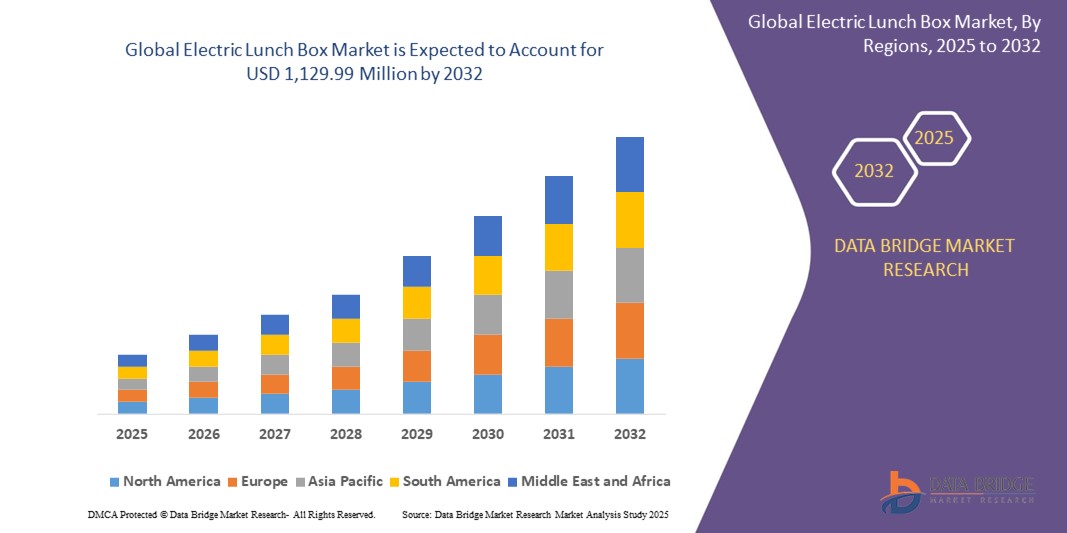
- The global electric lunch box market size was valued at USD 677.67 million in 2024 and is expected to reach USD 1,129.99 million by 2032, at a CAGR of 6.60% during the forecast period
- The market growth is largely fueled by rising health consciousness and the increasing preference for home-cooked meals, especially among working professionals and students seeking convenient, portable solutions for warm food consumption during travel or office hours
- Furthermore, technological advancements such as cordless operation, battery-powered heating, and temperature control are enhancing product appeal, while growing urbanization and busy lifestyles are accelerating the adoption of electric lunch boxes, significantly boosting the industry’s growth
Electric Lunch Box Market Analysis
- An electric lunch box is a portable container designed to heat or cook food using electricity. It typically features compartments for different dishes and a heating element powered by an electrical outlet or USB. This convenient device allows users to enjoy hot meals on the go, making it ideal for work, travel, or outdoor activities
- The escalating demand for electric lunch boxes is primarily fueled by rising health awareness, the growing culture of packed meals among working professionals and students, and advancements in heating technologies that enable cordless, temperature-controlled functionality
- North America dominated the electric lunch box market with a share of 39.55% in 2024, due to the rising demand for portable meal solutions and increased health awareness among working professionals and students
- Asia-Pacific is expected to be the fastest growing region in the electric lunch box market during the forecast period due to rapid urbanization, a growing middle class, and the cultural norm of carrying home-prepared meals to school and work
- Plastic segment dominated the market with a market share of 62.13% in 2024, due to affordability, wide availability, and ease of handling. Plastic lunch boxes are typically lightweight, come in a variety of colors and designs, and are less likely to break when dropped, making them ideal for children and daily use. Their insulation properties also help retain heat for longer periods, and BPA-free plastics address concerns over food safety
Report Scope and Electric Lunch Box Market Segmentation
|
Attributes |
Electric Lunch Box Key Market Insights |
|
Segments Covered |
|
|
Countries Covered |
North America
Europe
Asia-Pacific
Middle East and Africa
South America
|
|
Key Market Players |
|
|
Market Opportunities |
|
|
Value Added Data Infosets |
In addition to the insights on market scenarios such as market value, growth rate, segmentation, geographical coverage, and major players, the market reports curated by the Data Bridge Market Research also include in-depth expert analysis, pricing analysis, brand share analysis, consumer survey, demography analysis, supply chain analysis, value chain analysis, raw material/consumables overview, vendor selection criteria, PESTLE Analysis, Porter Analysis, and regulatory framework. |
Electric Lunch Box Market Trends
“Rising Demand for Healthy Eating”
- A significant and accelerating trend in the global electric lunch box market is the rising demand for healthy eating, as consumers increasingly seek convenient ways to enjoy fresh, home-cooked meals during work, travel, and school hours. This shift in eating habits is driving the popularity of electric lunch boxes as a modern meal solution that supports dietary goals without compromising on portability or convenience
- For instance, Zojirushi America Corporation offers advanced electric lunch jars that keep food warm for hours while preserving nutritional quality, making them ideal for health-conscious individuals. Similarly, Cello World and Hamilton Housewares Pvt. Ltd. have introduced multi-layer electric lunch boxes that allow users to carry and heat balanced, portioned meals on the go
- Manufacturers are focusing on developing models with features such as controlled heating, BPA-free materials, and stainless-steel interiors to ensure meals are both safe and nutritious. For instance, HOTLOGIC's self-heating lunch boxes use low-slow heating technology to preserve the texture and nutritional content of food, making them a preferred choice among fitness-oriented consumers
- This trend aligns with the global push toward wellness and preventive healthcare, as electric lunch boxes offer an effective way to reduce reliance on processed or restaurant meals. As a result, more consumers are integrating these products into their daily routines as tools for maintaining a healthy lifestyle
- Companies such as Koolatron and Thermos L.L.C. are responding to this demand by expanding their range of durable, easy-to-clean, and energy-efficient electric lunch boxes, reflecting a broader market movement toward health-forward, tech-enabled food storage and heating solutions
- The demand for electric lunch boxes that support healthy eating habits is rapidly growing across both developed and emerging markets, as individuals prioritize nutrition, hygiene, and convenience in their daily meal preparation and consumption
Electric Lunch Box Market Dynamics
Driver
“Technological Advancement in Electric Heating Technologies”
- The rapid evolution of electric heating technologies is a significant driver for the heightened demand for electric lunch boxes, as consumers increasingly seek faster, safer, and more energy-efficient solutions for warming meals on the go
- For instance, LunchEAZE launched its Gen 2 cordless electric lunch box, incorporating advanced heating elements capable of reaching up to 220°F with adjustable temperature control and programmable timers, enabling users to pre-schedule heating cycles. Such innovations by key companies are expected to drive electric lunch box industry growth in the forecast period
- As consumers become more inclined toward convenience and time-saving meal solutions, features such as rapid heating, uniform temperature distribution, and battery-powered portability are gaining preference over traditional options. These technologies reduce dependency on external appliances such as microwaves and ensure consistent food warmth in various settings
- Furthermore, the integration of intelligent heating control and auto shut-off mechanisms enhances user safety and product reliability, making these devices more attractive to working professionals, students, and travelers
- The convenience of cordless use, customizable heating settings, and the ability to maintain food quality throughout the day are key factors propelling the adoption of technologically advanced electric lunch boxes across both household and commercial sectors. The growing trend of portable, smart kitchen appliances combined with innovative product launches by players such as HOTLOGIC and Thermos L.L.C. is further contributing to market growth
Restraint/Challenge
“Limited Consumer Awareness”
- Limited consumer awareness regarding the functionality, benefits, and proper usage of electric lunch boxes poses a significant challenge to broader market penetration. Despite their growing relevance in modern lifestyles, many potential users remain unfamiliar with how these products operate or how they can support healthier eating habits and daily convenience
- For instance, several consumers in emerging markets still associate food-warming with traditional methods such as microwaves or thermos containers, leading to hesitation in adopting newer electric heating lunch box solutions offered by brands such as Cello World or Haven Innovation
- Educating consumers on the advantages of electric lunch boxes—such as controlled heating, portability, safety, and preservation of food nutrition—is crucial for increasing adoption. Companies such as Zojirushi and HOTLOGIC are addressing this gap by promoting product tutorials, benefits, and use-case scenarios through online platforms and retail channels
- However, misconceptions around safety, power consumption, or maintenance requirements, combined with a general lack of product visibility in offline retail, can further hinder market growth, especially in regions with lower digital penetration or limited access to e-commerce
- Overcoming these challenges through strategic marketing, consumer education initiatives, and interactive in-store experiences will be essential for market expansion, particularly in price-sensitive or traditionalist markets where adoption remains low despite growing demand for portable meal solutions
Electric Lunch Box Market Scope
The market is segmented on the basis of type, technology, material use, application, end-user, distribution channel, and product.
• By Type
On the basis of type, the electric lunch box market is segmented into grid electric lunch boxes and container electric lunch boxes. The grid electric lunch boxes segment held the largest revenue share in 2024, primarily because they offer direct plug-in functionality, which delivers faster and more consistent heating without the need for external adapters or batteries. These lunch boxes are highly preferred for use in offices and homes where a stable electricity supply is available, allowing users to reheat food within minutes. Their reliability and efficiency in reheating solid and liquid meals such as rice, stews, and curries have made them a popular choice among working professionals and homemakers.
The container electric lunch boxes segment is projected to witness the fastest growth rate from 2025 to 2032. This growth is driven by the rising number of mobile professionals, delivery workers, and students who require portable meal solutions. These lunch boxes often feature built-in batteries, USB or car charger compatibility, and are designed for convenient use during commutes, fieldwork, and travel. Their lightweight build, spill-resistant design, and cordless functionality make them highly attractive to consumers with on-the-go lifestyles.
• By Technology
On the basis of technology, the market is segmented into microwave application and steam. The steam segment accounted for the largest market revenue in 2024. This is largely due to growing awareness around healthy eating and the nutritional advantages of steam-heated food. Steam-based electric lunch boxes gently reheat meals while retaining their moisture, texture, and nutrients, which is especially important for rice, vegetables, and mixed dishes. Their even and gradual heating reduces the chances of food burning or drying out, making them a preferred choice for health-conscious users and parents preparing meals for children.
The microwave application segment is anticipated to register the fastest growth from 2025 to 2032. Consumers are increasingly drawn to time-efficient solutions, and microwave-based lunch boxes provide significantly faster reheating times. These models are equipped with integrated microwave elements that mimic the operation of kitchen microwaves in a compact format. As technology improves to make them energy-efficient and safe for everyday use, their appeal grows among professionals, students, and busy individuals who value speed without compromising on meal quality.
• By Material Use
Based on material use, the market is segmented into plastic, metal, and glass. The plastic segment dominated the market with a share of 62.13% in 2024, driven by affordability, wide availability, and ease of handling. Plastic lunch boxes are typically lightweight, come in a variety of colors and designs, and are less likely to break when dropped, making them ideal for children and daily use. Their insulation properties also help retain heat for longer periods, and BPA-free plastics address concerns over food safety.
The metal segment is expected to witness the fastest CAGR during the forecast period. Rising health awareness has led to growing concerns over plastic usage, steering consumers toward stainless steel and other food-grade metal options. Metal containers are valued for their thermal efficiency, durability, and non-reactivity with hot or acidic foods. They are particularly favored in regions where high temperatures or long durations between food packing and consumption require better heat retention and hygienic storage.
• By Application
By application, the electric lunch box market is segmented into food, drink, vegetables, and others. The food segment held the highest revenue share of 44.02% in 2024, as electric lunch boxes are primarily used to carry full meals such as rice, meat, lentils, noodles, and gravies. This segment benefits from the global trend of meal prepping and rising cost sensitivity among consumers who prefer carrying home-cooked meals to workplaces and schools rather than purchasing expensive takeout.
The vegetables segment is projected to record the fastest growth from 2025 to 2032, fueled by the increasing popularity of plant-based diets and wellness lifestyles. Steam-based electric lunch boxes, in particular, are ideal for reheating or cooking vegetables without nutrient loss, and this appeals to vegetarian, vegan, and health-conscious demographics. The focus on portion control and nutritional balance further supports the demand for lunch boxes designed specifically for vegetables and side dishes.
• By End-User
Based on end-user, the market is divided into household and commercial. The household segment dominated the market in 2024, reflecting high adoption among individuals, families, and students seeking affordable and healthy alternatives to restaurant meals. These users rely on electric lunch boxes to consume freshly heated homemade food at schools, universities, and workplaces, especially in regions where tiffin culture or homemade meal traditions are strong.
The commercial segment is anticipated to expand at a rapid pace from 2025 to 2032. This is largely due to increased usage by food delivery services, cloud kitchens, and institutional catering providers. Businesses in these sectors utilize electric lunch boxes to maintain meal temperature during transport and ensure hygienic delivery. In addition, offices and co-working spaces are beginning to offer plug-in meal stations, further supporting commercial uptake.
• By Distribution Channel
On the basis of distribution channel, the electric lunch box market is bifurcated into online and offline. The offline segment accounted for the largest share in 2024 due to consumers’ continued preference for physically examining products, especially those involving heating and electronics. Retail chains, supermarkets, and electronic appliance stores provide demonstrations, warranties, and instant replacements, which help build trust among buyers.
The online segment is expected to experience the highest growth from 2025 to 2032. E-commerce platforms such as Amazon, Flipkart, and regional electronics portals have expanded product reach with diverse pricing options, user reviews, and doorstep delivery. As internet penetration rises and consumers seek time-saving shopping methods, online sales are expected to dominate, especially among urban and younger demographics.
• By Product
By product, the market is segmented into multi-layer, double-layer, and single-layer electric lunch boxes. The multi-layer segment led the market in 2024, favored by users who prefer carrying a complete meal consisting of multiple components—such as rice, curry, salad, and dessert—in separate compartments. These lunch boxes are especially popular among office workers and students who prioritize variety, portion control, and meal organization.
The single-layer segment is forecasted to witness the fastest CAGR over the forecast period due to increasing demand for compact, lightweight, and minimalist designs. These lunch boxes are convenient for quick meals, snacks, or one-dish preparations, and appeal to individuals with simple dietary routines or limited carrying capacity. The rise in solo living and mobile work culture further supports this growth.
Electric Lunch Box Market Regional Analysis
- North America dominated the electric lunch box market with the largest revenue share of 39.55% in 2024, driven by the rising demand for portable meal solutions and increased health awareness among working professionals and students
- Consumers in the region prioritize convenience, food safety, and the ability to enjoy home-cooked meals during work or travel hours, leading to strong demand for electric lunch boxes with advanced heating technologies and durable materials
- This demand is further amplified by high disposable income, busy lifestyles, and the presence of leading brands offering innovative, user-friendly models with smart features such as temperature control and auto shut-off
U.S. Electric Lunch Box Market Insight
The U.S. electric lunch box market captured the largest revenue share in 2024 within North America, fueled by growing health consciousness and the preference for fresh, warm meals over fast food options. The rise of mobile work culture and increasing popularity of packed meals among office employees and students are key contributors. Innovations such as USB-powered and car-compatible lunch boxes, along with strong retail and online distribution channels, are propelling market expansion across both urban and suburban areas.
Europe Electric Lunch Box Market Insight
The Europe electric lunch box market is projected to expand at a substantial CAGR throughout the forecast period, primarily driven by shifting consumer habits toward sustainable, healthy eating and reusable food containers. Demand is growing across countries as consumers seek alternatives to disposable packaging and opt for eco-friendly electric lunch boxes for daily meal prep. A rise in workplace wellness programs and increasing sales of smart kitchen gadgets further support market growth across corporate, educational, and travel settings.
U.K. Electric Lunch Box Market Insight
The U.K. electric lunch box market is anticipated to grow at a noteworthy CAGR during the forecast period, driven by increasing demand for on-the-go food heating solutions amid rising awareness around food hygiene and health. The growing remote and hybrid work culture, along with consumer interest in convenient, non-microwave reheating methods, is stimulating demand. Strong e-commerce infrastructure and interest in tech-integrated kitchenware are further fueling sales in the U.K. market.
Germany Electric Lunch Box Market Insight
The Germany electric lunch box market is expected to expand at a considerable CAGR during the forecast period, supported by the country's emphasis on energy-efficient, high-quality kitchen appliances. German consumers favor lunch boxes made with sustainable materials and precise heating control, aligning with their preferences for durability and performance. The market also benefits from a strong culture of meal planning and the adoption of tech-enhanced personal appliances, especially among commuters and office workers.
Asia-Pacific Electric Lunch Box Market Insight
The Asia-Pacific electric lunch box market is poised to grow at the fastest CAGR during the forecast period of 2025 to 2032, driven by rapid urbanization, a growing middle class, and the cultural norm of carrying home-prepared meals to school and work. Countries such as China, India, and Japan are seeing increasing demand due to affordability, rising health consciousness, and government initiatives encouraging local manufacturing of household appliances. Technological advancements and compact, affordable product designs are attracting a wide consumer base.
Japan Electric Lunch Box Market Insight
The Japan electric lunch box market is gaining momentum due to the nation’s strong preference for compact, efficient appliances suited for busy urban lifestyles. The growing prevalence of bento culture and demand for freshly heated meals among office workers are key drivers. Japanese consumers also value smart features and safety enhancements, supporting the market for innovative, portable food heating solutions that integrate seamlessly into daily routines.
China Electric Lunch Box Market Insight
The China electric lunch box market accounted for the largest market revenue share in Asia Pacific in 2024, attributed to widespread adoption of electric kitchen appliances among the expanding urban population. The growing preference for healthy, home-cooked food, along with rising disposable incomes and a booming e-commerce sector, is propelling growth. Strong domestic manufacturing capabilities and continuous product innovation in terms of size, power efficiency, and price make China a major contributor to regional and global demand.
Electric Lunch Box Market Share
The electric lunch box industry is primarily led by well-established companies, including:
- Zojirushi America Corporation. (U.S.)
- Cello World (India)
- Hamilton Housewares Pvt. Ltd. (India)
- Haven Innovation (U.S.)
- Koolatron (U.S.)
- Newell Brands (U.S.)
- Tayama Appliance Inc (U.S.)
- GiftEzee (India)
- Sociosis Productions (India)
- HOTLOGIC (U.S.)
- Thermos L.L.C. (U.S.)
Latest Developments in Global Electric Lunch Box Market
- In April 2024, LunchEAZE introduced Gen 2, a cordless, self-heating lunch box featuring a 940mL stainless steel container, adjustable temperatures up to 220°F, and a rechargeable battery, enabling users to schedule automatic heating. This launch is expected to significantly impact the electric lunch box market by driving demand for advanced, portable, and battery-powered solutions tailored to on-the-go consumers, particularly in work, travel, and outdoor use cases
- In August 2022, Milton introduced its Smart Tiffin, a groundbreaking product that connects to smartphones for scheduled food heating. Enhancing convenience and safety, this innovation aligns with the market's demand for tech-enabled kitchen solutions, catering to individuals seeking efficient meal preparation amidst busy schedules
- In August 2022, Jaypee Plus unveiled its electric line, featuring the e-warmer-electric chafing dish and hot pot electric box. Crafted with stainless steel and BPA-free plastic, these offerings promise durability and safety, showcasing innovative additions to the electric lunch box market
- In March 2021, Zojirushi Corporation partnered with China's Guadong Galanz Enterprises Co., Ltd. to bolster their home appliance offerings. Integrating Zojirushi's expertise with Galanz's manufacturing capabilities aims to foster innovation and diversification, capitalizing on emerging consumer demands for value-added products in the home appliance market
- In February 2020, Konwa launched its electric lunch box, revolutionizing mealtime convenience by heating food and steaming and cooking complete meals. Its multifunctional capabilities cater to busy lifestyles, offering a seamless solution for enjoying freshly prepared dishes on the go

- Interactive Data Analysis Dashboard
- Company Analysis Dashboard for high growth potential opportunities
- Research Analyst Access for customization & queries
- Competitor Analysis with Interactive dashboard
- Latest News, Updates & Trend analysis
- Harness the Power of Benchmark Analysis for Comprehensive Competitor Tracking
Data collection and base year analysis are done using data collection modules with large sample sizes. The stage includes obtaining market information or related data through various sources and strategies. It includes examining and planning all the data acquired from the past in advance. It likewise envelops the examination of information inconsistencies seen across different information sources. The market data is analysed and estimated using market statistical and coherent models. Also, market share analysis and key trend analysis are the major success factors in the market report. To know more, please request an analyst call or drop down your inquiry.
The key research methodology used by DBMR research team is data triangulation which involves data mining, analysis of the impact of data variables on the market and primary (industry expert) validation. Data models include Vendor Positioning Grid, Market Time Line Analysis, Market Overview and Guide, Company Positioning Grid, Patent Analysis, Pricing Analysis, Company Market Share Analysis, Standards of Measurement, Global versus Regional and Vendor Share Analysis. To know more about the research methodology, drop in an inquiry to speak to our industry experts.
Data Bridge Market Research is a leader in advanced formative research. We take pride in servicing our existing and new customers with data and analysis that match and suits their goal. The report can be customized to include price trend analysis of target brands understanding the market for additional countries (ask for the list of countries), clinical trial results data, literature review, refurbished market and product base analysis. Market analysis of target competitors can be analyzed from technology-based analysis to market portfolio strategies. We can add as many competitors that you require data about in the format and data style you are looking for. Our team of analysts can also provide you data in crude raw excel files pivot tables (Fact book) or can assist you in creating presentations from the data sets available in the report.