


Electro-medical and Electrotherapeutic Apparatus Market Size
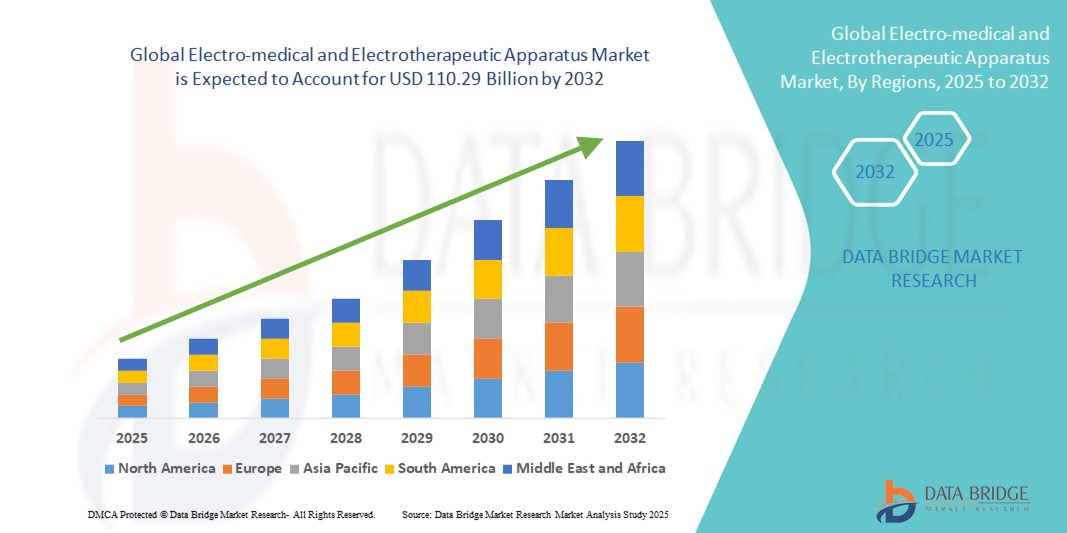
- The global electro-medical and electrotherapeutic apparatus market size was valued at USD 62.77 billion in 2024 and is expected to reach USD 110.29 billion by 2032, at a CAGR of 7.30% during the forecast period
- The market growth is largely fueled by the rising prevalence of chronic diseases, neurological disorders, and cardiovascular conditions, which is driving increased demand for advanced therapeutic and diagnostic devices in clinical and home care settings. The integration of cutting-edge technologies such as bioelectronic medicine, neural stimulation, and AI-assisted monitoring systems is significantly expanding the scope and efficacy of electro-medical and electrotherapeutic apparatuses
- Furthermore, the growing trend toward non-invasive treatment modalities and remote patient monitoring is accelerating the adoption of devices such as transcutaneous electrical nerve stimulation (TENS), neuromuscular electrical stimulation (NMES), and electrocardiograph (ECG) systems. These solutions are becoming increasingly vital for managing long-term health conditions outside of traditional hospital environments
Electro-medical and Electrotherapeutic Apparatus Market Analysis
- Electro-medical and electrotherapeutic apparatuses, which include devices such as defibrillators, physiotherapy equipment, electrocardiographs, and therapeutic stimulation devices, are becoming increasingly vital in modern healthcare due to their ability to enhance diagnostic accuracy, therapeutic outcomes, and patient monitoring capabilities across various clinical and rehabilitation settings
- The growing demand for electro-medical and electrotherapeutic devices is primarily driven by the rising prevalence of chronic diseases, the global aging population, and increasing adoption of non-invasive and minimally invasive treatment options enabled by technological advancements in medical electronics
- North America dominated the electro-medical and electrotherapeutic apparatus market with the largest revenue share of 38.6% in 2024, attributed to its advanced healthcare infrastructure, early adoption of cutting-edge medical technologies, favorable reimbursement frameworks, and the presence of key players such as Medtronic, Abbott, and Boston Scientific. The U.S. leads regional growth due to increasing investments in digital health and demand for home-based electrotherapeutic solutions
- Asia-Pacific is projected to be the fastest-growing region in the electro-medical and electrotherapeutic apparatus market over the forecast period (2025–2032), fueled by increasing healthcare expenditure, rising incidence of lifestyle-related disorders, rapid urbanization, and government initiatives aimed at expanding access to quality medical care in emerging economies such as China and India
- The diagnostic equipment segment dominated the electro-medical and electrotherapeutic apparatus market with a market revenue share of 38.5% in 2024, driven by increased demand for imaging systems such as MRI, CT, and ultrasound for early disease detection
Report Scope and Electro-medical and Electrotherapeutic Apparatus Market Segmentation
|
Attributes |
Electro-medical and Electrotherapeutic Apparatus Key Market Insights |
|
Segments Covered |
|
|
Countries Covered |
North America
Europe
Asia-Pacific
Middle East and Africa
South America
|
|
Key Market Players |
|
|
Market Opportunities |
|
|
Value Added Data Infosets |
In addition to the insights on market scenarios such as market value, growth rate, segmentation, geographical coverage, and major players, the market reports curated by the Data Bridge Market Research also include in-depth expert analysis, pricing analysis, brand share analysis, consumer survey, demography analysis, supply chain analysis, value chain analysis, raw material/consumables overview, vendor selection criteria, PESTLE Analysis, Porter Analysis, and regulatory framework. |
Electro-medical and Electrotherapeutic Apparatus Market Trends
Growing Need Due to Chronic Disease Burden and Aging Population
- The global electro-medical and electrotherapeutic apparatus market is experiencing robust growth, driven significantly by the increasing prevalence of chronic diseases and the rapidly aging global population. As healthcare systems worldwide face mounting pressure to manage long-term conditions such as cardiovascular disease, diabetes, arthritis, and neurodegenerative disorders, there is a growing reliance on advanced electro-medical devices for diagnosis, monitoring, and therapy
- Aging populations, in particular, are propelling demand for home-based medical technologies that enhance convenience, safety, and independence. In this context, the integration of artificial intelligence (AI) and voice-controlled ecosystems—such as Amazon Alexa, Google Assistant, and Apple HomeKit—is transforming electro-medical apparatus into intelligent, user-friendly systems that support both patients and caregivers. These smart technologies allow for hands-free operation, real-time health data collection, personalized therapeutic interventions, and seamless coordination with other digital health solutions
- For instance, AI-powered electrotherapeutic devices are being developed with adaptive algorithms that tailor treatments based on user-specific data, improving outcomes for chronic pain management or physical rehabilitation. Voice control integration further enhances accessibility, enabling elderly users or those with mobility impairments to operate devices without manual interaction—an essential feature for maintaining autonomy at home
- Moreover, companies such as WELOCK and other health tech innovators are extending the concept of smart connectivity from security systems to medical devices. Features such as automated operation, remote monitoring, and real-time alerts for abnormal usage patterns or health metrics are becoming standard. These capabilities align with the broader goal of preventative care and remote patient management, particularly important in regions with limited access to healthcare professionals
- As chronic disease rates rise and aging populations seek greater independence and home-based care solutions, the demand for intelligent, integrated Electro-medical and Electrotherapeutic Apparatus is expected to accelerate. This convergence of AI, voice technology, and medical innovation marks a pivotal shift in how care is delivered—more proactive, personalized, and embedded into everyday living environments
Electro-medical and Electrotherapeutic Apparatus Market Dynamics
Driver
Growing Demand Driven by Technological Advancements and Chronic Disease Burden
- The increasing prevalence of chronic diseases such as cardiovascular disorders, neurological conditions, and cancer—coupled with the aging population—is significantly driving demand for Electro-medical and Electrotherapeutic Apparatus. These devices, used for both diagnosis and therapy, are becoming essential in providing effective and personalized treatment pathways in hospitals, diagnostic centers, and homecare settings
- For instance, in March 2024, Siemens Healthineers launched its next-gen MRI platform MAGNETOM Cima.X, incorporating advanced AI-assisted imaging to enhance neurological and oncological diagnostics. Innovations such as these from key players are anticipated to accelerate market growth over the forecast period
- Furthermore, technological advancements such as the integration of AI, miniaturization, wireless communication, and wearable formats are making these devices more efficient, accurate, and patient-friendly. These features are especially critical in remote and home-based care settings, where real-time monitoring and portability are vital
- The growing shift toward value-based healthcare models, which emphasize outcome-driven treatment, is also fostering demand for advanced electro-medical devices that enable early detection, precision therapy, and minimally invasive procedures. Devices such as implantable neurostimulators and portable ECG monitors are helping reduce hospitalization rates and improve long-term patient outcomes
- In addition, increased government funding for digital health, telemedicine, and diagnostic innovation, particularly in developed markets such as the U.S., Germany, and Japan, is propelling investments in modernizing healthcare infrastructure with electrotherapeutic solutions
Restraint/Challenge
Cybersecurity Risks and High Implementation Costs
- A significant challenge facing the Electro-medical and Electrotherapeutic Apparatus market is the growing concern over cybersecurity vulnerabilities, especially with the rising integration of internet-connected systems and cloud-based diagnostics. As devices increasingly rely on network infrastructure to transmit patient data, they become potential targets for cyberattacks and data breaches
- For instance, several medical device manufacturers have been flagged by cybersecurity watchdogs in the past for vulnerabilities in remote telemetry systems, which raises hesitation among hospitals and clinicians to adopt connected solutions at scale. Ensuring HIPAA compliance and deploying robust encryption protocols are critical for mitigating these risks
- Another major restraint is the high upfront cost of acquiring and implementing advanced diagnostic or therapeutic systems such as MRI machines, robotic surgical systems, and neurostimulation devices. These costs can be prohibitive, especially for smaller clinics or healthcare facilities in emerging economies where capital expenditure budgets are limited
- Moreover, additional costs related to training, maintenance, and regulatory compliance add to the overall burden, discouraging adoption in cost-sensitive environments. Although leasing models and reimbursement reforms are helping mitigate this issue in some regions, affordability remains a key challenge
- Addressing these concerns through improved cybersecurity frameworks, cost-optimized innovation, and expanded insurance coverage will be vital to ensuring long-term scalability and broader adoption of electro-medical technologies across diverse healthcare settings
Electro-medical and Electrotherapeutic Apparatus Market Scope
The market is segmented on the basis of product, application, technology, end user, and distribution channel.
- By Product
On the basis of product, the electro-medical and electrotherapeutic apparatus market is segmented into diagnostic equipment, therapeutic equipment, surgical devices, patient assistive devices, and others. The diagnostic equipment segment held the largest market revenue share of 38.5% in 2024, driven by increased demand for imaging systems such as MRI, CT, and ultrasound for early disease detection.
The patient assistive devices segment is projected to witness the fastest CAGR of 8.7% from 2025 to 2032, supported by a growing elderly population and technological improvements in mobility and monitoring aids.
- By Application
On the basis of application, the electro-medical and electrotherapeutic apparatus market is segmented into cardiology, neurology, oncology, orthopedics, gynecology, urology, and others. The cardiology segment accounted for the largest market share of 29.3% in 2024, owing to the high global burden of cardiovascular diseases and widespread use of ECGs, pacemakers, and defibrillators.
The oncology segment is expected to grow at the fastest CAGR of 9.1% from 2025 to 2032, driven by the increasing incidence of cancer and the demand for minimally invasive treatment technologies.
- By Technology
On the basis of technology, the electro-medical and electrotherapeutic apparatus market is segmented into X-ray, MRI, CT scan, ultrasound, electroencephalography (EEG), electrosurgery, and others. The ultrasound segment led with a revenue share of 26.4% in 2024, supported by its real-time imaging capabilities, safety profile, and lower cost compared to other modalities.
The EEG segment is forecasted to grow at the highest CAGR of 10.2% from 2025 to 2032, driven by rising neurological disease prevalence and demand for portable brain monitoring systems.
- By End User
On the basis of end user, the electro-medical and electrotherapeutic apparatus market is segmented into hospitals, ambulatory surgical centers, specialty clinics, diagnostic centers, and homecare settings. The hospital segment dominated with the highest market revenue share of 46.8% in 2024, due to well-equipped facilities, high patient inflow, and the adoption of advanced electro-medical technologies.
The homecare settings segment is projected to grow at the fastest CAGR of 9.8% from 2025 to 2032, fueled by the trend toward decentralized healthcare, increasing chronic disease burden, and advancements in home-use diagnostic and therapeutic devices.
• By Distribution Channel
On the basis of distribution channel, the electro-medical and electrotherapeutic apparatus market is segmented into direct tenders and retail sales. The direct tenders segment accounted for the largest revenue share of 62.7% in 2024, as a result of high-volume procurement by hospitals and government health programs.
The retail sales segment is expected to register the fastest CAGR of 8.9% from 2025 to 2032, due to the growing consumer adoption of electro-medical devices for home use and the expanding presence of e-commerce platforms.
Electro-medical and Electrotherapeutic Apparatus Market Regional Analysis
- North America dominated the electro-medical and electrotherapeutic apparatus market with the largest revenue share of 38.6% in 2024, attributed to its advanced healthcare infrastructure, early adoption of cutting-edge medical technologies, favorable reimbursement frameworks, and the presence of key players such as Medtronic, Abbott, and Boston Scientific
- Consumers in the region highly value the convenience, real-time diagnostics, and seamless integration of electro-medical devices with other smart health systems
- This widespread adoption is further supported by high healthcare spending, advanced technological infrastructure, and the rising prevalence of chronic diseases among aging populations, making electro-medical and electrotherapeutic apparatus a key component of modern healthcare delivery
U.S. Electro-medical and Electrotherapeutic Apparatus Market Insight
The U.S. electro-medical and electrotherapeutic apparatus market captured the largest revenue share of 76% within North America in 2024, fueled by the rapid uptake of connected medical devices and the expanding home healthcare trend. Consumers increasingly prioritize enhancing healthcare access and convenience through portable, connected therapeutic systems. The growing preference for mobile health applications, DIY remote monitoring, and AI-integrated solutions is further propelling market expansion. Integration with platforms such as Alexa, Google Assistant, and Apple HealthKit plays a significant role in enabling real-time monitoring and intervention.
Europe Electro-medical and Electrotherapeutic Apparatus Market Insight
The Europe electro-medical and electrotherapeutic apparatus market accounted for 28.4% of the global Electro-medical and Electrotherapeutic Apparatus market share in 2024, with growth driven by stringent healthcare regulations, rising healthcare digitization, and the increasing burden of chronic conditions. Consumers across the region are adopting connected therapeutic devices for home care, post-surgery recovery, and rehabilitation. Market expansion is further supported by government-funded healthcare systems, growing elderly populations, and emphasis on preventive care across residential and institutional settings.
U.K. Electro-medical and Electrotherapeutic Apparatus Market Insight
The U.K. electro-medical and electrotherapeutic apparatus market is projected to grow at a CAGR of 11.2% during 2025–2032, driven by the rising adoption of smart healthcare devices and the shift toward patient-centric care models.Concerns regarding elderly care and chronic disease management are encouraging increased use of AI-enabled therapeutic systems.The U.K.’s well-developed digital infrastructure and increasing use of e-health platforms are supporting broader integration of electro-medical technologies.
Germany Electro-medical and Electrotherapeutic Apparatus Market Insight
The Germany electro-medical and electrotherapeutic apparatus market is expected to register a CAGR of 10.6% from 2025 to 2032, supported by the country’s strong innovation ecosystem and emphasis on health technology R&D. German consumers are highly receptive to secure, data-driven medical solutions that offer both efficiency and compliance with strict privacy standards (e.g., GDPR). Growth is being driven by the need for advanced rehabilitation systems, wearable monitors, and AI-powered diagnostic tools in hospitals and homecare environments.
Asia-Pacific Electro-medical and Electrotherapeutic Apparatus Market Insight
The Asia-Pacific electro-medical and electrotherapeutic apparatus market market is projected to expand at the fastest CAGR during the forecast period (2025–2032), supported by rapid urbanization, improving healthcare infrastructure, and rising disposable incomes. Increasing healthcare digitization in countries such as China, Japan, and India is accelerating the adoption of electro-medical and therapeutic devices, especially in remote and underserved areas. The region is also benefiting from favorable government initiatives and growing local manufacturing capabilities, making advanced healthcare technology more accessible and affordable.
Japan Electro-medical and Electrotherapeutic Apparatus Market Insight
The Japan electro-medical and electrotherapeutic apparatus market is anticipated to grow at a CAGR of 13.4% during 2025–2032, driven by its aging population and the country’s proactive approach to healthcare innovation. The integration of therapeutic devices with AI and IoT ecosystems in smart homes is creating new opportunities for personalized care. Demand is rising particularly for rehabilitation systems and wearable diagnostic tools that enable elderly and chronically ill patients to live independently.
China Electro-medical and Electrotherapeutic Apparatus Market Insight
The China electro-medical and electrotherapeutic apparatus market accounted for the largest revenue share of 39.5% in the Asia-Pacific Electro-medical and Electrotherapeutic Apparatus market in 2024, attributed to the country's booming smart healthcare sector, rising middle-class population, and aggressive government support for digital health.The growing deployment of AI-enabled medical devices across hospitals and homecare settings is accelerating market growth. In addition, the domestic manufacturing strength and increasing investments in MedTech innovation make China a key market for both local and global players.
Electro-medical and Electrotherapeutic Apparatus Market Share
The Electro-medical and Electrotherapeutic Apparatus industry is primarily led by well-established companies, including:
- Siemens Healthineers AG (Germany)
- Koninklijke Philips N.V. (Netherlands)
- GE HealthCare (U.S.)
- Medtronic (Ireland)
- Johnson & Johnson and its affiliates (U.S.)
- Fresenius Medical Care (Germany)
- Abbott (U.S.)
- Stryker (U.S.)
- Boston Scientific Corporation (U.S.)
- Baxter (U.S.)
- Siare Engineering International Group (Italy)
- Shimadzu Corporation (Japan)
- Mindray Medical International Limited (China)
- Olympus Corporation (Japan)
- Varian Medical Systems (U.S.)
- Cerner Corporation (U.S.)
- Zimmer Biomet (U.S.)
Latest Developments in Global Electro-medical and Electrotherapeutic Apparatus Market
- In April 2024, Fresenius Medical Care received U.S. FDA 510(k) clearance for its 5008X Hemodialysis System, allowing the company to introduce high-volume hemodiafiltration (HVHDF) in the U.S. for the first time. The system aims to improve dialysis efficiency and patient outcomes through advanced membrane technology. The phased rollout will continue into 2025
- In October 2024, Fresenius Medical Care also launched the Xenios 2.0 system, a next-generation extracorporeal life support platform. Designed for critical care environments, it includes enhanced safety monitoring features and improved integration with electronic medical records (EMRs)
- In April 2024, Soterix Medical launched the MxN-GO EEG system, which combines wearable high-definition transcranial electrical stimulation (HD-tES) with EEG monitoring. This innovation supports mobile neurodiagnostics and neuromodulation research
- In January 2024, Mindray Medical International introduced its Medius AI-enhanced ultrasound solution, capable of real-time diagnostics and automated image recognition. The system leverages machine learning to support clinical decisions across cardiology and radiology departments

- Interactive Data Analysis Dashboard
- Company Analysis Dashboard for high growth potential opportunities
- Research Analyst Access for customization & queries
- Competitor Analysis with Interactive dashboard
- Latest News, Updates & Trend analysis
- Harness the Power of Benchmark Analysis for Comprehensive Competitor Tracking
Data collection and base year analysis are done using data collection modules with large sample sizes. The stage includes obtaining market information or related data through various sources and strategies. It includes examining and planning all the data acquired from the past in advance. It likewise envelops the examination of information inconsistencies seen across different information sources. The market data is analysed and estimated using market statistical and coherent models. Also, market share analysis and key trend analysis are the major success factors in the market report. To know more, please request an analyst call or drop down your inquiry.
The key research methodology used by DBMR research team is data triangulation which involves data mining, analysis of the impact of data variables on the market and primary (industry expert) validation. Data models include Vendor Positioning Grid, Market Time Line Analysis, Market Overview and Guide, Company Positioning Grid, Patent Analysis, Pricing Analysis, Company Market Share Analysis, Standards of Measurement, Global versus Regional and Vendor Share Analysis. To know more about the research methodology, drop in an inquiry to speak to our industry experts.
Data Bridge Market Research is a leader in advanced formative research. We take pride in servicing our existing and new customers with data and analysis that match and suits their goal. The report can be customized to include price trend analysis of target brands understanding the market for additional countries (ask for the list of countries), clinical trial results data, literature review, refurbished market and product base analysis. Market analysis of target competitors can be analyzed from technology-based analysis to market portfolio strategies. We can add as many competitors that you require data about in the format and data style you are looking for. Our team of analysts can also provide you data in crude raw excel files pivot tables (Fact book) or can assist you in creating presentations from the data sets available in the report.













