


What is the Encephalitis Treatment Market Size and Growth Rate?
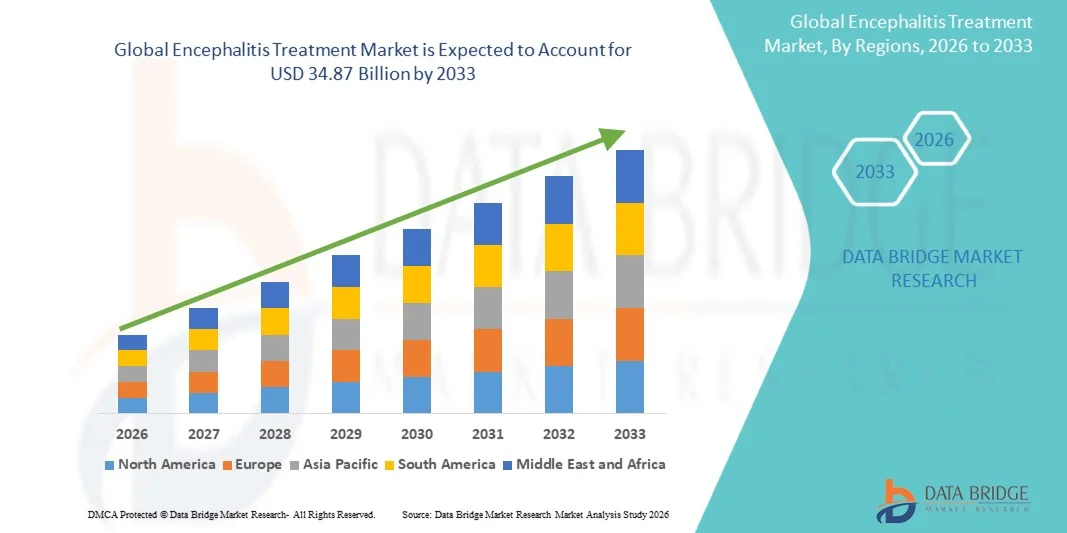
- As per Data Bridge Market Research Analysis the global encephalitis treatment market size was valued at USD 23.25 billion in 2025 and is expected to reach USD 34.87 billion by 2033, at a CAGR of 5.20% during the forecast period
- The market growth is largely fueled by the increasing prevalence of viral and bacterial infections that cause encephalitis, along with growing awareness about early diagnosis and treatment of neurological disorders across healthcare systems worldwide
- Furthermore, rising investments in healthcare infrastructure, expanding research and development activities for antiviral and immunotherapy treatments, and the growing demand for advanced therapeutic solutions are accelerating the adoption of Encephalitis Treatment solutions, thereby significantly boosting the industry's growth
Market Size & Forecast
- Global Market Value (2025): USD 23.25 Billion
- Expected Market Value (2033): USD 34.87 Billion
- Forecast CAGR (2026–2033): 5.20%
What are the Major Takeaways of Encephalitis Treatment Market?
- Encephalitis treatment solutions, including antiviral drugs, immunotherapies, corticosteroids, and supportive neurological care, are becoming increasingly important in modern healthcare systems due to the rising burden of viral infections such as herpes simplex virus, Japanese encephalitis, and other neuroinflammatory conditions that require timely clinical intervention and hospitalization
- The growing demand for effective encephalitis treatment is primarily driven by increasing awareness of neurological infections, improvements in diagnostic technologies such as PCR and neuroimaging, and the expanding availability of advanced antiviral and immunomodulatory therapies across hospitals and specialized care centers
- North America dominated the encephalitis treatment market with the largest revenue share of 39.4% in 2025, supported by well-established healthcare infrastructure, high awareness of neurological disorders, and strong research and development activities by pharmaceutical companies. The U.S. continues to experience significant growth in encephalitis treatment adoption due to improved diagnostic capabilities and increased availability of targeted antiviral therapies
- Asia-Pacific is expected to be the fastest-growing region, accounting for an estimated 26.8% market share in 2025, driven by rising incidence of mosquito-borne encephalitis infections, expanding healthcare access, and increasing government initiatives for infectious disease control across countries such as China, India, and Japan
- The injection segment dominated the largest market revenue share of 63.2% in 2025, driven by the need for immediate therapeutic intervention in severe encephalitis cases
Report Scope and Encephalitis Treatment Market Segmentation
|
Attributes |
Encephalitis Treatment Key Market Insights |
|
Segments Covered |
|
|
Countries Covered |
North America
Europe
Asia-Pacific
Middle East and Africa
South America
|
|
Key Market Players |
|
|
Market Opportunities |
|
|
Value Added Data Infosets |
In addition to the insights on market scenarios such as market value, growth rate, segmentation, geographical coverage, and major players, the market reports curated by the Data Bridge Market Research also include in-depth expert analysis, patient epidemiology, pipeline analysis, pricing analysis, and regulatory framework. |
What is the Key Trend in the Encephalitis Treatment Market?
“Advancements in Nanotechnology-Based Drug Delivery and Targeted Therapies”
- A significant and accelerating trend in the global encephalitis treatment market is the growing use of advanced therapeutic technologies and precision medicine approaches to improve treatment outcomes. Researchers and pharmaceutical companies are increasingly focusing on innovative drug delivery systems and targeted therapies that can effectively cross the blood–brain barrier and deliver medications directly to infected brain tissues
- For instance, several biotechnology companies and research institutions are developing nanoparticle-based antiviral delivery systems designed to enhance drug penetration into the central nervous system. These advanced formulations help improve the bioavailability and therapeutic efficiency of antiviral and anti-inflammatory drugs used in encephalitis treatment
- In addition, the integration of molecular diagnostics and biomarker-based treatment strategies is helping clinicians identify the underlying viral or autoimmune causes of encephalitis more rapidly. This enables healthcare providers to administer more personalized treatment plans, improving recovery rates and reducing neurological complications
- The growing adoption of next-generation therapeutics, including monoclonal antibodies and immune-modulating drugs, is also reshaping the treatment landscape. These therapies are being explored to control excessive immune responses associated with autoimmune encephalitis and severe viral infections
- Furthermore, collaborations between pharmaceutical companies, academic institutions, and government research organizations are accelerating the development of innovative treatment approaches. Increasing investment in neurological research and infectious disease management is further supporting the advancement of new therapeutic solutions
- As a result, the demand for more effective and targeted encephalitis treatments is steadily increasing across hospitals and specialized neurological care centers worldwide, driving innovation and shaping the future of the Encephalitis Treatment market
Encephalitis Treatment Market Dynamics
Driver
“Rising Incidence of Viral Infections and Increasing Awareness of Neurological Disorders”
- The increasing prevalence of viral infections that can cause encephalitis, such as herpes simplex virus, Japanese encephalitis virus, and West Nile virus, is a major driver for the growth of the Encephalitis Treatment market. These infections can lead to severe inflammation of the brain and require prompt medical intervention, increasing the demand for effective treatment solutions
- For instance, public health initiatives and vaccination programs in several countries are emphasizing early detection and treatment of encephalitis to prevent severe neurological complications and fatalities. Governments and healthcare organizations are actively strengthening surveillance systems and improving access to diagnostic and treatment facilities
- As awareness regarding neurological disorders continues to grow, patients and healthcare providers are increasingly seeking early diagnosis and timely treatment. Improved diagnostic technologies such as polymerase chain reaction (PCR) testing, advanced imaging techniques, and cerebrospinal fluid analysis are enabling quicker identification of encephalitis cases
- Furthermore, the expansion of healthcare infrastructure and increasing healthcare expenditure in both developed and emerging economies are supporting better management of infectious neurological diseases. Hospitals and specialized neurological care centers are adopting advanced treatment protocols to improve patient outcomes
- The growing focus on research and development of antiviral drugs, immunotherapies, and supportive neurological treatments is further contributing to the expansion of the Encephalitis Treatment market
Restraint/Challenge
“Limited Treatment Options and High Cost of Advanced Therapies”
- Despite advancements in medical research, the limited availability of highly effective targeted therapies remains a major challenge for the Encephalitis Treatment market. Treatment primarily relies on antiviral medications, anti-inflammatory drugs, and supportive care, which may not always provide optimal outcomes for all patients
- For instance, antiviral drugs such as acyclovir are widely used for treating herpes simplex virus encephalitis; however, treatment effectiveness may vary depending on the severity of infection and the timing of diagnosis. Delayed treatment can lead to long-term neurological damage or complications
- In addition, the high cost of advanced diagnostic procedures and specialized neurological care can limit access to treatment in low- and middle-income countries. Patients often require intensive care, long hospital stays, and rehabilitation services, which significantly increases overall healthcare costs
- Another challenge is the difficulty in early diagnosis, as the symptoms of encephalitis often resemble other neurological or infectious diseases. This can delay treatment initiation and reduce the effectiveness of available therapies
- Overcoming these challenges will require continued investment in neurological research, the development of more effective antiviral and immunomodulatory therapies, improved diagnostic technologies, and enhanced healthcare accessibility to ensure timely treatment for patients worldwide
How is the Encephalitis Treatment Market Segmented?
The market is segmented on the basis of type, treatment, diagnosis, symptoms, dosage, route of administration, end-users, and distribution channel.
• By Type
On the basis of type, the Encephalitis Treatment market is segmented into primary encephalitis and secondary encephalitis. The primary encephalitis segment dominated the largest market revenue share of 56.4% in 2025, driven by the increasing prevalence of viral infections directly affecting brain tissues such as herpes simplex virus (HSV), Japanese encephalitis virus, and West Nile virus. Primary encephalitis occurs when a virus directly infects the brain, making it one of the most common and clinically significant forms of the disease. The rising number of viral outbreaks across several regions, particularly in Asia-Pacific and parts of Africa, has contributed to the high incidence of primary encephalitis cases. Healthcare systems are increasingly focusing on early diagnosis and rapid antiviral therapy to reduce mortality rates associated with primary encephalitis. Growing awareness regarding neurological infections and improvements in diagnostic technologies such as MRI and PCR-based tests are also contributing to the dominance of this segment. In addition, public health initiatives aimed at controlling mosquito-borne viral infections have increased screening and detection rates. Pharmaceutical companies and research institutions are also investing in the development of targeted antiviral therapies to manage primary encephalitis more effectively. The increasing burden of viral neurological infections worldwide continues to support the strong market share of this segment.
The secondary encephalitis segment is expected to witness the fastest CAGR of 7.9% from 2026 to 2033, driven by the increasing occurrence of autoimmune and post-infectious neurological complications. Secondary encephalitis develops when the immune system mistakenly attacks brain tissues following an infection or due to autoimmune disorders. Growing awareness among healthcare professionals regarding autoimmune encephalitis and improved diagnostic capabilities are contributing to the rising detection rates of this condition. Advances in immunotherapy and targeted treatment options have also expanded treatment possibilities for secondary encephalitis patients. Increasing research activities focused on understanding autoimmune neurological disorders are expected to further support segment growth. Moreover, the rising incidence of viral infections that trigger immune-mediated brain inflammation has also increased the prevalence of secondary encephalitis. Governments and healthcare organizations are investing in neurological disease management programs, which further supports early diagnosis and treatment. These factors collectively drive the rapid growth of the secondary encephalitis segment.
• By Treatment
On the basis of treatment, the Encephalitis Treatment market is segmented into antiviral agents, steroid injection, antibiotics, immunoglobulin therapy, plasmapheresis, and others. The antiviral agents segment dominated the largest market revenue share of 34.8% in 2025, primarily due to the widespread use of antiviral medications in treating viral encephalitis cases. Antiviral drugs such as acyclovir are commonly administered to treat herpes simplex virus encephalitis, which is one of the most frequently reported forms of the disease. Early antiviral treatment significantly improves survival rates and reduces the risk of long-term neurological complications. The increasing incidence of viral infections affecting the central nervous system has further strengthened the demand for antiviral therapies. Healthcare providers strongly recommend early antiviral administration for suspected viral encephalitis cases, contributing to the segment’s dominance. Continuous advancements in antiviral drug development and improvements in diagnostic accuracy also support the widespread adoption of antiviral treatment options. Additionally, increasing awareness regarding neurological infections and improved healthcare infrastructure in emerging markets are driving treatment rates. These factors collectively contribute to the strong market share of antiviral agents in the encephalitis treatment market.
The immunoglobulin therapy segment is expected to witness the fastest CAGR of 8.5% from 2026 to 2033, driven by its increasing use in treating autoimmune encephalitis and severe inflammatory neurological conditions. Intravenous immunoglobulin (IVIG) therapy helps regulate abnormal immune responses and reduce inflammation in the brain. Growing clinical evidence supporting the effectiveness of immunoglobulin therapy in autoimmune neurological disorders has encouraged its broader adoption in encephalitis treatment. Physicians are increasingly recommending IVIG therapy for patients who do not respond well to conventional antiviral or steroid treatments. Additionally, advancements in immunotherapy research and increasing availability of specialized neurological treatments are further supporting segment growth. Rising healthcare expenditures and expanding access to advanced neurological treatments in developing economies are also contributing to the increased use of immunoglobulin therapy. The growing focus on personalized medicine and targeted immune-based therapies is expected to further accelerate the adoption of this treatment approach. These factors collectively drive the rapid growth of the immunoglobulin therapy segment.
• By Diagnosis
On the basis of diagnosis, the Encephalitis Treatment market is segmented into imaging tests, blood tests, biopsy, and others. The imaging tests segment held the largest market revenue share of 41.6% in 2025, supported by the critical role of imaging technologies in detecting brain inflammation and neurological abnormalities associated with encephalitis. Imaging techniques such as magnetic resonance imaging (MRI) and computed tomography (CT) scans are widely used to identify brain swelling, lesions, and structural changes caused by infection. These diagnostic tools allow physicians to rapidly assess disease severity and initiate appropriate treatment strategies. The increasing availability of advanced imaging equipment in hospitals and neurological centers has significantly improved diagnostic efficiency. Healthcare providers rely heavily on imaging technologies for accurate and timely diagnosis of encephalitis cases. Additionally, technological advancements in neuroimaging have enhanced the ability to detect early-stage brain inflammation. Rising investments in healthcare infrastructure and diagnostic capabilities further support the widespread use of imaging tests in encephalitis diagnosis. These factors collectively contribute to the strong dominance of the imaging tests segment.
The blood tests segment is expected to witness the fastest CAGR of 7.8% from 2026 to 2033, driven by increasing adoption of laboratory-based diagnostic techniques for detecting infectious and autoimmune causes of encephalitis. Blood tests help identify viral, bacterial, and autoimmune markers that indicate brain inflammation or infection. Advances in molecular diagnostic technologies, including PCR-based testing and biomarker identification, have significantly improved the accuracy of encephalitis detection through blood analysis. Healthcare providers increasingly rely on blood tests as a preliminary screening tool before conducting more advanced imaging or cerebrospinal fluid analysis. The growing demand for rapid and cost-effective diagnostic solutions further supports the expansion of blood testing methods. Additionally, improvements in laboratory infrastructure and increasing availability of advanced diagnostic kits are expected to accelerate segment growth. These factors collectively contribute to the strong growth prospects of the blood tests segment.
• By Dosage
On the basis of dosage, the Encephalitis Treatment market is segmented into injection, tablets, and others. The injection segment dominated the largest market revenue share of 63.2% in 2025, driven by the need for immediate therapeutic intervention in severe encephalitis cases. Injectable medications allow rapid drug delivery into the bloodstream, ensuring quick therapeutic action during emergency neurological conditions. Hospitals and intensive care units commonly administer antiviral drugs, steroids, and immunoglobulin therapies through injections for critically ill patients. Injectable formulations provide higher bioavailability and precise dosing control, making them ideal for acute neurological infections. The increasing number of hospital admissions for severe viral encephalitis cases further supports the widespread use of injectable therapies. Healthcare providers also prefer injectable drugs for patients experiencing severe symptoms such as seizures or loss of consciousness. These factors collectively contribute to the strong dominance of the injection dosage segment.
The tablets segment is expected to witness the fastest CAGR of 6.9% from 2026 to 2033, supported by the increasing use of oral medications for follow-up treatment and long-term management of encephalitis-related complications. Tablets offer greater convenience for patients recovering from acute infections and transitioning to outpatient care. Physicians frequently prescribe oral antiviral or supportive medications once patients stabilize following initial hospital treatment. The rising adoption of home-based healthcare services and outpatient neurological care is also encouraging the use of tablet formulations. Pharmaceutical companies are focusing on developing more effective oral formulations with improved drug absorption and therapeutic performance. These developments are expected to further support the growth of the tablet dosage segment.
• By Route of Administration
On the basis of route of administration, the Encephalitis Treatment market is segmented into oral, parenteral, and others. The parenteral segment accounted for the largest market revenue share of 59.1% in 2025, as severe encephalitis cases typically require rapid and direct drug administration through intravenous or intramuscular routes. Parenteral administration ensures immediate therapeutic action and higher drug bioavailability, making it the preferred treatment approach in emergency neurological conditions. Hospitals frequently administer antiviral drugs, steroids, and immunoglobulin therapies via parenteral routes to achieve faster clinical response. The increasing number of hospitalized encephalitis patients and the need for intensive care treatment further support the dominance of this segment. Additionally, advancements in injectable drug formulations have improved treatment outcomes and patient safety. These factors collectively contribute to the strong market share of the parenteral route segment.
The oral segment is expected to witness the fastest CAGR of 6.7% from 2026 to 2033, driven by the increasing use of oral medications for post-hospitalization treatment and long-term recovery management. Oral drugs provide greater patient convenience and support outpatient treatment protocols. The expansion of telemedicine services and home-based healthcare solutions has also encouraged the use of oral medications for managing neurological infections. These factors collectively drive the rapid growth of the oral route segment.
• By End-Users
On the basis of end-users, the Encephalitis Treatment market is segmented into clinic, hospital, and others. The hospital segment dominated the largest market revenue share of 62.7% in 2025, reflecting the critical need for specialized neurological care and intensive patient monitoring. Hospitals are equipped with advanced diagnostic technologies, including MRI and CT imaging, which enable accurate detection of encephalitis and associated brain abnormalities. Neurologists and critical care teams in hospitals provide comprehensive care, including antiviral therapy, steroids, immunoglobulin therapy, and supportive treatments. Most severe encephalitis cases require hospitalization for immediate intervention, ensuring rapid therapeutic response and minimizing long-term neurological damage. Hospitals maintain extensive inventories of specialized medications and injectable therapies, which enhances patient access to timely treatment. Government and private healthcare investments are increasingly directed toward upgrading hospital infrastructure, including neurological and infectious disease departments. The segment is further strengthened by rising hospital admissions for both viral and autoimmune encephalitis. In addition, hospitals are central to clinical trials and advanced treatment protocols for novel therapies. Their role in patient education, follow-up care, and intensive monitoring contributes to the sustained dominance of this segment. Established referral networks and collaborations with specialty clinics also ensure hospitals remain the primary point of care for encephalitis patients.
The clinic segment is expected to witness the fastest CAGR of 6.4% from 2026 to 2033, driven by growing awareness and early diagnosis initiatives. Clinics provide accessible outpatient care for patients presenting with initial symptoms such as fever, headaches, irritability, confusion, or drowsiness. Increasing numbers of specialized neurology and infectious disease clinics offer diagnostic services, including preliminary blood tests and neurological evaluations, supporting early detection and intervention. Clinics also play a growing role in follow-up care and rehabilitation for patients discharged from hospitals. The rise in telemedicine and remote consultation services allows clinics to reach wider patient populations, particularly in semi-urban and rural regions. Integration with digital health records and homecare services enhances treatment continuity. Clinics are increasingly adopting advanced diagnostic tools, improving accuracy and reducing the need for immediate hospitalization. Public awareness campaigns and educational programs about neurological disorders are boosting outpatient visits. This expansion in preventive and early-stage care contributes to the strong projected growth of the clinic segment. The convenience, cost-effectiveness, and personalized care provided by clinics further enhance their appeal to patients and families. These factors collectively drive the rapid growth of the clinic segment.
• By Distribution Channel
On the basis of distribution channel, the Encephalitis Treatment market is segmented into hospital pharmacy, retail pharmacy, and online pharmacy. The hospital pharmacy segment held the largest market revenue share of 48.9% in 2025, primarily due to its role in supporting the high volume of hospital-based treatments for severe encephalitis cases. Hospital pharmacies ensure the ready availability of specialized medications such as antiviral agents, immunoglobulins, and steroids, which are essential for immediate intervention. They operate under strict prescription regulations, maintaining controlled distribution and adherence to treatment protocols. The centralized supply within hospitals allows for rapid administration of intravenous and injectable therapies, which are critical in acute encephalitis management. Additionally, hospital pharmacies often collaborate with neurology departments, facilitating integrated patient care and consistent medication management. The dominance of this segment is reinforced by the large patient base in hospitals and growing hospital admissions for severe viral, bacterial, and autoimmune encephalitis cases. Hospitals also frequently participate in clinical trials and research studies, increasing demand for specialized therapeutic agents. Continuous improvements in hospital pharmacy infrastructure and logistics further enhance service reliability and patient outcomes.
The online pharmacy segment is expected to witness the fastest CAGR of 7.2% from 2026 to 2033, driven by rapid growth in digital healthcare adoption and consumer preference for home delivery of medications. Online pharmacies provide convenient access to both prescription and over-the-counter treatments, including oral antivirals and supportive care medications for follow-up therapy. The expansion of e-commerce platforms and improvements in pharmaceutical logistics have facilitated faster and safer delivery of medications, even in remote regions. Integration with telemedicine platforms allows patients to obtain prescriptions electronically, further boosting the adoption of online pharmacy services. Rising awareness regarding neurological diseases and home-based care has contributed to the shift toward online distribution channels. Online pharmacies also provide competitive pricing, subscription services, and improved inventory management, attracting a wider customer base. The segment benefits from increasing smartphone penetration, digital payment adoption, and growing trust in e-commerce healthcare services. These trends collectively drive the rapid growth of the online pharmacy distribution channel in the encephalitis treatment market.
Which Region Holds the Largest Share of the Encephalitis Treatment Market?
- North America dominated the encephalitis treatment market with the largest revenue share of 39.4% in 2025, supported by well-established healthcare infrastructure, high awareness of neurological disorders, and strong research and development activities by pharmaceutical companies
- The market continues to experience significant growth in encephalitis treatment adoption due to improved diagnostic capabilities and increased availability of targeted antiviral therapies
- This widespread adoption is further supported by increasing investment in public health initiatives, growing availability of specialized hospitals and treatment centers, and heightened awareness of early diagnosis and intervention strategies, establishing North America as a leading region in encephalitis management
U.S. Encephalitis Treatment Market Insight
The U.S. encephalitis treatment market captured the largest revenue share within North America in 2025, fueled by the development and adoption of advanced antiviral therapies, immunomodulatory treatments, and supportive care protocols. Ongoing clinical trials and research into innovative treatment options for viral and autoimmune encephalitis continue to propel the market. Moreover, growing awareness campaigns and improved access to healthcare services are significantly contributing to the market’s expansion.
Europe Encephalitis Treatment Market Insight
The Europe encephalitis treatment market is projected to expand at a substantial CAGR throughout the forecast period, primarily driven by rising prevalence of encephalitis cases, increasing government initiatives for infectious disease control, and the availability of advanced treatment options. The increase in healthcare infrastructure, coupled with improved diagnostic facilities, is fostering market growth. The region is experiencing significant adoption across hospital and outpatient care settings, with newer therapies being integrated into standard treatment protocols.
U.K. Encephalitis Treatment Market Insight
The U.K. encephalitis treatment market is anticipated to grow at a noteworthy CAGR during the forecast period, driven by increased awareness of neurological disorders and the growing need for effective viral and autoimmune encephalitis management. Additionally, government-supported health programs and robust research activities are expected to continue stimulating market growth.
Germany Encephalitis Treatment Market Insight
The Germany encephalitis treatment market is expected to expand at a considerable CAGR during the forecast period, fueled by increasing awareness of neurological diseases and the demand for innovative antiviral therapies. Germany’s well-developed healthcare system, emphasis on medical research, and early adoption of advanced treatment protocols promote the growth of the market, particularly in hospital and specialized care settings.
Asia-Pacific Encephalitis Treatment Market Insight
The Asia-Pacific encephalitis treatment market is poised to grow at the fastest CAGR, accounting for an estimated 26.8% market share in 2025, driven by rising incidence of mosquito-borne encephalitis infections, expanding healthcare access, and increasing government initiatives for infectious disease control across countries such as China, India, and Japan. Furthermore, improving healthcare infrastructure, rising healthcare expenditure, and growing awareness about early diagnosis and treatment are contributing to rapid market adoption in the region.
Japan Encephalitis Treatment Market Insight
The Japan encephalitis treatment market is gaining momentum due to increasing awareness of encephalitis infections, a well-developed healthcare system, and government programs focused on infectious disease prevention. The growing adoption of antiviral therapies and supportive care solutions is driving market growth, especially among elderly and high-risk populations.
China Encephalitis Treatment Market Insight
The China encephalitis treatment market accounted for a significant market revenue share in Asia-Pacific in 2025, attributed to the country’s rising incidence of mosquito-borne encephalitis, expanding healthcare access, and increasing government initiatives for disease prevention and control. The availability of advanced treatment options and ongoing public health campaigns are key factors propelling the market in China.
Which are the Top Companies in Encephalitis Treatment Market?
The Encephalitis Treatment industry is primarily led by well-established companies, including:
• Pfizer Inc. (U.S.)
• GlaxoSmithKline (U.K.)
• Merck & Co., Inc. (U.S.)
• Johnson & Johnson (U.S.)
• Roche Holding AG (Switzerland)
• Sanofi S.A. (France)
• Novartis AG (Switzerland)
• Takeda Pharmaceutical Company (Japan)
• Bayer AG (Germany)
• CSL Limited (Australia)
• Moderna, Inc. (U.S.)
• BioNTech SE (Germany)
• Gilead Sciences, Inc. (U.S.)
• AbbVie Inc. (U.S.)
• Regeneron Pharmaceuticals, Inc. (U.S.)
• Emergent BioSolutions Inc. (U.S.)
• Bharat Biotech International Ltd. (India)
• Serum Institute of India Pvt. Ltd. (India)
• Inovio Pharmaceuticals, Inc. (U.S.)
• Vaxart, Inc. (U.S.)
What are Latest Developments in Encephalitis Treatment Market?
- In January 2022, the National Institutes of Health (NIH) announced the initiation of the ExTINGUISH clinical trial evaluating inebilizumab for the treatment of anti-NMDA receptor encephalitis, a severe autoimmune form of encephalitis. The monoclonal antibody targets CD19-positive B cells to suppress autoimmune activity, and the trial evaluates its effectiveness when added to standard immunotherapy in patients with moderate-to-severe disease. This development represents a significant step toward targeted biologic therapies for autoimmune encephalitis treatment
- In October 2023, Arialys Therapeutics, a biotechnology company focused on autoimmune neuropsychiatric diseases, announced the launch of a new program to develop targeted antibody therapies for anti-NMDA receptor encephalitis following significant seed funding to advance precision treatments for antibody-mediated brain inflammation. The initiative aims to develop next-generation therapies designed to neutralize pathogenic autoantibodies that cause autoimmune encephalitis
- In November 2023, researchers from the German Center for Neurodegenerative Diseases (DZNE) and Charité – Universitätsmedizin Berlin reported the development of a novel cell-based therapeutic strategy for autoimmune encephalitis, involving engineered immune cells capable of eliminating disease-causing antibodies in the brain. Preclinical results showed promising outcomes and paved the way for future clinical trials evaluating the therapy as a targeted treatment for autoimmune brain inflammation
- In October 2024, Arialys Therapeutics announced the initiation of a Phase I clinical trial for ART5803, a precision monoclonal antibody designed to treat anti-NMDA receptor encephalitis. The investigational therapy targets pathogenic autoantibodies affecting NMDA receptors and is being evaluated for safety and pharmacokinetics in healthy volunteers before advancing to patient trials
- In September 2025, Arialys Therapeutics announced that the U.S. Food and Drug Administration (FDA) granted Rare Pediatric Disease Designation to ART5803 for the treatment of pediatric anti-NMDA receptor encephalitis. The designation supports the development of targeted therapies for rare neurological conditions and may accelerate regulatory pathways for innovative encephalitis treatments

- Interactive Data Analysis Dashboard
- Company Analysis Dashboard for high growth potential opportunities
- Research Analyst Access for customization & queries
- Competitor Analysis with Interactive dashboard
- Latest News, Updates & Trend analysis
- Harness the Power of Benchmark Analysis for Comprehensive Competitor Tracking
Data collection and base year analysis are done using data collection modules with large sample sizes. The stage includes obtaining market information or related data through various sources and strategies. It includes examining and planning all the data acquired from the past in advance. It likewise envelops the examination of information inconsistencies seen across different information sources. The market data is analysed and estimated using market statistical and coherent models. Also, market share analysis and key trend analysis are the major success factors in the market report. To know more, please request an analyst call or drop down your inquiry.
The key research methodology used by DBMR research team is data triangulation which involves data mining, analysis of the impact of data variables on the market and primary (industry expert) validation. Data models include Vendor Positioning Grid, Market Time Line Analysis, Market Overview and Guide, Company Positioning Grid, Patent Analysis, Pricing Analysis, Company Market Share Analysis, Standards of Measurement, Global versus Regional and Vendor Share Analysis. To know more about the research methodology, drop in an inquiry to speak to our industry experts.
Data Bridge Market Research is a leader in advanced formative research. We take pride in servicing our existing and new customers with data and analysis that match and suits their goal. The report can be customized to include price trend analysis of target brands understanding the market for additional countries (ask for the list of countries), clinical trial results data, literature review, refurbished market and product base analysis. Market analysis of target competitors can be analyzed from technology-based analysis to market portfolio strategies. We can add as many competitors that you require data about in the format and data style you are looking for. Our team of analysts can also provide you data in crude raw excel files pivot tables (Fact book) or can assist you in creating presentations from the data sets available in the report.












