Global Endotracheal Tube Market
Market Size in USD Billion
CAGR :
% 
 USD
2.77 Billion
USD
4.58 Billion
2025
2033
USD
2.77 Billion
USD
4.58 Billion
2025
2033
 Forecast Period Forecast Period |
2026 –2033 |
 Market Size (Base Year) Market Size (Base Year) |
USD 2.77 Billion |
 Market Size (Forecast Year) Market Size (Forecast Year) |
USD 4.58 Billion |
 CAGR CAGR |
% |
| Major Markets Players |
|
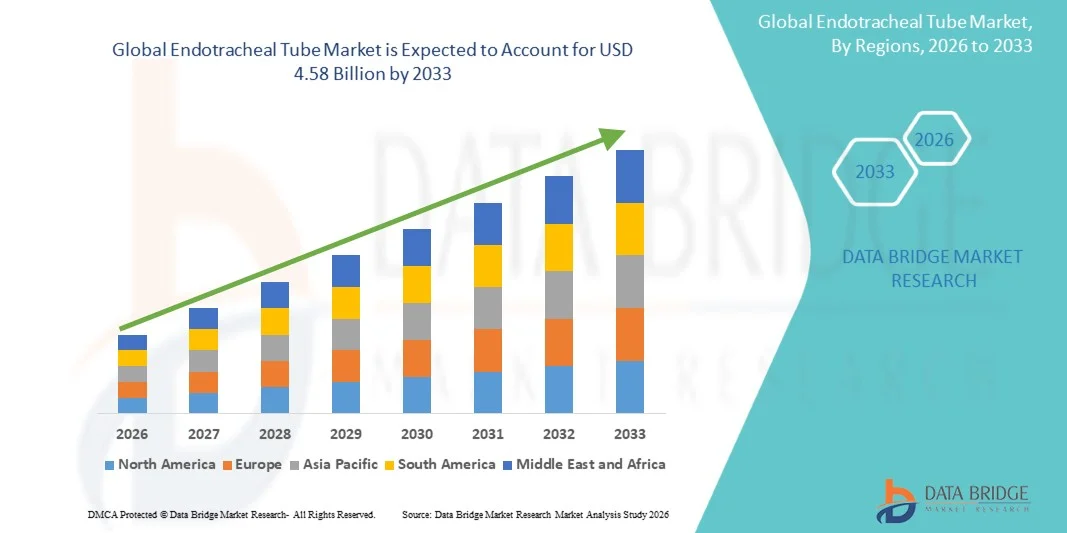
Endotracheal Tube Market Size
- The global endotracheal tube market size was valued at USD 2.77 billion in 2025 and is expected to reach USD 4.58 billion by 2033, at a CAGR of 6.49% during the forecast period
- The market growth is largely fueled by the increasing prevalence of respiratory conditions, rising surgical procedures requiring intubation, growth in ICU admissions, and continuous technological advancements in airway management devices, which are enhancing clinical outcomes and adoption rates worldwide
- Furthermore, growing healthcare expenditure, expansion of healthcare infrastructure in emerging markets, and heightened focus on patient safety and critical care management are driving demand for advanced, reliable endotracheal tube solutions across hospitals, emergency centers, and surgical facilities, thereby significantly boosting the industry’s growth
Endotracheal Tube Market Analysis
- Endotracheal tubes, providing a critical airway management solution during surgeries and respiratory emergencies, are increasingly essential in hospitals, ICUs, and emergency care settings due to their role in ensuring patient safety, facilitating mechanical ventilation, and supporting anesthesia administration
- The escalating demand for endotracheal tubes is primarily fueled by the rising prevalence of respiratory disorders, increasing surgical procedures, growing ICU admissions, and continuous technological advancements in airway management devices that enhance safety and ease of use
- North America dominated the endotracheal tube market with the largest revenue share of 38.9% in 2025, characterized by advanced healthcare infrastructure, high healthcare expenditure, and a strong presence of key industry players, with the U.S. experiencing substantial growth in endotracheal tube utilization across hospitals and surgical centers, driven by innovations in materials, design, and patient safety features
- Asia-Pacific is expected to be the fastest growing region in the endotracheal tube market during the forecast period due to expanding healthcare infrastructure, increasing surgical volumes, rising awareness of critical care, and growing healthcare spending in emerging economies
- Regular Endotracheal Tubes segment dominated the market with a share of 45.6% in 2025, driven by their widespread use in routine surgical procedures and emergency airway management due to ease of insertion, reliability, and compatibility with ventilation systems
Report Scope and Endotracheal Tube Market Segmentation
|
Attributes |
Endotracheal Tube Key Market Insights |
|
Segments Covered |
|
|
Countries Covered |
North America
Europe
Asia-Pacific
Middle East and Africa
South America
|
|
Key Market Players |
|
|
Market Opportunities |
|
|
Value Added Data Infosets |
In addition to the insights on market scenarios such as market value, growth rate, segmentation, geographical coverage, and major players, the market reports curated by the Data Bridge Market Research also include in-depth expert analysis, patient epidemiology, pipeline analysis, pricing analysis, and regulatory framework |
Endotracheal Tube Market Trends
“Advancements Through AI-Enabled and Material Innovations”
- A significant and accelerating trend in the global endotracheal tube market is the integration of AI-enabled monitoring systems and improved biocompatible materials, enhancing patient safety, ease of intubation, and reducing complications during surgeries and critical care
- For instance, some modern endotracheal tubes now feature AI-assisted cuff pressure monitoring, which continuously adjusts to minimize tissue damage while maintaining optimal ventilation. Similarly, reinforced tubes with advanced silicone coatings reduce airway trauma in prolonged mechanical ventilation
- AI integration in endotracheal tubes enables features such as predicting patient-specific ventilation requirements, providing alerts for tube displacement, and optimizing suctioning schedules. For instance, select ventilator systems can use tube-integrated sensors to send intelligent alerts if abnormal airway pressures are detected
- The combination of material innovation and AI-enabled monitoring facilitates better outcomes in both emergency and surgical settings, allowing clinicians to manage airways more efficiently and safely, while also reducing the risk of infection or injury
- This trend towards smarter, safer, and more patient-friendly endotracheal tubes is reshaping expectations in hospitals and ICUs. Consequently, companies such as Medtronic and Teleflex are developing AI-enabled and coated endotracheal tubes with features such as automatic cuff adjustment, improved visibility, and reduced airway trauma
- The demand for advanced, intelligent, and biocompatible endotracheal tubes is growing rapidly across both developed and emerging markets, as healthcare providers increasingly prioritize patient safety, procedural efficiency, and regulatory compliance
- Integration with connected ventilators and ICU monitoring systems is emerging, enabling real-time data collection and analysis to optimize patient ventilation management
Endotracheal Tube Market Dynamics
Driver
“Increasing Demand Due to Rising Surgical Procedures and Respiratory Disorders”
- The rising prevalence of respiratory illnesses, increasing surgical volumes, and growing ICU admissions is a significant driver for the heightened demand for endotracheal tubes
- For instance, in March 2025, Medtronic introduced a range of reinforced and preformed endotracheal tubes designed for complex surgeries and prolonged ventilation, expected to drive market growth in the forecast period
- As healthcare providers face higher volumes of critical care patients, endotracheal tubes offer advanced features such as reinforced materials, integrated sensors, and improved patient safety profiles, providing a compelling choice over conventional airway devices
- Furthermore, the increasing adoption of minimally invasive surgeries and emergency care protocols is making endotracheal tubes an essential component in both routine and critical procedures
- The availability of user-friendly, preformed, and disposable tubes, combined with rising awareness of airway management standards, further contributes to adoption across hospitals, ambulatory centers, and emergency care units
- Expansion of hospital networks and ICU facilities in emerging economies is increasing demand for reliable airway management devices, including endotracheal tubes
- Growing investments in emergency preparedness and trauma care infrastructure are accelerating adoption of advanced and specialized endotracheal tube variants
Restraint/Challenge
“Risk of Complications and Regulatory Compliance Hurdles”
- Concerns surrounding airway trauma, incorrect intubation, and infection risks pose a significant challenge to broader market penetration. Since endotracheal tubes are invasive devices, improper use or design flaws can lead to serious complications, raising anxieties among healthcare providers
- For instance, high-profile reports of ventilator-associated pneumonia and airway injuries in ICUs have made some clinicians cautious in adopting certain tube variants without proper training
- Addressing these concerns through robust design improvements, enhanced material biocompatibility, and staff training is crucial for building clinical trust. Companies such as Teleflex and Smiths Medical emphasize their safety features, antimicrobial coatings, and user-friendly designs to reassure medical professionals
- In addition, the relatively high cost of advanced or AI-enabled endotracheal tubes compared to standard tubes can be a barrier for adoption in price-sensitive hospitals, especially in emerging regions
- While prices are gradually decreasing and disposable options are expanding, perceived risks and compliance requirements can still hinder adoption, making regulatory approvals, training programs, and clinician education vital for sustained market growth
- Limited availability of skilled personnel to perform intubation safely in smaller clinics and rural healthcare centers can slow market penetration
- Stringent regulatory approvals and quality certification processes for new tube designs can delay product launches and adoption in multiple regions
Endotracheal Tube Market Scope
The market is segmented on the basis of product, route, application, and end use.
- By Product
On the basis of product, the endotracheal tube market is segmented into regular endotracheal tube, reinforced endotracheal tube, preformed endotracheal tube, and double lumen endotracheal tube. The Regular Endotracheal Tube segment dominated the market with the largest revenue share of 45.6% in 2025, driven by its widespread use in routine surgical procedures, emergency airway management, and ICU ventilation. Hospitals and emergency care units often prioritize regular tubes due to their ease of insertion, reliability, and compatibility with a variety of ventilation systems. These tubes are available in multiple sizes and cuff types, making them versatile for diverse patient demographics. The established clinical familiarity with regular tubes also supports their continued dominance. Furthermore, their relatively lower cost compared to specialized tubes makes them a preferred choice in both developed and emerging markets. Ongoing improvements in material and design further enhance patient safety, reinforcing their market leadership.
The Reinforced Endotracheal Tube segment is expected to witness the fastest growth rate from 2026 to 2033, fueled by increasing adoption in complex surgeries and prolonged mechanical ventilation scenarios. Reinforced tubes are preferred for procedures requiring unusual patient positioning, neck surgeries, or high-risk airway management due to their flexibility and resistance to kinking. Hospitals and surgical centers are increasingly investing in reinforced tubes to improve procedural safety and reduce airway complications. The rise of AI-assisted cuff pressure monitoring and improved silicone coatings in reinforced tubes further enhances their adoption. In addition, growing awareness of airway trauma reduction and the demand for patient-friendly solutions are supporting strong growth in this segment.
- By Route
On the basis of route, the endotracheal tube market is segmented into orotracheal and nasotracheal. The Orotracheal segment dominated the market in 2025 due to its simplicity, quick insertion, and suitability for a wide range of surgical and emergency scenarios. Orotracheal tubes are standard practice in most hospitals and ICUs because they allow easy ventilation, suctioning, and monitoring of patients. Emergency responders and anesthesiologists often prefer this route for rapid airway access in critical care and trauma situations. The availability of various tube sizes and cuff designs enhances flexibility and patient safety, supporting widespread adoption. In addition, ongoing technological innovations, such as reinforced or AI-enabled monitoring integration, are increasingly applied to orotracheal tubes, further consolidating their market dominance.
The Nasotracheal segment is expected to witness the fastest growth during the forecast period, driven by its rising use in oral and maxillofacial surgeries, ENT procedures, and prolonged ventilation where oral access is restricted. Nasotracheal tubes provide better stability and patient comfort in long-term intubation scenarios. Growing adoption in specialized surgical applications and pediatric care is contributing to this growth. Improved tube materials, coatings to reduce irritation, and reinforced designs are further enhancing clinical confidence and adoption rates. The segment also benefits from increasing awareness of patient safety protocols and hospital preference for procedure-specific airway management solutions.
- By Application
On the basis of application, the endotracheal tube market is segmented into emergency treatment, therapy, and others. The Emergency Treatment segment dominated the market with the largest revenue share in 2025, driven by the critical role of endotracheal tubes in trauma care, emergency intubations, and resuscitation scenarios. Hospitals, emergency medical services, and disaster response units heavily rely on endotracheal tubes to secure airways rapidly and ensure effective ventilation. The segment’s dominance is supported by high volumes of emergency cases globally, including respiratory distress, cardiac arrest, and accident-related trauma. Regular training programs, clinical familiarity, and integration with emergency ventilators further strengthen this segment’s market position. Technological enhancements such as AI-assisted monitoring, reinforced tubes, and disposable variants improve procedural efficiency and patient outcomes. Hospitals and emergency care providers continue to prioritize ready availability and reliability in emergency airway management devices, solidifying the segment’s leadership.
The Therapy segment is expected to witness the fastest growth from 2026 to 2033, fueled by rising demand for prolonged mechanical ventilation in ICUs, chronic respiratory therapy, and specialized post-surgical care. Hospitals and critical care units increasingly adopt therapy-focused endotracheal tubes to enhance patient comfort, reduce airway trauma, and facilitate long-term ventilation. Innovations such as reinforced, preformed, and AI-integrated tubes are accelerating growth in this segment. Growing ICU admissions, prevalence of respiratory diseases, and emphasis on improving clinical outcomes are key contributors. Awareness among healthcare providers regarding patient-specific ventilation optimization further drives adoption in therapy applications. The demand for advanced therapy tubes is particularly strong in emerging markets with expanding ICU infrastructure.
- By End Use
On the basis of end use, the endotracheal tube market is segmented into hospitals, clinics, ambulatory surgical centers, and others. The Hospitals segment dominated the market with the largest share in 2025, attributed to high patient volumes, ICU facilities, and extensive surgical procedures requiring endotracheal intubation. Hospitals prioritize reliable and versatile tubes for emergency, routine, and specialized care applications. Integration with advanced ventilation systems, AI-assisted monitoring, and availability of multiple tube variants further enhances adoption. Strong regulatory compliance, trained staff, and established procurement systems ensure consistent demand. The dominance is reinforced by hospital preference for pre-stocked, disposable, and sterilized tube options to minimize infection risk. Moreover, ongoing investments in hospital infrastructure and critical care equipment drive continued market growth in this segment.
The Ambulatory Surgical Centers (ASCs) segment is expected to witness the fastest growth during the forecast period, driven by the rising number of outpatient surgeries, minimally invasive procedures, and focus on efficiency in procedural care. ASCs increasingly adopt preformed and reinforced endotracheal tubes for short-term ventilation and procedural safety. Cost-effectiveness, ease of use, and reduced post-operative complications make these tubes attractive for ASCs. Growth in elective surgeries, expansion of ASCs in urban and semi-urban regions, and increasing awareness of airway management standards are supporting rapid adoption. Technological innovations, disposable tube preferences, and integration with portable ventilators further contribute to segment growth.
Endotracheal Tube Market Regional Analysis
- North America dominated the endotracheal tube market with the largest revenue share of 38.9% in 2025, characterized by advanced healthcare infrastructure, high healthcare expenditure, and a strong presence of key industry players, with the U.S. experiencing substantial growth in endotracheal tube utilization across hospitals and surgical centers, driven by innovations in materials, design, and patient safety features
- Healthcare providers in the region prioritize patient safety, procedural efficiency, and reliable airway management, leading to widespread adoption of regular, reinforced, and AI-enabled endotracheal tubes in hospitals, ICUs, and surgical centers
- This strong market presence is further supported by continuous technological innovations, high awareness of airway management best practices, and investments in emergency care and ICU expansion, establishing endotracheal tubes as essential devices across both routine and critical care settings in North America
U.S. Endotracheal Tube Market Insight
The U.S. endotracheal tube market captured the largest revenue share of 80% in North America in 2025, driven by the country’s advanced healthcare infrastructure, high ICU and surgical volumes, and the rising prevalence of respiratory disorders. Hospitals and emergency care units are increasingly adopting regular, reinforced, and AI-enabled endotracheal tubes to improve patient safety and procedural efficiency. The growing emphasis on critical care protocols, trauma management, and postoperative ventilation further propels market demand. Moreover, integration with advanced ventilators, monitoring systems, and disposable tube variants is significantly contributing to the market’s expansion.
Europe Endotracheal Tube Market Insight
The Europe endotracheal tube market is projected to expand at a substantial CAGR during the forecast period, primarily driven by increasing ICU admissions, surgical procedures, and stringent patient safety regulations. Rising urbanization, along with growing investments in hospital infrastructure and adoption of advanced medical devices, is fostering market growth. European healthcare providers are focusing on patient-centric solutions, prompting higher adoption of reinforced, preformed, and AI-enabled tubes. The market is witnessing growth across hospitals, clinics, and ambulatory surgical centers, with tubes being incorporated into both new facilities and upgraded critical care units.
U.K. Endotracheal Tube Market Insight
The U.K. endotracheal tube market is anticipated to grow at a noteworthy CAGR during the forecast period, driven by increasing demand for emergency care, surgical interventions, and critical care services. Concerns over patient safety, airway management efficiency, and reducing ventilation-related complications are encouraging hospitals and clinics to adopt advanced endotracheal tubes. The U.K.’s strong healthcare infrastructure, widespread adoption of connected ventilators, and robust medical supply chain are expected to continue stimulating market growth.
Germany Endotracheal Tube Market Insight
The Germany endotracheal tube market is expected to expand at a considerable CAGR during the forecast period, fueled by increasing awareness of patient safety, technological advancements in tube design, and rising critical care procedures. Germany’s well-developed healthcare system, emphasis on innovation, and adoption of AI-enabled monitoring solutions promote the use of advanced endotracheal tubes, particularly in hospitals and ICUs. Integration with high-end ventilators and digital monitoring systems is becoming increasingly prevalent, with a strong focus on reliability, biocompatibility, and patient comfort aligning with local clinical expectations.
Asia-Pacific Endotracheal Tube Market Insight
The Asia-Pacific endotracheal tube market is poised to grow at the fastest CAGR of 24% during the forecast period of 2026 to 2033, driven by increasing surgical volumes, ICU expansion, and rising prevalence of respiratory illnesses in countries such as China, Japan, and India. The region’s growing healthcare infrastructure, supported by government initiatives and rising healthcare spending, is driving adoption of regular, reinforced, and preformed tubes. Furthermore, APAC is emerging as a manufacturing hub for advanced airway management devices, improving accessibility and affordability for hospitals, clinics, and ambulatory surgical centers.
Japan Endotracheal Tube Market Insight
The Japan endotracheal tube market is gaining momentum due to high ICU utilization, increasing surgeries, and a focus on technological advancements in critical care. Hospitals and surgical centers are prioritizing advanced tubes, including AI-enabled and reinforced variants, to improve patient safety and procedural efficiency. Integration with connected ventilators and monitoring systems, along with the need for minimally invasive intubation techniques, is fueling growth. Moreover, Japan’s aging population is likely to spur demand for safer and easier-to-use airway management solutions across both residential healthcare facilities and commercial hospitals.
India Endotracheal Tube Market Insight
The India endotracheal tube market accounted for the largest revenue share in Asia-Pacific in 2025, attributed to rapid urbanization, increasing ICU and surgical procedures, and high healthcare investments. India is witnessing significant growth in hospital, clinic, and ambulatory surgical center adoption of endotracheal tubes, driven by rising awareness of patient safety and procedural efficiency. The expansion of private hospitals, government initiatives supporting critical care infrastructure, and availability of affordable tube options, alongside domestic manufacturing capabilities, are key factors propelling market growth in India.
Endotracheal Tube Market Share
The Endotracheal Tube industry is primarily led by well-established companies, including:
- Medtronic (U.S.)
- Teleflex Medical (U.S.)
- ICU Medical, Inc. (U.S.)
- BD (U.S.)
- Intersurgical Ltd (U.K.)
- Ambu A/S (Denmark)
- Fuji Systems Corporation (Japan)
- Smiths Medical (U.K.)
- Medline Industries, Inc. (U.S.)
- Vygon SAS (France)
- Hollister Incorporated (U.S.)
- ANGIPLAST PRIVATE LIMITED (India)
- Well Lead Medical Co.,Ltd. (China)
- Sewoon Medical Co., Ltd. (South Korea)
- Sterimed Medical Devices Pvt. Ltd. (India)
- Parker Medical Inc. (U.S.)
- Hospiteknik Healthcare (India)
- Bactiguard AB (Sweden)
- Neurovision Medical Products, Inc. (U.S.)
What are the Recent Developments in Global Endotracheal Tube Market?
- In March 2025, ICU Medical issued an urgent medical device correction for certain Smiths Medical endotracheal tubes after identifying that some units may be smaller than labeled, which could lead to inadequate ventilation in patients. This safety development underscores the importance of strict manufacturing quality control and regulatory oversight in airway management devices to ensure effective ventilation and patient safety in clinical practice
- In January 2025, Ambu A/S announced the launch of its Ambu® SureSight™ Connect video laryngoscopy solution, designed to enhance airway visualization and facilitate safer, more efficient intubations in both routine and difficult airway management situations. The platform integrates with Ambu’s digital systems to streamline clinician workflow, improve visibility during endotracheal tube placement, and support one‑lung ventilation procedures a notable step toward integrated airway visualization solutions
- In November 2023, researchers at the University of Nottingham announced that the world’s first smart breathing tube equipped with optical fibre sensors (iTraXS) was set to enter human clinical trials, marking a significant innovation in endotracheal tube technology that could improve real‑time monitoring of cuff pressure and ventilation in mechanically ventilated patients, potentially reducing complications such as ventilator‑associated pneumonia and enhancing patient outcomes
- In August 2021, researchers at the Children’s Hospital of Philadelphia (CHOP) developed an antimicrobial peptide‑releasing coating for endotracheal tubes that consistently releases specific peptides over time to target infectious bacteria. This proof‑of‑concept innovation aims to reduce bacterial colonization and inflammation associated with intubation, potentially lowering the risk of complications such as subglottic stenosis and ventilator‑associated infections during prolonged airway management
- In May 2021, Medtronic plc commercially launched the SonarMed™ Airway Monitoring System in the U.S., a pioneering technology that continuously monitors endotracheal tube position and detects obstructions in real‑time using acoustic reflectometry. This system provides clinicians with timely, actionable data during mechanical ventilation especially in neonatal and pediatric care helping improve patient safety by reducing unplanned extubations and unnecessary imaging
SKU-
Get online access to the report on the World's First Market Intelligence Cloud

- Interactive Data Analysis Dashboard
- Company Analysis Dashboard for high growth potential opportunities
- Research Analyst Access for customization & queries
- Competitor Analysis with Interactive dashboard
- Latest News, Updates & Trend analysis
- Harness the Power of Benchmark Analysis for Comprehensive Competitor Tracking
Research Methodology
Data collection and base year analysis are done using data collection modules with large sample sizes. The stage includes obtaining market information or related data through various sources and strategies. It includes examining and planning all the data acquired from the past in advance. It likewise envelops the examination of information inconsistencies seen across different information sources. The market data is analysed and estimated using market statistical and coherent models. Also, market share analysis and key trend analysis are the major success factors in the market report. To know more, please request an analyst call or drop down your inquiry.
The key research methodology used by DBMR research team is data triangulation which involves data mining, analysis of the impact of data variables on the market and primary (industry expert) validation. Data models include Vendor Positioning Grid, Market Time Line Analysis, Market Overview and Guide, Company Positioning Grid, Patent Analysis, Pricing Analysis, Company Market Share Analysis, Standards of Measurement, Global versus Regional and Vendor Share Analysis. To know more about the research methodology, drop in an inquiry to speak to our industry experts.
Customization Available
Data Bridge Market Research is a leader in advanced formative research. We take pride in servicing our existing and new customers with data and analysis that match and suits their goal. The report can be customized to include price trend analysis of target brands understanding the market for additional countries (ask for the list of countries), clinical trial results data, literature review, refurbished market and product base analysis. Market analysis of target competitors can be analyzed from technology-based analysis to market portfolio strategies. We can add as many competitors that you require data about in the format and data style you are looking for. Our team of analysts can also provide you data in crude raw excel files pivot tables (Fact book) or can assist you in creating presentations from the data sets available in the report.