


Occupational Respiratory Disorders Market Size
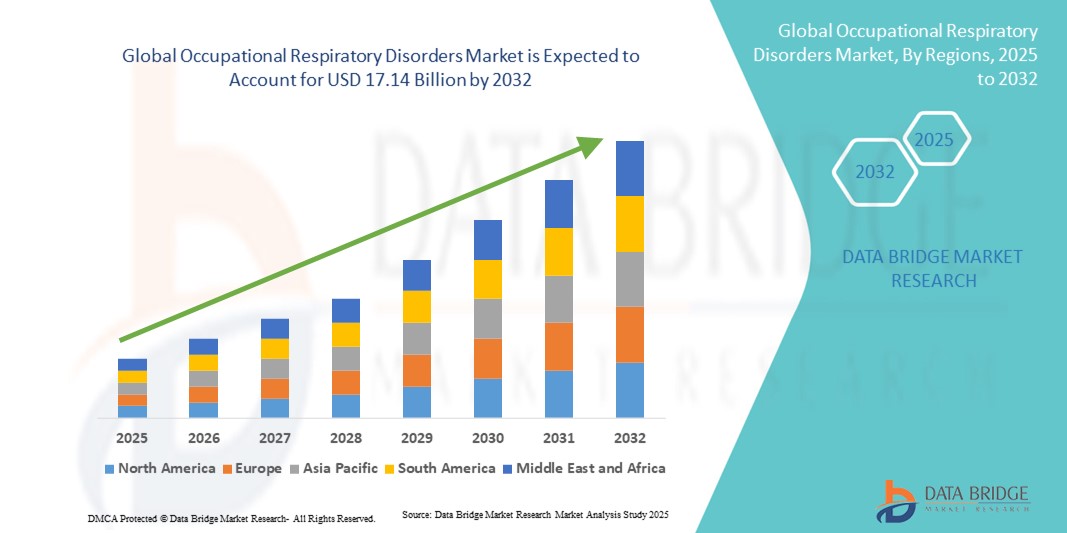
- The global occupational respiratory disorders market size was valued at USD 10.51 billion in 2024 and is expected to reach USD 17.14 billion by 2032, at a CAGR of 6.30% during the forecast period
- The market growth is largely fueled by the increasing prevalence of occupational respiratory conditions such as asbestosis, work-related asthma, and black lung disease, coupled with rising awareness and stringent regulatory measures in workplaces
- Furthermore, advancements in diagnostic and therapeutic technologies, along with growing employer investments in preventive and treatment solutions, are driving the adoption of effective management strategies for occupational respiratory disorders, thereby significantly boosting the industry's growth
Occupational Respiratory Disorders Market Analysis
- Occupational respiratory disorders (ORDs), including asbestosis, silicosis, work-related asthma, and black lung disease, are increasingly recognized as critical health concerns in industrial and occupational settings due to prolonged exposure to hazardous dust, chemicals, and fumes, significantly affecting workforce productivity and quality of life
- The escalating demand for effective ORD management is primarily fueled by growing industrialization, increasing exposure to occupational hazards, rising awareness of workplace health, and stringent regulatory measures, prompting greater adoption of diagnostic, preventive, and therapeutic solutions
- North America dominated the occupational respiratory disorders market with the largest revenue share of 39% in 2024, driven by stringent regulatory frameworks, advanced diagnostic and treatment facilities, well-established healthcare infrastructure, and increased employer initiatives for employee health and safety, particularly in manufacturing, mining, and construction sectors
- Asia-Pacific is expected to be the fastest-growing region in the occupational respiratory disorders market during the forecast period due to rapid industrialization, urbanization, and rising investment in occupational health management and respiratory care solutions
- Asbestosis segment dominated the occupational respiratory disorders market with a market share of 30.5% in 2024, driven by its high prevalence among workers exposed to asbestos in construction, shipbuilding, and related industries, coupled with the need for continuous monitoring and treatment
Report Scope and Occupational Respiratory Disorders Market Segmentation
|
Attributes |
Occupational Respiratory Disorders Key Market Insights |
|
Segments Covered |
|
|
Countries Covered |
North America
Europe
Asia-Pacific
Middle East and Africa
South America
|
|
Key Market Players |
|
|
Market Opportunities |
|
|
Value Added Data Infosets |
In addition to the insights on market scenarios such as market value, growth rate, segmentation, geographical coverage, and major players, the market reports curated by the Data Bridge Market Research also include in-depth expert analysis, pricing analysis, brand share analysis, consumer survey, demography analysis, supply chain analysis, value chain analysis, raw material/consumables overview, vendor selection criteria, PESTLE Analysis, Porter Analysis, and regulatory framework. |
Occupational Respiratory Disorders Market Trends
Advancements in Diagnostic and Therapeutic Technologies
- A significant and accelerating trend in the global occupational respiratory disorders (ORD) market is the adoption of advanced diagnostic tools and therapeutic technologies, including AI-powered imaging, wearable respiratory monitors, and personalized treatment regimens, which are improving early detection and disease management
- For instance, AI-assisted spirometry and digital stethoscopes enable clinicians to identify abnormal lung function patterns more accurately, while wearable sensors monitor exposure to hazardous dust and chemicals in real-time, helping prevent disease progression
- Integration of digital health platforms with ORD management allows healthcare providers to track patient adherence to medications, provide teleconsultation, and adjust therapy plans remotely, improving outcomes and reducing hospital visits
- Emerging therapeutic solutions, such as targeted corticosteroid delivery systems and combination drug therapies, are enhancing the efficacy of treatment for conditions such as asbestosis, silicosis, and work-related asthma, thereby improving patient quality of life
- This trend towards technologically advanced, patient-centric, and data-driven management systems is reshaping expectations for occupational health, with companies such as ResMed and 3M developing AI-enabled diagnostic and monitoring devices for workplace respiratory health
- The demand for solutions that integrate advanced diagnostics, continuous monitoring, and personalized therapy is growing rapidly across industrial, construction, and mining sectors, as employers seek to protect workforce health and comply with regulatory standards
Occupational Respiratory Disorders Market Dynamics
Driver
Rising Occupational Health Awareness and Regulatory Measures
- The increasing awareness of occupational health risks among workers and employers, coupled with stricter safety regulations, is a key driver of market growth. Companies are investing in preventive measures, early diagnostics, and effective treatment solutions to reduce disease incidence
- For instance, in 2024, several mining and manufacturing companies in North America and Europe implemented workplace respiratory monitoring programs to comply with OSHA and EU safety regulations, integrating advanced detection tools and protective strategies
- Growing recognition of long-term productivity losses and healthcare costs associated with ORD has increased the adoption of preventive interventions, respiratory protective equipment, and therapeutic treatments
- The push for safer working environments, especially in high-risk industries such as construction, mining, and chemical manufacturing, is driving demand for comprehensive ORD management solutions
- Rising investment in occupational health programs, coupled with technological innovations, is enabling early intervention and improved disease outcomes, further propelling market growth
Restraint/Challenge
High Treatment Costs and Limited Access in Emerging Regions
- The relatively high cost of advanced diagnostics, monitoring devices, and targeted therapies poses a challenge for broader adoption, particularly in developing regions where occupational health programs may be underfunded
- For instance, AI-powered diagnostic systems and personalized therapeutic regimens can be expensive, limiting their availability to large enterprises or urban hospitals, while small-scale industries struggle to implement such measures
- Additionally, limited awareness about occupational respiratory disorders and inadequate healthcare infrastructure in emerging markets restrict early diagnosis and timely treatment, leading to disease progression and higher morbidity
- Overcoming these challenges requires cost-effective solutions, mobile diagnostic programs, employee education initiatives, and government or employer-supported occupational health schemes to expand access to effective ORD management
- Reducing treatment costs, increasing awareness, and improving infrastructure will be vital to ensure equitable access and sustained growth of the occupational respiratory disorders market
Occupational Respiratory Disorders Market Scope
The market is segmented on the basis of disease type, cause, drug type, severity, route of administration, end user, and distribution channel.
- By Disease Type
On the basis of disease type, the occupational respiratory disorders market is segmented into asbestosis, black lung disease, silicosis, byssinosis, hypersensitivity pneumonitis, work-related asthma, and others. Asbestosis dominated the ORD market with a market share of 30.5% in 2024, driven by long-term exposure to asbestos in industries such as construction, shipbuilding, and manufacturing. Chronic inhalation of asbestos fibers leads to progressive lung fibrosis, making early diagnosis and treatment critical. Regulatory focus on occupational health and safety has increased workplace screening and preventive programs. Hospitals and specialty clinics prioritize continuous monitoring and long-term care for affected workers. Advanced imaging techniques and therapeutic interventions further reinforce the dominance of this segment. Additionally, the growing awareness of health risks among workers ensures sustained demand for asbestosis management solutions.
Work-related asthma is expected to witness the fastest growth during the forecast period due to increasing exposure to industrial chemicals, dust, and fumes in emerging economies. Improved diagnostic tools, workplace safety initiatives, and preventive health programs are raising detection and reporting rates. The rising adoption of inhalers and targeted therapies is expanding treatment options. Employers are investing in early intervention programs to reduce absenteeism and healthcare costs. Regulatory compliance in industrial sectors further drives growth. Overall, growing awareness of occupational asthma and technological advancements in its management support rapid segment expansion.
- By Cause
On the basis of cause, the occupational respiratory disorders market is segmented into organic and inorganic. Inorganic dusts, including silica, asbestos, and coal dust, dominated the market in 2024 with around 60% share. Chronic exposure in mining, construction, and manufacturing industries leads to severe respiratory disorders, driving the need for diagnostic tools and therapeutic interventions. Workplace safety regulations and preventive programs have reinforced market adoption. Protective equipment, monitoring devices, and treatment solutions are widely used to manage inorganic dust-related disorders. Hospitals and clinics are focusing on long-term care strategies for affected workers. Industrial compliance requirements ensure continuous investment in this segment, maintaining its dominance.
Organic dusts are expected to witness the fastest growth during forecast period, due to rising exposure in agriculture, textile, and food processing industries in Asia-Pacific and Latin America. These dusts can cause hypersensitivity pneumonitis, byssinosis, and work-related asthma, creating demand for preventive and therapeutic solutions. Industrial expansion and workforce growth in emerging regions increase the at-risk population. Awareness campaigns and occupational health programs promote early detection and management. Companies are introducing advanced monitoring systems to mitigate risks. Rising regulations and preventive initiatives contribute to the rapid growth of this segment.
- By Drug Type
On the basis of drug type, the occupational respiratory disorders market is segmented into mycolytics, antibiotics, corticosteroids, antihistamines, and others. Corticosteroids dominated the market in 2024 with 35% share, due to their effectiveness in controlling inflammation in chronic respiratory disorders such as asbestosis, silicosis, and work-related asthma. They are widely used across hospitals and specialty clinics. Corticosteroids are available in oral, nasal, and inhaled forms, increasing patient compliance. Advanced formulations and combination therapies further enhance efficacy. Their long-term use in chronic cases ensures steady demand. The broad clinical adoption of corticosteroids reinforces this segment’s dominance in the market.
Mycolytics are anticipated to be the fastest-growing during forecast period, as they improve mucus clearance and lung function in chronic and acute conditions. Increasing industrial workforce exposure and rising incidences of respiratory complications drive demand. Advanced delivery systems and combination therapies are enhancing effectiveness and convenience. Awareness programs and occupational health initiatives are promoting adoption in emerging markets. Hospitals, clinics, and pharmacies are witnessing higher utilization rates. Growing integration of mycolytics into preventive care programs supports rapid segment growth.
- By Severity
On the basis of severity, the occupational respiratory disorders market is segmented into acute and chronic. Chronic respiratory disorders held the largest market share of 70% in 2024 due to long-term exposure and progressive disease characteristics. Conditions such as asbestosis, silicosis, and black lung disease require continuous treatment and monitoring. Chronic cases lead to significant healthcare expenditure, encouraging hospitals and governments to invest in prevention and management. Long-term medication and monitoring programs are common for affected workers. Employer-led initiatives also support ongoing care. This sustained demand and regulatory focus maintain the dominance of chronic cases in the market.
Acute respiratory disorders are expected to witness the fastest growth during forecast period, due to sudden exposure to high levels of dust, chemicals, and fumes in industrial accidents. Early intervention and rapid treatment are critical to reduce morbidity. Industrial growth in emerging regions increases the incidence of acute cases. Hospitals and clinics are adopting fast-acting drugs and emergency care protocols. Workplace monitoring and early diagnosis programs are expanding rapidly. Awareness campaigns about occupational hazards contribute to the faster adoption of acute disorder management solutions.
- By Route of Administration
On the basis of route of administration, the occupational respiratory disorders market is segmented into oral, nasal, and parenteral. Oral medications dominated with approximately 50% share due to ease of administration, systemic effect, and suitability for long-term therapy. Oral corticosteroids and antibiotics are widely used in hospitals, clinics, and specialty clinics. High patient compliance makes oral medications preferred. They support both chronic and acute disorder management. The availability of generics ensures affordability for long-term use. Oral drugs remain the backbone of therapeutic management in ORD treatment, maintaining dominance.
Nasal administration is anticipated to witness the fastest growth during forecast period, due to targeted delivery, rapid symptom relief, and lower systemic side effects. Inhalers and nasal sprays are increasingly adopted for allergic and inflammatory respiratory conditions. Rising awareness of localized drug delivery benefits drives adoption. Hospitals, clinics, and occupational health programs are promoting nasal therapies. Technological advancements in delivery devices improve patient compliance. The convenience and effectiveness of nasal routes contribute to its rapid growth.
- By End User
On the basis of end user, the occupational respiratory disorders market is segmented into hospitals, specialty clinics, diagnostic centers, research institutes, and others. Hospitals dominated with around 40% share due to comprehensive facilities, advanced diagnostics, and specialist care for severe ORD cases. They serve as primary centers for chronic and acute disorder management. Hospitals provide long-term treatment programs and follow-ups. Integration of occupational health programs enhances care quality. They act as major distribution points for prescription medications. Their infrastructure and capabilities support dominance in the market.
Specialty clinics are the fastest-growing segment during forecast period, due to focus on occupational health, outpatient care, and industry-specific preventive programs. They provide personalized treatment, early diagnosis, and flexible care options. Rapid expansion in emerging regions supports higher adoption. Occupational health initiatives and regulatory compliance drive demand. Specialty clinics integrate monitoring devices and therapies for targeted interventions. Their patient-centric model and convenience contribute to faster growth.
- By Distribution Channel
On the basis of distribution channel, the occupational respiratory disorders market is segmented into hospital pharmacy, retail pharmacy, online pharmacies, and others. Hospital pharmacies dominated with approximately 45% share as they provide controlled access to prescription drugs and therapeutic solutions. They ensure availability for inpatient and outpatient treatment. Long-term monitoring and follow-up programs rely on hospital pharmacy distribution. Hospitals maintain consistent supply for chronic and acute cases. Collaboration with healthcare providers supports efficient medication management. Regulatory compliance also reinforces hospital pharmacies as the dominant distribution channel.
Online pharmacies are expected to witness the fastest growth during forecast period, due to increasing e-commerce adoption and wider accessibility, particularly in remote industrial regions. Home delivery services provide convenience for workers with limited access to hospitals. Telemedicine integration supports digital prescriptions and follow-up care. Growing awareness of online pharmacy services is expanding the consumer base. Cost-effectiveness and convenience enhance adoption. The increasing role of technology in healthcare distribution drives rapid growth for this segment.
Occupational Respiratory Disorders Market Regional Analysis
- North America dominated the occupational respiratory disorders market with the largest revenue share of 39% in 2024, driven by stringent regulatory frameworks, advanced diagnostic and treatment facilities, well-established healthcare infrastructure, and increased employer initiatives for employee health and safety, particularly in manufacturing, mining, and construction sectors
- Employers and healthcare providers in the region prioritize early diagnosis, continuous monitoring, and effective management of occupational respiratory disorders, supported by advanced diagnostic tools and therapeutic solutions
- The prevalence of industries such as mining, construction, and manufacturing, combined with regulatory compliance requirements from OSHA and other agencies, fuels demand for protective equipment, monitoring devices, and medications
U.S. Occupational Respiratory Disorders Market Insight
The U.S. occupational respiratory disorders market captured the largest revenue share of 42% in 2024 within North America, driven by stringent occupational health regulations, advanced industrial safety standards, and high awareness of workplace respiratory risks. Employers and healthcare providers are increasingly prioritizing early diagnosis, monitoring, and management of occupational respiratory disorders. The prevalence of industries such as mining, construction, and manufacturing, combined with well-established occupational health programs, fuels demand for diagnostic tools, protective equipment, and therapeutic treatments. Rising adoption of telemedicine and digital health solutions for workforce monitoring further propels market growth. Additionally, government initiatives promoting workplace safety and preventive healthcare are significantly contributing to market expansion.
Europe Occupational Respiratory Disorders Market Insight
The Europe occupational respiratory disorders market is projected to grow at a steady CAGR during the forecast period, primarily driven by strict industrial safety regulations, high awareness of occupational hazards, and the adoption of preventive healthcare programs. The prevalence of respiratory disorders among industrial workers is encouraging employers to invest in protective measures, regular health monitoring, and early treatment. Countries such as Germany, France, and Italy are witnessing increased adoption of advanced diagnostic tools, therapeutic solutions, and workplace health programs. Rising urbanization and industrialization, combined with a focus on employee well-being, are fostering market expansion across manufacturing, mining, and construction sectors.
U.K. Occupational Respiratory Disorders Market Insight
The U.K. occupational respiratory disorders market is anticipated to grow at a significant CAGR during the forecast period, driven by heightened awareness of workplace respiratory hazards and stringent regulatory frameworks. Employers are increasingly investing in occupational health services, preventive screenings, and employee wellness programs. The country’s strong healthcare infrastructure and emphasis on early diagnosis support rapid adoption of treatment and monitoring solutions. Additionally, awareness campaigns targeting industrial workers and the integration of digital health solutions are expected to further stimulate market growth.
Germany Occupational Respiratory Disorders Market Insight
The Germany occupational respiratory disorders market is expected to expand at a considerable CAGR during the forecast period, fueled by growing awareness of industrial respiratory risks and robust occupational safety regulations. Germany’s well-developed industrial infrastructure, combined with advanced healthcare systems, promotes early diagnosis, preventive care, and effective management of occupational respiratory disorders. Employers are focusing on workplace monitoring and implementation of protective measures to mitigate exposure. The demand for advanced diagnostic tools, therapeutic treatments, and workforce wellness programs is steadily increasing, supporting market growth.
Asia-Pacific Occupational Respiratory Disorders Market Insight
The Asia-Pacific occupational respiratory disorders market is poised to grow at the fastest CAGR of 23% during the forecast period of 2025 to 2032, driven by rapid industrialization, increasing workforce population, and rising awareness of occupational health. Countries such as China, India, and Japan are witnessing higher incidences of respiratory disorders due to mining, manufacturing, and construction activities. Government initiatives promoting workplace safety, combined with the adoption of preventive care and diagnostic technologies, are accelerating market growth. Additionally, the region’s expanding healthcare infrastructure and increasing investment in occupational health programs are supporting wider adoption of monitoring and treatment solutions.
Japan Occupational Respiratory Disorders Market Insight
The Japan occupational respiratory disorders market is gaining momentum due to high industrial activity, advanced healthcare systems, and a strong emphasis on employee safety. The aging workforce and increasing awareness of occupational health are driving the demand for preventive care, early diagnosis, and treatment of respiratory disorders. Integration of digital health technologies for monitoring workplace exposure and employee health is supporting market growth. Moreover, government programs promoting occupational safety and regular health check-ups further enhance adoption across industrial and commercial sectors.
India Occupational Respiratory Disorders Market Insight
The India occupational respiratory disorders market accounted for the largest revenue share in Asia-Pacific in 2024, attributed to rapid industrialization, expanding workforce, and rising awareness of workplace health hazards. The mining, construction, and manufacturing sectors are major contributors to occupational respiratory disorders, prompting the adoption of protective measures, diagnostic solutions, and therapeutic treatments. Government initiatives promoting occupational safety and the emergence of specialized clinics are driving market expansion. Additionally, growing industrial compliance and the availability of cost-effective treatment options further support the region’s market growth.
Occupational Respiratory Disorders Market Share
The occupational respiratory disorders industry is primarily led by well-established companies, including:
- AstraZeneca (U.K.)
- GSK plc (U.K.)
- Novartis AG (Switzerland)
- Boehringer Ingelheim Pharmaceuticals, Inc. (U.S.)
- Gilead Sciences, Inc. (U.S.)
- Bayer AG (Germany)
- Pfizer Inc. (U.S.)
- Bristol-Myers Squibb Company (U.S.)
- Merck & Co., Inc. (U.S.)
- Sanofi (U.S.)
- Mallinckrodt Pharmaceuticals (U.K.)
- F. Hoffmann-La Roche Ltd (Switzerland)
- Vertex Pharmaceuticals Incorporated (U.S.)
- Koninklijke Philips N.V., (U.S.)
- The University of Iowa (U.S.)
- University of Wisconsin Hospitals and Clinics Authority (U.S.)
- Medtronic (Ireland)
- AbbVie Inc. (U.S.)
- Baxter International Inc. (U.S.)
What are the Recent Developments in Global Occupational Respiratory Disorders Market?
- In July 2025, the European Lung Foundation launched the "Joint Action on Chronic Respiratory Diseases" (JARED) project to promote early recognition and independent management of chronic lung diseases. The project, coordinated by the National Korányi Institute for Pulmonology in Hungary, aims to strengthen and renew efforts within the European Union to reduce chronic lung diseases through innovative solutions. It intends to promote early recognition of diseases and support the independent management of their condition
- In June 2025, Sanofi announced its acquisition of Blueprint Medicines, a biopharmaceutical company specializing in rare immunological diseases. This collaboration expands Sanofi's portfolio and pipeline in immunology, which includes treatments for diseases that can have occupational links, such as systemic mastocytosis
- In April 2025, Sanofi announced advancements in its respiratory pipeline, including new data in asthma and plans for new clinical studies in chronic obstructive pulmonary disease (COPD). This development underscores Sanofi's commitment to addressing occupational respiratory disorders through innovative treatments
- In April 2025, TytoCare received FDA clearance for its AI-powered Tyto Insights, a tool designed to detect rhonchi, a lung sound associated with respiratory conditions. This technology aims to extend specialist diagnostics to primary care and home settings, enhancing early detection of occupational respiratory diseases
- In May 2023, Sanofi presented late-breaking data at the American Thoracic Society (ATS) 2023 conference, demonstrating significant advancements across Dupixent® and its broader respiratory pipeline. Dupixent has shown potential in treating COPD, a key concern in occupational respiratory health.

- Interactive Data Analysis Dashboard
- Company Analysis Dashboard for high growth potential opportunities
- Research Analyst Access for customization & queries
- Competitor Analysis with Interactive dashboard
- Latest News, Updates & Trend analysis
- Harness the Power of Benchmark Analysis for Comprehensive Competitor Tracking
Data collection and base year analysis are done using data collection modules with large sample sizes. The stage includes obtaining market information or related data through various sources and strategies. It includes examining and planning all the data acquired from the past in advance. It likewise envelops the examination of information inconsistencies seen across different information sources. The market data is analysed and estimated using market statistical and coherent models. Also, market share analysis and key trend analysis are the major success factors in the market report. To know more, please request an analyst call or drop down your inquiry.
The key research methodology used by DBMR research team is data triangulation which involves data mining, analysis of the impact of data variables on the market and primary (industry expert) validation. Data models include Vendor Positioning Grid, Market Time Line Analysis, Market Overview and Guide, Company Positioning Grid, Patent Analysis, Pricing Analysis, Company Market Share Analysis, Standards of Measurement, Global versus Regional and Vendor Share Analysis. To know more about the research methodology, drop in an inquiry to speak to our industry experts.
Data Bridge Market Research is a leader in advanced formative research. We take pride in servicing our existing and new customers with data and analysis that match and suits their goal. The report can be customized to include price trend analysis of target brands understanding the market for additional countries (ask for the list of countries), clinical trial results data, literature review, refurbished market and product base analysis. Market analysis of target competitors can be analyzed from technology-based analysis to market portfolio strategies. We can add as many competitors that you require data about in the format and data style you are looking for. Our team of analysts can also provide you data in crude raw excel files pivot tables (Fact book) or can assist you in creating presentations from the data sets available in the report.












