


Enteral Syringe Market Size
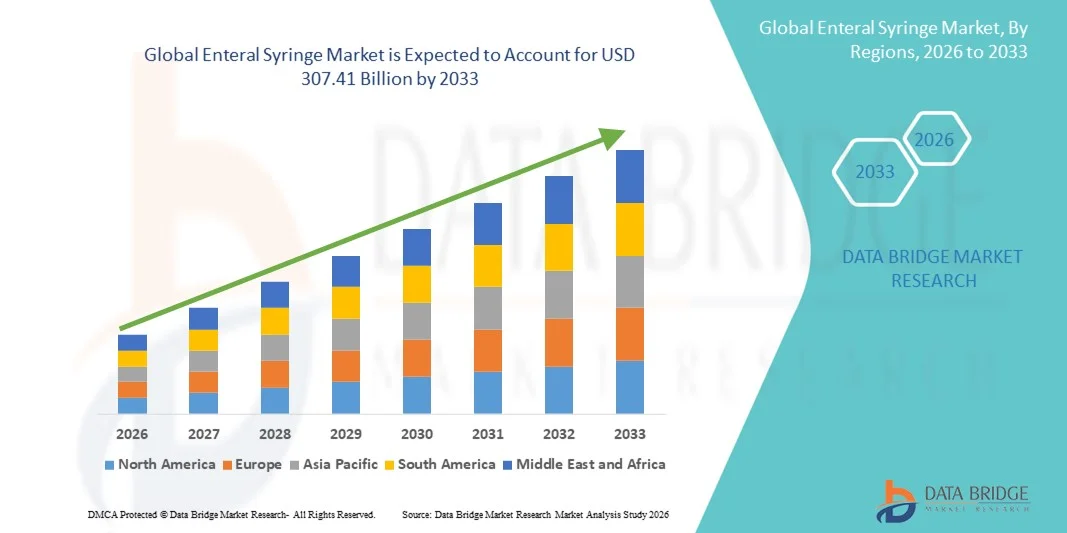
- The global enteral syringe market size was valued at USD 199.40 billion in 2025 and is expected to reach USD 307.41 billion by 2033, at a CAGR of 5.56% during the forecast period
- The market growth is largely fueled by the increasing adoption of enteral feeding practices and continuous technological advancements in enteral syringe design, leading to improved safety, accuracy, and efficiency in medication and nutritional delivery across hospitals, clinics, and homecare settings
- Furthermore, rising demand for safe, user-friendly, and standardized enteral administration devices is establishing enteral syringes as the preferred solution for oral and tube feeding. These converging factors are accelerating the uptake of enteral syringe solutions, thereby significantly boosting the growth of the Enteral Syringe market
Enteral Syringe Market Analysis
- Enteral syringes, designed specifically for the safe delivery of enteral nutrition and oral medications, are essential components of modern healthcare across hospitals, long-term care facilities, and homecare settings due to their accuracy, safety features, and compatibility with feeding tubes
- The rising demand for enteral syringes is primarily driven by the growing prevalence of chronic diseases, increasing geriatric population, expanding use of enteral feeding in neonatal and pediatric care, and heightened focus on preventing medication administration errors through the adoption of ENFit-compliant devices
- North America dominated the enteral syringe market, accounting for approximately 38.4% of the global revenue share in 2025, supported by advanced healthcare infrastructure, high awareness regarding patient safety, widespread adoption of enteral feeding protocols, and strong presence of leading medical device manufacturers, with the U.S. contributing significantly due to high hospital and homecare usage
- Asia-Pacific is expected to be the fastest-growing region in the Enteral Syringe market during the forecast period, registering a strong CAGR driven by rising healthcare expenditure, increasing hospitalization rates, growing adoption of enteral nutrition in emerging economies, and expanding home healthcare services
- The adults segment accounted for the largest market revenue share of 61.3% in 2025, driven by the high prevalence of chronic diseases requiring enteral feeding
Report Scope and Enteral Syringe Market Segmentation
|
Attributes |
Enteral Syringe Key Market Insights |
|
Segments Covered |
|
|
Countries Covered |
North America
Europe
Asia-Pacific
Middle East and Africa
South America
|
|
Key Market Players |
|
|
Market Opportunities |
|
|
Value Added Data Infosets |
In addition to the insights on market scenarios such as market value, growth rate, segmentation, geographical coverage, and major players, the market reports curated by the Data Bridge Market Research also include in-depth expert analysis, patient epidemiology, pipeline analysis, pricing analysis, and regulatory framework. |
Enteral Syringe Market Trends
Rising Focus on Patient Safety and Medication Accuracy
- A significant and accelerating trend in the global enteral syringe market is the growing emphasis on patient safety, dosing accuracy, and the prevention of medication errors in enteral feeding and drug delivery practices across healthcare settings
- For instance, ENFit-compliant enteral syringes introduced by manufacturers such as B. Braun and Cardinal Health are specifically designed to reduce the risk of misconnections between enteral feeding systems and intravenous lines, thereby enhancing patient safety in hospitals and homecare environments
- Advancements in enteral syringe design, including clear volume markings, low-dose accuracy, and smooth plunger movement, are improving the precision of nutrient and medication delivery, particularly for neonatal, pediatric, and geriatric patients who require controlled dosing
- The increasing adoption of standardized enteral delivery systems across hospitals, long-term care facilities, and home healthcare settings is supporting consistency in clinical practices and minimizing administration errors. This standardization also aligns with evolving global safety guidelines issued by healthcare authorities
- This trend toward safer, more reliable, and standardized enteral syringes is reshaping procurement preferences among healthcare providers. As a result, manufacturers are investing in product innovation, regulatory compliance, and ergonomic designs to meet the rising expectations of clinicians and caregivers
- The demand for enteral syringes that prioritize safety, accuracy, and ease of use is growing steadily worldwide, driven by expanding enteral nutrition programs and increased awareness of patient safety protocols
Enteral Syringe Market Dynamics
Driver
Growing Demand Driven by Expanding Enteral Nutrition and Chronic Disease Burden
- The increasing prevalence of chronic diseases such as cancer, neurological disorders, gastrointestinal conditions, and age-related illnesses is a major driver for the global Enteral Syringe market, as many patients require long-term enteral feeding or medication administration
- For instance, the rising use of enteral nutrition in intensive care units (ICUs), neonatal care, and home healthcare settings has significantly increased the demand for reliable and easy-to-use enteral syringes to support daily feeding and medication routines
- As healthcare systems worldwide shift toward home-based care and early hospital discharge models, enteral syringes play a critical role in enabling safe and effective self-administration by patients and caregivers outside clinical settings
- Furthermore, the growing geriatric population globally is contributing to sustained demand, as elderly patients often require assisted feeding and precise medication delivery through enteral routes
- The expanding availability of enteral feeding products, improved reimbursement policies in developed markets, and increased healthcare infrastructure investments in emerging economies are collectively driving market growth
Restraint/Challenge
Cost Sensitivity, Regulatory Compliance, and Environmental Concerns
- Cost sensitivity remains a key challenge in the Enteral Syringe market, particularly in low- and middle-income regions where healthcare budgets are constrained and price competition among suppliers is intense
- For instance, hospitals and healthcare providers in cost-sensitive markets often prioritize lower-priced products, which can limit the adoption of advanced or premium enteral syringe designs despite their safety advantages
- Strict regulatory requirements related to medical device safety, material quality, and labeling also pose challenges for manufacturers, as compliance increases production costs and lengthens product approval timelines
- In addition, growing concerns regarding medical plastic waste and environmental sustainability are placing pressure on manufacturers to develop eco-friendly or recyclable enteral syringe solutions, which may further increase development and manufacturing costs
- Overcoming these challenges through cost-effective manufacturing, streamlined regulatory strategies, and sustainable product innovation will be essential for ensuring long-term growth and broader adoption in the global Enteral Syringe market
Enteral Syringe Market Scope
The market is segmented on the basis of product type, patient group, application, and end user.
- By Product Type
On the basis of product type, the Enteral Syringe market is segmented into home use enteral syringes, catheter tip syringes, single-use enteral syringes, and others. The single-use enteral syringes segment dominated the largest market revenue share of 44.7% in 2025, driven by rising infection-control concerns and strict hospital safety protocols. Single-use syringes significantly reduce the risk of cross-contamination and hospital-acquired infections. Their widespread adoption in hospitals, ICUs, and neonatal units supports dominance. Regulatory guidelines increasingly favor disposable medical devices. Ease of availability and low per-unit cost encourage bulk procurement. Growing enteral feeding procedures in oncology and critical care boost demand. Strong adoption in developed healthcare systems supports revenue share. Compatibility with ENFit connectors further enhances safety. Rising patient safety awareness sustains growth. These factors position single-use enteral syringes as the dominant product type.
The home use enteral syringes segment is expected to witness the fastest CAGR of 9.8% from 2026 to 2033, driven by the increasing shift toward home-based enteral nutrition. Growth in chronic disease prevalence and aging populations supports demand. Patients requiring long-term feeding prefer home care solutions. Rising healthcare cost pressures encourage early discharge and home treatment. Improvements in syringe ergonomics enhance usability. Expanding home healthcare services fuel adoption. Increasing caregiver awareness supports growth. Favorable reimbursement policies in developed markets aid expansion. Rising malnutrition cases further boost demand. These factors make home use enteral syringes the fastest-growing product segment.
- By Patient Group
On the basis of patient group, the Enteral Syringe market is segmented into neonates and pediatrics and adults. The adults segment accounted for the largest market revenue share of 61.3% in 2025, driven by the high prevalence of chronic diseases requiring enteral feeding. Conditions such as cancer, stroke, gastrointestinal disorders, and neurological diseases contribute significantly. Adults undergoing long-term hospitalization often require enteral nutrition. Rising elderly population globally supports dominance. Higher enteral feeding volumes per patient increase syringe usage. Strong adoption in hospitals and home care settings sustains demand. Adults represent the largest patient base across healthcare facilities. Increasing ICU admissions further boost utilization. Clinical familiarity and standardized protocols favor adult use. These factors establish adults as the dominant patient group.
The neonates and pediatrics segment is expected to register the fastest CAGR of 10.6% from 2026 to 2033, driven by rising preterm birth rates and neonatal ICU admissions. Pediatric patients require specialized enteral syringes for precise dosing. Increasing awareness of neonatal nutrition supports growth. Technological advancements improve safety and accuracy. Hospitals prioritize pediatric-specific feeding solutions. Growing survival rates of premature infants drive demand. Regulatory emphasis on ENFit adoption enhances safety. Expanding pediatric healthcare infrastructure supports uptake. Rising malnutrition in children boosts usage. These factors position neonates and pediatrics as the fastest-growing patient segment.
- By Application
On the basis of application, the Enteral Syringe market is segmented into oncology, malnutrition, neurological disease, GI-related disease, and others. The oncology segment dominated the largest market revenue share of 32.9% in 2025, driven by the high prevalence of cancer patients requiring enteral nutrition. Cancer treatments often impair oral intake, increasing reliance on feeding tubes. Long treatment durations raise syringe consumption rates. Strong hospital-based oncology care supports demand. Increasing global cancer incidence boosts market size. Supportive care protocols include enteral feeding. Growing adoption in palliative care strengthens dominance. Availability of reimbursement further supports uptake. Oncology patients often require multiple daily feedings. These factors establish oncology as the leading application segment.
The malnutrition segment is projected to witness the fastest CAGR of 11.2% from 2026 to 2033, driven by rising awareness of clinical and age-related malnutrition. Increasing geriatric population heightens risk. Pediatric malnutrition in developing regions fuels growth. Home-based nutritional therapy supports adoption. Government and NGO nutrition programs increase usage. Enteral feeding is preferred for long-term nutritional management. Improved diagnosis rates accelerate demand. Expanding healthcare access boosts growth. Rising chronic illness prevalence supports sustained need. These factors make malnutrition the fastest-growing application segment.
- By End User
On the basis of end user, the Enteral Syringe market is segmented into hospitals, clinics, home care settings, and others. The hospitals segment accounted for the largest market revenue share of 46.5% in 2025, driven by high patient volumes and frequent enteral feeding procedures. Hospitals manage critical, surgical, and oncology patients requiring enteral nutrition. Availability of skilled staff supports extensive use. Infection-control policies favor disposable enteral syringes. ICU and neonatal unit demand significantly contributes. Bulk procurement supports revenue dominance. Integration with hospital feeding protocols ensures steady consumption. Emergency and long-term care patients drive usage. High treatment intensity increases syringe turnover. These factors position hospitals as the dominant end user.
The home care settings segment is expected to witness the fastest CAGR of 10.9% from 2026 to 2033, driven by the shift toward outpatient and home-based care. Rising chronic disease burden supports long-term home feeding. Cost-containment strategies encourage early discharge. Growing availability of home healthcare services boosts adoption. Improved caregiver training supports safe use. Increasing patient preference for home treatment fuels growth. Aging population strengthens demand. Favorable reimbursement policies encourage expansion. Technological improvements enhance usability. These factors establish home care settings as the fastest-growing end-user segment.
Enteral Syringe Market Regional Analysis
- North America dominated the enteral syringe market, accounting for approximately 38.4% of the global revenue share in 2025, supported by advanced healthcare infrastructure, high awareness regarding patient safety, widespread adoption of enteral feeding protocols, and the strong presence of leading medical device manufacturers
- Healthcare providers in the region place strong emphasis on patient safety, accuracy in medication delivery, and compliance with enteral feeding standards, driving consistent demand across hospitals, long-term care facilities, and homecare settings
- This dominance is further reinforced by high healthcare expenditure, favorable reimbursement frameworks, and extensive use of enteral syringes in both acute and chronic care, establishing the region as a key market contributor
U.S. Enteral Syringe Market Insight
The U.S. enteral syringe market captured the largest revenue share within North America in 2025, driven by high hospital admission rates, a growing elderly population, and increasing utilization of enteral nutrition in both clinical and homecare environments. The strong adoption of standardized enteral feeding devices to reduce medication errors, along with the presence of major manufacturers and robust regulatory oversight, continues to support market growth. Additionally, rising home healthcare usage significantly contributes to sustained demand.
Europe Enteral Syringe Market Insight
The Europe enteral syringe market is projected to expand at a steady CAGR during the forecast period, primarily driven by stringent medical safety regulations, increasing prevalence of chronic diseases, and growing demand for enteral nutrition support. The region benefits from well-established healthcare systems and increasing awareness regarding the prevention of misconnections in enteral feeding, supporting adoption across hospitals and homecare settings.
U.K. Enteral Syringe Market Insight
The U.K. enteral syringe market is anticipated to grow at a notable CAGR, supported by the National Health Service’s focus on patient safety and standardized medical devices. Rising aging population, increasing use of enteral feeding in long-term care, and expanding home healthcare services are key factors contributing to market expansion.
Germany Enteral Syringe Market Insight
The Germany enteral syringe market is expected to grow at a considerable CAGR, driven by strong healthcare infrastructure, high adoption of advanced medical devices, and increasing hospitalization rates. Germany’s emphasis on quality medical care and patient safety supports the consistent use of enteral syringes in hospitals and outpatient care facilities.
Asia-Pacific Enteral Syringe Market Insight
The Asia-Pacific enteral syringe market is expected to be the fastest-growing region during the forecast period, registering a strong CAGR due to rising healthcare expenditure, increasing hospitalization rates, and growing adoption of enteral nutrition in emerging economies. Expansion of healthcare infrastructure and rapid growth in home healthcare services are further accelerating market growth across the region.
Japan Enteral Syringe Market Insight
The Japan enteral syringe market is witnessing steady growth, driven by the country’s aging population and high demand for long-term nutritional support. Strong awareness of patient safety, coupled with advanced healthcare systems and increasing use of enteral feeding in elderly care facilities, is supporting sustained market demand.
China Enteral Syringe Market Insight
The China enteral syringe market accounted for the largest revenue share in Asia-Pacific in 2025, attributed to rising healthcare investments, growing hospitalization rates, and expanding adoption of enteral nutrition therapies. The country’s expanding healthcare infrastructure, increasing prevalence of chronic illnesses, and rapid growth of home healthcare services are key factors propelling market growth.
Enteral Syringe Market Share
The Enteral Syringe industry is primarily led by well-established companies, including:
• B. Braun S.E. (Germany)
• Baxter International Inc. (U.S.)
• BD (U.S.)
• Cardinal Health, Inc. (U.S.)
• Fresenius Kabi AG (Germany)
• ICU Medical, Inc. (U.S.)
• Medtronic plc (Ireland)
• Smiths Medical (U.K.)
• Terumo Corporation (Japan)
• Vygon SA (France)
• Moog Inc. (U.S.)
• Avanos Medical, Inc. (U.S.)
• Nipro Corporation (Japan)
• Medline Industries, Inc. (U.S.)
• Qosina Corporation (U.S.)
Latest Developments in Global Enteral Syringe Market
- In October 2023, Nutricair enteral syringes with ENFit received U.S. FDA 510(k) clearance as a sterile, single-use enteral feeding syringe compliant with the ISO 80369-3 standard. The device is intended for measurement, preparation, and enteral administration of feeding solutions or medications for neonatal, pediatric, and adult patients in clinical and home care settings. This clearance supported wider adoption of standardized ENFit enteral connectors to improve patient safety and reduce misconnections
- In April 2024, BD (Becton, Dickinson and Company) announced a multi-year contract to supply ENFit-compatible enteral syringes to major U.S. hospital systems, leveraging its manufacturing footprint to meet growing demand for safe nutritional and medication delivery devices in clinical settings
- In January 2024, Vygon Group launched a new line of ENFit-compatible enteral syringes, expanding its portfolio of standardized feeding devices designed to enhance compatibility and safety across enteral nutrition and medication delivery systems in healthcare facilities
- In October 2024, Terumo Corporation secured a major multi-year supply contract to provide ENFit syringes to a global hospital network, strengthening supply chains for standardized enteral feeding solutions and supporting broader adoption of the ISO-compliant connector across regions
- In June 2025, Amsino International launched a new ENFit-compliant enteral syringe featuring a redesigned plunger and silicone-free materials, aimed at improving compatibility with feeding tubes and reducing risks associated with material sensitivities and tube connection issues
- In May 2025, CMT Health Pte. Ltd. received U.S. FDA 510(k) clearance for its Profoject Enteral Feeding Syringe, a sterile enteral syringe provided in multiple sizes (0.5 mL to 60 mL) with male ENFit connector, intended for clinical and home care use across all age groups and supporting enteral feeding and fluid delivery safely

- Interactive Data Analysis Dashboard
- Company Analysis Dashboard for high growth potential opportunities
- Research Analyst Access for customization & queries
- Competitor Analysis with Interactive dashboard
- Latest News, Updates & Trend analysis
- Harness the Power of Benchmark Analysis for Comprehensive Competitor Tracking
Data collection and base year analysis are done using data collection modules with large sample sizes. The stage includes obtaining market information or related data through various sources and strategies. It includes examining and planning all the data acquired from the past in advance. It likewise envelops the examination of information inconsistencies seen across different information sources. The market data is analysed and estimated using market statistical and coherent models. Also, market share analysis and key trend analysis are the major success factors in the market report. To know more, please request an analyst call or drop down your inquiry.
The key research methodology used by DBMR research team is data triangulation which involves data mining, analysis of the impact of data variables on the market and primary (industry expert) validation. Data models include Vendor Positioning Grid, Market Time Line Analysis, Market Overview and Guide, Company Positioning Grid, Patent Analysis, Pricing Analysis, Company Market Share Analysis, Standards of Measurement, Global versus Regional and Vendor Share Analysis. To know more about the research methodology, drop in an inquiry to speak to our industry experts.
Data Bridge Market Research is a leader in advanced formative research. We take pride in servicing our existing and new customers with data and analysis that match and suits their goal. The report can be customized to include price trend analysis of target brands understanding the market for additional countries (ask for the list of countries), clinical trial results data, literature review, refurbished market and product base analysis. Market analysis of target competitors can be analyzed from technology-based analysis to market portfolio strategies. We can add as many competitors that you require data about in the format and data style you are looking for. Our team of analysts can also provide you data in crude raw excel files pivot tables (Fact book) or can assist you in creating presentations from the data sets available in the report.













