


Epidural Hematoma Market Size
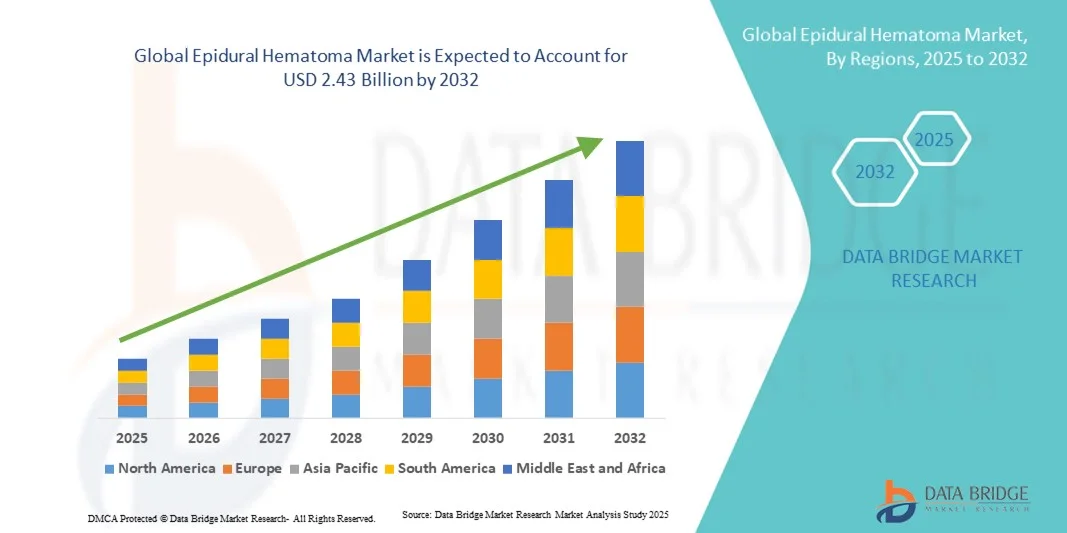
- The global epidural hematoma market size was valued at USD 1.70 billion in 2024 and is expected to reach USD 2.43 billion by 2032, at a CAGR of 4.60% during the forecast period
- The market growth is largely fueled by the increasing prevalence of epidural hematomas, rising head injuries, and growing alcohol abuse, driving demand for advanced diagnostic and treatment options
- Furthermore, advancements in treatment modalities including medication, aspiration, and craniotomy combined with improvements in diagnostic techniques such as CT scans, MRI, and EEG, are enhancing patient outcomes and accelerating market adoption. These converging factors are establishing epidural hematoma management as a critical segment of neurological care, thereby significantly boosting the industry's growth
Epidural Hematoma Market Analysis
- Epidural hematoma treatments, encompassing surgical interventions and pharmacological therapies, are increasingly vital components of modern neurological care due to their critical role in preventing severe brain injury and improving patient outcomes in both emergency and clinical settings
- The escalating demand for epidural hematoma management is primarily fueled by the rising prevalence of head injuries, increasing incidence of trauma-related hospitalizations, and growing awareness among healthcare providers of timely diagnosis and intervention
- North America dominated the epidural hematoma market with the largest revenue share of 38.9% in 2024, characterized by advanced healthcare infrastructure, high healthcare expenditure, and a strong presence of key market players, with the U.S. experiencing substantial growth in hospital-based treatments and surgical interventions, driven by innovations in minimally invasive procedures and advanced monitoring technologies
- Asia-Pacific is expected to be the fastest-growing region in the epidural hematoma market during the forecast period, due to increasing investment in healthcare infrastructure, rising road traffic accidents, and growing government support for trauma care facilities
- Surgery segment dominated the epidural hematoma market with a market share of 46.8% in 2024, driven by its established efficacy in removing hematomas and preventing neurological deterioration, making it the preferred choice for severe cases in emergency medical settings
Report Scope and Epidural Hematoma Market Segmentation
|
Attributes |
Epidural Hematoma Key Market Insights |
|
Segments Covered |
|
|
Countries Covered |
North America
Europe
Asia-Pacific
Middle East and Africa
South America
|
|
Key Market Players |
|
|
Market Opportunities |
|
|
Value Added Data Infosets |
In addition to the insights on market scenarios such as market value, growth rate, segmentation, geographical coverage, and major players, the market reports curated by the Data Bridge Market Research also include in-depth expert analysis, pricing analysis, brand share analysis, consumer survey, demography analysis, supply chain analysis, value chain analysis, raw material/consumables overview, vendor selection criteria, PESTLE Analysis, Porter Analysis, and regulatory framework. |
Epidural Hematoma Market Trends
Advancements in Minimally Invasive Surgical Techniques
- A significant and accelerating trend in the global epidural hematoma market is the adoption of minimally invasive surgical procedures, including endoscopic hematoma evacuation and image-guided craniotomy, improving precision and patient recovery
- For instance, the use of neuronavigation-assisted craniotomy allows surgeons to target hematoma sites more accurately, reducing complications and hospital stay durations
- Advanced surgical tools and intraoperative imaging systems enable surgeons to remove hematomas with greater safety and efficiency, while monitoring neurological status in real time
- The integration of digital health technologies with surgical care, such as electronic medical records and remote monitoring, facilitates better perioperative management and outcome tracking
- This trend toward safer, more efficient, and technology-driven surgical interventions is reshaping clinical expectations for epidural hematoma management
- The adoption of such advanced surgical approaches is growing rapidly across both developed and emerging healthcare markets, as hospitals increasingly prioritize patient safety, reduced recovery times, and improved surgical outcomes
Epidural Hematoma Market Dynamics
Driver
Rising Incidence of Head Injuries and Trauma Cases
- The increasing prevalence of head injuries and traumatic accidents, including road traffic and sports-related incidents, is a major driver for the heightened demand for epidural hematoma treatment
- For instance, hospitals are witnessing a surge in trauma admissions requiring timely diagnosis and intervention to prevent severe neurological complications
- Growing awareness among healthcare providers and caregivers about early detection and treatment is increasing the adoption of surgical and pharmacological interventions
- Advanced diagnostic tools, including CT scans and MRI, are facilitating rapid identification of hematomas, driving timely clinical decision-making
- Increased public awareness campaigns regarding head injury risks and trauma care protocols are motivating patients and families to seek prompt treatment
- The combination of rising trauma incidence and improved diagnostic access is propelling market growth across hospitals and emergency care centers globally
Restraint/Challenge
High Treatment Costs and Limited Accessibility in Emerging Markets
- The relatively high cost of surgical and advanced pharmacological interventions for epidural hematoma presents a challenge to broader market penetration, particularly in price-sensitive regions
- For instance, the cost of neuronavigation-assisted surgeries and intensive postoperative care can limit adoption in rural or underfunded hospitals
- Limited availability of specialized neurosurgeons and advanced medical infrastructure in emerging regions restricts timely access to treatment
- In addition, variations in healthcare insurance coverage and reimbursement policies create disparities in patient access to standard-of-care interventions
- While efforts are being made to increase accessibility and reduce costs, the financial and infrastructural barriers continue to impede widespread treatment adoption
- Overcoming these challenges through government initiatives, investment in healthcare infrastructure, and affordable treatment options will be crucial for sustaining market growth globally
Epidural Hematoma Market Scope
The market is segmented on the basis of treatment, diagnosis, dosage, route of administration, symptoms, end-users, and distribution channel.
- By Treatment
On the basis of treatment, the epidural hematoma market is segmented into medication, surgery, and others. The surgery segment dominated the market with the largest revenue share of 46.8% in 2024, driven by its established efficacy in removing hematomas and preventing neurological deterioration. Surgical interventions, including craniotomy and aspiration, are considered the standard of care for severe cases, making them the preferred choice in hospital settings. The segment benefits from advancements in minimally invasive techniques and intraoperative imaging that improve precision and patient outcomes. Hospitals prioritize surgical treatment due to its ability to rapidly relieve intracranial pressure, reducing long-term complications. Strong adoption in emergency and trauma care centers supports revenue growth.
The medication segment is anticipated to witness the fastest growth rate of 13.8% from 2025 to 2032, fueled by increasing use of anticonvulsants, hyperosmotic agents, and corticosteroids as adjunctive therapy. Medication is often used for mild cases or post-surgical management, offering non-invasive alternatives for patients. Growing awareness among healthcare providers regarding early pharmacological interventions is accelerating adoption. Advancements in drug formulations and hospital protocols are enhancing treatment efficacy. The rising number of outpatient neurological care facilities contributes to faster adoption. In addition, medication provides a cost-effective option for long-term management in emerging markets.
- By Diagnosis
On the basis of diagnosis, the epidural hematoma market is segmented into CT scan, MRI, EEG, neurological tests, and others. The CT scan segment held the largest market revenue share in 2024, due to its rapid imaging capability, affordability, and widespread availability in hospitals and trauma centers. CT scans are the preferred diagnostic tool for immediate assessment of hematomas and guiding surgical interventions. Their accuracy in detecting blood accumulation and monitoring progression enhances patient management efficiency. Hospitals increasingly rely on CT imaging for emergency trauma cases, driving market dominance. The segment also benefits from advancements in 3D imaging and reduced radiation exposure techniques. Quick results enable faster treatment decisions, further cementing CT scans as the leading diagnostic method.
The MRI segment is expected to witness the fastest growth from 2025 to 2032, driven by its superior soft tissue resolution and ability to detect subtle brain injuries. MRI is increasingly used for complex or follow-up cases where detailed imaging is required. Technological improvements such as faster scan times and enhanced imaging software are promoting adoption. Growing investment in MRI infrastructure in emerging markets is accelerating usage. Increasing preference for non-radiation imaging among sensitive patient groups, such as children and pregnant women, further supports growth. MRI is also preferred for post-operative monitoring and chronic case evaluation, contributing to market expansion.
- By Dosage
On the basis of dosage, the epidural hematoma market is segmented into tablets, injections, and others. The injection segment dominated in 2024, primarily due to intravenous administration of hyperosmotic agents, corticosteroids, and emergency medications that provide rapid therapeutic effects. Hospitals and clinics prefer injections in acute settings to quickly reduce intracranial pressure and manage complications. The segment benefits from advancements in injectable formulations that enhance efficacy and minimize side effects. Rising emergency trauma cases and hospital adoption further drive revenue growth. Medical protocols increasingly recommend injectable treatments for faster intervention in severe hematoma cases. The segment also sees steady adoption in intensive care units globally.
The tablet segment is expected to witness the fastest growth rate from 2025 to 2032, driven by the growing use of oral medications for mild cases and post-surgical management. Tablets offer convenience for outpatient treatment and home care settings. Pharmaceutical advancements improving bioavailability and patient compliance are accelerating adoption. Increasing awareness among caregivers and patients about preventive medication also supports market expansion. Telemedicine and home health services contribute to the rising adoption of oral therapies. Tablets also reduce dependency on hospital resources, making them appealing for emerging markets.
- By Route of Administration
On the basis of route of administration, the epidural hematoma market is segmented into oral, intravenous, and others. The intravenous segment dominated the market in 2024, due to its ability to deliver rapid therapeutic effects in emergency trauma care. IV administration is critical for hyperosmotic agents, corticosteroids, and supportive fluids in severe epidural hematoma cases. Hospitals and trauma centers rely heavily on this route for immediate intervention. Technological advancements in infusion devices and patient monitoring systems enhance safety and adoption. Emergency protocols standardize IV administration, supporting revenue dominance. IV administration also facilitates precise dosage control and rapid titration based on patient response.
The oral segment is expected to witness the fastest growth from 2025 to 2032, driven by its use in outpatient care, follow-up treatments, and non-critical cases. Oral administration is convenient, non-invasive, and suitable for long-term management. Pharmaceutical developments improving drug absorption and tolerability are increasing adoption. The growing trend of home-based care and telemedicine services further fuels growth. Patient preference for easier administration methods contributes to the expansion of the oral segment. The segment also benefits from increasing availability of combination therapy tablets.
- By Symptoms
On the basis of symptoms, the epidural hematoma market is segmented into seizures, confusion, drowsiness, nausea, vomiting, enlarged pupil in one eye, severe headache, loss of vision, dizziness, shortness of breath, and others. The severe headache segment dominated in 2024, as it is the most common and easily identifiable symptom prompting emergency intervention. Hospitals prioritize treatment based on symptom severity, with severe headache being a key clinical indicator for diagnosis and surgical planning. Rapid recognition drives market activity in emergency and trauma centers. Awareness campaigns educating the public about symptom recognition further enhance treatment adoption. Severe headache often correlates with increased intracranial pressure, making timely management critical. This reinforces hospitals’ reliance on symptom-based triaging.
The dizziness segment is expected to witness the fastest growth rate from 2025 to 2032, due to increasing recognition of subtle neurological signs and mild cases requiring early intervention. Growing patient awareness and preventive check-ups contribute to higher detection rates. Integration of symptom-tracking applications and outpatient monitoring enhances early diagnosis. Rising focus on comprehensive neurological evaluation and routine imaging in mild symptom cases supports growth. Dizziness is also associated with minor hematomas, increasing the demand for outpatient diagnostics. Improved access to neurology clinics in emerging regions supports segment expansion.
- By End-Users
On the basis of end-users, the epidural hematoma market is segmented into clinics, hospitals, and others. The hospital segment dominated in 2024, due to the critical nature of epidural hematoma management requiring emergency care, surgical facilities, and advanced diagnostic equipment. Hospitals handle the majority of trauma and emergency cases, driving revenue dominance. Adoption of minimally invasive surgical techniques and high patient volumes further support growth. Hospitals also invest in advanced imaging and monitoring infrastructure, enhancing treatment capabilities. The segment benefits from robust healthcare infrastructure and trained neurosurgeons. High patient turnover in emergency departments sustains consistent demand.
The clinic segment is expected to witness the fastest growth rate from 2025 to 2032, driven by the rise of outpatient neurological care centers and follow-up management. Clinics are increasingly equipped with diagnostic tools such as CT scans and MRI for non-critical cases. Telemedicine integration and preventive care programs in clinics support early diagnosis and monitoring. Growing awareness among primary care providers and patients boosts treatment adoption. Clinics provide cost-effective alternatives for mild cases, expanding market access. Expansion of private neurology clinics in emerging markets also contributes to growth.
- By Distribution Channel
On the basis of distribution channel, the epidural hematoma market is segmented into hospital pharmacy, retail pharmacy, and online pharmacy. The hospital pharmacy segment dominated in 2024, due to direct availability of medications and treatment supplies required for acute and emergency care in hospital settings. Hospitals prefer centralized pharmacy distribution for rapid access to drugs, intravenous solutions, and surgical adjuncts. Established hospital pharmacy networks streamline procurement and inventory management, supporting revenue growth. Strong regulatory compliance and standardization favor hospital-based distribution. Hospitals also maintain consistent supply for emergency cases. Centralized procurement ensures optimal stock management and reduces delays.
The online pharmacy segment is expected to witness the fastest growth rate from 2025 to 2032, driven by increasing adoption of e-pharmacies for follow-up medications and outpatient care. Online platforms provide convenience, wider accessibility, and timely delivery of tablets and supportive medications. Rising patient awareness and the growth of telemedicine services accelerate online pharmacy adoption. Regulatory frameworks and improved logistics further enhance market expansion. E-pharmacies also facilitate easier access in rural and remote areas. Integration with hospital systems and digital prescriptions supports segment growth.
Epidural Hematoma Market Regional Analysis
- North America dominated the epidural hematoma market with the largest revenue share of 38.9% in 2024, characterized by advanced healthcare infrastructure, high healthcare expenditure, and a strong presence of key market players
- The region benefits from a well-developed emergency care system, widespread availability of diagnostic tools such as CT scans and MRI, and rapid access to neurosurgical interventions for trauma patients
- Growing awareness among healthcare providers and the public regarding timely diagnosis and treatment of head injuries supports widespread adoption of epidural hematoma management solutions. High investment in research and development of minimally invasive surgical techniques and advanced treatment modalities is further fueling market growth.
U.S. Epidural Hematoma Market Insight
The U.S. epidural hematoma market captured the largest revenue share of 42% in 2024 within North America, fueled by the high prevalence of traumatic brain injuries and advanced healthcare infrastructure. Hospitals and trauma centers are increasingly adopting minimally invasive surgical techniques and advanced diagnostic tools, such as CT scans and MRI, for rapid intervention. Awareness among healthcare providers and emergency care personnel regarding timely treatment is driving demand for effective management solutions. In addition, growing patient education on head injury symptoms supports early hospital visits. Robust healthcare expenditure and well-established neurosurgical facilities further strengthen market dominance. The integration of advanced monitoring and post-operative care technologies continues to expand treatment adoption.
Europe Epidural Hematoma Market Insight
The Europe epidural hematoma market is projected to expand at a substantial CAGR during the forecast period, primarily driven by increasing investments in healthcare infrastructure and rising trauma cases from road accidents and sports injuries. The demand for timely diagnosis and treatment in hospitals and trauma centers is fostering market adoption. European countries are also emphasizing emergency care standardization, improving access to surgical interventions and advanced diagnostic techniques. Awareness programs on head injury risks and early intervention are contributing to adoption. The market is witnessing growth across hospitals, clinics, and rehabilitation centers, with new technologies enhancing patient outcomes. Policy support and insurance coverage further aid market expansion.
U.K. Epidural Hematoma Market Insight
The U.K. epidural hematoma market is anticipated to grow at a noteworthy CAGR during the forecast period, driven by increasing road traffic accidents and sports-related injuries. Healthcare providers and patients are increasingly seeking rapid intervention to prevent severe neurological complications. The country’s advanced hospital network and access to modern imaging technologies support effective diagnosis and treatment. Concerns regarding patient safety and clinical outcomes are encouraging hospitals to adopt minimally invasive surgical techniques. The integration of telemedicine and outpatient monitoring solutions is facilitating early detection and follow-up care. These factors are expected to stimulate market growth in both public and private healthcare segments.
Germany Epidural Hematoma Market Insight
The Germany epidural hematoma market is expected to expand at a considerable CAGR during the forecast period, fueled by rising awareness of head injury management and the adoption of technologically advanced surgical procedures. Germany’s well-established healthcare infrastructure and strong focus on research and development in neurosurgery promote market growth. Hospitals are increasingly integrating modern imaging and monitoring solutions to improve patient outcomes. Preventive care initiatives and emergency response programs also support early diagnosis and treatment. A strong regulatory framework and insurance coverage encourage timely intervention. The country is witnessing growth across both hospital and specialized clinic settings.
Asia-Pacific Epidural Hematoma Market Insight
The Asia-Pacific epidural hematoma market is poised to grow at the fastest CAGR of 15% during the forecast period of 2025 to 2032, driven by increasing road traffic accidents, industrialization, and growing awareness of head injury management. Rapidly expanding healthcare infrastructure in countries such as China, India, and Japan is supporting adoption of advanced diagnostic and surgical solutions. Government initiatives promoting emergency care and trauma management are further accelerating growth. Rising urbanization and higher disposable incomes are enabling wider access to hospitals and clinics with neurosurgical capabilities. The market is also benefiting from increasing training programs for healthcare professionals in trauma care.
Japan Epidural Hematoma Market Insight
The Japan epidural hematoma market is gaining momentum due to the country’s aging population, high healthcare standards, and demand for advanced treatment solutions. Hospitals are increasingly equipped with state-of-the-art imaging and surgical facilities to manage traumatic brain injuries efficiently. The adoption of minimally invasive techniques and enhanced post-operative care is driving patient preference. Integration of emergency response systems and telemedicine is supporting rapid diagnosis and follow-up care. High patient awareness regarding neurological health and injury prevention is fueling market growth. Both public and private healthcare facilities are expanding capacity for trauma and neurosurgical interventions.
India Epidural Hematoma Market Insight
The India epidural hematoma market accounted for the largest revenue share in Asia-Pacific in 2024, attributed to the country’s rising incidence of road traffic accidents and expanding healthcare infrastructure. Increasing awareness of head injury symptoms and the importance of early intervention is driving hospital visits. Government initiatives promoting trauma care and emergency response systems are enhancing treatment accessibility. The availability of cost-effective surgical and pharmacological solutions supports wider adoption in both urban and semi-urban areas. Domestic hospitals and clinics are increasingly adopting modern diagnostic tools such as CT and MRI. The growth of private healthcare facilities and rising insurance coverage are key factors propelling market expansion in India.
Epidural Hematoma Market Share
The epidural hematoma industry is primarily led by well-established companies, including:
- Johnson & Johnson and its affiliates (U.S.)
- InfraScan, Inc. (U.S.)
- GE Healthcare (U.K.)
- Medtronic (Ireland)
- Siemens (Germany)
- Integra LifeSciences Corporation (U.S.)
- B. Braun SE (Germany)
- Stryker (U.S.)
- Zimmer Biomet (U.S.)
- KARL STORZ SE & Co. KG (Germany)
- Penumbra, Inc. (U.S.)
What are the Recent Developments in Global Epidural Hematoma Market?
- In August 2025, researchers proposed a treatment flowchart emphasizing the critical importance of timely decompression in patients with post-operative epidural hematomas. The study highlighted that decompression within 6 hours of diagnosis significantly improves neurological recovery. This guideline aims to standardize treatment protocols and reduce delays in surgical intervention, ultimately enhancing patient outcomes
- In July 2025, a clinical study proposed a novel approach for treating acute epidural hematomas by combining drill drainage with middle meningeal artery (MMA) embolization via transradial access (TRA). This technique aims to provide efficient and safe therapy for acute EDH, potentially reducing the need for traditional surgical interventions
- In June 2025, a report explored the role of atorvastatin in the conservative management of epidural hematomas. The study involved six patients treated with oral atorvastatin, all of whom achieved full recovery without the need for surgical intervention. This approach offers a novel possibility for conservative treatment of EDH
- In February 2025, a groundbreaking study introduced a 3D foundation model designed to enhance the detection of various neuro-trauma conditions, including epidural hematomas, in non-contrast head CT scans. This model utilizes large language models for automatic labeling and integrates neural networks trained for hemorrhage subtype segmentation and brain anatomy parcellation
- In September 2022, the American College of Surgeons released updated guidelines for the management of traumatic brain injury, which included recommendations for the management of epidural hematomas. These guidelines emphasize the development of regional systems that provide initial intracerebral hemorrhage care and the capacity for appropriate interventions

- Interactive Data Analysis Dashboard
- Company Analysis Dashboard for high growth potential opportunities
- Research Analyst Access for customization & queries
- Competitor Analysis with Interactive dashboard
- Latest News, Updates & Trend analysis
- Harness the Power of Benchmark Analysis for Comprehensive Competitor Tracking
Data collection and base year analysis are done using data collection modules with large sample sizes. The stage includes obtaining market information or related data through various sources and strategies. It includes examining and planning all the data acquired from the past in advance. It likewise envelops the examination of information inconsistencies seen across different information sources. The market data is analysed and estimated using market statistical and coherent models. Also, market share analysis and key trend analysis are the major success factors in the market report. To know more, please request an analyst call or drop down your inquiry.
The key research methodology used by DBMR research team is data triangulation which involves data mining, analysis of the impact of data variables on the market and primary (industry expert) validation. Data models include Vendor Positioning Grid, Market Time Line Analysis, Market Overview and Guide, Company Positioning Grid, Patent Analysis, Pricing Analysis, Company Market Share Analysis, Standards of Measurement, Global versus Regional and Vendor Share Analysis. To know more about the research methodology, drop in an inquiry to speak to our industry experts.
Data Bridge Market Research is a leader in advanced formative research. We take pride in servicing our existing and new customers with data and analysis that match and suits their goal. The report can be customized to include price trend analysis of target brands understanding the market for additional countries (ask for the list of countries), clinical trial results data, literature review, refurbished market and product base analysis. Market analysis of target competitors can be analyzed from technology-based analysis to market portfolio strategies. We can add as many competitors that you require data about in the format and data style you are looking for. Our team of analysts can also provide you data in crude raw excel files pivot tables (Fact book) or can assist you in creating presentations from the data sets available in the report.












