


What is the Epithelioid Sarcoma Treatment Market Size and Growth Rate ?
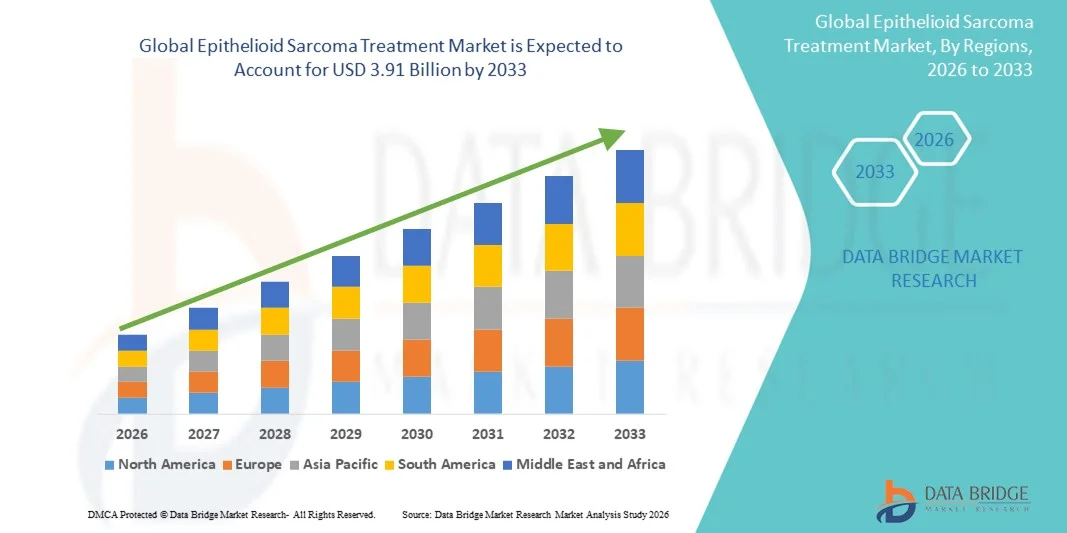
- As per Data Bridge Market Research Analysis the Global epithelioid sarcoma treatment market size was valued at USD 1.57 billion in 2025 and is expected to reach USD 3.91 billion by 2033, at a CAGR of 12.10% during the forecast period
- The market growth is largely fueled by increasing awareness of rare cancers, advancements in diagnostic techniques, and improvements in treatment options for Epithelioid Sarcoma, leading to enhanced adoption of specialized therapies in both hospitals and oncology centers
- Furthermore, rising demand for targeted therapies, better patient outcomes, and integration of multidisciplinary treatment approaches is accelerating the uptake of Epithelioid Sarcoma Treatment solutions, thereby significantly boosting the industry's growth
Market Size & Forecast
- Global Market Value (2025): USD 1.57 Billion
- Expected Market Value (2033): USD 3.91 Billion
- Forecast CAGR (2026–2033): 12.10%
What are the Major Takeaways of Epithelioid Sarcoma Treatment Market ?
- Epithelioid Sarcoma Treatment, involving targeted therapies, surgical interventions, and advanced supportive care, is increasingly vital for managing this rare cancer in both hospitals and oncology centers due to improved patient outcomes, specialized care protocols, and enhanced treatment accessibility
- The escalating demand for epithelioid sarcoma treatment is primarily fueled by rising awareness of rare cancers, advances in diagnostic techniques, growing prevalence of soft tissue sarcomas, and an increasing focus on personalized medicine
- North America dominated the epithelioid sarcoma treatment market with the largest revenue share of 41.5% in 2025, characterized by well-established healthcare infrastructure, high healthcare spending, and the presence of leading biopharmaceutical companies, with the U.S. experiencing substantial growth in clinical adoption of targeted therapies, clinical trials, and advanced diagnostic programs
- Asia-Pacific is expected to be the fastest-growing region in the epithelioid sarcoma treatment market during the forecast period, projected to expand at a CAGR of 16.2% from 2026 to 2033, driven by increasing healthcare modernization, rising awareness of rare cancers, growing investment in oncology centers, and improving access to advanced treatment options in countries such as Japan, China, and India
- The Adult segment dominated with 62.1% market share in 2025, as Epithelioid Sarcoma incidence is higher in adults, particularly between 30–60 years of age
Report Scope and Epithelioid Sarcoma Treatment Market Segmentation
|
Attributes |
Epithelioid Sarcoma Treatment Key Market Insights |
|
Segments Covered |
|
|
Countries Covered |
North America
Europe
Asia-Pacific
Middle East and Africa
South America
|
|
Key Market Players |
|
|
Market Opportunities |
|
|
Value Added Data Infosets |
In addition to the insights on market scenarios such as market value, growth rate, segmentation, geographical coverage, and major players, the market reports curated by the Data Bridge Market Research also include in-depth expert analysis, patient epidemiology, pipeline analysis, pricing analysis, and regulatory framework. |
What are the Key Trends in Epithelioid Sarcoma Treatment Market ?
Increasing Focus on Targeted Therapies and Immunotherapy
- A major trend in the global epithelioid sarcoma treatment market is the growing development and adoption of targeted therapies and immunotherapies for managing this rare soft tissue cancer. Advances in molecular profiling and biomarker identification are enabling personalized treatment strategies
- Clinical trials exploring tyrosine kinase inhibitors and immune checkpoint inhibitors are increasing, offering hope for better efficacy and reduced side effects compared to conventional chemotherapy
- Integration of multidisciplinary treatment approaches, combining surgery, radiotherapy, and systemic therapies, is shaping standard care protocols
- Patient awareness and advocacy groups are encouraging early diagnosis, contributing to higher treatment uptake
- Hospitals and cancer centers are increasingly implementing precision oncology programs, allowing individualized treatment planning
- Expanded research collaborations between academic institutions and pharmaceutical companies are accelerating novel therapy pipelines
- For instance, in September 2023, a Phase II clinical trial on tazemetostat demonstrated promising outcomes in advanced Epithelioid Sarcoma, highlighting the potential of targeted therapy
- Regulatory approvals for orphan drugs targeting Epithelioid Sarcoma have increased in key markets, enhancing accessibility
- Growing focus on palliative care and quality-of-life improvement measures is influencing treatment adoption
- Real-world evidence studies are supporting the effectiveness of newer systemic treatments, encouraging broader clinical acceptance
- Overall, this trend underscores a shift toward more precise, effective, and patient-centric management strategies in Epithelioid Sarcoma care
Epithelioid Sarcoma Treatment Market Dynamics
Driver
Rising Incidence and Improved Diagnostic Capabilities
- The increasing prevalence of soft tissue sarcomas, including Epithelioid Sarcoma, is driving demand for effective treatment options
- Enhanced diagnostic tools, such as immunohistochemistry, molecular testing, and advanced imaging, are enabling earlier and more accurate detection
- For instance, in March 2024, the FDA approved a new molecular assay for detecting INI1-deficient sarcomas, improving early diagnosis and guiding therapy selection
- Rising awareness among oncologists and patients about rare sarcomas is leading to more referrals to specialized treatment centers
- Growing investments in oncology infrastructure, including sarcoma-dedicated centers, are supporting better patient management
- Insurance coverage and government healthcare programs in key regions are improving accessibility of approved therapies
- Increased funding for sarcoma research and clinical trials is accelerating the development of novel drugs
- Healthcare providers are adopting standardized treatment guidelines, improving treatment outcomes and patient confidence. Multidisciplinary tumor boards are supporting optimized therapy planning, driving higher treatment adoption
- Overall, the combination of rising incidence, better diagnostics, and improved care infrastructure is a key growth driver for the market
Restraint/Challenge
High Treatment Costs and Limited Therapy Options
- The high cost of advanced therapies, including targeted drugs and immunotherapies, presents a significant challenge, particularly in developing regions. Access to specialized care centers is limited in rural and low-income areas, delaying diagnosis and treatment
- For instance, many orphan drugs for Epithelioid Sarcoma can cost upwards of USD150,000 per year, restricting patient access
- Adverse effects associated with systemic therapies, such as immunotherapy-related toxicities, require careful monitoring, limiting widespread adoption
- Limited availability of clinical trials for rare sarcomas reduces patient participation in experimental therapies
- Healthcare provider knowledge gaps in managing rare sarcomas can lead to treatment delays or suboptimal therapy choices
- Regulatory hurdles and lengthy approval processes for novel therapies can slow market growth
- Lack of public awareness about rare sarcomas contributes to late-stage diagnosis, impacting treatment success
- Payers and insurers may be reluctant to cover high-cost therapies without robust clinical evidence, constraining adoption
- Addressing these challenges through patient assistance programs, expanded therapy pipelines, and education initiatives is crucial for sustained market growth
Epithelioid Sarcoma Treatment Market Scope
The market is segmented on the basis of treatment, demographic, diagnosis, end-users, and distribution channel
- By Treatment
On the basis of treatment, the Epithelioid Sarcoma Treatment market is segmented into Surgery, Chemotherapy, Radiation Therapy, and Others. The Surgery segment dominated the largest market revenue share of 46.3% in 2025, driven by its curative potential in localized tumors and the ability to remove cancerous tissues completely. Surgical interventions are often the first-line therapy, supported by advanced surgical techniques and minimally invasive approaches. Surgeons prefer wide local excision to reduce recurrence rates, and hospitals with specialized sarcoma centers facilitate high surgical volumes. Patient outcomes and survival rates are strongly associated with early surgical intervention. Post-surgical care protocols and rehabilitation programs enhance patient recovery. The availability of surgical expertise in key regions strengthens dominance. Clinical guidelines from oncology societies prioritize surgery where feasible. Research into organ-preserving procedures further boosts adoption. Multidisciplinary tumor boards ensure optimized surgical planning. Insurance coverage and reimbursement policies favor surgical treatment, reinforcing consistent market uptake.
The Chemotherapy segment is expected to witness the fastest CAGR of 8.5% from 2026 to 2033, driven by the increasing need for systemic therapy in advanced or metastatic cases. Novel chemotherapeutic agents and combination regimens improve response rates and disease control. Expanding clinical trials and real-world evidence support broader use in high-risk patients. Chemotherapy is increasingly used as neoadjuvant therapy to shrink tumors before surgery. Hospital oncology departments are integrating chemotherapy with targeted therapies for improved outcomes. Patient education on regimen adherence and side effect management encourages consistent treatment. Availability of oral and injectable chemotherapeutic formulations enhances accessibility. Guidelines recommending adjuvant chemotherapy for aggressive variants accelerate growth. Advances in toxicity management reduce treatment discontinuation. Insurance reimbursement and patient assistance programs support uptake. Increasing prevalence of aggressive sarcoma subtypes fuels demand. Research collaborations drive innovation and treatment adoption.
- By Demographic
On the basis of demographic, the market is segmented into Adult and Pediatric. The Adult segment dominated with 62.1% market share in 2025, as Epithelioid Sarcoma incidence is higher in adults, particularly between 30–60 years of age. Early diagnosis and access to specialized sarcoma centers boost treatment adoption. Adults benefit from a wider array of surgical, systemic, and radiation therapy options. Health awareness campaigns targeting adult populations increase clinical consultations. Oncology guidelines prioritize treatment personalization for adults. Hospital-based multidisciplinary care strengthens outcomes. Post-treatment monitoring programs and follow-ups are more established for adults. Prevalence data and epidemiological studies focus primarily on adult patients. Insurance coverage and healthcare infrastructure favor adult treatment access. Patients’ ability to tolerate aggressive treatment supports dominance. Availability of clinical trials targeting adult cohorts increases participation. Global adult patient pool and higher diagnosis rates drive market leadership.
The Pediatric segment is projected to witness the fastest CAGR of 7.3% from 2026 to 2033, driven by increasing awareness and improved pediatric oncology care. Specialized pediatric oncology units are expanding globally. Early detection protocols in children enhance treatment efficacy. Clinical trials for pediatric-targeted therapies support growth. Pediatric sarcoma advocacy groups and parental awareness improve diagnosis rates. Hospitals are increasingly adopting minimally invasive and organ-preserving treatments. Safety and tolerability of systemic therapies are emphasized in pediatric care. Integration of psychosocial support and family-centered care boosts adoption. Pediatric oncology guidelines recommend multi-modal treatment approaches. Growth in pediatric cancer registries improves tracking and management. Access to orphan drug programs supports treatment availability. Research into pediatric-specific immunotherapy drives future growth.
- By Diagnosis
On the basis of diagnosis, the market is segmented into Biopsy, Imaging Tests, and Others. The Biopsy segment dominated with 51.4% market share in 2025, as tissue biopsy remains the gold standard for definitive diagnosis of Epithelioid Sarcoma. Histopathology and immunohistochemistry confirm tumor type and guide treatment planning. Biopsy is essential for differentiating from other soft tissue sarcomas. Pathology labs in hospitals and specialized centers support widespread adoption. Accurate diagnosis ensures selection of optimal surgery, chemotherapy, or radiation. Guidelines recommend biopsy prior to systemic therapy initiation. Minimally invasive core needle biopsies reduce patient morbidity. Standardized protocols and trained pathologists increase diagnostic reliability. Biopsy results drive staging and prognosis decisions. Early and accurate biopsy enhances patient survival outcomes. Insurance coverage for biopsy procedures supports adoption. Clinical research relies on biopsy-confirmed cases for eligibility. Multidisciplinary review of biopsy specimens ensures optimal care.
The Imaging Tests segment is expected to witness the fastest CAGR of 6.9% from 2026 to 2033, driven by the adoption of advanced MRI, CT, and PET scans for tumor detection and monitoring. Imaging assists in pre-surgical planning and evaluating treatment response. Integration of AI-assisted imaging enhances detection accuracy. Hospitals and diagnostic centers increasingly invest in high-resolution imaging systems. Imaging is preferred for monitoring inoperable or metastatic cases. Radiology-guided treatment planning improves precision and patient outcomes. Growing awareness of non-invasive diagnostic alternatives boosts adoption. Imaging tests complement biopsy results for comprehensive care. Expansion of oncology diagnostic services supports market growth. Government healthcare initiatives promote access to advanced imaging. Insurance coverage for imaging-based diagnostics encourages use. Research on functional imaging enhances its clinical utility.
- By End-Users
On the basis of end-users, the market is segmented into Clinic, Hospital, and Others. The Hospital segment dominated with 68.7% market share in 2025, driven by the availability of oncology departments, multidisciplinary tumor boards, and inpatient treatment facilities. Hospitals provide access to surgery, chemotherapy, and radiation therapy in one location. Specialized sarcoma centers facilitate comprehensive care. Advanced medical infrastructure supports complex procedures. Hospitals ensure adherence to standardized treatment guidelines. Access to clinical trials at hospitals encourages patient enrollment. Post-operative care, rehabilitation, and follow-up monitoring are hospital-centric. Insurance and reimbursement systems favor hospital-based care. Hospitals attract adult and pediatric patients for specialized treatment. Multidisciplinary care teams improve outcomes and reduce recurrence. High patient volumes in hospitals reinforce market dominance. Research collaborations and registry programs are centered in hospital settings.
The Clinic segment is expected to witness the fastest CAGR of 7.1% from 2026 to 2033, driven by increasing outpatient consultations, follow-ups, and non-invasive treatment administration. Clinics provide easier access for routine monitoring, pre-therapy evaluation, and supportive care. Expansion of outpatient oncology services enhances convenience. Telemedicine integration in clinics supports remote follow-up. Early detection and screening in clinics improve treatment initiation rates. Patient education programs at clinics raise awareness and encourage compliance. Clinics increasingly collaborate with hospitals for referral-based care. Accessibility in urban and semi-urban regions supports growth. Clinics support less intensive therapy regimens, enhancing patient adherence. Insurance coverage for clinic-based visits encourages utilization. Research and registry collaborations at clinics grow steadily. Growth in preventive and diagnostic services drives adoption.
- By Distribution Channel
On the basis of distribution channel, the market is segmented into Hospital Pharmacy, Retail Pharmacy, and Online Pharmacy. The Hospital Pharmacy segment dominated with 56.9% market share in 2025, due to centralized distribution of chemotherapy agents, supportive care medications, and perioperative drugs. Hospital pharmacies ensure timely availability of essential treatments. Specialized oncology pharmacists manage dosing and preparation. Integration with electronic medical records streamlines prescription fulfillment. Hospital pharmacy protocols reduce medication errors. Institutional bulk procurement supports cost-efficiency. Insurance reimbursements encourage use through hospital pharmacies. Hospital pharmacies provide controlled access for hazardous medications. Training programs for oncology pharmacists maintain quality standards. Patient counseling and education are integrated into pharmacy services. Hospitals drive adoption of new drugs and formulations. Collaboration with research studies enhances access to novel therapies. Robust supply chains in hospitals maintain continuous availability.
The Online Pharmacy segment is projected to witness the fastest CAGR of 8.2% from 2026 to 2033, driven by increasing digital adoption and convenience of home delivery for oral and supportive care medications. Patients benefit from subscription and home delivery models. Telemedicine prescriptions facilitate online pharmacy fulfillment. E-pharmacies improve access in remote or underserved regions. Mobile applications and web platforms enhance patient engagement. Integration with hospital and clinic systems ensures accurate dispensing. Online pharmacy growth is supported by regulatory approvals for telehealth-driven medication supply. Digital marketing increases patient awareness of available therapies. Chronic therapy adherence programs support online pharmacy usage. Home delivery reduces treatment delays and missed doses. Price comparison and bulk order discounts encourage online purchases. Expansion of logistics networks ensures timely delivery.
Epithelioid Sarcoma Treatment Market Regional Analysis
- North America dominated the epithelioid sarcoma treatment market with the largest revenue share of 41.5% in 2025, characterized by well-established healthcare infrastructure, high healthcare spending, and the presence of leading biopharmaceutical companies
- The market experienced substantial growth in clinical adoption of targeted therapies, advanced diagnostic programs, and ongoing clinical trials, contributing to improved patient management and outcomes
- Rising awareness about rare cancers, expanded oncology centers, and government-supported research programs further support the market’s expansion across hospitals, specialized clinics, and research institutions
Europe Epithelioid Sarcoma Treatment Market Insight
The Europe epithelioid sarcoma treatment market is projected to expand at a substantial CAGR during the forecast period, driven by increasing awareness of rare cancers, strong healthcare infrastructure, and government initiatives supporting oncology research and rare disease programs. The region is witnessing growing investment in specialized oncology centers, access to advanced diagnostic technologies, and increased patient enrollment in clinical studies, contributing to improved treatment adoption.
U.K. Epithelioid Sarcoma Treatment Market Insight
The U.K. epithelioid sarcoma treatment market is anticipated to grow at a noteworthy CAGR, fueled by rising awareness of sarcoma among healthcare professionals and patients, coupled with access to advanced therapies and clinical trials. Investments in specialized sarcoma centers and improved diagnostic capabilities are enhancing early detection and treatment outcomes.
Germany Epithelioid Sarcoma Treatment Market Insight
Germany epithelioid sarcoma treatment market is expected to see considerable growth due to the availability of advanced treatment options, strong healthcare infrastructure, and government initiatives promoting rare cancer research. Integration of multidisciplinary care approaches and expansion of oncology centers focused on rare cancers is further driving market growth.
Asia-Pacific Epithelioid Sarcoma Treatment Market Insight
Asia-Pacific epithelioid sarcoma treatment market is expected to be the fastest-growing region in the epithelioid sarcoma treatment market during the forecast period, projected to expand at a CAGR of 16.2% from 2026 to 2033. Growth is driven by healthcare modernization, increasing awareness of rare cancers, growing investment in oncology centers, and improving access to advanced treatment options in countries such as Japan, China, and India.
Japan Epithelioid Sarcoma Treatment Market Insight
The Japan epithelioid sarcoma treatment market is gaining momentum due to high awareness of rare cancers, growing investments in oncology research, and access to advanced therapies and clinical trials. Expansion of specialized oncology centers and increasing patient enrollment in rare cancer programs is supporting robust growth.
China Epithelioid Sarcoma Treatment Market Insight
China epithelioid sarcoma treatment market accounted for a significant market share in Asia-Pacific in 2025, attributed to the increasing number of oncology centers, government support for rare disease research, and growing healthcare expenditure. Improved patient access to targeted therapies and enhanced diagnostic infrastructure are key factors propelling the market.
Epithelioid Sarcoma Treatment Market Share
The Epithelioid Sarcoma Treatment industry is primarily led by well-established companies, including:
- Pfizer (U.S.)
- Novartis (Switzerland)
- GlaxoSmithKline (U.K.)
- Merck & Co. (U.S.)
- Roche (Switzerland)
- Bristol-Myers Squibb (U.S.)
- Johnson & Johnson (U.S.)
- Eli Lilly and Company (U.S.)
- Takeda Pharmaceutical Company (Japan)
- Amgen (U.S.)
- Bayer AG (Germany)
- AbbVie (U.S.)
- Sanofi (France)
- Astellas Pharma (Japan)
- Incyte Corporation (U.S.)
- Adaptimmune Therapeutics (U.K.)
- Epizyme, Inc. (U.S.)
- Dynavax Technologies (U.S.)
Latest Developments in Global Epithelioid Sarcoma Treatment Market
- In May 2022, tazemetostat (TAZVERIK) was approved for use in the Hainan Boao Lecheng International Medical Tourism Pilot Zone in China. This approval allowed patients with epithelioid sarcoma to access the treatment under a special program for urgently needed imported drugs, addressing a significant unmet medical need in the region
- In March 2023, tazemetostat received approval in Macau, marking an important expansion of available treatment options for epithelioid sarcoma patients in Asia. This approval provided access to a targeted therapy for a rare cancer that previously had very limited treatment options
- In January 2024, the National Medical Products Administration (NMPA) in China accepted a priority review for tazemetostat’s New Drug Application for epithelioid sarcoma. This step highlighted the growing regulatory recognition of the drug’s potential and accelerated pathways to bring it to patients with advanced disease
- In August 2025, the Japanese Ministry of Health, Labour and Welfare granted Orphan Drug Designation to tazemetostat for the treatment of unresectable INI1-negative epithelioid sarcoma. This designation emphasizes the high unmet medical need in Japan and encourages further clinical development and availability of this therapy

- Interactive Data Analysis Dashboard
- Company Analysis Dashboard for high growth potential opportunities
- Research Analyst Access for customization & queries
- Competitor Analysis with Interactive dashboard
- Latest News, Updates & Trend analysis
- Harness the Power of Benchmark Analysis for Comprehensive Competitor Tracking
Data collection and base year analysis are done using data collection modules with large sample sizes. The stage includes obtaining market information or related data through various sources and strategies. It includes examining and planning all the data acquired from the past in advance. It likewise envelops the examination of information inconsistencies seen across different information sources. The market data is analysed and estimated using market statistical and coherent models. Also, market share analysis and key trend analysis are the major success factors in the market report. To know more, please request an analyst call or drop down your inquiry.
The key research methodology used by DBMR research team is data triangulation which involves data mining, analysis of the impact of data variables on the market and primary (industry expert) validation. Data models include Vendor Positioning Grid, Market Time Line Analysis, Market Overview and Guide, Company Positioning Grid, Patent Analysis, Pricing Analysis, Company Market Share Analysis, Standards of Measurement, Global versus Regional and Vendor Share Analysis. To know more about the research methodology, drop in an inquiry to speak to our industry experts.
Data Bridge Market Research is a leader in advanced formative research. We take pride in servicing our existing and new customers with data and analysis that match and suits their goal. The report can be customized to include price trend analysis of target brands understanding the market for additional countries (ask for the list of countries), clinical trial results data, literature review, refurbished market and product base analysis. Market analysis of target competitors can be analyzed from technology-based analysis to market portfolio strategies. We can add as many competitors that you require data about in the format and data style you are looking for. Our team of analysts can also provide you data in crude raw excel files pivot tables (Fact book) or can assist you in creating presentations from the data sets available in the report.












