


Erythromelalgia Treatment Market Size
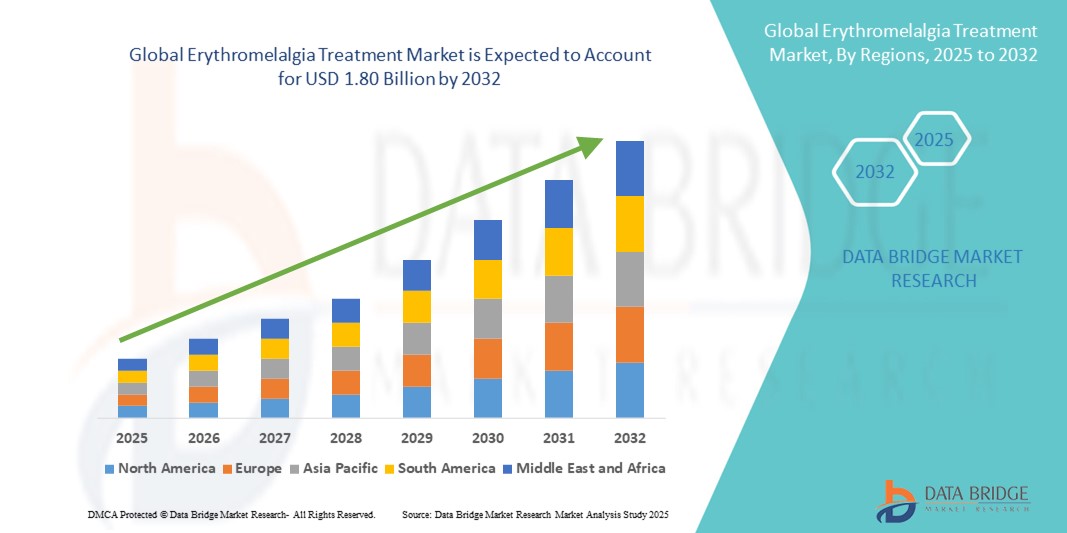
- The global erythromelalgia treatment market size was valued at USD 1.37 billion in 2024 and is expected to reach USD 1.80 billion by 2032, at a CAGR of 3.50% during the forecast period
- The market growth is largely fueled by increasing awareness of rare vascular disorders, advancements in targeted therapies, and the expansion of personalized medicine approaches, driving adoption of effective treatment options
- Furthermore, rising patient demand for safe, rapid-acting, and symptom-specific therapies, along with supportive healthcare initiatives and improved diagnostic capabilities, is positioning novel and conventional treatments as the preferred choice. These converging factors are accelerating the adoption of erythromelalgia therapies, thereby significantly boosting the industry’s growth
Erythromelalgia Treatment Market Analysis
- Erythromelalgia treatments, including pharmacological therapies, topical agents, and supportive care, are increasingly vital in managing this rare vascular disorder due to their effectiveness in alleviating burning pain, redness, and swelling, thereby improving patients’ quality of life
- The escalating demand for erythromelalgia treatments is primarily fueled by growing awareness of rare vascular disorders, increased diagnosis rates, and advancements in targeted therapies and personalized medicine approaches
- North America dominated the erythromelalgia treatment market with the largest revenue share of 39.6% in 2024, characterized by advanced healthcare infrastructure, high healthcare spending, and the presence of leading pharmaceutical companies, with the U.S. showing substantial adoption of novel therapies and ongoing clinical trials for symptom management.
- Asia-Pacific is expected to be the fastest growing region in the erythromelalgia treatment market during the forecast period due to improving healthcare access, rising awareness of rare disorders, and growing investments in research and development
- Medication segment dominated the erythromelalgia treatment market in 2024 with a 73% share, driven by its established efficacy in managing symptoms and widespread clinical use
Report Scope and Erythromelalgia Treatment Market Segmentation
|
Attributes |
Erythromelalgia Treatment Key Market Insights |
|
Segments Covered |
|
|
Countries Covered |
North America
Europe
Asia-Pacific
Middle East and Africa
South America
|
|
Key Market Players |
|
|
Market Opportunities |
|
|
Value Added Data Infosets |
In addition to the insights on market scenarios such as market value, growth rate, segmentation, geographical coverage, and major players, the market reports curated by the Data Bridge Market Research also include in-depth expert analysis, pricing analysis, brand share analysis, consumer survey, demography analysis, supply chain analysis, value chain analysis, raw material/consumables overview, vendor selection criteria, PESTLE Analysis, Porter Analysis, and regulatory framework. |
Erythromelalgia Treatment Market Trends
Rising Focus on Targeted Therapies and Personalized Medicine
- A significant and accelerating trend in the global erythromelalgia treatment market is the increasing development of targeted therapies and personalized medicine approaches tailored to the underlying causes of the disorder, such as genetic mutations in primary erythromelalgia
- For instance, ongoing clinical studies are investigating sodium channel blockers and novel analgesic formulations that aim to address the root cause of symptoms rather than only providing symptomatic relief. Similarly, research into gene-specific interventions is gaining traction, offering potential long-term management options for patients with hereditary forms of the condition
- Advancements in diagnostic techniques, including genetic testing and biomarker identification, allow clinicians to stratify patients and recommend personalized treatment plans, improving therapeutic efficacy and minimizing adverse effects
- The trend towards integrating personalized treatment strategies with supportive care regimens is enhancing patient outcomes and satisfaction. Through precise targeting, patients may experience faster symptom relief, reduced medication side effects, and improved quality of life
- This focus on individualized therapies is reshaping expectations in erythromelalgia care, prompting pharmaceutical companies to develop therapies that are more effective and patient-centric. For instance, companies such as Xeris Pharmaceuticals and Cipla are exploring tailored formulations and delivery systems to optimize symptom management
- The demand for targeted and personalized erythromelalgia treatments is increasing rapidly across both hospital and specialty clinic settings, as patients and physicians prioritize therapies that address the root causes while providing effective symptom relief
Erythromelalgia Treatment Market Dynamics
Driver
Increasing Awareness and Diagnosis of Rare Vascular Disorders
- The growing awareness among healthcare providers and patients about erythromelalgia, coupled with improvements in diagnostic techniques, is a key driver for market growth
- For instance, in March 2024, several medical centers in North America launched awareness campaigns and rare disease clinics focusing on erythromelalgia, improving early diagnosis and treatment adoption
- As more patients are diagnosed, the demand for effective treatment options including pharmacological therapies and supportive care rises, driving the market forward
- In addition, the expansion of healthcare infrastructure and specialized care centers facilitates patient access to therapies, increasing treatment adoption rates
- The availability of educational resources, physician training programs, and patient support initiatives further contributes to market growth by promoting timely diagnosis and management
Restraint/Challenge
Limited Awareness and High Treatment Costs
- A major challenge in the erythromelalgia treatment market is the limited awareness of the condition among patients and some healthcare providers, leading to misdiagnosis or delayed treatment initiation
- For instance, reports indicate that many patients undergo multiple consultations before receiving an accurate diagnosis, which can prolong symptom severity and reduce quality of life
- Furthermore, advanced therapies and personalized treatment options often come with high costs, limiting access for patients in developing regions or those without comprehensive insurance coverage
- Addressing these challenges through patient education, wider dissemination of diagnostic guidelines, and development of cost-effective therapies is crucial for expanding market adoption
- Companies such as Cipla and Xeris Pharmaceuticals are exploring patient assistance programs and affordable formulations to improve access, but broader initiatives are needed to overcome awareness and affordability barriers
Erythromelalgia Treatment Market Scope
The market is segmented on the basis of type, treatment, drugs, route of administration, end-users, and distribution channel.
- By Type
On the basis of type, the market is segmented into primary erythromelalgia and secondary erythromelalgia. The primary erythromelalgia segment dominated the market with a revenue share of 61.2% in 2024, driven by its higher prevalence and chronic nature. Patients with primary erythromelalgia often require long-term management and continuous pharmacological therapy to relieve burning pain, redness, and swelling. Increased awareness of hereditary and idiopathic cases has encouraged early diagnosis and treatment initiation, further driving adoption. Clinical trials targeting sodium channel blockers and novel analgesics are primarily focused on primary erythromelalgia, strengthening its market position. The segment also benefits from the availability of both hospital- and home-based treatment options. Moreover, patients seek therapies that improve quality of life, boosting demand for established and innovative solutions.
The secondary erythromelalgia segment is anticipated to witness the fastest growth from 2025 to 2032 due to growing recognition of underlying conditions such as autoimmune disorders, diabetes, and myeloproliferative diseases. Improved diagnostic tools and awareness campaigns are enabling earlier identification and treatment of secondary cases. Collaborations between hospitals and specialty clinics are supporting better patient outcomes. Rising patient access to condition-specific therapies is also fueling growth. Pharmaceutical companies are exploring targeted medications for secondary erythromelalgia, further accelerating market expansion.
- By Treatment
On the basis of treatment, the market is segmented into medication and surgery. The medication segment dominated the market with a 73% share in 2024, as pharmacological therapies are widely prescribed for symptom management. Medications such as lidocaine, capsaicin, and diclofenac provide effective pain relief and are minimally invasive compared to surgical options. Hospitals and specialty clinics prefer medications as first-line therapy due to safety and efficacy. The segment also benefits from continuous drug development and the introduction of combination therapies. Patient adherence is higher for oral or topical treatments, supporting sustained growth. In addition, the availability of novel formulations enhances treatment convenience and effectiveness.
The surgery segment is expected to witness the fastest growth during the forecast period due to advancements in minimally invasive procedures and neuromodulation techniques. Patients unresponsive to medications are increasingly opting for surgical interventions. Specialized surgical centers and clinical research initiatives are promoting adoption. Awareness among physicians about procedural options is improving patient access. Moreover, targeted therapies are complementing surgical outcomes, encouraging combined treatment strategies. Rising investment in healthcare infrastructure in emerging regions is also expected to support growth.
- By Drugs
On the basis of drugs, the market is segmented into lidocaine, capsaicin, diclofenac, brimonidine, misoprostol, and others. The lidocaine segment dominated the market in 2024 with a 28.4% share, due to its rapid pain-relieving effect and wide clinical acceptance. Lidocaine is available in multiple forms such as patches, creams, and injections, providing flexibility in treatment. Its safety profile and ease of administration make it a preferred choice among physicians. Continuous research into novel delivery systems is further enhancing its adoption. Hospitals and specialty clinics widely use lidocaine for both acute flare-ups and chronic management. Its versatility and predictable efficacy contribute to sustained dominance.
The capsaicin segment is expected to witness the fastest growth during the forecast period due to rising use as a topical agent for localized symptom relief. Capsaicin’s non-systemic mechanism reduces systemic side effects, appealing to homecare patients. Increasing availability of high-concentration and extended-release formulations improves efficacy. Awareness campaigns are encouraging physician adoption for mild-to-moderate cases. Growth is supported by patient preference for self-administered treatments. Pharmaceutical innovations in capsaicin delivery are further boosting the segment’s expansion.
- By Route of Administration
On the basis of route, the market is segmented into oral and topical. The oral segment dominated the market with a 54.7% share in 2024, as oral therapies provide systemic symptom management for widespread pain. Oral administration is convenient, ensures predictable pharmacokinetics, and is highly preferred in hospitals and clinics. Long-term adherence is easier with oral medications compared to other routes. Physicians favor oral drugs for both primary and secondary erythromelalgia due to clinical effectiveness. Patients also prefer oral therapies for their ease of use and minimal intervention. Continuous development of oral formulations enhances segment growth.
The topical segment is expected to witness the fastest growth during the forecast period due to rising preference for localized, non-systemic symptom control. Topical formulations are suitable for homecare and patient self-management. They minimize systemic side effects and offer targeted relief. New delivery systems, such as patches and gels, improve efficacy and adherence. Increasing awareness among patients about safer alternatives is driving adoption. The convenience of home-based application is further accelerating growth.
- By End-Users
On the basis of end-users, the market is segmented into hospitals, homecare, specialty clinics, and others. The hospitals segment dominated the market with a 49.3% share in 2024, due to advanced healthcare infrastructure, specialist access, and availability of diverse treatment options. Hospitals serve as primary points for diagnosis, prescription, and therapy administration. Clinical research, ongoing trials, and patient monitoring in hospitals further support adoption. Collaboration with specialty clinics ensures comprehensive care. Hospitals also provide access to both pharmacological and procedural interventions. The credibility of hospital care encourages patient trust and adherence.
The homecare segment is expected to witness the fastest growth during the forecast period as patients increasingly prefer convenient, self-administered treatment options. Expansion of homecare services, remote monitoring, and the availability of oral and topical medications for home use support adoption. Awareness about chronic disease management in home settings is increasing. Telemedicine integration helps in guiding homecare therapy. Patients gain flexibility and independence with home-based management. The growing trend of patient-centric care is a key driver of growth.
- By Distribution Channel
On the basis of distribution channel, the market is segmented into hospital pharmacies, retail pharmacies, and others. The hospital pharmacies segment dominated the market with a 46.8% share in 2024, due to direct access to prescribed medications and integration with hospital care protocols. Hospital pharmacies ensure timely availability of both conventional and advanced therapies. They support adherence to physician-recommended regimens. Hospitals often provide counseling and monitoring alongside medication distribution. Access to specialized formulations enhances the segment’s relevance. Integration with hospital systems streamlines supply and patient care.
The retail pharmacies segment is expected to witness the fastest growth during the forecast period, fueled by expanding pharmacy networks and increasing over-the-counter availability of certain topical therapies. Patients prefer the convenience of obtaining medications outside hospitals. Growing urbanization and retail expansion in emerging markets are driving growth. Enhanced supply chain infrastructure ensures consistent availability. Retail pharmacies also support self-managed care and patient education.
Erythromelalgia Treatment Market Regional Analysis
- North America dominated the erythromelalgia treatment market with the largest revenue share of 39.6% in 2024, characterized by advanced healthcare infrastructure, high healthcare spending, and the presence of leading pharmaceutical companies
- Patients and healthcare providers in the region highly value the availability of specialized treatment options, early diagnosis, and access to both pharmacological and procedural therapies for effective symptom management
- The widespread adoption is further supported by well-established hospital networks, presence of leading pharmaceutical companies, and ongoing clinical research, establishing North America as the preferred region for erythromelalgia treatment
U.S. Erythromelalgia Treatment Market Insight
The U.S. erythromelalgia treatment market captured the largest revenue share of 82% in 2024 within North America, driven by the presence of advanced healthcare infrastructure, well-established hospital networks, and high awareness of rare vascular disorders. Patients increasingly prioritize timely diagnosis and access to effective pharmacological therapies for symptom relief. The growing focus on personalized medicine, combined with ongoing clinical trials and research initiatives, further propels market growth. In addition, the adoption of novel drugs, including sodium channel blockers and targeted analgesics, contributes to increased treatment penetration. Rising healthcare expenditure and insurance coverage support widespread accessibility of erythromelalgia therapies.
Europe Erythromelalgia Treatment Market Insight
The Europe erythromelalgia treatment market is projected to expand at a substantial CAGR during the forecast period, primarily driven by increasing awareness of rare vascular disorders and the presence of robust healthcare systems. The demand for specialized care in hospitals and clinics is fostering the adoption of effective treatment options. Rising urbanization, coupled with an aging population, supports higher prevalence and diagnosis of erythromelalgia. In addition, European patients value advanced therapies that minimize side effects, enhancing market adoption. Growth is also supported by government initiatives promoting rare disease management and reimbursement policies for approved therapies.
U.K. Erythromelalgia Treatment Market Insight
The U.K. erythromelalgia treatment market is anticipated to grow at a notable CAGR during the forecast period, driven by increasing recognition of the disorder and the desire for effective, patient-centric treatments. Concerns regarding symptom severity, such as burning pain and swelling, encourage patients to seek timely medical intervention. The U.K.’s well-developed healthcare infrastructure and insurance coverage facilitate access to both pharmacological and procedural therapies. Moreover, expanding rare disease clinics and specialist centers enhance early diagnosis and management. Growing awareness among physicians and patients further stimulates adoption of approved treatment options.
Germany Erythromelalgia Treatment Market Insight
The Germany erythromelalgia treatment market is expected to expand at a considerable CAGR during the forecast period, fueled by advanced healthcare infrastructure, high healthcare spending, and a focus on innovative therapies. German patients are increasingly aware of the benefits of targeted medications and personalized management strategies. Hospitals and specialty clinics play a significant role in treatment delivery, ensuring timely access to effective therapies. Research collaborations and clinical trials in Germany promote the development and availability of novel treatment options. Rising emphasis on patient safety and adherence to clinical guidelines also strengthens market growth.
Asia-Pacific Erythromelalgia Treatment Market Insight
The Asia-Pacific erythromelalgia treatment market is poised to grow at the fastest CAGR during the forecast period, driven by rising healthcare access, growing awareness of rare diseases, and improving diagnostic infrastructure in countries such as China, Japan, and India. Increasing urbanization and disposable incomes support the adoption of specialized treatments. Expansion of hospitals and specialty clinics focused on rare vascular disorders further fuels growth. Government initiatives promoting rare disease awareness and treatment accessibility are positively impacting the market. In addition, the introduction of affordable pharmacological therapies and expansion of domestic pharmaceutical manufacturers contribute to regional growth.
Japan Erythromelalgia Treatment Market Insight
The Japan erythromelalgia treatment market is gaining momentum due to the country’s advanced healthcare system, aging population, and strong focus on rare disease management. Patients prioritize effective, easy-to-administer therapies for symptom relief and improved quality of life. The integration of personalized medicine approaches and innovative pharmacological treatments is accelerating adoption. Hospitals and specialty clinics offer comprehensive care and support for chronic cases. Awareness campaigns and clinical research initiatives are driving timely diagnosis and treatment. In addition, the emphasis on patient-centric care is strengthening market growth across residential and clinical settings.
India Erythromelalgia Treatment Market Insight
The India erythromelalgia treatment market accounted for the largest revenue share in Asia-Pacific in 2024, attributed to growing awareness, increasing healthcare access, and a rising prevalence of rare vascular disorders. The expanding network of hospitals and specialty clinics supports early diagnosis and treatment adoption. Government initiatives promoting rare disease awareness and treatment affordability are further driving market growth. India’s large patient population and increasing disposable income facilitate access to pharmacological therapies. In addition, domestic pharmaceutical manufacturers are developing cost-effective formulations, enhancing availability and patient compliance. Rising patient demand for effective symptom management continues to propel market expansion.
Erythromelalgia Treatment Market Share
The Erythromelalgia Treatment industry is primarily led by well-established companies, including:
- ALGOTX (France)
- AlzeCure Pharma AB (Sweden)
- Adolore BioTherapeutics (U.S.)
- Tonix Pharmaceuticals Holding Corp. (U.S.)
- Neurana Pharmaceuticals (U.S.)
- Chromocell Therapeutics (U.S.)
- Brighton Biotech (U.S.)
- Pila Pharma (Sweden)
- Camurus AB (Sweden)
- Sun Pharmaceutical Industries Limited (India)
- Glenmark Pharmaceuticals (India)
- Akums Drugs and Pharmaceuticals (India)
- Amneal Pharmaceuticals (U.S.)
- Apricus Biosciences, Inc. (U.S.)
- Indoco Remedies Ltd (India)
- Somerset Therapeutics, LLC (U.S.)
- Galderma Laboratories, L.P. (Switzerland)
- Xenon Pharmaceuticals (Canada)
- Teva Pharmaceuticals (Israel)
- Anthropic (U.S.)
What are the Recent Developments in Global Erythromelalgia Treatment Market?
- In July 2025, the U.S. Food and Drug Administration (FDA) granted Orphan Drug Status to AlzeCure's pain project, ACD440, for the treatment of erythromelalgia. This designation is a major development as it provides incentives for companies to develop drugs for rare diseases, including extended market exclusivity and reduced fees
- In January 2025, an international consortium developed the PED-EMERGE registry to investigate pediatric erythromelalgia. This collaborative effort includes multidisciplinary experts and patient partners, focusing on genetic screening and clinical effectiveness research to understand the condition's mechanisms and improve management strategies
- In April 2024, a case report was published in the Oxford Medical Case Reports journal detailing the first known instance of intermittent erythromelalgia precipitated by the use of pseudoephedrine, a common nasal decongestant. This discovery is a vital clinical development, as it helps physicians and patients identify and avoid a new potential trigger for symptoms
- In September 2023, AlgoTx initiated a Phase II clinical trial (EASE study) to evaluate ATX01, a topical agent targeting pain-conducting sodium channels for erythromelalgia treatment. This global study involves collaboration with the Mayo Clinic in the U.S. and Universitätsklinikum Erlangen in Germany, aiming to assess the efficacy and safety of ATX01 in patients with this rare neurovascular disorder
- In March 2023, the European biotech company AlgoTx announced that the FDA had cleared its Investigational New Drug (IND) application for its Phase 2 candidate, ATX01, in the treatment of erythromelalgia. This development cleared the way for the "Efficacy of ATX01 Study in Erythromelalgia" (EASE) trial, a significant step forward in bringing a new topical treatment to patients

- Interactive Data Analysis Dashboard
- Company Analysis Dashboard for high growth potential opportunities
- Research Analyst Access for customization & queries
- Competitor Analysis with Interactive dashboard
- Latest News, Updates & Trend analysis
- Harness the Power of Benchmark Analysis for Comprehensive Competitor Tracking
Data collection and base year analysis are done using data collection modules with large sample sizes. The stage includes obtaining market information or related data through various sources and strategies. It includes examining and planning all the data acquired from the past in advance. It likewise envelops the examination of information inconsistencies seen across different information sources. The market data is analysed and estimated using market statistical and coherent models. Also, market share analysis and key trend analysis are the major success factors in the market report. To know more, please request an analyst call or drop down your inquiry.
The key research methodology used by DBMR research team is data triangulation which involves data mining, analysis of the impact of data variables on the market and primary (industry expert) validation. Data models include Vendor Positioning Grid, Market Time Line Analysis, Market Overview and Guide, Company Positioning Grid, Patent Analysis, Pricing Analysis, Company Market Share Analysis, Standards of Measurement, Global versus Regional and Vendor Share Analysis. To know more about the research methodology, drop in an inquiry to speak to our industry experts.
Data Bridge Market Research is a leader in advanced formative research. We take pride in servicing our existing and new customers with data and analysis that match and suits their goal. The report can be customized to include price trend analysis of target brands understanding the market for additional countries (ask for the list of countries), clinical trial results data, literature review, refurbished market and product base analysis. Market analysis of target competitors can be analyzed from technology-based analysis to market portfolio strategies. We can add as many competitors that you require data about in the format and data style you are looking for. Our team of analysts can also provide you data in crude raw excel files pivot tables (Fact book) or can assist you in creating presentations from the data sets available in the report.












