


Erythropoietin Stimulating Agents Market Overview
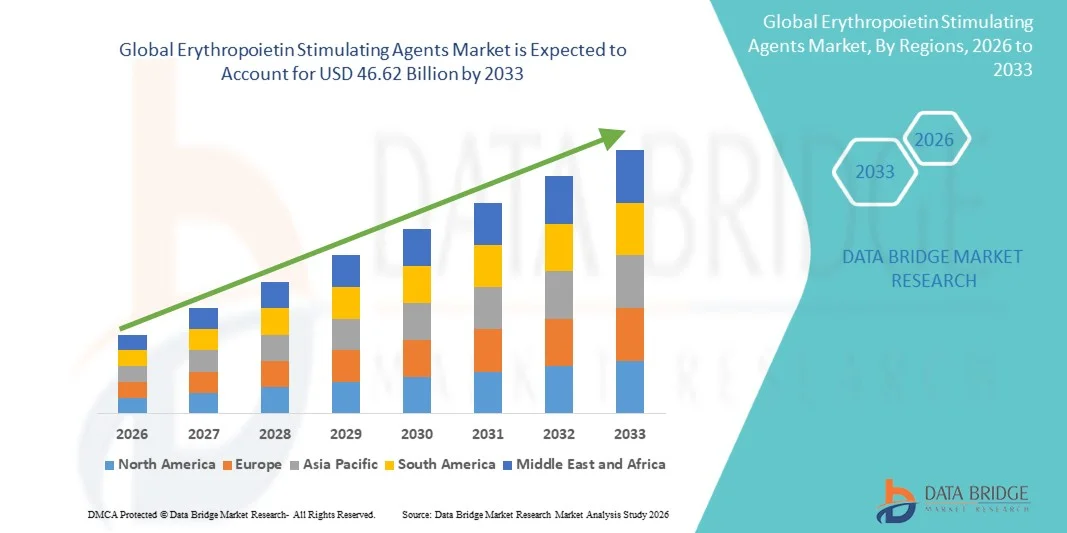
As per Data Bridge Market Research analysis The erythropoietin stimulating agents market was valued at USD 21.36 billion in 2025 and is projected to reach USD 46.62 billion by 2033, growing at a CAGR of 10.25% from 2026 to 2033. The market is experiencing consistent growth driven by increasing prevalence of anemia, rising burden of chronic kidney disease, expanding applications in cancer-related anemia and HIV infections, and growing demand for erythropoiesis-stimulating therapies for effective red blood cell production management.
The increasing number of patients suffering from anemia, end-stage renal disorders, and chronic kidney disease, combined with rising adoption of erythropoietin stimulating agents in oncology and renal care, is encouraging healthcare providers to utilize advanced anemia management therapies. Growing usage of recombinant erythropoietin products, development of biosimilar agents, and increasing healthcare investments in emerging economies are further supporting market expansion across hospitals, dialysis centers, and specialty clinics.
Market Size & Forecast
- Global Market Value (2025): USD 21.36 Billion
- Expected Market Value (2033): USD 46.62 Billion
- Forecast CAGR (2026–2033): 10.25%
- Leading Region in 2025: North America
- Fastest Growing Region: Asia Pacific
Key Market Trends & Insights
- North America dominated the erythropoietin stimulating agents market with a 38.75% revenue share in 2025, supported by advanced healthcare infrastructure, high prevalence of chronic kidney disease, increasing dialysis patient population, and strong adoption of erythropoiesis-stimulating therapies for anemia management
- The epoetin-alfa segment led the market with a 45.50% share in 2025, driven by extensive clinical history, broad regulatory approvals, and widespread application in treating anemia associated with chronic kidney disease
- Asia-Pacific is expected to be the fastest-growing region at a CAGR of 6.69% from 2026 to 2033, fueled by the increasing prevalence of chronic kidney disease and chemotherapy-induced anemia, rising adoption of biosimilars, growing awareness regarding anemia treatment, and increasing healthcare investments
- Darbepoetin-alfa are the fastest-growing product type, projected to register a CAGR of 6.7%, reflecting the surge in longer half-life and reduced dosing frequency compared with conventional epoetin therapies
- The kidney disorders segment dominated the disease cured category with a 40.45% revenue share in 2025, led by the high prevalence of chronic kidney disease and end-stage renal disease requiring anemia management
- Hospitals accounted for 50.12% of the market, preferred by the availability of advanced diagnostic facilities, specialized departments, and comprehensive anemia management services
- The cancer chemotherapy segment is the fastest-growing disease cured category, with a CAGR of 7.8%, driven by the rising global cancer burden and increasing incidence of chemotherapy-induced anemia
Report Scope and Erythropoietin Stimulating Agents Market Segmentation
|
Attributes |
Erythropoietin Stimulating Agents Key Market Insights |
|
Segments Covered |
|
|
Countries Covered |
North America
Europe
Asia-Pacific
Middle East and Africa
South America
|
|
Key Market Players |
|
|
Market Opportunities |
|
|
Value Added Data Infosets |
In addition to the insights on market scenarios such as market value, growth rate, segmentation, geographical coverage, and major players, the market reports curated by the Data Bridge Market Research also include in-depth expert analysis, patient epidemiology, pipeline analysis, pricing analysis, and regulatory framework. |
Erythropoietin Stimulating Agents Market Trends
Trend: Rising Adoption of Biosimilar Erythropoietin Stimulating Agents
The increasing adoption of biosimilar erythropoietin stimulating agents is reshaping the anemia treatment landscape by improving affordability and expanding patient access to erythropoiesis-stimulating therapies. Healthcare systems are increasingly preferring biosimilars due to their comparable efficacy, safety profiles, and lower treatment costs compared with originator biologics. The availability of biosimilar epoetin alfa and darbepoetin alfa products is supporting wider utilization across chronic kidney disease, chemotherapy-induced anemia, and other anemia-related conditions. Regulatory approvals and cost-containment initiatives are further accelerating biosimilar adoption in developed and emerging markets. For instance, in October 2023, a real-world safety review of Sandoz’s epoetin alfa biosimilar Binocrit (HX575) evaluated post-approval experience and confirmed its continued clinical use among biosimilar erythropoietin therapies, supporting physician confidence and broader adoption of cost-effective ESA alternatives for anemia management.
The growing acceptance of biosimilar erythropoietin products is creating new opportunities for market expansion by improving affordability and increasing availability of anemia management therapies.
Erythropoietin Stimulating Agents Market Dynamics
Key Market Driver: Increasing Prevalence of Chronic Kidney Disease and Dialysis Population
The rising global burden of chronic kidney disease (CKD) is significantly driving demand for erythropoietin stimulating agents, as anemia is a common complication among patients with impaired kidney function. Increasing numbers of patients undergoing dialysis require long-term anemia management therapies to stimulate red blood cell production and reduce transfusion dependency. Growing healthcare expenditure, improved diagnosis rates, and expanding renal care infrastructure are further supporting the adoption of erythropoietin therapies across hospitals and dialysis centers. The increasing prevalence of diabetes and hypertension is also contributing to the rising incidence of CKD-related anemia worldwide. The United States Renal Data System (USRDS) reported that the number of patients with end-stage kidney disease (ESKD) requiring dialysis continued to rise in the United States, with anemia management remaining an essential component of renal care, supporting sustained demand for erythropoiesis-stimulating agents among dialysis patients. For instance, in February 2023, the U.S. FDA approved Jesduvroq (daprodustat), the first oral treatment for anemia caused by chronic kidney disease in adults undergoing dialysis for at least four months, based on clinical data from 2,964 patients across 431 sites in 35 countries, highlighting the growing need for advanced anemia management therapies among CKD patients.
The approval of new anemia therapies targeting CKD patients demonstrates the expanding treatment landscape and continued demand for erythropoiesis-stimulating and related anemia management solutions globally.
Key Restraint/Challenge: Safety Concerns Associated with High-Dose Erythropoiesis-Stimulating Agent Therapy
A significant challenge in the erythropoietin stimulating agents market is the risk of adverse cardiovascular events associated with higher hemoglobin targets and excessive erythropoietin stimulation. Regulatory agencies have implemented safety warnings regarding increased risks of cardiovascular complications, stroke, and thromboembolic events in certain patient populations receiving erythropoiesis-stimulating agents. These safety concerns have resulted in stricter treatment guidelines, careful patient monitoring, and limitations on ESA usage, particularly in cancer-related anemia management. The requirement for controlled dosing and risk-benefit evaluation may restrict broader adoption in some clinical applications. For instance, the FDA prescribing information for erythropoiesis-stimulating agents, including epoetin alfa and darbepoetin alfa, carries a boxed warning stating that ESAs may increase the risks of death, myocardial infarction, stroke, venous thromboembolism, thrombosis of vascular access, and tumor progression or recurrence in specific patient populations.
Safety-related limitations and regulatory monitoring continue to influence prescribing practices and represent a key challenge for erythropoietin stimulating agent market growth.
Key Market Opportunity: Expansion of Long-Acting Erythropoietin Therapies
The development of long-acting erythropoietin stimulating agents presents a significant market opportunity by reducing dosing frequency, improving patient convenience, and supporting better treatment adherence. Advanced formulations such as darbepoetin alfa and continuous erythropoietin receptor activators are enabling more flexible anemia management approaches for chronic kidney disease and chemotherapy-associated anemia patients. Increasing focus on personalized treatment strategies, improved patient monitoring, and outpatient-based care models is further creating opportunities for innovative erythropoietin therapies. Emerging markets with expanding renal care infrastructure also provide additional growth potential for long-acting ESA products. For instance, Amgen developed darbepoetin alfa (Aranesp), a long-acting erythropoiesis-stimulating agent approved for anemia associated with chronic kidney disease and chemotherapy, with extended dosing intervals compared with traditional epoetin alfa therapies, improving treatment convenience for patients requiring long-term anemia management.
The development of long-acting erythropoietin stimulating agents such as darbepoetin alfa is supporting market growth by improving dosing convenience, enhancing patient adherence, and expanding advanced anemia treatment options
Erythropoietin Stimulating Agents Market Scope
The erythropoietin stimulating agents market is segmented on the basis of product type, disease cured and end user.
- By Product Type
On the basis of product type, the erythropoietin stimulating agents market is segmented into epoetin-alfa, epoetin-beta, epoetin-omega, epoetin-delta, and darbepoetin-alfa. The epoetin-alfa segment dominated the market with an estimated 45.50% revenue share in 2025, owing to its extensive clinical history, broad regulatory approvals, and widespread application in treating anemia associated with chronic kidney disease, chemotherapy, and other conditions requiring stimulation of red blood cell production. Epoetin-alfa remains the most established erythropoiesis-stimulating agent due to its proven therapeutic effectiveness and long-term physician acceptance. The availability of multiple biosimilar epoetin-alfa products has improved affordability and expanded patient access across different healthcare systems. Increasing demand for cost-effective anemia treatment solutions is further supporting segment growth. The strong clinical evidence base and extensive usage across nephrology and oncology applications continue to maintain its leading market position.
The darbepoetin-alfa segment is projected to register the fastest growth at an estimated CAGR of 6.7% during the forecast period, driven by its longer half-life and reduced dosing frequency compared with conventional epoetin therapies. Darbepoetin-alfa provides improved treatment convenience for patients requiring long-term anemia management, particularly those with chronic kidney disease and chemotherapy-induced anemia. The increasing preference for long-acting erythropoiesis-stimulating agents is encouraging adoption among healthcare providers. Growing emphasis on improving patient compliance and reducing treatment administration burden is further supporting demand. Continuous innovation in long-acting ESA formulations is expected to strengthen the future growth potential of this segment.
- By Disease Cured
On the basis of disease cured, the erythropoietin stimulating agents market is segmented into oncology diseases, kidney disorders, anemia, neural disease, wound healing, antiretroviral treatment (ART), and cancer chemotherapy. The kidney disorders segment dominated the market with an estimated 40.45% revenue share in 2025, owing to the high prevalence of chronic kidney disease and end-stage renal disease requiring anemia management. Reduced erythropoietin production by damaged kidneys results in anemia, creating significant demand for erythropoietin stimulating agents among dialysis patients. ESAs are widely incorporated into renal care protocols to increase red blood cell production and reduce dependence on blood transfusions. The expanding global dialysis population and increasing diagnosis of chronic kidney disorders continue to support segment dominance. The critical role of ESAs in managing renal anemia ensures continued demand from kidney disorder applications.
The cancer chemotherapy segment is expected to witness the fastest growth at an estimated CAGR of 7.8% during the forecast period, driven by the rising global cancer burden and increasing incidence of chemotherapy-induced anemia. Cancer treatments often suppress bone marrow activity, increasing the need for supportive therapies such as erythropoietin stimulating agents. Growing adoption of supportive oncology care and increasing availability of cancer treatment services are contributing to segment expansion. ESAs help reduce transfusion requirements and improve quality of life among selected cancer patients. Increasing investment in oncology infrastructure across emerging economies is further supporting growth opportunities. The growing focus on comprehensive cancer care is expected to accelerate ESA adoption in chemotherapy applications.
- By End User
On the basis of end user, the erythropoietin stimulating agents market is segmented into hospitals, dialysis centers, oncology clinics, specialty clinics, and homecare settings. The hospitals segment dominated the market with an estimated 50.12% revenue share in 2025, owing to the availability of advanced diagnostic facilities, specialized departments, and comprehensive anemia management services. Hospitals are major treatment centers for patients suffering from chronic kidney disease, cancer, and other conditions requiring ESA therapy. The presence of nephrology, oncology, and hematology departments enables effective monitoring and administration of erythropoietin stimulating agents. Increasing hospital admissions related to chronic diseases are strengthening segment growth. Established reimbursement frameworks and access to trained healthcare professionals further support hospital-based ESA utilization. The broad patient base and integrated treatment capabilities continue to make hospitals the leading end-user segment.
The dialysis centers segment is projected to register the fastest growth at an estimated CAGR of 7.2% during the forecast period, driven by the increasing number of patients undergoing dialysis due to chronic kidney disease progression. Dialysis centers routinely administer erythropoietin stimulating agents as part of anemia management protocols for end-stage renal disease patients. Rising prevalence of kidney disorders and expanding dialysis infrastructure are creating strong growth opportunities for this segment. Dedicated renal care facilities allow regular monitoring and optimized ESA dosing. Increasing healthcare access in emerging economies is further supporting the expansion of dialysis centers. The growing demand for specialized kidney care services is expected to accelerate adoption of ESAs in these settings.
Erythropoietin Stimulating Agents Market Regional Analysis
North America dominated the erythropoietin stimulating agents market with a 38.75% revenue share in 2025, supported by advanced healthcare infrastructure, high prevalence of chronic kidney disease, increasing dialysis patient population, and strong adoption of erythropoiesis-stimulating therapies for anemia management. The region also benefits from the presence of major pharmaceutical companies, established reimbursement systems, and widespread availability of advanced renal and oncology care services. Growing utilization of biosimilar erythropoietin products, increasing cancer treatment volumes, and rising demand for effective anemia management solutions are accelerating market development. Increasing focus on improving patient outcomes, expanding specialty care networks, and reducing transfusion dependency continues to strengthen North America's leading position in the global market.
U.S. Erythropoietin Stimulating Agents Market Insight
The U.S. erythropoietin stimulating agents market is witnessing strong growth due to the rising prevalence of chronic kidney disease, increasing dialysis population, and growing demand for anemia management therapies. The country’s advanced healthcare infrastructure, strong presence of biotechnology and pharmaceutical companies, and widespread adoption of erythropoiesis-stimulating agents across renal and oncology care settings are driving market expansion. In addition, increasing cancer treatment volumes and continued use of ESAs for chemotherapy-induced anemia are accelerating adoption across hospitals and specialty clinics. According to the United States Renal Data System (USRDS), more than 800,000 people in the U.S. were living with end-stage kidney disease in 2022, supporting sustained demand for renal anemia management therapies.
Europe Erythropoietin Stimulating Agents Market Insight
The Europe erythropoietin stimulating agents market remains a major contributor to global revenue, driven by the high burden of chronic kidney disease, established dialysis infrastructure, and strong adoption of biosimilar erythropoietin products. The widespread availability of epoetin alfa biosimilars, supportive regulatory frameworks, and increasing focus on cost-effective anemia management solutions are supporting market expansion across the region. Increasing investments in renal care services, oncology treatment facilities, and biologic medicines are further enhancing ESA adoption throughout Europe. The European Medicines Agency (EMA) has approved multiple erythropoietin biosimilars, including Binocrit (epoetin alfa) and Retacrit (epoetin zeta), improving access to cost-effective ESA therapies across European healthcare systems.
U.K. Erythropoietin Stimulating Agents Market Insight
The U.K. erythropoietin stimulating agents market is experiencing steady growth, supported by increasing cases of chronic kidney disease, expanding dialysis services, and growing demand for effective anemia treatment approaches. Increasing adoption of biosimilar erythropoietin products and strong healthcare systems are contributing to market growth. Furthermore, integration of evidence-based renal care protocols and increasing focus on improving patient outcomes are supporting ESA utilization in hospitals and specialty clinics. According to Kidney Research UK’s 2023 report, approximately 7.2 million people in the U.K. are living with chronic kidney disease (CKD), representing more than 10% of the population and increasing the demand for advanced renal anemia management solutions, including erythropoiesis-stimulating agents.
Germany Erythropoietin Stimulating Agents Market Insight
The Germany erythropoietin stimulating agents market is expanding steadily due to the country’s advanced healthcare infrastructure, high prevalence of chronic diseases, and strong adoption of innovative biologic and biosimilar therapies. Hospitals, dialysis centers, and oncology clinics are increasingly utilizing erythropoietin stimulating agents for anemia management in renal disease and cancer patients. Continuous advancements in pharmaceutical research, strong reimbursement systems, and increasing acceptance of biosimilars are further driving market growth in Germany. Germany has one of the largest dialysis patient populations in Europe, with more than 90,000 patients receiving dialysis treatment, supporting continued demand for ESA therapies in renal care.
Asia-Pacific Erythropoietin Stimulating Agents Market Insight
The Asia-Pacific erythropoietin stimulating agents market is expected to witness rapid growth, driven by increasing prevalence of chronic kidney disease, expanding dialysis infrastructure, and rising healthcare investments across countries such as China, India, and Japan. Growing awareness regarding anemia treatment, increasing adoption of biosimilar erythropoietin products, and improving access to specialized renal care services are supporting regional market expansion. In addition, the growing burden of diabetes and hypertension-related kidney disorders is accelerating demand for erythropoiesis-stimulating therapies across emerging economies. The International Society of Nephrology reported that Asia accounts for a significant proportion of the global chronic kidney disease burden, creating substantial demand for renal care and anemia management solutions
Japan Erythropoietin Stimulating Agents Market Insight
The Japan erythropoietin stimulating agents market is witnessing consistent growth due to rising demand for anemia management among elderly patients, increasing dialysis prevalence, and strong adoption of advanced renal care therapies. Pharmaceutical innovation, established healthcare infrastructure, and widespread availability of erythropoietin products are supporting market development. Moreover, increasing focus on improving quality of life for chronic kidney disease patients and reducing transfusion dependency is contributing to ESA adoption. According to the Japanese Society for Dialysis Therapy (JSDT) Renal Data Registry, Japan had approximately 343,508 dialysis patients in 2023, representing one of the largest dialysis populations globally and supporting sustained demand for erythropoiesis-stimulating agents for renal anemia management.
China Erythropoietin Stimulating Agents Market Insight
The China erythropoietin stimulating agents market is growing rapidly, driven by increasing chronic kidney disease prevalence, expanding healthcare access, and rising adoption of anemia treatment therapies. Growing government focus on improving chronic disease management, increasing dialysis capacity, and expanding pharmaceutical manufacturing capabilities are significantly boosting market demand. In addition, rising availability of domestic and biosimilar erythropoietin products is improving affordability and accessibility across healthcare facilities. According to a national epidemiological study published in The Lancet, China has a high burden of chronic kidney disease, with more than 130 million individuals estimated to be affected, creating significant demand for renal anemia management therapies.
Erythropoietin Stimulating Agents Market Share
The erythropoietin stimulating agents industry is primarily led by well-established companies, including:
- Amgen Inc. (U.S.)
- Johnson & Johnson Services, Inc. (U.S.)
- F. Hoffmann-La Roche Ltd (Switzerland)
- Pfizer Inc. (U.S.)
- Novartis AG (Switzerland)
- Sanofi (France)
- Baxter (U.S.)
- Sandoz AG (Switzerland)
- Teva Pharmaceutical Industries Ltd. (Israel)
- Biocon Biologics Limited (India)
- Dr. Reddy’s Laboratories Ltd. (India)
- Intas Pharmaceuticals Ltd. (India)
- Zydus Lifesciences Limited (India)
- CELLTRION Inc. (South Korea)
- LG Chem (South Korea)
- JCR Pharmaceuticals Co., Ltd. (Japan)
- Kyowa Kirin Co., Ltd. (Japan)
- Kissei Pharmaceutical Co., Ltd. (Japan)
- 3SBio Group (China)
- United Biotech (India)
Latest Developments in Erythropoietin Stimulating Agents Market
- In March 2024, the U.S. Food and Drug Administration (FDA) approved Vafseo (vadadustat) for the treatment of anemia caused by chronic kidney disease in adults receiving dialysis. Developed by Akebia Therapeutics, Vafseo is an oral HIF-PH inhibitor designed to stimulate erythropoietin production and regulate iron metabolism. The approval expanded treatment options for CKD-related anemia and further increased competition within the renal anemia therapy market
- In February 2023, the U.S. Food and Drug Administration (FDA) approved Jesduvroq™ (daprodustat) for the treatment of anemia caused by chronic kidney disease (CKD) in adults receiving dialysis for at least four months. The approval was based on clinical evidence from a global Phase 3 study involving 2,964 patients across 431 sites in 35 countries
- In June 2022, Akebia Therapeutics and Otsuka Pharmaceutical finalized the termination of their collaboration and license agreements for vadadustat, allowing Akebia to regain commercialization and regulatory rights in multiple global markets. The companies reached an agreement under which Otsuka paid Akebia a USD 55 million settlement fee, while Akebia resumed responsibility for regulatory activities and commercialization strategy for vadadustat
- In February 2022, Akebia Therapeutics and Vifor Pharma amended their license agreement to support the potential commercialization of vadadustat, an oral therapy for anemia associated with chronic kidney disease (CKD). The collaboration expanded Vifor Pharma’s role in commercial access by leveraging its established relationships with dialysis organizations, including Fresenius Kidney Care and other dialysis providers in the United States
- In November 2021, Kissei Pharmaceutical and JCR Pharmaceuticals continued commercialization of Darbepoetin Alfa BS Injection [JCR], a biosimilar long-acting erythropoiesis-stimulating agent launched in Japan for renal anemia treatment. The product was developed as a biosimilar of darbepoetin alfa and demonstrated comparable quality, efficacy, and safety characteristics to the reference product

- Interactive Data Analysis Dashboard
- Company Analysis Dashboard for high growth potential opportunities
- Research Analyst Access for customization & queries
- Competitor Analysis with Interactive dashboard
- Latest News, Updates & Trend analysis
- Harness the Power of Benchmark Analysis for Comprehensive Competitor Tracking
Data collection and base year analysis are done using data collection modules with large sample sizes. The stage includes obtaining market information or related data through various sources and strategies. It includes examining and planning all the data acquired from the past in advance. It likewise envelops the examination of information inconsistencies seen across different information sources. The market data is analysed and estimated using market statistical and coherent models. Also, market share analysis and key trend analysis are the major success factors in the market report. To know more, please request an analyst call or drop down your inquiry.
The key research methodology used by DBMR research team is data triangulation which involves data mining, analysis of the impact of data variables on the market and primary (industry expert) validation. Data models include Vendor Positioning Grid, Market Time Line Analysis, Market Overview and Guide, Company Positioning Grid, Patent Analysis, Pricing Analysis, Company Market Share Analysis, Standards of Measurement, Global versus Regional and Vendor Share Analysis. To know more about the research methodology, drop in an inquiry to speak to our industry experts.
Data Bridge Market Research is a leader in advanced formative research. We take pride in servicing our existing and new customers with data and analysis that match and suits their goal. The report can be customized to include price trend analysis of target brands understanding the market for additional countries (ask for the list of countries), clinical trial results data, literature review, refurbished market and product base analysis. Market analysis of target competitors can be analyzed from technology-based analysis to market portfolio strategies. We can add as many competitors that you require data about in the format and data style you are looking for. Our team of analysts can also provide you data in crude raw excel files pivot tables (Fact book) or can assist you in creating presentations from the data sets available in the report.













