


Exanthema Market Size and Growth Rate
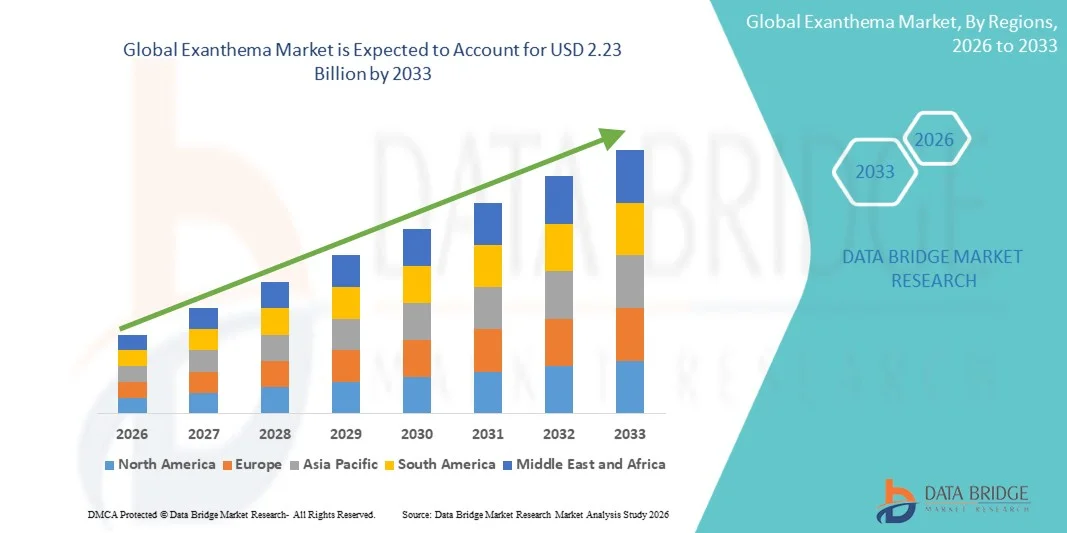
- As per Data Bridge Market Research Analysis the global exanthema market size was valued at USD 1.39 billion in 2025 and is expected to reach USD 2.23 billion by 2033, at a CAGR of 6.10% during the forecast period
- The market growth is primarily driven by increasing prevalence of skin rashes and exanthematous conditions, along with growing awareness among healthcare providers and patients regarding early diagnosis and effective management. Technological advancements in formulation and delivery of dermatological treatments are further enhancing treatment outcomes, supporting broader adoption
- Furthermore, rising demand for safe, effective, and patient-friendly therapeutic solutions is positioning exanthema treatments as essential interventions in both clinical and homecare settings. These factors are collectively accelerating the uptake of exanthema solutions, thereby significantly boosting growth in the global exanthema market
Market Size and Forecast:
- Global Market Value (2025): USD 1.39 billion
- Expected Market Value (2033): USD 2.23 billion
- Forecast CAGR (2026–2033):6.10%
Exanthema Market Analysis
- Exanthema treatments, encompassing topical and systemic therapies for skin rashes and related conditions, are becoming increasingly vital in modern dermatological care across both clinical and homecare settings due to their proven efficacy, ease of use, and ability to manage symptoms effectively
- The escalating demand for exanthema treatments is primarily fueled by the rising prevalence of viral and non‑viral rash conditions, increasing awareness among patients and healthcare providers, and a growing preference for safe, convenient, and patient-friendly therapeutic options
- North America dominated the exanthema market, capturing approximately 42.5% of total revenue in 2025, supported by well‑established healthcare infrastructure, high patient awareness of exanthematous conditions, and greater access to advanced dermatological treatments. The U.S. represents the largest share within the region due to strong clinical adoption of innovative therapies and active disease surveillance programs
- Asia‑Pacific is expected to be the fastest‑growing region in the exanthema market during the forecast period, with a projected compound annual growth rate (CAGR) from 2026 to 2033. Growth in this region is driven by rising healthcare expenditure, increasing incidence of viral rash‑related illnesses, expanding access to healthcare services, and growing public awareness of skin health
- The oral segment dominated the largest market revenue share of 81% in 2025, driven by convenience, high patient compliance, and frequent prescription in hospitals and specialty centres
Report Scope and Exanthema Market Segmentation
|
Attributes |
Exanthema Key Market Insights |
|
Segments Covered |
|
|
Countries Covered |
North America
Europe
Asia-Pacific
Middle East and Africa
South America
|
|
Key Market Players |
• Pfizer (U.S.) |
|
Market Opportunities |
|
|
Value Added Data Infosets |
In addition to the insights on market scenarios such as market value, growth rate, segmentation, geographical coverage, and major players, the market reports curated by the Data Bridge Market Research also include in-depth expert analysis, patient epidemiology, pipeline analysis, pricing analysis, and regulatory framework. |
Exanthema Market Trends
“Rising Awareness and Adoption of Topical Treatments”
- A significant and accelerating trend in the global exanthema market is the growing awareness and adoption of topical therapies for skin conditions such as eczema, psoriasis, dermatitis, rashes, and hyperkeratosis
- For instance, in 2025, dermatologists in North America and Europe increasingly recommended salicylic acid, urea, and lactic acid-based formulations as part of standard care for chronic skin irritation and keratotic disorders
- Consumers are proactively seeking solutions that not only provide symptomatic relief but also improve overall skin health and texture
- Educational initiatives, professional dermatology consultations, and online awareness campaigns have improved public understanding of effective skincare regimens, driving higher product adoption
- This trend is particularly pronounced among urban populations and working professionals who prioritize preventive skin health and seek clinically validated products
- The demand for convenient, ready-to-use formulations such as creams, gels, and lotions has also contributed to the expansion of the market, catering to diverse consumer needs
Exanthema Market Dynamics
Driver
“Growing Incidence of Skin Disorders and Rising Healthcare Awareness”
- The increasing prevalence of skin disorders such as eczema, contact dermatitis, psoriasis, and rashes is a key driver of Exanthema market growth
- For instance, epidemiological studies in North America and Europe in 2025 reported a rise in chronic dermatitis cases among adults and children, prompting higher demand for effective topical solutions.
- Growing awareness of preventive dermatology and early intervention strategies is encouraging consumers to seek clinically validated treatments rather than symptomatic relief alone
- Expansion of professional dermatology services, teledermatology platforms, and skincare clinics is supporting product adoption across urban and semi-urban areas
- Rising disposable incomes and willingness to invest in high-quality topical treatments are increasing adoption rates in both developed and emerging markets
- Consumer demand for products that combine therapeutic benefits with cosmetic advantages is also driving innovation in formulations and expanding the product portfolio available globally
- The aging population in regions like Japan and Europe is further fueling demand for gentle, effective, and easy-to-apply keratolytic and anti-inflammatory topical agents
Restraint/Challenge
“Concerns About Safety, Side Effects, and High Costs”
- Despite strong growth, certain challenges may hinder market penetration, including safety concerns, side effects, and relatively high product costs
- For instance, high-concentration keratolytic agents such as salicylic acid or urea may cause irritation, redness, or hypersensitivity in sensitive individuals, limiting adoption
- Prescription-grade treatments often carry higher prices, which can restrict access for price-sensitive consumers in developing regions
- Variability in formulation quality, lack of awareness about proper usage, and inconsistent labeling can reduce consumer confidence, particularly among first-time users
- Inadequate knowledge about treatment duration and frequency may result in suboptimal outcomes, leading some consumers to abandon therapy prematurely
- Overcoming these challenges requires improved consumer education, clear instructions, and the development of safe, cost-effective, and well-tolerated formulations
- Manufacturers investing in clinical trials, safety data, and innovative packaging to ensure ease-of-use and minimize side effects are likely to build greater consumer trust and drive sustained market growth
Exanthema Market Scope
The market is segmented on the basis of types, treatment, route of administration, end-users, and distribution channel.
• By Types
On the basis of types, the Exanthema market is segmented into bacterial, viral, and others. The viral segment dominated the largest market revenue share of 42.3% in 2025, driven by high prevalence of viral exanthems among children and adults, frequent hospital visits, and strong physician recommendation. Awareness programs, vaccination campaigns, and public health initiatives reinforce market dominance. Hospitals, specialty centres, and homecare providers widely treat viral cases. Ease of diagnosis and treatment compliance supports adoption. Brand recognition, proven efficacy of supportive therapies, and regulatory approvals strengthen market leadership. Emerging markets are witnessing rising prevalence. OTC and prescription-based treatments enhance reach. Patient adherence is high. Physician trust and standard treatment protocols reinforce uptake. Combination therapies and multiple treatment forms improve versatility.
The bacterial segment is expected to witness the fastest CAGR of 10.2% from 2026 to 2033, fueled by growing antibiotic use, rising awareness among patients, and increasing hospital visits for bacterial exanthems. Hospitals and specialty centres are expanding treatment protocols. E-commerce and online pharmacy penetration support faster access. Physician recommendations enhance adoption. Combination therapies improve efficacy. Patient preference for effective and rapid treatment drives uptake. Emerging markets show strong adoption. Digital campaigns and awareness initiatives boost treatment awareness. OTC availability accelerates usage. Lifestyle and hygiene trends further support growth.
• By Treatment
On the basis of treatment, the market is segmented into anti-pyretics, emollients, liquids, and others. The anti-pyretics segment dominated the largest market revenue share of 36.7% in 2025, driven by frequent use in fever management during exanthema outbreaks, hospitals, homecare, and specialty centres. Physician trust, brand recognition, and proven efficacy reinforce dominance. Multiple dosage forms, affordability, and combination therapy compatibility support widespread adoption. OTC availability enhances penetration. Marketing initiatives and awareness programs improve visibility. Patient adherence is high. Emerging markets show increasing uptake. Hospital stocking and prescription support reinforce consistent supply. Public health campaigns strengthen adoption. Continuous R&D ensures sustained relevance.
The emollients segment is expected to witness the fastest CAGR of 11.0% from 2026 to 2033, fueled by growing skincare awareness, rising use in symptomatic relief, and increasing OTC availability. Hospitals, homecare, and specialty centres expand adoption. Digital marketing and e-commerce penetration accelerate uptake. Patient preference for moisturizing and soothing agents supports faster growth. Combination therapies enhance treatment outcomes. Emerging markets show rapid adoption. Lifestyle trends and consumer awareness reinforce usage. Physician recommendations sustain credibility. Product diversification strengthens market relevance. Convenience and accessibility accelerate uptake.
• By Route of Administration
On the basis of route of administration, the market is segmented into oral, parenteral, and others. The oral segment dominated the largest market revenue share of 81% in 2025, driven by convenience, high patient compliance, and frequent prescription in hospitals and specialty centres. Availability in multiple formulations, including syrups and tablets, supports adoption. OTC access improves reach. Brand recognition, physician trust, and regulatory approvals strengthen dominance. Emerging markets contribute to growth. Patient adherence is high. Digital awareness programs enhance visibility. Combination therapies improve efficacy. Hospital and homecare stocking supports consistent use.
The parenteral segment is expected to witness the fastest CAGR of 9.5% from 2026 to 2033, driven by severe cases requiring injections, hospital adoption, and clinical protocol integration. Hospitals and specialty centres are primary users. Emerging markets show strong uptake. Combination therapies enhance efficacy. Physician recommendations reinforce adoption. Patient trust and compliance support faster growth. Evolving treatment guidelines encourage adoption. Digital campaigns and awareness initiatives further drive uptake.
• By End-Users
On the basis of end-users, the market is segmented into hospitals, homecare, specialty centres, and others. The hospitals segment dominated the largest market revenue share of 46% in 2025, driven by high patient inflow, prescription-based usage, and institutional treatment protocols. Specialty centres and homecare support outpatient and self-care treatment. Physician trust, awareness campaigns, and brand recognition reinforce dominance. OTC availability improves accessibility. Emerging markets show strong hospital-driven adoption. Combination therapies strengthen treatment outcomes. Marketing campaigns and digital awareness improve visibility. Patient adherence is high. Continuous R&D ensures product relevance. Insurance coverage supports accessibility.
The homecare segment is expected to witness the fastest CAGR of 12.1% from 2026 to 2033, fueled by growing self-treatment trends, OTC availability, e-commerce penetration, and convenience. Specialty centres and hospitals show stable growth. Digital campaigns and patient education accelerate adoption. Physician recommendations enhance trust. Emerging markets show rapid adoption. Lifestyle trends and accessibility reinforce faster uptake. Combination therapies support efficacy. Consumer preference for convenience accelerates adoption.
• By Distribution Channel
On the basis of distribution channel, the market is segmented into hospital pharmacy, online pharmacy, and retail pharmacy. The retail pharmacy segment dominated the largest market revenue share of 44% in 2025, driven by OTC availability, accessibility, and convenience. Hospitals and specialty centres cater to prescription demand. Brand recognition, physician trust, and awareness initiatives reinforce dominance. Marketing campaigns enhance visibility. Emerging markets contribute to growth. Digital awareness improves reach. Consumer familiarity strengthens adoption. Continuous R&D supports relevance.
The online pharmacy segment is expected to witness the fastest CAGR of 12.3% from 2026 to 2033, driven by e-commerce penetration, doorstep delivery, digital marketing, and convenience. Retail and hospital pharmacies show steady growth. Consumer awareness, smartphone adoption, and online consultations accelerate adoption. Emerging markets show strong uptake. Convenience and accessibility sustain faster growth. Marketing campaigns strengthen visibility. Increasing trust in online purchases further drives adoption. Expansion of digital healthcare platforms supports long-term growth.
Exanthema Market Regional Analysis
- North America dominated the exanthema market, capturing approximately 42.5% of total revenue in 2025, supported by well-established healthcare infrastructure, high patient awareness of exanthematous conditions, and greater access to advanced dermatological treatments. The U.S. represents the largest share within the region, driven by strong clinical adoption of innovative therapies and active disease surveillance programs
- Rising incidence of viral rash-related illnesses, such as measles, rubella, and chickenpox, has increased demand for effective topical and systemic treatments.
- High patient awareness, frequent dermatological consultations, and easy access to prescription medications contribute to sustained market growth. Expanding insurance coverage, combined with proactive public health programs, is facilitating broader adoption of clinically validated Exanthema treatments for both acute and chronic conditions
U.S. Exanthema Market Insight
The U.S. exanthema market, captured the largest revenue share within North America in 2025 due to strong clinical adoption of topical and systemic therapies for rash-related conditions. Increasing awareness among patients about the importance of early diagnosis and preventive treatment is driving demand for dermatologically recommended formulations. Government programs monitoring the prevalence of viral exanthems and other skin disorders have further encouraged the use of evidence-based therapies. The market growth is supported by rising healthcare expenditure, a robust pharmaceutical industry, and easy availability of prescription and OTC treatments in retail and clinical channels.
Europe Exanthema Market Insight
The Europe exanthema market, is projected to expand at a substantial CAGR during the forecast period, driven by rising awareness of dermatological health, stringent regulatory standards, and increased access to healthcare services. Countries such as Germany, France, and Italy are witnessing higher clinical adoption of keratolytic and anti-inflammatory therapies for viral and inflammatory rashes. The urbanized population, coupled with a growing preference for professional medical consultations, supports increased utilization of both prescription and OTC Exanthema products. Europe also benefits from strong healthcare infrastructure, advanced dermatology clinics, and educational campaigns promoting early intervention in skin disorders.
U.K. Exanthema Market Insight
The U.K. exanthema market, is anticipated to grow at a notable CAGR, driven by increasing patient awareness and clinical adoption of therapies for common exanthematous conditions. Rising incidence of viral rash-related illnesses and atopic dermatitis is encouraging both hospitals and dermatology clinics to prescribe clinically validated formulations. In addition, widespread healthcare access, government health campaigns, and a strong retail pharmacy network facilitate product availability for consumers seeking preventive and therapeutic treatments. The U.K. market also benefits from growing public interest in dermatological wellness and education on safe skincare practices.
Germany Exanthema Market Insight
The Germany exanthema market, is expected to expand at a considerable CAGR, fueled by increasing awareness of skin health and demand for advanced dermatological treatments. High adoption of topical and systemic therapies for rashes, viral exanthems, and dermatitis supports market growth. Germany’s well-developed healthcare system, combined with government programs monitoring skin-related conditions, ensures broad access to innovative therapies. Consumers are also increasingly inclined toward clinically tested and effective products, reflecting strong demand across both residential and professional healthcare settings.
Asia-Pacific Exanthema Market Insight
The Asia-Pacific exanthema market, is expected to be the fastest-growing region during the forecast period (2026–2033), driven by rising healthcare expenditure, increasing incidence of viral rash-related illnesses, expanding access to healthcare services, and growing public awareness of skin health. Countries such as China, Japan, and India are witnessing increased patient consultations and higher clinical adoption of topical and systemic therapies for exanthematous conditions. Urbanization, rising disposable incomes, and government initiatives promoting healthcare access further support market expansion. In addition, increasing availability of affordable treatments and growing pharmaceutical manufacturing in the region enhance product accessibility for both acute and chronic conditions.
Japan Exanthema Market Insight
The Japan exanthema market, is gaining momentum due to the country’s aging population, high healthcare standards, and strong clinical adoption of dermatological therapies. Rising awareness of viral exanthems and chronic dermatitis, combined with easy access to professional healthcare services, supports the demand for effective treatments. Public health campaigns and well-established dermatology clinics ensure timely diagnosis and management of exanthematous conditions, further fueling market growth.
China Exanthema Market Insight
The China exanthema market, accounted for the largest revenue share in Asia-Pacific in 2025, attributed to rapid urbanization, increasing incidence of viral rash-related illnesses, and growing public awareness of skin health. Strong government initiatives promoting healthcare access, along with an expanding middle class, are driving demand for both OTC and prescription Exanthema treatments. In addition, the availability of cost-effective therapies produced by domestic pharmaceutical manufacturers enhances treatment accessibility, supporting sustained market growth across residential, hospital, and clinic segments.
Top Companies in Exanthema Market
The Exanthema industry is primarily led by well-established companies, including:
• Pfizer (U.S.)
• Novartis (Switzerland)
• Sanofi (France)
• Johnson & Johnson (U.S.)
• Bayer (Germany)
• GlaxoSmithKline (U.K.)
• Abbott Laboratories (U.S.)
• Mylan (U.S.)
• Cipla (India)
• Sun Pharma (India)
• HRA Pharma (France)
• Glenmark Pharmaceuticals (India)
• Fresenius Kabi (Germany)
• Beiersdorf (Germany)
• Shiseido (Japan)
• Amorepacific Corporation (South Korea)
• L’Oréal (France)
• Dr. Reddy’s Laboratories (India)
• Hoffmann-La Roche (Switzerland)
• AbbVie (U.S.)
Latest Developments in Global Exanthema Market
- In June 2022, the U.S. Food and Drug Administration (FDA) approved Priorix (a measles, mumps, and rubella vaccine, live) for active immunization in individuals 12 months and older — a key development relevant to the exanthema segment driven by infectious‑rash conditions
- In February 2023, Pfizer Inc. and BioNTech SE initiated a Phase 1/2 trial exploring the safety, tolerability, and immunogenicity of an mRNA vaccine candidate against shingles (VZV), a virus linked with exanthema presentations, marking an advanced R&D effort in this field
- In February 2023, GC Biopharma announced that its live attenuated varicella vaccine BARYCELA received pre‑qualification from the World Health Organization (WHO), making the vaccine eligible for procurement by UN agencies and national immunization programs and strengthening its global positioning in exanthema‑related vaccine markets
- In September 2024, the U.S. FDA granted Fast Track Designation to ATR‑04, a topical live biotherapeutic developed by Azitra, Inc. targeting moderate to severe skin rash associated with Epidermal Growth Factor Receptor inhibitor (EGFRi) treatments, underscoring accelerated regulatory support for innovative exanthema‑related treatments
- In August 2024, Azitra, Inc. received a Study May Proceed letter from the FDA, clearing the company’s Investigational New Drug (IND) application for ATR‑04 to treat EGFRi‑associated skin rash and enabling the launch of a Phase 1/2 clinical trial by the end of 2024
- In July 2025, GC Biopharma announced that its vaccine BARYCELA has received marketing authorization in Vietnam, expanding the geographical rollout of its varicella vaccine that contributes to prevention of rash‑causing infections tied to exanthema conditions
- In March 2025, Azitra, Inc. reported progress in clinical programs, highlighting ongoing trials such as ATR‑12 for Netherton syndrome and development milestones for ATR‑04, positioning the company as a key innovator in dermatologic and rash‑related therapeutic development in the exanthema market

- Interactive Data Analysis Dashboard
- Company Analysis Dashboard for high growth potential opportunities
- Research Analyst Access for customization & queries
- Competitor Analysis with Interactive dashboard
- Latest News, Updates & Trend analysis
- Harness the Power of Benchmark Analysis for Comprehensive Competitor Tracking
Data collection and base year analysis are done using data collection modules with large sample sizes. The stage includes obtaining market information or related data through various sources and strategies. It includes examining and planning all the data acquired from the past in advance. It likewise envelops the examination of information inconsistencies seen across different information sources. The market data is analysed and estimated using market statistical and coherent models. Also, market share analysis and key trend analysis are the major success factors in the market report. To know more, please request an analyst call or drop down your inquiry.
The key research methodology used by DBMR research team is data triangulation which involves data mining, analysis of the impact of data variables on the market and primary (industry expert) validation. Data models include Vendor Positioning Grid, Market Time Line Analysis, Market Overview and Guide, Company Positioning Grid, Patent Analysis, Pricing Analysis, Company Market Share Analysis, Standards of Measurement, Global versus Regional and Vendor Share Analysis. To know more about the research methodology, drop in an inquiry to speak to our industry experts.
Data Bridge Market Research is a leader in advanced formative research. We take pride in servicing our existing and new customers with data and analysis that match and suits their goal. The report can be customized to include price trend analysis of target brands understanding the market for additional countries (ask for the list of countries), clinical trial results data, literature review, refurbished market and product base analysis. Market analysis of target competitors can be analyzed from technology-based analysis to market portfolio strategies. We can add as many competitors that you require data about in the format and data style you are looking for. Our team of analysts can also provide you data in crude raw excel files pivot tables (Fact book) or can assist you in creating presentations from the data sets available in the report.












