


Exosome-Based Therapeutic Drugs Market Size
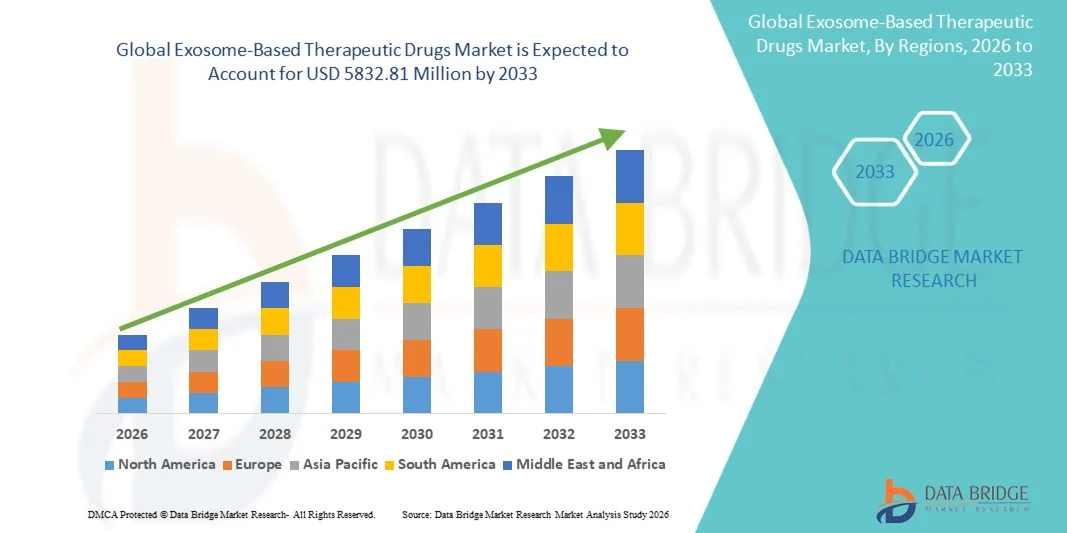
- The global exosome-based therapeutic drugs market size was valued at USD 924.00 Million in 2025 and is expected to reach USD 5832.81 Million by 2033, at a CAGR of 25.90% during the forecast period
- The market growth is largely fueled by increasing research and development in regenerative medicine, rising adoption of biologic therapies, and advancements in exosome isolation, characterization, and delivery technologies
- Furthermore, growing clinical trial activity, strategic collaborations between biotech companies and research institutions, and increasing awareness among healthcare providers regarding the therapeutic potential of exosome-based treatments are accelerating the uptake of Exosome-Based Therapeutic Drugs solutions, thereby significantly boosting the industry's growth
Exosome-Based Therapeutic Drugs Market Analysis
- Exosome-Based Therapeutic Drugs, offering cell-derived vesicle therapies for targeted drug delivery and regenerative medicine, are increasingly vital components of advanced therapeutics in both clinical and research settings due to their enhanced precision, biocompatibility, and potential to treat complex diseases
- The escalating demand for Exosome-Based Therapeutic Drugs is primarily fueled by the growing prevalence of chronic and degenerative diseases, advances in biotechnology, and rising investment in regenerative and personalized medicine
- North America dominated the exosome-based therapeutic drugs market with the largest revenue share of approximately 41.2% in 2025, characterized by advanced healthcare infrastructure, strong R&D capabilities, and a robust presence of key industry players, with the U.S. experiencing substantial growth in exosome-based therapeutics adoption across hospitals, research centers, and biotech startups, driven by innovations in drug delivery, regenerative therapies, and immunotherapy
- Asia-Pacific is expected to be the fastest-growing region in the exosome-based therapeutic drugs market during the forecast period, registering a CAGR of approximately 9.1%, due to increasing healthcare expenditure, expanding biotech research facilities, rising prevalence of chronic diseases, and growing awareness of exosome-based therapies in countries such as China, India, and Japan
- The stem cell-derived exosomes segment dominated the largest market revenue share of 50.3% in 2025, owing to their strong regenerative and immunomodulatory properties
Report Scope and Exosome-Based Therapeutic Drugs Market Segmentation
|
Attributes |
Exosome-Based Therapeutic Drugs Key Market Insights |
|
Segments Covered |
|
|
Countries Covered |
North America
Europe
Asia-Pacific
Middle East and Africa
South America
|
|
Key Market Players |
• Exopharm (Australia) |
|
Market Opportunities |
|
|
Value Added Data Infosets |
In addition to the insights on market scenarios such as market value, growth rate, segmentation, geographical coverage, and major players, the market reports curated by the Data Bridge Market Research also include in-depth expert analysis, patient epidemiology, pipeline analysis, pricing analysis, and regulatory framework. |
Exosome-Based Therapeutic Drugs Market Trends
“Rising Demand for Advanced Therapeutics and Regenerative Medicine Applications”
- The global demand for exosome-based therapeutic drugs is being driven by their significant potential in regenerative medicine, targeted drug delivery, and cell-free therapies
- These therapies offer safer and more efficient alternatives to conventional cell-based treatments, fostering rapid adoption among hospitals, research institutions, and biotechnology companies
- For instance, Increasing prevalence of chronic and degenerative diseases, such as cardiovascular disorders, neurodegenerative conditions, and autoimmune diseases, is fueling research and clinical applications of exosome-based therapeutics
- Patients and healthcare providers are seeking innovative solutions that can improve recovery outcomes, reduce side effects, and accelerate healing processes
- Advancements in biomanufacturing technologies and scalable production methods are enabling more consistent and cost-effective exosome therapeutics, encouraging pharmaceutical companies to expand their product pipelines and clinical trials
- Strategic collaborations between biotechnology firms, academic institutions, and pharmaceutical companies are further driving market growth by enabling faster development, regulatory approvals, and commercialization of novel exosome-based drugs
- The increasing investment in precision medicine and targeted therapeutics is amplifying the adoption of exosome-based platforms due to their ability to deliver bioactive molecules with high specificity to target tissues
Exosome-Based Therapeutic Drugs Market Dynamics
Driver
“Expansion of Clinical Trials and Research Activities”
- There is a significant increase in clinical trials evaluating the therapeutic potential of exosomes across multiple indications, including oncology, cardiology, neurology, and immunology. For instance, in 2025, Exopharm conducted phase II trials on exosome-based therapies for wound healing in diabetic patients, showcasing real-world progress
- Government and private funding is accelerating research in regenerative medicine and cell-free therapies
- For instance, the U.S. National Institutes of Health (NIH) allocated substantial grants in 2025 for exosome research in cancer immunotherapy, highlighting global support for development
- Personalized medicine trends are boosting demand for patient-specific exosome therapies, where autologous exosomes are derived from the patient’s own cells for targeted treatment. This approach minimizes immune reactions and enhances efficacy, which is increasingly applied in oncology and orthopedic regenerative therapies
- Academic-industry collaborations are driving innovation, knowledge sharing, and accelerated product development. For instance, Harvard Stem Cell Institute partnered with biotech firms to explore exosome-based drug delivery for brain disorders
- Integration of advanced analytical technologies, such as next-generation sequencing and high-resolution flow cytometry, is improving exosome characterization, allowing researchers to identify disease-specific exosome markers and accelerate biomarker discovery for diagnostics
- Awareness and educational initiatives are promoting acceptance of exosome therapies among clinicians and patients, leading to faster clinical adoption in hospitals, outpatient clinics, and specialty care centers worldwide
Restraint/Challenge
“Regulatory Complexity and High Manufacturing Costs”
- Stringent regulatory requirements pose a major challenge. Agencies like the FDA and EMA require detailed evidence on safety, potency, and consistency, delaying approvals and commercialization. For instance, exosome therapeutics for oncology must undergo rigorous multi-phase trials, significantly extending time-to-market
- Lack of standardized protocols for isolation, purification, and storage limits scalability and product uniformity
- For instance, different laboratories use varying ultracentrifugation and filtration techniques, resulting in inconsistent exosome yield and bioactivity
- High manufacturing costs, complex cold chain requirements, and sophisticated storage infrastructure make therapies expensive, limiting access in developing regions. Companies like CureVac have reported cost challenges when scaling exosome production for clinical trials
- Technical limitations in maintaining exosome stability, bioactivity, and shelf-life during storage, shipping, and delivery hinder widespread adoption. For instance, temperature fluctuations during transport can significantly degrade exosome potency
- Potential immunogenicity and off-target effects remain concerns in early-stage studies, requiring careful clinical evaluation and monitoring, which increases development costs and limits market penetration
- Limited skilled workforce for exosome manufacturing and quality control in emerging economies further restrains rapid adoption and scale-up
- Overcoming these challenges will require harmonization of regulatory frameworks, process standardization, development of cost-effective production technologies, and robust clinical validation to ensure global market growth
Exosome-Based Therapeutic Drugs Market Scope
The market is segmented on the basis of type, source, application and end user
• By Type
On the basis of type, the Exosome-Based Therapeutic Drugs market is segmented into therapeutic exosomes, engineered exosomes, and other types. The therapeutic exosomes segment dominated the largest market revenue share of 46.8% in 2025, driven by its wide application across multiple therapeutic areas, particularly oncology and cardiovascular diseases. Therapeutic exosomes are naturally derived and possess inherent biological functions, making them attractive for regenerative medicine and immune modulation. Hospitals and biopharmaceutical companies increasingly rely on these exosomes for clinical applications due to their safety profile and therapeutic potential. The growing adoption of precision medicine, increasing clinical trials, and rising research funding are contributing to segment growth. In addition, their ability to deliver biomolecules and drugs effectively enhances treatment outcomes. Awareness among healthcare providers and patients regarding exosome therapy benefits further fuels demand. Moreover, the expansion of biopharmaceutical manufacturing and improvements in isolation and purification techniques strengthen this segment’s market position.
The engineered exosomes segment is expected to witness the fastest CAGR of 12.4% from 2026 to 2033, driven by the rising focus on customizing exosomes for targeted drug delivery and gene therapy applications. Engineered exosomes can be modified to carry specific therapeutic cargo, such as siRNA, mRNA, or proteins, improving efficacy in disease treatment. Biopharmaceutical companies are increasingly investing in engineered exosome development for precision oncology and regenerative therapies. Technological advancements in bioengineering, nanotechnology, and cell modification are accelerating the adoption of engineered exosomes. Regulatory approvals for novel engineered exosome therapies are expected to further drive market growth. In addition, collaborations between research institutes and biotech firms are expanding the application potential. Growing clinical evidence supporting the safety and effectiveness of engineered exosomes is also contributing to rapid adoption.
• By Source
On the basis of source, the market is segmented into stem cell-derived, immune cell-derived, and other sources. The stem cell-derived exosomes segment dominated the largest market revenue share of 50.3% in 2025, owing to their strong regenerative and immunomodulatory properties. Stem cell-derived exosomes are widely studied for tissue repair, wound healing, and cardiovascular applications, making them highly valuable in therapeutic research. Hospitals and research institutes increasingly employ these exosomes for clinical trials and regenerative medicine therapies. The rising prevalence of chronic diseases and tissue damage conditions supports their demand. Their compatibility with multiple administration routes and ability to avoid immune rejection further enhance their appeal. Expansion of stem cell banks and research funding from both government and private sectors are contributing to segment dominance. In addition, increasing clinical adoption in advanced therapy settings strengthens the market presence.
The immune cell-derived exosomes segment is expected to witness the fastest CAGR of 13.1% from 2026 to 2033, driven by growing research in cancer immunotherapy and infectious disease applications. Immune cell-derived exosomes can modulate immune responses, enhance antigen presentation, and deliver therapeutic agents effectively. Biopharmaceutical companies are actively developing immune exosome therapies for oncology and autoimmune disorders. Advances in exosome isolation, characterization, and cargo loading techniques are further enabling market growth. Clinical trials demonstrating safety and efficacy in immune-mediated diseases are also boosting adoption. Increasing collaborations between biotech firms and academic research institutes accelerate innovation in this segment. In addition, regulatory encouragement for immunotherapy development supports rapid expansion.
• By Application
On the basis of application, the market is segmented into oncology, cardiovascular, neurological, and other applications. The oncology segment dominated the largest market revenue share of 47.5% in 2025, driven by the critical need for targeted cancer therapies and precision medicine. Exosome-based drugs are increasingly used for delivering chemotherapeutic agents, gene therapy, and immunomodulators directly to tumor cells. Hospitals, biopharmaceutical companies, and research institutes are adopting these therapies due to their potential to reduce off-target effects and improve treatment outcomes. Rising prevalence of cancer worldwide, increased R&D investment in oncology therapeutics, and ongoing clinical trials are supporting segment growth. Exosome therapy is being explored for both solid tumors and hematologic malignancies. Regulatory approvals of novel exosome-based oncology treatments further strengthen adoption. Increasing awareness among oncologists and patients regarding innovative treatment options is contributing to demand.
The cardiovascular segment is expected to witness the fastest CAGR of 12.6% from 2026 to 2033, fueled by growing research on regenerative therapies for heart diseases. Exosomes derived from stem cells and engineered sources are used to repair cardiac tissue, reduce myocardial injury, and promote angiogenesis. Clinical studies demonstrating improved heart function are encouraging hospitals and research institutes to adopt exosome-based cardiovascular treatments. Biopharmaceutical companies are investing heavily in developing exosome therapies for ischemic heart diseases and heart failure. Rising prevalence of cardiovascular conditions and increasing awareness of novel therapies are further driving growth. Technological advancements in exosome formulation, targeted delivery, and scalability enhance commercial potential. In addition, collaborations between academic institutes and biotech firms are accelerating product development in this segment.
• By End User
On the basis of end user, the market is segmented into hospitals, biopharmaceutical companies, research institutes, and contract research organizations (CROs). The hospitals segment dominated the largest market revenue share of 44.7% in 2025, due to the increasing adoption of exosome-based therapeutics in clinical treatment settings. Hospitals provide direct patient access to advanced therapies and are actively involved in clinical trials and compassionate use programs for exosome therapies. Rising demand for targeted treatments, regenerative medicine applications, and oncology care drives segment growth. The availability of trained healthcare professionals and advanced hospital infrastructure further supports adoption. Increased awareness of exosome therapies among clinicians and patients is also contributing to market dominance. Moreover, strategic collaborations between hospitals and biopharmaceutical companies facilitate early adoption of novel therapies.
The biopharmaceutical companies segment is expected to witness the fastest CAGR of 13.3% from 2026 to 2033, driven by extensive R&D efforts and commercialization of exosome-based therapeutic products. Companies are investing in engineered exosomes, drug delivery platforms, and scalable manufacturing techniques. Rising prevalence of chronic and complex diseases motivates development of innovative therapies. In addition, partnerships with research institutes and hospitals accelerate clinical trials and product development. Government funding and favorable regulatory pathways for advanced biologics are further supporting rapid growth. The increasing global focus on personalized medicine and targeted therapy enhances the adoption potential for biopharmaceutical firms.
Exosome-Based Therapeutic Drugs Market Regional Analysis
- North America dominated the exosome-based therapeutic drugs market with the largest revenue share of approximately 41.2% in 2025, characterized by advanced healthcare infrastructure, strong R&D capabilities, and a robust presence of key industry players
- The market experienced substantial growth in exosome-based therapeutics adoption across hospitals, research centers, and biotech startups, driven by innovations in drug delivery, regenerative therapies, and immunotherapy
- High healthcare expenditure, favorable regulatory frameworks, and ongoing investments in clinical trials and translational research are supporting rapid market expansion. In addition, collaborations between pharmaceutical companies and academic institutions are accelerating the development of novel exosome-based therapeutics across oncology, cardiovascular, and neurodegenerative disease applications
U.S. Exosome-Based Therapeutic Drugs Market Insight
The U.S. exosome-based therapeutic drugs market captured the largest revenue share in 2025 within North America. The market is fueled by the growing adoption of advanced exosome therapeutics across hospitals, clinical research centers, and biotechnology firms. Increasing investment in regenerative medicine and immunotherapy has prompted pharmaceutical companies to expand production pipelines, while public-private collaborations are driving innovation in targeted drug delivery systems. For instance, clinical trials investigating exosome-based therapies for cancer and autoimmune disorders have been expanding in major research hospitals, further reinforcing the U.S. as a leading market in this segment.
Europe Exosome-Based Therapeutic Drugs Market Insight
The Europe exosome-based therapeutic drugs market is projected to expand at a substantial CAGR throughout the forecast period, supported by increasing government funding for regenerative medicine, robust clinical research networks, and growing awareness of exosome applications in therapeutic and diagnostic fields. Countries such as Germany, France, and the U.K. are witnessing extensive adoption of exosome-based therapies in hospitals and research institutions. For example, German biotech firms have initiated multiple clinical programs exploring exosome-mediated cancer immunotherapies and wound healing solutions. The expansion of healthcare infrastructure, favorable reimbursement policies, and collaborations between academic research centers and pharmaceutical companies are expected to accelerate growth across the region.
U.K. Exosome-Based Therapeutic Drugs Market Insight
The U.K. exosome-based therapeutic drugs market is anticipated to grow at a noteworthy CAGR during the forecast period, driven by advanced healthcare infrastructure, active R&D in regenerative medicine, and strong presence of leading pharmaceutical and biotech companies. Public and private funding initiatives for novel therapies, coupled with high adoption of automated diagnostic and therapeutic technologies, are promoting market expansion. Clinical trials evaluating exosome-based therapeutics for cardiovascular and neurodegenerative conditions exemplify the country’s growing focus on innovative healthcare solutions.
Germany Exosome-Based Therapeutic Drugs Market Insight
The Germany exosome-based therapeutic drugs market is expected to expand at a considerable CAGR during the forecast period, fueled by increasing healthcare expenditure, growing clinical research networks, and rising prevalence of chronic diseases. Government initiatives promoting regenerative medicine research and collaborations between universities and biotech companies are further driving adoption. Germany’s well-developed healthcare infrastructure and emphasis on technologically advanced therapies ensure rapid integration of exosome-based drugs into hospitals and research centers, particularly for oncology and autoimmune disease applications.
Asia-Pacific Exosome-Based Therapeutic Drugs Market Insight
The Asia-Pacific exosome-based therapeutic drugs market is poised to grow at the fastest CAGR of approximately 9.1% during the forecast period, driven by increasing healthcare expenditure, expanding biotech research facilities, rising prevalence of chronic diseases, and growing awareness of exosome-based therapies in countries such as China, India, and Japan. The region is witnessing substantial investment in clinical research infrastructure and government-backed initiatives to promote advanced therapeutics. Local biotech companies in China and India are actively developing exosome-based platforms for oncology and regenerative medicine, while Japan focuses on neurodegenerative and musculoskeletal applications, making the region a hotspot for emerging exosome therapies.
Japan Exosome-Based Therapeutic Drugs Market Insight
The Japan exosome-based therapeutic drugs market is gaining momentum due to increasing healthcare investment, advanced clinical research infrastructure, and rising demand for regenerative and precision medicine solutions. Japanese hospitals and research institutions are increasingly participating in clinical trials for exosome-based therapeutics targeting cancer, cardiovascular, and musculoskeletal disorders. Government incentives supporting biotechnology research and high patient awareness of innovative treatments are expected to drive market adoption further.
China Exosome-Based Therapeutic Drugs Market Insight
The China exosome-based therapeutic drugs market t accounted for the largest market revenue share in Asia-Pacific in 2025. Growth is attributed to increasing healthcare infrastructure, a rising middle-class population, and rapid advancements in biotechnology research. Chinese biotech companies are developing exosome-based platforms for oncology and regenerative medicine, with ongoing collaborations between domestic manufacturers and global pharmaceutical firms. Government programs promoting innovation in advanced therapies and the expansion of clinical trial networks are further accelerating market development across hospitals and research institutions.
Exosome-Based Therapeutic Drugs Market Share
The Exosome-Based Therapeutic Drugs industry is primarily led by well-established companies, including:
• Exopharm (Australia)
• Celyad Oncology (Belgium)
• Mesoblast (Australia)
• Capricor Therapeutics (U.S.)
• Athersys (U.S.)
• TheraCell (South Korea)
• ReNeuron (U.K.)
• ExoCoBio (South Korea)
• Evox Therapeutics (U.K.)
• Rion Therapeutics (U.S.)
• Cartell Bio (China)
• Direct Biologics (U.S.)
• Anterogen (South Korea)
• AlloSource (U.S.)
• PLx Pharma (U.S.)
• Takeda Pharmaceutical (Japan)
• Healios K.K. (Japan)
• ExoFlow Therapeutics (U.S.)
• Regenacy Pharmaceuticals (U.S.)
• Celltex Therapeutics (U.S.)
Latest Developments in Global Exosome-Based Therapeutic Drugs Market
- In April 2024, EXO Biologics announced it had secured up to EUR 16 million in Series A funding to advance its pipeline of exosome‑based therapeutic drugs and to support clinical supply capabilities for its exosome platforms. This funding is intended to accelerate pipeline development and expand clinical trials for various therapeutic indications
- In May 2025, Exosome Therapeutics (a subsidiary of Exosome Diagnostics) announced it had secured USD 50 million in Series C financing to accelerate development of its exosome‑based therapeutics targeting neurodegenerative diseases and cancer, highlighting growing investor interest and therapeutic expansion in the market

- Interactive Data Analysis Dashboard
- Company Analysis Dashboard for high growth potential opportunities
- Research Analyst Access for customization & queries
- Competitor Analysis with Interactive dashboard
- Latest News, Updates & Trend analysis
- Harness the Power of Benchmark Analysis for Comprehensive Competitor Tracking
Data collection and base year analysis are done using data collection modules with large sample sizes. The stage includes obtaining market information or related data through various sources and strategies. It includes examining and planning all the data acquired from the past in advance. It likewise envelops the examination of information inconsistencies seen across different information sources. The market data is analysed and estimated using market statistical and coherent models. Also, market share analysis and key trend analysis are the major success factors in the market report. To know more, please request an analyst call or drop down your inquiry.
The key research methodology used by DBMR research team is data triangulation which involves data mining, analysis of the impact of data variables on the market and primary (industry expert) validation. Data models include Vendor Positioning Grid, Market Time Line Analysis, Market Overview and Guide, Company Positioning Grid, Patent Analysis, Pricing Analysis, Company Market Share Analysis, Standards of Measurement, Global versus Regional and Vendor Share Analysis. To know more about the research methodology, drop in an inquiry to speak to our industry experts.
Data Bridge Market Research is a leader in advanced formative research. We take pride in servicing our existing and new customers with data and analysis that match and suits their goal. The report can be customized to include price trend analysis of target brands understanding the market for additional countries (ask for the list of countries), clinical trial results data, literature review, refurbished market and product base analysis. Market analysis of target competitors can be analyzed from technology-based analysis to market portfolio strategies. We can add as many competitors that you require data about in the format and data style you are looking for. Our team of analysts can also provide you data in crude raw excel files pivot tables (Fact book) or can assist you in creating presentations from the data sets available in the report.












