


Familial Mediterranean Fever Treatment Market Overview
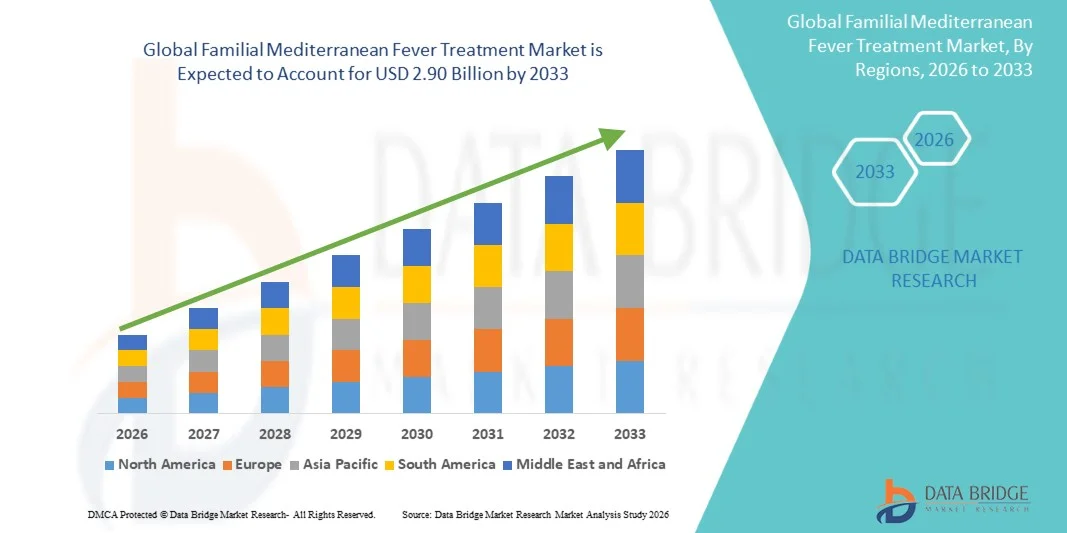
The Familial Mediterranean Fever Treatment Market was valued at USD 1.89 billion in 2025 and is projected to reach USD 2.90 billion by 2033, growing at a CAGR of 5.50% from 2026 to 2033. The market is experiencing steady growth driven by rising diagnosis of familial Mediterranean fever, increasing awareness of autoinflammatory disorders, and growing adoption of long-term anti-inflammatory therapies. Familial Mediterranean Fever (FMF) is a hereditary autoinflammatory disease characterized by recurrent episodes of fever and inflammation affecting the abdomen, chest, and joints. Colchicine remains the mainstay treatment for reducing attack frequency and preventing amyloidosis, while IL-1 inhibitors such as canakinumab are increasingly used in colchicine-resistant or colchicine-intolerant patients. The increasing adoption of genetic testing, expanding access to rare disease treatment centers, and growing R&D activities focused on targeted biologic therapies are creating beneficial opportunities. In addition, the rising burden of periodic fever syndromes and continued improvements in specialty care access are expected to escalate market growth over the forecast period.
Key Market Trends & Insights
- North America dominated the Familial Mediterranean Fever Treatment Market with the largest revenue share of 40.6% in 2025, supported by advanced rare disease diagnostic infrastructure, high healthcare expenditure, strong availability of biologic therapies, and growing adoption of genetic testing for autoinflammatory diseases.
- Asia-Pacific is expected to be the fastest-growing region at a CAGR of 8.13% from 2026 to 2033, driven by improving healthcare access, increasing awareness of hereditary fever syndromes, expanding diagnostic capabilities, and a large population base with Mediterranean and Middle Eastern ancestry-linked risk groups.
- The Colchicine segment led the market in 2025 with 58.4% share, owing to its established position as the first-line and lifelong therapy for preventing FMF attacks and reducing risk of AA amyloidosis.
- The Canakinumab segment is anticipated to be the fastest-growing drug classification category, driven by rising adoption of IL-1 inhibitor therapy in colchicine-resistant and colchicine-intolerant FMF patients.
- The Medication segment dominated the treatment category in 2025 with 96.8% share, supported by the chronic nature of FMF management and the widespread use of colchicine and biologic therapies.
- The Surgery segment accounted for a smaller share of the treatment category, as surgical intervention is not a standard disease-modifying treatment and is mainly associated with complication management or misdiagnosed acute abdominal presentations.
- The Hospitals segment accounted for the largest share of the end-user category in 2025 with 42.6% share, driven by specialist-led diagnosis, genetic testing access, and management of severe or complicated FMF cases.
- The Speciality Centres segment is expected to witness the fastest growth, supported by rising referrals to rheumatology, immunology, and rare disease centers for long-term management of autoinflammatory disorders.
- The Hospital Pharmacy segment dominated the distribution channel category in 2025 with 51.3% share, owing to hospital-based prescribing of colchicine, injectable biologics, and specialist-supervised therapies.
- The Online Pharmacy segment is expected to witness the fastest growth from 2026 to 2033, driven by expanding digital pharmacy platforms, home delivery services, and rising patient preference for convenient access to chronic medications.
Market Size & Forecast
- Global Market Value (2025): USD 1.89 Billion
- Expected Market Value (2033): USD 2.90 Billion
- Forecast CAGR (2026-2033): 5.50%
- Leading Region in 2025: North America
- Fastest Growing Region: Asia-Pacific
Report Scope and Familial Mediterranean Fever Treatment Market Segmentation
|
Attributes |
Familial Mediterranean Fever Treatment Key Market Insights |
|
Segments Covered |
|
|
Countries Covered |
North America · U.S. · Canada · Mexico Europe · Germany · France · U.K. · Netherlands · Switzerland · Belgium · Russia · Italy · Spain · Turkey · Rest of Europe Asia-Pacific · China · Japan · India · South Korea · Singapore · Malaysia · Australia · Thailand · Indonesia · Philippines · Rest of Asia-Pacific Middle East and Africa · Saudi Arabia · U.A.E. · South Africa · Egypt · Israel · Rest of Middle East and Africa South America · Brazil · Argentina · Rest of South America |
|
Key Market Players |
· Novartis AG (Switzerland) · Takeda Pharmaceutical Company Limited (Japan) · Hikma Pharmaceuticals PLC (U.K.) · Amgen Inc. (U.S.) · Sobi (Sweden) · Regeneron Pharmaceuticals, Inc. (U.S.) · Pfizer Inc. (U.S.) · Teva Pharmaceutical Industries Ltd. (Israel) · Sun Pharmaceutical Industries Ltd. (India) · Dr. Reddy’s Laboratories Ltd. (India) · Zydus Lifesciences Limited (India) · Viatris Inc. (U.S.) · AbbVie Inc. (U.S.) · Sanofi (France) |
|
Market Opportunities |
· Advancements in IL-1 inhibitor therapies and biologic treatment access for colchicine-resistant FMF patients · Increasing adoption of genetic testing, early diagnosis, and precision medicine approaches for hereditary autoinflammatory diseases |
|
Value Added Data Infosets |
In addition to the insights on market scenarios such as market value, growth rate, segmentation, geographical coverage, and major players, the market reports curated by the Data Bridge Market Research also include depth expert analysis, patient epidemiology, pipeline analysis, pricing analysis, and regulatory framework. |
Familial Mediterranean Fever Treatment Market Trends
Trend: Growing Adoption of Targeted IL-1 Inhibitor Therapy for Colchicine-Resistant FMF
The increasing adoption of targeted biologic therapy is emerging as a major trend in the Familial Mediterranean Fever Treatment Market. Healthcare providers are increasingly utilizing IL-1 inhibitors to manage patients who do not respond adequately to colchicine or who are unable to tolerate effective colchicine doses. Since FMF attacks are closely associated with dysregulated innate immune inflammation, IL-1 blockade has become an important treatment approach for refractory cases. Colchicine remains the standard first-line therapy, while anti-IL-1 agents are recommended for colchicine-intolerant or colchicine-resistant patients.
For instance,
In 2025, recent clinical reviews continued to highlight colchicine as the mainstay therapy for FMF and emphasized the growing role of anti-IL-1 agents in patients with colchicine intolerance or inadequate response. In addition, IL-1 inhibitors such as canakinumab, anakinra, and rilonacept are increasingly recognized in clinical practice for patients requiring targeted control of recurrent inflammatory attacks.
In addition, the integration of genetic testing, serum inflammatory marker monitoring, patient-reported disease activity tools, and specialist rheumatology care is improving diagnosis and supporting personalized treatment pathways for FMF. These advancements are improving clinical decision-making, reducing attack burden, and strengthening the overall autoinflammatory disease management ecosystem.
Familial Mediterranean Fever Treatment Market Market Dynamics
Key Market Driver: Increasing Diagnosis of FMF and Rising Adoption of Long-Term Preventive Therapy
The growing diagnosis of familial Mediterranean fever and increasing adoption of long-term preventive treatment are significantly driving the Familial Mediterranean Fever Treatment Market. Healthcare providers are increasingly focusing on early identification of FMF through clinical criteria, family history, inflammatory marker testing, and MEFV genetic testing. Rising awareness among rheumatologists and pediatric specialists, expanding access to genetic diagnostics, and increasing use of lifelong colchicine therapy are further supporting market growth.
For instance,
In 2025, FMF was recognized as the most common autoinflammatory disease, particularly frequent among populations originating from the Mediterranean basin. Colchicine continued to be described as the mainstay therapy due to its ability to reduce attack frequency and prevent amyloidosis, the most serious complication of uncontrolled disease.
Key Restraint/Challenge: Colchicine Intolerance, High Biologic Costs, and Limited Access to Specialty Care
A major challenge in the Familial Mediterranean Fever Treatment Market is colchicine intolerance and incomplete treatment response among a subset of patients. Although colchicine is effective for most individuals, gastrointestinal intolerance, adherence issues, dose-limiting adverse effects, and persistent inflammatory attacks can restrict optimal disease control. High costs of biologic therapies such as IL-1 inhibitors and limited reimbursement in several regions further restrain market expansion.
For instance,
In 2025, clinical literature continued to identify colchicine intolerance as an important problem that limits the ability to reach an effective dose. In such patients, adding alternative biological treatment with anti-IL-1 agents is recommended, but treatment access can remain limited by cost and specialized care availability.
Key Market Opportunity: Advancements in Genetic Testing and Precision Management of Autoinflammatory Diseases
The growing adoption of MEFV genetic testing, next-generation sequencing panels, and precision medicine approaches presents significant opportunities for the market. Increasing investments in rare disease diagnostics and autoinflammatory disease research are expected to improve early detection, risk stratification, personalized treatment selection, and long-term patient monitoring worldwide.
For instance,
In 2026, expanding use of multi-gene testing panels for periodic fever syndromes is supporting earlier diagnosis of hereditary autoinflammatory diseases. Rising awareness and wider use of genetic testing are helping physicians identify periodic fever syndromes earlier, increasing the number of patients receiving proper long-term treatment.
Familial Mediterranean Fever Treatment Market Scope
The familial Mediterranean fever treatment market is segmented on the basis of drug classification, treatment, end-users, and distribution channel.
- By Drug Classification
On the basis of drug classification, the Familial Mediterranean Fever Treatment Market is segmented into canakinumab, colchicine, and others. The colchicine segment dominated the market in 2025 with 58.4% share due to its long-established role as the first-line and lifelong therapy for FMF. Colchicine is widely prescribed to reduce the number and severity of inflammatory attacks and to prevent AA amyloidosis in patients with uncontrolled disease. Its oral administration, clinical familiarity, broad availability, and inclusion in treatment guidelines have contributed to its strong market position globally.
The canakinumab segment is expected to witness the fastest growth from 2026 to 2033, driven by increasing adoption in colchicine-resistant and colchicine-intolerant FMF patients. Canakinumab, a targeted IL-1 beta inhibitor, is increasingly used in severe autoinflammatory disease cases requiring biologic treatment. Rising specialist awareness, improved diagnosis of refractory FMF, and greater use of targeted cytokine inhibition are further contributing to segment growth. In addition, increasing clinical confidence in IL-1 blockade and growing access to biologics in developed markets are supporting greater treatment utilization.
- By Treatment
On the basis of treatment, the Familial Mediterranean Fever Treatment Market is segmented into medication and surgery. The medication segment dominated the market in 2025 with 96.8% share due to the chronic and pharmacologic nature of FMF management. Medications, including colchicine and IL-1 inhibitors, form the core treatment approach for reducing acute attacks, controlling subclinical inflammation, and preventing secondary AA amyloidosis. Increasing use of lifelong therapy, better adherence programs, and growing availability of biologic options continue to support segment demand.
The surgery segment is expected to witness limited but steady growth from 2026 to 2033, driven by management of complications and acute abdominal presentations that may require hospital-based intervention. Surgery is not considered a standard disease-modifying therapy for FMF, but some patients may undergo procedures due to diagnostic uncertainty during severe abdominal attacks or related complications. Improved diagnostic awareness may reduce unnecessary procedures, while hospital-based management of complex cases is expected to maintain limited segment demand.
- By End-Users
On the basis of end-users, the Familial Mediterranean Fever Treatment Market is segmented into hospitals, homecare, speciality centres, and others. The hospitals segment dominated the market in 2025 with 42.6% share due to the need for specialist diagnosis, inflammatory marker testing, genetic evaluation, and management of severe FMF attacks. Hospitals play a critical role in diagnosis, treatment initiation, biologic administration, and long-term monitoring of patients with complex or refractory disease. Their ability to provide access to rheumatologists, pediatric specialists, nephrologists, and advanced diagnostic facilities has contributed significantly to segment dominance.
The speciality centres segment is expected to witness the fastest growth from 2026 to 2033, driven by rising referrals to rheumatology, immunology, and rare disease centers for long-term FMF management. Increasing availability of autoinflammatory disease clinics, greater use of genetic testing, and growing adoption of biologic therapies are expected to support strong segment expansion. In addition, specialist centers are increasingly supporting personalized treatment plans, adherence monitoring, and prevention of amyloidosis.
- By Distribution Channel
On the basis of distribution channel, the Familial Mediterranean Fever Treatment Market is segmented into hospital pharmacy, online pharmacy, and retail pharmacy. The hospital pharmacy segment dominated the market in 2025 with 51.3% share due to the concentration of specialist-prescribed treatments within hospital and rare disease care settings. Hospital pharmacies serve as the primary distribution channel for biologic therapies, specialist-supervised prescriptions, and medications used in severe or refractory FMF cases. Their integration with multidisciplinary healthcare teams and access to prescription therapies have further strengthened their market position.
The online pharmacy segment is expected to witness the fastest growth from 2026 to 2033, driven by expanding digital healthcare platforms and increasing patient preference for convenient medication access. Growing internet penetration, rising adoption of e-pharmacy services, home delivery options, and improved availability of chronic prescription medications through online channels are expected to support significant growth in this segment throughout the forecast period.
Familial Mediterranean Fever Treatment Market Regional Analysis
North America dominated the familial Mediterranean fever treatment market with a market share of 40.6% in 2025, supported by advanced healthcare infrastructure, widespread availability of genetic testing services, strong rare disease research activities, and access to targeted biologic therapies. The region also benefits from high awareness of autoinflammatory disorders, favorable reimbursement structures for specialty medicines, and increasing adoption of precision medicine approaches. Growing investments in genomic diagnostics, rheumatology care, and specialized treatment centers continue to strengthen North America’s leadership position in the global market.
U.S. Familial Mediterranean Fever Treatment Market Insight
The U.S. familial mediterranean fever treatment market is witnessing steady growth due to increasing adoption of genetic testing technologies, rising awareness of rare autoinflammatory disorders, and expanding access to targeted biologic therapies. The country’s well-established healthcare system, strong research ecosystem, and availability of specialized rheumatology and rare disease centers are supporting market expansion. In addition, growing focus on early diagnosis, prevention of amyloidosis, and personalized treatment strategies is improving patient outcomes and driving demand for advanced diagnostic and therapeutic solutions.
Europe Familial Mediterranean Fever Treatment Market Insight
The Europe familial mediterranean fever treatment market remains a major contributor to global revenue, driven by strong healthcare systems, increasing government support for rare disease management, and growing adoption of genetic diagnostics. Countries with Mediterranean populations, including Italy, Spain, France, Greece, and Turkey, contribute significantly to regional demand due to higher disease recognition and genetic prevalence. Furthermore, favorable regulatory initiatives, specialist rheumatology networks, and increasing investments in genomic medicine continue to enhance market growth across the region.
U.K. Familial Mediterranean Fever Treatment Market Insight
The U.K. familial mediterranean fever treatment market is experiencing steady growth, supported by increasing awareness of hereditary autoinflammatory disorders, expanding access to genetic counseling services, and rising investments in genomic healthcare programs. Growing integration of advanced molecular diagnostics and personalized medicine approaches is improving disease identification and management. In addition, ongoing research initiatives and support from healthcare organizations are contributing to market development.
Germany Familial Mediterranean Fever Treatment Market Insight
The Germany familial Mediterranean fever treatment market is expanding steadily due to the country’s advanced healthcare infrastructure, strong focus on rare disease research, and increasing adoption of next-generation sequencing technologies. Healthcare providers are increasingly utilizing genetic testing and multidisciplinary treatment approaches to improve patient care. Continuous advancements in genomic medicine, specialty rheumatology services, and biologic therapy access are further supporting market growth in Germany.
Asia-Pacific Familial Mediterranean Fever Treatment Market Insight
The Asia-Pacific familial Mediterranean fever treatment market is expected to witness rapid growth with a CAGR of 8.13% during the forecast period, driven by improving healthcare infrastructure, increasing awareness of periodic fever syndromes, and expanding access to diagnostic services across countries such as China, India, and Japan. Growing investments in precision medicine, rising adoption of genetic testing technologies, and increasing government initiatives aimed at improving rare disease management are supporting regional market expansion. In addition, expanding specialty care networks and greater use of online pharmacy channels are contributing to market growth.
Japan Familial Mediterranean Fever Treatment Market Insight
The Japan familial Mediterranean fever treatment market is witnessing consistent growth due to increasing investments in genomic research, advanced healthcare technologies, and rare disease diagnostics. Healthcare institutions are increasingly adopting molecular testing and personalized treatment approaches to improve disease management. Moreover, strong government support for rare disease research and innovation is further contributing to market growth.
China Familial Mediterranean Fever Treatment Market Insight
The China familial Mediterranean fever treatment market is growing rapidly, driven by expanding healthcare infrastructure, increasing adoption of genetic testing technologies, and rising awareness of rare inherited inflammatory disorders. Growing investments in biotechnology research, precision medicine initiatives, and advanced diagnostic capabilities are significantly boosting market development. In addition, supportive healthcare reforms and increasing access to specialized medical services are positioning China as one of the fastest-growing markets for rare disease diagnostics and treatment.
Familial Mediterranean Fever Treatment Market Share
The Familial Mediterranean Fever Treatment industry is primarily led by well-established companies, including:
- Novartis AG (Switzerland)
- Takeda Pharmaceutical Company Limited (Japan)
- Hikma Pharmaceuticals PLC (U.K.)
- Amgen Inc. (U.S.)
- Sobi (Sweden)
- Regeneron Pharmaceuticals, Inc. (U.S.)
- Pfizer Inc. (U.S.)
- Teva Pharmaceutical Industries Ltd. (Israel)
- Sun Pharmaceutical Industries Ltd. (India)
- Dr. Reddy’s Laboratories Ltd. (India)
- Zydus Lifesciences Limited (India)
- Viatris Inc. (U.S.)
- AbbVie Inc. (U.S.)
- Sanofi (France)

- Interactive Data Analysis Dashboard
- Company Analysis Dashboard for high growth potential opportunities
- Research Analyst Access for customization & queries
- Competitor Analysis with Interactive dashboard
- Latest News, Updates & Trend analysis
- Harness the Power of Benchmark Analysis for Comprehensive Competitor Tracking
Data collection and base year analysis are done using data collection modules with large sample sizes. The stage includes obtaining market information or related data through various sources and strategies. It includes examining and planning all the data acquired from the past in advance. It likewise envelops the examination of information inconsistencies seen across different information sources. The market data is analysed and estimated using market statistical and coherent models. Also, market share analysis and key trend analysis are the major success factors in the market report. To know more, please request an analyst call or drop down your inquiry.
The key research methodology used by DBMR research team is data triangulation which involves data mining, analysis of the impact of data variables on the market and primary (industry expert) validation. Data models include Vendor Positioning Grid, Market Time Line Analysis, Market Overview and Guide, Company Positioning Grid, Patent Analysis, Pricing Analysis, Company Market Share Analysis, Standards of Measurement, Global versus Regional and Vendor Share Analysis. To know more about the research methodology, drop in an inquiry to speak to our industry experts.
Data Bridge Market Research is a leader in advanced formative research. We take pride in servicing our existing and new customers with data and analysis that match and suits their goal. The report can be customized to include price trend analysis of target brands understanding the market for additional countries (ask for the list of countries), clinical trial results data, literature review, refurbished market and product base analysis. Market analysis of target competitors can be analyzed from technology-based analysis to market portfolio strategies. We can add as many competitors that you require data about in the format and data style you are looking for. Our team of analysts can also provide you data in crude raw excel files pivot tables (Fact book) or can assist you in creating presentations from the data sets available in the report.












