


Female Sterilization Devices Market Size
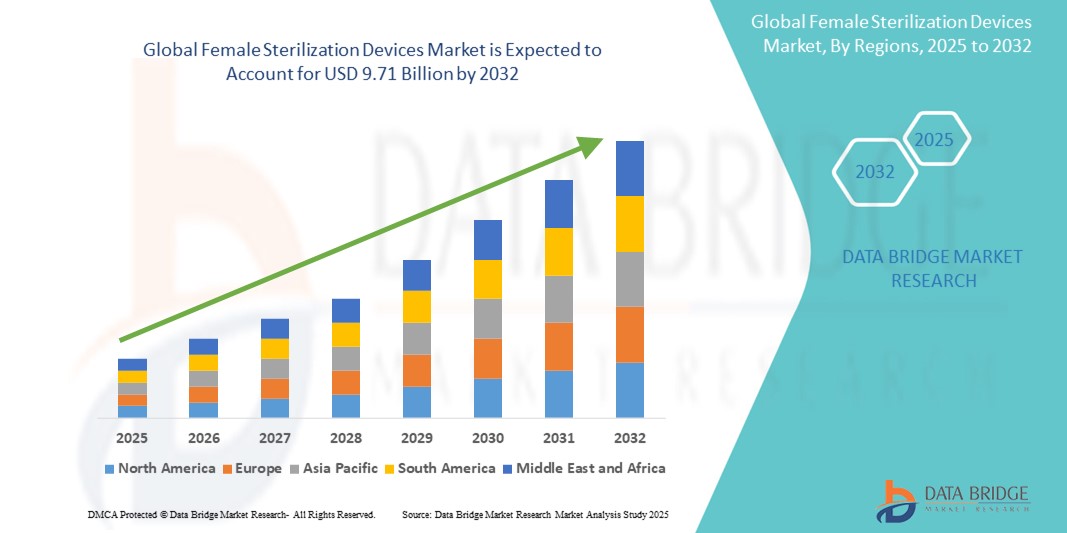
- The global female sterilization devices market size was valued at USD 6.30 billion in 2024 and is expected to reach USD 9.71 billion by 2032, at a CAGR of 5.56% during the forecast period
- The market growth is primarily driven by rising awareness regarding permanent contraception, increasing population control initiatives by governments, and advancements in minimally invasive surgical technologies
- In addition, growing female preference for long-term birth control methods and the availability of safer, more effective devices are propelling market demand. These combined trends are fostering greater adoption of female sterilization devices, thus contributing substantially to the industry's expansion
Female Sterilization Devices Market Analysis
- Female sterilization devices, used in permanent contraception procedures such as tubal ligation, are gaining traction globally as effective, long-term birth control solutions in both hospital and outpatient surgical settings due to their reliability, minimal maintenance, and advancements in laparoscopic and hysteroscopic techniques
- The growing demand for female sterilization devices is largely driven by increasing awareness of family planning, rising government initiatives promoting population control, and the affordability of sterilization compared to long-term temporary contraceptives
- North America dominated the female sterilization devices market with the largest revenue share of 40.1% in 2024, attributed to higher awareness of reproductive health, technological advancements in minimally invasive procedures, and favorable healthcare infrastructure, with the U.S. leading due to increased adoption in outpatient clinics and growing demand for elective sterilization
- Asia-Pacific is expected to be the fastest growing region in the female sterilization devices market during the forecast period due to strong governmental population control policies and increasing access to affordable surgical care
- Laparoscopic segment dominated the female sterilization devices market with a market share of 46.2% in 2024, driven by their precision, reduced recovery time, and growing adoption of minimally invasive techniques across healthcare facilities
Report Scope and Female Sterilization Devices Market Segmentation
|
Attributes |
Female Sterilization Devices Key Market Insights |
|
Segments Covered |
|
|
Countries Covered |
North America
Europe
Asia-Pacific
Middle East and Africa
South America
|
|
Key Market Players |
|
|
Market Opportunities |
|
|
Value Added Data Infosets |
In addition to the insights on market scenarios such as market value, growth rate, segmentation, geographical coverage, and major players, the market reports curated by the Data Bridge Market Research also include in-depth expert analysis, pricing analysis, brand share analysis, consumer survey, demography analysis, supply chain analysis, value chain analysis, raw material/consumables overview, vendor selection criteria, PESTLE Analysis, Porter Analysis, and regulatory framework. |
Female Sterilization Devices Market Trends
“Minimally Invasive Technologies and Outpatient Procedure Expansion”
- A notable and accelerating trend in the global female sterilization devices market is the growing shift toward minimally invasive technologies and outpatient-based sterilization procedures, offering improved safety, reduced recovery time, and lower overall healthcare costs. This transformation is enhancing patient outcomes and increasing acceptance of female sterilization as a long-term contraceptive method
- For instance, newer laparoscopic devices and hysteroscopic sterilization systems allow for quicker procedures under local anesthesia, often completed in ambulatory surgical centers. Devices such as Filshie Clips and advanced electrosurgical tools have made tubal ligation more efficient, with minimal complications and faster patient turnaround
- These advancements enable physicians to perform sterilizations without requiring full hospitalization, allowing greater scheduling flexibility and accessibility for women seeking permanent birth control
- In addition, rising healthcare digitization has facilitated better patient monitoring and follow-up, contributing to improved procedural outcomes. Innovations such as single-incision laparoscopic sterilization and device coatings that minimize post-operative adhesions are gaining attention among healthcare providers
- The move toward outpatient sterilization procedures is helping reduce healthcare system burdens while making sterilization more convenient for patients, particularly in developed markets. Companies such as CONMED and CooperSurgical are continuously advancing their portfolios to meet the growing demand for minimally invasive sterilization devices
- This trend is reshaping the delivery model of female sterilization, encouraging both public and private providers to adopt more streamlined, safe, and cost-effective approaches to meet the rising demand for permanent contraception
Female Sterilization Devices Market Dynamics
Driver
“Increasing Demand Due to Family Planning Initiatives and Surgical Advancements”
- The rising global emphasis on family planning, especially in densely populated and developing regions, is a key driver of the growing demand for female sterilization devices.
- Government-supported campaigns and NGOs are actively promoting permanent contraception methods to reduce unintended pregnancies and improve maternal health outcomes
- For instance, national programs in India, Indonesia, and parts of Sub-Saharan Africa offer free or subsidized sterilization services, significantly contributing to adoption rates. In developed countries, greater autonomy in reproductive choices and favorable insurance coverage are further promoting device-based sterilization procedures
- Technological progress in sterilization devices including the development of simplified laparoscopic instruments and safer occlusion systems has enhanced surgical precision, reduced complications, and expanded access to sterilization services
- The reliability of female sterilization, combined with its one-time cost-effectiveness compared to long-term reversible methods, continues to drive uptake across both public and private healthcare settings
Restraint/Challenge
“Cultural Resistance and Limited Access in Low-Resource Settings”
- Despite growing awareness, cultural resistance and social stigmas surrounding permanent contraception remain major barriers to wider adoption in certain regions. In some communities, sterilization is viewed unfavorably due to religious beliefs, misconceptions, or lack of education about reproductive rights
- In addition, logistical and infrastructural challenges in low-income countries hinder the availability of skilled personnel and sterilization equipment in rural areas, limiting access for women outside major urban centers
- For instance, reliance on camp-based sterilization models in countries such as India has faced criticism for inadequate post-operative care and coercive practices, affecting public trust. These issues necessitate stronger regulatory frameworks, comprehensive patient counseling, and investment in decentralized surgical infrastructure
- Moreover, the irreversible nature of female sterilization continues to deter younger women or those unsure of future fertility desires, often pushing them toward temporary or reversible methods instead.
- Overcoming these challenges will require sustained education campaigns, better provider training, and improved service delivery models to ensure ethical, informed, and equitable access to sterilization services globally
Female Sterilization Devices Market Scope
The market is segmented on the basis of type, method, usage, and end user.
- By Type
On the basis of type, the female sterilization devices market is segmented into minilaparotomy, laparoscopy, and hysteroscopy. The laparoscopy segment dominated the market with the largest revenue share of 46.2% in 2024, owing to its minimally invasive nature, high procedural success rate, and reduced recovery time. The growing availability of laparoscopic surgical tools, combined with rising demand for outpatient procedures, has positioned laparoscopy as the preferred choice among surgeons and patients.
The hysteroscopy segment is anticipated to witness the fastest growth rate from 2025 to 2032, driven by increased adoption of incision-less procedures and advancements in hysteroscopic devices that enable permanent contraception without general anesthesia. The convenience of performing hysteroscopic sterilizations in office-based environments and the avoidance of abdominal incisions are key factors propelling this segment’s growth.
- By Method
On the basis of method, the female sterilization devices market is categorized into minimally invasive and less invasive techniques. The minimally invasive segment held the largest market share in 2024 due to its clinical advantages such as faster recovery, fewer complications, and reduced hospital stay. Laparoscopic and hysteroscopic approaches under this category have gained significant traction owing to their compatibility with outpatient services and modern surgical practices.
The less invasive segment is anticipated to witness the fastest growth rate from 2025 to 2032, as some healthcare systems in low- and middle-income regions adopt simplified procedures requiring less infrastructure and shorter training times for providers, particularly in rural and resource-constrained settings.
- By Usage
On the basis of usage, the female sterilization devices market is segmented into disposable and reusable devices. The disposable devices segment dominated the market in 2024, supported by increasing focus on infection control, ease of use, and convenience in high-volume sterilization programs. Disposable clips, trocars, and ligature instruments are widely used in both public and private healthcare settings, especially in developing countries with government-led sterilization initiatives.
The reusable devices segment is anticipated to witness the fastest growth rate from 2025 to 2032, particularly in developed healthcare systems, where sterilization protocols are strictly maintained. Cost efficiency and the long-term usability of durable laparoscopic instruments contribute to steady demand in this category.
- By End User
On the basis of end user, the female sterilization devices market sterilization devices market is segmented into hospitals, specialty clinics, and others. The hospitals segment accounted for the largest share in 2024, driven by the availability of advanced surgical facilities, trained personnel, and integrated post-operative care. Hospitals remain the primary centers for permanent sterilization procedures in both urban and semi-urban areas due to their infrastructure and established medical protocols.
The specialty clinics segment is expected to grow at the fastest pace from 2025 to 2032, supported by the trend toward outpatient care, growing preference for same-day procedures, and increased penetration of minimally invasive technologies. Clinics specializing in gynecology and reproductive health are expanding their service offerings to include sterilization using less invasive and efficient device-based approaches
Female Sterilization Devices Market Regional Analysis
- North America dominated the female sterilization devices market with the largest revenue share of 40.1% in 2024, attributed to higher awareness of reproductive health, technological advancements in minimally invasive procedures, and favorable healthcare infrastructure
- Consumers and healthcare providers in the region increasingly favor minimally invasive sterilization techniques due to their safety, efficiency, and shorter recovery times, supported by robust insurance coverage and technological advancements in surgical instruments
- The region’s leadership is further reinforced by a well-established network of specialty clinics and hospitals, a proactive stance on family planning, and continuous innovations by leading medical device manufacturers, making female sterilization a preferred long-term birth control option across various demographic groups
U.S. Female Sterilization Devices Market Insight
The U.S. female sterilization devices market captured the largest revenue share of 83% in 2024 within North America, driven by high awareness of reproductive health, access to advanced surgical infrastructure, and a strong preference for minimally invasive procedures. Elective sterilization is widely accepted, supported by comprehensive insurance coverage and streamlined outpatient services. In addition, the presence of leading medical device manufacturers and continued innovation in laparoscopic and hysteroscopic techniques contribute to sustained market growth.
Europe Female Sterilization Devices Market Insight
The Europe female sterilization devices market is projected to grow at a stable CAGR throughout the forecast period, fueled by public health policies promoting family planning, and growing adoption of minimally invasive sterilization methods. High demand for efficient, low-complication procedures in hospital and clinical settings is driving adoption. The increasing focus on long-term cost savings and patient-centered reproductive health solutions is further contributing to market expansion across the region.
U.K. Female Sterilization Devices Market Insight
The U.K. female sterilization devices market is anticipated to grow at a moderate CAGR during the forecast period, supported by government-backed family planning programs and growing awareness of long-term contraceptive options. National Health Service (NHS) support and increased access to outpatient sterilization services are encouraging more women to opt for permanent birth control. In addition, advancements in laparoscopic procedures are improving efficiency and outcomes in clinical settings.
Germany Female Sterilization Devices Market Insight
The Germany female sterilization devices market is expected to expand at a considerable CAGR during the forecast period, driven by increased adoption of minimally invasive surgical technologies and a strong healthcare infrastructure. The preference for outpatient-based laparoscopic procedures and the availability of high-quality medical equipment support steady market penetration. Growing public acceptance and availability of patient education on long-term contraceptive options further strengthen the market outlook.
Asia-Pacific Female Sterilization Devices Market Insight
The Asia-Pacific female sterilization devices market is poised to grow at the fastest CAGR of 23.6% during the forecast period of 2025 to 2032, driven by population control initiatives, expanding healthcare access, and growing demand for cost-effective permanent contraception. Countries such as India and China lead in adoption due to government-supported sterilization programs and rising awareness of reproductive health. Increasing investments in rural healthcare infrastructure and outreach programs are expanding the reach of sterilization services across the region.
Japan Female Sterilization Devices Market Insight
The Japan female sterilization devices market is gaining traction, driven by the country's aging population, a shrinking birth rate, and growing focus on women’s health. Demand for minimally invasive sterilization options is increasing, particularly in urban medical facilities offering outpatient procedures. The integration of advanced laparoscopic instruments in clinical practice and a culturally supported emphasis on precision medicine contribute to steady market growth.
India Female Sterilization Devices Market Insight
The India female sterilization devices market accounted for the largest market revenue share in Asia Pacific in 2024, driven by government-led population control programs, high demand for permanent contraception, and widespread public health campaigns. India’s healthcare system offers extensive access to free or subsidized sterilization services through public hospitals and mobile medical camps. The adoption of reusable laparoscopic instruments and simplified surgical approaches continues to support widespread use, particularly in rural and semi-urban areas.
Female Sterilization Devices Market Share
The female sterilization devices industry is primarily led by well-established companies, including:
- CooperSurgical, Inc. (U.S.)
- CONMED Corporation (U.S.)
- Medtronic (Ireland)
- B. Braun SE (Germany)
- Karl Storz SE & Co. KG (Germany)
- Olympus Corporation (Japan)
- Ethicon, Inc. (U.S.)
- Richard Wolf GmbH (Germany)
- Stryker (U.S.)
- Teleflex Incorporated (U.S.)
- Hologic, Inc. (U.S.)
- Pregna International Ltd. (India)
- MedGyn Products, Inc. (U.S.)
- Lina Medical ApS (Denmark)
- BD (U.S.)
- Applied Medical Resources Corporation (U.S.)
- Grena Ltd. (U.K.)
- STERIS plc (Ireland)
- LiNA Laparoscopy ApS (Denmark)
- Purple Surgical International Ltd. (U.K.)
What are the Recent Developments in Global Female Sterilization Devices Market?
- In April 2023, CooperSurgical Inc., a key player in women’s health solutions, introduced an upgraded version of its minimally invasive laparoscopic sterilization instruments. These devices are designed to improve surgical efficiency and patient recovery times in outpatient settings. The launch reflects CooperSurgical’s ongoing commitment to innovation in reproductive health technologies and addresses the growing global demand for safe, permanent contraceptive methods
- In March 2023, CONMED Corporation expanded its footprint in the global female sterilization market by launching a new line of reusable laparoscopic instruments with enhanced ergonomic design and durability. The product line targets both developed and emerging markets, offering healthcare providers cost-effective solutions for high-volume sterilization procedures while maintaining surgical precision and safety standards
- In February 2023, MedGyn Products, Inc. announced a strategic distribution partnership with healthcare agencies in Southeast Asia to increase the availability of hysteroscopic sterilization devices in underserved regions. This initiative aims to expand access to minimally invasive contraceptive procedures and strengthen MedGyn’s position in the rapidly growing Asia-Pacific market
- In February 2023, Pregna International Ltd. collaborated with several public health organizations across Africa to support national family planning programs through the supply of safe, affordable female sterilization devices. The initiative emphasizes the company’s mission to promote reproductive health equity and reduce unmet contraceptive needs in low-resource settings
- In January 2023, Olympus Corporation unveiled a next-generation laparoscopic imaging system designed to enhance visual clarity during female sterilization procedures. Integrated with smart imaging and minimally invasive tools, this system helps clinicians perform precise, safe tubal ligation surgeries. The development aligns with Olympus’s broader strategy to elevate surgical outcomes and expand its offerings in the gynecological surgical device market

- Interactive Data Analysis Dashboard
- Company Analysis Dashboard for high growth potential opportunities
- Research Analyst Access for customization & queries
- Competitor Analysis with Interactive dashboard
- Latest News, Updates & Trend analysis
- Harness the Power of Benchmark Analysis for Comprehensive Competitor Tracking
Data collection and base year analysis are done using data collection modules with large sample sizes. The stage includes obtaining market information or related data through various sources and strategies. It includes examining and planning all the data acquired from the past in advance. It likewise envelops the examination of information inconsistencies seen across different information sources. The market data is analysed and estimated using market statistical and coherent models. Also, market share analysis and key trend analysis are the major success factors in the market report. To know more, please request an analyst call or drop down your inquiry.
The key research methodology used by DBMR research team is data triangulation which involves data mining, analysis of the impact of data variables on the market and primary (industry expert) validation. Data models include Vendor Positioning Grid, Market Time Line Analysis, Market Overview and Guide, Company Positioning Grid, Patent Analysis, Pricing Analysis, Company Market Share Analysis, Standards of Measurement, Global versus Regional and Vendor Share Analysis. To know more about the research methodology, drop in an inquiry to speak to our industry experts.
Data Bridge Market Research is a leader in advanced formative research. We take pride in servicing our existing and new customers with data and analysis that match and suits their goal. The report can be customized to include price trend analysis of target brands understanding the market for additional countries (ask for the list of countries), clinical trial results data, literature review, refurbished market and product base analysis. Market analysis of target competitors can be analyzed from technology-based analysis to market portfolio strategies. We can add as many competitors that you require data about in the format and data style you are looking for. Our team of analysts can also provide you data in crude raw excel files pivot tables (Fact book) or can assist you in creating presentations from the data sets available in the report.













