What is the Fencing Equipment Market Size and Growth Rate?
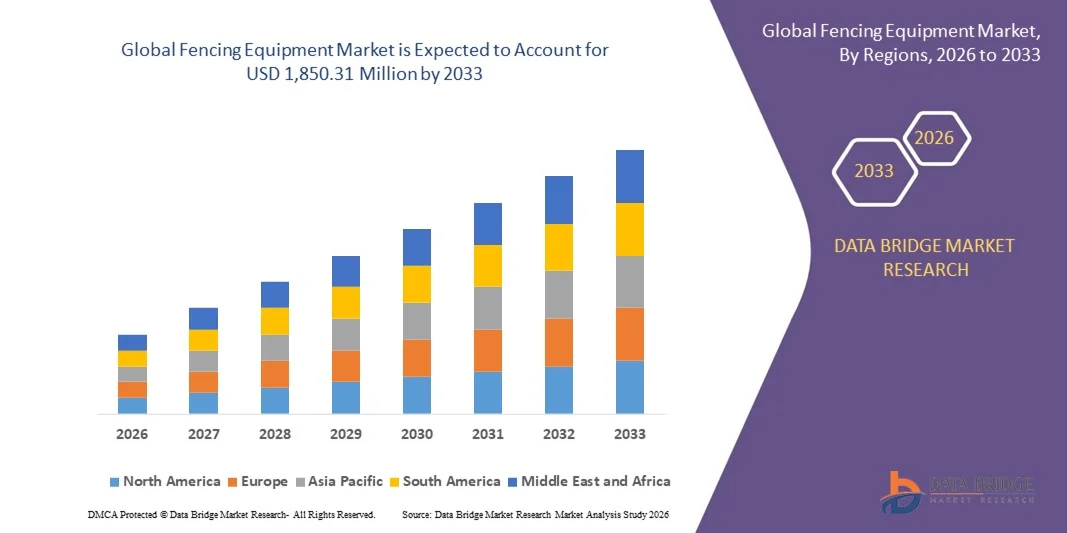
- As per Data Bridge Market Research Analysis the global fencing equipment market size was valued at USD 998.18 million in 2025 and is expected to reach USD 1,850.31 million by 2033, at a CAGR of 8.02 % during the forecast period
- The market growth is largely fuelled by the increasing popularity of fencing as a competitive sport, supported by global sports events such as the Olympics and World Fencing Championships
- Rising investments in sports infrastructure, training facilities, and youth development programs are contributing to the growing adoption of advanced fencing gear
Market Size & Forecast
- Global Market Value (2025): USD 998.18 million
- Expected Market Value (2033): USD 1,850.31 million
- Forecast CAGR (2026–2033): 8.02 %
Fencing Equipment Market Analysis
- The global fencing equipment market is witnessing steady growth due to rising participation across schools, universities, and professional training centers. The expansion of e-commerce platforms has made fencing products more accessible to consumers worldwide, boosting overall sales
- Moreover, the integration of lightweight materials and sensor-based innovations in fencing equipment is elevating the overall athlete experience, attracting both professional and recreational users to the sport
- North America dominated the fencing equipment market with the largest revenue share of 38.65% in 2025, driven by the growing popularity of fencing as a professional sport and increasing investments in sports infrastructure. Rising participation in fencing clubs, schools, and national tournaments has further boosted the demand for high-quality fencing gear across the region
- Asia-Pacific region is expected to witness the highest growth rate in the global fencing equipment market, driven by rapid urbanization, growing disposable incomes, and increasing adoption of fencing as a recreational and competitive sport. Expanding access to quality sports facilities and international exposure are further accelerating market expansion across emerging economies such as China, Japan, and South Korea
- The protective clothing segment held the largest market revenue share in 2025, driven by the increasing emphasis on safety standards and player protection during training and tournaments. Rising awareness about the importance of certified protective gear, coupled with the growing participation in professional fencing events, has further boosted demand for high-quality jackets, breeches, and gloves designed to minimize injury risks
Report Scope and Fencing Equipment Market Segmentation
|
Attributes |
Fencing Equipment Key Market Insights |
|
Segments Covered |
|
|
Countries Covered |
North America
Europe
Asia-Pacific
Middle East and Africa
South America
|
|
Key Market Players |
|
|
Market Opportunities |
|
|
Value Added Data Infosets |
In addition to the insights on market scenarios such as market value, growth rate, segmentation, geographical coverage, and major players, the market reports curated by the Data Bridge Market Research also include in-depth expert analysis, pricing analysis, brand share analysis, consumer survey, demography analysis, supply chain analysis, value chain analysis, raw material/consumables overview, vendor selection criteria, PESTLE Analysis, Porter Analysis, and regulatory framework. |
What is the Key Trend in the Fencing Equipment Market?
Rising Adoption Of Electric Fencing Systems For Enhanced Security
- The growing preference for electric fencing systems is reshaping the global fencing equipment market, driven by increasing concerns about perimeter security in both residential and agricultural sectors. Electric fences provide real-time deterrence and efficient boundary protection, making them suitable for large properties, farms, and industrial facilities. The ability to deliver immediate feedback in case of breach and lower maintenance requirements further enhance their appeal among users across various applications
- The demand for these systems is further bolstered by the availability of solar-powered fencing solutions that cater to remote areas with limited access to electricity. These eco-friendly options reduce operational costs and maintenance requirements, encouraging adoption in developing regions and off-grid applications. Moreover, they align with the global shift toward sustainability, appealing to both individual users and agricultural enterprises seeking green security alternatives
- Integration of smart monitoring technologies, such as IoT-enabled alarm systems and mobile-based alerts, is making electric fencing more user-friendly and responsive. Users can remotely track fence performance and receive instant notifications of breaches, enhancing overall safety and reliability. The convergence of automation and security management allows real-time analytics, predictive maintenance, and seamless integration with smart surveillance systems
- For instance, in 2024, Gallagher Group introduced a new line of AI-integrated electric fences that automatically detect intrusions and alert users via mobile devices. This innovation has gained strong traction among commercial farms and ranches across Australia and New Zealand, boosting demand for smart fencing systems. The company’s focus on user-centric design and energy-efficient operation has set a benchmark for next-generation fencing solutions
- While electric fencing is gaining rapid popularity, its growth depends on continued advancements in automation, material durability, and cost efficiency. Manufacturers must prioritize accessible smart fencing technologies to fully tap into emerging security and agricultural markets. Expanding product customization, improving after-sales support, and increasing affordability will be crucial to sustaining long-term demand across both developed and developing regions
Fencing Equipment Market Dynamics
Driver
Increasing Participation In Fencing Sports And Government Support For Athletic Development
- The growing popularity of fencing as a competitive sport across various regions is driving market demand for specialized equipment such as foils, épées, sabres, and protective gear. Rising participation in schools, universities, and clubs is creating a steady demand for high-quality, safety-compliant products. This has encouraged manufacturers to innovate with enhanced materials and designs to improve comfort, durability, and performance for both amateur and professional athletes
- Government initiatives and sports federations are actively promoting fencing through funding, training programs, and inclusion in national-level events. This has led to the establishment of new fencing academies and boosted the procurement of certified equipment. National sports development schemes and international collaborations are also helping to standardize fencing equipment regulations and make the sport more inclusive
- The rising visibility of fencing through international competitions and media exposure has also contributed to the sport’s mainstream appeal. Manufacturers are introducing lightweight and ergonomic designs to meet the growing needs of professional and amateur fencers alike. Furthermore, e-commerce platforms and digital marketing strategies are expanding access to fencing gear, enabling brands to reach a broader customer base
- For instance, in 2023, the International Fencing Federation (FIE) collaborated with several national associations to distribute subsidized fencing kits to developing countries, enhancing global accessibility and participation rates. This initiative has significantly improved entry-level affordability and encouraged greater female and youth participation. Such efforts are crucial to broadening the sport’s demographic reach and sustaining long-term market expansion
- While the surge in interest is a key driver, maintaining equipment quality standards and ensuring affordability remain essential for sustained growth in the fencing sports segment. Industry stakeholders must focus on local manufacturing, cost reduction strategies, and broader distribution networks to ensure equipment accessibility. Expanding partnerships between sports federations and manufacturers could further promote innovation and adoption at the grassroots level
Restraint/Challenge
High Cost Of Professional Fencing Gear And Limited Availability In Developing Regions
- The premium cost of professional-grade fencing gear, including electronic scoring systems and advanced protective suits, poses a major challenge to market accessibility, particularly for beginners and small training institutions. Import dependency and high manufacturing costs further elevate retail prices. The lack of economies of scale in many regions limits affordability, restricting fencing’s growth potential in lower-income demographics
- Developing regions face supply chain limitations and a lack of authorized distributors, leading to product shortages and delays. This hinders the establishment of fencing as a widely practiced sport outside major urban centers. Poor logistics infrastructure and limited awareness of reliable brands often push buyers toward counterfeit or substandard products, undermining user safety and satisfaction
- Limited awareness about proper maintenance and replacement of fencing gear also restricts recurring sales. Many schools and sports organizations hesitate to invest in high-cost equipment due to budget constraints and low perceived returns. This results in inconsistent training standards and discourages participation at the grassroots level, further constraining the overall market penetration
- For instance, in 2023, fencing clubs across Southeast Asia reported difficulty in sourcing certified FIE-approved gear, delaying participation in regional tournaments and hampering the growth of local fencing communities. The dependency on imports and lengthy procurement processes often lead to higher costs and slower adoption. This has prompted calls for domestic manufacturing initiatives to stabilize pricing and availability
- While technological innovation and increased production capacity are expected to lower prices over time, addressing distribution inefficiencies and expanding local manufacturing will be key to overcoming this market restraint. Partnerships with regional distributors, combined with awareness campaigns and training support, can help democratize access to fencing equipment. Long-term success will depend on creating a balanced ecosystem that promotes both affordability and quality assurance
Fencing Equipment Market Scope
The fencing equipment market is segmented on the basis of product, application, and distribution channel.
- By Product
On the basis of product, the fencing equipment market is segmented into protective clothing, fencing weapons, fencing masks, and accessories. The protective clothing segment held the largest market revenue share in 2025, driven by the increasing emphasis on safety standards and player protection during training and tournaments. Rising awareness about the importance of certified protective gear, coupled with the growing participation in professional fencing events, has further boosted demand for high-quality jackets, breeches, and gloves designed to minimize injury risks.
The fencing weapons segment is expected to witness the fastest growth rate from 2026 to 2033, driven by the rising adoption of advanced, lightweight, and precision-engineered foils, sabres, and épées among professional and amateur players. Continuous innovation in weapon materials such as stainless steel and composite alloys is improving durability and balance, enhancing overall performance and user comfort. The increasing number of fencing academies and the standardization of weapon designs by global sporting bodies are also propelling segment growth.
- By Application
On the basis of application, the fencing equipment market is segmented into women, men, and others. The men segment accounted for the largest market revenue share in 2025, supported by high participation rates in professional tournaments and institutional fencing programs. The growing number of national and international competitions featuring male athletes has sustained consistent equipment demand, particularly for personalized and performance-optimized gear.
The women segment is expected to witness the fastest growth rate from 2026 to 2033, driven by increasing female participation in fencing and the expansion of women’s categories in international events. Rising investment in female athlete development and the availability of ergonomic, lightweight, and stylish equipment tailored for women are further accelerating segment growth. The inclusion of fencing in school-level sports programs is also encouraging more young women to take up the sport, strengthening future demand.
- By Distribution Channel
On the basis of distribution channel, the fencing equipment market is segmented into offline and online. The offline segment dominated the market in 2025, attributed to the strong presence of specialty sports stores, fencing academies, and authorized distributors that allow customers to test and customize equipment before purchase. Physical retail outlets also offer professional guidance and after-sales services, ensuring trust and reliability among consumers.
The online segment is projected to witness the fastest growth rate from 2026 to 2033, driven by the rising penetration of e-commerce platforms and the convenience of online purchasing. Major fencing brands are increasingly partnering with digital marketplaces to expand their global reach and offer a wider product range. Discounts, home delivery options, and easy return policies are also encouraging consumers to adopt online purchasing channels, particularly in regions with limited offline availability.
Fencing Equipment Market Regional Analysis
- North America dominated the fencing equipment market with the largest revenue share of 38.65% in 2025, driven by the growing popularity of fencing as a professional sport and increasing investments in sports infrastructure. Rising participation in fencing clubs, schools, and national tournaments has further boosted the demand for high-quality fencing gear across the region
- Consumers in North America show strong interest in advanced protective clothing and certified fencing weapons that ensure safety and performance during competitions. The region’s active promotion of fencing through sports federations and training programs continues to expand market opportunities
- The growing availability of fencing equipment through both online and offline channels, coupled with high disposable incomes and the presence of leading manufacturers, strengthens North America’s position as a key hub for fencing equipment production and consumption
U.S. Fencing Equipment Market Insight
The U.S. fencing equipment market captured the largest revenue share in 2025 within North America, driven by strong participation in collegiate and professional fencing events. Government support and the establishment of new training centers have created significant opportunities for equipment suppliers. Furthermore, the country’s growing interest in fencing as both a recreational and competitive sport is contributing to consistent product demand across all categories.
Europe Fencing Equipment Market Insight
The Europe fencing equipment market is expected to witness the fastest growth rate from 2026 to 2033, driven by the long-standing cultural heritage of fencing and strong institutional support for sports development. European nations host numerous international tournaments, fostering demand for certified equipment. Moreover, advancements in material technology and the rise of online retail platforms are improving accessibility and affordability for consumers across the region.
U.K. Fencing Equipment Market Insight
The U.K. fencing equipment market is expected to witness the fastest growth rate from 2026 to 2033, fuelled by increasing youth participation and government-backed sports initiatives. The establishment of regional fencing academies and the rising popularity of fencing in schools are stimulating equipment sales. Moreover, British manufacturers are focusing on lightweight, durable materials to enhance performance and comfort for professional athletes.
Germany Fencing Equipment Market Insight
The Germany fencing equipment market is expected to witness the fastest growth rate from 2026 to 2033, driven by the nation’s emphasis on precision sports and high-performance gear. German consumers prioritize quality and safety standards, encouraging the adoption of certified protective clothing and fencing masks. The country’s strong sports culture, coupled with technological innovation in equipment design, continues to enhance its market presence.
Asia-Pacific Fencing Equipment Market Insight
The Asia-Pacific fencing equipment market is expected to witness the fastest growth rate from 2026 to 2033, driven by rapid sports development, urbanization, and rising disposable incomes in countries such as China, Japan, and South Korea. The region is witnessing increased participation in international competitions and government investments in sports education programs. Moreover, local manufacturing capabilities are improving product affordability and accessibility.
Japan Fencing Equipment Market Insight
The Japan fencing equipment market is expected to witness the fastest growth rate from 2026 to 2033, fuelled by growing enthusiasm for Olympic sports and government support for athletic training. Japanese athletes’ strong performance on international platforms has increased public interest in fencing. The rising number of fencing clubs and the integration of innovative materials into protective gear are driving domestic market expansion.
China Fencing Equipment Market Insight
The China fencing equipment market accounted for the largest market revenue share in Asia Pacific in 2025, supported by a rapidly expanding sports industry and rising government investments in fencing academies. The country’s growing middle-class population is increasingly adopting fencing as a recreational and competitive activity. Furthermore, the presence of local manufacturers offering cost-effective and certified equipment is strengthening China’s role as a major regional market.
Which are the Top Companies in Fencing Equipment Market?
The Fencing Equipment industry is primarily led by well-established companies, including:
• Absolute Fencing Gear (U.S.)
• Alliance Fencing Equipment (U.K.)
• Allstar Fencing (Germany)
• American Fencers Supply Co. (U.S.)
• Blade Fencing Store (U.K.)
• Blue Gauntlet (U.S.)
• Leon Paul London (U.K.)
• PBT Hungary Kft (Hungary)
• Triplette Competition Arms (U.S.)
• Victory Fencing Gear (U.S.)
• Bopac Sports Co. Ltd. (China)
• PRIEUR SPORTS (France)
• STM Group PLC (U.K.)
• Uhlmann Fechtsport (Germany)
• Folo, Inc. (U.S.)
• HTS (South Korea)
• Gladius Fencing Gear (Italy)
• Armor Fence (U.S.)
Latest Developments in Global Fencing Equipment Market
- In October 2023, Absolute Fencing Gear (U.S.) renewed its partnership agreement with U.S. Fencing as the official equipment supplier through the 2028 Olympic and Paralympic Games in Los Angeles. This strategic collaboration aims to enhance the quality and reliability of fencing tournaments by supplying advanced fencing strips, scoring machines, and essential gear. The partnership reinforces Absolute Fencing’s position as a key industry leader, ensuring that USA Fencing events continue to set global standards for excellence and performance in competitive fencing
- In June 2023, Fence Armor (U.S.) announced a strategic collaboration with Amazon to integrate the “Buy with Prime” feature on its official website. This development enables U.S.-based Prime Members to purchase directly from FenceArmor.com with fast, free delivery and simplified checkout. The partnership enhances customer convenience and accessibility, boosting Fence Armor’s online sales presence and expanding its reach within the fencing equipment market

- Interactive Data Analysis Dashboard
- Company Analysis Dashboard for high growth potential opportunities
- Research Analyst Access for customization & queries
- Competitor Analysis with Interactive dashboard
- Latest News, Updates & Trend analysis
- Harness the Power of Benchmark Analysis for Comprehensive Competitor Tracking
Data collection and base year analysis are done using data collection modules with large sample sizes. The stage includes obtaining market information or related data through various sources and strategies. It includes examining and planning all the data acquired from the past in advance. It likewise envelops the examination of information inconsistencies seen across different information sources. The market data is analysed and estimated using market statistical and coherent models. Also, market share analysis and key trend analysis are the major success factors in the market report. To know more, please request an analyst call or drop down your inquiry.
The key research methodology used by DBMR research team is data triangulation which involves data mining, analysis of the impact of data variables on the market and primary (industry expert) validation. Data models include Vendor Positioning Grid, Market Time Line Analysis, Market Overview and Guide, Company Positioning Grid, Patent Analysis, Pricing Analysis, Company Market Share Analysis, Standards of Measurement, Global versus Regional and Vendor Share Analysis. To know more about the research methodology, drop in an inquiry to speak to our industry experts.
Data Bridge Market Research is a leader in advanced formative research. We take pride in servicing our existing and new customers with data and analysis that match and suits their goal. The report can be customized to include price trend analysis of target brands understanding the market for additional countries (ask for the list of countries), clinical trial results data, literature review, refurbished market and product base analysis. Market analysis of target competitors can be analyzed from technology-based analysis to market portfolio strategies. We can add as many competitors that you require data about in the format and data style you are looking for. Our team of analysts can also provide you data in crude raw excel files pivot tables (Fact book) or can assist you in creating presentations from the data sets available in the report.