


FGFR Inhibitor Drug Market Size
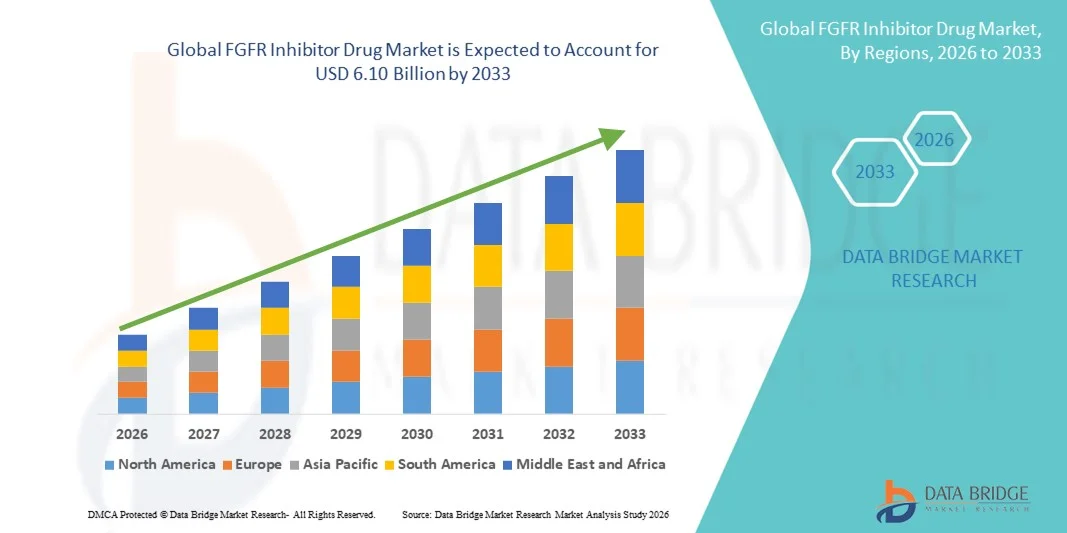
- The global FGFR inhibitor drug market size was valued at USD 1.68 billion in 2025 and is expected to reach USD 6.10 billion by 2033, at a CAGR of 17.50% during the forecast period
- The market growth is largely fueled by increasing prevalence of FGFR-driven cancers, rising oncology awareness, and growing investments in targeted cancer therapies
- Furthermore, the demand for personalized medicine and precision oncology, coupled with ongoing clinical trials and regulatory approvals of novel FGFR inhibitor drugs, is accelerating the uptake of FGFR Inhibitor Drug solutions, thereby significantly boosting the industry's growth
FGFR Inhibitor Drug Market Analysis
- FGFR inhibitor drugs, offering targeted therapy for FGFR-driven cancers, are increasingly vital components of modern oncology treatment regimens in both hospitals and specialty cancer clinics due to their high efficacy, precision targeting, and ability to minimize damage to healthy cells
- The escalating demand for FGFR inhibitor drugs is primarily fueled by the rising prevalence of FGFR-related cancers, ongoing clinical trials, regulatory approvals, and growing awareness among clinicians and patients for personalized cancer therapy
- North America dominated the FGFR Inhibitor Drug market with the largest revenue share of 41.5% in 2025, driven by advanced healthcare infrastructure, high adoption of targeted cancer therapies, strong presence of leading pharmaceutical players, and ongoing clinical trials for novel FGFR inhibitors in the U.S. and Canada
- Asia-Pacific is expected to be the fastest-growing region in the FGFR Inhibitor Drug market during the forecast period, expanding at a CAGR of 12.8% from 2026 to 2033, fueled by rising cancer prevalence, growing investments in healthcare infrastructure, increasing regulatory approvals, and expanding accessibility of targeted therapies in countries such as China, India, and Japan
- The selective FGFR inhibitors segment dominated the largest market revenue share of 42.8% in 2025, driven by their targeted mechanism of action that minimizes off-target effects and improves patient safety
Report Scope and FGFR Inhibitor Drug Market Segmentation
|
Attributes |
FGFR Inhibitor Drug Key Market Insights |
|
Segments Covered |
|
|
Countries Covered |
North America
Europe
Asia-Pacific
Middle East and Africa
South America
|
|
Key Market Players |
|
|
Market Opportunities |
|
|
Value Added Data Infosets |
In addition to the insights on market scenarios such as market value, growth rate, segmentation, geographical coverage, and major players, the market reports curated by the Data Bridge Market Research also include in-depth expert analysis, patient epidemiology, pipeline analysis, pricing analysis, and regulatory framework. |
FGFR Inhibitor Drug Market Trends
Rising Adoption of Targeted Therapies and Personalized Medicine
- A notable trend in the global FGFR Inhibitor Drug market is the increasing adoption of targeted therapies and precision medicine approaches, which are driving demand for FGFR inhibitors in oncology and rare disease treatments
- For instance, recent approvals of selective FGFR inhibitors for cholangiocarcinoma and urothelial carcinoma have encouraged oncologists to adopt biomarker-driven treatment strategies, thereby expanding market usage
- The trend toward integrating FGFR testing and companion diagnostics in clinical workflows is enabling physicians to identify eligible patients more efficiently, optimizing treatment outcomes
- Increasing collaborations between pharmaceutical companies and research institutions to develop next-generation FGFR inhibitors are enhancing the therapeutic pipeline and addressing unmet medical needs
- Regulatory agencies, such as the FDA and EMA, are increasingly approving accelerated pathways for FGFR-targeted therapies, further encouraging market growth and adoption
FGFR Inhibitor Drug Market Dynamics
Driver
Rising Incidence of FGFR-Driven Cancers and Expanding Clinical Research
- The growing prevalence of cancers associated with FGFR gene alterations, including bladder, lung, and cholangiocarcinoma, is a key driver for market expansion
- For instance, in 2025, over 10,000 new cholangiocarcinoma cases worldwide were identified with FGFR2 fusions, creating significant demand for selective FGFR inhibitors
- Expanding clinical research and ongoing clinical trials are evaluating novel FGFR inhibitors in combination with immunotherapy and chemotherapy, broadening the scope of treatable patient populations
- Increased investment by pharmaceutical companies in R&D for FGFR-targeted therapies is accelerating the development of more effective and safer drugs, boosting market confidence
- Growing awareness among healthcare professionals regarding the benefits of precision oncology and personalized medicine is driving the prescription of FGFR inhibitors over conventional treatments
Restraint/Challenge
Drug Resistance, Adverse Effects, and High Cost
- The emergence of acquired resistance to FGFR inhibitors, due to secondary mutations in the FGFR gene or activation of alternative pathways, poses a significant challenge to long-term treatment efficacy
- For instance, clinical studies have reported resistance in a subset of patients treated with first-generation FGFR inhibitors, leading to disease progression and limiting therapeutic outcomes
- Side effects associated with FGFR inhibitor therapy, including hyperphosphatemia, fatigue, and gastrointestinal toxicity, may impact patient compliance and restrict widespread use
- The high cost of FGFR-targeted therapies, particularly in regions with limited healthcare reimbursement, can be a barrier for adoption, especially in developing countries or for uninsured patients
- Ensuring broader accessibility requires ongoing efforts to reduce costs, implement patient assistance programs, and develop next-generation inhibitors with improved safety profiles
FGFR Inhibitor Drug Market Scope
The market is segmented on the basis of drug type and indication.
- By Drug Type
On the basis of drug type, the FGFR Inhibitor Drug market is segmented into selective FGFR inhibitors and non-selective FGFR inhibitors. The selective FGFR inhibitors segment dominated the largest market revenue share of 42.8% in 2025, driven by their targeted mechanism of action that minimizes off-target effects and improves patient safety. These drugs are widely adopted due to clinical efficacy in treating FGFR-driven cancers such as bladder cancer and cholangiocarcinoma. Strong research pipelines and regulatory approvals across key regions support continued adoption. Hospitals and oncology clinics prefer selective inhibitors for personalized therapy approaches, enhancing treatment outcomes. Advances in biomarker-guided patient selection further strengthen the segment. Increasing incidence of FGFR-mutated cancers in North America and Europe drives demand. Cost-effectiveness relative to broad-spectrum inhibitors encourages preference among healthcare providers. High clinical trial success rates and robust evidence of durable responses increase physician confidence. Partnerships between pharmaceutical companies and healthcare institutions facilitate availability. Awareness campaigns regarding targeted therapy benefits accelerate uptake. The segment benefits from favorable reimbursement policies in developed regions. Continuous innovation in selective FGFR inhibitors reinforces its leading market position.
The non-selective FGFR inhibitors segment is expected to witness the fastest CAGR of 11.9% from 2026 to 2033, fueled by broader therapeutic applicability across multiple cancer types. Non-selective inhibitors are increasingly used when patients exhibit co-occurring mutations or resistance to selective FGFR therapy. Expanding clinical trials and ongoing drug development programs drive segment growth. Emerging markets in Asia-Pacific and Latin America contribute to increasing adoption due to rising cancer incidence. The segment benefits from ongoing combination therapy strategies with immunotherapy or chemotherapy to improve efficacy. Growing awareness among oncologists about novel treatment options supports utilization. Increased investment in molecular diagnostics aids identification of suitable patients. Rapidly evolving oncology treatment guidelines favor inclusion of non-selective inhibitors. Expanding hospital and specialty oncology networks enhances access. Market growth is supported by collaborations between pharmaceutical firms and research institutions. Improved patient outcomes and survival rates boost physician preference. Accessibility via patient assistance programs encourages adoption. Overall, the combination of broad applicability, clinical efficacy, and supportive infrastructure positions non-selective FGFR inhibitors as the fastest-growing segment over the forecast period.
- By Indication
On the basis of indication, the FGFR Inhibitor Drug market is segmented into bladder cancer, lung cancer, cholangiocarcinoma, breast cancer, and other cancers. The bladder cancer segment dominated the largest market revenue share of 39.6% in 2025, owing to the high prevalence of FGFR3 mutations and increasing adoption of targeted FGFR therapy. Clinical guidelines increasingly recommend FGFR inhibitors as a standard of care for advanced urothelial carcinoma. Strong awareness among oncologists regarding molecularly targeted treatment enhances adoption. Rising investment in diagnostic testing for FGFR mutations enables patient-specific therapy. Hospitals and oncology centers prioritize selective inhibitors for improved efficacy and reduced adverse events. Regulatory approvals in North America, Europe, and Asia-Pacific support widespread use. Reimbursement policies for targeted therapies facilitate patient access. Real-world clinical data demonstrates durable responses and better progression-free survival. Increasing availability of both oral and injectable formulations improves treatment flexibility. Patient preference for therapies with fewer systemic toxicities supports uptake. Pharmaceutical partnerships and global distribution channels ensure consistent supply. Continuous pipeline innovation in bladder cancer-targeted drugs reinforces market dominance.
The cholangiocarcinoma segment is expected to witness the fastest CAGR of 12.3% from 2026 to 2033, driven by rising incidence of FGFR2 fusion-positive cholangiocarcinoma and limited treatment alternatives. Increasing molecular testing for FGFR alterations enhances early diagnosis and targeted therapy initiation. Clinical trial results demonstrating significant efficacy and manageable safety profiles further boost adoption. The segment benefits from approval of multiple selective FGFR inhibitors in advanced biliary tract cancers. Awareness programs targeting oncologists and patients promote utilization. Hospitals and specialty cancer centers are expanding capacity for molecularly guided therapy. Combination strategies with immunotherapy or chemotherapy improve clinical outcomes, supporting growth. Availability of oral therapies enhances patient adherence and convenience. Government and private funding for oncology treatment accessibility accelerates market penetration. Emerging markets in Asia-Pacific show increasing adoption due to rising cancer prevalence. Strategic collaborations between pharmaceutical companies and healthcare providers strengthen distribution. Overall, the segment’s rapid clinical acceptance and rising disease incidence position cholangiocarcinoma as the fastest-growing indication in the FGFR inhibitor drug market.
FGFR Inhibitor Drug Market Regional Analysis
- North America dominated the FGFR Inhibitor Drug market with the largest revenue share of 41.5% in 2025, driven by advanced healthcare infrastructure, high adoption of targeted cancer therapies, strong presence of leading pharmaceutical players, and ongoing clinical trials for novel FGFR inhibitors in the U.S. and Canada
- The region benefits from well-established oncology centers, high patient awareness, and the availability of precision diagnostic technologies, enabling the early identification and treatment of FGFR-driven cancers
- High healthcare expenditure, robust clinical research ecosystem, and rapid regulatory approvals further support the widespread adoption of FGFR inhibitor therapies across both the U.S. and Canada
U.S. FGFR Inhibitor Drug Market Insight
The U.S. FGFR Inhibitor Drug market captured the largest revenue share in North America in 2025, driven by the swift uptake of targeted therapies and ongoing clinical trials for novel FGFR inhibitors. Rising awareness of FGFR-driven cancers, increasing integration of precision medicine, and growing access to specialized oncology treatments are key factors propelling market growth. The presence of leading pharmaceutical companies and established research collaborations ensures continuous innovation and availability of advanced FGFR inhibitors to patients.
Europe FGFR Inhibitor Drug Market Insight
The Europe FGFR Inhibitor Drug market is projected to grow at a substantial CAGR during the forecast period, driven by increasing cancer prevalence, well-established healthcare infrastructure, and high adoption of precision oncology treatments. Countries such as Germany, France, and the U.K. are witnessing rising integration of targeted FGFR therapies into standard treatment protocols. Increasing government funding for cancer research, supportive reimbursement policies, and growing patient awareness are also contributing to the region’s market expansion.
U.K. FGFR Inhibitor Drug Market Insight
The U.K. FGFR Inhibitor Drug market is expected to expand steadily, supported by rising incidence of FGFR-driven cancers and increasing adoption of targeted therapies. Strong oncology infrastructure, ongoing clinical trials, and awareness programs promoting precision medicine are key drivers. Additionally, the availability of FGFR mutation testing and government-backed healthcare initiatives enhances patient access to these therapies.
Germany FGFR Inhibitor Drug Market Insight
The Germany FGFR Inhibitor Drug market is anticipated to witness significant growth during the forecast period, fueled by increasing prevalence of cancers with FGFR alterations, well-developed healthcare infrastructure, and adoption of advanced treatment protocols. Germany’s focus on medical innovation and strong research ecosystem supports the introduction of novel FGFR inhibitors, contributing to higher market penetration in both public and private healthcare sectors.
Asia Pacific FGFR Inhibitor Drug Market Insight
The Asia-Pacific FGFR Inhibitor Drug market is expected to be the fastest-growing region, expanding at a CAGR of 12.8% during the forecast period of 2026 to 2033. The growth is driven by rising cancer prevalence, growing investments in healthcare infrastructure, increasing regulatory approvals, and expanding accessibility of targeted therapies across the region. The APAC market is further supported by a large patient population, increasing awareness of precision medicine, and the establishment of advanced oncology centers in key countries such as China, India, and Japan.
China FGFR Inhibitor Drug Market Insight
The China FGFR Inhibitor Drug market accounted for the largest revenue share in the Asia-Pacific region in 2025, driven by the rapid expansion of biotechnology and pharmaceutical industries, growing government funding for biomedical research, and increasing adoption of advanced diagnostic and treatment technologies in hospitals and research institutions. The country’s rising cancer incidence, coupled with enhanced healthcare infrastructure and strong domestic manufacturing capabilities, is facilitating broader availability of FGFR inhibitors. Additionally, China’s focus on integrating targeted therapies into standard oncology treatment protocols further strengthens market growth.
India FGFR Inhibitor Drug Market Insight
The India FGFR Inhibitor Drug market is expected to be the fastest-growing country market in APAC during the forecast period, expanding at a CAGR of 13.5% from 2026 to 2033. Growth is supported by rising cancer prevalence, increasing clinical research activities, improving healthcare infrastructure, and expanding patient access to targeted therapies. Government initiatives aimed at strengthening precision oncology, coupled with growing awareness of FGFR-driven cancers and the expansion of hospital networks in tier-2 and tier-3 cities, are driving demand. Additionally, increasing regulatory approvals and partnerships with global pharmaceutical companies are facilitating the availability of novel FGFR inhibitors in the Indian market.
FGFR Inhibitor Drug Market Share
The FGFR Inhibitor Drug industry is primarily led by well-established companies, including:
- AstraZeneca (U.K.)
- Novartis (Switzerland)
- Bayer (Germany)
- Incyte Corporation (U.S.)
- BridgeBio Pharma (U.S.)
- HonorHealth Pharmaceuticals (U.S.)
- Helsinn Group (Switzerland)
- F. Hoffmann-La Roche (Switzerland)
- BeiGene (China)
- Hutchison China MediTech (China)
- Zai Lab (China)
- Taiho Pharmaceutical (Japan)
- Daiichi Sankyo (Japan)
- Pfizer (U.S.)
- Merck & Co. (U.S.)
- Johnson & Johnson (U.S.)
- Blueprint Medicines (U.S.)
- Shanghai Pharma (China)
- Hanmi Pharmaceutical (South Korea)
Latest Developments in Global FGFR Inhibitor Drug Market
- In May 2021, TRUSELTIQ (infigratinib) received U.S. FDA accelerated approval for the treatment of adults with previously treated, unresectable, locally advanced or metastatic cholangiocarcinoma with an FGFR2 fusion or rearrangement, marking one of the earliest regulatory milestones in the FGFR inhibitor drug class. This conditional approval required confirmatory trials
- In September 2022, LYTGOBI (futibatinib) received U.S. FDA accelerated approval for adults with unresectable, locally advanced or metastatic intrahepatic cholangiocarcinoma (iCCA) harboring FGFR2 gene fusions or rearrangements based on positive FOENIX‑CCA2 trial data, establishing another approved FGFR‑targeted therapy in precision oncology
- In July 2023, LYTGOBI (futibatinib) received conditional marketing authorization from the European Commission and was launched in multiple European Union countries for FGFR2‑fusion cholangiocarcinoma, expanding the availability of FGFR‑targeted therapy in Europe beyond the United States
- In August 2023, LYTGOBI (futibatinib) was launched in Japan for the treatment of FGFR2 fusion‑positive biliary tract cancer patients who have progressed after chemotherapy, marking its commercial entry in the Asia‑Pacific region and broadening global access
- In May 2024, the U.S. FDA finalized the withdrawal of TRUSELTIQ (infigratinib) for previously treated, unresectable, locally advanced or metastatic cholangiocarcinoma with FGFR2 fusion/rearrangements because post‑approval confirmatory trial recruitment challenges and limited commercial viability led the sponsor to request removal of the indication
- In May 2024, Johnson & Johnson presented updated clinical results from a Phase I study of BALVERSA (erdafitinib) administered via a novel intravesical targeted delivery system (TAR‑210) for non‑muscle‑invasive bladder cancer with FGFR alterations at the American Urological Association (AUA) Annual Meeting, showcasing innovative delivery approaches for existing FGFR inhibitors
- In October 2024, interim clinical data from TYRA‑300 (a next‑generation FGFR inhibitor developed by Tyra Biosciences) demonstrated a ~54.5 % partial response rate in patients with FGFR3‑positive metastatic urothelial carcinoma at higher dose levels, reinforcing the potential of newer FGFR‑targeted compounds with improved selectivity and tolerability profiles
- In January 2025, Tyra Biosciences received U.S. FDA clearance to initiate the Phase II SURF302 clinical trial of TYRA‑300 in FGFR3‑altered low‑grade, intermediate‑risk non‑muscle‑invasive bladder cancer, advancing late‑stage clinical development of this next‑gen FGFR3‑targeted therapy

- Interactive Data Analysis Dashboard
- Company Analysis Dashboard for high growth potential opportunities
- Research Analyst Access for customization & queries
- Competitor Analysis with Interactive dashboard
- Latest News, Updates & Trend analysis
- Harness the Power of Benchmark Analysis for Comprehensive Competitor Tracking
Data collection and base year analysis are done using data collection modules with large sample sizes. The stage includes obtaining market information or related data through various sources and strategies. It includes examining and planning all the data acquired from the past in advance. It likewise envelops the examination of information inconsistencies seen across different information sources. The market data is analysed and estimated using market statistical and coherent models. Also, market share analysis and key trend analysis are the major success factors in the market report. To know more, please request an analyst call or drop down your inquiry.
The key research methodology used by DBMR research team is data triangulation which involves data mining, analysis of the impact of data variables on the market and primary (industry expert) validation. Data models include Vendor Positioning Grid, Market Time Line Analysis, Market Overview and Guide, Company Positioning Grid, Patent Analysis, Pricing Analysis, Company Market Share Analysis, Standards of Measurement, Global versus Regional and Vendor Share Analysis. To know more about the research methodology, drop in an inquiry to speak to our industry experts.
Data Bridge Market Research is a leader in advanced formative research. We take pride in servicing our existing and new customers with data and analysis that match and suits their goal. The report can be customized to include price trend analysis of target brands understanding the market for additional countries (ask for the list of countries), clinical trial results data, literature review, refurbished market and product base analysis. Market analysis of target competitors can be analyzed from technology-based analysis to market portfolio strategies. We can add as many competitors that you require data about in the format and data style you are looking for. Our team of analysts can also provide you data in crude raw excel files pivot tables (Fact book) or can assist you in creating presentations from the data sets available in the report.












