


What is the Fibromyalgia Market Size and Overview?
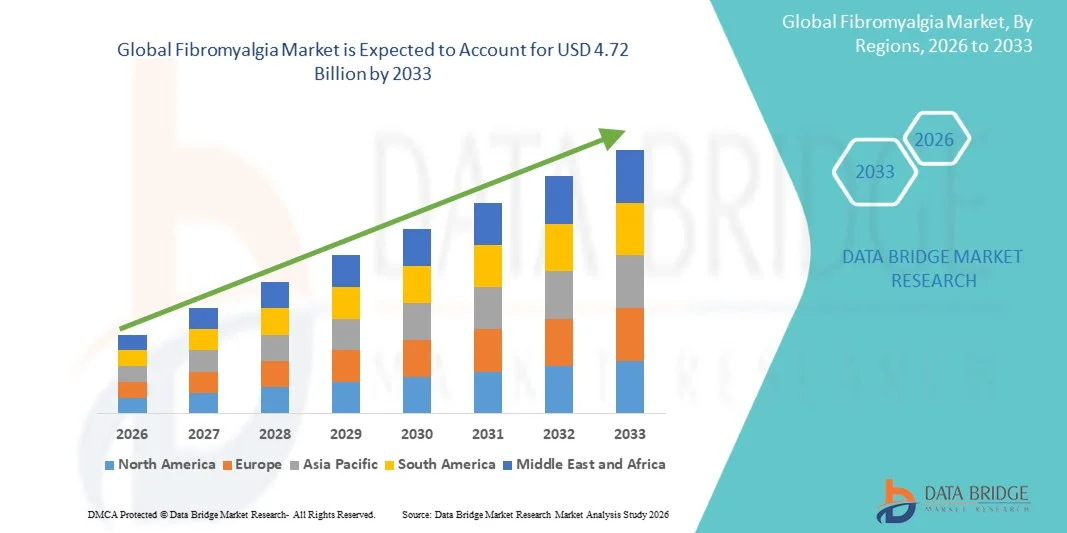
- The global fibromyalgia market size was valued at USD 2.75 billion in 2025 and is expected to reach USD 4.72 billion by 2033, at a CAGR of 7.00% during the forecast period
- The market growth is largely fueled by the increasing prevalence of fibromyalgia, along with rising awareness regarding chronic pain disorders and improved diagnosis rates. Advancements in treatment approaches, including pharmacological therapies and non-drug interventions such as cognitive behavioral therapy and physical therapy, are further supporting market expansion
- Furthermore, rising demand for effective, patient-centric, and long-term management solutions is establishing fibromyalgia treatments as an essential component of modern pain management and neurology care. These converging factors are accelerating the uptake of fibromyalgia solutions, thereby significantly boosting growth in the global fibromyalgia market
Market Size & Forecast
- Global Market Value (2025): USD 2.75 billion
- Expected Market Value (2033): USD 4.72 billion
- Forecast CAGR (2025–2033): 7.00%
Fibromyalgia Market Analysis
- Fibromyalgia treatment solutions, including pharmacological therapies (such as antidepressants, anticonvulsants, and pain relievers) and non-pharmacological approaches like physical therapy and cognitive behavioral therapy, are increasingly vital in modern healthcare due to the chronic and complex nature of fibromyalgia. Growing recognition of the condition and improvements in diagnostic criteria are supporting wider treatment adoption
- The escalating demand for fibromyalgia solutions is primarily fueled by increasing prevalence of chronic pain disorders, rising awareness among patients and healthcare providers, and a growing emphasis on improving quality of life through long-term disease management. These factors are driving the adoption of comprehensive and multidisciplinary treatment approaches
- North America dominated the fibromyalgia market, accounting for approximately 45% of global revenue in 2025, supported by high diagnosis rates, strong healthcare infrastructure, and widespread availability of approved therapies. The U.S. remains the largest contributor within the region
- Asia-Pacific is expected to be the fastest-growing region in the fibromyalgia market during the forecast period, with a projected CAGR driven by increasing awareness of chronic pain conditions, improving healthcare access, and rising healthcare expenditure
- The oral segment dominated the largest market revenue share of 48.3% in 2025, driven by ease of administration, high patient compliance, and widespread use of oral medications for long-term symptom management
Report Scope and Fibromyalgia Market Segmentation
|
Attributes |
Fibromyalgia Key Market Insights |
|
Segments Covered |
|
|
Countries Covered |
North America
Europe
Asia-Pacific
Middle East and Africa
South America
|
|
Key Market Players |
|
|
Market Opportunities |
|
|
Value Added Data Infosets |
|
What is the Key Trend in the Fibromyalgia Market?
“Advancements in Multimodal Pain Management and Personalized Therapies”
- A significant and accelerating trend in the global fibromyalgia market is the growing shift toward multimodal pain management approaches that combine pharmacological treatments, physical therapy, and behavioral interventions to improve patient outcomes. This integrated approach is enhancing overall treatment effectiveness and quality of life for patients
- For instance, healthcare providers are increasingly adopting combination therapies such as antidepressants, anticonvulsants, and cognitive behavioral therapy (CBT) to manage symptoms more effectively, reflecting a move toward personalized treatment strategies
- Advancements in drug development are enabling targeted therapies that address specific symptoms such as chronic pain, fatigue, and sleep disturbances. Novel formulations and extended-release medications are improving treatment adherence and patient comfort
- The integration of digital health tools, including mobile health applications and remote monitoring systems, is supporting continuous patient management and enabling better tracking of symptom progression and treatment response
- This trend toward personalized and patient-centric care is reshaping treatment protocols, with pharmaceutical companies and healthcare providers focusing on tailored therapies based on individual patient profiles
- The demand for comprehensive and long-term management solutions is growing across both developed and emerging markets, as awareness of fibromyalgia and its impact on daily life continues to increase
Fibromyalgia Market Dynamics
Driver
“Rising Prevalence of Chronic Pain Disorders and Increasing Awareness”
- The increasing prevalence of chronic pain conditions, including fibromyalgia, is a major driver of market growth, with a growing number of patients seeking diagnosis and long-term treatment options
- For instance, rising awareness campaigns by health organizations and patient advocacy groups have improved diagnosis rates and encouraged early treatment initiation, particularly in developed regions
- Greater recognition of fibromyalgia as a legitimate medical condition has led to increased healthcare consultations and demand for effective therapies
- Furthermore, improvements in diagnostic criteria and physician education are enabling earlier and more accurate identification of the condition
- The expanding geriatric population, which is more susceptible to chronic pain disorders, is also contributing to increased demand for fibromyalgia treatments
- Increasing healthcare expenditure and improved access to pain management services are further supporting market expansion globally
Restraint/Challenge
“Limited Treatment Efficacy and High Cost of Long-Term Management”
- One of the key challenges in the fibromyalgia market is the limited efficacy of available treatments, as most therapies focus on symptom management rather than curing the condition
- For instance, commonly prescribed drugs such as pregabalin and duloxetine may not provide adequate relief for all patients and can be associated with side effects, leading to discontinuation or reduced adherence
- The chronic nature of fibromyalgia requires long-term treatment and continuous management, which can result in significant financial burden for patients
- In addition, lack of standardized treatment protocols and variability in patient response complicate disease management
- Insurance coverage limitations and reimbursement challenges in certain regions further restrict access to advanced therapies
- Addressing these challenges will require continued research into more effective therapies, improved clinical guidelines, and increased accessibility to affordable treatment options
Fibromyalgia Market Scope
The market is segmented on the basis of diagnosis, treatment, route of administration, end-users, and distribution channel.
• By Type
On the basis of type, the Fibromyalgia market is segmented into blood tests and others. The blood tests segment dominated the largest market revenue share of 46.2% in 2025, driven by increasing use of laboratory testing to rule out other conditions and support differential diagnosis of fibromyalgia. Hospitals and specialty clinics frequently rely on blood tests to identify underlying issues such as autoimmune disorders or inflammation markers. Physicians prefer blood tests as part of initial diagnostic evaluation. Growing awareness about early diagnosis supports adoption. Integration with advanced diagnostic technologies improves accuracy. High patient inflow in hospitals contributes to segment growth. Insurance coverage for diagnostic procedures enhances accessibility. Continuous advancements in lab testing techniques strengthen reliability. Clinical guidelines support use of blood tests in evaluation. Research initiatives improve diagnostic pathways. Increasing prevalence of chronic pain conditions drives demand.
The others segment is expected to witness the fastest CAGR of 9.4% from 2026 to 2033, fueled by rising adoption of clinical examination, symptom-based diagnosis, and emerging diagnostic tools. Physicians increasingly rely on comprehensive assessment methods beyond lab tests. Growing awareness about fibromyalgia improves early diagnosis rates. Specialty clinics adopt multidisciplinary diagnostic approaches. Technological advancements support improved screening tools. Emerging markets show rising diagnostic capabilities. Patient education programs enhance recognition of symptoms. Integration with digital health tools improves assessment accuracy. Increasing focus on personalized diagnosis drives adoption. Clinical research supports development of new diagnostic techniques. Healthcare providers emphasize holistic evaluation methods.
• By Treatment
On the basis of treatment, the Fibromyalgia market is segmented into medication, therapy, and others. The medication segment dominated the largest market revenue share of 42.7% in 2025, driven by widespread use of pain relievers, antidepressants, and anticonvulsants for symptom management. Hospitals and specialty clinics frequently prescribe medications to manage chronic pain and fatigue. High patient dependence on pharmacological treatment supports dominance. Physician familiarity and established treatment guidelines reinforce adoption. Availability of multiple drug classes enhances flexibility. Insurance coverage improves accessibility. Pharmaceutical advancements improve efficacy and tolerability. Patient adherence remains relatively high. Awareness programs support treatment continuation. Integration with combination therapies enhances outcomes. Growing prevalence of fibromyalgia drives demand.
The therapy segment is expected to witness the fastest CAGR of 10.8% from 2026 to 2033, fueled by increasing adoption of non-pharmacological treatments such as cognitive behavioral therapy, physical therapy, and lifestyle management. Patients prefer holistic approaches with fewer side effects. Specialty clinics expand therapy-based treatment programs. Growing awareness of mental health supports adoption. Integration with digital therapy platforms enhances accessibility. Emerging markets show rising acceptance of therapy options. Healthcare providers emphasize multidisciplinary care. Research supports effectiveness of non-drug interventions. Patient education improves engagement. Telehealth services facilitate therapy sessions. Long-term benefits drive sustained growth.
• By Route of Administration
On the basis of route of administration, the Fibromyalgia market is segmented into oral, parenteral, and others. The oral segment dominated the largest market revenue share of 48.3% in 2025, driven by ease of administration, high patient compliance, and widespread use of oral medications for long-term symptom management. Patients prefer oral drugs due to convenience and accessibility. Homecare settings strongly support oral therapy adoption. Pharmaceutical companies focus on oral formulations. Cost-effectiveness enhances affordability. Physician preference supports continued usage. Integration with chronic disease management programs strengthens demand. Awareness initiatives encourage adherence. Emerging markets show strong uptake. Availability of generic drugs further boosts adoption.
The parenteral segment is expected to witness the fastest CAGR of 8.6% from 2026 to 2033, fueled by increasing use in severe cases requiring rapid symptom relief and controlled dosing. Hospitals and specialty centres prefer parenteral administration in acute scenarios. Clinical protocols support its use in specific conditions. Technological advancements improve delivery systems. Patient monitoring enhances safety. Growing healthcare infrastructure supports adoption. Research initiatives explore advanced formulations. Integration with hospital-based care strengthens demand. Emerging markets show gradual uptake. Increasing focus on effective pain management drives growth.
• By End-Users
On the basis of end-users, the Fibromyalgia market is segmented into hospitals, homecare, specialty clinics, and others. The hospitals segment dominated the largest market revenue share of 47.9% in 2025, driven by availability of multidisciplinary care, diagnostic facilities, and access to pharmacological treatments. Hospitals manage complex fibromyalgia cases effectively. High patient inflow supports dominance. Access to advanced diagnostic tools improves evaluation. Physician expertise enhances treatment outcomes. Insurance coverage facilitates hospital-based care. Government healthcare initiatives support infrastructure. Integration with pain management programs strengthens adoption. Research and clinical studies reinforce hospital role. Patient trust drives preference.
The homecare segment is expected to witness the fastest CAGR of 11.2% from 2026 to 2033, fueled by increasing preference for long-term management at home and growing use of telehealth services. Patients opt for homecare for convenience and comfort. Remote monitoring tools support treatment adherence. Cost-effectiveness drives adoption. Emerging markets show rising homecare services. Awareness programs improve patient engagement. Integration with digital health platforms enhances accessibility. Healthcare providers expand homecare offerings. Supportive therapies strengthen outcomes. Convenience and flexibility accelerate growth.
• By Distribution Channel
On the basis of distribution channel, the Fibromyalgia market is segmented into hospital pharmacy, online pharmacy, and retail pharmacy. The hospital pharmacy segment dominated the largest market revenue share of 45.1% in 2025, driven by direct linkage with hospital treatment protocols and availability of prescribed medications. Hospitals ensure immediate access to drugs for patients. Physician prescriptions are primarily fulfilled through hospital pharmacies. Regulatory compliance ensures safety and quality. Strong supply chain supports availability. Insurance coverage improves access. Patient trust reinforces dominance. Integration with hospital systems enhances efficiency.
The online pharmacy segment is expected to witness the fastest CAGR of 12.7% from 2026 to 2033, driven by increasing digital adoption, convenience, and availability of medications through e-commerce platforms. Patients prefer doorstep delivery for long-term therapy. Smartphone penetration supports online purchases. Telemedicine integration enhances prescription access. Competitive pricing attracts consumers. Awareness of online platforms is increasing. Emerging markets show rapid adoption. Accessibility and convenience sustain growth. Expansion of digital healthcare ecosystems further accelerates demand.
Fibromyalgia Market Regional Analysis
- North America dominated the fibromyalgia market, accounting for approximately 45% of global revenue in 2025, supported by high diagnosis rates, strong healthcare infrastructure, and widespread availability of approved therapies
- The region benefits from increased awareness of chronic pain disorders and access to specialized pain management services
- The Fibromyalgia market represents the largest share within North America, driven by advanced diagnostic capabilities, high healthcare expenditure, and strong adoption of pharmacological and non-pharmacological treatment approaches. The presence of key pharmaceutical companies and ongoing research initiatives further supports market growth
U.S. Fibromyalgia Market Insight
The U.S. fibromyalgia market captured the largest revenue share within North America, driven by increasing prevalence of chronic pain conditions and strong awareness regarding early diagnosis and treatment. The country benefits from a well-established healthcare system, widespread availability of approved medications, and increasing use of multidisciplinary treatment approaches, including physical therapy and behavioral interventions. In addition, favorable reimbursement policies and continuous advancements in pain management therapies are contributing to market expansion.
Europe Fibromyalgia Market Insight
The Europe fibromyalgia market is projected to expand at a substantial CAGR throughout the forecast period, primarily driven by increasing awareness of fibromyalgia, improved diagnostic practices, and growing adoption of multidisciplinary treatment approaches. The presence of supportive healthcare systems and rising healthcare expenditure are further contributing to market growth across the region.
U.K. Fibromyalgia Market Insight
The U.K. fibromyalgia market is anticipated to grow at a noteworthy CAGR during the forecast period, driven by increasing recognition of chronic pain disorders and improved access to healthcare services. Government initiatives and growing awareness among healthcare professionals are supporting early diagnosis and effective disease management.
Germany Fibromyalgia Market Insight
The Germany fibromyalgia market is expected to expand at a considerable CAGR during the forecast period, fueled by advanced healthcare infrastructure, strong focus on clinical research, and increasing demand for effective pain management therapies. Germany’s emphasis on innovation and patient care is promoting the adoption of comprehensive treatment approaches.
Asia-Pacific Fibromyalgia Market Insight
The Asia-Pacific fibromyalgia market is expected to be the fastest-growing region during the forecast period, driven by increasing awareness of chronic pain conditions, improving healthcare access, and rising healthcare expenditure. Large patient populations and expanding healthcare infrastructure in countries such as China, India, and Japan are significantly contributing to market growth.
Japan Fibromyalgia Market Insight
The Japan fibromyalgia market is gaining momentum due to growing awareness of fibromyalgia, improving diagnostic capabilities, and increasing focus on pain management. The country’s aging population further contributes to rising demand for effective treatment solutions.
China Fibromyalgia Market Insight
The China fibromyalgia market accounted for a significant revenue share in Asia Pacific, driven by expanding healthcare infrastructure, rising healthcare expenditure, and increasing awareness of chronic pain disorders. Government initiatives to improve healthcare access and the growing availability of treatment options are key factors propelling market growth in the country.
Which are the Top Companies in Fibromyalgia Market?
The Fibromyalgia industry is primarily led by well-established companies, including:
• Pfizer (U.S.)
• Eli Lilly and Company (U.S.)
• Johnson & Johnson (U.S.)
• AbbVie (U.S.)
• Novartis (Switzerland)
• GlaxoSmithKline (U.K.)
• Sanofi (France)
• Bayer (Germany)
• Merck & Co. (U.S.)
• Teva Pharmaceutical (Israel)
• Sun Pharma (India)
• Dr. Reddy’s Laboratories (India)
• Cipla (India)
• Lupin Pharmaceuticals (India)
• Amgen (U.S.)
• AstraZeneca (U.K.)
• Takeda Pharmaceutical (Japan)
• Bristol-Myers Squibb (U.S.)
• Endo International (Ireland)
• Hoffmann-La Roche (Switzerland)
Latest Developments in Global Fibromyalgia Market
- In April 2022, Tonix Pharmaceuticals initiated the Phase 3 RESILIENT clinical trial of TNX-102 SL (cyclobenzaprine HCl sublingual tablets) for the management of fibromyalgia, marking a significant late-stage development aimed at introducing the first new therapy in over a decade
- In December 2023, Tonix Pharmaceuticals announced positive topline results from its Phase 3 RESILIENT trial, demonstrating statistically significant reductions in daily pain and improvements in sleep quality and fatigue in fibromyalgia patients, supporting regulatory submission for approval
- In January 2024, Tonix Pharmaceuticals reported that the U.S. Food and Drug Administration (FDA) conditionally accepted the trade name “Tonmya” for TNX-102 SL, advancing the product toward commercialization and regulatory approval in the fibromyalgia treatment landscape
- In July 2024, the U.S. FDA granted Fast Track designation to TNX-102 SL, recognizing its potential to address unmet needs in fibromyalgia management and accelerating its regulatory review process
- In March 2025, Tonix Pharmaceuticals announced that the FDA would not require an advisory committee meeting for its New Drug Application (NDA) for TNX-102 SL, indicating a streamlined regulatory pathway and increasing the likelihood of timely approval
- In August 2025, the U.S. FDA approved Tonmya (cyclobenzaprine HCl sublingual tablets) for the treatment of fibromyalgia, marking the first new FDA-approved drug for fibromyalgia in over 15 years and introducing a novel non-opioid therapy targeting sleep disturbances associated with the condition
- In December 2025, Tonmya was commercially launched and made available in pharmacies, representing a major commercialization milestone and expanding treatment options for patients suffering from chronic widespread pain, fatigue, and sleep disturbances associated with fibromyalgia

- Interactive Data Analysis Dashboard
- Company Analysis Dashboard for high growth potential opportunities
- Research Analyst Access for customization & queries
- Competitor Analysis with Interactive dashboard
- Latest News, Updates & Trend analysis
- Harness the Power of Benchmark Analysis for Comprehensive Competitor Tracking
Data collection and base year analysis are done using data collection modules with large sample sizes. The stage includes obtaining market information or related data through various sources and strategies. It includes examining and planning all the data acquired from the past in advance. It likewise envelops the examination of information inconsistencies seen across different information sources. The market data is analysed and estimated using market statistical and coherent models. Also, market share analysis and key trend analysis are the major success factors in the market report. To know more, please request an analyst call or drop down your inquiry.
The key research methodology used by DBMR research team is data triangulation which involves data mining, analysis of the impact of data variables on the market and primary (industry expert) validation. Data models include Vendor Positioning Grid, Market Time Line Analysis, Market Overview and Guide, Company Positioning Grid, Patent Analysis, Pricing Analysis, Company Market Share Analysis, Standards of Measurement, Global versus Regional and Vendor Share Analysis. To know more about the research methodology, drop in an inquiry to speak to our industry experts.
Data Bridge Market Research is a leader in advanced formative research. We take pride in servicing our existing and new customers with data and analysis that match and suits their goal. The report can be customized to include price trend analysis of target brands understanding the market for additional countries (ask for the list of countries), clinical trial results data, literature review, refurbished market and product base analysis. Market analysis of target competitors can be analyzed from technology-based analysis to market portfolio strategies. We can add as many competitors that you require data about in the format and data style you are looking for. Our team of analysts can also provide you data in crude raw excel files pivot tables (Fact book) or can assist you in creating presentations from the data sets available in the report.












