


Fibromyalgia Syndrome Market Size
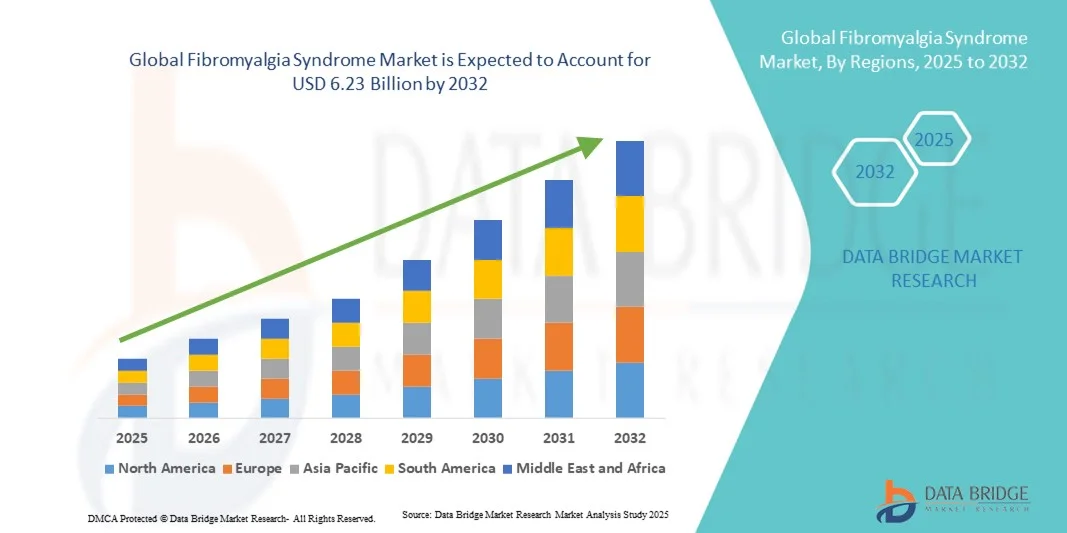
- The global Fibromyalgia Syndrome market size was valued at USD 3.84 billion in 2024 and is expected to reach USD 6.23 billion by 2032, at a CAGR of 6.25% during the forecast period
- The market growth is primarily driven by the increasing prevalence of fibromyalgia and heightened awareness of chronic pain disorders, coupled with advancements in diagnostic methods and therapeutic approaches
- Moreover, rising investments in novel drug development, expanding research on neuromodulators and antidepressants, and growing patient preference for effective, long-term pain management solutions are reinforcing market expansion. These combined factors are accelerating the adoption of innovative treatment options, thereby significantly propelling the industry’s growth
Fibromyalgia Syndrome Market Analysis
- Fibromyalgia syndrome, a chronic disorder characterized by widespread musculoskeletal pain, fatigue, and sleep disturbances, is emerging as a major focus area in pain management and neurological research, driven by increasing disease awareness and evolving therapeutic strategies
- The market growth is primarily fueled by the rising prevalence of fibromyalgia, greater clinical recognition of chronic pain syndromes, and ongoing advancements in pharmacological interventions aimed at improving patient quality of life
- North America dominated the fibromyalgia syndrome market with the largest revenue share of 41.5% in 2024, supported by robust healthcare infrastructure, favorable reimbursement policies, and the presence of key players offering FDA-approved medications such as duloxetine and pregabalin
- The Asia-Pacific region is projected to register the fastest growth during the forecast period due to increasing healthcare access, rising awareness of pain management, and expanding distribution networks for fibromyalgia medications
- The antidepressants segment dominated the fibromyalgia syndrome market with a market share of 44.6% in 2024, attributed to their proven efficacy in reducing pain perception and improving sleep quality, positioning them as a primary therapeutic choice for fibromyalgia management
Report Scope and Fibromyalgia Syndrome Market Segmentation
|
Attributes |
Fibromyalgia Syndrome Key Market Insights |
|
Segments Covered |
|
|
Countries Covered |
North America
Europe
Asia-Pacific
Middle East and Africa
South America
|
|
Key Market Players |
|
|
Market Opportunities |
|
|
Value Added Data Infosets |
In addition to the insights on market scenarios such as market value, growth rate, segmentation, geographical coverage, and major players, the market reports curated by the Data Bridge Market Research also include in-depth expert analysis, patient epidemiology, pipeline analysis, pricing analysis, and regulatory framework |
Fibromyalgia Syndrome Market Trends
Integration of Digital Therapeutics and Remote Monitoring Solutions
- A significant and accelerating trend in the global fibromyalgia syndrome market is the growing integration of digital therapeutics, wearable technologies, and remote monitoring tools to enhance patient management and treatment personalization
- For instance, platforms such as Kaia Health and Swing Therapeutics are leveraging mobile-based cognitive behavioral therapy (CBT) and symptom tracking to provide non-pharmacological management options for fibromyalgia patients. Similarly, wearable devices are being used to monitor sleep quality, physical activity, and pain intensity, allowing physicians to tailor interventions more precisely
- AI-enabled health applications are enabling continuous patient data analysis to detect symptom fluctuations and optimize medication schedules. For instance, digital platforms are integrating AI-driven insights to identify early signs of flare-ups and deliver timely behavioral or therapeutic recommendations, improving overall disease control. Furthermore, such technologies provide patients with self-management tools, empowering them to track and manage pain, sleep, and mood patterns effectively
- The seamless integration of digital health technologies with clinical care facilitates data-driven decision-making and patient-centered management, promoting a holistic approach to fibromyalgia care. Through a single connected interface, patients can coordinate medication adherence, track symptoms, and communicate with healthcare providers, creating an integrated and responsive care ecosystem
- This trend toward digitally enhanced, patient-centric management is fundamentally transforming fibromyalgia treatment paradigms. Consequently, companies such as Swing Therapeutics are developing FDA-approved digital therapeutics designed to complement pharmacological care through behavioral interventions and symptom tracking
- The demand for evidence-based digital health solutions for chronic pain management is rapidly increasing across global healthcare systems, as patients and clinicians increasingly seek personalized, non-invasive, and continuous care options
Fibromyalgia Syndrome Market Dynamics
Driver
Rising Disease Awareness and Advancements in Multimodal Treatment Approaches
- The increasing global awareness of fibromyalgia as a chronic pain disorder, combined with ongoing advancements in multimodal treatment approaches, is a significant driver for the growing demand in this market
- For instance, in March 2024, Tonix Pharmaceuticals announced progress in the development of TNX-102 SL, a novel sublingual formulation of cyclobenzaprine targeting fibromyalgia-related pain and sleep disturbances, signaling expanding innovation within the therapeutic pipeline
- As healthcare providers adopt multidisciplinary management strategies, combining pharmacological therapies with physical therapy, psychotherapy, and lifestyle modifications, fibromyalgia treatment is becoming more comprehensive and effective
- Furthermore, the growing emphasis on early diagnosis and patient education, along with supportive government and clinical initiatives, is strengthening diagnosis rates and improving access to advanced therapies
- The shift toward patient-tailored care, supported by digital tracking and symptom monitoring tools, is promoting proactive disease management and better treatment outcomes. In addition, the expansion of clinical research in neurobiological mechanisms is creating new opportunities for drug discovery and targeted therapy development
- The growing collaboration between pharmaceutical innovators, healthcare providers, and digital health platforms is driving the adoption of integrated treatment ecosystems, reinforcing the overall growth trajectory of the global fibromyalgia syndrome market
Restraint/Challenge
Limited Therapeutic Options and Diagnostic Complexity
- The absence of a definitive diagnostic test and the limited number of FDA-approved fibromyalgia drugs present major challenges for market expansion. The subjective nature of symptoms often leads to underdiagnosis or misdiagnosis, delaying appropriate treatment interventions
- For instance, despite advancements in understanding fibromyalgia’s pathophysiology, many patients continue to experience prolonged diagnostic delays, as healthcare providers struggle to differentiate it from overlapping chronic pain or autoimmune conditions
- Addressing these challenges requires improved diagnostic biomarkers, greater clinician education, and the integration of standardized diagnostic tools within clinical practice. Companies such as Pfizer and Eli Lilly emphasize ongoing R&D efforts to identify new therapeutic targets and develop next-generation treatment options. In addition, the high treatment costs associated with long-term symptom management remain a burden for patients, particularly in regions with limited healthcare coverage
- While new pharmacological and digital treatment modalities are emerging, the variability in patient response continues to hinder uniform clinical success, creating uncertainty in therapy outcomes and adherence rates
- Overcoming these challenges through biomarker-driven diagnostics, patient-centric care frameworks, and expanded clinical education initiatives will be essential for improving disease management and driving sustainable market growth
Fibromyalgia Syndrome Market Scope
The market is segmented on the basis of drug class and distribution channel.
- By Drug Class
On the basis of drug class, the fibromyalgia syndrome market is segmented into antidepressants, anticonvulsants, muscle relaxants, and analgesics. The antidepressants segment dominated the fibromyalgia syndrome market with the largest market revenue share of 44.6% in 2024, owing to their proven clinical efficacy in alleviating pain, improving sleep quality, and reducing depressive symptoms associated with fibromyalgia. Antidepressants such as duloxetine (Cymbalta) and amitriptyline are widely prescribed due to their ability to modulate neurotransmitters such as serotonin and norepinephrine, which play a key role in pain perception. Healthcare professionals often prefer antidepressants as first-line therapy because they address both the psychological and somatic symptoms of fibromyalgia. The segment also benefits from strong regulatory approval, established safety profiles, and inclusion in major treatment guidelines. Moreover, ongoing research into novel serotonin-norepinephrine reuptake inhibitors (SNRIs) and selective serotonin reuptake inhibitors (SSRIs) continues to expand therapeutic options. Rising awareness of fibromyalgia’s neurochemical basis further strengthens the position of antidepressants as the mainstay of treatment globally.
The anticonvulsants segment is anticipated to witness the fastest growth rate of 7.8% from 2025 to 2032, driven by their increasing adoption for managing neuropathic pain and improving sleep disturbances in fibromyalgia patients. Drugs such as pregabalin (Lyrica) and gabapentin (Neurontin) are clinically proven to reduce abnormal neuronal excitability, providing sustained pain relief and enhanced quality of life. The segment’s rapid expansion is supported by the strong performance of pregabalin as one of the few FDA-approved drugs specifically indicated for fibromyalgia. Increasing physician preference for anticonvulsants stems from their dual benefits in managing both pain and anxiety, common comorbidities in fibromyalgia patients. In addition, ongoing research into next-generation neuromodulators and combination therapies is expected to broaden clinical applications. The growing focus on CNS-targeted drug development and patient-centric treatment approaches is further boosting the demand for anticonvulsants across developed and emerging markets.
- By Distribution Channel
On the basis of distribution channel, the fibromyalgia syndrome market is segmented into hospital pharmacies, drug stores, retail pharmacies, and online pharmacies. The hospital pharmacies segment dominated the fibromyalgia syndrome market with a market share of 39.8% in 2024, supported by the increasing number of patients receiving formal diagnosis and treatment in hospital-based settings. Hospital pharmacies play a crucial role in dispensing prescription medications, particularly antidepressants and anticonvulsants, which require careful dosage management and professional supervision. The strong presence of multidisciplinary pain clinics within hospitals facilitates integrated care and consistent medication supply. Moreover, the segment benefits from rising hospitalization rates for severe chronic pain management and better access to specialist consultations. The availability of branded and generic formulations within hospital networks ensures treatment continuity and supports patient adherence. In addition, hospital pharmacies often serve as the primary distribution point for newly approved fibromyalgia medications, further solidifying their market dominance.
The online pharmacies segment is expected to register the fastest growth rate of 8.2% from 2025 to 2032, driven by the growing adoption of e-commerce in healthcare and the increasing preference for home delivery of chronic pain medications. Patients suffering from fibromyalgia often face mobility limitations, making online pharmacies a convenient and accessible option for regular prescription refills. The digitalization of healthcare and expansion of teleconsultation platforms have further enhanced the accessibility of fibromyalgia treatments through verified online channels. In addition, the availability of discounts, automated refill options, and discreet delivery services are encouraging more patients to shift toward online purchasing. Regulatory developments supporting e-pharmacy operations in key markets such as the U.S., U.K., and India are also accelerating segment growth. As awareness and trust in digital healthcare platforms continue to rise, online pharmacies are expected to emerge as a vital distribution channel for fibromyalgia medications globally.
Fibromyalgia Syndrome Market Regional Analysis
- North America dominated the fibromyalgia syndrome market with the largest revenue share of 41.5% in 2024, supported by robust healthcare infrastructure, favorable reimbursement policies, and the presence of key players offering FDA-approved medications such as duloxetine and pregabalin
- Patients in the region benefit from easy access to specialized healthcare facilities, availability of FDA-approved medications, and active research programs focusing on developing novel therapies for fibromyalgia management
- This strong market presence is further reinforced by favorable reimbursement policies, high healthcare spending, and the growing emphasis on patient-centric treatment approaches, establishing North America as the leading hub for fibromyalgia care and therapeutic innovation
U.S. Fibromyalgia Syndrome Market Insight
The U.S. fibromyalgia syndrome market captured the largest revenue share of 82% in 2024 within North America, driven by a high prevalence of chronic pain conditions and widespread awareness of fibromyalgia as a distinct clinical disorder. The country benefits from strong access to advanced healthcare facilities, established diagnostic protocols, and the availability of FDA-approved therapies such as duloxetine and pregabalin. Increasing clinical trials focused on novel treatment targets, coupled with the adoption of multidisciplinary management approaches, continues to drive market expansion. Moreover, growing investment in digital therapeutics and telehealth platforms for chronic pain management further enhances patient engagement and treatment accessibility across the U.S.
Europe Fibromyalgia Syndrome Market Insight
The Europe fibromyalgia syndrome market is projected to expand at a substantial CAGR throughout the forecast period, supported by rising awareness of chronic pain management and increased clinical recognition of fibromyalgia across healthcare systems. The region’s focus on improving quality of life for patients with long-term disorders, coupled with robust reimbursement structures, encourages adoption of approved pharmacological and non-pharmacological treatments. Furthermore, collaborative research initiatives between academic institutions and pharmaceutical firms are accelerating drug development. The growing integration of pain management programs within public healthcare and supportive national health policies continue to reinforce market growth across the region.
U.K. Fibromyalgia Syndrome Market Insight
The U.K. fibromyalgia syndrome market is anticipated to grow at a noteworthy CAGR during the forecast period, driven by improved clinical awareness and expanding access to specialized pain management centers. The increasing prevalence of fibromyalgia among women and the elderly population has intensified the demand for effective therapies and diagnostic services. In addition, the National Health Service (NHS) is increasingly emphasizing multidisciplinary treatment programs combining medication, physiotherapy, and psychological interventions. The country’s strong focus on patient education and early diagnosis further contributes to its growing market share.
Germany Fibromyalgia Syndrome Market Insight
The Germany fibromyalgia syndrome market is expected to expand at a considerable CAGR during the forecast period, fueled by advanced healthcare infrastructure and increasing investments in research on chronic pain mechanisms. Germany’s commitment to innovation in medical technology and pharmacology is promoting the adoption of evidence-based fibromyalgia treatments. Furthermore, supportive health insurance systems and patient advocacy initiatives are improving diagnosis and access to treatment. The growing acceptance of integrative medicine approaches, including physiotherapy and cognitive-behavioral therapy, also aligns with the country’s emphasis on holistic pain management solutions.
Asia-Pacific Fibromyalgia Syndrome Market Insight
The Asia-Pacific fibromyalgia syndrome market is poised to grow at the fastest CAGR of 24% during the forecast period of 2025 to 2032, driven by rising disease awareness, improving healthcare infrastructure, and growing patient populations in countries such as China, Japan, and India. Increased healthcare expenditure and greater availability of both branded and generic fibromyalgia drugs are expanding treatment accessibility. Moreover, government-led health initiatives and the adoption of digital platforms for patient monitoring are supporting market penetration. As pharmaceutical companies increase their presence in APAC through partnerships and clinical trials, the region is expected to become a key growth driver for the global fibromyalgia market.
Japan Fibromyalgia Syndrome Market Insight
The Japan fibromyalgia syndrome market is gaining momentum due to the country’s aging population and strong focus on pain and neurological disorder management. Japanese healthcare providers are increasingly utilizing antidepressants and anticonvulsants as standard treatments, supported by high diagnostic accuracy and patient adherence. Integration of telemedicine and remote consultation systems enables continuous care and symptom tracking for fibromyalgia patients. Furthermore, Japan’s investment in advanced CNS research and precision medicine initiatives is enhancing treatment innovation, contributing to steady market growth.
India Fibromyalgia Syndrome Market Insight
The India fibromyalgia syndrome market accounted for the largest market revenue share in Asia-Pacific in 2024, attributed to the growing awareness of chronic pain disorders and expanding access to affordable healthcare. Rising urbanization and an increasing middle-class population are fueling demand for improved diagnosis and treatment options. Pharmaceutical companies are introducing cost-effective generics and expanding distribution networks to cater to India’s large patient base. In addition, government-led digital health initiatives and teleconsultation platforms are improving outreach and early detection. The increasing collaboration between public hospitals and private pharmaceutical firms is further strengthening the country’s fibromyalgia care ecosystem.
Fibromyalgia Syndrome Market Share
The Fibromyalgia Syndrome industry is primarily led by well-established companies, including:
- Pfizer Inc. (U.S.)
- Eli Lilly and Company (U.S.)
- Teva Pharmaceutical Industries Ltd. (Israel)
- AbbVie Inc. (U.S.)
- Astellas Pharma Inc. (Japan)
- Novartis AG (Switzerland)
- Bayer AG (Germany)
- Boehringer Ingelheim International GmbH (Germany)
- Sanofi (France)
- GSK plc. (U.K.)
- Swing Therapeutics, Inc. (U.S.)
- Aptinyx Inc. (U.S.)
- Neuraxpharm (Germany)
- Silo Pharma, Inc. (U.S.)
- Dogwood Therapeutics, Inc. (U.S.)
- Abbisko Therapeutics (China)
- Daiichi Sankyo Company, Limited (Japan)
- Bristol-Myers Squibb Company (U.S.)
- Takeda Pharmaceutical Company Limited (Japan)
What are the Recent Developments in Global Fibromyalgia Syndrome Market?
- In July 2025, a study published in Scientific Reports (Nature Publishing Group) applied advanced machine learning (ML) models to a cohort of 303 fibromyalgia patients, achieving predictive accuracy up to R² = 0.97 for pain, fatigue, and sleep quality based on 3D spinal alignment data. This pioneering research underscores the integration of AI and biomechanics in understanding fibromyalgia pathophysiology
- In March 2025, Tonix Pharmaceuticals further reported that the FDA would not require an advisory committee meeting to review TNX-102 SL. The decision to forgo an advisory committee indicates strong FDA confidence in Tonix’s data package and potentially expedites the final approval timeline
- In February 2025, Swing Therapeutics achieved a significant breakthrough when Highmark Health began covering its FDA-cleared digital therapeutic platform, Stanza, for fibromyalgia symptom management. This marks one of the first instances of a digital health solution for fibromyalgia gaining commercial insurance coverage. The move reflects the healthcare industry’s growing recognition of digital cognitive-behavioral interventions as legitimate, reimbursable treatments for chronic pain and fatigue conditions
- In December 2024, Tonix Pharmaceuticals announced that the U.S. FDA accepted its New Drug Application (NDA) for TNX-102 SL (cyclobenzaprine HCl sublingual tablets) for the treatment of fibromyalgia. This is a major regulatory milestone for Tonix, as TNX-102 SL represents one of the first potential new pharmacological treatments for fibromyalgia in over a decade
- In July 2024, a clinical trial of Swing Therapeutics’ Stanza demonstrated statistically significant improvements in fibromyalgia patients’ pain, fatigue, and functional outcomes. The results validated the effectiveness of digital therapeutics in improving patient quality of life without pharmacological side effects

- Interactive Data Analysis Dashboard
- Company Analysis Dashboard for high growth potential opportunities
- Research Analyst Access for customization & queries
- Competitor Analysis with Interactive dashboard
- Latest News, Updates & Trend analysis
- Harness the Power of Benchmark Analysis for Comprehensive Competitor Tracking
Data collection and base year analysis are done using data collection modules with large sample sizes. The stage includes obtaining market information or related data through various sources and strategies. It includes examining and planning all the data acquired from the past in advance. It likewise envelops the examination of information inconsistencies seen across different information sources. The market data is analysed and estimated using market statistical and coherent models. Also, market share analysis and key trend analysis are the major success factors in the market report. To know more, please request an analyst call or drop down your inquiry.
The key research methodology used by DBMR research team is data triangulation which involves data mining, analysis of the impact of data variables on the market and primary (industry expert) validation. Data models include Vendor Positioning Grid, Market Time Line Analysis, Market Overview and Guide, Company Positioning Grid, Patent Analysis, Pricing Analysis, Company Market Share Analysis, Standards of Measurement, Global versus Regional and Vendor Share Analysis. To know more about the research methodology, drop in an inquiry to speak to our industry experts.
Data Bridge Market Research is a leader in advanced formative research. We take pride in servicing our existing and new customers with data and analysis that match and suits their goal. The report can be customized to include price trend analysis of target brands understanding the market for additional countries (ask for the list of countries), clinical trial results data, literature review, refurbished market and product base analysis. Market analysis of target competitors can be analyzed from technology-based analysis to market portfolio strategies. We can add as many competitors that you require data about in the format and data style you are looking for. Our team of analysts can also provide you data in crude raw excel files pivot tables (Fact book) or can assist you in creating presentations from the data sets available in the report.












