


What is the Flavored Water with Low Sugar Market Size and Growth Rate ?
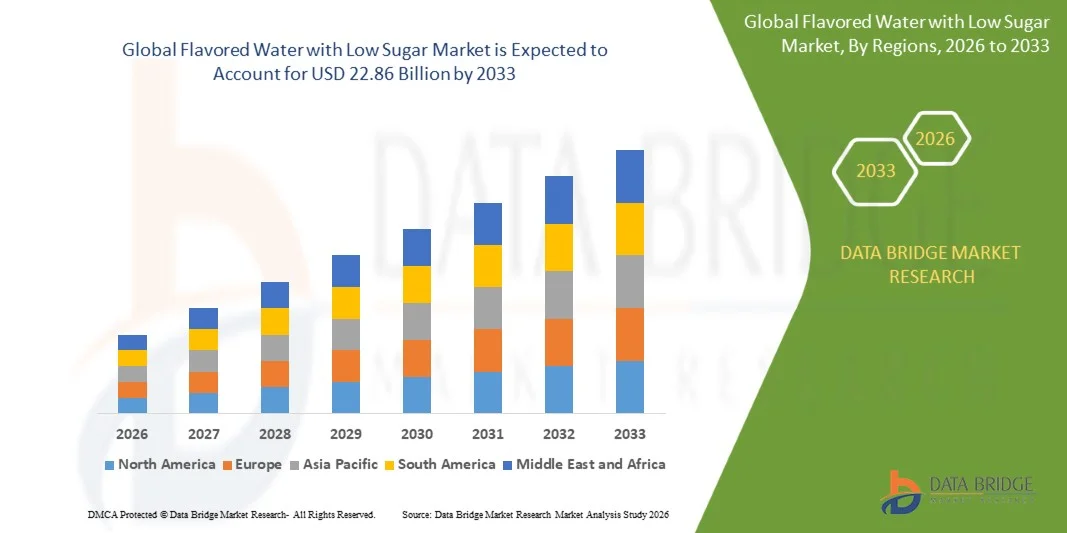
- As per Data Bridge Market Research Analysis the global flavored water with low sugar market size was valued at USD 13.96 billion in 2025 and is expected to reach USD 22.86 billion by 2033, at a CAGR of 6.35% during the forecast period
- The market growth is largely fueled by the increasing consumer shift toward healthier beverage options and rising awareness regarding the adverse effects of high sugar consumption, leading to strong demand for low-calorie and low-sugar hydration solutions across global markets
- Furthermore, growing preference for clean-label products, natural ingredients, and functional beverages with added health benefits is establishing low-sugar flavored water as a preferred alternative to carbonated soft drinks. These converging factors are accelerating product innovation and expanding consumer adoption, thereby significantly boosting the industry's growth
Market Size & Forecast
- Global Market Value (2025): USD 13.96 billion
- Expected Market Value (2033): USD 22.86 billion
- Forecast CAGR (2026–2033): 6.35%
What are the Major Takeaways of Flavored Water with Low Sugar Market?
- Flavored water with low sugar refers to beverages infused with natural or artificial flavors containing minimal or no added sugars, often enhanced with functional ingredients such as vitamins, minerals, or electrolytes to support hydration and wellness needs
- The escalating demand for these beverages is primarily fueled by increasing health consciousness, rising incidences of lifestyle-related diseases, and a growing preference for convenient ready-to-drink products that align with fitness-oriented and balanced dietary habits
- North America dominated the flavored water with low sugar market with a share of 33.4% in 2025, due to increasing consumer preference for healthier beverage alternatives and rising awareness regarding sugar reduction in daily diets
- Asia-Pacific is expected to be the fastest growing region in the flavored water with low sugar market during the forecast period due to rapid urbanization, rising disposable incomes, and increasing awareness of health and wellness
- Conventional segment dominated the market with a market share of 69.2% in 2025, due to its affordability and widespread availability across global markets. Manufacturers continue to rely on conventional formulations to cater to mass consumer demand while maintaining competitive pricing and scalable production
Report Scope and Flavored Water with Low Sugar Market Segmentation
|
Attributes |
Flavored Water with Low Sugar Key Market Insights |
|
Segments Covered |
|
|
Countries Covered |
North America
Europe
Asia-Pacific
Middle East and Africa
South America
|
|
Key Market Players |
|
|
Market Opportunities |
|
|
Value Added Data Infosets |
In addition to the insights on market scenarios such as market value, growth rate, segmentation, geographical coverage, and major players, the market reports curated by the Data Bridge Market Research also include in-depth expert analysis, pricing analysis, brand share analysis, consumer survey, demography analysis, supply chain analysis, value chain analysis, raw material/consumables overview, vendor selection criteria, PESTLE Analysis, Porter Analysis, and regulatory framework. |
What is the Key Trend in the Flavored Water with Low Sugar Market ?
“Rising Demand for Clean-Label and Naturally Sweetened Beverages”
- A significant trend in the flavored water with low sugar market is the increasing consumer preference for clean-label beverages formulated with natural ingredients and plant-based sweeteners, driven by rising awareness regarding health and wellness. This trend is elevating the demand for products that offer transparency in labeling and minimal processing while maintaining taste and functionality
- For instance, The Coca-Cola Company introduced Vitaminwater variants sweetened with stevia and monk fruit, aligning its portfolio with consumer demand for natural and low-sugar beverage options. Such innovations are strengthening brand positioning and encouraging wider adoption of alternative sweetening solutions across the industry
- The growing shift toward natural hydration solutions is encouraging manufacturers to reduce artificial additives and focus on fruit-based flavors and botanical infusions. This is enhancing product differentiation and attracting health-conscious consumers seeking refreshing yet low-calorie beverages
- Consumers are increasingly favoring beverages that combine hydration with functional benefits such as vitamins, antioxidants, and electrolytes. This trend is driving the development of value-added low-sugar flavored water products that cater to evolving lifestyle and fitness preferences
- Retailers and beverage companies are expanding their portfolios with premium and organic variants to capture demand from consumers prioritizing quality and sustainability. This is supporting the expansion of the market across both developed and emerging economies
- The rising emphasis on transparency, health benefits, and natural formulation continues to reinforce this trend. The demand for clean-label and naturally sweetened beverages is shaping innovation and strengthening the long-term growth trajectory of the flavored water with low sugar market
Flavored Water with Low Sugar Market Dynamics
Driver
“Increasing Health Awareness and Shift Away from Sugary Soft Drinks”
- The increasing awareness of the negative health effects associated with excessive sugar consumption is driving consumers to shift toward low-sugar and low-calorie beverage alternatives. This shift is significantly boosting demand for flavored water products that offer hydration without added health risks
- For instance, PepsiCo, Inc. expanded its Propel and Gatorade product lines with reduced-sugar and zero-sugar options to cater to health-conscious consumers. These initiatives are accelerating market growth by aligning product offerings with changing dietary preferences and regulatory pressures
- The rising incidence of lifestyle-related conditions such as obesity and diabetes is encouraging consumers to adopt healthier beverage choices. This is increasing the penetration of low-sugar flavored water across diverse consumer segments
- Fitness trends and active lifestyles are further contributing to the demand for functional hydration products that support performance and recovery. This is strengthening the role of low-sugar flavored water in sports and wellness categories
- The sustained shift in consumer behavior toward healthier consumption patterns continues to drive this market. The increasing demand for low-sugar beverages is positioning flavored water as a key growth segment within the global beverage industry
Restraint/Challenge
“High Cost of Natural Sweeteners and Ingredient Sourcing”
- The flavored water with low sugar market faces challenges due to the high cost associated with sourcing natural sweeteners such as stevia and monk fruit, which are essential for maintaining low sugar content without compromising taste. These ingredients often involve complex extraction and processing methods, increasing overall production costs
- For instance, Danone S.A. has invested in reformulating its beverage portfolio with natural ingredients, which requires higher input costs and supply chain adjustments. These cost pressures can impact pricing strategies and limit affordability for price-sensitive consumers
- The dependence on agricultural raw materials for natural sweeteners introduces variability in supply and pricing, which affects cost stability for manufacturers. This creates challenges in maintaining consistent product availability and competitive pricing
- Manufacturers must balance taste, quality, and cost efficiency while developing low-sugar formulations, which increases research and development complexity. This adds to operational expenses and extends product development timelines
- The ongoing challenge of managing ingredient costs while maintaining product quality and affordability continues to impact the market. These constraints require strategic sourcing and innovation to sustain growth in the flavored water with low sugar segment
How is the Flavored Water with Low Sugar Market Segmented ?
The market is segmented on the basis of product type, nature, flavor, packaging, distribution channel, and end use.
• By Product Type
On the basis of product type, the flavored water with low sugar market is segmented into still and sparkling. The still segment dominated the largest market revenue share in 2025, driven by its widespread acceptance as a daily hydration option and its alignment with clean-label and low-calorie preferences. Consumers prefer still flavored water due to its simplicity, absence of carbonation, and suitability for regular consumption across all age groups. The segment benefits from strong retail penetration and compatibility with functional ingredient additions such as vitamins and electrolytes.
The sparkling segment is anticipated to witness the fastest growth rate from 2026 to 2035, fueled by increasing demand for healthier alternatives to carbonated soft drinks. Sparkling flavored water offers a fizzy sensory experience without high sugar content, attracting younger consumers and urban populations. The premium positioning and expanding flavor innovations further contribute to its rapid adoption in both retail and foodservice channels.
• By Nature
On the basis of nature, the market is segmented into organic and conventional. The conventional segment dominated the largest market revenue share of 69.2% in 2025 due to its affordability and widespread availability across global markets. Manufacturers continue to rely on conventional formulations to cater to mass consumer demand while maintaining competitive pricing and scalable production. The segment also benefits from established supply chains and diverse flavor offerings.
The organic segment is expected to witness the fastest growth rate from 2026 to 2035, driven by increasing consumer awareness regarding clean-label products and natural ingredient sourcing. Consumers are actively shifting toward organic flavored water as part of a broader health and wellness lifestyle. Rising certifications and transparency in labeling are further strengthening consumer trust and boosting segment growth.
• By Flavor
On the basis of flavor, the market is segmented into fruit-based, botanical-based, and exotic blends. The fruit-based segment dominated the largest market revenue share in 2025, driven by high consumer familiarity and preference for refreshing and naturally appealing taste profiles. Citrus, berry, and tropical fruit flavors remain widely popular due to their perceived freshness and compatibility with low-sugar formulations. The segment also benefits from strong product innovation and seasonal flavor launches.
The botanical-based segment is anticipated to witness the fastest growth rate from 2026 to 2035, fueled by increasing interest in functional beverages and wellness-oriented ingredients. Botanical flavors incorporating herbs and plant extracts are gaining traction among health-conscious consumers seeking added benefits. Exotic blends are also expanding steadily as brands experiment with unique combinations to differentiate offerings.
• By Packaging
On the basis of packaging, the market is segmented into bottle, can, box, cup, and pouch. The bottle segment dominated the largest market revenue share in 2025, driven by its convenience, portability, and strong presence across retail outlets. Bottled flavored water is widely preferred for on-the-go consumption and offers flexibility in size variations catering to different consumer needs. The segment also benefits from advancements in recyclable and lightweight packaging materials.
The can segment is expected to witness the fastest growth rate from 2026 to 2035, fueled by rising sustainability concerns and increasing adoption of eco-friendly packaging formats. Aluminum cans offer higher recyclability and are gaining popularity among environmentally conscious consumers. The premium appeal and suitability for sparkling variants further accelerate the growth of this segment.
• By Distribution Channel
On the basis of distribution channel, the market is segmented into B2B and B2C. The B2C segment dominated the largest market revenue share in 2025, driven by strong demand from supermarkets, convenience stores, and online retail platforms. Direct consumer access, product visibility, and promotional strategies significantly contribute to segment growth. The increasing penetration of e-commerce platforms also enhances accessibility and convenience for consumers.
The B2B segment is anticipated to witness the fastest growth rate from 2026 to 2035, fueled by rising demand from hospitality, corporate offices, and foodservice providers. Bulk purchasing and partnerships with beverage distributors are strengthening supply networks. The growing focus on healthier beverage offerings in institutional settings further supports segment expansion.
• By End Use
On the basis of end use, the market is segmented into beverage industry, brewery industry, health and wellness industry, and retail. The beverage industry segment dominated the largest market revenue share in 2025, driven by extensive utilization of low sugar flavored water as a core product category and as a base for innovative beverage formulations. Manufacturers are continuously expanding product portfolios to cater to evolving consumer preferences. The segment benefits from strong branding, marketing, and distribution capabilities.
The health and wellness industry segment is expected to witness the fastest growth rate from 2026 to 2035, fueled by increasing consumer focus on fitness, hydration, and low-calorie consumption. Flavored water is being integrated into wellness programs, gyms, and health-focused retail environments. The rising demand for functional hydration solutions further accelerates growth in this segment.
Which Region Holds the Largest Share of the Flavored Water with Low Sugar Market?
- North America dominated the flavored water with low sugar market with the largest revenue share of 33.4% in 2025, driven by increasing consumer preference for healthier beverage alternatives and rising awareness regarding sugar reduction in daily diets
- Consumers in the region highly value functional hydration, clean-label ingredients, and convenient ready-to-drink formats, which is accelerating the adoption of low-sugar flavored water across retail and on-the-go consumption channels
- This widespread adoption is further supported by high disposable incomes, strong presence of premium beverage brands, and growing demand for wellness-focused products, establishing low-sugar flavored water as a preferred alternative to carbonated and high-calorie drinks
U.S. Flavored Water with Low Sugar Market Insight
The U.S. flavored water with low sugar market captured the largest revenue share within North America in 2025, fueled by the rising shift toward health-conscious consumption and declining demand for sugary soft drinks. Consumers are increasingly prioritizing beverages with natural flavors, low-calorie content, and added functional benefits such as vitamins and electrolytes. The expanding availability of innovative product variants and strong marketing by beverage companies is further propelling market growth. Moreover, the increasing penetration of fitness trends and active lifestyles is significantly contributing to the market’s expansion.
Europe Flavored Water with Low Sugar Market Insight
The Europe flavored water with low sugar market is projected to expand at a substantial CAGR throughout the forecast period, primarily driven by stringent regulations on sugar content and increasing consumer inclination toward healthier beverage choices. The rise in urban lifestyles, coupled with growing awareness about obesity and lifestyle diseases, is fostering the adoption of low-sugar flavored water. European consumers are also drawn to sustainable packaging and natural ingredient formulations. The region is experiencing steady growth across supermarkets, convenience stores, and online retail channels, with strong demand in both developed and emerging economies.
U.K. Flavored Water with Low Sugar Market Insight
The U.K. flavored water with low sugar market is anticipated to grow at a noteworthy CAGR during the forecast period, driven by increasing health awareness and government initiatives aimed at reducing sugar consumption. In addition, the demand for low-calorie and naturally flavored beverages is encouraging consumers to shift away from traditional sugary drinks. The U.K.’s well-established retail infrastructure and rising demand for premium and functional beverages are expected to continue to stimulate market growth.
Germany Flavored Water with Low Sugar Market Insight
The Germany flavored water with low sugar market is expected to expand at a considerable CAGR during the forecast period, fueled by growing preference for organic and natural beverage products and increasing focus on healthy hydration. Germany’s strong emphasis on quality, sustainability, and clean-label products promotes the adoption of low-sugar flavored water across various consumer segments. The integration of functional ingredients and eco-friendly packaging solutions is also becoming increasingly prevalent, aligning with consumer expectations and environmental regulations.
Asia-Pacific Flavored Water with Low Sugar Market Insight
The Asia-Pacific flavored water with low sugar market is poised to grow at the fastest CAGR during the forecast period of 2026 to 2033, driven by rapid urbanization, rising disposable incomes, and increasing awareness of health and wellness. The region's growing inclination toward convenient and healthier beverage options, supported by expanding retail networks, is driving market growth. Furthermore, as APAC emerges as a major production and consumption hub for packaged beverages, the affordability and accessibility of low-sugar flavored water are expanding to a broader consumer base.
Japan Flavored Water with Low Sugar Market Insight
The Japan flavored water with low sugar market is gaining momentum due to the country’s strong preference for functional beverages and innovative product formulations. The Japanese market places significant emphasis on quality and health benefits, and the adoption of low-sugar flavored water is driven by increasing demand for convenient and refreshing hydration options. The integration of functional ingredients such as vitamins and minerals is fueling growth. Moreover, Japan's aging population is such asly to drive demand for healthier and easy-to-consume beverage options across different age groups.
China Flavored Water with Low Sugar Market Insight
The China flavored water with low sugar market accounted for the largest market revenue share in Asia Pacific in 2025, attributed to the country’s expanding middle-class population, rapid urbanization, and increasing health awareness. China stands as one of the largest markets for ready-to-drink beverages, and low-sugar flavored water is gaining popularity among young and urban consumers. The push toward healthier lifestyles, along with strong domestic manufacturing and wide distribution networks, is a key factor propelling the market in China.
Which are the Top Companies in Flavored Water with Low Sugar Market ?
The flavored water with low sugar industry is primarily led by well-established companies, including:
- The Coca-Cola Company (U.S.)
- PepsiCo, Inc. (U.S.)
- Nestlé S.A. (Switzerland)
- Danone S.A. (France)
- Keurig Dr Pepper Inc. (U.S.)
- National Beverage Corp. (U.S.)
- Talking Rain Beverage Company (U.S.)
- Hint Inc. (U.S.)
- Spindrift Beverage Co., Inc. (U.S.)
- The Kraft Heinz Company (U.S.)
- Sunny Delight Beverages Co. (U.S.)
- Britvic plc (U.K.)
- Refresco Group N.V. (Netherlands)
- Suntory Holdings Limited (Japan)
- Asahi Group Holdings, Ltd. (Japan)
- Bisleri International Pvt. Ltd. (India)
- Tata Consumer Products Limited (India)
What are Latest Developments in Flavored Water with Low Sugar Market ?
- In March 2026, Gatorade Lower Sugar introduced a cleaner hydration solution with no artificial flavors, sweeteners, or colors and 75% less sugar than traditional variants, strengthening the shift toward natural and reduced-sugar sports beverages while expanding consumer trust in functional hydration. This development is reinforcing competitive intensity in the low-sugar segment and encouraging other beverage manufacturers to accelerate reformulation strategies aligned with clean-label and health-focused trends
- In January 2026, PepsiCo expanded its low-sugar hydration portfolio by introducing new variants under its Propel brand with enhanced electrolytes and zero added sugar, reinforcing competitive positioning in the better-for-you beverage segment and accelerating market penetration among fitness-focused consumers. This move is driving category growth by widening product accessibility and encouraging repeat consumption among health-conscious and active lifestyle segments
- In November 2025, Nestlé launched new low-sugar flavored water options under its regional bottled water brands with natural fruit extracts, enhancing its clean-label product portfolio and increasing accessibility of healthier hydration choices across emerging and developed markets. This initiative is supporting brand diversification while responding to rising regulatory and consumer pressure for reduced sugar formulations
- In September 2025, Danone introduced reformulated flavored water products with reduced sugar content and added functional ingredients such as vitamins, supporting its health-centric strategy and driving demand among wellness-conscious consumers. This advancement is contributing to product premiumization and strengthening the appeal of functional low-sugar beverages in both retail and on-the-go consumption channels
- In August 2023, Liquid I.V. debuted a long-awaited sugar-free formula while Bigelow Tea expanded its Botanicals Cold Water Infusions with new flavors, and Coca-Cola’s Vitaminwater launched new variants using monk fruit and stevia, collectively accelerating innovation in natural sweeteners and diversifying low-sugar beverage offerings across multiple brands. This wave of product launches is intensifying innovation cycles and encouraging broader adoption of plant-based sweetening alternatives across the industry

- Interactive Data Analysis Dashboard
- Company Analysis Dashboard for high growth potential opportunities
- Research Analyst Access for customization & queries
- Competitor Analysis with Interactive dashboard
- Latest News, Updates & Trend analysis
- Harness the Power of Benchmark Analysis for Comprehensive Competitor Tracking
Global Flavored Water With Low Sugar Market, Supply Chain Analysis and Ecosystem Framework
To support market growth and help clients navigate the impact of geopolitical shifts, DBMR has integrated in-depth supply chain analysis into its Global Flavored Water With Low Sugar Market research reports. This addition empowers clients to respond effectively to global changes affecting their industries. The supply chain analysis section includes detailed insights such as Global Flavored Water With Low Sugar Market consumption and production by country, price trend analysis, the impact of tariffs and geopolitical developments, and import and export trends by country and HSN code. It also highlights major suppliers with data on production capacity and company profiles, as well as key importers and exporters. In addition to research, DBMR offers specialized supply chain consulting services backed by over a decade of experience, providing solutions like supplier discovery, supplier risk assessment, price trend analysis, impact evaluation of inflation and trade route changes, and comprehensive market trend analysis.
Data collection and base year analysis are done using data collection modules with large sample sizes. The stage includes obtaining market information or related data through various sources and strategies. It includes examining and planning all the data acquired from the past in advance. It likewise envelops the examination of information inconsistencies seen across different information sources. The market data is analysed and estimated using market statistical and coherent models. Also, market share analysis and key trend analysis are the major success factors in the market report. To know more, please request an analyst call or drop down your inquiry.
The key research methodology used by DBMR research team is data triangulation which involves data mining, analysis of the impact of data variables on the market and primary (industry expert) validation. Data models include Vendor Positioning Grid, Market Time Line Analysis, Market Overview and Guide, Company Positioning Grid, Patent Analysis, Pricing Analysis, Company Market Share Analysis, Standards of Measurement, Global versus Regional and Vendor Share Analysis. To know more about the research methodology, drop in an inquiry to speak to our industry experts.
Data Bridge Market Research is a leader in advanced formative research. We take pride in servicing our existing and new customers with data and analysis that match and suits their goal. The report can be customized to include price trend analysis of target brands understanding the market for additional countries (ask for the list of countries), clinical trial results data, literature review, refurbished market and product base analysis. Market analysis of target competitors can be analyzed from technology-based analysis to market portfolio strategies. We can add as many competitors that you require data about in the format and data style you are looking for. Our team of analysts can also provide you data in crude raw excel files pivot tables (Fact book) or can assist you in creating presentations from the data sets available in the report.













