


What is the Fluorescent Antibody Test (FAT) Market Size and Growth Rate?
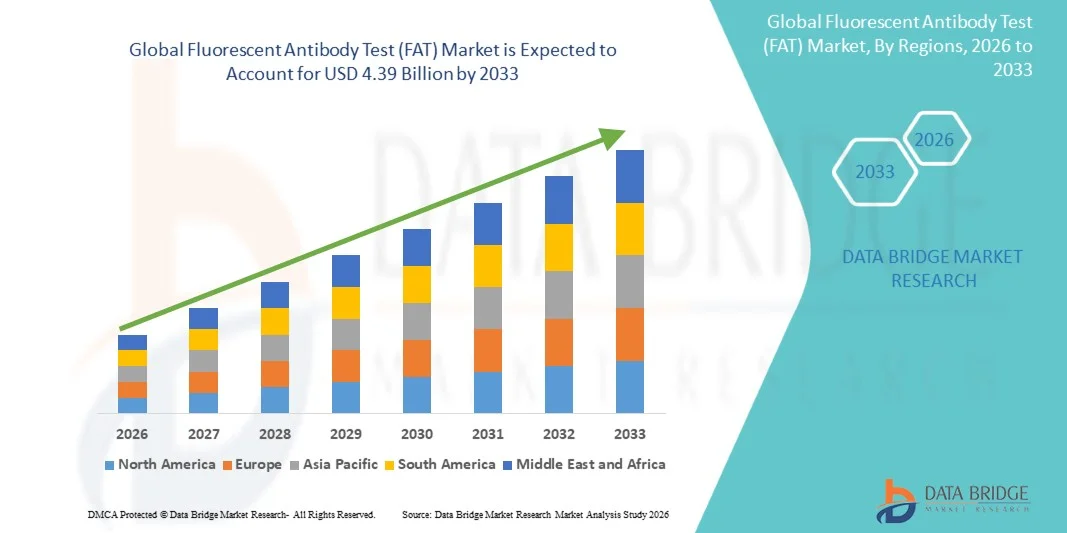
- As per Data Bridge Market Research Analysis the global fluorescent antibody test (FAT) market size was valued at USD 2.50 billion in 2025 and is expected to reach USD 4.39 billion by 2033, at a CAGR of 7.30% during the forecast period
- The market growth is largely fueled by the increasing prevalence of infectious diseases and growing demand for rapid and accurate diagnostic techniques, leading to increased adoption of fluorescent antibody testing across clinical laboratories, hospitals, and research settings
- Furthermore, rising demand for sensitive, specific, and early-stage disease detection methods, along with increasing use of immunofluorescence techniques in microbiology and pathology, is establishing Fluorescent Antibody Test (FAT) as a reliable diagnostic tool. These converging factors are accelerating the uptake of Fluorescent Antibody Test (FAT) solutions, thereby significantly boosting the industry's growth
Market Size & Forecast
- Global Market Value (2025): USD 2.50 billion
- Expected Market Value (2033): USD 4.39 billion
- Forecast CAGR (2026–2033): 7.30%
What is the Fluorescent Antibody Test (Fat) Market Size and Growth Rate?
- Fluorescent Antibody Test (FAT), offering highly sensitive immunofluorescence-based diagnostic solutions for the detection of infectious agents, are increasingly vital components of modern diagnostic and laboratory systems in both clinical and research settings due to their rapid detection capability, high specificity, and reliability
- The escalating demand for Fluorescent Antibody Test (FAT) is primarily fueled by the increasing prevalence of infectious diseases, growing need for rapid and accurate diagnostic methods, and rising adoption of advanced immunodiagnostic techniques in hospitals and laboratories
- North America dominated the Fluorescent Antibody Test (FAT) market with the largest revenue share of 39.0% in 2025, characterized by advanced healthcare infrastructure, high adoption of diagnostic technologies, strong presence of key industry players, and increasing demand for early and accurate disease detection, with the U.S. experiencing substantial growth in diagnostic testing volumes driven by continuous technological advancements
- Asia-Pacific is expected to be the fastest growing region in the Fluorescent Antibody Test (FAT) market during the forecast period due to increasing healthcare expenditure, rising awareness, expanding laboratory infrastructure, and growing demand for rapid diagnostic solutions
- The infectious diseases segment dominated the largest market revenue share of 61.4% in 2025, driven by the high global burden of bacterial and viral infections
Report Scope and Fluorescent Antibody Test (FAT) Market Segmentation
|
Attributes |
Fluorescent Antibody Test (FAT) Key Market Insights |
|
Segments Covered |
|
|
Countries Covered |
North America
Europe
Asia-Pacific
Middle East and Africa
South America
|
|
Key Market Players |
|
|
Market Opportunities |
|
|
Value Added Data Infosets |
|
What is the Key Trend in the Fluorescent Antibody Test (Fat) Market?
“Advancements in Rapid and Accurate Diagnostic Techniques”
- A significant and accelerating trend in the global Fluorescent Antibody Test (FAT) market is the growing emphasis on rapid, highly sensitive, and specific diagnostic methods for infectious diseases and immunological conditions
- Continuous advancements in fluorescence-based technologies are enabling faster detection and improved diagnostic accuracy across clinical and research settings
- For instance, the development of automated immunofluorescence systems and advanced fluorescence microscopy platforms has enhanced the efficiency and reliability of Fluorescent Antibody Test (FAT) procedures, enabling laboratories to process a higher volume of samples with greater precision and reduced turnaround time
- Technological innovations in reagents, fluorescent dyes, and imaging systems are improving signal clarity and reducing background noise, thereby enhancing test sensitivity and reproducibility. These advancements are particularly beneficial in diagnosing viral and bacterial infections, including rabies and respiratory pathogens
- Furthermore, the integration of Fluorescent Antibody Test (FAT) with digital imaging and laboratory automation systems is streamlining workflows, minimizing human error, and improving overall laboratory productivity. This enables healthcare providers to deliver timely and accurate diagnostic results
- The increasing adoption of point-of-care testing and decentralized diagnostic solutions is also contributing to the demand for simplified and rapid Fluorescent Antibody Test (FAT) kits that can be used in remote or resource-limited settings
- This trend towards more efficient, reliable, and accessible diagnostic technologies is reshaping laboratory practices and driving the widespread adoption of Fluorescent Antibody Test (FAT) across global healthcare systems
Fluorescent Antibody Test (FAT) Market Dynamics
Driver
“Rising Prevalence of Infectious Diseases and Demand for Early Diagnosis”
- The increasing global burden of infectious diseases, along with the growing need for early and accurate diagnosis, is a major driver for the Fluorescent Antibody Test (FAT) market. The demand for reliable diagnostic tools is rising as healthcare systems focus on timely disease detection and effective treatment planning
- For instance, the rising incidence of diseases such as rabies, influenza, and other viral infections has led to increased utilization of Fluorescent Antibody Test (FAT) in clinical laboratories and research institutions for rapid pathogen identification
- As healthcare providers emphasize early intervention and disease surveillance, Fluorescent Antibody Test (FAT) offers high specificity and sensitivity, making it a preferred diagnostic method for detecting antigen-antibody interactions
- Furthermore, increasing investments in healthcare infrastructure and diagnostic capabilities, particularly in emerging economies, are supporting the widespread adoption of advanced testing methods
- The expanding use of Fluorescent Antibody Test (FAT) in veterinary diagnostics, epidemiological studies, and public health monitoring is also contributing to market growth
Restraint/Challenge
“High Equipment Costs and Requirement for Skilled Professionals”
- The high cost associated with fluorescence microscopy equipment and specialized reagents presents a significant challenge to the widespread adoption of Fluorescent Antibody Test (FAT), particularly in low- and middle-income regions
- For instance, the requirement for advanced fluorescence microscopes and trained laboratory personnel to perform and interpret Fluorescent Antibody Test (FAT) results can limit its accessibility in smaller diagnostic centers and rural healthcare facilities
- In addition, maintaining and calibrating sophisticated diagnostic equipment increases operational costs for laboratories, which may hinder adoption among budget-constrained institutions
- The need for skilled technicians and proper training to ensure accurate test execution and interpretation further adds to the complexity of implementation
- Moreover, the availability of alternative diagnostic methods, such as PCR-based techniques and rapid antigen tests, may pose competition, particularly in settings where cost and ease of use are critical factors
- Addressing these challenges through cost-effective technological innovations, training programs, and improved accessibility to diagnostic infrastructure will be essential for sustained market growth
How is the Fluorescent Antibody Test (Fat) Market Segmented?
The market is segmented on the basis of technology, products, method, indication, antigen, and end-user.
• By Technology
On the basis of technology, the Fluorescent Antibody Test (FAT) market is segmented into ELISA/Immunohistochemistry, chromatography techniques, PCR, and others. The ELISA/Immunohistochemistry segment dominated the largest market revenue share of 42.7% in 2025, driven by its widespread use in detecting antigen-antibody interactions with high specificity and sensitivity. These techniques are extensively adopted in clinical diagnostics and research laboratories due to their reliability and cost-effectiveness. The growing prevalence of infectious and autoimmune diseases significantly boosts demand for these technologies. In addition, increasing use in cancer diagnostics and biomarker detection further supports segment growth. The availability of advanced kits and reagents enhances testing efficiency and accuracy. Rising investments in healthcare infrastructure and laboratory expansion contribute to increased adoption. Furthermore, strong regulatory approvals and standardized protocols strengthen market penetration. The ease of use and compatibility with high-throughput screening systems also support widespread utilization. Growing awareness regarding early disease diagnosis further accelerates demand. These factors collectively ensure the dominance of the ELISA/Immunohistochemistry segment.
The PCR segment is expected to witness the fastest CAGR of 10.9% from 2026 to 2033, driven by its superior accuracy, rapid detection capabilities, and increasing adoption in molecular diagnostics. PCR technology plays a crucial role in identifying genetic material from pathogens, making it highly effective for infectious disease diagnosis. Technological advancements such as real-time PCR and digital PCR enhance sensitivity and turnaround time. The rising demand for early and precise diagnosis supports adoption across healthcare settings. Increasing use in personalized medicine and genetic testing further fuels growth. Government initiatives promoting advanced diagnostic technologies contribute to market expansion. In addition, the growing number of diagnostic laboratories and research institutions drives demand. The integration of automation and AI in PCR systems enhances efficiency. Expanding applications in oncology and virology further strengthen its growth trajectory. These factors position PCR as the fastest-growing technology segment.
• By Products
On the basis of products, the Fluorescent Antibody Test (FAT) market is segmented into instruments, reagents and kits, and accessories. The reagents and kits segment dominated the largest market revenue share of 49.3% in 2025, driven by their recurring usage in diagnostic procedures and research activities. These products are essential for conducting FAT tests, leading to consistent and high demand. Increasing prevalence of infectious diseases significantly boosts consumption of reagents and kits. The growing number of diagnostic tests performed globally further strengthens demand. In addition, continuous product innovation and development of advanced assay kits enhance accuracy and efficiency. Expanding laboratory infrastructure and rising healthcare investments support market growth. The availability of disease-specific kits improves diagnostic precision. Furthermore, increasing focus on early disease detection contributes to higher adoption. The cost-effectiveness and ease of availability of reagents further support dominance. These factors collectively ensure the leading position of the reagents and kits segment.
The instruments segment is expected to witness the fastest CAGR of 9.6% from 2026 to 2033, driven by increasing demand for automated and high-throughput diagnostic systems. Technological advancements in fluorescence microscopy and imaging systems enhance testing efficiency. The growing need for accurate and rapid diagnostics supports adoption of advanced instruments. Increasing investments in healthcare infrastructure, especially in emerging markets, contribute to growth. In addition, the rising number of diagnostic laboratories and research facilities drives demand. Integration of digital technologies and automation improves workflow management. The increasing focus on precision medicine further boosts instrument adoption. Expansion of clinical research activities supports market expansion. Moreover, continuous innovation in imaging technologies enhances performance capabilities. These factors position instruments as the fastest-growing product segment.
• By Method
On the basis of method, the Fluorescent Antibody Test (FAT) market is segmented into direct and indirect. The direct method segment dominated the largest market revenue share of 55.1% in 2025, driven by its simplicity, rapid results, and high specificity in detecting antigens. This method involves direct labeling of antibodies, reducing procedural steps and minimizing testing time. The growing demand for quick diagnostic results in clinical settings supports its adoption. In addition, increasing use in infectious disease diagnosis enhances its market share. The method’s reliability and ease of interpretation further contribute to its dominance. Expanding use in hospital laboratories and diagnostic centers boosts growth. Technological improvements in fluorescent labeling enhance sensitivity and accuracy. Furthermore, rising awareness regarding early disease detection supports demand. The cost-effectiveness of the direct method also makes it widely preferred. These factors collectively ensure its leading position in the market.
The indirect method segment is expected to witness the fastest CAGR of 8.7% from 2026 to 2033, driven by its higher sensitivity and ability to amplify signals for better detection. This method is widely used in detecting low-abundance antigens and antibodies. Increasing application in research and complex diagnostic procedures supports growth. The rising prevalence of chronic and autoimmune diseases boosts demand for sensitive diagnostic techniques. In addition, advancements in secondary antibody labeling technologies enhance performance. Growing investments in research and development contribute to segment expansion. The flexibility of the indirect method allows for broader applications across various diseases. Increasing adoption in academic and research institutes further supports growth. The ability to provide detailed diagnostic insights enhances its value. These factors position the indirect method as the fastest-growing segment.
• By Indication
On the basis of indication, the Fluorescent Antibody Test (FAT) market is segmented into infectious diseases and autoimmune diseases. The infectious diseases segment dominated the largest market revenue share of 61.4% in 2025, driven by the high global burden of bacterial and viral infections. FAT is widely used for rapid and accurate detection of pathogens, supporting its adoption in clinical diagnostics. The increasing incidence of diseases such as tuberculosis, influenza, and viral infections boosts demand. In addition, rising awareness regarding early diagnosis supports market growth. Government initiatives for infectious disease control further enhance adoption. Expanding diagnostic infrastructure globally contributes to increased testing. Technological advancements in fluorescence detection improve accuracy and efficiency. Furthermore, growing healthcare expenditure supports accessibility to diagnostic services. The need for timely disease management strengthens segment demand. These factors collectively ensure dominance of the infectious diseases segment.
The autoimmune diseases segment is expected to witness the fastest CAGR of 9.4% from 2026 to 2033, driven by increasing prevalence of autoimmune disorders such as lupus and rheumatoid arthritis. Rising awareness regarding autoimmune conditions supports early diagnosis and treatment. The growing demand for advanced diagnostic techniques enhances adoption. In addition, increasing research in immunology contributes to segment growth. Technological advancements in antibody detection improve diagnostic accuracy. Expanding healthcare infrastructure in emerging markets further supports growth. The increasing geriatric population also contributes to rising cases of autoimmune diseases. Furthermore, improved accessibility to diagnostic tests boosts adoption. The need for precise disease monitoring enhances demand. These factors position autoimmune diseases as the fastest-growing segment.
• By Antigen
On the basis of antigen, the Fluorescent Antibody Test (FAT) market is segmented into bacteria and virus. The virus segment dominated the largest market revenue share of 57.2% in 2025, driven by the high prevalence of viral infections globally. FAT is extensively used for rapid detection of viruses due to its high sensitivity and specificity. The increasing incidence of viral outbreaks significantly boosts demand. In addition, advancements in virology research support segment growth. The rising need for early and accurate diagnosis enhances adoption. Government initiatives for controlling viral diseases contribute to market expansion. Furthermore, increasing awareness regarding infectious diseases supports demand. The development of advanced viral detection kits improves efficiency. Expanding healthcare infrastructure further strengthens growth. These factors collectively ensure dominance of the virus segment.
The bacteria segment is expected to witness the fastest CAGR of 8.9% from 2026 to 2033, driven by increasing prevalence of bacterial infections and antibiotic resistance concerns. The growing demand for accurate bacterial detection supports adoption of FAT. Technological advancements in bacterial diagnostics enhance efficiency. Increasing use in clinical and research settings further drives growth. In addition, rising healthcare investments support expansion. The need for rapid diagnosis in hospital settings boosts demand. Expanding applications in food safety and environmental testing contribute to growth. Furthermore, increasing awareness regarding bacterial infections supports adoption. These factors position bacteria as the fastest-growing segment.
• By End-User
On the basis of end-user, the Fluorescent Antibody Test (FAT) market is segmented into diagnostic centers, hospitals, clinics, and others. The hospitals segment dominated the largest market revenue share of 44.8% in 2025, driven by the availability of advanced diagnostic infrastructure and skilled healthcare professionals. Hospitals handle a large volume of patient testing, contributing to high demand. Increasing patient admissions for infectious and chronic diseases supports growth. In addition, the availability of integrated diagnostic facilities enhances adoption. Rising healthcare expenditure further strengthens hospital capabilities. Government funding and support for hospital infrastructure boost demand. Furthermore, the need for accurate and timely diagnosis enhances utilization. Expanding hospital networks globally contribute to growth. These factors ensure dominance of the hospital segment.
The diagnostic centers segment is expected to witness the fastest CAGR of 10.2% from 2026 to 2033, driven by increasing preference for specialized and cost-effective diagnostic services. The growing number of independent diagnostic labs supports market expansion. In addition, advancements in diagnostic technologies enhance service efficiency. Rising awareness regarding early disease detection boosts demand. The expansion of private healthcare services contributes to growth. Furthermore, faster turnaround times attract more patients. Increasing collaborations with hospitals and clinics strengthen their position. The growing demand for outpatient diagnostic services supports adoption. These factors position diagnostic centers as the fastest-growing segment.
Which Region Holds the Largest Share of the Fluorescent Antibody Test (Fat) Market?
- North America dominated the fluorescent antibody test (FAT) market with the largest revenue share of approximately 39.0% in 2025, characterized by advanced healthcare infrastructure, high adoption of diagnostic technologies, and a strong presence of key industry players
- The region is witnessing increased demand for early and accurate disease detection, supported by well-established laboratory networks and continuous technological advancements in diagnostic methodologies
- The widespread utilization of Fluorescent Antibody Test (FAT) across clinical diagnostics, infectious disease detection, and research applications is further driven by favorable reimbursement policies, high healthcare spending, and growing emphasis on preventive healthcare, establishing it as a critical diagnostic tool in the region
U.S. Fluorescent Antibody Test (FAT) Market Insight
The U.S. fluorescent antibody test (FAT) market captured the largest revenue share within North America in 2025, driven by increasing diagnostic testing volumes, strong investments in healthcare infrastructure, and rapid adoption of advanced laboratory technologies. The rising prevalence of infectious diseases and growing focus on early diagnosis and disease surveillance are key factors propelling market growth. In addition, continuous technological advancements and the presence of leading diagnostic companies are further accelerating the expansion of the market in the country.
Europe Fluorescent Antibody Test (FAT) Market Insight
The Europe fluorescent antibody test (FAT) market is projected to expand at a substantial CAGR throughout the forecast period, primarily driven by increasing demand for accurate diagnostic solutions, rising prevalence of infectious and chronic diseases, and strong support for healthcare research and innovation. The region is experiencing growing adoption of advanced diagnostic technologies across hospitals and laboratories, particularly in disease surveillance and clinical research applications.
U.K. Fluorescent Antibody Test (FAT) Market Insight
The U.K. fluorescent antibody test (FAT) market is anticipated to grow at a noteworthy CAGR during the forecast period, supported by increasing investments in diagnostic services, expanding use of laboratory testing, and rising awareness regarding early disease detection. Government initiatives aimed at strengthening healthcare systems and improving diagnostic capabilities are further contributing to market growth.
Germany Fluorescent Antibody Test (FAT) Market Insight
The Germany Fluorescent Antibody Test (FAT) market is expected to expand at a considerable CAGR during the forecast period, fueled by strong research infrastructure, growing adoption of innovative diagnostic techniques, and increasing demand for high-quality healthcare services. The country’s focus on technological advancement and precision diagnostics supports the integration of Fluorescent Antibody Test (FAT) in both clinical and research environments.
Asia-Pacific Fluorescent Antibody Test (FAT) Market Insight
The Asia-Pacific fluorescent antibody test (FAT) market is expected to be the fastest growing region during the forecast period, driven by increasing healthcare expenditure, rising awareness regarding advanced diagnostic methods, expanding laboratory infrastructure, and growing demand for rapid diagnostic solutions. Improving access to healthcare services and rising investments in healthcare systems are further accelerating market growth in the region.
Japan Fluorescent Antibody Test (FAT) Market Insight
The Japan fluorescent antibody test (FAT) market is gaining momentum due to the country’s advanced healthcare system, strong focus on technological innovation, and increasing demand for early disease diagnosis. The growing aging population and rising need for efficient diagnostic solutions are driving the adoption of Fluorescent Antibody Test (FAT) across clinical and research applications.
China Fluorescent Antibody Test (FAT) Market Insight
The China fluorescent antibody test (FAT) market accounted for the largest market revenue share in Asia Pacific in 2025, attributed to expanding healthcare infrastructure, increasing government investments in diagnostics, and rising demand for advanced testing solutions. The country’s large patient population, growing focus on disease control, and rapid development of laboratory capabilities are key factors propelling market growth.
Which are the Top Companies in Fluorescent Antibody Test (FAT) Market?
The Fluorescent Antibody Test (FAT) industry is primarily led by well-established companies, including:
- Thermo Fisher Scientific Inc. (U.S.)
- F. Hoffmann-La Roche Ltd (Switzerland)
- Danaher Corporation (U.S.)
- Bio-Rad Laboratories, Inc. (U.S.)
- Abbott Laboratories (U.S.)
- Siemens Healthineers AG (Germany)
- Agilent Technologies, Inc. (U.S.)
- PerkinElmer, Inc. (U.S.)
- BioMérieux S.A. (France)
- Merck KGaA (Germany)
- BD (U.S.)
- QIAGEN N.V. (Netherlands)
- Sysmex Corporation (Japan)
- Hologic, Inc. (U.S.)
- Ortho Clinical Diagnostics (U.S.)
- DiaSorin S.p.A. (Italy)
- Trinity Biotech plc (Ireland)
- Randox Laboratories Ltd. (U.K.)
- Mindray Medical International Limited (China)
- Shenzhen New Industries Biomedical Engineering Co., Ltd. (China)
What are Latest Developments in Fluorescent Antibody Test (Fat) Market?
- In October 2021, industry analysis highlighted increasing global adoption of fluorescent antibody tests for rabies diagnosis, supported by recommendations from the World Health Organization (WHO) and rising government initiatives for rabies control programs. This development strengthened the role of FAT as a standard diagnostic tool in infectious disease surveillance
- In March 2022, multiple healthcare organizations and research institutions expanded collaborations to develop and commercialize advanced fluorescent antibody detection assays, particularly for infectious diseases and public health programs. This reflects growing investment in improving diagnostic accuracy and disease monitoring capabilities
- In April 2023, market analysis reported increasing prevalence of infectious diseases such as rabies driving demand for fluorescent antibody testing, along with continuous product innovations including advanced reagents, kits, and fluorescence-based diagnostic instruments. This development highlights the expanding clinical application of FAT in global healthcare system
- In May 2025, industry reports highlighted the growing adoption of advanced fluorescent antibody testing technologies, including multiplex assays and automated systems, driven by increasing demand for rapid and accurate diagnostic solutions in infectious and autoimmune diseases. This reflects ongoing technological advancement and market expansion

- Interactive Data Analysis Dashboard
- Company Analysis Dashboard for high growth potential opportunities
- Research Analyst Access for customization & queries
- Competitor Analysis with Interactive dashboard
- Latest News, Updates & Trend analysis
- Harness the Power of Benchmark Analysis for Comprehensive Competitor Tracking
Data collection and base year analysis are done using data collection modules with large sample sizes. The stage includes obtaining market information or related data through various sources and strategies. It includes examining and planning all the data acquired from the past in advance. It likewise envelops the examination of information inconsistencies seen across different information sources. The market data is analysed and estimated using market statistical and coherent models. Also, market share analysis and key trend analysis are the major success factors in the market report. To know more, please request an analyst call or drop down your inquiry.
The key research methodology used by DBMR research team is data triangulation which involves data mining, analysis of the impact of data variables on the market and primary (industry expert) validation. Data models include Vendor Positioning Grid, Market Time Line Analysis, Market Overview and Guide, Company Positioning Grid, Patent Analysis, Pricing Analysis, Company Market Share Analysis, Standards of Measurement, Global versus Regional and Vendor Share Analysis. To know more about the research methodology, drop in an inquiry to speak to our industry experts.
Data Bridge Market Research is a leader in advanced formative research. We take pride in servicing our existing and new customers with data and analysis that match and suits their goal. The report can be customized to include price trend analysis of target brands understanding the market for additional countries (ask for the list of countries), clinical trial results data, literature review, refurbished market and product base analysis. Market analysis of target competitors can be analyzed from technology-based analysis to market portfolio strategies. We can add as many competitors that you require data about in the format and data style you are looking for. Our team of analysts can also provide you data in crude raw excel files pivot tables (Fact book) or can assist you in creating presentations from the data sets available in the report.













